Bluetti AC300 Review for Off-Grid Use
When you're dreaming of an off-grid lifestyle, whether it's powering a remote cabin, enjoying extended RV trips, or simply ensuring reliable home backup, figuring out your power solution can feel like navigating a maze. The challenge often lies in finding a system that's powerful enough to handle your essentials, flexible enough to grow with your needs, and simple enough not to require an electrical engineering degree. This comprehensive guide dives deep into the Bluetti AC300, exploring its features, real-world applications, and how it stacks up, helping you decide if it’s the right central power hub for your off-grid adventures.
Unpacking the Bluetti AC300: Core Features and Design
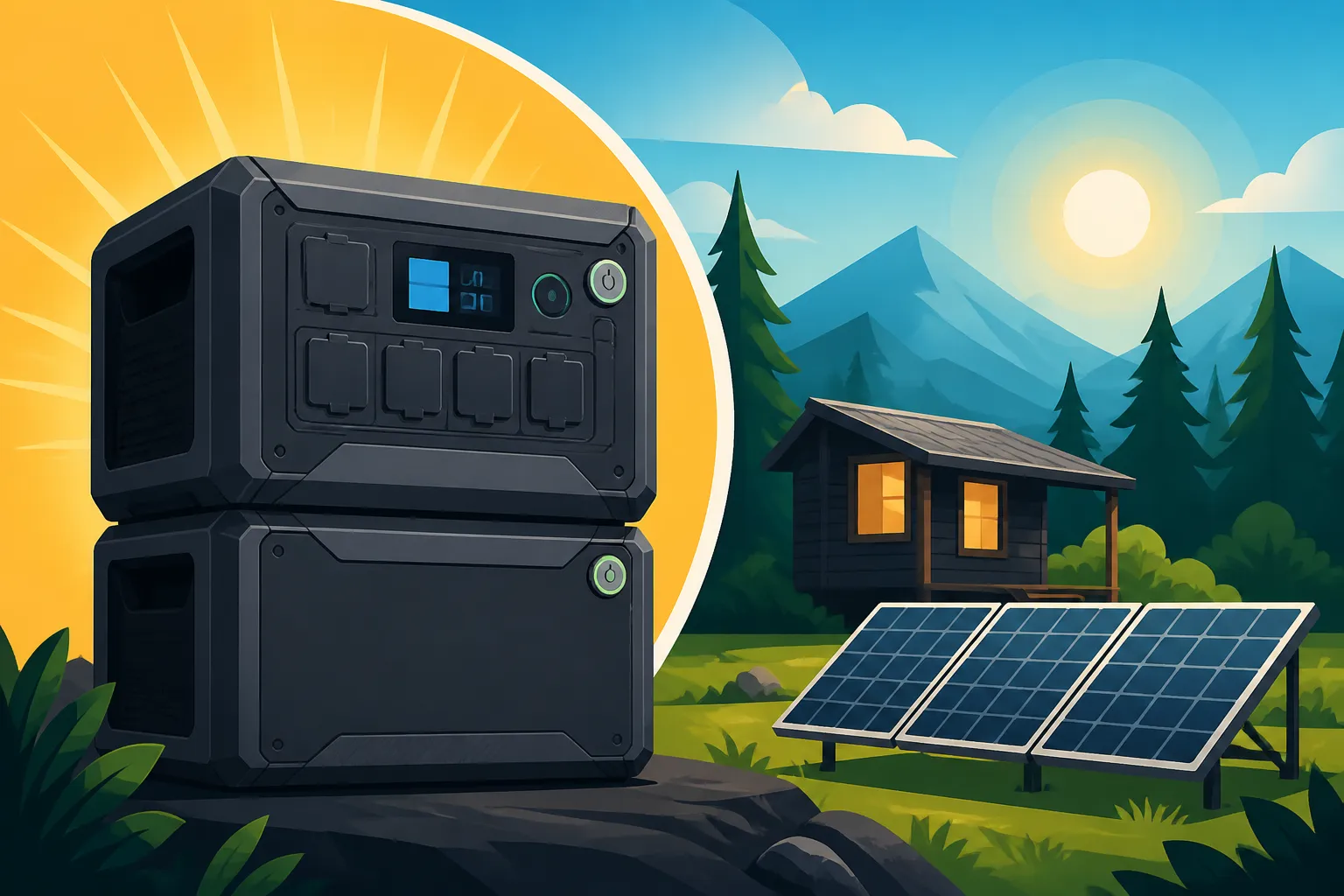
The Bluetti AC300 isn't just another battery pack; it's a modular power station designed with serious off-grid use in mind. Unlike many all-in-one units that have fixed battery capacity, the AC300 separates the inverter/charge controller unit from its battery modules, giving you incredible flexibility. This approach allows you to scale your power storage as your needs evolve, rather than being stuck with a system that's either too small or unnecessarily large from day one. It’s a powerful beast that aims to be the central brain of your independent power setup.
Modular Battery System and Capacity
One of the standout features of the Bluetti AC300 is its modularity. The main AC300 unit acts as the brain, housing the inverter, MPPT charge controller, and all the output ports, but it doesn't have an internal battery. Instead, it connects to external Bluetti B300 battery modules. Each B300 battery offers a substantial 3,072Wh (watt-hours) of capacity and is built with durable LiFePO4 (Lithium Iron Phosphate) cells. This chemistry is a huge win for off-grid living because LiFePO4 batteries are known for their exceptional longevity, often rated for 3,500+ charge cycles to 80% capacity, and they're incredibly safe and stable, even in varying temperatures.
You can link up to four B300 battery modules to a single AC300 unit, giving you a colossal maximum capacity of 12,288Wh. This kind of flexibility means you can start with one or two batteries for lighter use, like powering a small shed or a short camping trip, and then add more B300s later if you decide to move into a full-time tiny home or need more capacity for a larger cabin. This modularity also simplifies maintenance and replacement down the road, as you only need to replace individual battery units rather than an entire integrated system. For anyone curious about the long-term investment, understanding the lifespan and replacement costs of such batteries is crucial, and you can delve deeper into Cost to Replace Off-Grid Solar Batteries for more insights.
Impressive Power Output and Versatility
At the heart of the AC300 is a robust 3,000W pure sine wave inverter, capable of handling a staggering 6,000W surge. This means it can power a wide array of appliances, from sensitive electronics like laptops and medical devices to high-draw items that have a significant startup surge, such as refrigerators, microwaves, and even some power tools. The pure sine wave output is critical for protecting your electronics, ensuring they run smoothly and efficiently, unlike the 'modified sine wave' found in cheaper inverters that can harm delicate devices over time.
Beyond the AC outlets, the AC300 also offers a comprehensive suite of DC outputs, including a 12V/30A RV port, a 24V/10A cigarette lighter port, and multiple USB-A and USB-C ports. This versatility means you can directly power many common off-grid appliances without needing extra adapters or converters, maximizing efficiency. Imagine running your mini-fridge directly off the 12V port while charging your phone and laptop from the USB ports – all simultaneously and efficiently. This comprehensive set of outputs truly makes the AC300 a central power hub for diverse energy needs. If you're comparing power output requirements, it's always good to consult a detailed Off-Grid Solar System Sizing Guide to ensure your system matches your actual consumption.
Flexible and Rapid Charging Options
The Bluetti AC300 boasts impressive charging capabilities, making it adaptable to various off-grid scenarios. It supports up to 2,400W of solar input via an advanced MPPT (Maximum Power Point Tracking) charge controller. This high solar input means you can charge your entire battery bank remarkably quickly when the sun is shining, optimizing energy harvesting even on partly cloudy days. Pairing it with a substantial solar array can significantly reduce your reliance on other charging methods, giving you true energy independence. For those looking to maximize their solar input, checking out options for Best MPPT Charge Controllers will give you a good idea of what’s capable.
In addition to solar, the AC300 can be charged via standard AC wall outlets at a rapid 3,000W, or even faster by combining AC and solar charging for a total input of up to 5,400W. This hybrid charging feature is incredibly useful if you have a generator or access to grid power occasionally and need to quickly top off your batteries. You can also charge it from your vehicle's 12V cigarette lighter port, though this method is much slower and generally reserved for emergency top-offs. The flexibility to charge from multiple sources ensures that no matter your situation, you can keep your power station ready for action.
Real-World Off-Grid Applications and Performance
The true test of any off-grid power solution isn't just its specs on paper, but how it performs when put to use in challenging, real-world conditions. The Bluetti AC300 really shines in its ability to adapt to various off-grid lifestyles, from static cabin setups to dynamic mobile living.
Powering a Remote Cabin or Homestead
For cabin owners or those building a small homestead off the beaten path, the AC300 can act as a robust central power unit. Imagine a cozy cabin in the mountains, far from any utility lines. With a single AC300 and two B300 battery modules, you'd have 6,144Wh of usable energy. This capacity is generally enough to power essential lights, a small energy-efficient refrigerator, charge your devices, run a well pump for a few minutes a day, and even handle occasional use of a microwave or coffee maker. During sunny periods, your solar panels (up to 2,400W) would quickly recharge the batteries, ensuring continuous power.
During winter or extended cloudy spells, the AC300’s ability to accept substantial generator input comes in handy. You could run a small portable generator for a couple of hours to quickly replenish the battery bank, ensuring you maintain a comfortable lifestyle without over-relying on the generator for direct power. This hybrid approach significantly reduces generator run time and fuel consumption, a huge benefit for remote living. For those considering the long-term cost implications of such a setup, a deep dive into How Much Does an Off-Grid Solar System Cost can provide further perspective.
Integration for RV and Van Life Adventures
Mobile living, whether it's full-time RVing or embracing the van life movement, demands a flexible and reliable power source. The Bluetti AC300 fits right into this niche. Its modular design means you can configure the system to match the available space and power needs of your vehicle. A single AC300 with one B300 battery (totaling 3,072Wh) might be perfect for a smaller van or weekend warrior setup, providing ample power for cooking, charging electronics, and running a fan or small heater. For larger RVs with more appliances, adding a second or even third B300 module becomes feasible.
The diverse output ports are particularly useful in an RV or van. The 12V/30A RV port can directly power many existing RV appliances designed for 12V DC, like lights, water pumps, and fans, avoiding the efficiency losses of converting to AC and then back to DC. When you factor in the high solar input, it becomes clear why this unit is so popular; you can extend your time off-grid significantly by just parking in a sunny spot. This significantly outperforms smaller, less capable portable power stations, giving you freedom to truly explore without range anxiety for your power. If you're specifically eyeing an RV setup, you might find more tailored advice in Off-Grid Solar Cost for an RV.
Emergency Preparedness and Home Backup
Beyond dedicated off-grid scenarios, the Bluetti AC300 is also an exceptional choice for emergency home backup. Power outages are an unfortunate reality, and losing access to critical appliances like your refrigerator, medical devices (like a CPAP machine), or even just charging your phone can be more than an inconvenience. The AC300, especially with multiple B300 batteries, can keep essential household items running for days. Its ability to integrate with existing home wiring via a transfer switch (though this typically requires professional installation) means it can seamlessly power specific circuits during an outage.
When the grid goes down, you can quickly deploy your solar panels to keep the AC300 charged, or use a gas generator if prolonged cloudy weather is expected. This resilience provides a huge sense of security. Many homeowners look for reliable alternatives to noisy, fuel-intensive generators, and the AC300 offers a quiet, emission-free solution for daily power needs and emergencies. It’s significantly more portable and easier to set up than a traditional whole-home generator, making it a powerful tool in any emergency preparedness plan.
Strengths and Considerations for Off-Grid Enthusiasts
Choosing an off-grid power system is a significant decision, and like any powerful tool, the Bluetti AC300 comes with its own set of advantages and factors to consider. Weighing these carefully against your specific needs will help determine if it's the right fit for your off-grid journey.
Advantages for True Off-Grid Living
One of the most compelling advantages of the AC300 for off-grid users is its incredible modularity and scalability. As mentioned, starting with one or two B300 batteries and expanding later significantly reduces the initial investment while allowing your power system to grow with your energy demands. This flexibility is unmatched by many all-in-one power stations. The use of LiFePO4 batteries in the B300 modules is another huge plus. Their long cycle life means fewer replacements over the years, contributing to a lower Lifetime Cost of an Off-Grid Solar System. Their inherent safety and stable performance are crucial for systems that are often left unattended in remote locations.
The high continuous power output (3,000W) and massive surge capability (6,000W) mean you're rarely limited by what appliances you can run, even simultaneously. Many off-grid systems struggle with motor startup surges from things like well pumps or power tools, but the AC300 handles them with ease. Its high solar input (2,400W) and advanced MPPT controller are also a major benefit, allowing for rapid recharging and maximum energy harvest from your solar array, even in less-than-ideal conditions. Finally, the unit's smart app control provides real-time monitoring of power input/output, battery status, and allows for remote management, which is incredibly convenient for off-grid setups where you might not always be physically next to your power station.
Potential Drawbacks and Limitations
While powerful, the Bluetti AC300 does have some considerations. First and foremost is the initial investment. While modularity can spread costs, the individual components – the AC300 unit itself and each B300 battery – are not inexpensive. A full setup with four batteries represents a significant financial commitment, potentially nearing what some might spend on a custom-built, full-component system, though typically with less installation hassle. The size and weight of the system, especially with multiple B300 batteries, can also be a factor. Each B300 battery weighs around 79 lbs, and the AC300 unit is about 47 lbs. While manageable individually, transporting and setting up a multi-battery system requires effort and space.
Another point to consider is the solar input ceiling. While 2,400W is substantial for many applications, for large, permanent off-grid homes aiming for complete energy independence and running many heavy loads, it might not be enough to fully offset consumption during peak demand or prolonged cloudy periods. A truly massive system might require a dedicated, larger charge controller and a greater solar array, highlighting the differences between an all-in-one power station and a fully custom Off-Grid Solar System Design Basics. While Bluetti offers an expansion unit (the Fusion Box Pro) to combine two AC300 units for 240V split-phase output and even more capacity, this further increases cost and complexity.
Comparing the AC300 to Other Off-Grid Power Solutions
The market for off-grid power solutions is rich and varied, from smaller portable power stations to full-scale DIY component systems. Understanding where the Bluetti AC300 fits into this landscape is key to making an informed decision.
Bluetti AC300 Versus Other Power Stations
When looking at high-capacity portable power stations, the Bluetti AC300 often gets compared to contenders like the EcoFlow Delta Pro or larger units from brands like Jackery. While a Jackery 2000 Plus for Off-Grid: Specs and Review is an excellent choice for many, offering good power and portability, the AC300 distinguishes itself primarily through its modular battery design. Most Jackery and EcoFlow units come with a fixed internal battery capacity (though some EcoFlow models allow for external battery add-ons). This means with the AC300, you have unparalleled control over your energy storage. If your needs change, you simply add or remove a B300, which is a powerful differentiator.
For example, if you need a specific system size, the AC300's flexibility truly stands out compared to a fixed unit like a smaller Jackery model. Its larger sustained inverter output (3,000W vs. typically 2,200W-3,600W for direct competitors like the Delta Pro) also gives it an edge in powering multiple heavy appliances simultaneously without tripping. While some competitors, like the EcoFlow Delta Pro, also offer 240V output with a double unit setup, the AC300's ability to seamlessly integrate up to four B300 batteries to a single AC300 unit for massive capacity is a unique selling point. This makes it a formidable option for those who need significant, scalable power without committing to a completely disparate component system right away.
| Feature | Bluetti AC300 + B300 Modules | EcoFlow Delta Pro + Batteries | Jackery Explorer 2000 Plus + Batteries |
|---|---|---|---|
| Max AC Output | 3,000W (6,000W surge) | 3,600W (7,200W surge) | 3,000W (6,000W surge) |
| Max Battery Cap. | 12,288Wh (with 4 B300s) | 25,000Wh (with 2 Extra Batteries) | 24,000Wh (with 5 Battery Packs) |
| Battery Type | LiFePO4 | LiFePO4 | LiFePO4 |
| Solar Input | 2,400W (single unit) | 1,600W (single unit) | 1,200W (single unit) |
| Modular Design | Yes (AC300 head + B300 batteries) | Yes (Delta Pro + Smart Extra Batteries) | Yes (Explorer 2000 Plus + Battery Packs) |
| Charging Speed | Up to 5,400W (AC+Solar) | Up to 6,500W (AC+Solar) | Up to 2,400W (AC+Solar) |
| 240V Capability | Yes (with Fusion Box Pro and 2 AC300s) | Yes (with Smart Home Panel or Hub) | Yes (with parallel connector) |
| Key Advantage | Robust modularity, 30A RV port | Highest single unit output, home integration | Portability, user-friendly interface |
When a Traditional DIY System Might Be a Better Fit
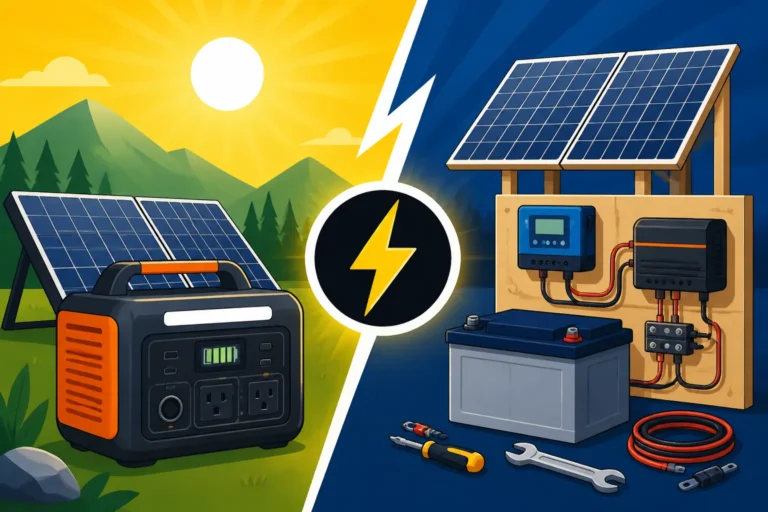
While the Bluetti AC300 is incredibly capable, it's essential to recognize that it sits in a specific niche. For some off-grid enthusiasts, a traditional, custom-built component system might still be the superior choice. If you're planning a very large off-grid home that requires continuous high power output, extremely large battery banks (think 30 kWh or more), or if you want to integrate very specific components like a large central inverter, specialized charge controllers, or unique panel configurations, a DIY system offers ultimate customization. You can often achieve a lower Off-Grid Solar Cost Per Watt by sourcing individual components and performing the installation yourself, though this demands a higher level of technical knowledge and time.
Furthermore, if you need a system that is fully integrated into a complex electrical panel, or if you're dealing with strict local permitting and inspection requirements for a permanent dwelling, hiring professionals to design and install a purpose-built system might be more straightforward. While the AC300 simplifies much of the setup, a large-scale traditional system, built from separate panels, charge controllers, inverters, and battery banks, can sometimes offer more advanced load management, monitoring, and overall raw power output capability. However, it also comes with increased complexity in wiring, sizing, and potential installation costs, making the "plug-and-play" nature of the AC300 a compelling alternative for many. For those considering a full DIY build, understanding How to Budget for an Off-Grid Solar System from the ground up is absolutely vital.
Final Thoughts on the Bluetti AC300 for Off-Grid Use
Ultimately, the Bluetti AC300 is a powerful, flexible, and well-designed piece of off-grid solar equipment. Its modular battery system, high power output, and versatile charging options make it an excellent choice for a wide range of applications, from small cabins and RVs to robust emergency home backup. It truly excels for those who want significant power and capacity without the complexity of building a system from individual components.
If you're looking for a reliable, expandable power station that can grow with your needs, handle demanding appliances, and offer peace of mind, the AC300 with its B300 battery modules should definitely be at the top of your list. It's a significant investment, but one that promises long-term performance and adaptability for your independent power needs.
Disclaimer
The information provided in this article is for general informational purposes only and does not constitute professional advice. Off-grid solar system design and installation can be complex and involve electrical hazards. Always consult with qualified professionals and adhere to local codes and regulations before installing or modifying any electrical system. The author and publisher are not responsible for any actions taken based on the information presented herein.