Best Off-Grid Solar Kit for a Garage
It can be incredibly frustrating trying to power a garage that's just a little too far from the main house to easily trench power, or perhaps your property is completely off-grid. Maybe you’re tired of expensive electricity bills from running power-hungry tools, or you simply crave the independence of generating your own energy. This comprehensive guide is here to walk you through everything you need to know to find the best off-grid solar kit to reliably power your garage, making those electrical frustrations a thing of the past.
Why an Off-Grid Solar Kit is a Game-Changer for Your Garage
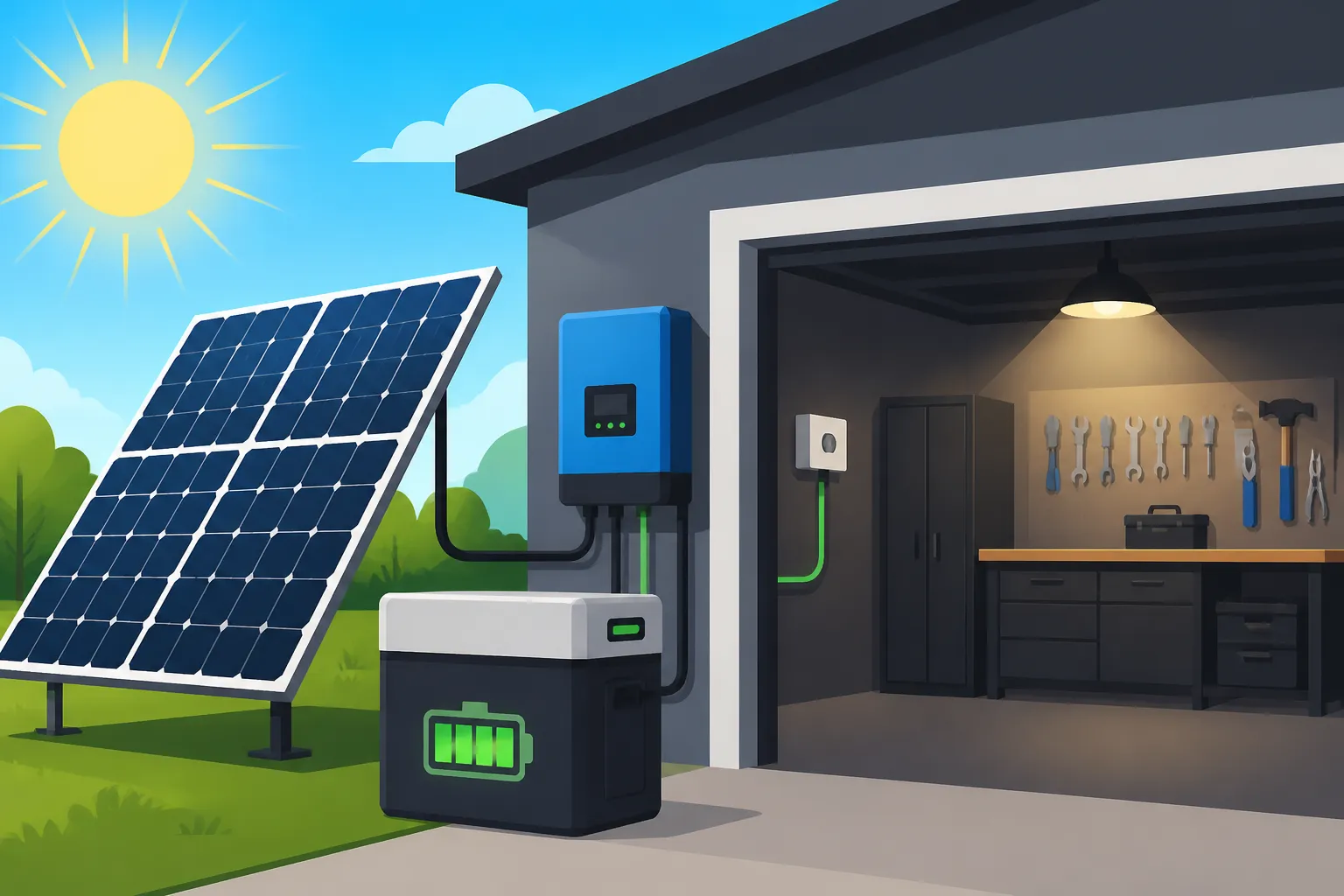
For many homeowners and hobbyists, the garage isn't just a place to park a car; it's a workshop, a storage area, a creative space, or even a secondary living area. But getting reliable, cost-effective power to these spaces can be a real headache. Traditional grid power comes with installation costs, monthly bills, and the potential for outages. That's where an off-grid solar kit truly shines, offering a flexible and empowering solution.
Solving Remote Location and Grid Access Headaches
Imagine your ideal workshop setup: a detached garage nestled deep in your backyard, far from the existing electrical panel, or maybe even on a completely remote parcel of land without any utility lines. Running new electrical lines from the main grid to such a location can be an incredibly expensive and disruptive undertaking. We’re talking about significant trenching, conduit, wiring, and labor costs that can quickly add up to thousands of dollars, not to mention the mess and time involved.
An off-grid solar kit completely bypasses this challenge. Instead of relying on distant infrastructure, you generate power right where you need it. This eliminates the need for costly utility extensions and gives you the freedom to place your garage almost anywhere you desire on your property, regardless of its proximity to existing power poles. For many, this freedom alone is worth the initial investment, allowing for greater flexibility in property layout and usage without being tethered to the grid.
Achieving Energy Independence and Cost Savings
Beyond the convenience of placement, off-grid solar for your garage offers genuine energy independence. Once your system is installed and running, you're no longer beholden to rising utility rates or susceptible to grid outages. Think about it: during a blackout that leaves your main house in the dark, your solar-powered garage can still be humming along, providing light, running tools, or keeping essential equipment powered.
While there's an upfront cost associated with purchasing and installing an off-grid solar kit, the long-term savings can be substantial. You'll eliminate monthly electricity bills for your garage's power consumption, which can be considerable if you frequently use power tools, heaters, or even a mini-fridge. Over the lifespan of your solar equipment, which can easily be 20-30 years for panels, these savings really add up, making the initial investment pay for itself over time. It's a bit like buying your fuel upfront, then getting to use it for free for decades.
Key Components of an Effective Off-Grid Solar Kit for a Garage
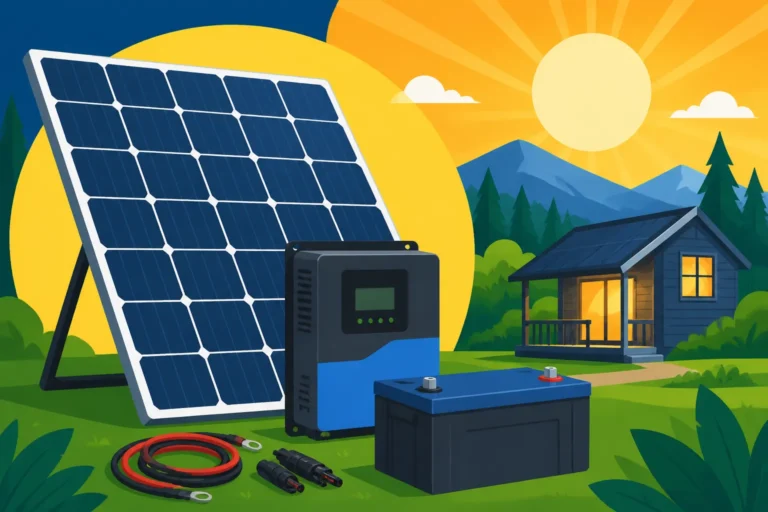
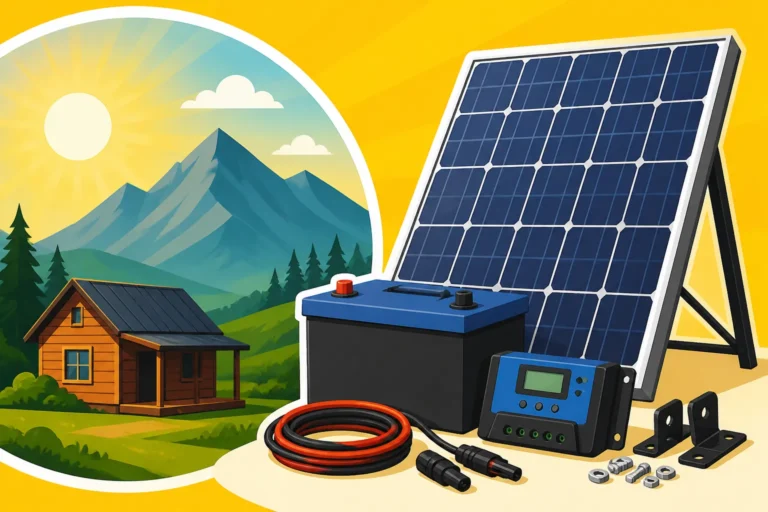
An off-grid solar kit isn't just a single item you buy; it's a collection of essential components that work together seamlessly to capture, store, and convert solar energy into usable electricity. Understanding each part is crucial for making an informed decision about what’s right for your garage.
The Power Generators: Solar Panels
At the heart of any solar system are the solar panels themselves. These are the workhorses that capture sunlight and convert it into DC (direct current) electricity. For a garage, you'll primarily be looking at rigid monocrystalline or polycrystalline panels, which are known for their efficiency and durability. Monocrystalline panels tend to be a bit more efficient in smaller footprints, making them a popular choice if roof space is limited.
When considering panels, think about how and where they’ll be mounted. For a garage, roof mounting is often the most straightforward option, taking advantage of existing structure. However, if your garage roof isn't ideally oriented or shaded, a ground mount might be a better choice, allowing you to optimize the tilt and azimuth for maximum sun exposure. The total wattage of your solar array will directly correlate with how much power you can generate, so it’s important to match this to your energy consumption. To learn more about selecting the right panels, you can explore guides like Best Off-Grid Solar Panels.
The Energy Storage Hub: Batteries
Since the sun doesn't shine 24/7, batteries are arguably the most critical component of an off-grid system for a garage. They store the excess energy generated by your solar panels during the day, so you have power available at night, on cloudy days, or whenever the panels aren't producing. Without a robust battery bank, your off-grid garage would only have power when the sun is actively hitting your panels.
For garage use, you'll typically choose between two main battery chemistries: lead-acid (like AGM or Gel) or lithium iron phosphate (LiFePO4). Lead-acid batteries are generally more affordable upfront but have a shorter lifespan, require more maintenance, and have a shallower depth of discharge, meaning you can only safely use a smaller percentage of their stated capacity. LiFePO4 batteries, on the other hand, boast a much longer lifespan, are virtually maintenance-free, offer a deeper depth of discharge, and perform better in a wider range of temperatures. While their initial cost is higher, their longevity and superior performance often make them a more cost-effective choice in the long run. Many users find brands like Battle Born or EG4 offer excellent performance for garage power needs. You can dive deeper into battery options by checking out Best Off-Grid Solar Batteries.
The Brains of the Operation: Inverter and Charge Controller
These two components are absolutely essential for converting and managing your solar power. The charge controller sits between your solar panels and your batteries. Its main job is to regulate the voltage and current coming from your solar panels, ensuring your batteries are charged efficiently and safely without being overcharged, which can severely damage them. You’ll typically encounter two types: PWM (Pulse Width Modulation) and MPPT (Maximum Power Point Tracking). MPPT controllers are more efficient, especially in varying light conditions, and are generally recommended for larger or more critical systems, though they come at a higher price point.
The inverter is what truly makes the power usable for most garage tools and appliances. Solar panels and batteries produce DC power, but most standard household appliances and power tools run on AC (alternating current) power. The inverter converts the DC electricity from your battery bank into usable AC electricity. For a garage, especially one with power tools, it's crucial to select a pure sine wave inverter. Modified sine wave inverters are cheaper but can damage sensitive electronics and cause motors (like those in power tools) to run inefficiently or overheat. The size of your inverter (its wattage rating) needs to be able to handle the combined running watts and the surge watts (the brief, higher power draw when motors start) of all the appliances you plan to use simultaneously. Learn more about these critical components in Off-Grid Solar System Components Explained.
Sizing Your Off-Grid Solar Kit for Garage Needs
One of the biggest mistakes people make when going off-grid is improperly sizing their system. If it's too small, you'll constantly run out of power. If it's too large, you've overspent. Getting the sizing right is a careful balance, and it all starts with understanding your specific power demands.
Performing a Thorough Energy Audit for Your Garage
Before you can even think about buying a kit, you need to understand exactly how much electricity your garage consumes. This isn't just a guessing game; it's a detailed list of every electrical device you plan to use, how many watts it draws, and for how long each day. Grab a pen and paper, or even a spreadsheet, and list everything: lights, power tools (drills, saws, air compressors), battery chargers, stereo, mini-fridge, garage door opener, even a small heater or fan.
For each item, find its wattage. This is usually printed on the appliance label or can be found in the owner's manual. If you only see amps and volts, multiply them (Amps x Volts = Watts). Then, estimate how many hours per day you'll use each item. Multiply the wattage by the hours to get daily Watt-hours (Wh) for each device. Sum all these daily Watt-hours, and you'll have your total estimated daily energy consumption for your garage. This load analysis is the cornerstone of your entire system design, and it's covered in detail in resources like How to Calculate Daily Energy Usage. Don't forget to account for seasonal variations; you might use a powerful heater in winter or a fan in summer.
Calculating Your Battery Bank Capacity
Once you have your daily Watt-hour consumption, you can determine how much battery capacity you'll need. A general rule of thumb for off-grid systems is to aim for at least 2-3 days of "autonomy," meaning your battery bank can power your garage for that many days without any solar input (e.g., during prolonged cloudy weather).
You also need to factor in the battery's "depth of discharge" (DoD). For lead-acid batteries, you typically shouldn't discharge them below 50% to maximize their lifespan. So, if you need 1000 Wh per day and want 3 days of autonomy, you'd need 3000 Wh of usable capacity. With a 50% DoD, you'd need a battery bank with a total rated capacity of 6000 Wh. LiFePO4 batteries, however, can often be safely discharged to 80-100%, meaning you need less overall rated capacity for the same usable energy. The system voltage (12V, 24V, or 48V) also plays a role here, as higher voltage systems generally require fewer amps, which can reduce cable thickness and improve efficiency over longer runs.
Determining the Right Solar Panel Array Size
With your daily energy consumption and desired battery bank size in hand, you can figure out how many solar panels you need. This calculation involves your "peak sun hours" – the equivalent number of hours per day when the sun's intensity is at its maximum. This value varies significantly by geographic location and time of year. For instance, a sunny region like Arizona might have 5-6 peak sun hours, while a cloudy region like the Pacific Northwest might only have 2-3.
You'll need to generate enough energy from your panels daily to replenish your battery bank and meet any immediate loads. The formula often looks something like this: (Daily Watt-hours / Peak Sun Hours) * a Loss Factor (usually 1.2-1.3 to account for inefficiencies). This will give you your required panel wattage. Always plan for the worst-case scenario (e.g., shortest day of the year or longest stretch of cloudy days) to ensure reliable power year-round. A detailed guide on How to Size an Off-Grid Solar System can help you walk through these calculations step-by-step.
Top Considerations When Choosing a Garage Off-Grid Solar Kit
Picking the "best" kit isn't just about the cheapest price; it's about finding the right balance of performance, reliability, and suitability for your specific garage and its intended uses. There are a few crucial aspects to keep in mind.
Understanding Your Power Tool Demands
Garages often house power-hungry tools, and these can present unique challenges for off-grid solar systems. Tools with motors, like air compressors, table saws, grinders, or even a basic drill, have a "surge" or "starting" wattage that can be significantly higher than their "running" wattage. This surge lasts for only a fraction of a second but can be 3-7 times the running wattage. If your inverter isn't sized to handle these surges, it will simply shut down when you try to start a tool.
For instance, a circular saw might run at 1500 watts but surge to 4500 watts when first turned on. Your inverter needs to be able to supply that 4500-watt surge. Always check the peak surge rating of your inverter and compare it to the starting wattage requirements of your most power-intensive tools. This is a common pitfall for DIYers, so pay close attention to the specifications of any kit you consider.
The Portability Factor: Solar Generators as Kit Options
For smaller garages, occasional use, or those who value flexibility, a high-capacity portable solar generator can be an excellent "kit" option. These all-in-one units integrate the battery, inverter, and charge controller into a single, relatively portable box. They are incredibly user-friendly – just plug in your solar panels, and you're generating power.
Brands like Jackery are very popular in this space, offering units that can power lights, charge tool batteries, and even run smaller power tools for limited durations. A Jackery Explorer 1000 or larger model paired with a couple of portable solar panels can be a fantastic solution for a small workshop, providing power for essential lighting, charging cordless tools, and running a radio. The main advantage here is simplicity and the ability to move the power source if needed. However, they typically have less overall capacity and inverter surge capability than a custom-built, full-scale off-grid system. They might not be sufficient for running a welder or a large air compressor for extended periods. For more on these versatile units, check out Best Solar Generators for Off-Grid Use.
| Kit Type | Typical Use Case | Panels (Watts) | Battery (Wh) | Inverter (Watts) | Estimated Cost (Kit Only) | Pros | Cons |
|---|---|---|---|---|---|---|---|
| Basic Lighting & Charging | Small shed, occasional lights, phone/tool charging | 100-200 | 500-1000 | 300-600 | $500 – $1,500 | Very affordable, simple install, portable options | Limited power, cannot run most tools |
| Workshop Starter | Lights, small power tools (drills), mini-fridge | 400-800 | 2000-5000 | 1000-2000 | $2,000 – $5,000 | Powers essential tools, good for moderate use | Might struggle with high-surge tools, limited run-time |
| Serious Workshop | Lights, heavy-duty power tools (saws, compressors), AC | 1000-3000 | 5000-15000+ | 3000-7000+ | $6,000 – $15,000+ | Runs most tools, can support larger loads, good autonomy | Higher cost, complex install, larger footprint |
Note: These are general estimates. Actual costs and performance will vary based on specific components, brands, and installation factors.
DIY Kits Versus Pre-Built Systems
You essentially have two paths: assemble a system from individual components (a DIY kit) or purchase a pre-built, all-in-one system. DIY kits offer maximum flexibility. You can select each component to perfectly match your needs and budget, often resulting in a more optimized system. However, this path requires a good understanding of electrical wiring, system design, and safety protocols. It can be more time-consuming and daunting for beginners. The total Cost of a DIY Off-Grid Solar Build can be lower if you’re doing the labor yourself, but the learning curve is steeper.
Pre-built systems, often referred to as solar generators or "power stations" in the smaller range, or integrated inverter/battery systems for larger setups, offer convenience and ease of installation. Companies like Renogy, EcoFlow, or Victron (with their all-in-one units like the MultiPlus) provide comprehensive kits where many components are pre-wired or designed to seamlessly integrate. These are often ideal for beginners or those who want a reliable, ready-to-go solution with less fuss. While they might be slightly more expensive than buying individual parts, the reduced complexity and integrated support can be well worth it. Consider what type of installation suits you best by reading more on DIY vs Professional Off-Grid Solar Cost.
Budgeting and Planning for Future Expansion
It’s tempting to try and get the cheapest system possible, but thinking long-term can save you money and headaches. Consider your budget not just for the initial purchase, but also for any potential installation costs (if hiring a professional) and future maintenance. Batteries, for example, will need replacement eventually, and some systems require more attention than others. Off-Grid Solar Battery Replacement Cost Over Time is a real consideration.
Also, think about your future needs. Do you anticipate adding more power-hungry tools, or maybe even eventually converting part of your garage into a small living space? Designing your system with expandability in mind can be a smart move. This might mean choosing an inverter that can handle more panels later, or investing in a battery management system that allows for easy addition of more battery modules. While you don't want to wildly oversize your initial setup, leaving a little headroom or choosing components that integrate easily with additions can prevent costly overhauls down the line. A solid budgeting plan, as outlined in How to Budget for an Off-Grid Solar System, will help you navigate these choices.
Final Thoughts on Powering Your Garage with Solar
Choosing the best off-grid solar kit for your garage is a journey that blends careful planning with practical considerations. Whether you opt for a compact, user-friendly solar generator like those from Jackery for basic power needs, or a robust, custom-designed system capable of running heavy-duty machinery, the freedom and reliability of off-grid power are undeniable. Taking the time to accurately assess your energy consumption, understand the core components, and weigh the benefits of DIY versus pre-built solutions will ensure you create a garage that's not just functional, but truly independent.
Disclaimer
The information provided in this guide is for general informational purposes only and does not constitute professional advice. Off-grid solar system design and installation can be complex and should be undertaken with caution. Always consult with qualified professionals, electricians, or solar installers when planning and installing your system to ensure safety, compliance with local codes, and optimal performance.