How to Choose Off-Grid Solar for a Hunting Cabin
Heading out to your hunting cabin, ready to unplug and enjoy the peace of the wilderness, only to realize that running a generator all night or dealing with dead batteries is a constant headache? It's a common frustration for many remote property owners. Achieving true off-grid independence means having reliable power, and that's exactly what a well-designed solar system can offer. This guide will walk you through everything you need to know to choose the perfect off-grid solar setup for your hunting cabin, ensuring comfort and convenience far from the nearest power pole.
Understanding Your Hunting Cabin's Energy Needs
Before you even think about panels or batteries, the absolute first step in choosing an off-grid solar system for your hunting cabin is to figure out what you actually want to power. It’s easy to underestimate, or even overestimate, your needs when you’re used to the limitless supply of the grid. But out in the woods, every watt-hour counts, and understanding your consumption is the bedrock of a successful system.
Assessing Appliance Wattage and Usage Time
Think about a typical day or weekend at your cabin. What appliances do you absolutely need? Most hunting cabins don't require the power demands of a full-time residence, but even basic comforts add up. You're likely looking at LED lighting for those darker evenings, a small mini-fridge to keep provisions fresh, and perhaps a way to charge phones, GPS devices, or two-way radios. Beyond that, you might want to run a small TV for weather updates, a fan in warmer months, or even a modest water pump for a basic sink or shower.
Each of these items has a "wattage" rating, which tells you how much power it draws when in use. For example, a modern LED light might only pull 7-10 watts, while a mini-fridge could draw 50-100 watts when its compressor is running. Power tools, like a drill or an electric saw you might use for minor repairs, can draw hundreds of watts, sometimes even over a thousand for short bursts. The key isn't just the wattage, but how long you run it. If you run a 10-watt LED light for 5 hours, that's 50 watt-hours (Wh) of consumption. If your mini-fridge runs for 8 hours total over a day (cycling on and off), that could be 800 Wh. Tallying these up is crucial. You can often find wattage information on appliance labels or by using a simple kill-a-watt meter. Don't forget those small "phantom loads" from chargers and standby devices; while individually small, they can collectively nibble away at your battery bank. Getting a clear picture of this daily or weekend energy appetite is paramount, and we have a detailed guide on How to Calculate Daily Energy Usage that can walk you through the process.
Considering Seasonal Usage and Weather Patterns
A hunting cabin isn't usually a year-round dwelling, and that seasonal nature significantly impacts your solar system design. If you primarily use your cabin during the fall and winter hunting seasons, you're going to face some unique challenges. Daylight hours are much shorter in these seasons, meaning your solar panels will have fewer hours to generate electricity. Furthermore, the sun sits lower in the sky, and its intensity can be reduced by cloud cover, fog, or even snow accumulation on your panels.
Cold weather also affects batteries, especially lead-acid types, reducing their effective capacity. While modern lithium iron phosphate (LiFePO4) batteries perform better in the cold, extremely low temperatures can still inhibit charging or require heated enclosures. Planning for "days of autonomy" is particularly important here – that's how many days your system can sustain your loads without any sun input. For a hunting cabin, you might want to factor in 2-3 days of cloudy or snowy weather. This often means oversizing your battery bank and possibly your solar array compared to what you might need for summer-only use. Understanding these environmental factors helps prevent those frustrating moments when your power runs out just when you need it most.
Key Components of a Hunting Cabin Off-Grid Solar System
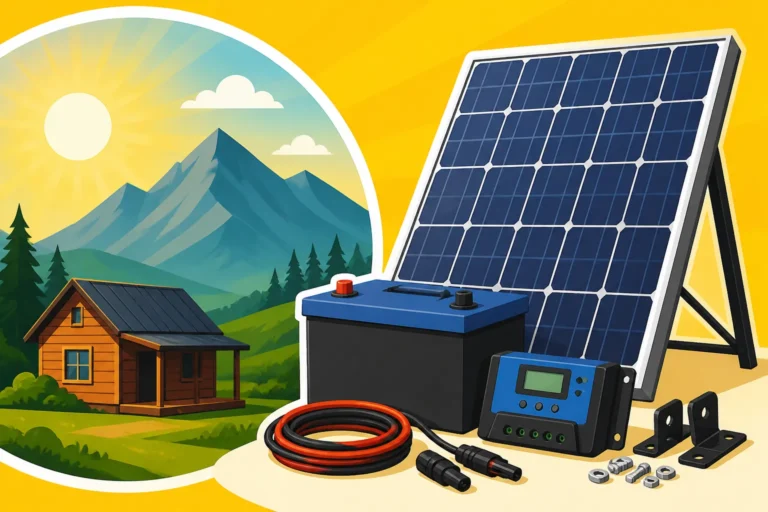
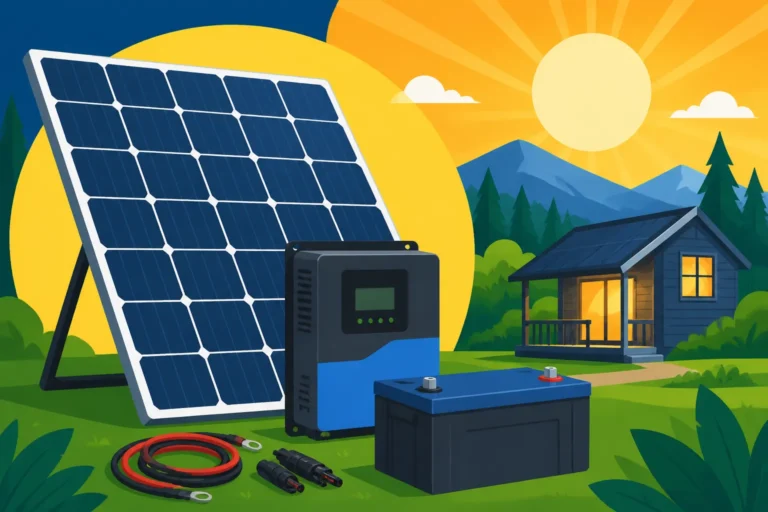
Building an off-grid solar system for your hunting cabin is like assembling a team where each member has a crucial role. You can't just throw some panels on the roof and expect magic. Each component plays a vital part in generating, storing, and delivering power safely and efficiently. Knowing what each piece does and why it's important will empower you to make informed decisions for your cabin's energy independence.
Solar Panels: Types and Placement
The solar panels are your energy collectors, turning sunlight into electricity. For a hunting cabin, you'll primarily be looking at rigid monocrystalline panels. These are generally the most efficient, meaning they can produce more power from a smaller footprint, which is often a big advantage if you have limited roof space or want to keep your array discreet. While flexible panels exist, they typically have lower efficiency and longevity, making them less ideal for a permanent or semi-permanent cabin setup. When choosing panels, also consider their temperature coefficient – a lower number means they perform better in hot conditions, which can be relevant if your cabin heats up in direct sun.
Placement is critical. South-facing (in the Northern Hemisphere) is generally best for maximizing year-round production. However, for a hunting cabin used predominantly in winter, you might consider tilting your panels steeper than usual (closer to your latitude plus 15 degrees) to catch the lower winter sun more effectively. If you're going with a ground mount, this offers the most flexibility for adjusting the tilt seasonally, allowing you to maximize output. Roof mounts are common for a more permanent installation and less visual impact, but ensure the roof can handle the weight and wind loads. You’ll want to research Best Off-Grid Solar Panels to get a sense of available options. Remember to consider any potential shading from trees, especially during different times of the day or year, as even partial shade can dramatically reduce your system's output.
Batteries: The Heart of Your Cabin's Power
Your battery bank is the heart of your off-grid solar system, storing the energy generated by your panels for use when the sun isn't shining. Without it, you'd only have power during peak daylight hours. For hunting cabins, the choice often comes down to lead-acid (like AGM) or lithium iron phosphate (LiFePO4) batteries. While lead-acid batteries are initially cheaper, their limitations can quickly outweigh the savings in an off-grid cabin scenario. They have a shorter cycle life, are sensitive to deep discharges, and their capacity significantly decreases in cold weather, often performing poorly below freezing unless kept in a heated enclosure.
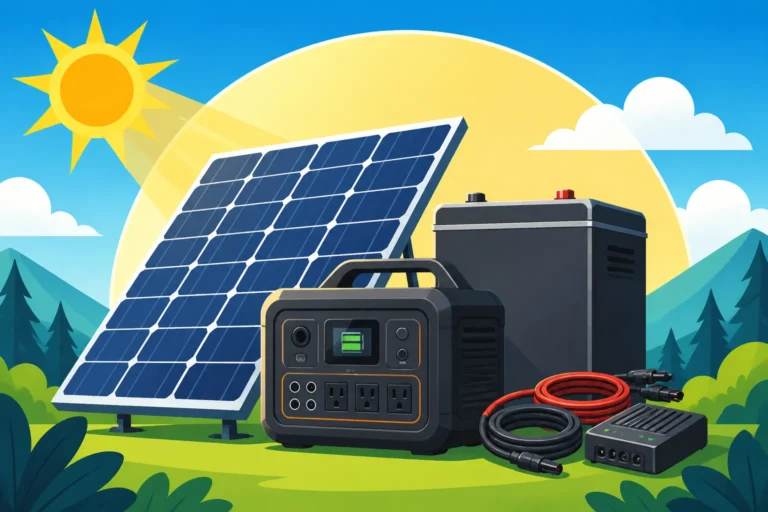
LiFePO4 batteries, on the other hand, offer a much longer lifespan (often 10-15 years or more), can be discharged much deeper without damage, and maintain their capacity better in cooler temperatures. Many modern LiFePO4 batteries even come with built-in heating elements, allowing them to charge safely below freezing. While they have a higher upfront cost, their superior performance and longevity often make them the more economical choice in the long run for a cabin where reliability is key. For smaller, more portable needs, a robust solar generator like a Jackery Explorer 1000 or 2000 Pro can serve as an excellent battery bank, especially if you're not at the cabin frequently or want a truly plug-and-play solution. However, for a dedicated whole-cabin system, a purpose-built LiFePO4 battery bank is often preferred. You can find more specific recommendations in our guide on the Best Off-Grid Solar Batteries.
Charge Controller and Inverter Choices
These two components are the unsung heroes of your system, ensuring your power flows smoothly and safely. The charge controller is responsible for regulating the power coming from your solar panels to your batteries. It prevents overcharging and optimizes the charging process. For most off-grid cabin systems, an MPPT (Maximum Power Point Tracking) charge controller is the way to go. It's more efficient than a simpler PWM (Pulse Width Modulation) controller, especially in varying light conditions or when the panel voltage is significantly higher than the battery voltage. This extra efficiency means you'll capture more energy from your panels, which is particularly valuable during those shorter, cloudier hunting season days.
The inverter converts the DC (direct current) power stored in your batteries into AC (alternating current) power, which is what most of your standard household appliances use. For sensitive electronics like laptops, TVs, or even modern refrigerators, you'll definitely want a "pure sine wave" inverter. This type of inverter produces clean, stable AC power, mimicking what you'd get from the grid. Avoid "modified sine wave" inverters, as they can damage delicate electronics and cause motors to run inefficiently or hum loudly. When sizing your inverter, don't just consider the total running wattage of your appliances; also account for "surge" wattage, which is the brief, higher power draw many appliances (like mini-fridges, microwaves, or power tools) require when they first start up. It's better to slightly oversize your inverter to handle these surges gracefully. Some popular options for cabin inverters include brands like Victron, Renogy, and Growatt, offering reliable performance.
Sizing Your Off-Grid Solar System for a Hunting Cabin
Okay, now that you know what all the pieces do, let's get down to brass tacks: how big of a system do you actually need? This is where the rubber meets the road, and getting it right means the difference between comfortable power and constantly running out of juice. It’s not just about slapping on some panels; it’s about a calculated approach that matches your specific usage to the system's capabilities.
Calculating Your Daily Energy Consumption
This is arguably the most critical step. Remember that list of appliances and how long you use them? Now it’s time to sum it all up. Grab a pen and paper, or fire up a spreadsheet.
Let’s take a hypothetical hunting cabin example for a weekend warrior:
- LED Lights (5 x 8W each): 40W for 4 hours/day = 160 Wh
- Mini-Fridge (75W): Running 8 hours/day (cycled) = 600 Wh
- Phone Charging (15W): 2 phones x 2 hours/day = 60 Wh
- Radio/Bluetooth Speaker (10W): 3 hours/day = 30 Wh
- Small TV (50W): 2 hours/day = 100 Wh
- Electric Water Pump (150W): 15 minutes/day (0.25 hours) = 37.5 Wh
- Small Coffee Maker (800W): 10 minutes/day (0.17 hours) = 136 Wh (this is a big one for short duration!)
Total Daily Consumption: ~1123.5 Wh or 1.12 kWh
This might seem small compared to a home, but for off-grid, it’s a tangible number. Being realistic is key; if you might use a heavy-draw appliance, factor it in, even if rarely. It's almost always better to slightly oversize your system than to constantly find yourself short on power. We've compiled a comprehensive guide on How Many Watt-Hours You Use Per Day that provides a detailed worksheet to help you track everything.
Determining Panel Array Size and Battery Bank Capacity
Once you have your daily consumption (let's stick with 1.12 kWh/day), you need to figure out how many solar panels and batteries you'll need. This involves considering your "peak sun hours" – the average number of hours per day when the sun's intensity is equivalent to 1000 watts per square meter. This varies greatly by location and season. For instance, in sunny Arizona, you might get 5-6 peak sun hours in winter, while in a northern state like Maine, it could be as low as 2-3. Since you're using a hunting cabin seasonally, usually in fall/winter, you absolutely must base your calculations on the lowest sun-hour month you plan to be there.
Let's assume your hunting cabin is in a region that gets, on average, 3 peak sun hours in the winter. To generate 1123.5 Wh (or 1.12 kWh) per day:
- Required Panel Output (Watts): (Daily Wh / Peak Sun Hours) = 1123.5 Wh / 3 hours = 374.5 Watts.
- This means you'd need approximately 375 watts of solar panels to meet your daily needs on an average sunny winter day. So, two 200W panels or one 400W panel would be a good starting point. However, always factor in system losses (around 15-20% for wiring, inverter, etc.), so you might aim for 450-500 watts of panels. Our article on How Many Solar Panels for Off-Grid Living delves into this calculation in more detail.
For batteries, you need to store that power and also account for cloudy days. This is your "days of autonomy." If you want 2-3 days of backup power, multiply your daily consumption by that number. For 2 days: 1123.5 Wh/day * 2 days = 2247 Wh (or 2.25 kWh).
- Usable Battery Capacity Needed: LiFePO4 batteries can typically be discharged to 80-90% without significant wear. For simplicity, let's aim for 80% usable capacity. So, your battery bank needs a total raw capacity of approximately 2.25 kWh / 0.8 = 2.81 kWh.
- If you're looking at 12V LiFePO4 batteries, a 100Ah battery stores 12V * 100Ah = 1200 Wh or 1.2 kWh. So, you'd need about 2.5 of these, meaning three 100Ah 12V batteries for 2 days of autonomy. You can explore this further in How Many Batteries for an Off-Grid System.
Here's a simplified table comparing common hunting cabin scenarios:
| Cabin Usage Profile | Daily Energy Estimate (Wh) | Suggested Panel Size (Watts) (winter sun) | Suggested Battery Bank (LiFePO4, 2 days autonomy) | Example Appliances |
|---|---|---|---|---|
| Basic Lights & Charging | 500-800 | 200-300 | 1 x 100Ah 12V (approx 1.2 kWh) | LED lights, phone, radio, small fan |
| Comfortable Weekend Cabin | 1000-1500 | 400-600 | 2 x 100Ah 12V (approx 2.4 kWh) | Basic + mini-fridge, small TV, water pump, laptop |
| Extended Stay/More Amenities | 1500-2500 | 600-1000 | 3-4 x 100Ah 12V (approx 3.6-4.8 kWh) | Comfortable + microwave, heavier tools, small space heater |
Voltage Selection and Wiring Considerations
When designing your off-grid system, you’ll also need to decide on a system voltage: 12V, 24V, or 48V. For smaller hunting cabins with limited loads, a 12V system is often the easiest and most common choice. Many RV and marine components are 12V, making direct DC appliance connection simple. However, as your power needs grow, a 24V or even 48V system becomes more efficient. Higher voltage means lower current for the same amount of power (Power = Voltage x Current). Lower current means you can use thinner, less expensive wiring, and there's less power lost to heat over longer wire runs.
For instance, if your system demands 2000 watts, a 12V system would draw 166 amps (2000W/12V). A 48V system would only draw 41 amps (2000W/48V). That's a huge difference in wiring requirements! For a basic hunting cabin with just lights, charging, and a mini-fridge, 12V might be perfectly adequate and simpler to install. But if you're powering a well pump, a larger fridge, or any 120V AC appliances, stepping up to 24V or 48V for your main battery bank and inverter can save you money and headaches in the long run. Our comprehensive breakdown in 12V vs 24V vs 48V: Which to Choose can help you weigh the pros and cons for your specific situation. Don’t forget to properly size your wires and add appropriate fuses and circuit breakers to protect your system from overcurrents and short circuits. Safety is paramount, especially in a remote setting.
Installation and Maintenance for Cabin Systems
So, you've got your dream system picked out. The next hurdle is getting it installed and ensuring it runs smoothly for years to come. For a hunting cabin, installation often presents unique challenges due to remote locations, lack of readily available help, and sometimes, less stringent permitting requirements (though safety standards should always be followed). And once it's in, the job isn't over; consistent, albeit simple, maintenance is what truly guarantees reliable power.
DIY vs. Professional Installation
The decision to go DIY or hire a professional is a significant one for a hunting cabin. Many cabin owners, being handy by nature, opt for a DIY approach, especially for smaller, simpler systems. The internet is a treasure trove of information, and many component manufacturers, like Renogy or Victron, offer detailed wiring diagrams and support. Going the DIY route can significantly reduce your initial costs, giving you more budget for higher-quality components. It also gives you an intimate understanding of your system, which can be invaluable for troubleshooting in a remote location. However, it requires a good understanding of electrical principles, safety protocols, and the ability to work confidently with tools. Messing up can be dangerous or costly.
For larger, more complex systems, or if you're not confident in your electrical skills, hiring a professional solar installer is definitely worth considering. They'll ensure the system is correctly sized, safely installed, and compliant with any local codes (even if remote, some jurisdictions still have rules). While the upfront cost is higher, the peace of mind knowing it's done right can be priceless. They can also often secure better warranties and potentially assist with future expansions. The trade-off between cost and expertise is a personal one, but if you're unsure, consult with an electrician or a solar professional for at least a system design consultation. We break down the cost implications further in our article on DIY vs Professional Off-Grid Solar Cost.
Essential Maintenance Tips for Longevity
Once your off-grid solar system is up and running at your hunting cabin, a little bit of proactive maintenance will go a long way in ensuring its longevity and consistent performance. Neglect can lead to reduced efficiency, premature component failure, and frustrating power outages.
First and foremost, keep your solar panels clean. Dust, pollen, leaves, and especially snow can significantly reduce their output. If your cabin is in a snowy region, regular snow removal from the panels is crucial during winter months. A soft brush with an extension pole or a simple squeegee can do wonders. Second, periodically check all your electrical connections. Loose terminals on batteries, inverters, or charge controllers can cause resistance, leading to power loss and even fire hazards. A quick visual inspection and a gentle tug on wires can help identify problems.
Third, monitor your battery health. If you have a battery monitor, keep an eye on its readings. For lead-acid batteries, check electrolyte levels and specific gravity if they are flooded cell types. LiFePO4 batteries are lower maintenance, but ensuring they aren't regularly deep-cycled beyond their recommended depth of discharge will extend their life. If your cabin is left unused for long periods, especially in cold weather, ensure your batteries are either fully charged and disconnected or that your solar system is still actively maintaining them (e.g., through a 'float' charge). Some LiFePO4 batteries, like those from Battle Born or EG4, have low-temperature cutoff features and even self-heating capabilities to protect them in frigid conditions. For more in-depth advice, check out our guide on Off-Grid Solar Maintenance Costs to understand what you might expect over the lifetime of your system.
Budgeting and Future Expansion
Let's be real, going off-grid isn't always cheap, but the investment often pays dividends in freedom and reliability. Understanding the financial outlay and planning for potential growth will help you build a system that meets your current needs without limiting your future aspirations. A hunting cabin might start small, but as you spend more time there, your desire for more comforts often grows!
Understanding the Costs Involved
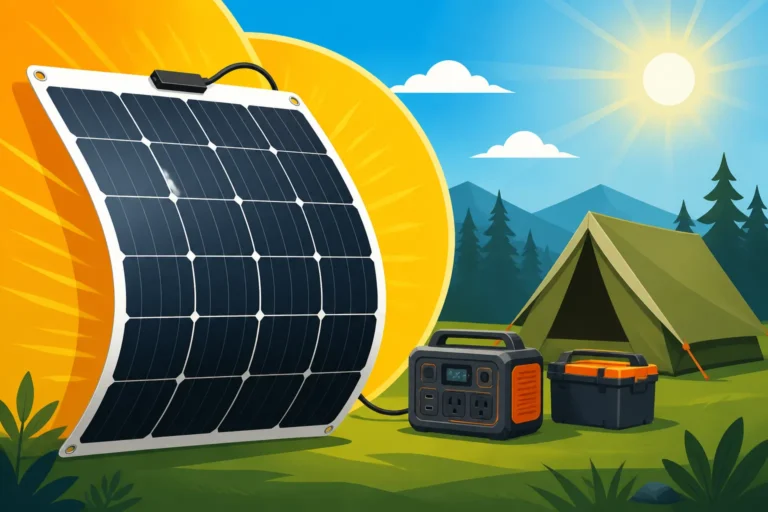
The cost of an off-grid solar system for a hunting cabin can vary wildly, from a few hundred dollars for a very basic portable setup (like a small Jackery power station with a foldable solar panel) to several thousand for a robust system capable of powering a larger cabin with more amenities. The main cost drivers are the batteries, followed by the solar panels and the inverter. High-quality LiFePO4 batteries, while more expensive upfront, offer a better long-term value. Similarly, choosing efficient monocrystalline panels might cost more per watt but could mean you need fewer panels overall. Don't forget the "hidden" costs: mounting hardware, wiring, fuses, breakers, disconnects, and any potential permit fees or professional labor.
While it might seem daunting, think of it as investing in your independence and comfort. You're eliminating utility bills (because there aren't any!) and gaining control over your power supply. For a detailed breakdown of what to expect, our guide on the Cost to Power a Cabin with Solar can provide excellent insights. Establishing a realistic budget from the outset, including a contingency fund for unexpected expenses, is a smart move. Our article on How to Budget for an Off-Grid Solar System offers practical steps to help you plan your finances effectively.
Planning for Growth and Reliability
One of the biggest mistakes people make when setting up an off-grid system for a cabin is not thinking about the future. What if you decide to install a larger refrigerator? What if you want to add an air conditioner or a more robust well pump down the line? It's much easier and often more cost-effective to design an "expandable system" from the start. This means choosing an inverter that has some headroom for future loads, oversizing your charge controller slightly, and selecting a battery bank that can easily accept additional batteries in parallel (especially true for many LiFePO4 systems).
Even with a perfectly sized solar system, there will always be those extended cloudy stretches or unexpected heavy loads that push your system to its limits. This is where a backup generator shines. A small, quiet gasoline or propane generator can provide peace of mind, allowing you to charge your batteries or directly power high-draw appliances during emergencies or prolonged periods of low solar production. Some advanced inverters can even automatically start a generator when battery levels drop too low. A portable solar generator, such as a larger Jackery model, can also serve as a fantastic backup power source or for specific portable needs around the cabin, providing flexibility. Integrating a generator into your off-grid system isn't about admitting defeat; it's about smart redundancy. Learn more about planning for future growth in How to Design an Expandable System and understand the financial aspect in Cost of Adding a Generator to Off-Grid Solar. This proactive planning ensures your hunting cabin remains a sanctuary of comfort and convenience, no matter what nature throws your way.
Disclaimer
The information provided in this guide is for general informational purposes only and does not constitute professional electrical or solar engineering advice. Off-grid solar systems involve high voltages and currents, which can be dangerous. Always consult with a qualified electrician or solar professional before designing, installing, or modifying any electrical system. Adhere to all local, state, and national electrical codes and regulations. The author and publisher are not liable for any losses, injuries, or damages resulting from the use of this information.