Should You Buy the Jackery 2000 Plus for Off-Grid
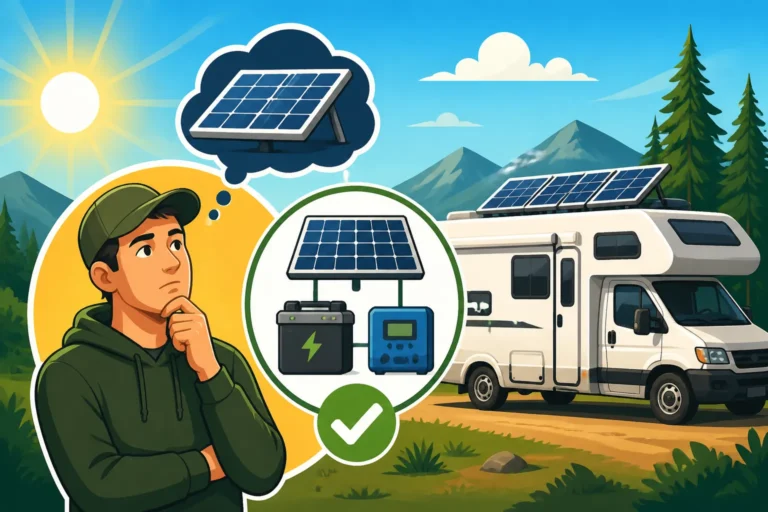
Many folks dreaming of off-grid independence or just better preparedness often find themselves scratching their heads over portable power solutions. The market is flooded with options, and it can be incredibly frustrating trying to figure out if a popular all-in-one unit, like the Jackery 2000 Plus, is truly robust enough for your specific off-grid needs, or if you're better off with a more traditional, component-based system. This guide is designed to cut through the confusion, offering a deep dive into the Jackery 2000 Plus to help you determine if it's the right investment for your journey to energy self-reliance.
Understanding the Jackery 2000 Plus for Off-Grid Living
When we talk about off-grid living, it's not a one-size-fits-all situation. What works for a weekend warrior in an RV is vastly different from what a full-time homesteader needs. The Jackery 2000 Plus positions itself as a versatile, powerful solar generator, but let's really peel back the layers to see how it stands up to the demands of genuinely going off-grid.
What is the Jackery 2000 Plus and its Core Features?
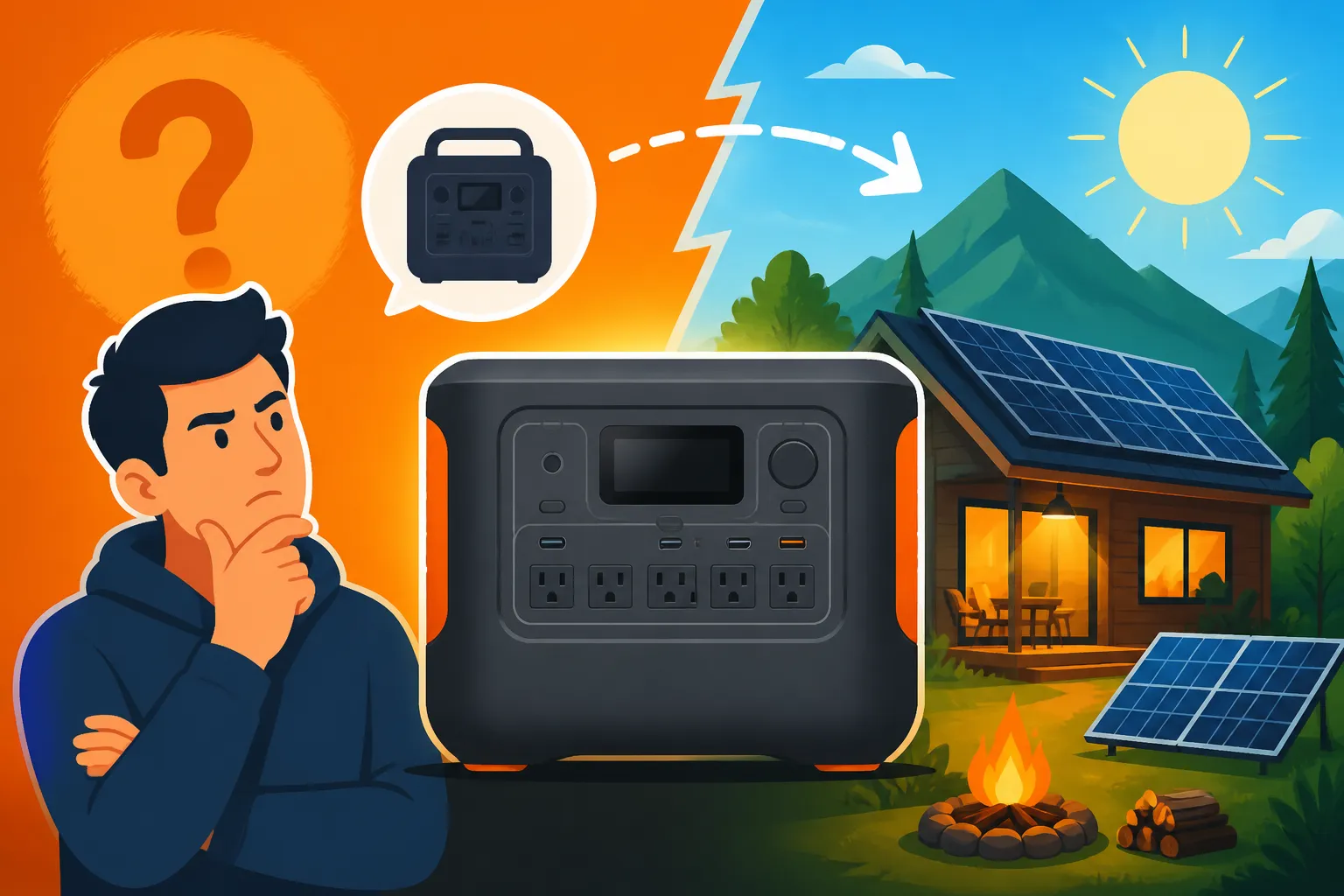
The Jackery 2000 Plus is essentially a sophisticated portable power station, often referred to as a solar generator because of its ability to integrate directly with solar panels for recharging. It's an all-in-one unit, meaning it combines a battery, an inverter, and a charge controller into a single, relatively compact box. For many, this integrated design is a huge draw, eliminating the need to source and wire separate components.
At its core, the Jackery 2000 Plus boasts a substantial 2042 Watt-hour (Wh) LiFePO4 battery, which is a big deal in the world of portable power. LiFePO4 (Lithium Iron Phosphate) batteries are renowned for their long cycle life, safety, and stable performance, making them an excellent choice for consistent use. It also features a powerful pure sine wave inverter capable of delivering 2200 watts of continuous AC power, with a surge capability of up to 4400 watts. This means it can handle most household appliances, from blenders and microwaves to power tools, for short bursts or sustained operation within its continuous rating.
Connectivity is another strong suit, with multiple AC outlets, USB-A and USB-C ports (including fast charging), and a 12V car outlet. This wide array of output options makes it incredibly versatile for charging and powering a diverse range of electronics and appliances. When it comes to recharging, the unit is highly adaptable. It can charge from a standard wall outlet, a car's 12V port, or most importantly for off-grid users, directly from solar panels. Jackery's own SolarSaga panels are designed to plug and play, making solar integration straightforward. The solar input capability is quite robust, allowing for significant power intake to quickly replenish the battery on sunny days.
Key Specifications and What They Mean for Off-Grid Use
Let's dive a little deeper into those numbers because they directly impact what you can actually do with the Jackery 2000 Plus when you're truly disconnected from the grid.
First, the 2042 Wh battery capacity: This number represents how much energy the battery can store. To put it in perspective, a typical residential refrigerator might use anywhere from 300 to 800 Wh per day. So, a single Jackery 2000 Plus could theoretically run a small fridge for 2-3 days, depending on its efficiency and how often it's opened. For lighter loads like charging phones, laptops, and running LED lights, 2042 Wh provides a comfortable amount of power for an extended period. This is a good starting point for understanding How to Calculate Daily Energy Usage in your off-grid setup.
Next, the 2200W continuous AC output and 4400W surge capability. Continuous wattage dictates what appliances you can run steadily. A standard microwave might draw 1000-1500W, a coffee maker around 1200W, and many power tools can range from 800W to 2000W. The surge capability is crucial for appliances with motors, like refrigerators, pumps, or certain power tools, which demand a brief burst of higher power to start up before settling into their continuous draw. The Jackery 2000 Plus handles these surges quite well for its class.
The LiFePO4 battery chemistry is a significant advantage. Unlike older lead-acid batteries or even some other lithium-ion variants, LiFePO4 offers an impressive cycle life, typically rated for 3,000 to 4,000 cycles to 80% capacity. This means you can charge and discharge it thousands of times before experiencing significant degradation, which is vital for daily off-grid use. They are also safer, less prone to thermal runaway, and perform better in a wider range of temperatures, although extreme cold will still impact their charging efficiency. For a deeper dive into battery choices, you might want to read about LiFePO4 vs Lead-Acid Battery Cost.
Finally, the solar input. The Jackery 2000 Plus can accept up to 1400W of solar input with expansion batteries, or a substantial amount (often around 1200W) on the base unit depending on the exact model and how many solar panels you connect. This high solar input means that, under optimal sun conditions, you can recharge the unit relatively quickly. For instance, with 1000W of solar panels, you could theoretically fully recharge the 2042 Wh battery in about 2-3 hours of peak sunlight. This is a critical factor for maintaining power during prolonged off-grid stays, allowing you to effectively utilize your solar resources throughout the day.
Pros and Cons of Using the Jackery 2000 Plus Off-Grid
Deciding on a power solution for off-grid living requires weighing the good against the less-than-ideal. The Jackery 2000 Plus definitely shines in certain areas, but like any tool, it has its limitations when pushed beyond its intended design.
Advantages for Specific Off-Grid Scenarios
The Jackery 2000 Plus offers compelling benefits, especially for those with mobile or less power-intensive off-grid needs.
Its portability and ease of use are arguably its biggest selling points. For RVers, van lifers, campers, or those with small, remote cabins, the ability to simply pick up and move your power source is revolutionary. There's no complex wiring, no need for permanent mounting (unless you want to), and virtually no installation headache. You just plug in your devices and go. This plug-and-play simplicity makes it an excellent choice for beginners who aren't ready to tackle a full-blown DIY solar installation. If you're looking for simple power for your adventures, something like this could be the Best Solar Generator for Off-Grid Use.
Consider a scenario: you're planning a week-long trip to a remote campsite in your RV. You need to power your mini-fridge, charge your laptops and phones, and run some LED lights at night. A Jackery 2000 Plus, especially coupled with a couple of its matching SolarSaga panels, provides all that without breaking a sweat. You can easily move the unit closer to where you're working or relaxing, and deploy the panels in the sunniest spot without much fuss. This kind of flexibility is hard to beat for temporary or semi-permanent setups. It significantly simplifies the process of providing power, especially for something like Off-Grid Solar Cost for an RV.
Another significant advantage is its integrated system design. With a Jackery 2000 Plus, you don't need to worry about matching an inverter to a battery bank, finding the right charge controller, or sizing wires. It's all pre-engineered and contained within a rugged casing, reducing potential points of failure and simplifying troubleshooting if an issue arises. This makes it an ideal emergency backup power source for homes that might experience occasional outages. You can keep it charged, perhaps with a few solar panels, and deploy it instantly when the grid goes down, powering essential appliances like a refrigerator, some lights, and communication devices.
Furthermore, the Jackery 2000 Plus offers a degree of scalability that many other portable power stations don't. While the base unit has 2042 Wh, you can connect up to five additional battery packs, each adding 2042 Wh, to achieve a massive 12,252 Wh (12.25 kWh) total capacity. This transforms it from a personal power station into a formidable energy storage system, capable of powering a small cabin or a larger RV for an extended period. This modular approach allows you to start small and expand as your needs and budget grow.
Limitations for More Extensive Off-Grid Setups
While the Jackery 2000 Plus is fantastic for its intended niche, it's crucial to understand its boundaries when considering more ambitious off-grid aspirations, like powering a full-time residence.
The primary limitation often comes down to continuous power output and battery capacity for heavy, sustained loads. While 2200W continuous is respectable, it might not be enough for simultaneously running multiple high-draw appliances or certain energy hogs. For example, if you want to run a well pump (which can have high surge and continuous demands) alongside an air conditioner or electric water heater, a single Jackery 2000 Plus, or even several, might struggle. Larger off-grid homes often require inverters capable of 3000W, 5000W, or even 8000W continuous power, along with commensurately larger battery banks. For advice on these larger systems, you might find our guide on How to Size an Off-Grid Solar System very helpful.
Even with expansion batteries, the Jackery 2000 Plus system, while powerful, might still fall short for truly intensive applications like running a mini-split air conditioner constantly in a hot climate or powering an electric oven for regular cooking. These appliances typically demand significant sustained power that can quickly deplete battery banks and challenge inverter limits.
Another factor to consider is the cost per watt-hour when compared to building a custom, component-based off-grid system. While the convenience of a solar generator is invaluable, you often pay a premium for that integration and brand name. If you're comfortable with electrical work and willing to source individual components – like separate solar panels, a charge controller, an inverter, and a Cost of an Off-Grid Solar Battery Bank – you can often build a system with greater capacity and more robust components for a lower overall cost per watt-hour. However, the DIY route also comes with its own complexities and learning curve.
Finally, while the Jackery 2000 Plus is durable for a portable unit, a permanent, component-based off-grid system is typically designed for greater durability and weather resistance. Solar panels are built to withstand decades of outdoor elements, and industrial-grade inverters and batteries are housed in secure, climate-controlled environments. A portable power station, while rugged, isn't usually engineered for the same kind of permanent, exposed installation that a home off-grid system demands. If you're building a system that needs to stand up to the elements day in and day out, Best Off-Grid Solar Batteries and other dedicated components might be a better fit.
Comparing the Jackery 2000 Plus to Traditional Off-Grid Solutions
When you're serious about off-grid power, the decision often boils down to convenience versus customizability and long-term robustness. Solar generators like the Jackery 2000 Plus represent one philosophy, while component-based systems offer another.
Solar Generators vs. Component-Based Systems
The fundamental difference lies in their design philosophy. The Jackery 2000 Plus is a "solar generator" (or portable power station) – an all-in-one, integrated unit. Think of it like buying a pre-built computer: it works right out of the box, all the parts are compatible, and it's easy to use. However, you have limited control over individual component upgrades or repairs.
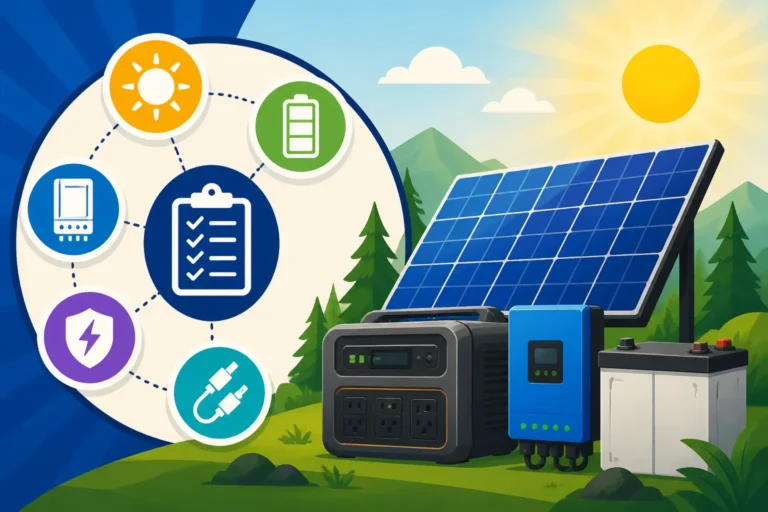
Component-based systems, on the other hand, are like building your own computer from scratch. You select individual solar panels, a charge controller, an inverter, and a battery bank. This approach offers immense flexibility and modularity. If one component fails, you can often replace just that part. You can easily upgrade your solar array, expand your battery bank, or swap out your inverter for a more powerful one as your needs evolve. This level of customization allows you to design a system perfectly tailored to your exact energy demands, from voltage (12V, 24V, 48V) to battery chemistry and inverter size. For those considering this route, understanding Off-Grid Solar System Components Explained is crucial.
Let's consider installation complexity. With a Jackery 2000 Plus, it's virtually plug-and-play. Connect solar panels, plug in your devices, and you're good to go. For a component-based system, especially for a home, you're looking at significant wiring, mounting, conduit runs, and potentially obtaining permits. This often involves a deeper understanding of electrical principles or hiring a professional electrician. The difference in initial setup effort and specialized knowledge required is substantial. This is a key factor when looking at DIY vs Professional Off-Grid Solar Cost.
Another critical aspect is repairability and longevity. While a Jackery unit comes with a warranty, if a core component like the inverter or battery fails outside that period, you're often looking at sending the entire unit in for service or, in some cases, replacing the whole thing. With a component-based system, if your charge controller goes out, you just replace the charge controller. If a battery cell degrades, you might replace that battery or even just a part of the bank. This makes the long-term maintenance and repair of a traditional system potentially more cost-effective and sustainable for a permanent off-grid dwelling.
Ideal Use Cases and When to Consider Alternatives
So, when is the Jackery 2000 Plus the perfect fit, and when should you definitely look at something more robust?
The Jackery 2000 Plus truly shines in mobile, temporary, or supplementary off-grid scenarios:
- Camping and RV Life: For weekend trips, extended road trips, or even part-time RV living, its portability and ability to run essential appliances (fridge, lights, small electronics) are a game-changer. It’s perfect for power on the go.
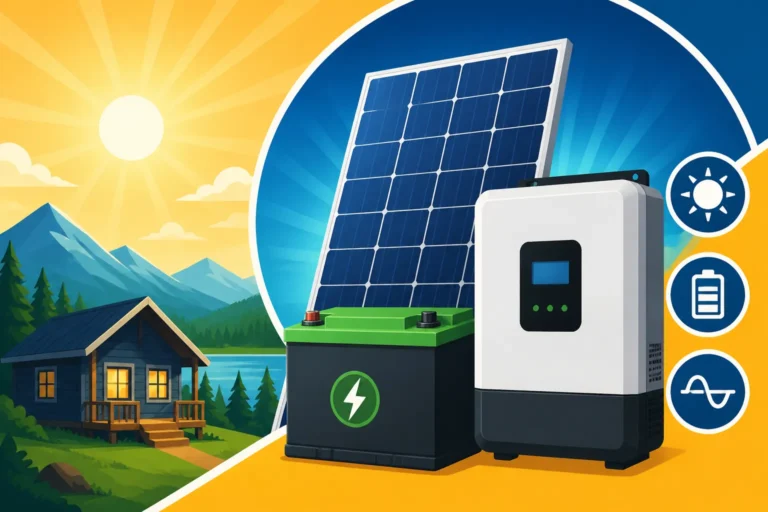
- Remote Cabins or Sheds (Light Use): If you have a small cabin in the woods that you use seasonally, or a shed where you need occasional power for tools and lights, the Jackery 2000 Plus can be an excellent, no-fuss solution. It can power a Cost to Run Lights And Electronics on Off-Grid Solar easily.
- Emergency Backup: For urban or suburban homes susceptible to power outages, it’s an invaluable tool for keeping critical appliances running until grid power returns.
- Work Sites: Need portable power for tools on a construction site far from an outlet? This unit delivers.
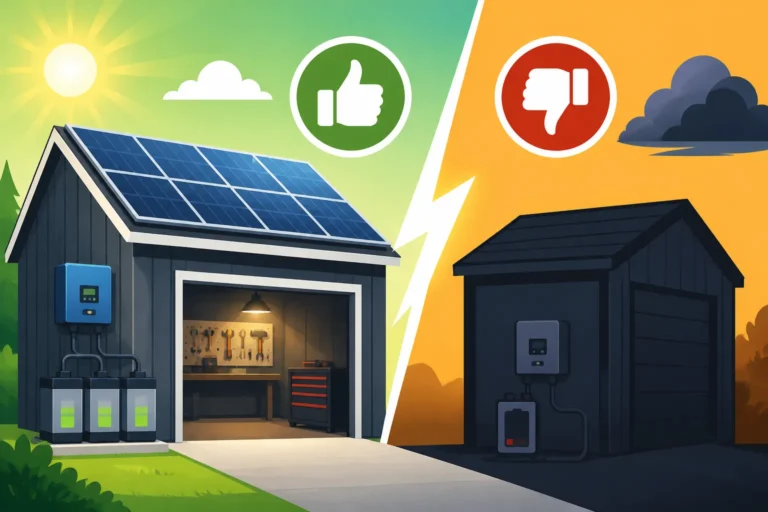
However, if your vision for off-grid living involves full-time residency, powering a larger home, or running high-demand appliances consistently, you should absolutely consider a more traditional, component-based system.
- Whole House Off-Grid: If you're building a home that will be permanently disconnected from the grid, you'll need significantly more power storage and output than even an expanded Jackery 2000 Plus system can provide. These setups require large solar arrays, robust battery banks (often 48V systems for efficiency), and heavy-duty inverters. Explore concepts like Off-Grid Solar System Design Basics for this level of commitment.
- Heavy Appliance Use: Running an electric stove, clothes dryer, central air conditioning, or a powerful well pump for daily water needs typically exceeds the sustained capabilities of even the largest solar generators. These require dedicated systems built for such loads. For example, the Off-Grid Solar Cost for a Whole House will be far more significant and complex than a portable solution.
- Year-Round Living: For continuous, year-round off-grid power, especially in regions with fluctuating sunlight or harsh winters, you need a system designed for high reliability, redundancy, and potentially hybrid solutions with generators. The smaller capacities of solar generators make them less ideal for guaranteeing power through multiple cloudy days.
While Jackery offers impressive products, and the 2000 Plus is a strong contender in its category, it's vital to align its capabilities with your actual long-term energy strategy. Other brands like EcoFlow or Bluetti offer similar "all-in-one" portable power stations with varying features and capacities, but the fundamental considerations remain the same.
Making Your Decision: Is the Jackery 2000 Plus Right for You?
Choosing an off-grid power solution is a significant decision, influencing your comfort, capabilities, and peace of mind. Let's break down the final considerations to help you make an informed choice.
Assessing Your Specific Off-Grid Power Needs
Before you even look at a product, you need to look inward at your energy consumption. This is the absolute first step in determining if the Jackery 2000 Plus – or any system – is right for you. Start by performing a detailed "load analysis." This means listing every single appliance and device you intend to power, noting its wattage and how many hours per day (or week) you plan to use it. Don't forget those pesky "phantom loads" that draw power even when turned off.
For example, if you're running a remote hunting cabin for occasional visits, your needs might be minimal: lights for a few hours, charging a phone, maybe a small radio. A single Jackery 2000 Plus could easily handle this. However, if you envision living in a cabin full-time, running a refrigerator, a well pump, a washing machine, and various entertainment systems, your daily energy consumption will skyrocket. It's not just about the wattage of individual items; it's about the cumulative "watt-hours per day" that truly defines your system requirements. Our guide on How to Calculate Off-Grid Solar Needs provides an in-depth look at this essential step.
Consider peak loads: What's the highest amount of power you'll need at any given moment? If you turn on a microwave while your coffee maker is brewing, that's a significant power spike. Your inverter needs to be able to handle that combined wattage, plus any surge requirements. The Jackery 2000 Plus's 2200W continuous and 4400W surge is good for many household tasks, but it's not unlimited.
Finally, think about your "days of autonomy." This refers to how many days your battery bank can power your loads without any new charge coming in (e.g., during cloudy weather). For a small Jackery 2000 Plus, without ample solar recharging, you might get 1-2 days for moderate use. For critical systems or full-time living, you'd want several days of autonomy, which necessitates a much larger battery bank than a single portable power station.
Budget, Expansion, and Long-Term Considerations
Your budget will always play a role, but it's important to think beyond the initial sticker price. The upfront cost of a Jackery 2000 Plus is appealing for its convenience, often ranging from $2,000 to $2,500 for the base unit. If your needs are modest, this might be a complete solution. However, if you find yourself needing to add multiple expansion batteries to reach a capacity that approaches a traditional off-grid system, the costs can add up quickly.
Consider the How Much Does an Off-Grid Solar System Cost for a component-based setup. While it can be more expensive upfront, especially if you hire professional installers, it often offers a better cost-per-watt-hour and greater longevity for dedicated off-grid living. If you're looking at powering something like a permanent Off-Grid Solar Cost for a Cabin, the investment usually leans towards a more robust, non-portable system.
Expansion capabilities are a key differentiator. The Jackery 2000 Plus’s ability to connect up to five additional battery packs is a fantastic feature for modular growth. This means you don't have to buy a massive system all at once, allowing you to scale up as your power demands increase or your budget allows. This phased approach can be a smart way to manage your finances and learn your true power needs. For those on a tighter budget, learning How to Budget for an Off-Grid Solar System is paramount.
Long-term goals should also factor heavily into your decision. Are you just dabbling in off-grid living for a year or two, or is this a permanent lifestyle change? For permanent off-grid homes, dedicated systems offer superior reliability, durability, and often a better return on investment over decades. They are built for continuous, heavy-duty operation and are more easily maintained or upgraded component by component. While a Jackery 2000 Plus is excellent for shorter-term or mobile needs, it might not be the ultimate, lifetime solution for a full-fledged off-grid homestead.
Ultimately, the Jackery 2000 Plus is a remarkable piece of technology for what it is: a highly capable, portable, and user-friendly solar generator. It excels in convenience, rapid deployment, and modular expansion for specific use cases like RVs, camping, and emergency backup. However, for those aiming for total energy independence in a stationary dwelling with significant and continuous power demands, a carefully designed, component-based off-grid solar system will generally provide greater power, flexibility, and long-term value. Choose the solution that truly aligns with your current and future off-grid dreams.
Disclaimer
The information provided in this guide is for general informational purposes only and does not constitute professional advice. Off-grid solar system design and installation can be complex and may involve electrical hazards. Always consult with qualified professionals and adhere to all local codes and regulations when planning or installing any solar power system.