Is Off-Grid Solar Worth It for a Hunting Cabin
Dreaming of that secluded hunting cabin, a true escape from the hustle and bustle, but constantly vexed by how to power it reliably? You're not alone. Many cabin owners face the frustrating dilemma of grid dependency in remote locations or the endless headache of noisy, fuel-guzzling generators. This guide is here to shed light on whether embracing off-grid solar is a truly worthwhile investment for your hunting cabin, offering genuine independence and peace of mind.
Understanding the Unique Needs of a Hunting Cabin
Powering a hunting cabin isn't quite like powering a full-time residence. Your demands are usually different, often seasonal, and the location itself presents its own set of hurdles. It's crucial to acknowledge these unique aspects before diving into solar solutions.
Typical Power Demands for Rustic Cabins
When we talk about a hunting cabin, we're usually picturing something a bit more rustic than a suburban home, right? You're likely not running multiple washing machines, electric dryers, or a central air conditioning unit all day long. Instead, the typical power demands revolve around comfort and essential conveniences during your stays. Think about the basics:
- Lighting: A few LED lights for evenings, maybe some exterior lights for security.
- Small Appliances: A mini-fridge to keep your food and drinks cold, a coffee maker for those early mornings, perhaps a microwave for quick meals.
- Charging: Keeping your phone, GPS, two-way radios, and flashlight batteries topped up is a must.
- Water System: If you have running water, a small well pump or a demand pump for a pressure system will draw power.
- Entertainment/Communication: Maybe a small TV or radio, and often a reliable internet connection (satellite modem or cellular booster) is desired to stay connected or check weather conditions.
These are usually intermittent loads. You might only be at the cabin on weekends, or for a few weeks during hunting season. This sporadic use pattern is a key factor in determining if solar is a good fit, and how large a system you truly need. You don't want to overspend on capacity you'll rarely use, but you also don't want to be left in the dark.
Challenges of Remote Locations
The very appeal of a hunting cabin often lies in its remoteness, but that same isolation creates significant challenges for power generation.
First off, there's the grid itself. If your cabin is more than a few hundred feet from existing power lines, the cost to extend utility service can be absolutely astronomical. We're talking tens of thousands, sometimes even hundreds of thousands of dollars, just to get a pole to your property. That’s often a non-starter for many, and frankly, it kind of defeats the "off-the-grid" vibe, doesn't it?
Then there's the generator route. For years, this was the go-to solution for remote cabins. You haul out a generator, fill it with gas, pull the cord, and you've got power. Simple, right? Not really. Generators are noisy, which completely ruins the peace and quiet you seek. They produce exhaust fumes, which aren't great for the environment or your lungs. And let's not forget the constant need for fuel – storing it safely, transporting it, and constantly refilling the tank. The maintenance on generators can also be a pain, requiring oil changes, spark plug replacements, and general upkeep, especially if they sit unused for long periods. Plus, imagine trying to start a stubborn generator in freezing temperatures before dawn when you're trying to get ready for a hunt. It's less than ideal.
Remote locations also mean exposure to harsher elements. Your power system needs to withstand extreme heat, freezing cold, heavy snow, and strong winds. Accessibility for repairs or fuel delivery during bad weather can also be a major concern, leaving you without power when you need it most.
The Financial Angle: Initial Investment vs. Long-Term Savings
Let's get down to brass tacks: money. The upfront cost of an off-grid solar system can feel like a significant hurdle, but it's important to look at it as a long-term investment, comparing it to the hidden and ongoing costs of other power solutions.
Breaking Down the Upfront Costs of an Off-Grid System
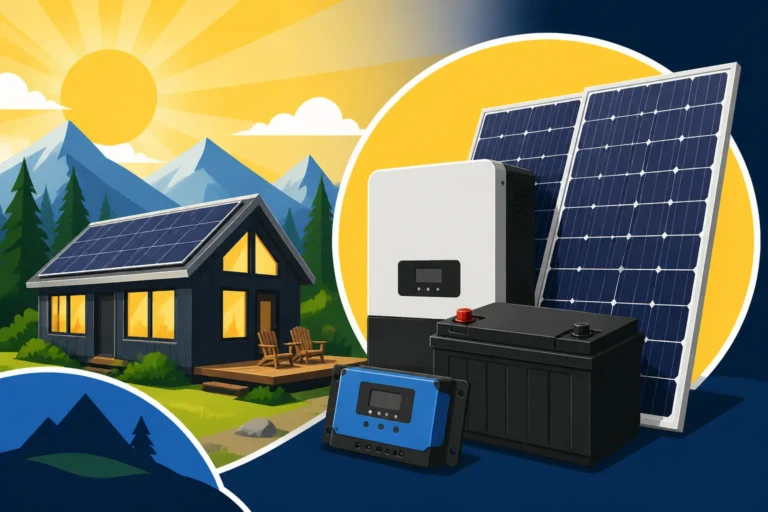
When you decide to go solar for your hunting cabin, you're essentially building your own mini-utility. This means you’ll need several key components, and each comes with its own price tag. The good news is that for a cabin with moderate usage, the system doesn't necessarily need to be massive.
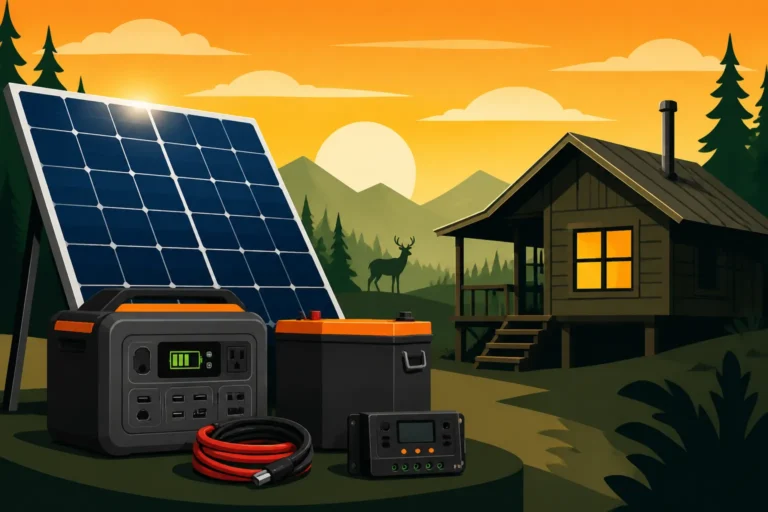
- Solar Panels: These are what capture the sun's energy. For a cabin, you might need anywhere from 500 watts to 2,000 watts, depending on your daily usage. The Cost of Off-Grid Solar Panels can vary depending on efficiency and brand, but they've become much more affordable over the years.
- Batteries: This is where the magic happens for off-grid living – storing that solar energy for use when the sun isn't shining. Lithium Iron Phosphate (LiFePO4) batteries are gaining popularity for their longevity and performance, but lead-acid options are also available for tighter budgets. The Cost of an Off-Grid Solar Battery Bank is often the most significant part of the upfront investment.
- Charge Controller: This smart device regulates the power flow from your solar panels to your batteries, protecting them from overcharging.
- Inverter: If you want to run standard household appliances (AC power), you'll need an inverter to convert the DC power from your batteries.
- Mounting Equipment: Racking for your panels, whether on the roof or a ground mount.
- Wiring, Fuses, and Safety Gear: All the necessary electrical components to safely connect everything.
For a basic hunting cabin setup, designed to run lights, a mini-fridge, and charge devices, you might be looking at an initial investment anywhere from $3,000 to $10,000 for a decent quality system. Of course, a larger cabin with more amenities, or a system designed for year-round living, would see those costs climb. It's important to recognize that while this might seem steep, you're buying independence, not just electricity. For a comprehensive overview, you can check out guides like How Much Does an Off-Grid Solar System Cost.
Comparing Solar to Other Power Options
To truly understand if solar is worth it, we need to compare its costs to its alternatives over time.
- Generator Costs: Let's imagine you're running a portable gas generator at your cabin. You're constantly buying gasoline, which adds up fast. A typical 3,000-watt generator might burn 0.5-1 gallon of gas per hour. If you run it for just 4 hours a day, that's 2-4 gallons daily. At current prices, that's easily $8-$16 a day, or $240-$480 a month, just for fuel! And that's if gas prices stay stable. Generators also require regular oil changes, air filter replacements, and other maintenance, plus eventual repair or replacement costs. These ongoing expenses are a silent drain on your wallet. For a deeper dive, read about Off-Grid Solar vs Generator Fuel Cost.
- Grid Extension: As mentioned, extending power lines to a remote cabin is usually prohibitively expensive. Estimates often run from $20,000 to $50,000 per mile, and sometimes even more depending on terrain and utility regulations. For many, this cost alone makes off-grid solar the more affordable initial option, even if it feels like a big investment.
Let's put this into a table for clarity:
| Power Option | Initial Investment (Estimate) | Ongoing Costs (Estimate) | Pros | Cons |
|---|---|---|---|---|
| Off-Grid Solar | $3,000 – $15,000+ (for cabin use) | Minimal (battery replacement every 5-15 yrs, some maintenance) | Quiet, clean, reliable, independent, low long-term costs | Higher upfront cost, weather dependent |
| Gas Generator | $500 – $3,000+ | High (fuel, maintenance, repairs) | Lower initial cost, portable | Noisy, smelly, constant fueling, high long-term costs, less reliable long-term |
| Grid Extension | $20,000 – $100,000+ (per mile) | Monthly utility bills | "Set it and forget it" convenience, unlimited power | Extremely high initial cost for remote properties, ongoing bills, not truly off-grid |
When you look at the long game, especially factoring in the escalating costs of fuel and the sheer expense of grid extension, off-grid solar starts to make incredible financial sense. The Off-Grid Solar Payback Period Explained can show you how over time, your solar system will essentially pay for itself through avoided costs. The money you save on gas and grid fees can, over a decade or two, easily surpass your initial solar investment. For many, the Cost to Power a Cabin with Solar ultimately makes solar a superior choice.
Practical Considerations and Lifestyle Benefits
Beyond the numbers, there's a whole host of practical advantages and lifestyle improvements that off-grid solar brings to a hunting cabin. These are often the reasons people truly fall in love with their solar setup.
Reliability and Convenience for Cabin Life
Imagine this: You arrive at your cabin after a long drive. Instead of wrestling with a generator, hoping it starts in the cold, and then listening to its drone, you simply walk in, flip a light switch, and there's power. Your fridge is already humming, keeping your supplies fresh. Your phone plugs right into a wall outlet, ready to charge. That's the beauty of off-grid solar. It's quiet. The only sound you'll hear is the rustle of leaves or the call of a distant owl, not the incessant thrum of an engine.
The power is instant and always available, as long as your batteries are charged. No more running out of fuel halfway through cooking dinner or having to venture out in the dark for a refill. Modern solar systems, especially those with robust inverters and charge controllers from reputable brands like Victron or Outback Power, are incredibly reliable. Many even offer remote monitoring capabilities, allowing you to check your battery status or panel output from your smartphone back home, ensuring everything is running smoothly before you even arrive. This level of convenience and automation fundamentally changes the experience of being at your cabin. You spend less time managing power and more time enjoying why you went there in the first place.
Environmental Impact and Peace of Mind
For many who choose the cabin life, a deep appreciation for nature is a core value. Off-grid solar perfectly aligns with this. By harnessing the sun's energy, you're significantly reducing your carbon footprint. You're not burning fossil fuels, not contributing to air pollution, and you're truly living in harmony with your environment. This isn't just a feel-good factor; it's a tangible benefit.
The peace of mind that comes with energy independence is invaluable. No more worrying about power outages during a storm, or if the local utility decides to shut down power for maintenance. You are truly self-sufficient. This sense of resilience also extends to emergency preparedness. In a world with increasing uncertainty, having a reliable power source that isn't dependent on external infrastructure is a powerful advantage. Your cabin becomes a true sanctuary, always ready, always powered. This kind of independence is often the ultimate answer to the question: Is Off-Grid Solar Worth the Cost?
Making the Decision: Is Off-Grid Solar Right for Your Cabin?
The question of "worth" is deeply personal, but by considering a few key factors, you can determine if off-grid solar truly aligns with your hunting cabin dreams and practical realities.
Factors to Weigh Before Investing
Before you commit to an off-grid solar setup, sit down and honestly evaluate these points related to your cabin and how you use it:
- Usage Frequency: How often do you use your cabin? Is it a weekend getaway once a month, a full hunting season retreat, or something in between? If you're only there a few times a year for short stints, a smaller, simpler system might suffice, or even a robust portable power station like a Jackery Explorer for very basic needs. If you're spending extended periods, a more substantial fixed system is necessary.
- Budget: What's your comfortable spending limit? As we've discussed, upfront costs vary widely. It’s wise to set a realistic budget and explore financing options if needed. Remember, this isn't just an expense, it's an investment in your property and lifestyle. A good starting point is to understand How to Budget for an Off-Grid Solar System.
- DIY Capability: Are you handy? Installing a smaller off-grid system can be a rewarding DIY project, saving you money on labor. However, larger, more complex systems often benefit from professional installation, especially for safety and efficiency. Be honest about your comfort level with electrical work.
- Desired Comfort Level: How much power do you truly need? Are you content with just lights and phone charging, or do you want to run a full-size fridge, a water heater, or even a small air conditioning unit? Your desired amenities directly impact the size and cost of your system.
- Accessibility: How easy is it to get materials to your cabin? A remote location might incur higher delivery fees for panels and batteries, and potentially higher labor costs if you hire professionals.
- Local Regulations: While many remote cabins are exempt from strict permitting, it's always good practice to check with local authorities for any rules regarding electrical installations or structures.
By weighing these factors, you can get a clearer picture of whether off-grid solar is not only feasible but also the best solution for your specific hunting cabin.
Sizing Your System for Optimal Performance
One of the biggest mistakes people make when going off-grid is improperly sizing their system. You don't want to run out of power on a cold, dark night, but you also don't want to overspend on an oversized system that generates far more power than you'll ever use.
The key to successful sizing is a thorough load analysis. This means listing every appliance you plan to use, how many watts it draws, and for how many hours a day. Don't forget those sneaky phantom loads either! This helps you calculate your total daily watt-hour consumption. For instance, a small LED light might use 5 watts for 4 hours (20 Wh), while a mini-fridge might cycle on and off, using perhaps 100 watts for a total of 8 hours of compressor run time over 24 hours (800 Wh). This might seem tedious, but it's the foundation of a reliable system. Dive into Off-Grid Solar Load Calculation Explained for detailed steps.
Once you have your total daily energy needs, you can then determine how many solar panels are required to generate that energy, taking into account your location's peak sun hours and accounting for cloudy days. You'll also size your battery bank to store enough energy to last through several days without sun (known as "days of autonomy"). Your inverter then needs to be large enough to handle the surge power of your biggest appliance turning on (like a well pump) while also handling your continuous loads.
For smaller, more basic cabin needs, a portable power station can be a good entry point. Brands like Jackery offer powerful yet portable solutions that can handle essential charging and even run a small fridge for a while, making them ideal for very occasional use or as a backup. But for consistent, day-in-day-out power for a cabin, a dedicated system is usually required. To avoid common pitfalls and ensure your system is just right, I highly recommend reading How to Size an Off-Grid Solar System.
Getting Started with Off-Grid Solar for Your Cabin
So, you've decided off-grid solar is indeed the way to go for your hunting cabin. Congratulations! Now, let's look at the practical steps to make it a reality.
Essential Components and Kits
Building an off-grid solar system involves a few core components that work together seamlessly. Understanding these pieces will empower you to make informed choices.
- Solar Panels: These are the workhorses, converting sunlight into electricity. Monocrystalline panels are generally preferred for their efficiency, especially when space might be limited on a cabin roof or a small ground mount.
- Charge Controller: This device protects your batteries by ensuring they don't overcharge or discharge too quickly from the panels. MPPT (Maximum Power Point Tracking) controllers are more efficient than PWM (Pulse Width Modulation) controllers, especially in varying light conditions, making them a wise investment for maximizing energy harvest.
- Battery Bank: The heart of your off-grid system. As discussed, LiFePO4 batteries are excellent for their lifespan and depth of discharge, but AGM lead-acid batteries can be a more budget-friendly starting point. The size of your battery bank is crucial for ensuring you have power during cloudy periods or at night. You can learn more about finding the Best Off-Grid Solar Batteries.
- Inverter: This converts the DC power from your batteries into usable AC power for most of your standard appliances. Always choose a pure sine wave inverter to protect sensitive electronics.
For those new to off-grid solar, or for cabin owners who prefer a simpler approach, pre-packaged solar kits are a fantastic option. Many reputable companies offer kits that include panels, a charge controller, an inverter, and all the necessary wiring, often designed for specific applications like cabins or RVs. These kits take much of the guesswork out of component matching and can significantly simplify the procurement process. For instance, for smaller, more temporary setups, portable power stations like a Jackery or EcoFlow can serve as an "all-in-one" solution that integrates a battery, inverter, and charge controller into a single unit, which is great for lights and charging small electronics, or even as a backup for a larger system. Looking into Best Off-Grid Solar Kits for Beginners can provide excellent starting points.
Installation Approaches: DIY or Professional?
Once you have your components, the next step is installation. This is where many cabin owners face a crossroads: do you tackle it yourself, or do you bring in the pros?
- DIY Installation: For smaller, simpler cabin systems, especially those consisting of a few panels, a charge controller, a battery, and a small inverter, DIY is often a very viable and cost-effective route. The satisfaction of building your own power system is immense! There are countless resources online, including detailed diagrams and step-by-step guides, that can walk you through the process of How to Wire an Off-Grid Solar System safely. Doing it yourself can drastically reduce the overall Cost of a DIY Off-Grid Solar Build. You'll need some basic electrical knowledge, a good understanding of safety protocols, and the right tools.
- Professional Installation: As your system grows in complexity – perhaps you're integrating a generator backup, have a larger battery bank, or need to connect to a full cabin electrical panel – hiring a professional electrician or solar installer becomes highly recommended. They ensure that everything is up to code, installed safely, and optimized for performance. While it adds to the upfront cost, it provides peace of mind and often comes with warranties on labor. They can also navigate any tricky permitting or inspection requirements, which might be necessary depending on your local jurisdiction, even for off-grid properties. Sometimes, even if you do most of the work yourself, you might want to consult with a professional for the final hookups to the main electrical panel. Knowing When to Hire an Electrician for Off-Grid Solar is a smart move, even for the most seasoned DIYer.
Ultimately, the best approach depends on your skill set, the complexity of your desired system, and your comfort level with electrical work. Whether you're a seasoned DIYer or prefer to delegate, the goal is a safe, efficient, and reliable power system for your beloved hunting cabin.
Disclaimer
Please note that the information provided in this guide is for general informational purposes only and does not constitute professional advice. Off-grid solar system design and installation involve electrical work which can be dangerous if not performed correctly. Always consult with qualified professionals for specific advice tailored to your situation and ensure all installations comply with local codes and safety standards.