Best Off-Grid Solar Kit Under $10,000
Navigating the world of off-grid solar can feel like a minefield, especially when you’re trying to stick to a budget without sacrificing reliability. Many folks dream of energy independence but worry that going off-grid means spending a fortune, leaving them wondering if a truly capable system can even be built for under five figures. This guide is here to demystify the options and show you the best off-grid solar kits available for under $10,000, helping you power your life with confidence.
Understanding What $10,000 Buys in Off-Grid Solar
When you’re looking at a $10,000 budget for an off-grid solar system, it’s really important to have a clear picture of what that investment realistically covers. It’s a sweet spot where you can move beyond basic recreational setups but might not yet reach the scale of a full-blown, year-round residential power plant. Understanding these boundaries will help you make smarter decisions and avoid disappointment.
Realistic Expectations for Power Output
For under $10,000, you can absolutely get a robust off-grid system, but it’s generally best suited for specific applications rather than a sprawling family home running multiple air conditioners. Think along the lines of a comfortable cabin, a full-time RV setup, a tiny home, or a reliable backup system for essential loads in a larger house. You’re typically looking at a system that can generate and store enough power for several essential appliances and daily electronics.
For instance, you might expect a system that can reliably provide 3-5 kilowatt-hours (kWh) of usable battery capacity per day, recharged by an array of 800W to 1500W of solar panels. This is enough to run a modern energy-efficient refrigerator, LED lights, a TV, charge laptops and phones, and perhaps even a small well pump or a mini-split air conditioner for a few hours. What it likely won't cover is simultaneous heavy loads like electric water heaters, large central AC units, or electric clothes dryers, unless you're very strategic with your usage and have an extremely generous solar harvest that day. For a deeper dive into sizing, check out our guide on how to size an off-grid solar system.
Key Components You Can Expect
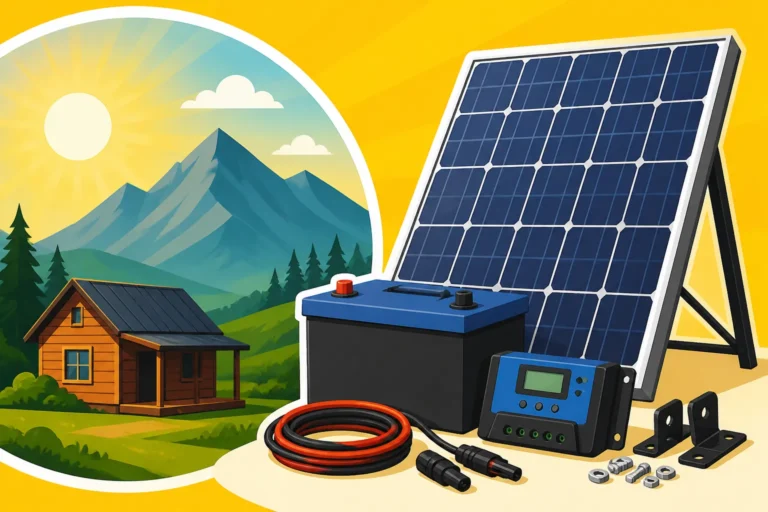
Within this budget, you’ll find that most kits will include the fundamental building blocks of a reliable off-grid system. These aren’t just bare-bones panels; we’re talking about integrated solutions that simplify the purchasing and installation process. You’ll typically get a decent number of solar panels, often between 4 to 8 standard residential-sized panels (around 200W-400W each), providing a substantial amount of daily power.
The battery bank is where a significant chunk of this budget will go, and thankfully, under $10,000, you can usually get into quality lithium iron phosphate (LiFePO4) batteries. These are a game-changer compared to older lead-acid options, offering more usable capacity, longer lifespans, and better efficiency. You'll also find a capable inverter, often a pure sine wave model, with a continuous output of 2000W to 5000W, which is crucial for running sensitive electronics and power tools without issues. An efficient MPPT (Maximum Power Point Tracking) charge controller is almost always included, maximizing the energy harvested from your panels. Necessary wiring, fuses, and mounting hardware for the panels are also generally part of the package, though sometimes specific mounting options might be extra. Our article on off-grid solar system components explained breaks down each part in detail.
The Trade-offs of Budget Systems
While $10,000 opens up many fantastic possibilities for off-grid power, it’s important to acknowledge where compromises might exist. You’re generally looking at kits that prioritize core functionality and reliability over luxury features or extreme oversizing. The primary trade-off often lies in the overall energy storage capacity; while you get good batteries, a system within this budget might not offer many “days of autonomy” – meaning the number of cloudy days it can power your loads without a charge. You might need to be more mindful of your energy consumption during prolonged bad weather, or plan for a backup generator to supplement.
Another area might be expandability. Some kits are designed as all-in-one solutions that are less flexible for future additions of panels or batteries, while others, like certain modular power stations, offer easier scaling. Installation might also require more DIY effort, as professional installation can significantly increase the total cost. You might not get the absolute top-tier, enterprise-grade components from every single manufacturer, but reputable brands still offer excellent value within this range. Understanding these trade-offs helps you choose a system that best fits your immediate needs and long-term plans.
What to Look For in an Off-Grid Solar Kit Under $10,000
When you’re trying to piece together or select an off-grid solar kit for less than $10,000, every component choice matters. It’s about finding the sweet spot between performance, durability, and cost-effectiveness. Here’s a breakdown of what to prioritize in each major part of your system.
Power Generation Solar Panels
The solar panels are your energy collectors, literally soaking up the sun’s rays to convert into electricity. For a sub-$10,000 budget, you’ll primarily be looking at monocrystalline panels. These are generally more efficient than their polycrystalline counterparts, meaning they can produce more power from a smaller footprint, which is a big plus if you have limited space on your roof or a small ground mount area.
When evaluating panels, look at their wattage (e.g., 200W, 300W, 400W), but also consider their physical size and the number of panels included in the kit. A higher total wattage from fewer, more efficient panels might be better than many lower-wattage, larger panels if space is a concern. Also, consider the panel's temperature coefficient – how much its output degrades in hot weather. While all panels lose some efficiency in heat, some perform better than others. Reputable brands like Renogy or Rich Solar often offer robust panels that provide good value and performance, even within this budget. Think about whether you need rigid, durable panels for a fixed installation or more flexible options for an RV.
Energy Storage Battery Bank
The battery bank is arguably the most critical component for any off-grid system, as it determines how much power you can use when the sun isn’t shining. In the under-$10,000 category, you should strongly prioritize Lithium Iron Phosphate (LiFePO4) batteries. While they have a higher upfront cost than lead-acid batteries, their benefits are immense: significantly longer lifespan (often 10+ years and thousands of cycles), higher usable depth of discharge (you can typically use 80-100% of their rated capacity without damage), faster charging, and lower weight.
Look for kits that specify LiFePO4 batteries and pay close attention to the total usable kilowatt-hours (kWh) of storage. A good starting point for a cabin or RV might be 2-5 kWh of usable capacity. Brands like Battle Born, EG4, or SOK are known for their quality LiFePO4 batteries, and you can often find kits incorporating these or similar high-quality cells. Remember, the Cost of an Off-Grid Solar Battery Bank is a significant portion of your total investment, so choosing wisely here impacts your system's long-term performance and value.
Inverter Power Output
The inverter is what converts the DC (direct current) electricity from your batteries into usable AC (alternating current) power for most household appliances. For kits under $10,000, you’ll almost certainly want a pure sine wave inverter. This type of inverter produces clean, stable electricity that mimics grid power, essential for sensitive electronics like laptops, TVs, and medical devices. Modified sine wave inverters are cheaper but can damage these types of appliances.
Pay attention to both the continuous power rating (e.g., 2000W, 3000W, 5000W) and the surge power rating. Continuous power is what the inverter can supply steadily, while surge power is the brief burst of higher power needed to start motors in appliances like refrigerators, microwaves, or well pumps. Ensure the inverter's continuous rating can handle your expected simultaneous loads, and its surge rating can manage the startup spikes of your largest motor-driven appliances. Brands like Victron, Growatt, or even certain offerings from Renogy provide reliable inverters that fit within this budget. For more details, check out our guide on how to size an off-grid inverter.
Charge Controller Type and Efficiency
The charge controller is the brain between your solar panels and your batteries, regulating the voltage and current to safely and efficiently charge your battery bank. For any serious off-grid setup, including those under $10,000, an MPPT (Maximum Power Point Tracking) charge controller is almost always the superior choice over a PWM (Pulse Width Modulation) controller.
MPPT controllers are significantly more efficient, especially in varying weather conditions and colder temperatures, as they can optimize the power harvest from your solar panels, converting excess voltage into additional amperage. This means more power makes it to your batteries, which is critical for smaller arrays or during less-than-ideal solar conditions. Look for kits that explicitly include an MPPT controller, and ensure its amperage rating is sufficient for your chosen solar array size. Many reputable brands offer excellent MPPT controllers that are reliable and efficient.
System Expandability and Scalability
One often-overlooked aspect when buying a kit is its potential for future growth. Even if your current needs fit within a sub-$10,000 system, you might find yourself wanting more power down the line – perhaps you add another appliance, or decide to spend more time off-grid. A truly good value kit will offer some degree of expandability.
Look for systems where you can easily add more solar panels by connecting them to the existing charge controller (if it has extra capacity or can support multiple strings) or by adding another charge controller. Similarly, check if the battery bank is modular, allowing you to easily add more batteries in parallel to increase storage capacity. Some all-in-one inverter-chargers are designed with scalability in mind, making it simpler to upgrade. For example, some portable power stations like the higher-end Jackery Explorer series or larger systems from Bluetti or EcoFlow are designed with modular battery expansions, allowing you to increase your storage later. Thinking about expandability now can save you from having to completely overhaul your system later.
Brand Reputation and Support
When you’re investing in an off-grid solar system, even a budget-friendly one, you want components that are reliable and come from companies that stand behind their products. Brand reputation and customer support are incredibly important. Look for brands that have a proven track record in the off-grid solar market, with good reviews and readily available technical support.
A good brand will offer clear warranties on its components (panels, batteries, inverters) and have resources like detailed manuals, online forums, or responsive customer service. This is particularly crucial if you're undertaking a DIY installation, as you'll likely have questions during the process. While specific product lines might change, established players like Renogy, EcoFlow, Bluetti, Victron, and yes, Jackery for portable solutions, generally have better support networks than some lesser-known manufacturers. Investing in a kit from a reputable brand can provide peace of mind and simplify any troubleshooting down the road. Our guide on Best Off-Grid Solar Brands offers more insights.
Top Picks for Off-Grid Solar Kits Under $10,000
Finding the perfect off-grid solar kit under $10,000 means balancing your specific power needs with component quality and system capabilities. This budget range offers some fantastic options, from highly portable units to more robust, semi-permanent setups.
Portable Power Stations Solar Generators
For those who need portable power, backup solutions, or a flexible system for an RV, van, or casual cabin use, high-capacity portable power stations (often called “solar generators”) are an excellent choice within the sub-$10,000 budget. These are essentially all-in-one units that combine a large LiFePO4 battery, a pure sine wave inverter, and an MPPT charge controller into a single, often rugged, chassis. They are incredibly easy to set up – just plug in your solar panels and you’re good to go.
Brands like Jackery, EcoFlow, and Bluetti dominate this space. For example, a Jackery Explorer 2000 Plus, often found around the $2,000-$3,000 mark, can deliver 2.4kWh of battery capacity and a 3000W inverter, capable of running many household appliances. You can typically add an expansion battery to these units, easily staying within the $10,000 budget while boosting capacity. When you add a few hundred watts of flexible solar panels or even rigid ones, you get a powerful, movable, and highly user-friendly system. These are perfect for folks who aren't ready for a complex wiring job but still need substantial power. They excel for Off-Grid Solar Cost for an RV or a simple shed, offering plug-and-play convenience.
Mid-Size Kits for Cabins or RVs
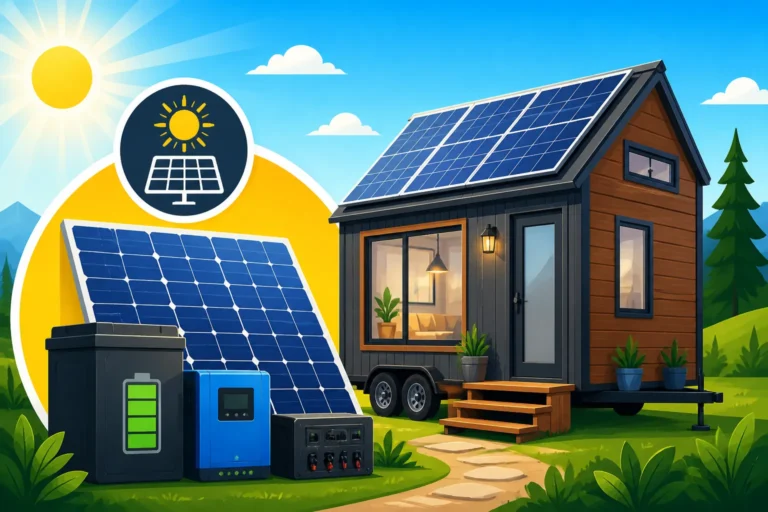
Stepping up from portable power stations, you’ll find comprehensive kits specifically designed for cabins, tiny homes, or more permanent RV setups. These usually come with a set of rigid solar panels, a dedicated charge controller, an inverter, and a substantial LiFePO4 battery bank, all meant for a more fixed installation. These kits offer more sustained power and battery storage than most portable units within the same price bracket.
A typical kit in this category might include four to six 200W-300W solar panels (totaling 800W to 1800W), a 3000W-5000W pure sine wave inverter, an MPPT charge controller, and a LiFePO4 battery bank with 5-10 kWh of usable capacity. This kind of setup is robust enough to handle a full-size energy-efficient refrigerator, a well pump, various lights, entertainment systems, and even some power tools. Brands like Renogy and Grape Solar offer several such kits. The advantage here is the optimized pairing of components and the higher raw capacity. You might need to invest in some basic wiring and mounting hardware if not fully included, but the core system provides a solid foundation for comfortable off-grid living. These are excellent options if you’re looking at the Cost to Power a Cabin with Solar or need serious power for a full-time RV setup.
Expandable Starter Systems
For those who envision growing their off-grid system over time, choosing an expandable starter kit is a smart move. These kits might start with a slightly smaller initial capacity but are built with components that can easily accommodate future additions of panels or batteries, keeping you well within the $10,000 budget for the initial setup.
Look for systems built around modular LiFePO4 battery banks, where you can add more batteries in parallel as your needs or budget expands. Similarly, an inverter-charger that can handle a larger solar array or can be upgraded without replacing the entire unit is a major plus. Brands like EG4 and some specialized Victron Energy setups (though Victron components individually can push the budget, some smaller starter systems or combined inverter/charge controllers fit) are designed with scalability in mind. For example, an initial kit might come with a 3kW inverter, an MPPT controller, and 5kWh of battery storage. The system architecture, however, would allow you to easily add another 5kWh battery module and more solar panels down the line without needing a complete overhaul. This "phase-in" approach can make the initial investment more manageable while ensuring your system can adapt to evolving energy demands. This strategy is highlighted in our article on How to Plan for Future Expansion.
Maximizing Your Off-Grid Solar Budget
Getting the most bang for your buck with an off-grid solar system under $10,000 isn’t just about finding the cheapest components; it’s about smart planning, strategic choices, and sometimes, a bit of elbow grease. Here’s how you can stretch your budget further without compromising on reliability.
DIY vs. Pre-Assembled Kits
This is probably the biggest factor in cost savings for an off-grid solar system. Choosing to go the DIY route can significantly reduce your overall expenditure, often saving you thousands of dollars in installation labor costs. While a pre-assembled, plug-and-play kit like a **Jackery** Explorer series or EcoFlow Power Kit offers incredible convenience, the labor of having a professional install a more traditional component-based system can quickly push your total cost over the $10,000 mark.
If you're comfortable with basic electrical work, have patience, and are willing to learn, assembling your own system from individual components or a comprehensive but uninstalled kit can be incredibly rewarding and cost-effective. There are tons of online resources, wiring diagrams, and community support available. However, be realistic about your skills and time. If you're completely new to electrical work, consider a simpler kit or hire an electrician for the trickier parts like wiring the inverter to your loads. Our guide on DIY vs Professional Off-Grid Solar Cost breaks down the financial implications.
Prioritizing Your Power Needs
Before you even start looking at kits, sit down and do a thorough load analysis. This means listing every appliance and device you intend to power, noting its wattage and how many hours per day you plan to use it. This exercise is critical for determining How Much Off-Grid Solar You Really Need. A common mistake is oversizing the system unnecessarily, which drives up costs, or undersizing it, leading to frustration.
For a budget under $10,000, prioritizing is key. Can you live without a microwave? Can you use a propane water heater or a tankless, on-demand electric one only when needed, instead of a large electric storage tank? Are there high-draw appliances you can run from a generator instead of relying solely on solar? By identifying your absolute essentials and being realistic about occasional-use items, you can right-size your system to meet your core needs, thus saving money on panels, batteries, and inverter capacity. For instance, prioritizing a modern, energy-efficient refrigerator will yield much better results than trying to power an old, inefficient model.
Phased Approach to Building Your System
If your ideal off-grid vision is a bit more ambitious than what $10,000 can fully cover upfront, consider a phased approach. This involves building a robust core system now, and then adding components as your budget allows or as your needs evolve. This is a fantastic strategy for managing costs over time.
For example, you might start with a solid inverter-charger, a sufficient number of solar panels, and a smaller but expandable LiFePO4 battery bank. This provides immediate power for your most critical loads. Later, you can add more solar panels to increase your charging capacity or purchase additional battery modules to extend your days of autonomy. Many modern systems, especially those from brands like EG4 or Victron (though often pricier initially, their modularity can be cost-effective long-term), are designed for this kind of expansion. This way, you don't have to wait until you have the full amount saved, and you can start enjoying the benefits of off-grid living sooner. Our article How to Budget for an Off-Grid Solar System offers further advice on this strategy.
Comparative Look at Off-Grid Solar Kits Under $10,000
Here's a simplified table comparing different types of off-grid solar solutions you might find under $10,000, along with their typical capabilities and best use cases. Remember, prices fluctuate, and specific features vary by brand and model.
| Kit Type | Typical Components | Total Solar Panels (W) | Usable Battery (kWh) | Inverter Cont. (W) | Best For | Pros | Cons |
|---|---|---|---|---|---|---|---|
| Portable Power Station | All-in-one unit (battery, inverter, CC) + panels | 200 – 800 | 1 – 3 | 1500 – 3000 | RVs, vans, camping, emergency backup, light cabin | Highly portable, easy setup, no wiring skill needed, expandable | Lower total capacity, generally less powerful inverter than fixed kits |
| Mid-Size Cabin/RV Kit | 4-6 panels, MPPT CC, pure sine inverter, LiFePO4 batteries, basic wiring | 800 – 1800 | 4 – 8 | 3000 – 5000 | Small cabins, full-time RVs, tiny homes, workshops | Good balance of power & storage, capable for essential appliances | Requires some DIY wiring/installation, less portable |
| Expandable Starter Kit | Core inverter-charger, 2-4 panels, modular LiFePO4 batteries | 400 – 1200 | 3 – 6 | 2000 – 4000 | Long-term growth, phased build, evolving needs | Future-proof, allows gradual investment, often quality components | Initial capacity might be lower, requires planning for expansion |
This table is designed to give you a quick overview, but always check the specific details of any kit you're considering to ensure it aligns with your power demands.
Disclaimer
Please remember that the information provided in this article is for general guidance and educational purposes only. Off-grid solar system design and installation can be complex and involve electrical hazards. Always consult with qualified professionals, adhere to local codes and regulations, and prioritize safety when planning or installing any solar power system. Product specifications, availability, and pricing can change, so always verify current details with manufacturers and retailers.