How Much Off-Grid Solar Do You Really Need
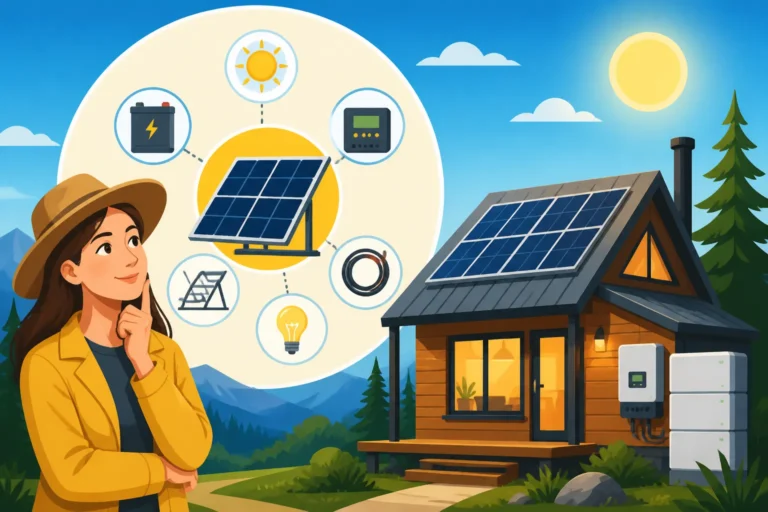
Embarking on the off-grid journey is exciting, but let's be honest, figuring out exactly how much solar power you actually need can feel like trying to solve a complex puzzle with half the pieces missing. It’s easy to get overwhelmed by watts, amp-hours, and system voltages, leaving you wondering if you're building an extravagant power plant or a system that will leave you in the dark. This guide is here to demystify the process, helping you realistically assess your energy requirements so you can design an off-grid solar system that truly fits your lifestyle and budget, without unnecessary stress or expense.
Understanding Your Energy Footprint
Before you even think about buying panels or batteries, the most crucial first step is to genuinely understand your energy consumption. This isn't just about what you want to power; it's about what you actually use, minute by minute, hour by hour, day by day. Skipping this step is the fastest way to end up with a system that's either woefully inadequate or ridiculously oversized – both of which can lead to major frustration and wasted money down the line.
Daily Watt-Hour Calculation
The heart of understanding your energy needs lies in calculating your daily watt-hours. Think of a watt-hour (Wh) as a unit of energy, much like a mile is a unit of distance. Every appliance you own consumes a certain amount of power (measured in watts, W) over a period of time. To get your total daily consumption, you'll need to list every electrical item you plan to use, find its wattage, and estimate how many hours a day it will run.
This can seem tedious, but it's incredibly empowering. Grab a pen and paper, or even a spreadsheet, and go through your home or RV. Don't forget those sneaky "phantom loads" – devices that are plugged in and consuming a small amount of power even when turned off. A power meter, like a Kill-A-Watt, is an invaluable tool here, as it can give you precise readings for your specific appliances. Multiply the wattage by the estimated hours of daily use for each item, and then sum them all up. For a more detailed walkthrough, our article on How to Calculate Daily Energy Usage can walk you through the specifics.
Let's say you have an LED light bulb that's 9 watts and you plan to run it for 5 hours a day. That's 9W * 5h = 45 Wh. Now do that for your refrigerator, laptop, phone charger, water pump, and any other electrical device. The sum of all these will give you your total daily watt-hour consumption, which is the foundational number for your entire off-grid system design.
Peak Power Demands and Surge Loads
While daily watt-hours tell you the total energy you need, understanding peak power demands and surge loads tells you how fast you need that energy, which is critical for sizing your inverter. An inverter converts the DC power from your batteries into the AC power that most household appliances use. Appliances like refrigerators, microwaves, well pumps, and power tools often have a "starting wattage" or "surge wattage" that is significantly higher than their "running wattage."
For example, a refrigerator might run at 150 watts continuously, but when its compressor kicks on, it could momentarily draw 1000-1500 watts. If your inverter isn't large enough to handle this brief surge, it will simply shut down, leaving you frustrated. This is a common pitfall for new off-gridders. It's not enough for your inverter to handle your average load; it absolutely must handle your maximum instantaneous load, even if it only lasts for a second or two.
Consider the appliances you plan to run simultaneously. If you want to use a microwave while the refrigerator compressor starts, your inverter needs to be able to handle the combined surge of both. Neglecting these high-draw, short-duration events can lead to constant system resets and unreliable power, which defeats the whole purpose of going off-grid.
Seasonal and Regional Considerations
Your energy needs aren't static; they fluctuate throughout the year and depend heavily on your geographic location. If you're planning to live off-grid in a cabin in the Pacific Northwest, your solar harvest will be significantly different in December compared to July. Similarly, living in sunny Arizona will offer a much more consistent solar resource. These factors directly impact how much solar array and battery storage you'll require.
Think about your lifestyle changes with the seasons. Will you be running more heating or cooling? Will your well pump be working harder in dry months? Do you spend more time indoors using electronics during winter? Accounting for these variations means designing a system that can handle your worst-case scenario while still being efficient for the rest of the year. This often means oversizing components slightly to ensure reliability during periods of low sunlight or high demand, ensuring your off-grid experience is comfortable year-round.
Sizing Your Solar Array
Once you have a solid grasp of your energy consumption, the next step is to determine how much solar panel capacity you need to generate that power. This is where the sun's availability and the specifics of your panels come into play. It's not just about buying a certain number of panels; it's about matching their output to your consumption, taking into account real-world conditions.
Peak Sun Hours and Their Impact
"Peak sun hours" is a critical concept when sizing your solar array. It's not about how many hours the sun is visible in the sky, but rather how many hours, on average, the intensity of sunlight reaching your panels is equivalent to 1,000 watts per square meter (kW/m²). This is the standard measurement for panel ratings. So, if a location has 5 peak sun hours, it means that over the course of a day, the total solar energy received is equivalent to 5 hours of full, intense sunshine.
This number varies significantly by location and by season. A good resource for finding your local average peak sun hours is a solar irradiance map, often available from government energy departments or solar industry organizations. For example, during winter in a northern state like Montana, you might only get 2-3 peak sun hours, while in summer, you could get 6-7. Your solar array must be sized to meet your needs during the season with the lowest peak sun hours, or you'll be constantly running a backup generator. Understanding this factor is key to accurately calculating How Many Solar Panels for Off-Grid Living.
So, if you need 3,000 Wh per day and your location averages 5 peak sun hours, you'll need panels that can produce 600 watts (3000 Wh / 5 hours). This 600W figure is your effective panel capacity needed. You'll likely need to install more than 600 watts of actual panels to account for inefficiencies.
Panel Wattage and Efficiency
Solar panels come in various wattages, typically ranging from 100W for smaller, portable setups to 400W or even 500W for larger residential panels. Higher wattage panels mean you need fewer physical panels to achieve your desired output, which can save on mounting space and wiring complexity. However, it's not just about the nameplate wattage; efficiency also plays a huge role. A panel's efficiency rating tells you how much of the sunlight hitting it is converted into usable electricity.
Modern monocrystalline solar panels often boast efficiencies between 17% and 23%. While a 20% efficient 300W panel and an 18% efficient 300W panel both produce 300W under standard test conditions, the higher efficiency panel will typically perform better in less-than-ideal conditions (like partial shading or lower light) and may take up slightly less space for the same output. It's important to research brands and models, looking for reputable manufacturers that offer good warranties and proven performance. Our guide to the Best Off-Grid Solar Panels can offer some excellent recommendations.
Remember that panel ratings are under "Standard Test Conditions" (STC), which are rarely met in the real world. Factors like panel temperature (panels become less efficient as they heat up), dust, and tilt angle will always reduce actual output. It's a good practice to factor in a 20-25% derating to account for these real-world losses when calculating your total required panel wattage.
Accounting for Shading and Degradation
No matter how perfectly you size your system, real-world variables like shading and panel degradation will affect your actual power harvest. Shading from trees, buildings, or even dirt and bird droppings on the panels can drastically reduce their output. Even a small amount of shading on one cell of a panel can severely impact the performance of the entire string of panels if they're wired in series. This is why careful site assessment and panel placement are paramount.
Beyond immediate shading, solar panels naturally degrade over time. Most manufacturers guarantee that their panels will still produce 80-85% of their original output after 25 years. While this is great long-term performance, it means your panels won't perform at 100% capacity forever. When sizing your system, especially for long-term off-grid living, it's wise to add a small buffer (e.g., an extra 5-10% panel capacity) to your initial calculations to account for this inevitable degradation, ensuring your system remains robust for years to come. Thinking ahead about how to handle How to Design for Year-Round Off-Grid Power is crucial.
Designing Your Battery Bank
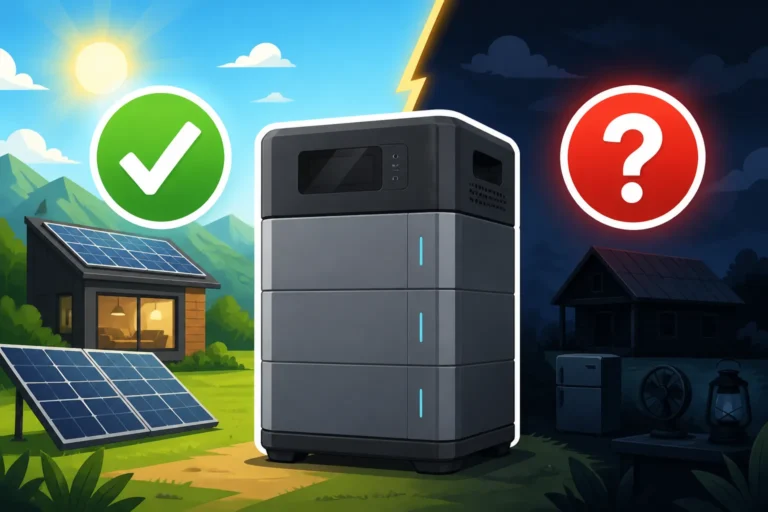
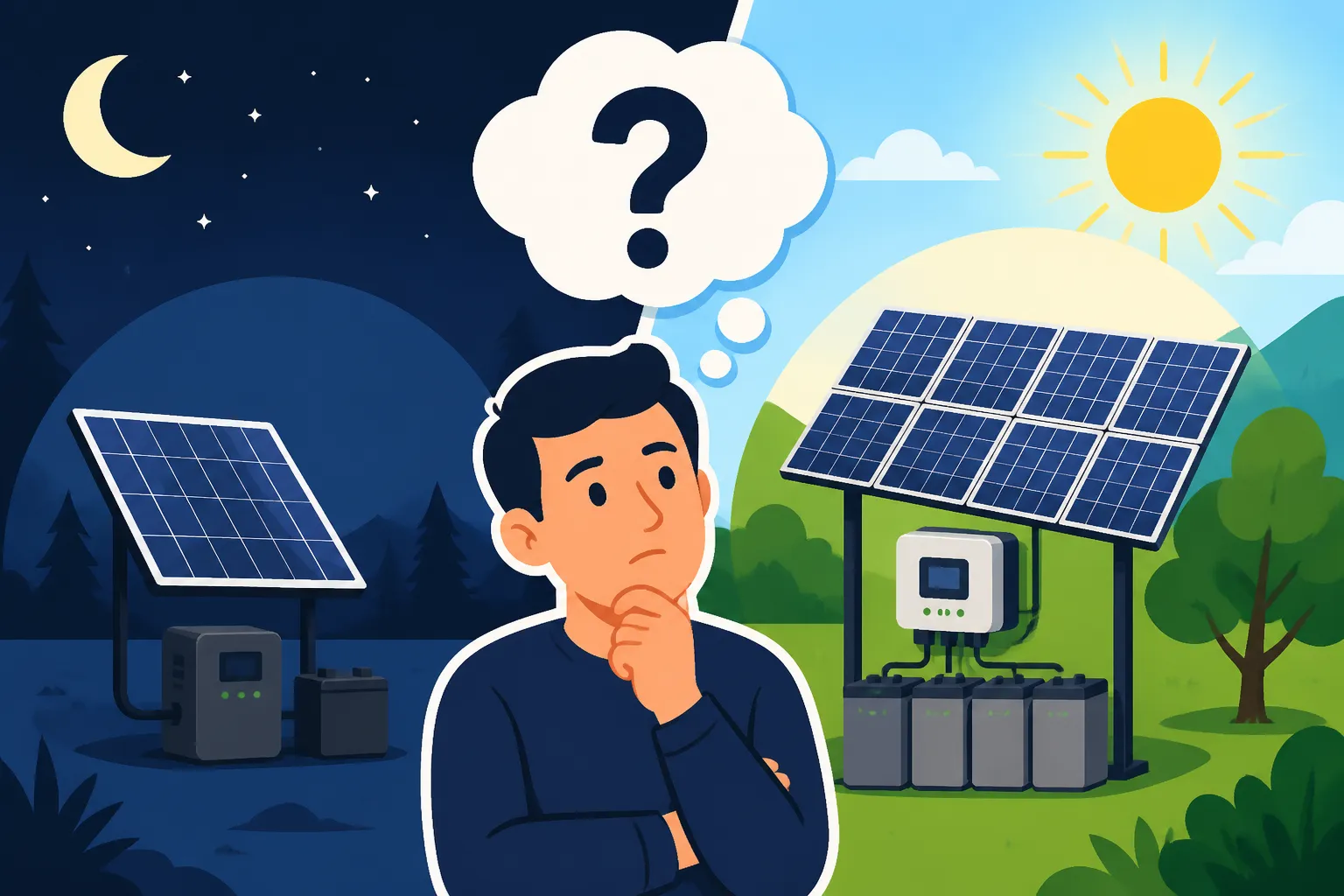
The battery bank is arguably the most critical component of an off-grid solar system. While solar panels generate power, batteries store it, allowing you to use electricity when the sun isn't shining – at night, on cloudy days, or during extended periods of bad weather. Without adequate battery storage, your off-grid independence is severely limited.
Days of Autonomy
"Days of autonomy" refers to how many days your battery bank can power your essential loads without any input from your solar panels or a backup generator. This is a crucial metric, especially for locations prone to extended periods of cloudy weather or for those who want maximum reliability. For instance, if you live in an area that typically experiences 2-3 consecutive cloudy days in winter, you'd want to design your battery bank for at least 3 days of autonomy, possibly more if you want a larger buffer.
To calculate this, you take your total daily watt-hour consumption (which you determined earlier) and multiply it by the number of desired days of autonomy. Then, you'll need to account for the battery's depth of discharge (DoD) – how much of its capacity you can safely use without damaging it – and its overall efficiency. Lithium iron phosphate (LiFePO4) batteries generally allow for 80-100% DoD, while traditional lead-acid batteries should only be discharged to 50% to maximize their lifespan. This means you'll need significantly more usable capacity with lead-acid batteries to achieve the same days of autonomy. You can dive deeper into this topic in our comprehensive guide on How Many Batteries for an Off-Grid System.
Let's say you need 3,000 Wh per day and want 3 days of autonomy with LiFePO4 batteries (allowing 80% DoD). Your total usable battery capacity needed would be (3,000 Wh/day * 3 days) / 0.80 = 11,250 Wh. Then you'd select batteries that meet this capacity, considering their individual voltage and amp-hour ratings.
Battery Chemistry and Depth of Discharge
The choice of battery chemistry has a profound impact on your system's performance, lifespan, and cost. The two most common types for off-grid solar are lead-acid (including flooded, AGM, and gel) and lithium iron phosphate (LiFePO4).
Lead-acid batteries are typically cheaper upfront but have a shorter lifespan (often 3-7 years) and should only be discharged to about 50% of their capacity to prolong their life. Discharging them further dramatically reduces their cycle life. They also require more maintenance (for flooded types) and are sensitive to temperature extremes. In contrast, LiFePO4 batteries have a higher upfront cost but offer a much longer lifespan (10-15+ years), can be discharged deeper (80-100% DoD) without significant degradation, are more efficient, and require virtually no maintenance. They also perform better in varying temperatures and are generally safer. The long-term cost of LiFePO4 vs Lead-Acid Battery Cost often favors lithium, despite the initial sticker shock, due to their superior performance and longevity.
Many off-grid enthusiasts are moving towards LiFePO4 batteries due to their advantages. Brands like Battle Born, EG4, and even DIY battery builders utilizing high-quality cells are popular choices. When selecting, consider not just the cost per amp-hour, but the cost per usable amp-hour over the battery's expected lifespan.
System Voltage (12V, 24V, 48V)
The voltage of your battery bank (and thus your entire system) is another critical decision, usually 12V, 24V, or 48V. This choice impacts efficiency, wiring costs, and the availability of components.
- 12V Systems: These are common for smaller applications like RVs, vans, small cabins, or basic shed setups. Many DC appliances (lights, USB chargers) are readily available in 12V. However, for larger loads, a 12V system requires very thick, expensive wiring to prevent significant voltage drop, and inverters for larger power outputs can be less efficient.
- 24V Systems: This is a good middle ground for moderate energy needs. It allows for thinner wiring than 12V for the same power output, reducing cable costs and losses. Many charge controllers and inverters are designed for 24V.
- 48V Systems: This is the standard for larger off-grid homes and substantial energy demands. Running at 48V significantly reduces the current (amperage) for a given power output, which means you can use much thinner, less expensive wiring, and experience minimal voltage drop over longer distances. It also allows for more efficient operation of large inverters. Most high-capacity inverters and charge controllers are optimized for 48V systems.
Generally, if your system needs exceed 1,500-2,000 watts of continuous inverter output, it's highly recommended to go with a 24V or, ideally, a 48V system. The upfront cost savings on wiring alone can be substantial, and the improved efficiency means your components will run cooler and last longer. Our guide on How to Choose System Voltage explores these options in detail.
| Appliance | Typical Wattage (W) | Est. Daily Use (hours) | Daily Watt-Hours (Wh) | Notes |
|---|---|---|---|---|
| LED Light Bulb | 9 | 5 | 45 | Assumes one bulb |
| Mini-Fridge | 70 | 8 (cycling) | 560 | Running wattage, cycles on/off |
| Laptop | 60 | 4 | 240 | Charging/running |
| Phone Charger | 10 | 2 | 20 | For one phone |
| Water Pump (well) | 1000 | 0.5 | 500 | High surge, short run time |
| Microwave (heating) | 1000 | 0.1 (6 mins) | 100 | Very high surge |
| TV (40-inch LED) | 80 | 3 | 240 | |
| Starlink Satellite | 50 | 24 | 1200 | Continuous draw |
| Example Total | 2905 | Your actual total will vary widely! |
This table provides a generalized example. Always check the specific wattage of your own appliances, ideally with a power meter.
Choosing the Right Inverter and Charge Controller
These two components are the "brains" and "brawn" of your off-grid system, respectively. The charge controller manages the power coming from your solar panels to efficiently charge your batteries, while the inverter converts that stored battery power into usable AC electricity for your appliances. Getting these wrong can lead to inefficiency, system failures, or even damaged equipment.
Inverter Sizing for Continuous and Surge Loads
As we touched on earlier, correctly sizing your inverter is paramount. The inverter's continuous power rating must comfortably exceed the total running wattage of all AC appliances you might use simultaneously. For example, if you routinely run a refrigerator (150W), a laptop (60W), and a few lights (20W total) at the same time, your continuous load is 230W. You'd want an inverter with a continuous rating well above this, perhaps 500W-1000W to give you breathing room.
However, the surge rating is equally, if not more, important. Look for an inverter that can handle the highest surge load of any single appliance, or the combined surge of multiple appliances starting at once. This might mean an inverter with a surge capacity that is 2-3 times its continuous rating. A 3000W continuous inverter with a 6000W surge capability is common for residential off-grid setups. Brands like Victron Energy, Sol-Ark, and Schneider Electric offer robust inverters known for their reliability and excellent surge capabilities. Considering How to Size an Off-Grid Inverter carefully will prevent countless headaches.
Additionally, always opt for a pure sine wave inverter. Modified sine wave inverters are cheaper, but they can damage sensitive electronics (like computers, modern refrigerators, and medical equipment) and run less efficiently, potentially causing motors to hum or overheat. For any modern off-grid application, pure sine wave is the only way to go.
Charge Controller Types and Selection
The charge controller regulates the voltage and current from your solar panels, ensuring your batteries are charged safely and efficiently. There are two main types: PWM (Pulse Width Modulation) and MPPT (Maximum Power Point Tracking).
- PWM Charge Controllers: These are simpler, less expensive, and less efficient (typically 70-75% efficient). They essentially act like a switch, connecting the solar panels directly to the battery when the battery needs charging, and disconnecting when it's full. They're best suited for small, simple systems, especially when the solar panel voltage closely matches the battery bank voltage (e.g., 12V panel charging a 12V battery).
- MPPT Charge Controllers: These are more advanced, more expensive, and significantly more efficient (typically 92-99% efficient). They actively track the maximum power point of the solar array, converting excess voltage into additional current, which means they can extract much more power from your panels, especially in varying light conditions or when panel voltage is significantly higher than battery voltage (e.g., higher voltage solar panels charging a 12V or 24V battery bank). This is particularly beneficial in colder weather, as panels produce higher voltage in cold temperatures.
For any moderate to large off-grid system, an MPPT charge controller is almost always the superior choice due to its higher efficiency, which means you'll get more usable power from your solar panels. This can often translate to needing fewer panels overall, potentially offsetting the higher upfront cost of the MPPT controller itself. Our detailed guide on How to Size a Charge Controller can help you determine the right fit for your specific panel array and battery bank.
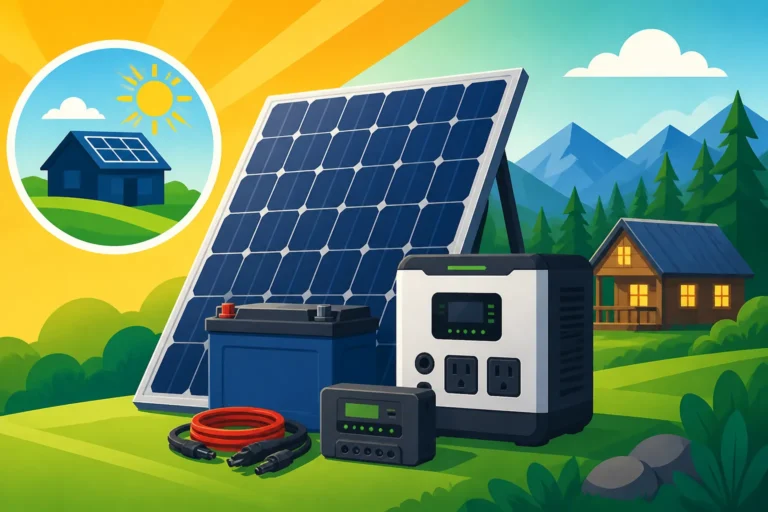
Integrated Systems and All-in-One Units
For those who are newer to off-grid solar or prefer a more streamlined approach, integrated systems and all-in-one units have become incredibly popular. These devices combine multiple essential components—like the charge controller, inverter, and sometimes even a battery monitor or transfer switch—into a single, compact unit. This simplifies wiring, reduces installation complexity, and often comes with user-friendly monitoring interfaces.
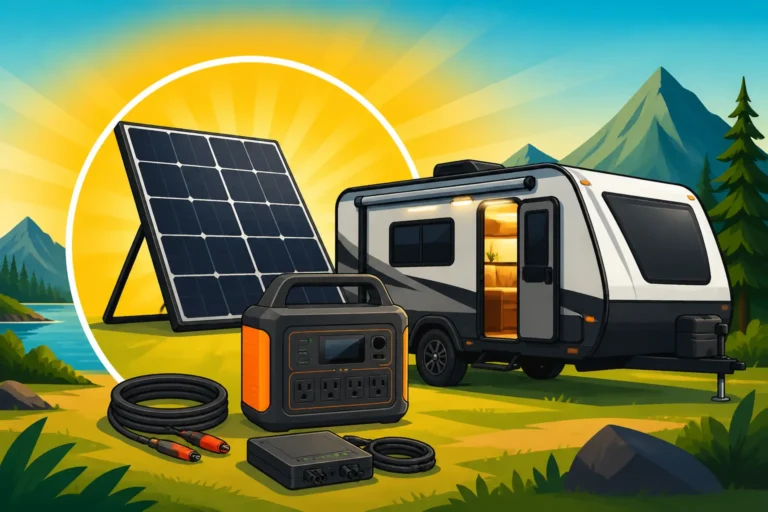
Companies like Sol-Ark, Victron MultiPlus, and Growatt offer powerful inverter-chargers that serve as the central hub for larger residential systems. For smaller, more portable needs, or even as a stepping stone to a full off-grid setup, units like the Jackery Explorer series offer a glimpse into off-grid living without the full commitment. These portable power stations typically include an inverter, charge controller, and battery all in one box, making them incredibly easy to deploy for things like camping, tailgating, or powering essential electronics in a small shed.
While convenient, all-in-one systems can sometimes be less flexible for customization or expansion down the line compared to building a system from discrete components. However, for many, the ease of installation and reduced footprint make them an attractive option, especially when space is at a premium, like in an RV or tiny home. Jackery has made a name for itself in this space, providing reliable, user-friendly options for portable power.
Beyond the Basics: Essential Considerations
Once you've wrapped your head around the core components, there are still a few important factors that seasoned off-gridders consider. These elements can significantly impact the long-term success, cost, and reliability of your off-grid solar system. Ignoring them can lead to unexpected expenses or frustrating limitations.
Expandability and Future Needs
One of the biggest regrets many off-gridders have is not planning for future expansion. Life changes, and so do energy needs. You might start with a small setup for basic lights and charging, but soon you're considering a mini-split air conditioner, an electric vehicle charger, or a larger workshop. Designing your system with expandability in mind from the start can save you a tremendous amount of time, effort, and money later on.
This means oversizing your charge controller slightly, choosing an inverter-charger that can handle future panel or battery additions, and running conduit that can accommodate more wiring. It also involves selecting a battery management system (BMS) for your LiFePO4 batteries that can manage additional packs. Even if you can't afford a full, robust system from day one, having a roadmap and choosing components that are part of an expandable ecosystem (like those offered by brands such as Victron Energy or the modular Jackery Power Station options) means you can grow your system incrementally. This way, you avoid having to rip out and replace perfectly good equipment simply because it's maxed out. Consider our article on Cost of Expanding an Off-Grid System to understand the financial implications.
Backup Power Solutions
Even the most meticulously designed off-grid solar system needs a backup plan. There will be times—extended cloudy periods, unusually high demand, or unexpected equipment failure—when your solar array and battery bank simply can't keep up. This is where a backup generator, either propane, gasoline, or diesel, becomes an indispensable part of a reliable off-grid setup.
A generator provides that critical safety net, ensuring you always have power when you need it most. Many modern off-grid inverters have generator integration features, allowing them to automatically start and stop the generator when battery levels drop too low or when the system needs an extra boost. For example, a generator can provide supplementary power to run high-draw appliances like a well pump or washing machine, saving your battery bank for nighttime use. When choosing one, consider fuel type, noise level, and power output. While the goal is solar independence, a well-integrated generator offers peace of mind and true energy security. Learn more about How to Add a Generator to Your Design and Off-Grid Solar Generator Backup Cost.
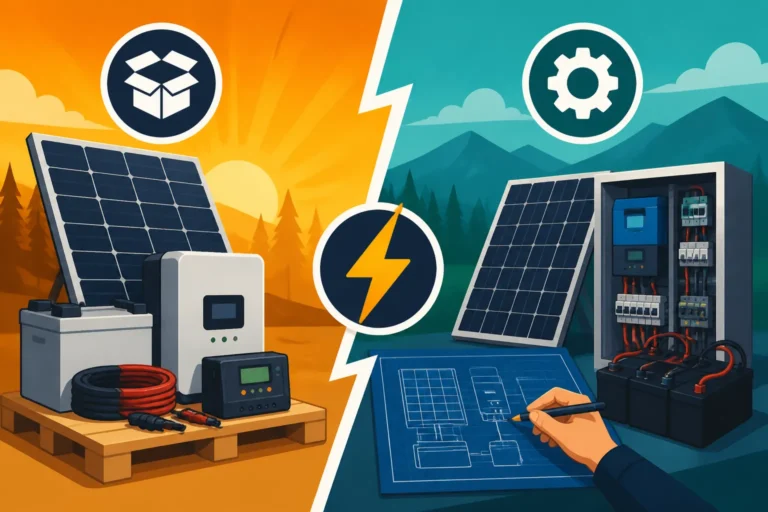
Budget and DIY vs. Professional Installation
Finally, the practical reality of your budget heavily influences how much off-grid solar you "really need." It's easy to get carried away with high-capacity dreams, but the cost can escalate quickly. A full off-grid residential system can range from $15,000 to $50,000 or more, depending on your energy needs and chosen components. For those with a tighter budget, starting smaller and focusing on essential loads, then expanding later, is a perfectly valid strategy. Our article on How to Budget for an Off-Grid Solar System can provide more specific advice.
The decision between a DIY installation and hiring a professional also impacts your overall cost and system design. Doing it yourself can save you a significant amount on labor costs, potentially cutting your total expenses by 30-50%. However, it requires a good understanding of electrical systems, safety protocols, and local codes. If you're not comfortable with electrical work, investing in professional installation is a wise choice to ensure safety, compliance, and optimal performance. Many people opt for a hybrid approach: purchasing a pre-configured kit (like those from Renogy or EcoFlow Power Kits) that simplifies some of the complexity, then tackling the installation themselves with careful research and perhaps an electrician's review.
Ultimately, "how much off-grid solar you really need" isn't a fixed number; it's a dynamic calculation based on your unique lifestyle, location, budget, and desired level of comfort and reliability. By systematically breaking down your energy consumption, carefully sizing each component, and planning for the future, you can build an off-grid solar system that perfectly suits your needs and empowers your independent lifestyle.
Disclaimer
The information provided in this article is for general guidance and informational purposes only, and does not constitute professional advice. Off-grid solar system design and installation can be complex and involve electrical hazards. Always consult with qualified professionals and adhere to all local electrical codes and regulations when designing or installing a solar power system.