Should You Buy the Bluetti EP500 for Off-Grid
The dream of escaping the rat race and powering your own life off-grid is incredibly appealing, but the reality often hits when you start looking at complex solar setups and daunting electrical diagrams. It can feel overwhelming trying to figure out if an all-in-one power solution, like the Bluetti EP500, can truly meet your needs without having to piece together an entire system. This guide is here to cut through the confusion and help you decide if the Bluetti EP500 is the right off-grid power solution for your unique situation.
Understanding the Bluetti EP500: A Deep Dive into its Capabilities
When you're looking at robust, all-in-one power solutions for off-grid living, the Bluetti EP500 often comes up in conversation. It's a significant piece of equipment, not just a small, portable power bank, and understanding its core capabilities is crucial before you even consider if it's a fit for your lifestyle. Think of it as a comprehensive power hub designed to tackle more substantial energy demands than your average portable solar generator.
What Exactly is the EP500?
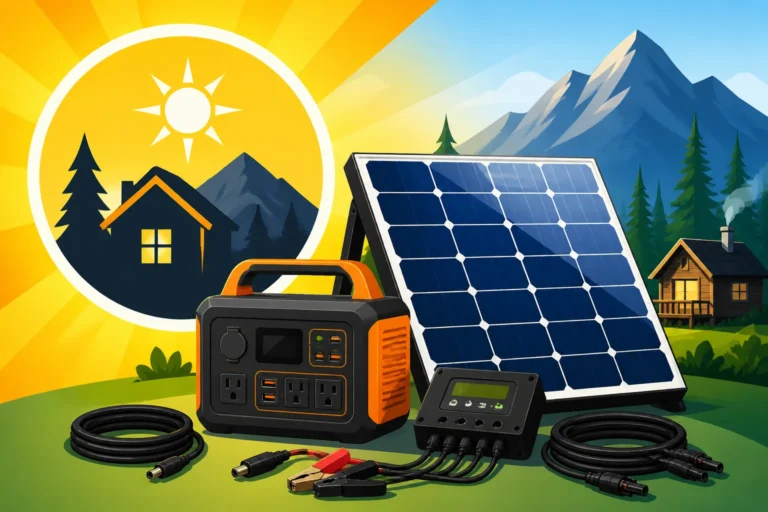
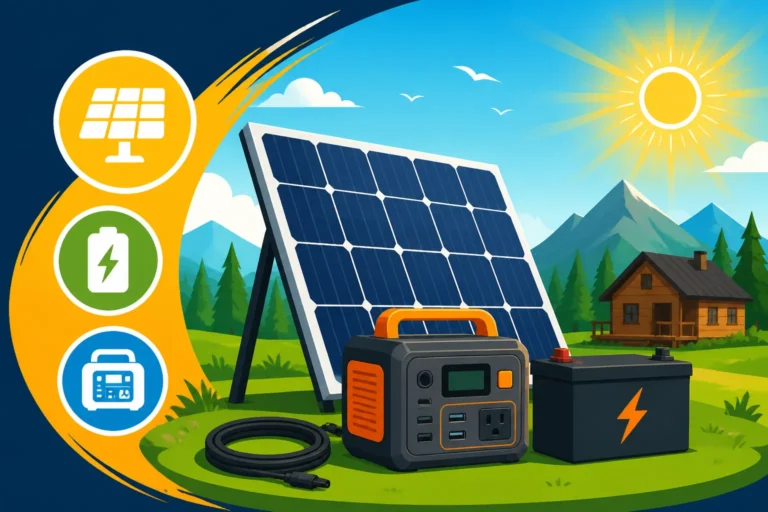
At its heart, the Bluetti EP500 is a massive, wheeled power station that integrates a high-capacity battery, a powerful inverter, and a sophisticated charge controller all into one relatively compact (though heavy!) unit. Unlike a traditional off-grid solar system where you purchase and connect each component separately – panels, charge controller, battery bank, inverter, and wiring – the EP500 streamlines much of this. It's designed to provide a ready-to-use power source that can be charged from various inputs, including solar panels, grid AC power, or even a gas generator. It’s often considered a high-end "solar generator," but its capacity and output push it into a category of its own, blurring the lines between a truly portable solution and a fixed mini-power plant.
What makes it particularly appealing is the integration. You don't have to worry about matching individual components or intricate wiring diagrams initially. You essentially plug in your solar panels, plug in your appliances, and you're good to go. This "plug-and-play" simplicity significantly lowers the barrier to entry for many folks who might feel intimidated by a full custom off-grid setup. However, this convenience also comes with its own set of considerations, particularly in terms of customization and future expandability, which we'll get into shortly.
Key Specifications and Features
Let's talk numbers, because that’s where the Bluetti EP500 really shines, or perhaps reveals its limitations, depending on your energy appetite. The standard Bluetti EP500 boasts a formidable 5100 Watt-hour (Wh) LiFePO4 battery. To put that into perspective, a typical residential refrigerator uses about 1-2 kWh per day, so the EP500 could theoretically run it for 2-3 days without any recharge, though real-world usage varies. It also integrates a 2000W pure sine wave inverter, which is capable of running most household appliances, from microwaves and coffee makers to power tools. It's important to remember that 2000W is the continuous output; some appliances have a high "surge" power requirement when they first start up, and while the EP500 can handle some surge, you need to be mindful of your total instantaneous draw.
For charging, the EP500 is highly versatile. It can accept up to 1200W of solar input, which is a substantial amount, allowing for relatively quick recharges on sunny days. It also charges rapidly from an AC wall outlet (up to 1800W) or a generator. One really neat feature is its uninterrupted power supply (UPS) capability. This means you can plug critical devices into it, and if grid power ever goes down, the EP500 seamlessly switches over to battery power, preventing any downtime for your electronics. This is a huge plus for those seeking reliable backup power, even if they're primarily grid-tied. Additionally, it offers multiple output ports, including AC outlets, DC ports, and USB-A and USB-C for all your smaller gadgets.
LiFePO4: The Heart of the EP500
The choice of battery chemistry is a massive factor in any off-grid power solution, and the Bluetti EP500 utilizes Lithium Iron Phosphate (LiFePO4) batteries. This isn't just a technical detail; it's a major advantage. LiFePO4 batteries are renowned for their incredible longevity and safety compared to older battery types like lead-acid. While a lead-acid battery might give you 300-500 charge cycles, a high-quality LiFePO4 battery, like those found in the EP500, can offer 2500-3500+ cycles to 80% depth of discharge. This means your investment in the EP500 will likely last for many, many years, significantly reducing the long-term cost of an off-grid solar battery bank.
Beyond cycle life, LiFePO4 batteries are also more thermally stable, reducing the risk of overheating or fire, which is a huge peace of mind for anyone living off-grid. They also maintain a more consistent voltage throughout their discharge cycle, meaning your appliances get a steady supply of power without significant drops in performance. This is a stark contrast to lead-acid batteries, which see a noticeable voltage sag as they discharge. Furthermore, LiFePO4 batteries are significantly lighter than lead-acid batteries of comparable capacity, although the EP500 itself is still quite heavy due to its robust casing and integrated components. The inclusion of LiFePO4 technology speaks volumes about the quality and forward-thinking design of the EP500, making it a serious contender for reliable, long-term power.
Is the Bluetti EP500 Right for Your Off-Grid Needs? Scenarios and Suitability
Deciding if the Bluetti EP500 is the right fit really boils down to your specific off-grid lifestyle and power demands. It's a powerful machine, no doubt, but "off-grid" can mean a lot of things, from a tiny cabin in the woods to a full-sized homestead. Let's explore where the EP500 shines and where you might need to consider other options.
Ideal Use Cases: Cabins, RVs, and Emergency Backup
The Bluetti EP500 truly excels in certain off-grid scenarios, particularly those that require substantial power but don't necessarily demand continuous, whole-house operation for weeks on end. For a remote cabin or a tiny home that's used seasonally or part-time, the EP500 can be an absolute game-changer. Imagine a hunting cabin where you need to run lights, charge devices, power a small fridge, and maybe a microwave for a few days at a time. The EP500's 5.1kWh capacity and 2000W inverter are more than capable of handling these loads, especially when supplemented with solar panels. You wouldn't need to learn how to install an off-grid solar system from scratch; just set up some panels and plug them in. This ease of setup makes it a fantastic option for getting power quickly without a steep learning curve. You might even use it to power a cabin with solar and enjoy modern conveniences.
RV and van life enthusiasts also find a lot to love in the EP500. While its weight means it's not truly "portable" in the sense of carrying it around, its integrated wheels make it movable for placement in a garage, bay, or even under a fixed countertop. For full-time RV living, especially for those who want to run air conditioning for short bursts or multiple kitchen appliances, the EP500 offers a robust power supply that easily surpasses smaller, more traditional RV power systems. You'd likely want to also explore Off-Grid Solar Cost for an RV to understand the full financial picture.
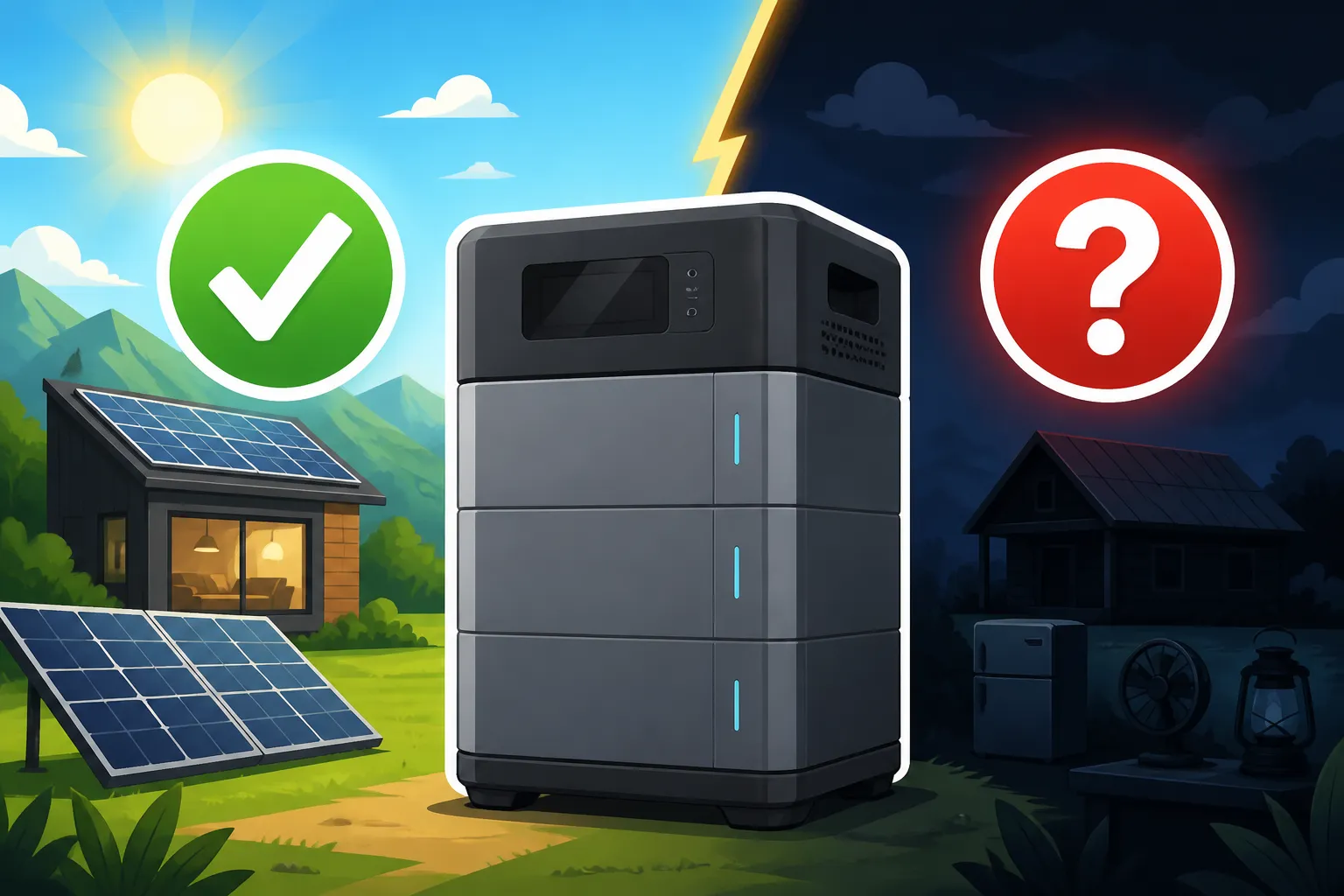
Furthermore, its UPS functionality makes it an excellent choice for emergency preparedness. If you're grid-tied but prone to power outages, the EP500 can keep your essential appliances, like a refrigerator, medical devices (like a CPAP machine), and communication equipment running smoothly for days. This can be a lifesaver when the grid goes dark, offering significant peace of mind. It’s a step up from smaller portable units, like some from Jackery, which might only cover light loads for shorter durations.
Limitations for Full-Time Off-Grid Living
While impressive, the Bluetti EP500 does have limitations that prevent it from being a universal solution for every off-grid application, especially for those aiming for full-time, year-round independence in a larger home. The primary constraint is its 2000W continuous power output (or 3000W for the EP500Pro model). For a typical family home, especially one with multiple major appliances like an electric water heater, central air conditioning, or a well pump, 2000W simply won't cut it for simultaneous operation. You'd quickly hit the inverter's limits, causing it to trip or shut down. You might be able to run one high-draw appliance at a time, but not several. This is where a traditional, custom-designed How to Size an Off-Grid Solar System with a larger inverter (e.g., 5000W or 8000W) becomes necessary.
Another factor is the total battery capacity. While 5.1kWh is a good amount of energy, a full-time off-grid home, particularly one in a region with limited sun or during winter months, often requires 10-20 kWh or more of battery storage to ensure several days of autonomy. Relying solely on a single EP500 for a large off-grid home means you'd be very dependent on consistent solar input, or running a generator frequently, which defeats some of the purpose of going off-grid with solar. For understanding more about your needs, a guide on How to Calculate Daily Energy Usage would be beneficial. The EP500 isn't designed to be easily expanded with additional external battery banks in the same way a modular off-grid system is.
Comparing it to a Modular Off-Grid System
This is where the rubber meets the road. The EP500 is a fantastic all-in-one "solar generator" solution, but it's fundamentally different from a fully modular, component-based off-grid solar system.
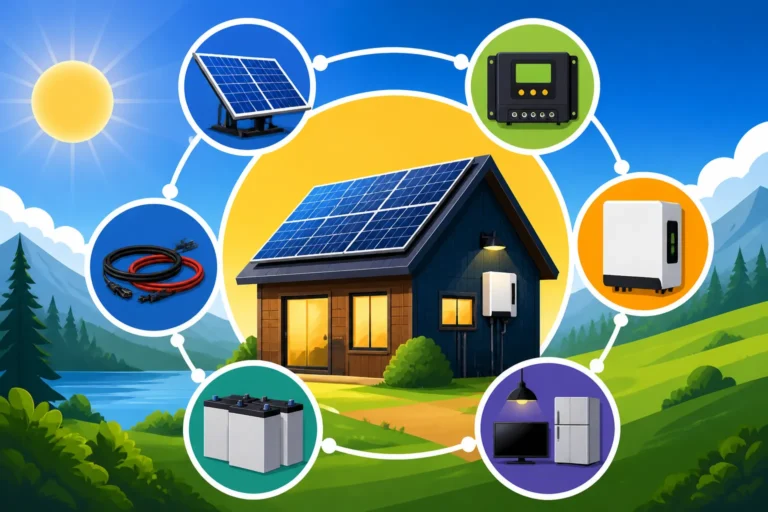
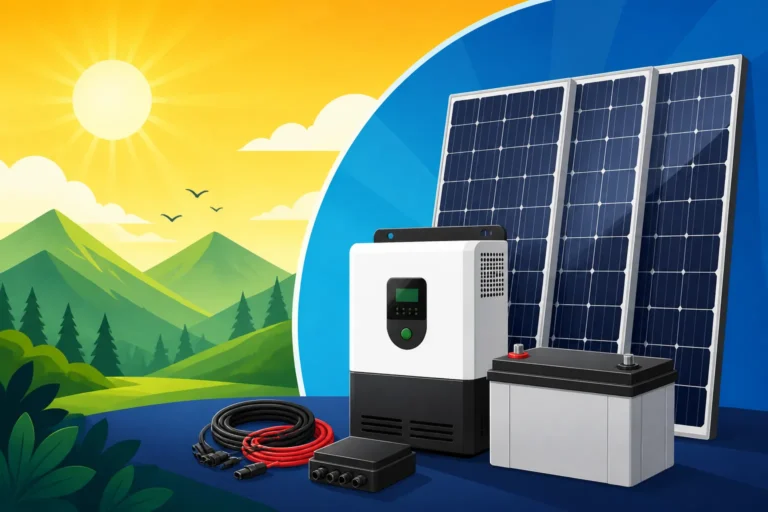
A modular system typically involves:
- Separate solar panels (often a larger array)
- A dedicated charge controller (MPPT or PWM)
- A large, standalone battery bank (e.g., multiple LiFePO4 batteries wired together)
- A powerful inverter (or inverter-charger) often with higher continuous output.
- All the necessary wiring, breakers, fuses, and possibly a main electrical panel.
The main advantages of a modular system, though more complex to install, are immense scalability and customization. If you need more power, you add more panels. If you need more storage, you add more batteries. If you need higher output, you upgrade your inverter. This flexibility is critical for a permanent, full-time off-grid home. For instance, the Best Off-Grid Solar Batteries often come in individual 100Ah or 200Ah units that you can string together for huge capacities.
The EP500 sacrifices this modularity for simplicity and portability (relatively speaking). It's a closed system. You can add more solar input (up to its 1200W limit), but you can't easily increase its battery capacity or inverter output beyond what's built-in. This makes it less suited for long-term growth or adaptation as your power needs change. A guide like Solar Generator vs Off-Grid Solar System delves into these differences in more detail, highlighting that while solar generators are convenient, they often have limits on expandability and continuous power compared to a custom-built system.
Practical Considerations and Making Your Decision
So, you've weighed the pros and cons, and you're still considering the Bluetti EP500. Now it's time to dig into the practicalities of owning and operating such a unit for your off-grid dreams. These are the details that often determine long-term satisfaction and the true value of your investment.
Cost, Longevity, and Expandability
Let's not beat around the bush: the Bluetti EP500 is a significant investment. Typically, these units can range from around $4,000 to $5,000, sometimes more depending on sales or bundled solar panels. When you're looking at Off-Grid Solar Cost: Complete Breakdown, this price tag needs to be evaluated against what you get. For that price, you're getting a premium LiFePO4 battery, a capable inverter, and a charge controller, all in one package, plus the convenience.
The longevity, as discussed, is a major plus. With thousands of charge cycles, the LiFePO4 battery should last you a decade or more under normal use, making it a robust long-term asset. This is a significant advantage over cheaper lead-acid setups where you might be looking at battery replacement every 3-5 years. When considering LiFePO4 vs Lead-Acid Battery Cost, the higher upfront cost of LiFePO4 is often justified by its extended lifespan and better performance.
However, the main drawback here is expandability. The EP500 is largely a self-contained unit. While Bluetti does offer fusion box accessories that allow you to link two EP500 or EP500Pro units together for double the capacity and output (240V split phase), this doubles your initial investment. You can't just easily add a couple more solar panels if you hit the 1200W input limit, or seamlessly integrate another 5kWh battery pack from a different manufacturer down the line. This lack of modular growth is a critical point for anyone whose power needs might increase over time. If you envision expanding your off-grid cabin into a larger homestead, you'll eventually need a different approach.
Installation, Maintenance, and Portability
One of the EP500's biggest selling points is its ease of "installation" and maintenance. For many off-grid hopefuls, the idea of complex wiring, permits, and electrical codes is daunting. With the EP500, much of that is bypassed. You essentially position it where you want it (remember, it’s heavy at around 170 lbs but comes with wheels), plug in your solar panels (using standard MC4 connectors), and connect your appliances. There's no intricate How to Wire an Off-Grid Solar System unless you're integrating it into a sub-panel, which then would likely require an electrician. For simple plug-and-play setups, it’s incredibly user-friendly.
Maintenance is also minimal. LiFePO4 batteries are generally maintenance-free. There's no need to check electrolyte levels as with flooded lead-acid batteries. Your primary maintenance will be ensuring the unit's cooling vents are clear, and occasionally cleaning dust off the exterior. Compared to a complex array of components that each need monitoring, the EP500 simplifies things dramatically.
As for portability, let's be realistic. While it has wheels, it's not something you're going to haul in and out of your vehicle every weekend for a casual camping trip. It's more about being able to relocate it within a fixed structure, like moving it from a shed to a cabin, or rolling it from your garage to a patio during a power outage. For true portability for simpler needs, you might look at smaller options, perhaps from brands like Jackery, that offer less power but are genuinely backpack-friendly. For instance, a Jackery Explorer 1000 or 2000 Pro is designed to be carried and moved with ease, albeit with less capacity and output than the EP500.
Alternatives and Complementary Solutions
If the Bluetti EP500 doesn't quite hit the mark, or if you're looking to augment its capabilities, there are several pathways you can explore.
Consider a Hybrid System: For those who need more power than the EP500 but still want some of its integrated advantages, a Best Off-Grid Solar Inverters system from brands like Victron or Sol-Ark might be a better fit. These often combine an inverter and charge controller into a single unit, but allow you to connect a much larger, expandable battery bank and solar array. This gives you more flexibility and higher power output for a whole house setup, though at a greater overall complexity and likely higher cost.
Smaller, More Portable Solar Generators: For lighter off-grid needs, like car camping, tent camping, or simply charging electronics on the go, a smaller solar generator might be more appropriate. Brands like Jackery, EcoFlow, and Goal Zero offer a wide range of portable power stations with capacities from a few hundred Watt-hours to several kilowatt-hours. These are often much lighter, more genuinely portable, and less expensive, making them perfect for shorter trips or minimal power demands. While they don't have the brute force of an EP500, they are incredibly practical for basic needs.
Building a Custom DIY System: For the truly ambitious, building your own custom off-grid system offers the ultimate in customization and often the best cost-per-watt-hour. You buy each component separately – panels, charge controller, batteries, inverter – and wire them together. This path, while requiring significant research and potentially professional electrical help, allows you to perfectly tailor the system to your exact needs, budget, and future expansion plans. You can create a truly massive Off-Grid Solar System Sizing Guide for a full-time residence. This is often the route taken for permanent, whole-house off-grid living, especially if you want significant power for appliances like a well pump or electric stove.
Ultimately, the Bluetti EP500 is an excellent product for a specific niche: those who need substantial power with maximum convenience for partial or remote off-grid living, or as robust emergency backup. It's a premium, all-in-one solution that delivers performance and ease of use, but it's crucial to align its capabilities with your actual long-term off-grid aspirations.
| Feature | Bluetti EP500 | Modular DIY Off-Grid System | Portable Solar Generator (e.g., smaller Jackery) |
|---|---|---|---|
| Battery Capacity | ~5.1 kWh LiFePO4 | Highly scalable (10 kWh to 50+ kWh) | 0.5 kWh – 2 kWh |
| Inverter Output | 2000W continuous (pure sine wave) | Highly scalable (2000W to 15000W+) | 500W – 2200W |
| Components | All-in-one unit (battery, inverter, CC) | Separate panels, CC, batteries, inverter, wiring | All-in-one unit (battery, inverter, CC) |
| Expandability | Limited (can link two units with accessories) | Excellent (add more panels/batteries/inverter) | Limited (some models allow external battery) |
| Installation | Plug-and-play for basic use | Complex, often requires professional electrician | Plug-and-play |
| Maintenance | Very low | Moderate (battery checks, wiring inspections) | Very low |
| Portability | Wheeled, movable within a structure (~170 lbs) | Fixed installation | Highly portable (10-60 lbs) |
| Ideal Use | Remote cabins, RVs, emergency home backup | Full-time off-grid homes, large power demands | Camping, small electronics, short outages |
| Cost | $4,000 – $5,000+ | Varies widely ($5,000 – $30,000+) | $500 – $2,500+ |
| Lifespan (Battery) | 2500-3500+ cycles | 2500-6000+ cycles (LiFePO4) | 500-2500+ cycles (LiFePO4 or NMC) |
| Key Advantage | Simplicity, robust power for its class | Scalability, customizability, high power output | Convenience, light weight, budget-friendly |
Disclaimer
The information provided in this article is for general informational purposes only and does not constitute professional advice. Off-grid solar system design and installation can be complex and involve electrical hazards. Always consult with a qualified electrician or solar professional before installing or modifying any electrical system. Specific regulations, permits, and codes may apply in your area.