Is Off-Grid Solar Worth It for a Food Truck
Running a food truck is a hustle, and one of the biggest headaches can be the constant need for reliable power. Whether you’re lugging around a noisy, gas-guzzling generator, constantly hunting for shore power hookups, or dealing with the fumes and maintenance, it’s a drain on your time, wallet, and peace of mind. This comprehensive guide will deep dive into whether investing in an off-grid solar system is truly worth it for your food truck, covering the financial, operational, and practical aspects to help you make an informed decision.
The Core Question: Is Off-Grid Solar a Smart Move for Food Trucks?
For many food truck entrepreneurs, the idea of ditching the generator or freeing themselves from reliance on unpredictable grid connections is incredibly appealing. The short answer to "Is off-grid solar worth it for a food truck?" is often a resounding yes, but with some important caveats that we'll explore. It’s not just about cutting down on fuel costs; it's about transforming your operational efficiency, enhancing your brand, and gaining unparalleled freedom.
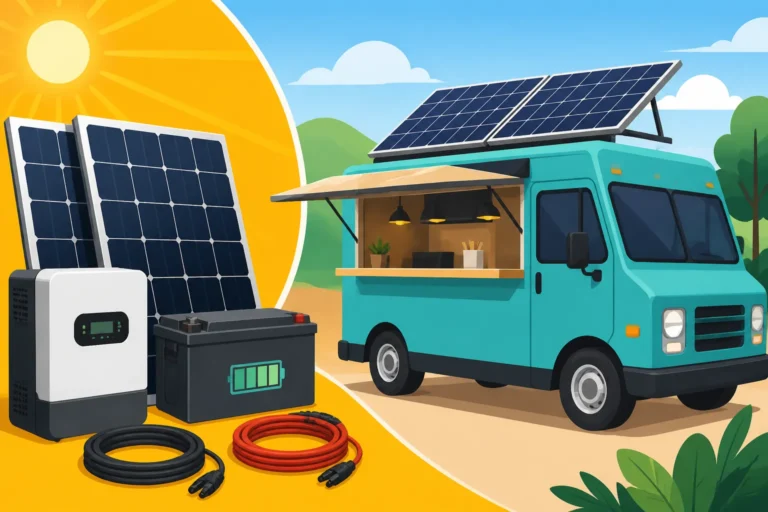
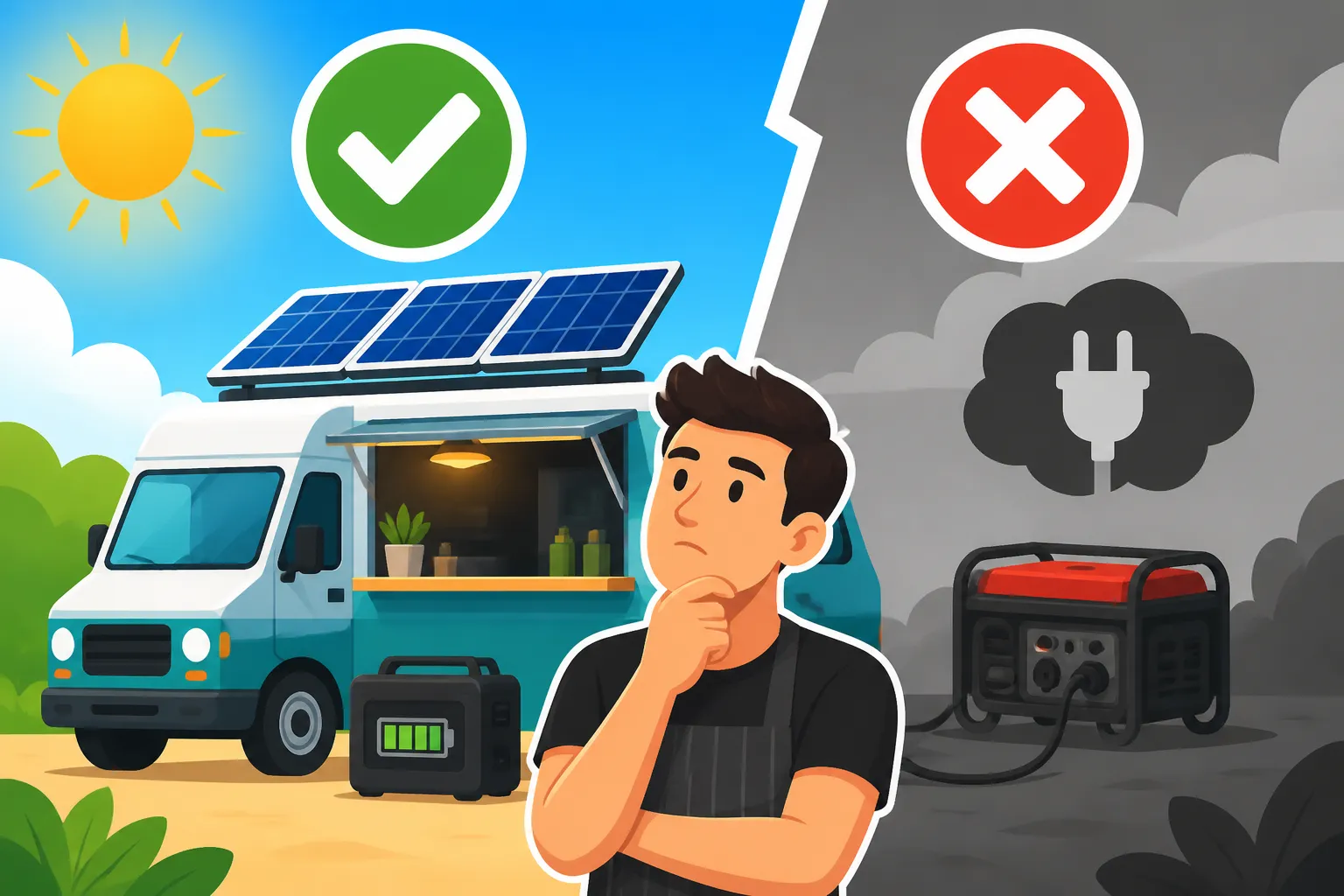
Think about it: the typical food truck experience for both owner and customer is often punctuated by the incessant drone of a generator. These machines guzzle fuel, demand regular maintenance, and emit fumes that can detract from the ambiance of your culinary creations. Imagine pulling up to a bustling farmers' market, a quiet park, or a private event, and effortlessly powering your entire operation with nothing but the silent hum of an inverter and the clean energy from the sun. This shift isn't just a fantasy; it's a tangible reality that more and more food truck operators are embracing.
The initial investment in solar can feel daunting, similar to buying new kitchen equipment or upgrading your vehicle. However, when you weigh that upfront cost against the recurring expenses of fuel, the frequent maintenance cycles of generators, and the potential revenue lost due to power outages or restrictions, the long-term value of solar quickly comes into focus. It's a strategic business decision that pays dividends in both tangible savings and intangible benefits, such as a more pleasant working environment and a positive public image.
Unpacking the Pros and Cons of Solar for Your Food Truck
Transitioning to off-grid solar for your food truck involves a careful evaluation of its advantages and the challenges you might encounter. It's about weighing the freedom and savings against the initial hurdles of design and installation.
The Bright Side: Major Advantages
Embracing solar power for your food truck can unlock a host of benefits that directly impact your bottom line and daily operations.
Reduced Operating Costs
This is often the first and most obvious advantage that springs to mind. Traditional generators, whether gasoline or diesel, consume fuel constantly, and those costs add up dramatically over time. If you’re running your generator for 8-12 hours a day, several days a week, the fuel expense alone can eat significantly into your profits. With an off-grid solar setup, once your system is installed, your "fuel" — sunlight — is absolutely free. You’ll drastically cut down on trips to the gas station and watch your operational expenses shrink. Beyond fuel, generators require frequent oil changes, spark plug replacements, and air filter cleanings. Solar systems, particularly the modern ones with robust components, demand far less in terms of routine maintenance, leading to further savings. For a detailed look at this, check out our article on Off-Grid Solar vs Generator Fuel Cost.
Environmental Impact and Brand Appeal
In today’s market, consumers are increasingly conscious of environmental responsibility. Operating a food truck powered by clean, renewable energy positions your brand as eco-friendly and forward-thinking. This isn’t just good for the planet; it’s a powerful marketing tool. Imagine advertising "Solar-Powered Street Eats!" or "Zero-Emission Culinary Delights!" This can attract a whole new segment of environmentally conscious customers who appreciate your commitment. It also aligns perfectly with events and venues that might have noise or emission restrictions, opening up new opportunities for your business.
Enhanced Customer Experience
Let’s be honest: the loud roar and exhaust fumes of a generator are hardly appetizing. They can drown out conversations, make ordering difficult, and frankly, just aren't pleasant for anyone nearby. A solar-powered food truck operates virtually silently, creating a much more inviting and enjoyable atmosphere for your customers. They can chat, hear your specials clearly, and savor their food without a background cacophony or the smell of gasoline. This subtle but significant improvement can lead to happier customers, longer stays, and better reviews.
Increased Flexibility and Reliability
With an off-grid solar system, you’re no longer tied to specific locations with shore power access or limited by how much fuel you can carry. You can set up shop in more remote areas, participate in events where power is scarce, or simply choose the best spot based on foot traffic, not electrical hookups. This freedom can expand your reach and open up new revenue streams. Moreover, a well-designed solar system with a robust battery bank offers a high degree of reliability, minimizing the risk of unexpected power outages that could disrupt service, spoil food, or halt sales during peak hours. Even during peak rush, a properly sized system ensures your grill stays hot and your refrigeration stays cold.
The Realistic Challenges: What to Consider
While the benefits are compelling, it's crucial to approach solar for your food truck with a clear understanding of the challenges involved.
Initial Investment and Complexity
Let's not sugarcoat it: setting up an off-grid solar system for a food truck isn't cheap. The upfront cost for solar panels, high-capacity batteries, a powerful inverter, and a charge controller can be substantial. You're looking at thousands of dollars, easily ranging from $5,000 to $20,000 or more, depending on your power needs and chosen components. This is a significant business investment that requires careful budgeting. Additionally, designing and installing a system requires a certain level of technical know-how. While DIY is possible, especially with pre-packaged kits, it often involves complex wiring, safety considerations, and understanding electrical principles. Many food truck owners opt for professional installation, which adds to the overall Off-Grid Solar Installation Cost. Our guide on How to Budget for an Off-Grid Solar System can help you plan this financial outlay.
Space Constraints and Weight
Food trucks are inherently compact spaces, and every square inch counts. Solar panels need ample, unobstructed roof space for optimal sunlight exposure. Batteries, especially the high-capacity ones required for sustained operation, are heavy and take up valuable interior real estate. You need to carefully consider how much roof area you have available for panels and where you can safely and effectively mount your battery bank without sacrificing crucial prep space or exceeding your vehicle's payload capacity. The added weight of a substantial battery bank can impact fuel efficiency and require adjustments to your truck's suspension or tires.
Weather Dependency and System Sizing
Solar power generation is, by its very nature, dependent on sunlight. Cloudy days, heavy rain, or even partial shading from buildings or trees can significantly reduce your power input. This means you need a robust battery bank to store enough energy to carry you through periods of low sunlight, often referred to as "days of autonomy." This makes How to Size an Off-Grid Solar System for a food truck a critical step. An undersized system will leave you scrambling for backup power, defeating the purpose. You’ll need to factor in your operational hours, peak demand, and typical weather patterns in your area. For example, a food truck operating in sunny Phoenix will have different sizing requirements than one in rainy Seattle.
Accurate Load Calculation
One of the trickiest parts of designing a reliable off-grid system is accurately calculating your total energy consumption. Food trucks use a variety of appliances, many of which have high startup (surge) wattage requirements, like refrigerators, freezers, griddles, fryers, and blenders. You need to meticulously list every electrical device, its running wattage, its surge wattage, and how many hours per day it will operate. Miscalculating your load can lead to an undersized system that can't keep up with demand, or an oversized one that costs more than necessary. Our article on How to Calculate Daily Energy Usage can walk you through this essential step.
Calculating the "Worth It" Factor: Costs, Savings, and ROI
Determining if off-grid solar is "worth it" for your food truck ultimately comes down to a financial analysis. While the initial sticker shock can be real, it’s crucial to look at the big picture: long-term savings, return on investment (ROI), and the enhanced value it brings to your business.
Initial Investment: Breaking Down the Components
The total cost of an off-grid solar system for a food truck varies widely based on your power needs, the quality of components, and whether you opt for DIY installation or hire professionals. Generally, for a full-time, robust food truck operation, you might expect to spend anywhere from $7,000 to $25,000+.
Solar Panels
The backbone of your system. You'll need enough panels to generate sufficient power, considering your available roof space. High-efficiency monocrystalline panels are popular for their smaller footprint. A typical food truck might need 600W to 2000W of panels, costing between $600 and $2,000. Brands like Renogy and Rich Solar offer durable options suitable for mobile applications. Explore our guide on Cost of Off-Grid Solar Panels for more specifics.
Batteries
This is often the most expensive component, but also the most critical for consistent power. Lithium Iron Phosphate (LiFePO4) batteries are highly recommended for food trucks due to their longer lifespan, lighter weight, faster charging, and deeper discharge capabilities compared to traditional lead-acid batteries. A common setup might require 200Ah to 600Ah of 12V or 24V LiFePO4 battery capacity, which can run from $2,000 to $8,000 or more. Consider options from Battle Born or EG4 for reliability. Learn more about Cost of an Off-Grid Solar Battery Bank.
Inverter
This converts the DC power from your batteries into the AC power your appliances use. Food trucks typically need a pure sine wave inverter to safely run sensitive electronics and appliances. You'll need one sized to handle your peak surge loads, usually in the 2000W to 5000W range, costing $500 to $2,500. Victron Energy and Growatt offer excellent inverter-chargers that combine the functions of an inverter and a charge controller, streamlining your system. You can read more about Cost of an Off-Grid Solar Inverter.
Charge Controller
This manages the power flow from your solar panels to your batteries, ensuring efficient charging and preventing overcharging. MPPT (Maximum Power Point Tracking) controllers are more efficient than PWM (Pulse Width Modulation) controllers, especially in varying light conditions, making them a worthwhile investment for food trucks. These typically cost $150 to $600. Our article on Cost of a Charge Controller details pricing.
Installation and Wiring
If you're not a seasoned DIYer, professional installation ensures safety and optimal performance. This can add several thousand dollars to your total cost, but it guarantees a properly wired and grounded system that meets safety standards. You'll also need wiring, fuses, breakers, and mounting hardware, which can add a few hundred dollars. Our Off-Grid Solar Installation Guide covers the basics.
Long-Term Savings and Return on Investment
The "worth it" factor truly shines when you consider the long-term savings.
Fuel Savings
Let's assume a food truck runs a 5,000-watt generator for 8 hours a day, 5 days a week. A typical 5kW gas generator might consume 0.75 to 1 gallon of gasoline per hour at 50% load. At $4 per gallon, that's $240 to $320 per week in fuel, or roughly $12,500 to $16,600 per year. Over five years, that's $62,500 to $83,000! With solar, this cost is virtually eliminated. This significant reduction makes a compelling case for Off-Grid Solar Return on Investment.
Reduced Maintenance
Generators require regular oil changes, filter replacements, and spark plug checks every 100-200 hours. Solar systems have far fewer moving parts and demand minimal maintenance, typically limited to cleaning panels and occasional battery health checks. This saves both money and valuable operational time.
Extended Equipment Lifespan
Solar panels are built to last 20-25 years or more. LiFePO4 batteries can endure 3,000 to 10,000 charge cycles, potentially lasting 10-15 years or longer in a well-managed system. Compare this to a generator's lifespan of perhaps 5,000-10,000 hours before needing major overhaul or replacement. This longevity of solar components significantly impacts the Lifetime Cost of an Off-Grid Solar System.
Potential Tax Incentives
Depending on your location, you might be eligible for federal, state, or local incentives, such as the Investment Tax Credit (ITC), which can offset a portion of your system's cost. While eligibility can vary, it's worth investigating. For more information, check out our piece on Does the Federal Tax Credit Apply to Off-Grid Solar.
Considering these factors, the payback period for a food truck's off-grid solar system could range from 3 to 7 years, after which you're essentially getting free power for the remainder of the system's life.
Here's a simplified comparison:
| Feature | Traditional Generator (Gas) | Off-Grid Solar System (LiFePO4) |
|---|---|---|
| Initial Cost (5kW equivalent) | $1,000 – $5,000 | $7,000 – $25,000+ |
| Daily Fuel Cost (8 hrs) | $30 – $40+ (at $4/gallon) | $0 |
| Annual Fuel Cost | $7,800 – $10,400+ | $0 |
| Maintenance | Frequent oil changes, filters, spark plugs | Minimal (panel cleaning, battery checks) |
| Noise & Emissions | High noise, exhaust fumes | Silent, zero emissions |
| Lifespan (Major Components) | 3-7 years (generator engine) | 20-25+ years (panels), 10-15+ years (batteries) |
| Operational Flexibility | Limited by fuel, noise restrictions | High flexibility, operate anywhere |
| Brand Appeal | Neutral to Negative | Positive, Eco-friendly |
Real-World Scenarios and Practical Considerations
Let's look at how solar might fit different food truck models:
- Small, Low-Power Food Trucks (e.g., Coffee, Smoothie, Pre-made Sandwiches): If your primary needs are refrigeration, a blender, lights, and a POS system, a smaller, more affordable solar setup might suffice. You could even start with a powerful portable solar generator like a Jackery Explorer 2000 Plus with a few solar panels to run your essentials, potentially expanding later. This offers a lower entry point and allows you to test the waters.
- Medium-Power Food Trucks (e.g., Tacos, Burgers with Griddle/Fryer): These operations have higher, more continuous demands. They'll need a robust system with a larger battery bank and inverter to handle the surge loads from cooking equipment. A 2-3 kW inverter and 400-600Ah of LiFePO4 batteries would be a good starting point. This system would significantly reduce reliance on generators but might still require a backup generator for extreme peak times or extended cloudy periods.
- High-Power Food Trucks (e.g., Full-service Kitchens with AC, Multiple Fryers): These require substantial investment in solar. A 5kW+ inverter and a large battery bank (e.g., 800Ah+ at 24V or 48V) would be necessary to keep everything running. For these setups, hybrid systems that integrate a small, efficient generator for backup or peak shaving are common. The initial outlay will be highest here, but the fuel savings will also be maximized.
Even for larger setups, a high-capacity solar generator, such as a Jackery model, can serve as an excellent emergency backup or a power source for specific, less critical appliances, allowing your main solar system to focus on your core cooking loads. This modular approach can enhance reliability without necessarily upsizing your entire primary system.
Designing Your Food Truck's Off-Grid Solar System
Designing an off-grid solar system for a food truck isn't a one-size-fits-all endeavor. It requires careful planning to match your specific energy consumption with appropriate components.
Understanding Your Energy Needs: Load Analysis
The absolute first step is to perform a detailed load analysis. This is crucial for properly sizing your system and ensuring you have enough power to run everything without interruption.
Identifying Appliances and Their Power Draw
Go through your food truck and list every single electrical appliance. This includes:
- Refrigerators and freezers
- Griddles, fryers, ovens (if electric)
- Lights (LEDs are highly recommended for efficiency)
- Fans, exhaust hoods
- Water pump
- Point-of-Sale (POS) system, cash register, tablet
- Charging ports for phones/tablets
- Air conditioning (if applicable, a major power draw)
- Any small appliances like coffee makers, blenders, microwaves
For each item, find its running wattage (how much power it uses continuously) and its surge wattage (the brief spike in power it needs to start up). These figures are usually found on the appliance label or in its manual. For example, a commercial refrigerator might run at 150-200 watts but surge to 800-1000 watts when the compressor kicks on. A powerful blender might surge to 1500W for a few seconds.
Calculating Daily Watt-Hours
Once you have the running wattage for each appliance, estimate how many hours per day you'll operate it. Multiply the wattage by the hours to get daily watt-hours (Wh) for each item. Sum these up to get your total daily energy consumption in Wh. This total will be critical for sizing your battery bank. For example, a 150W refrigerator running 24 hours consumes 3600Wh per day. A 1000W griddle running for 3 hours consumes 3000Wh. You can dive deeper into this with our guide on How Much Watt-Hours You Use Per Day.
Peak Demand Versus Continuous Draw
Your inverter needs to be able to handle the sum of all appliances that might be running at the exact same time, plus any surge loads. If you have a refrigerator and two fryers all kicking on their compressors or heating elements simultaneously, your inverter needs to be powerful enough to manage that instantaneous peak demand. Often, the peak surge load, not the continuous running load, determines your inverter size.
Key Components and Sizing for Food Truck Applications
Once you understand your loads, you can start selecting and sizing your components.
Solar Panels
Given limited roof space on a food truck, you'll want high-efficiency monocrystalline panels. Consider their physical dimensions and how many you can comfortably fit without significant shading from vents, AC units, or other rooftop equipment. You might opt for flexible panels if your roof has curves, but rigid panels are generally more durable and efficient. The goal is to generate enough power daily to recharge your batteries and meet your loads, even accounting for less-than-ideal sun conditions. Our article on Best Off-Grid Solar Panels offers excellent guidance.
Battery Bank
This is your energy reservoir. The size of your battery bank, typically measured in Amp-hours (Ah), should be large enough to store your daily energy consumption with some buffer for cloudy days or extended operation. For food trucks, a 12V or 24V system is common, though larger systems might move to 48V for efficiency. Lithium Iron Phosphate (LiFePO4) batteries are the gold standard for food trucks due to their durability, charge cycles, and ability to be deeply discharged without damage. Our article, How Many Batteries for an Off-Grid System, provides detailed calculations. When choosing, prioritize reputable brands like Battle Born Batteries or RELiON for their proven performance and warranties in demanding applications.
Inverter
As mentioned, a pure sine wave inverter is essential. Its continuous wattage rating must exceed your maximum simultaneous running load, and its surge rating must handle the highest startup spike. For most food trucks with cooking equipment, an inverter in the 3000W to 5000W range is often appropriate. Higher quality inverters, like those from Victron Energy or Sol-Ark, offer superior reliability and features, which are invaluable for a commercial operation. Read our guide on Best Off-Grid Solar Inverters to help you choose.
Charge Controller
An MPPT charge controller maximizes the power harvested from your solar panels, especially important when panel output varies throughout the day. Ensure its voltage and amperage ratings are compatible with your solar array and battery bank. Many modern inverters, like the Sol-Ark series, come with integrated MPPT charge controllers, simplifying installation and management.
Remember that while a full, dedicated solar system is ideal, even portable power stations can play a role. A Jackery Explorer series power station, for instance, can be a fantastic addition for running specific small appliances, charging devices, or serving as an emergency backup. It's a stepping stone or a supplementary power source that offers flexibility. For advice specific to mobile setups, our guide on How to Install Off-Grid Solar on a Food Truck is a must-read.
Making the Decision: Is it Truly Worth It for Your Food Truck?
Ultimately, the decision of whether off-grid solar is "worth it" for your food truck hinges on your specific business model, operational needs, financial capacity, and long-term vision. It's not a universal answer, but by carefully weighing the factors we've discussed, you can arrive at a conclusion that makes sense for you.
If your food truck operates primarily at venues with reliable shore power, or if your electricity needs are extremely minimal, the significant upfront investment in a full off-grid solar system might be harder to justify purely on financial terms. However, even in these scenarios, the peace of mind, environmental benefits, and enhanced customer experience could still tip the scales.
Conversely, if you frequently operate at remote locations, farmers' markets, festivals, or events where power access is unreliable or expensive (think about the cost of renting a generator or paying for special electrical hookups), then solar quickly becomes an incredibly smart investment. The savings on fuel and generator maintenance alone can lead to a surprisingly fast return on investment, making your food truck more profitable and sustainable.
Consider your usage patterns: Do you run continuously for long hours, or are your operations more intermittent? A truck that's constantly on the go will see more significant returns from solar than one that only operates a few days a month. Also, think about your commitment to sustainability. Does an eco-friendly brand resonate with your values and your target audience? If so, the marketing advantage alone could be invaluable.
While the initial cost can seem like a barrier, think of it as a strategic investment in the future of your business. It allows you to break free from volatile fuel prices, reduce your carbon footprint, and provide a superior experience for both your staff and your customers. Portable solar generators, like many models from Jackery, can also serve as a flexible entry point or supplement, allowing you to test the waters of solar power without committing to a full build-out immediately.
In conclusion, for many food truck owners, transitioning to off-grid solar represents a clear path to greater operational independence, significant long-term cost savings, and a distinct competitive advantage. It's a bold step, but one that can truly revolutionize how you do business on wheels.
Disclaimer
Please note that the information provided in this guide is for informational purposes only. Off-grid solar system design and installation can be complex and involve electrical hazards. Always consult with qualified professionals or certified electricians for system design, installation, and compliance with all local codes and regulations. Individual costs, savings, and performance may vary based on specific circumstances, location, and equipment choices.