Is Off-Grid Solar Worth It for a Workshop
Deciding whether to take your workshop off the grid with solar power is a big question that many of us grapple with, especially when you're tired of running extension cords, dealing with unreliable grid power, or simply want the freedom to set up shop anywhere. The upfront cost can feel daunting, and you might wonder if the long-term benefits truly outweigh the investment for a space that isn't your primary residence. This guide will walk you through the real-world factors, costs, and considerations to help you determine if off-grid solar is truly worth it for your specific workshop needs.
Understanding Your Workshop's Energy Needs for Off-Grid Solar
Before you can even begin to consider the "worth" of an off-grid solar system for your workshop, you first need to have a rock-solid understanding of what you actually intend to power. This isn't just about listing your tools; it's about getting down to the nitty-gritty of their power consumption, how often you use them, and for how long. Many folks underestimate this crucial first step, leading to undersized (and frustrating) systems or oversized (and overpriced) ones.
Identifying Your Essential Workshop Tools and Appliances
Think about your workshop's daily operations. Are you a weekend hobbyist who mostly runs a few lights and a radio? Or are you a serious woodworker with a table saw, planer, dust collector, and air compressor? The difference in power demand is astronomical. Start by making a comprehensive list of every electrical item you might ever want to use in your workshop. This includes everything from the overhead LED lights and your trusty drill charger to that beefy welder or air conditioning unit. Don't forget the smaller, often-overlooked items like a phone charger, a small fan, or a coffee maker if you spend a lot of time out there.
Once you have your list, for each item, you need to find its wattage. This is usually printed on a label on the tool itself, in the manual, or easily found with a quick online search. You'll likely see two numbers: "running watts" (what it continuously draws) and "starting watts" or "surge watts" (a much higher, momentary draw when the motor kicks on). For example, a typical 10-inch table saw might run at 1500 watts but surge to 4500 watts for a split second. Your inverter needs to handle these surges. Understanding How to Estimate Appliance Power Draw is a fundamental skill here.
Calculating Daily Energy Consumption in Watt-Hours
With your list of tools and their wattages in hand, the next step is to estimate how many watt-hours (Wh) you'll consume each day. This is where the rubber meets the road. For each tool, multiply its running wattage by the estimated number of hours you'll use it in a typical day. Do this for all your tools and then sum up the totals. For tools with high surge requirements, you'll need to factor that into your inverter sizing, but for daily consumption, stick to the running watts.
Let's say you plan to use a 100W LED light for 4 hours, a 1500W table saw for 30 minutes (0.5 hours), and a 50W radio for 2 hours.
- Lights: 100W * 4h = 400 Wh
- Table Saw: 1500W * 0.5h = 750 Wh
- Radio: 50W * 2h = 100 Wh
Your total daily consumption in this scenario would be 400 + 750 + 100 = 1250 Wh, or 1.25 kWh. This calculation helps determine How Much Battery Capacity You Need for your system. It's often helpful to create a spreadsheet to track all these numbers, especially if you have many tools or vary your usage significantly.
This table gives you a rough idea of common workshop tool power draws. Remember, actual wattage can vary by model and manufacturer.
| Appliance/Tool | Running Watts (Average) | Surge Watts (Average) | Daily Usage Example (Hours) | Estimated Daily Wh |
|---|---|---|---|---|
| LED Shop Lights (5x) | 100 | – | 4 | 400 |
| Cordless Tool Charger | 70 | – | 2 | 140 |
| Radio/Bluetooth Speaker | 30 | – | 3 | 90 |
| Miter Saw (10") | 1600 | 4800 | 0.25 | 400 |
| Table Saw (10") | 1800 | 5400 | 0.25 | 450 |
| Air Compressor (2HP) | 1500 | 4500 | 0.5 | 750 |
| Shop Vac (Wet/Dry) | 1200 | 2400 | 0.2 | 240 |
| Router (Handheld) | 700 | 1400 | 0.1 | 70 |
| Portable Heater | 1500 | – | 1 (seasonal) | 1500 |
| Mini Fridge | 80 (cycling) | 400 | 8 (on-time) | 640 |
(Note: "Daily Usage Example" is just for calculation; your actual usage will vary.)
The Financial Feasibility of Off-Grid Solar for a Workshop
Now that you know what you need to power, the biggest hurdle for most people is the cost. It's easy to get sticker shock when looking at solar components, but it's important to view it as an investment that can bring long-term savings and incredible operational freedom. How Much Does an Off-Grid Solar System Cost for a workshop can vary wildly, from a few hundred dollars for a basic setup to tens of thousands for a full-fledged, power-hungry operation.
Breaking Down the Core Components and Their Costs
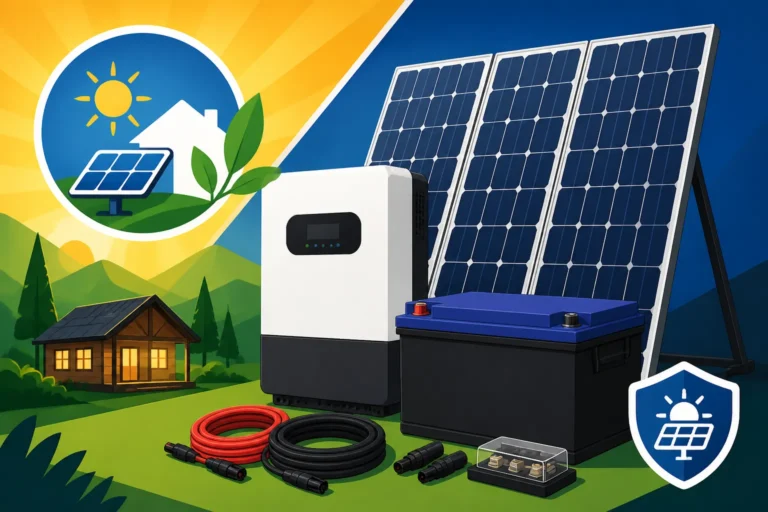
An off-grid solar system for a workshop, regardless of size, typically consists of several key components, each with its own cost implications:
- Solar Panels: These convert sunlight into electricity. Prices vary based on wattage, efficiency, and brand. For a workshop, you might need anywhere from a few 100W panels for basic lighting and tool charging to a dozen 400W panels for heavy machinery. The Cost of Off-Grid Solar Panels is a significant portion of the initial outlay.
- Batteries: This is often the most expensive component of an off-grid system, but also the most critical. Batteries store the energy generated by your panels so you can use it when the sun isn't shining. Lithium Iron Phosphate (LiFePO4) batteries are gaining popularity for their longevity and performance, though lead-acid options are cheaper upfront. Your battery bank size directly correlates with how many days of autonomy you want (how long your system can run without sun). The Cost of an Off-Grid Solar Battery Bank can truly make or break your budget.
- Charge Controller: This device regulates the voltage and current from your solar panels to your battery bank, protecting the batteries from overcharging and over-discharging. MPPT (Maximum Power Point Tracking) controllers are more efficient than PWM (Pulse Width Modulation) controllers but also cost more.
- Inverter: An inverter converts the DC (direct current) electricity from your batteries into AC (alternating current) electricity, which is what most standard workshop tools and appliances use. The size and type (pure sine wave is essential for sensitive electronics and motors) of your inverter need to match your workshop's peak power demands, including those surge loads. The Cost of an Off-Grid Solar Inverter varies significantly based on its wattage and features.
- Wiring, Fuses, and Mounting Hardware: These essential items ensure your system is safely and effectively connected. Don't skimp here; proper wiring and protection are vital for safety and system longevity.
For a modest workshop requiring about 1-2 kWh per day, you could be looking at a system costing anywhere from $3,000 to $10,000 or more, especially if you opt for high-quality lithium batteries and a robust inverter. For heavy-duty use with welding or air conditioning, costs could easily climb to $15,000-$30,000.
Comparing Costs: Off-Grid vs. Utility Extension
Often, the real "worth it" calculation comes down to comparing the cost of off-grid solar to the alternative: extending utility lines to your remote workshop. If your workshop is close to your main dwelling and existing power lines, extending grid power might be the cheaper option. Utility companies typically charge per foot for line extensions, and these costs can quickly add up, especially if you need new poles, transformers, or extensive trenching. In rural areas, extending power lines can cost anywhere from $10,000 to $50,000 or even more per mile.
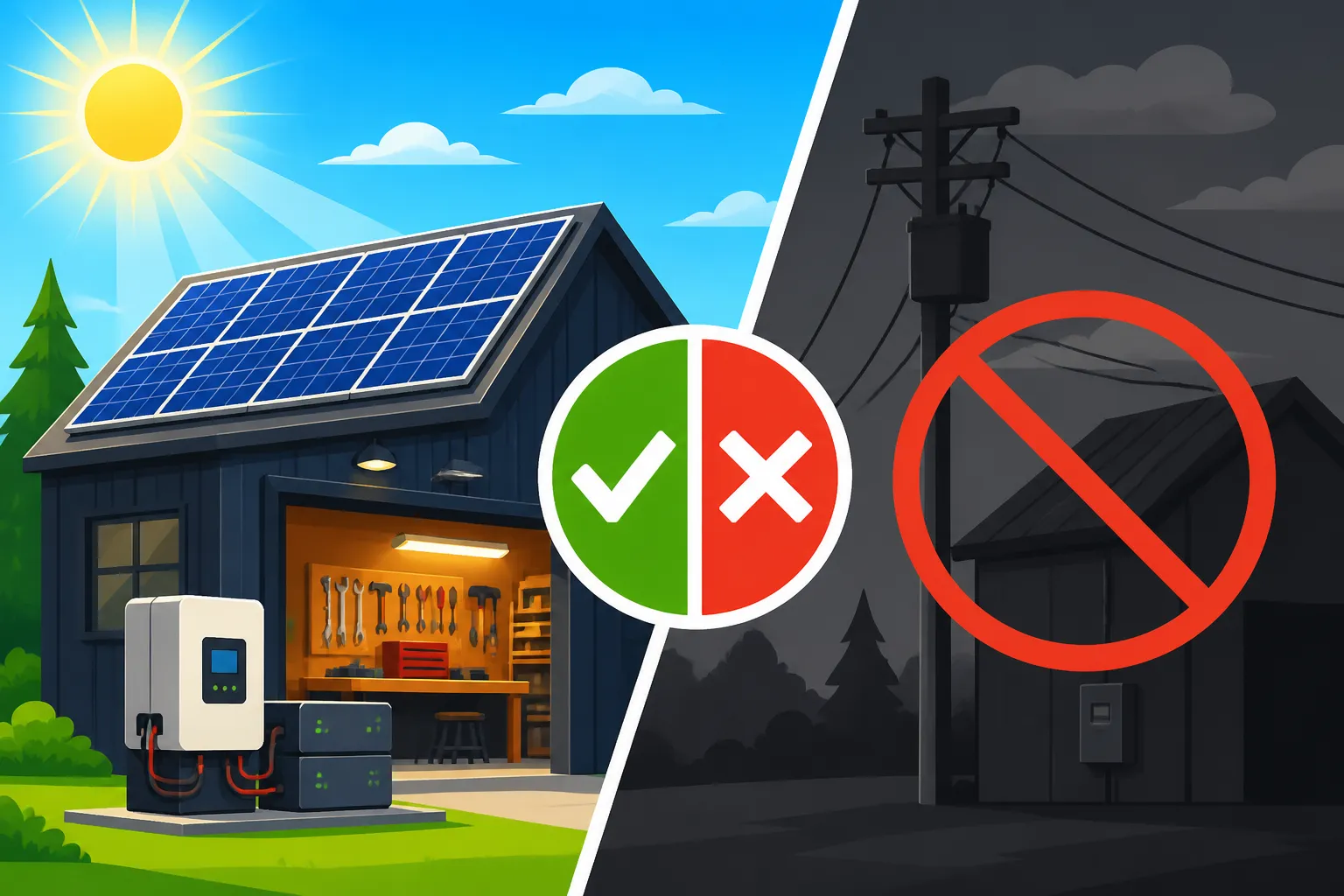
For a workshop that's truly remote, perhaps nestled deep in your property or even on a different parcel, the cost of grid extension can make off-grid solar a clear winner. You might find that Off-Grid Solar vs Utility Extension Cost reveals solar to be the more economically sound choice, not to mention providing energy independence and avoiding monthly utility bills. There are also less tangible benefits, like not having to worry about grid outages impacting your work.
Practical Considerations and System Design for a Workshop
Beyond the numbers, there are very real practicalities to consider when moving your workshop power source off the grid. These can significantly impact the usability, reliability, and ultimate "worth" of your solar setup.
Siting and Installation Challenges
Where will your solar panels go? For a workshop, a south-facing roof is often ideal, but if the roof isn't suitably angled or shaded by trees, a ground mount might be necessary. Ground mounts offer flexibility in angling panels for optimal sun exposure throughout the seasons, but they require more space and might be more visible. You'll need to consider how to install off-grid solar panels safely and securely.
Installation itself can be a DIY project for smaller systems, but for larger, more complex setups, hiring a qualified electrician or solar installer is highly recommended, especially when dealing with high-voltage DC wiring and AC connections to a subpanel in your workshop. DIY installations can certainly reduce your Off-Grid Solar Installation Cost, but they require a solid understanding of electrical principles and safety. Remember that any electrical work should comply with local codes, even off-grid systems.
Maintenance, Longevity, and Upgrades
An off-grid solar system isn't a "set it and forget it" solution. Batteries, especially lead-acid types, require regular maintenance. Even maintenance-free lithium batteries benefit from monitoring. Panels need occasional cleaning, and all connections should be checked periodically. You'll want to understand Off-Grid Solar Maintenance Costs over the lifetime of your system.
Components have different lifespans. Solar panels are typically warrantied for 20-25 years, while LiFePO4 batteries might last 10-15 years, and lead-acid batteries considerably less. Inverters often last 5-10 years. Planning for eventual replacement costs is part of a realistic budget. As your workshop needs evolve, you might find yourself wanting to expand your system. Designing an How to Design an Expandable System from the start can save you headaches and money down the road.
Dealing with Intermittent Sun and Heavy Loads
One of the biggest realities of off-grid living, even for a workshop, is the variability of solar production. Cloudy days, short winter days, and even heavy shading can drastically reduce the amount of power your panels generate. Your battery bank needs to be sized generously to account for "days of autonomy," which is how long your system can sustain your loads without any sun. For a workshop, this might mean having enough battery capacity to get you through a few consecutive cloudy days. Learning How to Account for Cloudy Days in your design is crucial for reliable power.
For workshops that run high-draw tools like welders, air compressors, or large power saws, you'll need an inverter with a high surge capacity. Some tools can draw 3-5 times their running wattage for a brief moment when starting up. An inverter that can't handle these surges will simply trip or fail. This is where quality equipment, like those from Victron or Outback Power, really shines, offering robust surge capabilities. For occasional, extremely high-draw tools, some off-gridders choose to incorporate a backup generator. Portable solar generators, like a Jackery 2000 Plus for Off-Grid: Specs and Review, can also serve as a handy backup for smaller tools or emergencies.
Making the "Worth It" Decision: Scenarios and Alternatives
The "worth it" factor for off-grid solar on a workshop is highly personal and depends on a mix of financial, practical, and philosophical considerations. There's no one-size-fits-all answer, but by looking at different scenarios and alternatives, you can make an informed choice.
Scenarios Where Off-Grid Solar is Definitely Worth It
For many people, the answer will be a resounding yes. Off-grid solar becomes incredibly "worth it" for a workshop in the following situations:
- Remote Locations: If your workshop is far from existing utility lines, the cost of extending grid power could easily exceed the cost of a solar system. In these cases, off-grid solar offers a clean, often cheaper, and independent power solution. Consider a hunting cabin with a small workshop attached; running a mile of utility line would be prohibitive, but a solar setup makes perfect sense.
- Desire for Energy Independence: For those who value self-sufficiency and don't want to rely on the utility company, off-grid solar is a lifestyle choice. It means your workshop operations aren't subject to grid outages, rate hikes, or bureaucratic hurdles. This sense of freedom is priceless for many.
- Environmental Impact: If minimizing your carbon footprint is a priority, solar power is an obvious choice. It's clean, renewable, and contributes to a more sustainable way of living, which can align with your personal values for a workshop space.
- Cost Savings Over Time: While the upfront cost can be high, once your off-grid system is paid off, your "fuel" (sunlight) is free. This can lead to significant savings compared to monthly utility bills or constantly buying gasoline for a generator. The Off-Grid Solar Payback Period Explained can show you when your investment starts paying for itself.
When Off-Grid Solar Might Not Be the Best Choice
There are also scenarios where off-grid solar, particularly a full-scale system, might be overkill or less practical:
- Already Connected to the Grid: If your workshop is already connected to the main house's electrical service or has an existing, affordable grid connection, the financial incentive for a separate off-grid system diminishes. In this case, perhaps a grid-tied system with battery backup (a hybrid system) might be more appropriate if resilience is your goal.
- Very Low Power Needs: If your workshop only needs a few lights and the occasional phone charge, a large, expensive off-grid system is probably not worth it. A simple solar charging kit for small batteries or a portable solar generator like a Jackery could suffice.
- Extremely High, Sporadic Power Demands: While solar can handle surges, if your workshop frequently runs extremely power-hungry equipment (like commercial-grade welders or industrial machinery) for prolonged periods, a solar system large enough to meet those demands might be prohibitively expensive and physically massive. In such cases, a robust backup generator might be a more cost-effective solution, potentially integrated into a smaller solar system.
- Limited Sunlight or Space: If your workshop is in a perpetually shaded area or a region with very low peak sun hours, the amount of solar panels needed to generate sufficient power might be impractical or too expensive. How Winter Affects Off-Grid Sizing is a key consideration in colder, darker climates.
Alternatives to Full Off-Grid Solar
It's not always an all-or-nothing proposition. Several alternatives or complementary solutions can make sense for workshop power:
- Portable Solar Generators: For light-duty workshops, weekend projects, or as a backup, a portable solar generator like those from Jackery or EcoFlow can be an excellent, relatively affordable solution. They combine a battery, inverter, and charge controller into one compact unit, often rechargeable by solar panels. They are perfect for running a few power tools, lights, or charging batteries. Best Solar Generators for Off-Grid Use offers a deeper dive into these versatile units.
- Hybrid Systems: If your workshop can connect to the grid but you want backup power or to reduce your electricity bill, a hybrid solar system (grid-tied with battery backup) might be ideal. It uses grid power when available and switches to batteries during outages, offering the best of both worlds.
- Generator Only: For workshops with very sporadic use or extremely high, short-duration power needs (e.g., only running a large air compressor for 15 minutes once a month), a gasoline or propane generator might be the most economical choice. However, factor in fuel costs, noise, and maintenance.
- Energy Efficiency Upgrades: Before committing to any power system, optimize your workshop's energy use. Switch to LED lighting, use efficient tools, and insulate properly. Reducing your overall energy demand means you need a smaller, less expensive solar system, immediately increasing its "worth." This is a crucial step detailed in guides like How to Calculate Daily Energy Usage.
Ultimately, determining if off-grid solar is worth it for your workshop boils down to a thorough assessment of your energy needs, a realistic look at the costs versus alternatives, and an understanding of the ongoing maintenance and operational realities. For many, the independence, peace of mind, and long-term savings make it an invaluable investment.
Disclaimer
The information provided in this guide is for general informational purposes only and does not constitute professional electrical or financial advice. Off-grid solar system design and installation can be complex and dangerous if not done correctly. Always consult with qualified professionals for system sizing, design, installation, and to ensure compliance with all local codes and regulations. Prices and product availability are subject to change.