Best 48V Off-Grid Solar Kit
Trying to piece together a robust off-grid solar system for a larger cabin, a full-time RV setup, or even a small homestead can feel like navigating a maze. You know you need something more powerful than a basic 12V or 24V system, but figuring out where to start with a 48V setup can be daunting, especially when every component needs to work in harmony. This guide is designed to cut through the confusion, helping you understand the intricacies of 48V off-grid solar kits and how to pick the best one to truly power your independent lifestyle.
Why 48V Systems Are Ideal for Off-Grid Living
When you're serious about off-grid living and have more than just a few lights and a phone charger to power, a 48V solar system often becomes the most logical and efficient choice. It's a leap from the smaller 12V and 24V systems, offering significant advantages that make a real difference in performance and the long-term health of your setup.
Understanding the Benefits of Higher Voltage
The primary benefit of a 48V system boils down to physics: higher voltage means lower current (amperage) for the same amount of power (watts). Think of it like a garden hose; if you want more water (power) through a smaller hose (wire), you need more pressure (voltage). Lower current is a game-changer for several reasons. First, it significantly reduces resistive losses in your wiring. This means less energy is wasted as heat during transmission from your solar panels to your charge controller, and from your battery bank to your inverter. Over long wire runs, which are common in many off-grid installations, these losses can really add up with lower voltage systems, impacting your overall efficiency.
Secondly, lower current allows you to use thinner, less expensive wiring. While you should never skimp on wire sizing for safety, a 48V system can often get away with smaller gauge wires compared to a 12V or 24V system delivering the same power, which can save you a pretty penny, especially on those thick battery cables. This also makes installations a bit easier and more flexible, as bulky cables are harder to route. Moreover, many high-power inverters and charge controllers are designed to operate most efficiently at 48V, offering better conversion rates and less internal heat generation, which prolongs their lifespan. If you're wondering how to properly handle these connections, check out our detailed guide on How to Wire an Off-Grid Solar System.
When to Choose a 48V System
So, when does a 48V system truly shine? It’s when your power needs move beyond basic camping or minimal cabin living and into something more akin to a modern home. If you're planning to run substantial 120V or 240V AC appliances like a full-sized refrigerator, an air conditioner, a well pump, or a washing machine, a 48V system is usually your best bet. These higher-demand appliances require significant wattage, and a 48V system can deliver that power much more effectively and safely.
For example, a typical well pump might draw 1,000 to 2,000 watts when running, often with a significant surge during startup. A 12V system attempting to provide this would need to pull an enormous amount of amperage, requiring extremely thick, expensive cables and putting immense strain on your inverter and batteries. A 48V system handles this gracefully, distributing the load more efficiently. Similarly, for homes or structures with longer distances between the solar array, battery bank, and load center, a 48V system minimizes voltage drop, ensuring consistent power delivery throughout your property. It’s also often the preferred choice for those designing a system for Year-Round Off-Grid Power where reliability and consistent performance are non-negotiable.
Key Components of a 48V Off-Grid Solar Kit
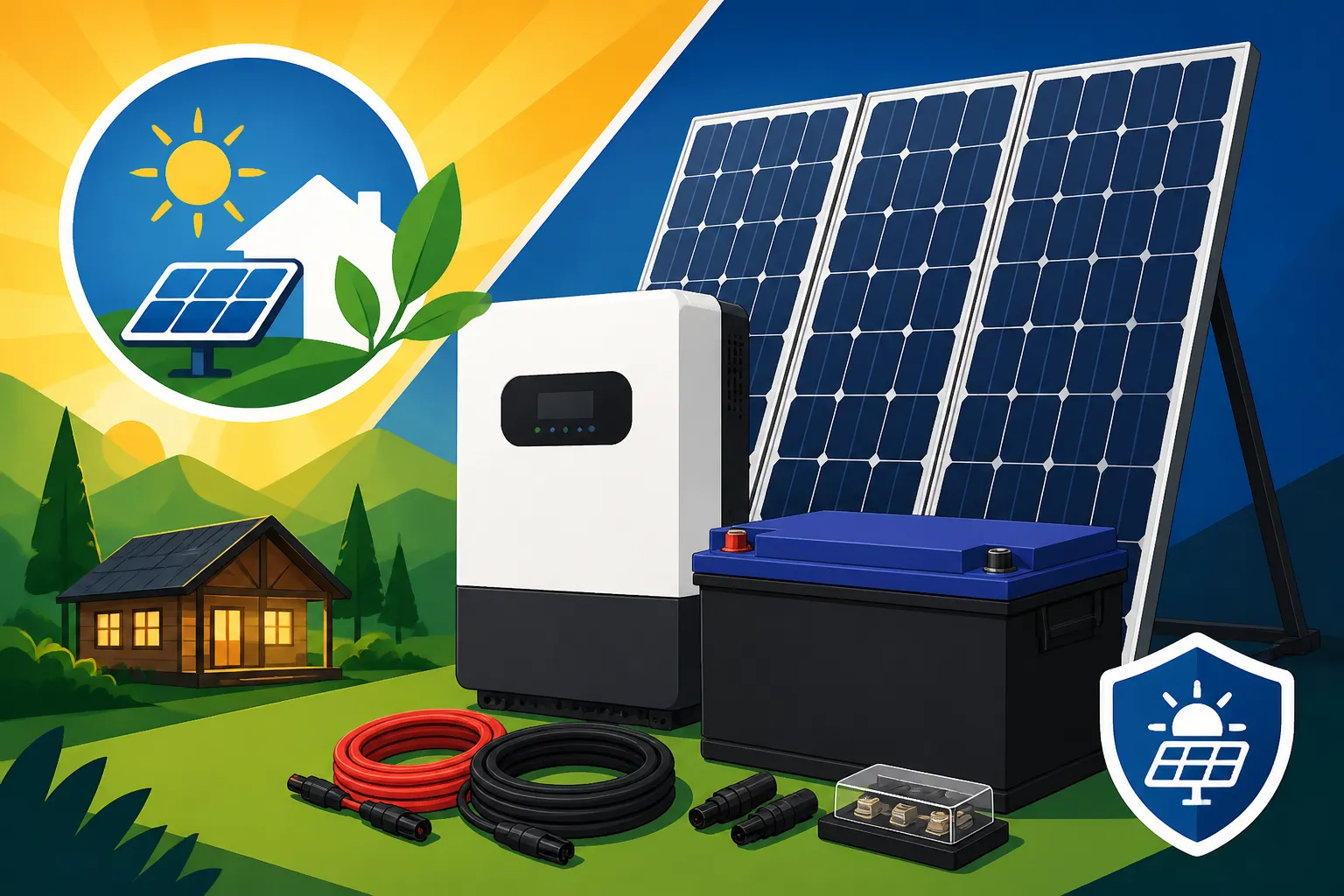
A robust 48V off-grid solar kit isn't just a collection of parts; it's a carefully balanced ecosystem designed to capture, store, and convert solar energy into usable power. Understanding each component is crucial for building a reliable system that meets your specific energy demands.
Solar Panels for 48V Systems
While solar panels themselves don't inherently produce "48V" power directly, they are configured to achieve this system voltage. Most standard panels are designed to produce a voltage suitable for 12V or 24V battery charging when connected in series. To achieve 48V, you'll typically connect four 12V nominal panels or two 24V nominal panels in series. Many installers, however, prefer using higher voltage grid-tie panels (often 60-cell or 72-cell modules) which have a higher open-circuit voltage (Voc) and maximum power point voltage (Vmp). These panels are generally more efficient and can be wired in series (e.g., two 60-cell panels) to provide the higher voltage range that a 48V MPPT charge controller loves, often reducing the number of strings and wiring complexity.
When selecting panels, consider their efficiency, temperature coefficient (how well they perform in heat), and physical durability. Monocrystalline panels are generally more efficient and perform better in low light, making them a popular choice for serious off-grid setups. For insights into selecting the right ones, delve into Best Off-Grid Solar Panels.
48V Inverters: The Heart of Your System
The inverter is arguably the most critical component in any off-grid system, and for 48V setups, it needs to be powerful and dependable. A 48V inverter takes the DC power from your battery bank and converts it into usable AC power for your household appliances. For almost all modern off-grid applications, you absolutely need a pure sine wave inverter. Modified sine wave inverters are cheaper, but they can damage sensitive electronics, cause motors to run hot, and are generally inefficient for running typical household items.
Look for a 48V inverter with a high continuous power rating (e.g., 3000W, 5000W, or even 8000W depending on your needs) and a substantial surge capacity. Surge capacity is vital for appliances with motors (refrigerators, well pumps, power tools) that draw a much higher current for a few seconds during startup. Many premium 48V inverters also come as "inverter-chargers," meaning they integrate a battery charger that can take AC power from a generator or grid connection (if available) and charge your battery bank, providing a seamless backup solution. Brands like Victron and Sol-Ark are well-regarded for their robust 48V inverter offerings. Learning How to Size an Off-Grid Inverter correctly is paramount to avoid system failures and ensure your appliances run smoothly.
Battery Banks for 48V Storage
Your battery bank is your energy reservoir, and for a 48V system, you're looking at a serious amount of storage. While lead-acid batteries (flooded, AGM, or Gel) are traditionally cheaper upfront, for a 48V off-grid setup, especially one intended for full-time living or heavy use, Lithium Iron Phosphate (LiFePO4) batteries are overwhelmingly recommended. They offer several significant advantages:
- Deeper Depth of Discharge (DoD): LiFePO4 batteries can be discharged much deeper (typically 80-100%) without damage, compared to lead-acid (50%). This means you need less actual rated capacity for the same usable energy.
- Longer Lifespan: They boast thousands of charge/discharge cycles, often lasting 10-15 years or more, far outlasting lead-acid options.
- Higher Efficiency: LiFePO4 batteries are more efficient in charging and discharging, meaning less energy is lost.
- Lighter Weight and Smaller Footprint: They are significantly lighter and more compact, which is a huge bonus for RVs or smaller cabins.
- Consistent Voltage: They maintain a more consistent voltage throughout their discharge cycle, leading to better appliance performance.
For a 48V bank, you'll typically connect multiple 12V or 24V LiFePO4 batteries in series to achieve the desired voltage. Most quality LiFePO4 batteries come with an integrated Battery Management System (BMS) that protects against overcharging, over-discharging, over-current, and temperature extremes, making them much safer and easier to manage than lead-acid. Exploring How Batteries Drive Off-Grid Solar Cost can help you understand the long-term investment. If you're building a system, our guide on How to Size an Off-Grid Battery Bank will be incredibly helpful.
Charge Controllers and Balance of System (BOS) Components
The charge controller is the unsung hero, regulating the voltage and current from your solar panels to your battery bank, preventing overcharging and optimizing the charging process. For 48V systems, an MPPT (Maximum Power Point Tracking) charge controller is almost always the superior choice over a PWM (Pulse Width Modulation) controller. MPPT controllers are much more efficient, especially in varying weather conditions, and can handle higher input voltages from your solar array, maximizing the power harvested from your panels. They are essential for optimizing charging performance and ensuring your batteries get the most out of every ray of sunshine.
Beyond these core components, your 48V off-grid kit will include various "Balance of System" (BOS) components:
- Fuses and Breakers: Essential safety devices that protect your system from overcurrents and short circuits. Proper sizing and placement are critical.
- Disconnect Switches: Manual switches for safely isolating panels, batteries, or inverters for maintenance or in emergencies.
- Wiring and Cables: High-quality, properly sized cables for connecting all components. Using marine-grade or UV-resistant cables is recommended for outdoor runs.
- Mounting Hardware: Racks and mounts for securing your solar panels to your roof, a ground mount, or your vehicle.
- Battery Monitor: A device that tracks the state of charge, voltage, current, and other vital statistics of your battery bank, giving you a clear picture of your power reserves.
These BOS components might seem like minor details, but they are crucial for the safety, efficiency, and longevity of your entire 48V off-grid system.
What to Look For When Choosing a 48V Off-Grid Solar Kit
Picking the right 48V off-grid solar kit isn't just about finding the biggest numbers; it's about finding the right numbers for your lifestyle and ensuring the entire package works seamlessly together. There are a few key areas you'll want to scrutinize before making such a significant investment.
System Sizing and Energy Needs
The absolute first step in choosing any off-grid solar kit, especially a 48V one, is to conduct a thorough energy audit, also known as a load analysis. You need to know exactly how much power you consume daily and what your peak power demands (surge loads) are. This involves listing every appliance and device you plan to use, noting its wattage and how many hours per day it will run. Don't forget seasonal variations; you might use an AC unit more in summer and a heater more in winter, impacting your overall consumption.
Once you have your total daily Watt-hour (Wh) consumption, you can then begin to size your solar array and battery bank. Remember to factor in "days of autonomy" – how many days your battery bank can power your loads without any sun, which is crucial for cloudy periods. For a 48V system, you're likely dealing with higher consumption, so aim for a battery bank that can comfortably handle 2-3 days of autonomy, especially in regions prone to extended cloudy weather. Many providers of 48V kits, like those from Renogy or EcoFlow, offer excellent resources to help with this calculation. Our guide on Off-Grid Solar System Sizing Guide provides a step-by-step approach to this essential process.
| Appliance Example | Wattage (W) | Hours/Day (Avg) | Daily Wh | Surge W (if applicable) |
|---|---|---|---|---|
| Refrigerator | 150 | 8 | 1200 | 1000-2000 |
| LED Lights (total) | 50 | 6 | 300 | N/A |
| Laptop | 60 | 4 | 240 | N/A |
| Well Pump | 1000 | 0.5 | 500 | 3000-5000 |
| Washing Machine | 2000 | 0.25 (15 min) | 500 | 4000-6000 |
| Microwave | 1200 | 0.1 (6 min) | 120 | N/A |
| Total Estimated Daily Wh | 2860 | |||
| Total Peak Surge Wattage Required | ~6000W |
Note: Wattage and usage hours are examples and will vary significantly based on appliance model and individual habits.
Kit Completeness and Expandability
When evaluating 48V off-grid solar kits, consider how "complete" they truly are. Some kits are all-inclusive, providing panels, inverter, charge controller, batteries, and even all the necessary cables and mounting hardware. Others might be more modular, allowing you to choose certain components à la carte. For beginners, an all-in-one kit can be a godsend, simplifying the purchasing process. However, ensure the quality of all included components is up to par.
Equally important is expandability. Your energy needs might grow over time, or you might realize you need more storage or generation capacity after living with the system for a while. A good 48V kit should allow you to easily add more solar panels, expand your battery bank, or even upgrade your inverter down the line without having to scrap the entire system. Look for systems that use standard connectors (like MC4 for panels) and clearly defined specifications for component compatibility. Many brands design their equipment to integrate seamlessly, making future additions much smoother. This flexibility can save you substantial money and effort in the long run.
Quality, Warranty, and Support
Off-grid living depends on reliable power, and a 48V system is a significant investment. Therefore, the quality of the components, the warranty offered, and the availability of customer support are non-negotiable. Don't simply opt for the cheapest kit you can find; the long-term costs of cheap, unreliable equipment often far outweigh any initial savings. Seek out reputable manufacturers known for their durability and performance in the off-grid sector. Look at reviews and feedback from other off-gridders who have been using these systems in real-world conditions.
A strong warranty is a huge indicator of a manufacturer's confidence in their product. Panels often come with 25-year performance warranties, while good LiFePO4 batteries typically offer 10 years or more. Inverters and charge controllers usually have shorter warranties, but 5 years is a reasonable expectation for quality brands.
Finally, consider customer support. When something goes wrong with a complex 48V system, you'll want access to knowledgeable technical support. Do they have clear documentation, online forums, or direct phone support? This can be especially important if you're undertaking a DIY Off-Grid Solar Installation Step by Step and encounter troubleshooting hurdles. Brands that prioritize their customer service, like those offered by Victron Energy or Battle Born Batteries, often make the off-grid journey much smoother. Even companies like Jackery, while mostly known for portable power stations, have built a strong reputation for customer service, which can be a good indicator of overall brand reliability, even if their main 48V offerings are in a different product category.
Top Considerations for Different 48V Off-Grid Scenarios
A 48V off-grid solar kit isn't a one-size-fits-all solution. The "best" kit for you depends heavily on your specific application, environment, and lifestyle. Let's break down some common scenarios.
48V Kits for Full-Time Off-Grid Homes
For those committing to living completely off the grid in a permanent residence, a 48V system is almost always the go-to. These systems need to be incredibly robust, capable of handling all the creature comforts of modern living. This means focusing on several key aspects:
- High Power Output: You'll need a substantial solar array (think 3kW to 10kW or more) to generate enough power for daily use, especially if you have high-draw appliances like electric stoves, water heaters, or multiple refrigerators.
- Large Battery Banks: A large LiFePO4 battery bank with considerable battery capacity is essential to provide multiple days of autonomy, ensuring power during extended cloudy periods or heavy usage spikes. You might be looking at 20-50 kWh or even more usable storage.
- Powerful Inverter-Charger: A large pure sine wave inverter, often 5kW or more, with robust surge capacity, is critical. An integrated inverter-charger is highly recommended as it allows for seamless integration with a backup generator, which is almost a necessity for a full-time off-grid home, particularly in winter.
- System Monitoring: Comprehensive system monitoring, often with remote access, is vital to keep an eye on performance, battery state of charge, and troubleshoot issues from anywhere. Victron Energy's Cerbo GX, for example, allows for detailed monitoring and control.
- Integration with Other Sources: Consider how easily the 48V kit can integrate with other power sources like a wind turbine, a micro-hydro system, or a traditional propane/diesel generator for ultimate reliability.
For detailed cost analysis, check out Off-Grid Solar Cost for a Whole House.
48V Kits for Large RVs and Mobile Applications
While many RVs run on 12V systems, large, luxury RVs, motorhomes, or custom-built mobile living spaces that incorporate residential-style appliances (like mini-split AC units, large residential fridges, or even washing machines) can greatly benefit from a 48V system. The challenges here are different from a stationary home:
- Space and Weight: RVs have limited space and strict weight limits. This makes compact, high-energy-density LiFePO4 batteries an absolute must. Panels need to be efficiently mounted on the roof, perhaps using flexible options or carefully planned rigid arrays.
- Ruggedness: Components need to withstand constant vibration, temperature fluctuations, and sometimes harsh driving conditions. Look for marine-grade or RV-specific components.
- Ease of Installation: DIY RV solar can be complex, so a kit with clear instructions and well-matched components can make a huge difference. If you're planning to install it yourself, our guide on How to Install Off-Grid Solar on an RV will be invaluable.
- Charging on the Go: Consider how the 48V system can be charged not only by solar but also from the alternator while driving (using a DC-DC charger capable of 48V output) or shore power when available.
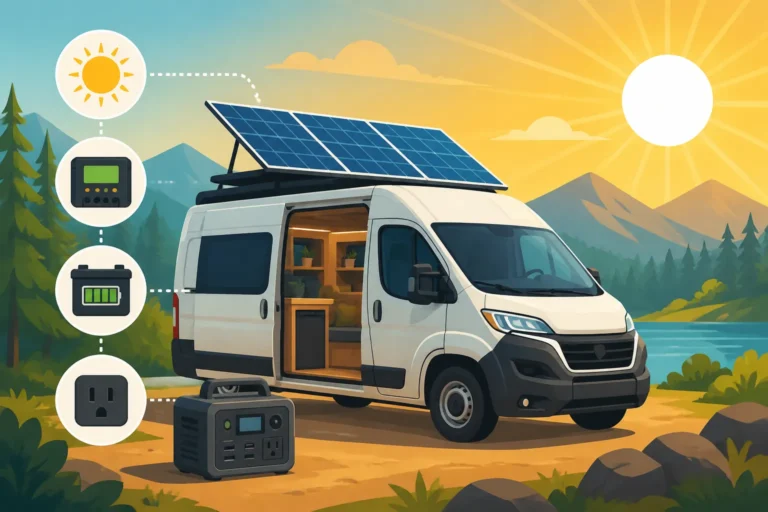
- Portable Backup: While a full 48V system handles primary loads, having a smaller, portable power station like a Jackery Explorer 1000 or 2000 Pro can be incredibly useful for supplementing power, powering devices outside the RV, or as a convenient backup for specific items during an emergency without firing up the main system.
48V Kits for Remote Cabins and Workshops
Remote cabins and workshops often have intermittent usage or specific, high-draw needs (like power tools). A 48V system provides the necessary muscle and efficiency for these scenarios:
- Durability in Harsh Environments: Cabins are often in remote, exposed locations. Components must be rated for wide temperature swings, humidity, and potentially heavy snow loads. Ground-mounted panels with adjustable tilt can be advantageous for optimizing winter sun.
- Seasonal Performance: If the cabin is used year-round, especially in cold climates, the system design needs to account for reduced solar irradiance and shorter daylight hours in winter. This means oversizing the solar array or having a robust generator backup plan. Our guide on Off-Grid Solar Cost in Cold Climates offers more context.
- Surge Capacity for Tools: Workshops will frequently use power tools (saws, compressors, welders) that have high startup current demands. A 48V inverter with excellent surge handling capability is essential to prevent nuisance trips or damage.
- Phased Expansion: Many cabin owners start small and expand. Choosing a modular 48V kit that allows for easy addition of more panels or batteries over time is a smart strategy to spread out the initial investment. You can always start with essential loads and add more as your budget and needs grow.
- Security: For unattended properties, consider security features for your solar equipment, such as locked enclosures for batteries and inverters, and tamper-proof mounting for panels.
Regardless of your specific application, taking the time to thoroughly research and plan your 48V off-grid solar kit will pay dividends in reliability, efficiency, and peace of mind.
Disclaimer
The information provided in this guide is for general informational purposes only and does not constitute professional advice. Off-grid solar system design and installation can be complex and involve significant electrical hazards. Always consult with qualified professionals, adhere to local building codes and electrical regulations, and prioritize safety when working with electrical systems.