Is Off-Grid Solar Worth It for a Tiny Home
The dream of tiny home living often conjures images of simplicity, minimalism, and a profound connection to nature. But after you've picked out your perfect little dwelling, a practical, often daunting question emerges: how exactly are you going to power this cozy abode? Many tiny home hopefuls wrestle with the idea of cutting the cord entirely and embracing off-grid solar, wondering if it's truly worth the investment and effort. This comprehensive guide will break down the realities, costs, and lifestyle considerations of going solar in your tiny home, helping you decide if it’s the right path for your off-grid aspirations.
Understanding Tiny Home Power Demands for Off-Grid Solar
Before you even begin to think about solar panels or batteries, you must understand your tiny home's actual power needs. It's a common misconception that because a home is small, its energy requirements will automatically be minuscule. The truth can be a bit more nuanced.
The Myth of Minimalist Power Consumption
While tiny homes certainly encourage a more intentional and often reduced consumption lifestyle, the reality is that modern conveniences still demand a fair bit of juice. People often picture living by candlelight, but most tiny home dwellers want a refrigerator that keeps food fresh, lights to see by after dark, a reliable way to heat water, and certainly the ability to charge phones and laptops. These aren't luxuries anymore; they're pretty standard expectations for comfortable living.
Think about it: even a small, energy-efficient refrigerator runs 24/7. Your water pump for showering or doing dishes needs power every time you turn on a faucet. Those cozy LED lights add up, especially during darker winter months. If you're planning on using a microwave for quick meals, a fan for summer cooling, or even a small coffee maker in the mornings, these appliances can draw significant power, albeit for shorter bursts. Don't fall into the trap of underestimating these daily essentials; they are the foundation of your power budget.
The beauty of a tiny home is its efficiency, but even efficient appliances need a consistent power source. A small electric heater, even if used infrequently, can be a major power hog when it's running. Knowing the difference between the running wattage and the surge wattage of your appliances is crucial for sizing your inverter. It’s all about balancing that minimalist ideal with the practicalities of modern life, and that means being honest about what you truly need powered.
Calculating Your Tiny Home's Energy Load
This is arguably the most critical step in determining if off-grid solar is worth it for your tiny home, and frankly, if it's even feasible. You can't just guess; you need to perform a thorough load analysis. This involves identifying every single electrical device you plan to use in your tiny home, figuring out its wattage, and then estimating how many hours per day (or week) you'll actually use it. This might sound tedious, but trust me, it’s the bedrock of a successful off-grid system.
Start by making a detailed list. Include everything from your refrigerator, lights, water pump, and fan, to your phone charger, laptop, and even that hair dryer you might occasionally use. For each item, look for the wattage listed on its label or in its manual. If you only find amperage (Amps) and voltage (Volts), you can calculate wattage by multiplying Amps by Volts (Watts = Amps x Volts). Then, estimate how long each device will run daily. For instance, a refrigerator might be 100 watts running for 8 hours (compressor cycling), while a laptop charger might be 60 watts for 4 hours.
Once you have these figures, multiply the wattage by the hours of use for each item to get its daily watt-hours (Wh). Add all these daily watt-hours together, and boom, you have your total estimated daily energy consumption. For a tiny home, this could range anywhere from 2,000 Wh (2 kWh) for a very conservative setup to 5,000 Wh (5 kWh) or more for those with a few more modern comforts. Understanding these numbers is absolutely vital for making informed decisions about your solar array and battery bank size. If you need a deeper dive into this process, check out our guide on How to Calculate Daily Energy Usage.
The Financial Equation: Is Off-Grid Solar Cost-Effective for Tiny Homes?
Let's face it, the bottom line is a huge factor for most people considering off-grid living, especially when tiny homes are often chosen for their affordability. The initial investment in an off-grid solar system can feel substantial, but it’s essential to look at the long-term picture.
Initial Investment vs. Long-Term Savings
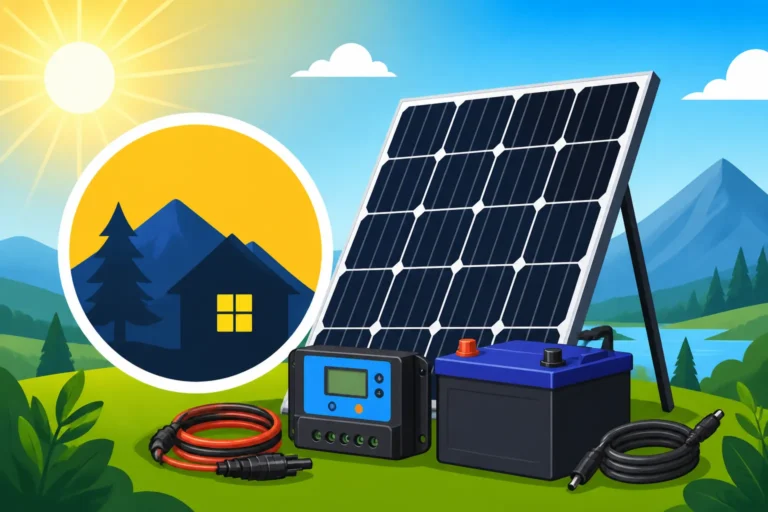
The upfront cost of installing an off-grid solar system for a tiny home can be a significant hurdle. You're looking at purchasing solar panels, a charge controller, an inverter, and most importantly, a robust battery bank. Then there are the smaller but essential components like wiring, fuses, circuit breakers, and mounting hardware. Depending on your energy needs, a basic system for a tiny home might start around $5,000, but a more comprehensive setup with quality components and enough battery storage for several days of autonomy can easily climb to $15,000 to $25,000, or even more.
Compared to traditional grid-tied homes, tiny homes don't typically incur massive utility bills. However, if your tiny home is on land far from existing grid infrastructure, the cost of extending power lines can be astronomical—often tens of thousands of dollars per mile. In such a scenario, an off-grid solar system almost immediately becomes the more cost-effective choice. Over the lifespan of your system, which can be 20-30 years for panels and 10-15 years for quality lithium batteries, you eliminate monthly utility bills, offering considerable long-term savings. Our detailed breakdown of Off-Grid Solar Cost: Complete Breakdown can give you a better idea of what to expect.
So, while the initial sticker shock might be real, the long-term financial benefits can be compelling. You’re essentially prepaying for decades of electricity. This financial independence can be a huge draw, especially as electricity rates continue to fluctuate. If you're weighing the pros and cons purely from a monetary perspective, understanding your specific circumstances, particularly if you’re trying to avoid costly grid extension, is key to answering the question of Is Off-Grid Solar Worth the Cost.
Factors Influencing Cost and Value
Several key components significantly influence the overall cost and value of your tiny home's off-grid solar system. The battery bank, in particular, is often the single most expensive component. You have choices like traditional lead-acid batteries or the more modern lithium iron phosphate (LiFePO4) batteries. While LiFePO4 batteries have a higher upfront cost, they offer a much longer lifespan (often 10-15 years compared to 3-5 for lead-acid), deeper discharge capabilities, and are virtually maintenance-free. For a tiny home where space and weight are often at a premium, LiFePO4 batteries like those from Battle Born or EG4 can be a smart investment despite their higher initial price, offering better long-term value. Our article on LiFePO4 vs Lead-Acid Battery Cost explores this in depth.
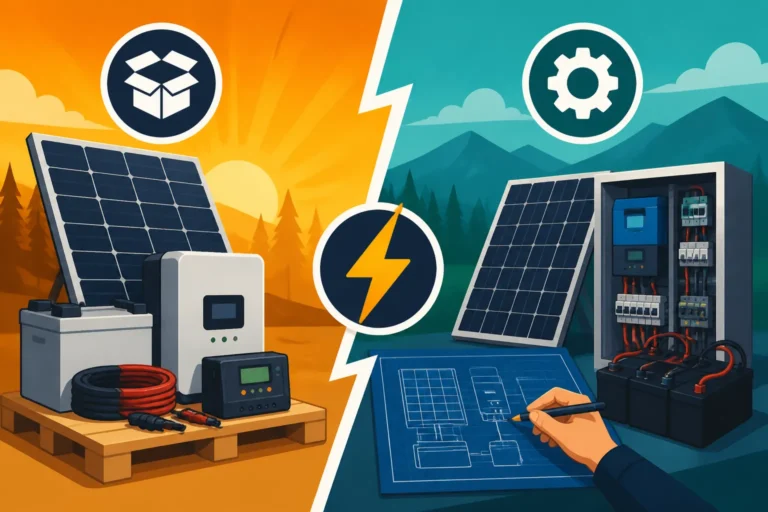
Another significant cost factor is whether you decide to go the DIY route or hire professionals for installation. DIY can save you a substantial amount on labor, potentially cutting your total costs by 30-50%. However, it requires a good understanding of electrical systems, safety protocols, and a willingness to learn. For those comfortable with hands-on projects, this can be a rewarding way to build equity and knowledge. If you're not confident in your electrical skills, professional installation ensures safety and compliance, but it will add to your overall budget. We delve into this comparison in our guide on DIY vs Professional Off-Grid Solar Cost.
Finally, don't forget about maintenance. While solar panels require minimal upkeep (mostly cleaning), batteries, especially lead-acid, need regular monitoring and maintenance. Even LiFePO4 batteries benefit from occasional checks. Also, be prepared for potential replacement costs for components like inverters or batteries down the line. These aren't hidden costs if you budget for them, but they are part of the long-term financial picture of off-grid solar ownership.
Practicality and Lifestyle: Does Off-Grid Solar Fit Tiny Home Living?
Beyond the numbers, how does living with off-grid solar feel in a tiny home? It's a lifestyle choice that comes with unique considerations regarding space, reliability, and how you interact with your energy.
Space, Weight, and Aesthetics
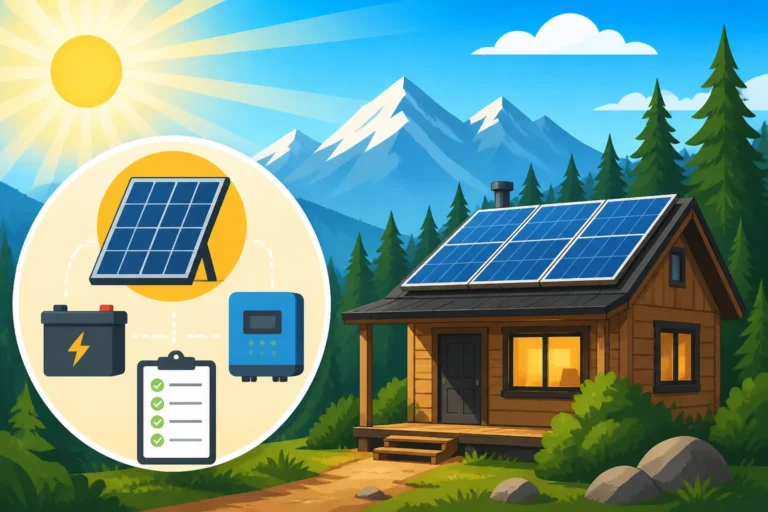
Tiny homes, by their very definition, are constrained by space and often weight, especially if they are built on a trailer for mobility. This presents unique challenges for integrating an off-grid solar system. Solar panels need a good amount of unshaded roof space, or dedicated ground mounts. While tiny home roofs are smaller than conventional homes, they can still accommodate a decent array, perhaps 4-8 panels, depending on size. If your tiny home is mobile, you'll also need to consider aerodynamics and secure mounting methods to withstand travel.
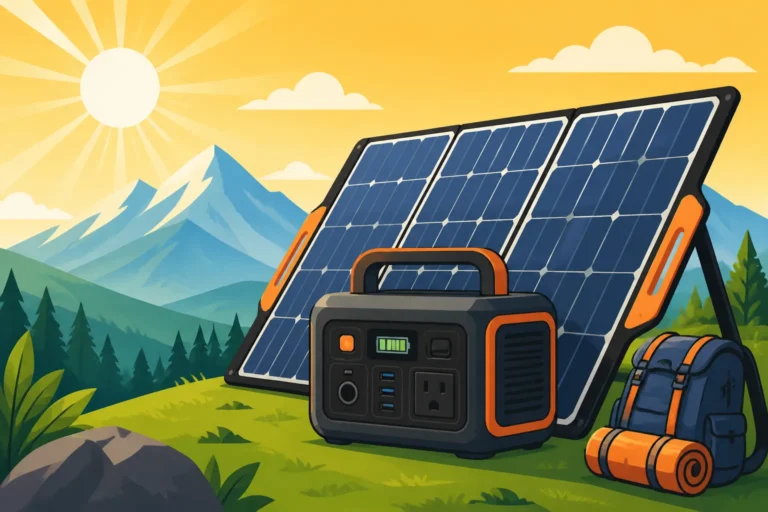
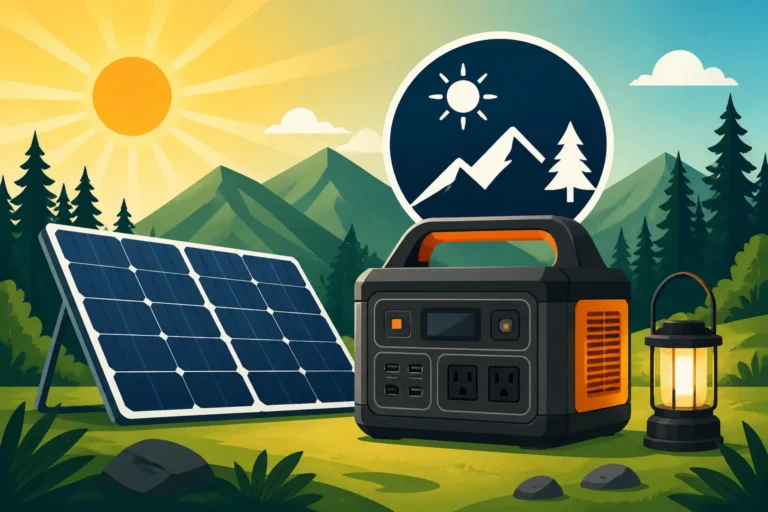
The battery bank, inverter, and charge controller also need a dedicated, often climate-controlled space. For a small dwelling, finding room for these essential components without eating into precious living area can be a puzzle. This is where compact, high-density batteries like LiFePO4 really shine, as they offer more power in a smaller, lighter footprint compared to bulky lead-acid options. For those looking for simplicity and portability, especially for smaller energy needs or as a backup, integrated solar generators like the Jackery Explorer series offer an all-in-one solution that takes up minimal space and can be moved easily. These units are fantastic for powering a few essential devices without the complexity of a full-blown system.
Aesthetics also play a role. Do you want visible panels on your roof, or would you prefer a ground-mounted array hidden from view? Flexible solar panels might be an option for certain curved surfaces, but they often come with a higher cost and lower efficiency than rigid panels. It's a constant negotiation between maximizing energy harvest, minimizing space impact, and maintaining the visual appeal of your tiny home.
Reliability and Self-Sufficiency
One of the biggest draws of off-grid solar for a tiny home is the profound sense of self-sufficiency and independence it provides. You’re no longer tethered to a utility company, subject to rising rates or power outages. This can be incredibly liberating, offering peace of mind, especially if your tiny home is in a remote location where grid reliability is questionable or non-existent.
However, true self-sufficiency requires careful planning to ensure reliability. Your system needs to be sized not just for average sunny days, but for cloudy periods and even inclement weather. This means having enough battery storage to carry you through multiple days without significant solar input. If you often experience extended stretches of cloudy or rainy weather, your solar array needs to be appropriately oversized, and your battery bank generous. Our article on How to Account for Cloudy Days dives into strategies for this. Similarly, if you live in a region with distinct seasons, understanding How Winter Affects Off-Grid Sizing is crucial, as shorter days and lower sun angles significantly reduce solar production.
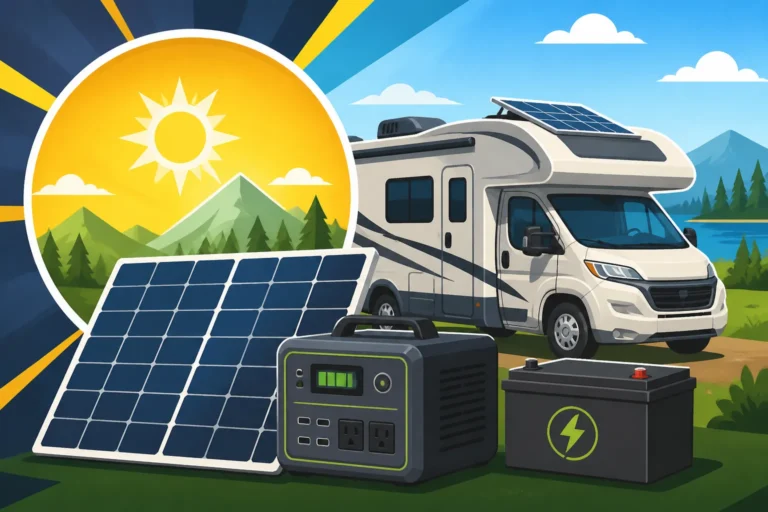
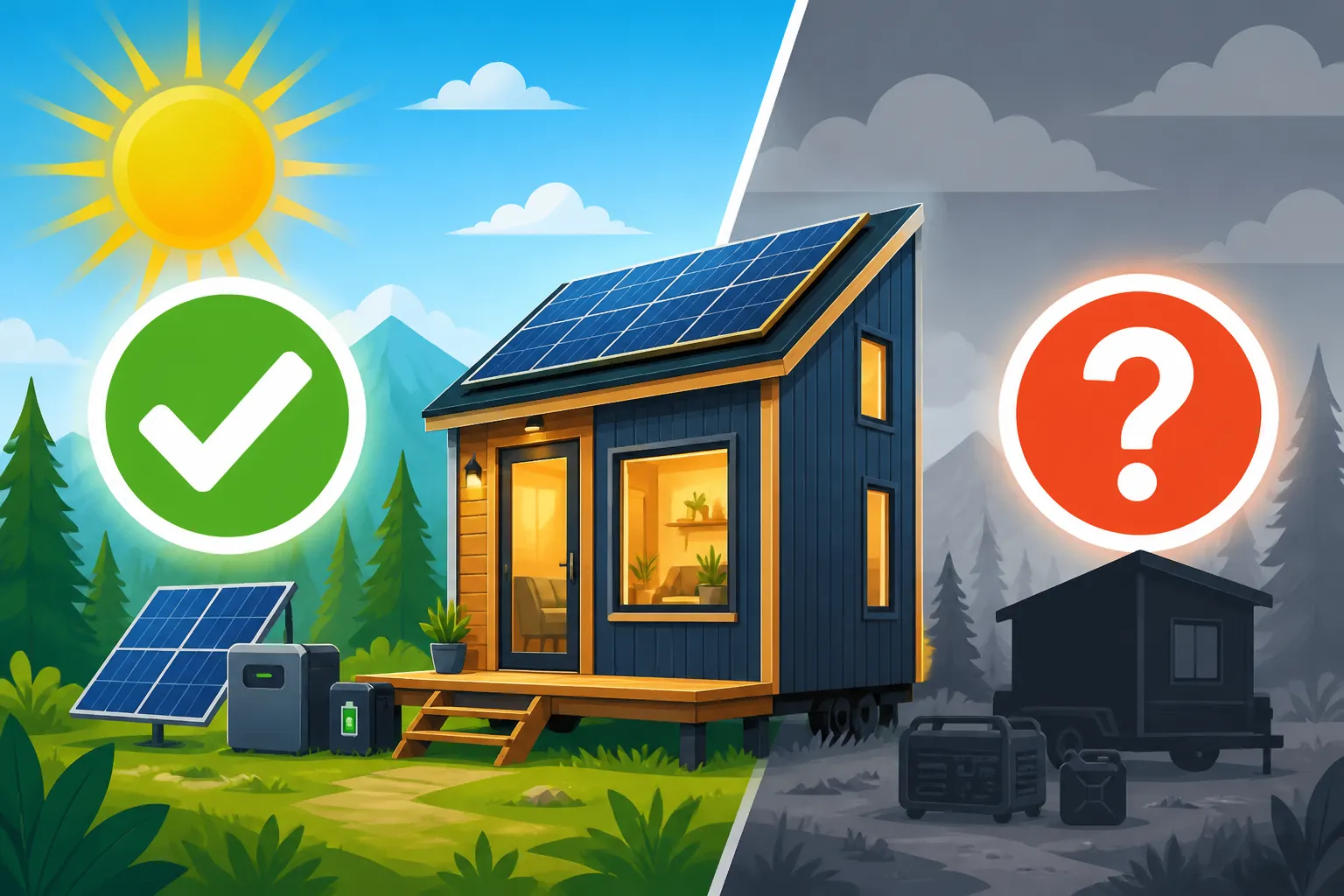
For those moments when solar simply isn't enough – perhaps during a long winter storm or if you have an unexpected high power draw – a backup power source is highly recommended. This could be a traditional gasoline generator, or a powerful portable solar generator like a Jackery, which can be charged via its own solar panels or from your vehicle, providing a quiet and clean burst of power when you need it most. It's about designing a system that can reliably meet your needs, even when Mother Nature isn't cooperating, ensuring your tiny home remains a comfortable sanctuary.
Key Considerations Before Committing to Off-Grid Solar for Your Tiny Home
Deciding if off-grid solar is "worth it" for your tiny home isn't a simple yes or no; it depends heavily on your specific circumstances, priorities, and long-term vision. Before you jump in, there are a few critical factors you need to seriously consider.
Location and Sun Exposure
The success of any solar system, especially an off-grid one, hinges entirely on your access to sunlight. It's not just about having sunny weather; it's about uninterrupted sun exposure throughout the day, year-round. This means thoroughly evaluating your tiny home's potential location. Are there tall trees, neighboring buildings, or geographical features (like a mountain to the east or west) that will shade your panels at critical times of the day? Even partial shading on one panel can significantly reduce the output of an entire string of panels.
Understanding the "peak sun hours" for your specific location is paramount. This isn't just the total daylight hours, but the equivalent hours of direct, intense sunlight. Different regions have different average peak sun hours, which directly impacts how many panels you'll need to generate your required energy. For instance, a tiny home in sunny Arizona might need fewer panels than one in cloudy Oregon to produce the same amount of electricity. Consider using online tools or apps that provide solar insolation data for your address. This will give you a realistic expectation of what your panels can generate. We explain this in more detail in our article on Peak Sun Hours Explained.
Furthermore, consider the orientation and tilt of your panels. For fixed installations, facing true south (in the Northern Hemisphere) and tilting them at an angle roughly equal to your latitude is generally optimal for year-round production. However, you might adjust the tilt seasonally to prioritize winter sun if that's when your power needs are highest. If your tiny home is on wheels, you have the flexibility to park in sunnier spots, but also the challenge of potentially needing to re-angle portable panels frequently.
System Sizing and Scalability
Underestimating your power needs is one of the most common and costly mistakes in off-grid solar. It's far better to slightly oversize your system than to find yourself constantly running out of power or relying too heavily on a noisy backup generator. As we discussed, a detailed load analysis is your best friend here. Don't just plan for your current needs; consider future additions. Will you eventually want a more powerful water pump, an electric bike charger, or a small workshop tool? These seemingly minor additions can significantly impact your daily energy budget.
When planning your system, think about scalability. Can you easily add more solar panels if your needs grow? Are your charge controller and inverter capable of handling additional input or output? Many off-grid components, like those from Victron Energy or Sol-Ark, are designed with expandability in mind, allowing you to gradually build out your system as your budget or needs evolve. For example, selecting a charge controller with extra capacity now can save you from replacing it later if you decide to add more panels. A thorough understanding of How to Size an Off-Grid Solar System will help prevent common pitfalls.
Designing for future expansion doesn't necessarily mean buying oversized equipment right away, but rather choosing components and a system architecture that can accommodate upgrades. This might mean laying conduit for future wiring, leaving space for additional batteries, or selecting an inverter with a higher capacity than your initial loads strictly demand. Thinking ahead about How to Design an Expandable System will save you headaches and money down the road, ensuring your off-grid tiny home remains powered as your lifestyle evolves.
Permits, Codes, and Insurance
Even though tiny homes are, well, tiny, and often seen as outside the norm, they are not exempt from regulations, especially if they're permanently sited. Depending on your location, you might still need to acquire permits for electrical work, even for an off-grid solar system. Building codes, particularly the National Electrical Code (NEC), apply to solar installations to ensure safety. Ignoring these can lead to fines, difficulties with insurance, or even unsafe electrical conditions.
Before you begin any installation, it's crucial to research local regulations in your county or municipality. Some areas are more lenient with off-grid setups, while others may require detailed plans and inspections from a licensed electrician. For tiny homes on wheels, the rules can be a bit more ambiguous, often falling under RV standards, but if you plan to park it long-term and establish it as a permanent residence, expect more scrutiny. Our guide on Off-Grid Solar Permits and Codes provides more general information.
Finally, consider insurance. Will your existing homeowner's or RV insurance policy cover your off-grid solar system? Many standard policies may not explicitly cover custom solar installations. It's wise to speak with your insurance provider to understand what's covered, what isn't, and if you need additional riders or specialized policies to protect your investment from damage, theft, or liability. A fully self-sufficient tiny home with a robust solar system represents a significant asset, and protecting it properly is a critical part of its long-term viability.
So, is off-grid solar worth it for a tiny home? The honest answer is: absolutely, for the right person and the right situation. If you value independence, live in a location with abundant sun, and are prepared for the initial investment and the learning curve, off-grid solar can provide incredible freedom and long-term financial benefits. It empowers you to live life on your own terms, free from utility bills and reliance on the grid. However, it demands careful planning, a realistic assessment of your energy needs, and an understanding of the practicalities. For many tiny home dreamers, the benefits far outweigh the challenges, making it an incredibly rewarding journey towards true self-sufficiency.
Tiny Home Off-Grid Solar System Component Estimates
| Component Category | Typical Tiny Home Needs | Estimated Cost Range (USD) | Notes |
|---|---|---|---|
| Solar Panels | 6-12 x 300-400W panels | $1,200 – $3,600 | Depends on daily energy needs and sun exposure. Monocrystalline are most efficient. |
| Battery Bank | 200-800Ah LiFePO4 @ 12/24/48V | $3,000 – $12,000 | The most critical and expensive component. LiFePO4 offers best value long-term. |
| Inverter | 2000W – 5000W Pure Sine Wave | $500 – $2,500 | Match to your highest surge load. Pure sine wave is essential for sensitive electronics. |
| Charge Controller | MPPT, sized for array/voltage | $200 – $800 | MPPT is more efficient than PWM. Must match system voltage. |
| Wiring & Safety | Cables, fuses, breakers, disconnects | $300 – $1,000 | Don't skimp on safety components! Proper wire gauge prevents voltage drop. |
| Mounting Structure | Roof or ground mounts | $200 – $1,000 | Depends on your tiny home's roof type, pitch, or if you prefer ground mounts. |
| Total Estimated Hardware | (Excludes installation) | $5,400 – $20,900 | This is for components only. Installation labor (DIY or professional) is extra. |
| Installation Labor | DIY or Professional | $0 – $5,000+ | DIY saves money but requires skill. Professionals ensure code compliance and safety. |
| Complete System Estimate | (Including potential labor) | $5,400 – $25,900+ | Very rough estimate, heavily depends on brand, size, and DIY vs. Pro. |
Disclaimer
The information provided in this guide is for general informational purposes only and does not constitute professional advice. Off-grid solar system design and installation can be complex and involve significant electrical risks. Always consult with qualified professionals, electricians, and local authorities to ensure your system is safely designed, installed, and compliant with all applicable codes and regulations. Costs and performance can vary widely based on location, specific components, and individual energy consumption habits.