Is Off-Grid Solar Worth It for a Cabin
Dreaming of a serene cabin retreat, nestled far from the hustle and bustle, often comes with a stark reality check: how do you get power out there? The idea of bringing in utility lines can be incredibly expensive and complicated, while relying solely on a noisy, gas-guzzling generator quickly loses its charm. This guide is here to walk you through the ins and outs of powering your cabin with off-grid solar, helping you decide if it's truly a worthwhile investment for your peaceful sanctuary.
The Allure of Cabin Life and the Power Dilemma
There's something uniquely appealing about having a cabin, isn't there? It’s a place to escape, to reconnect with nature, and to enjoy a slower pace of life. But achieving that perfect off-grid idyll often bumps up against the very real challenge of power. You want the comforts of home without the complexities and costs of traditional utilities.
Why Go Off-Grid for Your Cabin?
For many cabin owners, the decision to go off-grid with solar power stems from a deep desire for independence and a frustration with conventional options. Imagine waking up to the gentle sounds of the forest, not the drone of a generator, knowing your lights and coffee maker are running on pure sunshine. That’s the kind of peace of mind off-grid living offers. It’s about more than just electricity; it’s about a lifestyle choice that values self-sufficiency and a lighter footprint on the earth.
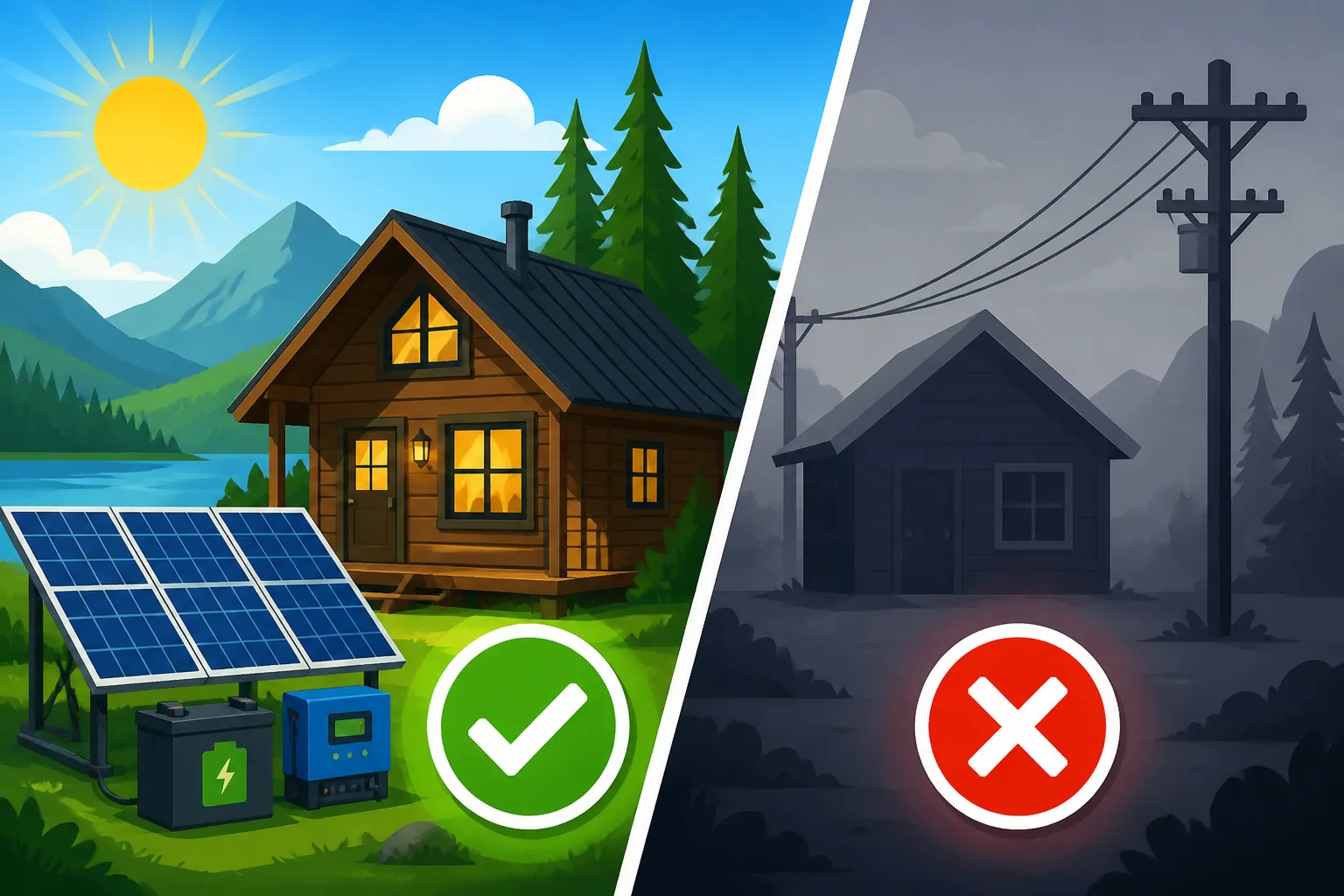
Beyond the philosophical appeal, there's a very practical reason: location. Many dream cabins are located in truly remote spots, far from existing utility poles. The cost to extend grid power to such a location can be astronomical, easily ranging from tens of thousands to well over $100,000, depending on the distance and terrain. When you're faced with an estimate like that, suddenly the upfront cost of an off-grid solar system starts looking a whole lot more reasonable. It truly puts into perspective the financial hurdle of relying on traditional infrastructure.
Furthermore, going off-grid allows you to escape the fluctuating and ever-increasing monthly utility bills. Once your solar system is installed, your "fuel" is free. While there are maintenance considerations, you're no longer at the mercy of power company rate hikes or unexpected outages caused by grid issues miles away. This freedom from ongoing costs and external control is a powerful motivator for many cabin dwellers, allowing for predictable budgeting and genuine energy autonomy.
Common Power Challenges for Cabin Owners
Before diving headfirst into solar, it’s important to acknowledge the typical power challenges that cabin owners face, as these often highlight why off-grid solar becomes such an attractive solution. The most significant hurdle, as mentioned, is often the sheer expense and logistical nightmare of extending grid power. Imagine surveying your property only to find out the nearest power pole is miles down a winding dirt road, necessitating expensive trenching, poles, and permits. This alone can derail a cabin dream before it even begins.
For those who decide against grid extension, the default alternative has long been a gasoline or propane generator. While generators certainly provide power, they come with their own set of drawbacks. The constant noise can quickly erode the peaceful atmosphere you sought in your cabin. Then there's the fuel — lugging jerry cans of gasoline or propane tanks to a remote cabin is no small feat, not to mention the ongoing cost of that fuel, which adds up significantly over time. Generators also require regular maintenance, oil changes, and can be unreliable in extreme weather.
Another common challenge is simply matching the power solution to your actual needs. Many cabins, especially those used seasonally or as weekend retreats, don't require the same robust power infrastructure as a full-time residence. You might only need to run a few lights, charge devices, operate a small refrigerator, and maybe a water pump. Over-investing in a massive grid-tied setup or constantly running an oversized generator for minimal loads feels inefficient and wasteful. Off-grid solar, when properly sized, offers a tailored solution that can match your cabin's unique energy profile without unnecessary overkill.
Deconstructing the Costs: Is the Investment Justified?
When considering off-grid solar for your cabin, the immediate question that pops into most people's minds is, "How much is this actually going to cost me?" It’s a fair question, and the answer isn't a simple one-size-fits-all number. However, by breaking down the initial investment and looking at the long-term financial benefits, we can paint a much clearer picture of whether it's truly justified for your situation.
Initial Setup Costs for an Off-Grid Cabin System
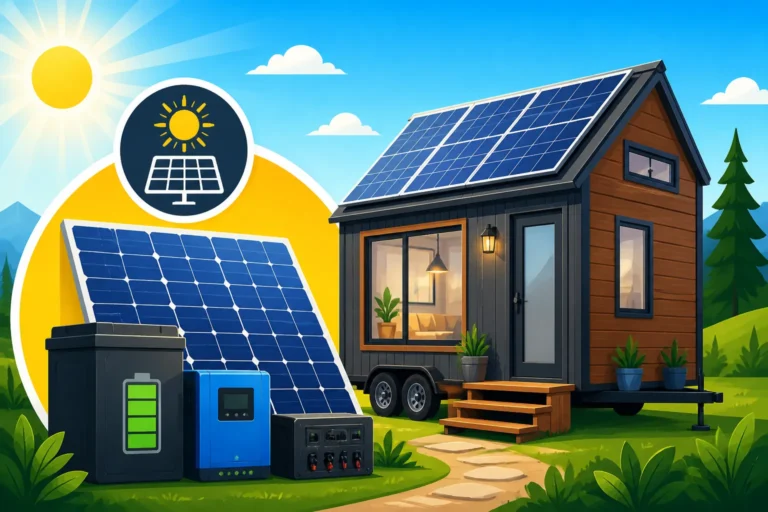
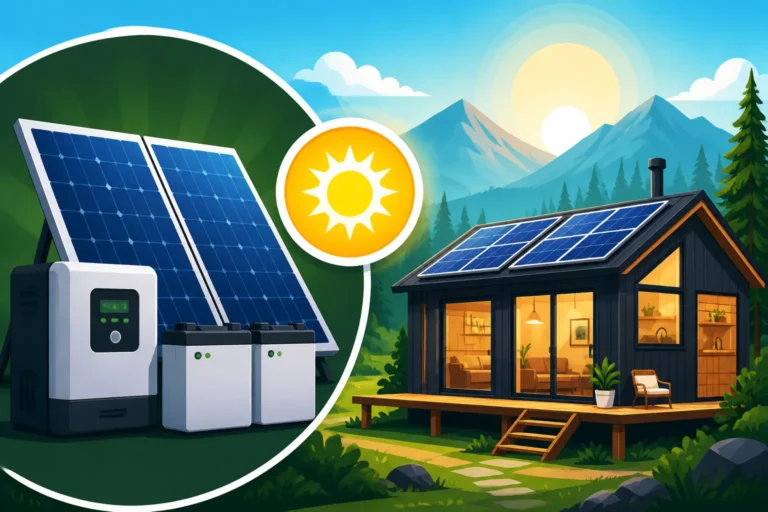
The price tag for an off-grid solar system for a cabin can vary widely, but typically, you're looking at an investment anywhere from $5,000 for a very basic setup suitable for minimal use, up to $30,000 or more for a robust system capable of supporting more significant loads or year-round living. The core components of any system will include solar panels, batteries for energy storage, an inverter to convert DC power from batteries to AC for your appliances, a charge controller to manage battery charging, and all the necessary wiring, fuses, and mounting hardware. You can learn more about the specifics in our guide on How Much Does an Off-Grid Solar System Cost.
For a small, seasonal cabin where you primarily need lights, phone charging, and perhaps a small mini-fridge, you might start with a modest system of 400-800 watts of solar panels, a few hundred amp-hours of lithium batteries, and a 1000-2000 watt inverter. Such a setup could cost between $3,000 and $8,000 if you're comfortable with a DIY installation. For those with slightly higher needs, like running a well pump or a small air conditioner occasionally, you'd be looking at a larger array, more battery storage, and a higher capacity inverter, pushing the cost into the $10,000 to $20,000 range. The critical factor is understanding that Off-Grid Solar Cost by System Size scales directly with your power demands.
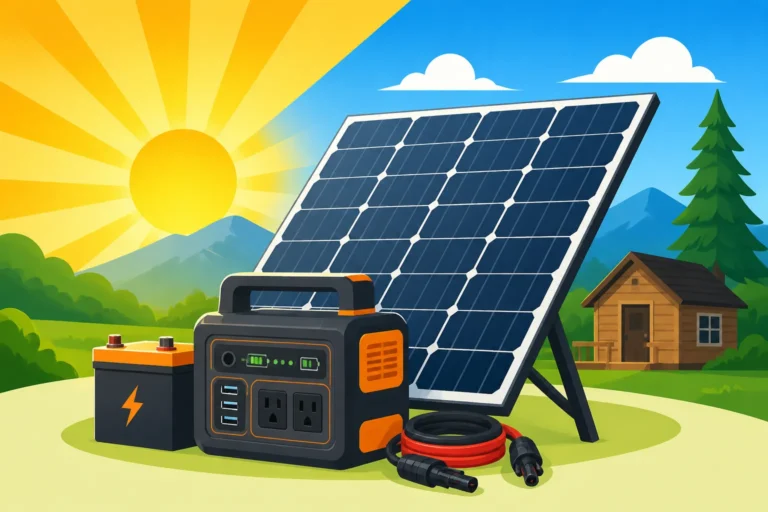
It’s also worth considering portable power stations like a Jackery Explorer series as a supplemental or entry-level solution for cabins. A Jackery Explorer 1000 or 2000 Pro, for instance, can power smaller devices, laptops, and even a compact refrigerator for a limited time, making it an excellent choice for a very minimalist cabin or as a backup for a larger system. These units are user-friendly, require no complex installation, and can give you a taste of solar power without a huge commitment. However, for continuous, larger power demands, a dedicated installed system will be more efficient and cost-effective in the long run.
Long-Term Savings and Return on Investment
While the upfront cost might seem daunting, it's crucial to look at the long game. This is where off-grid solar for your cabin really starts to shine. The most immediate and tangible saving comes from eliminating monthly utility bills. If your cabin is already grid-tied, think about what you pay the power company every month, especially during peak seasons. That money, once invested in solar, stays in your pocket. If your cabin isn't grid-tied, you're avoiding the potentially enormous expense of grid extension, which, as mentioned, can be a six-figure investment. Compared to that, a $20,000 solar system looks like a bargain.
Beyond avoided utility bills, consider the savings on generator fuel and maintenance. If you're currently running a generator, tally up your annual fuel costs – propane or gasoline. For even moderate use, this can easily run into hundreds or even thousands of dollars per year. Add to that the cost of oil changes, spark plugs, filters, and eventual repairs or replacement of the generator itself. An off-grid solar system, while requiring its own occasional maintenance, runs on free sunshine and has a much longer lifespan for its major components (panels often last 25+ years, lithium batteries 10-15+ years). This creates significant ongoing savings. Understanding your potential Off-Grid Solar Payback Period Explained can help solidify this financial justification.
Finally, an off-grid solar system can significantly increase the value and marketability of your cabin. A property that is energy independent, especially in a remote location, is a huge asset. Buyers are increasingly looking for homes with sustainable features and lower operating costs. Imagine selling your cabin and being able to tell potential buyers they'll never have a power bill. That’s a powerful selling point that can justify the initial investment, making your cabin not just a retreat but also a smarter, more valuable property.
Practical Considerations for Cabin Off-Grid Solar
Deciding if off-grid solar is worth it is one thing, but figuring out how to make it work for your specific cabin is another. There are practical considerations that will directly impact your system's design, functionality, and overall success. Ignoring these can lead to frustration and an underperforming system.
Sizing Your System for Cabin Needs
One of the biggest mistakes people make when planning off-grid solar for a cabin is either over-sizing or under-sizing their system. Unlike a conventional home that has a fairly predictable energy profile, cabin usage can vary wildly. Is it a weekend getaway? A seasonal residence? Or a full-time homestead? Each scenario requires a different approach to sizing. The first and most critical step is to perform a thorough load analysis to How to Calculate Daily Energy Usage. This means listing every appliance you plan to run, its wattage, and how many hours per day you expect to use it. Don't guess; actually observe your habits or estimate conservatively.
For example, a cabin used primarily for summer weekends might only need enough power for LED lights, a water pump for a shower, phone chargers, and a small refrigerator. A 1000-watt solar array with a 200-400 amp-hour lithium battery bank might suffice. However, if you plan to live there year-round and want to run a mini-split air conditioner/heater or even a washing machine, your power needs jump dramatically. You'll need a much larger solar array (e.g., 3000-5000 watts) and a significant battery bank (e.g., 800-1200 amp-hours or more), especially to account for shorter, cloudier winter days. This differentiation for Off-Grid Solar Cost for Seasonal Use versus year-round living is crucial.
You also need to consider your "days of autonomy" – how many days your batteries can power your cabin without any sunlight. In a region with frequent cloudy days or heavy winter snow, you might aim for 3-5 days of autonomy, meaning a larger battery bank. For a cabin, it's often more economical to incorporate energy-efficient appliances (like DC refrigerators) and embrace conservative power habits rather than building an excessively large system to power traditional energy hogs. This careful sizing ensures you have enough power when you need it without overspending on components you don't. Our guide on How to Size an Off-Grid Solar System offers a deeper dive into this process.
Installation and Maintenance Realities
Once you've designed your system, the next hurdle is installation. For many cabin owners, the idea of a DIY installation is appealing due to the potential savings on labor. If you’re handy with tools, comfortable with electrical wiring, and willing to invest time in learning, doing it yourself can save you anywhere from 10% to 50% of the total cost, especially for smaller systems. Resources like detailed wiring diagrams and online tutorials make this more feasible than ever. However, it requires a meticulous approach to safety and adherence to electrical codes, even if permits aren't strictly enforced in your remote area. This distinction is explored further in DIY vs Professional Off-Grid Solar Cost.
Alternatively, hiring a professional solar installer or an electrician for critical wiring stages offers peace of mind and ensures everything is done correctly and safely. While this adds to the upfront cost, it can prevent costly mistakes and provide a properly commissioned system. For larger, more complex cabin systems, professional installation is often the recommended route, as the stakes are higher.
Regardless of who installs it, maintenance is an ongoing reality. Solar panels are relatively low maintenance—requiring occasional cleaning, especially after dusty periods or heavy snowfall. However, batteries, the heart of your off-grid system, do require more attention. Lead-acid batteries need regular water top-offs and monitoring, while modern lithium iron phosphate (LiFePO4) batteries are largely maintenance-free but come with a higher initial cost. You'll want to review guides like Off-Grid Solar Maintenance Costs to understand what to expect. Inverters and charge controllers typically require little direct maintenance but should be kept in a clean, dry, and well-ventilated area. Factor in the eventual Cost to Replace Off-Grid Solar Batteries over the system's lifespan, which can be a significant expense depending on the type you choose. A good battery monitor is also an indispensable tool for keeping tabs on your system's health.
Weighing the Pros and Cons for Your Cabin Lifestyle
Making the leap to off-grid solar for your cabin is a significant decision. It's not just about the numbers; it's about how it integrates with your vision for cabin life. To truly assess if it's worth it, you need to weigh the undeniable advantages against the potential downsides.
The Undeniable Benefits of Cabin Solar
The most immediate and often cherished benefit of off-grid solar in a cabin setting is the peace and quiet. Imagine your cabin nestled deep in the woods, with nothing but the sounds of birds and rustling leaves. No noisy generator sputtering to life, disrupting your tranquility. This quiet operation is a huge win for anyone seeking a true escape from modern clamor. You can run your lights, charge your devices, and even power a small entertainment system without breaking the serene atmosphere.
Beyond the silence, there's the incredible reliability that a well-designed solar system offers. Once installed, it consistently harvests energy, day in and day out, providing a steady supply of power to your cabin. This stands in stark contrast to relying on a generator that needs to be refueled, started, and can break down at inconvenient times. With a robust battery bank (check out our recommendations for Best Off-Grid Solar Batteries) and appropriately sized panels, you can confidently weather short periods of cloudy weather or even multi-day storms, knowing your power supply is secure.
Furthermore, opting for solar power is a powerful statement about sustainability. You're harnessing a clean, renewable energy source, significantly reducing your carbon footprint compared to burning fossil fuels. For many cabin owners, this environmental stewardship aligns perfectly with their appreciation for nature and their desire to live in harmony with their surroundings. It's a tangible way to live your values.
Potential Drawbacks and How to Mitigate Them
No solution is without its challenges, and off-grid solar for a cabin is no exception. The most frequently cited drawback is the initial upfront cost. While we've discussed how this can be offset by long-term savings and avoided grid extension costs, it still represents a significant investment that requires careful budgeting. For some, the sticker shock of a system, even a basic one, can be a barrier. This is where options like gradually expanding your system or starting with a simple setup like a Jackery portable power station for basic needs can help ease into the investment.
Another factor to seriously consider is weather dependency. Solar panels, by their nature, need sunlight to generate electricity. This means that prolonged periods of heavy cloud cover, short winter days, or significant snow accumulation on panels can impact your energy production. If your cabin is in a region with long, dark winters, you'll need to design your system with a much larger battery bank to account for several "days of autonomy," and potentially oversize your solar array to compensate for lower sun angles and shorter daylight hours. Our guide on How to Account for Cloudy Days delves into strategies for managing this, including considering a small, efficient backup generator for those rare, extended periods of low sun.
Finally, there's a learning curve involved. While off-grid solar systems have become more user-friendly, they still require a basic understanding of electricity, system components (like your inverter – explore options in Best Off-Grid Solar Inverters), and maintenance. DIY enthusiasts will embrace this, but for others, it might feel like a hurdle. However, numerous online resources, forums, and communities are available to help newcomers learn the ropes. Investing in a system from a reputable brand that offers good customer support and clear manuals can also significantly ease this learning process.
| Component | Estimated Cost Range (USD) | Notes for Cabin Use |
|---|---|---|
| Solar Panels | $0.80 – $1.50 per watt | 400W-2000W often sufficient for small-to-medium cabins. Consider efficiency for limited space. |
| Batteries | $200 – $800 per kWh | LiFePO4 (lithium) is ideal for longevity; 2-10 kWh common. |
| Inverter | $500 – $3,000+ | 1500W-5000W pure sine wave recommended for sensitive electronics and appliances. |
| Charge Controller | $100 – $800 | MPPT type is more efficient, especially in variable sunlight. |
| Mounting Hardware | $150 – $500 | Roof or ground mounts. Consider tilt adjustability for seasonal optimization. |
| Wiring, Fuses, Breakers | $200 – $1,000 | Essential safety components. Correct sizing prevents voltage drop and hazards. |
| Optional: Backup Generator | $500 – $2,500 | For extended cloudy periods or high-demand surges. |
| Installation (Pro) | $1,500 – $10,000+ | Can be significant; DIY saves money but requires skill. |
| Total Estimated System | $3,000 – $30,000+ | Highly dependent on cabin size, energy needs, and DIY vs. professional install. |
In conclusion, for many cabin owners, going off-grid with solar is absolutely worth it. It provides true energy independence, eliminates recurring utility or fuel costs, and enhances the peaceful, self-sufficient lifestyle that drew you to cabin living in the first place. While there's an initial investment and some practical considerations, the long-term benefits, both financial and experiential, often far outweigh the challenges.
Disclaimer
Please remember that this article is for informational purposes only. Off-grid solar system design and installation involve electrical work and can be dangerous if not done correctly. Always consult with qualified professionals and adhere to all local codes and regulations.