Is Off-Grid Solar Worth It for a Camper
Stepping into the world of off-grid camping can feel like a dream – endless adventures, quiet nights under the stars, and the freedom to roam without worrying about electrical hookups. But then reality hits: how do you power all your beloved camper essentials? Deciding whether off-grid solar is truly worth the investment for your camper involves weighing your lifestyle against the costs and complexities, and this guide is here to walk you through that exact evaluation, helping you pinpoint if solar independence is the right path for your road-tripping dreams.
Unpacking Your Camper's Energy Footprint
Before you can even begin to think about solar panels or battery banks, the absolute first step is to understand exactly how much power your camper actually consumes. This isn't just a guessing game; it's a critical calculation that will inform every other decision you make about your off-grid system. Many folks dive headfirst into buying gear, only to find they've either grossly overestimated or, more commonly, severely underestimated their needs, leading to frustration and wasted money.
Identifying Your Appliances and Their Wattage
Think of every electrical item you use in your camper, from the big ones like your refrigerator and microwave to the smaller, oft-forgotten culprits like phone chargers, LED lights, and even your water pump. Each of these draws a certain amount of power, measured in watts. To figure this out, you'll need to do a little detective work:
- Check appliance labels: Most appliances have a sticker or plate that lists their voltage (V) and amperage (A) or directly states their wattage (W). If you only find voltage and amperage, simply multiply them (V x A = W) to get the wattage. For instance, a 120V microwave drawing 10A uses 1200 watts.
- Use a Kill-a-Watt meter: For 120V AC appliances that plug into an outlet, a device like a Kill-a-Watt meter is incredibly handy. You plug the meter into the outlet, then plug your appliance into the meter, and it will show you the real-time power draw. This is especially useful for items that cycle on and off, like a refrigerator.
- Research online: If you can't find a label, a quick search for your appliance model number will often yield its power specifications.
- Consider "phantom" loads: Don't forget devices that draw power even when turned off or in standby mode, like TVs, stereos, and converters. These can add up over time.
For example, a typical 12V RV refrigerator might pull 50-70 watts when running, but it might run for only 15-20 minutes out of every hour, depending on ambient temperature and how often you open the door. Your laptop charger might use 45-65 watts, but only when it's actively charging. A critical component of planning is understanding How to Calculate Daily Energy Usage for all these items.
Calculating Daily Watt-Hours Consumed
Once you know the wattage of each appliance, the next step is to estimate how long you'll use each item per day. This will give you its daily watt-hour (Wh) consumption. This is where your camper lifestyle truly comes into play. Are you a weekend warrior who only uses basic lights and charges a phone, or a full-time nomad running a mini-fridge, laptop, and maybe even a small induction cooktop?
Here’s the simple formula: Wattage (W) x Hours Used Per Day (h) = Watt-Hours Per Day (Wh)
Let’s look at a hypothetical scenario for a camper hitting the road for a few days of boondocking:
| Appliance | Wattage (W) | Est. Hours Used/Day (h) | Daily Watt-Hours (Wh) |
|---|---|---|---|
| LED Lights | 10 | 4 | 40 |
| 12V RV Refrigerator | 60 | 8 (compressor run-time) | 480 |
| Water Pump | 30 | 0.25 (15 min) | 7.5 |
| Laptop Charging | 60 | 2 | 120 |
| Phone Charging (x2) | 10 | 3 | 60 |
| Exhaust Fan | 20 | 3 | 60 |
| Total Daily Usage | 767.5 Wh |
This example gives us a baseline of approximately 768 Wh per day. Knowing this number is crucial because it directly dictates How to Size an Off-Grid Solar System, specifically how many solar panels you'll need and the capacity of your battery bank. If you plan to run an air conditioner, for instance, your daily watt-hour usage would skyrocket, potentially into the thousands, dramatically increasing your solar needs and the overall How Much Does an Off-Grid Solar System Cost.
Decoding the Components and Their Associated Costs
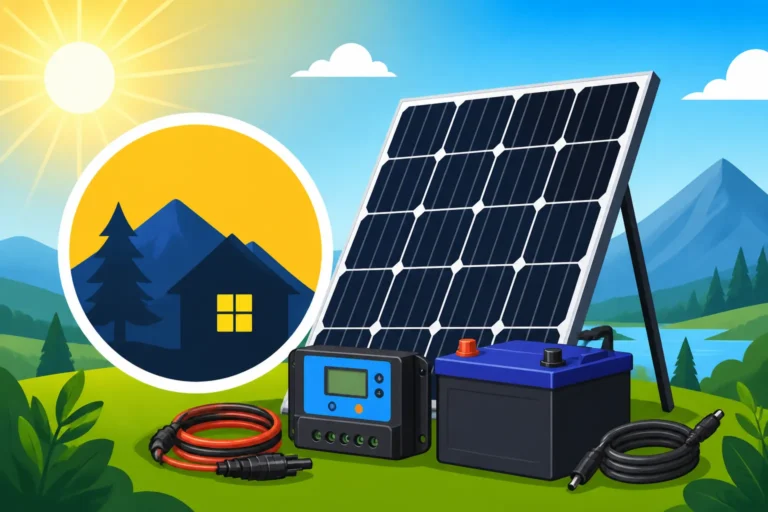
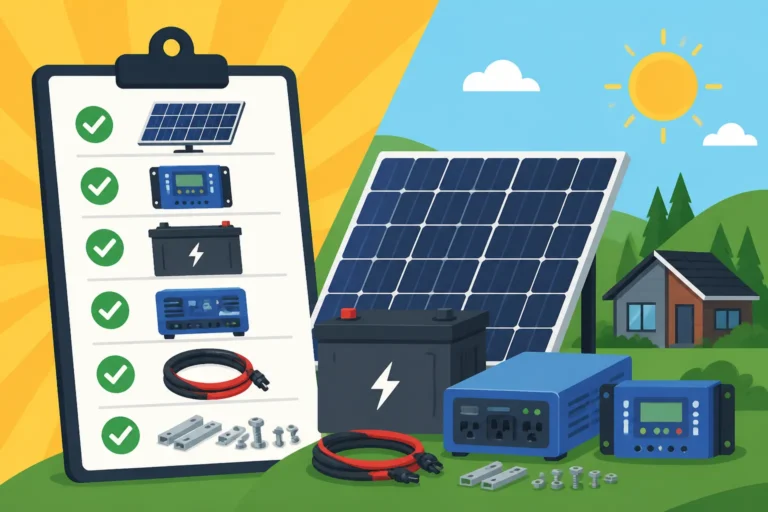
Once you have a solid grasp of your energy needs, it’s time to look at what goes into an off-grid solar system for a camper. Each component plays a vital role, and its quality and capacity will directly impact performance, longevity, and of course, the price tag.
Solar Panels: The Power Harvesters
These are the workhorses of your system, converting sunlight into electricity. For campers, you typically have a few options:
- Rigid Panels: These are the most common, robust, and efficient, usually mounted permanently to your camper's roof. They're great for maximizing power output and durability. Prices typically range from $1-$1.50 per watt.
- Flexible Panels: Lighter and thinner, these can adhere directly to curved surfaces, making them popular for vans or campers with limited roof space or complex rooflines. However, they tend to be less efficient and can degrade faster due to heat buildup if not properly installed. Expect to pay a bit more per watt than rigid panels.
- Portable Panels: Think fold-out suitcases or blankets. These are fantastic for smaller systems, giving you the flexibility to chase the sun, especially if your camper is parked in the shade. Brands like Renogy and BougeRV offer excellent portable options. While convenient, they often come at a higher cost per watt and require manual setup.
The number of panels you need depends directly on your daily watt-hour consumption and the available peak sun hours in your camping locations. For a camper using around 750 Wh/day, you might need 200-400 watts of panels, costing anywhere from $200-$600, not including mounting hardware.
Batteries: The Heart of Your System
Your batteries store the energy generated by your solar panels for use when the sun isn't shining. This is often the most expensive component of an off-grid solar setup for a camper.
- Lead-Acid Batteries (AGM): These are a more budget-friendly entry point. They are heavier and have a shorter lifespan (typically 2-5 years) compared to lithium, and you can only safely discharge them to about 50% of their capacity without damaging them. This means you need double the rated capacity for your usable power. A 100Ah 12V AGM battery might cost $200-$300.
- Lithium Iron Phosphate (LiFePO4) Batteries: While they come with a higher upfront cost, LiFePO4 batteries are lighter, last much longer (10+ years), and can be safely discharged to 80-100% of their capacity. This means you need less rated capacity for the same usable power. A 100Ah 12V LiFePO4 battery might run you $500-$900, but its longer lifespan and greater usable capacity often make it more cost-effective in the long run. Many experienced off-gridders consider them among the Best Off-Grid Solar Batteries available today.
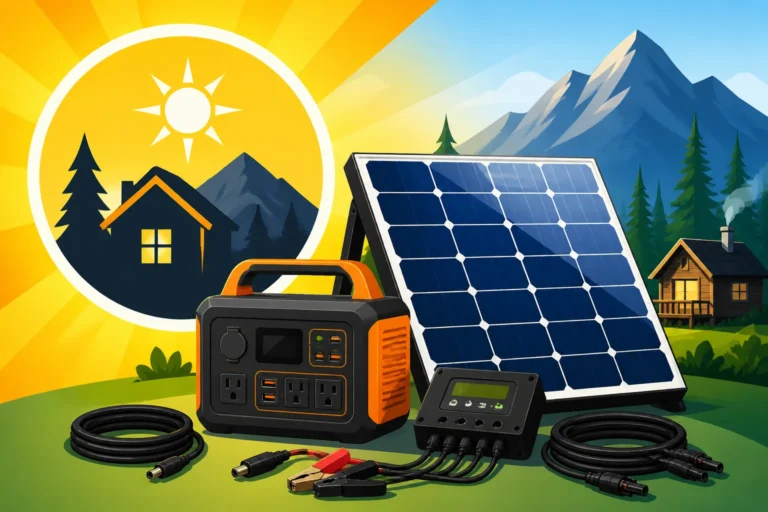
- Portable Power Stations: For those just dipping their toes into solar or with very minimal power needs, a portable power station can be an excellent all-in-one solution. These units, like the Jackery Explorer series, integrate a battery, inverter, and charge controller into a single, compact device. They're incredibly convenient for charging small electronics, running a fan, or powering a portable fridge for a few hours. While they offer simplicity and portability, their capacity is generally smaller than a custom-built system, and their cost per watt-hour can be higher. However, for weekend campers or emergency backup, a Jackery unit offers fantastic versatility and ease of use without the complexity of a full installation.
Your battery bank needs to store enough power for several days of autonomy, especially if you anticipate cloudy weather. For our 768 Wh/day example, you might need a 100Ah LiFePO4 battery (providing ~1200 Wh usable power) or a 200Ah AGM battery (providing ~1200 Wh usable power), with the Cost of an Off-Grid Solar Battery Bank varying significantly between these options.
Charge Controllers and Inverters: The Brains and Brawn
- Charge Controller: This crucial device regulates the power flowing from your solar panels to your battery bank, preventing overcharging and optimizing the charging process. MPPT (Maximum Power Point Tracking) controllers are more efficient and preferred for larger systems, while PWM (Pulse Width Modulation) controllers are simpler and more affordable for smaller setups. An MPPT controller can range from $100-$300+.
- Inverter: Your camper appliances likely run on 120V AC household power, but your solar panels and batteries produce 12V (or 24V/48V) DC power. An inverter converts that DC power to AC. For sensitive electronics, a pure sine wave inverter is essential. Sizes vary based on your highest single appliance draw (e.g., a microwave might need a 1500-2000W inverter). A good pure sine wave inverter can cost anywhere from $150 for smaller units to $500+ for larger ones.
Mounting, Wiring, and Other Necessities
These are the "hidden" costs that can quickly add up but are absolutely essential for a safe and functional system.
- Mounting Hardware: For rigid panels, you'll need roof mounts, brackets, and seals to prevent leaks.
- Wiring and Fuses: Proper gauge wiring, connectors (like MC4 for solar panels), fuses, and circuit breakers are non-negotiable for safety and efficiency. Undersized wiring can lead to dangerous overheating and power loss.
- Monitoring System: A battery monitor provides vital information on your battery's state of charge, voltage, and current, helping you manage your power consumption.
- Installation Labor: If you're not comfortable with electrical work, you'll need to factor in professional installation. The DIY vs Professional Off-Grid Solar Cost can be substantial, with professional installation easily adding $500-$2000+ depending on system complexity. However, many camper owners successfully complete a Cost of a DIY Off-Grid Solar Build with careful planning and research.
The Pros and Cons: Is Off-Grid Solar Really Worth It for a Camper?
Now for the million-dollar question: is it truly worth it? Like most things in life, there's no single "yes" or "no" answer. It depends entirely on your personal circumstances, how you use your camper, and your priorities.
The Bright Side: Advantages of Camper Solar
- Unrivaled Freedom and Independence: This is arguably the biggest draw. With off-grid solar, you're no longer tethered to campgrounds with electrical hookups. You can venture deep into national forests, BLM land, or any remote spot that calls to you, knowing you have power. No more paying for expensive campground electric sites!
- Quiet Power Generation: Unlike noisy, fuel-guzzling generators, solar power is completely silent. Imagine waking up to the sounds of nature, not the drone of an engine. This is a huge benefit for your peace of mind and for your fellow campers if you're in a shared space.
- Environmental Benefits: You're harnessing clean, renewable energy, reducing your carbon footprint. This aligns with the ethos of many outdoor enthusiasts who want to enjoy nature responsibly.
- Long-Term Savings: While the initial investment can be steep, over time, you'll save money on campground fees, generator fuel (if you would otherwise rely on one), and potentially even extend the life of your appliances by providing stable power. The Off-Grid Solar Payback Period Explained can vary but many find it worthwhile over several years of regular use.
- Increased Camper Resale Value: A well-designed and installed off-grid solar system can be a significant selling point, making your camper more attractive to future buyers who also desire independence.
- Reliable Backup Power: Even if you typically camp at hookup sites, having a solar system provides a robust backup in case of campground power outages or emergencies, ensuring your essentials like lights and a small fridge remain operational. Many also consider adding a portable power station like a Jackery as a supplemental or emergency backup power source.
The Reality Check: Disadvantages and Challenges
- Significant Upfront Cost: As detailed above, a complete off-grid solar system for a camper can range from a few hundred dollars for a very basic setup to several thousand for a robust one capable of powering a full-size RV. This initial investment can be a hurdle for many.
- Space and Weight Constraints: Camper roofs have limited space, and larger solar arrays require more real estate. Batteries, especially lead-acid, are heavy, adding to your camper's overall weight and potentially impacting fuel efficiency or payload capacity. Even compact solutions like the Jackery portable power stations, while great for smaller needs, can still take up valuable space.
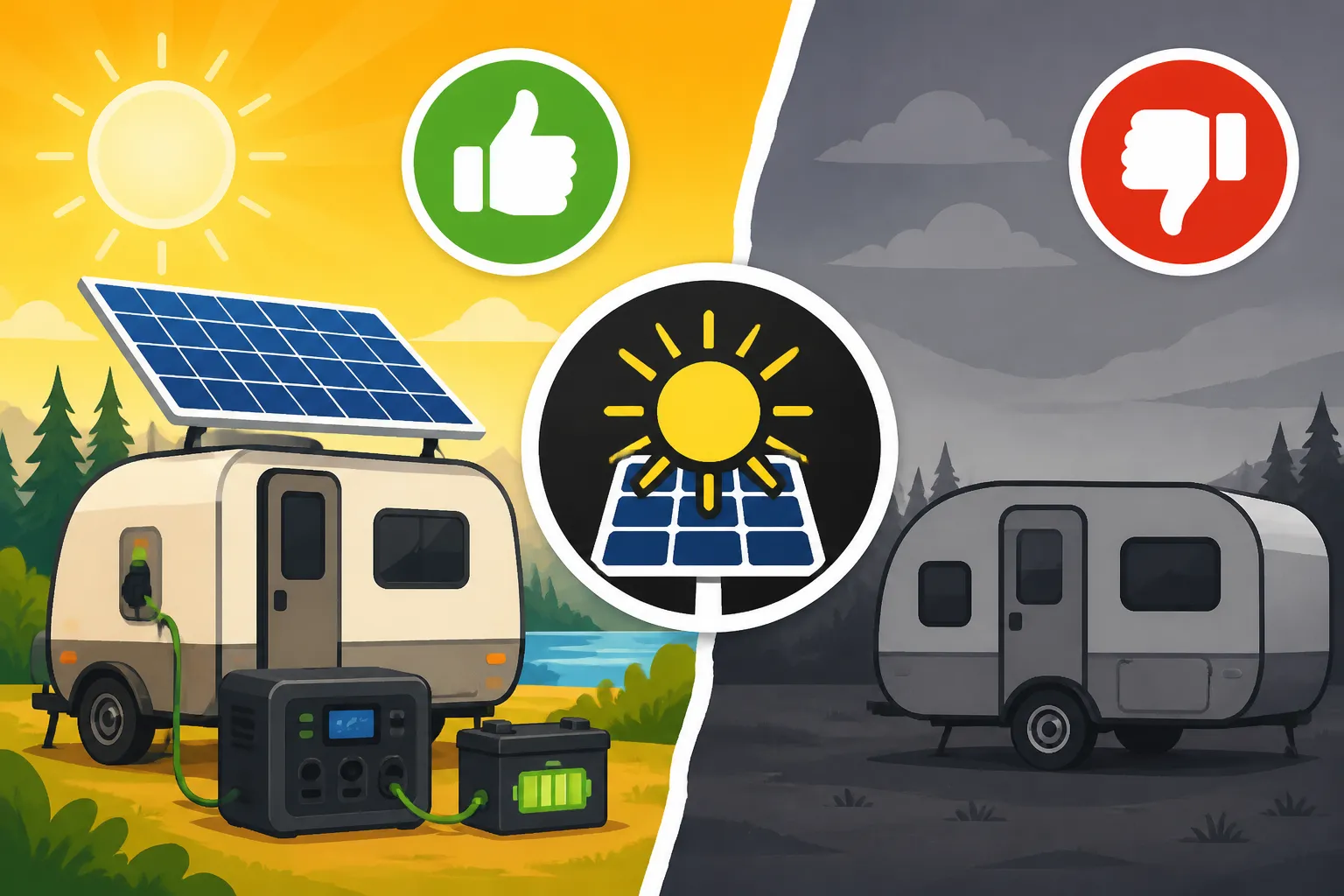
- Weather Dependency: Solar power generation is inherently dependent on sunlight. Cloudy days, rain, heavy tree cover, or short winter days will drastically reduce your power input, potentially leaving you in the dark if your battery bank isn't sized appropriately for multiple days of autonomy. You'll need to carefully consider How to Account for Cloudy Days in your system design.
- Maintenance and Troubleshooting: While generally low-maintenance, solar systems do require some attention. Panels need occasional cleaning, battery terminals might need inspection, and you'll need to monitor your system's performance. Learning to troubleshoot minor issues is also part of the off-grid lifestyle, and ignoring these aspects can lead to higher Off-Grid Solar Maintenance Costs down the line.
- Complexity of Installation: For a DIYer, installing a full system involves electrical knowledge, proper wiring, and safety precautions. Mistakes can be costly or even dangerous. While solar kits can simplify things, understanding the fundamentals is crucial. Many people opt for professional help for certain parts of the installation.
Making the "Worth It" Decision: Factors to Consider
Ultimately, the decision of whether off-grid solar is worth it for your camper comes down to a few key personal and practical considerations.
Your Camper Lifestyle and Usage Patterns
- How often do you boondock? If you primarily stay at campgrounds with hookups, a full solar system might be overkill. A small, portable solar panel and a power station like a Jackery for charging devices might be sufficient. If you always boondock, then solar becomes almost a necessity.
- How long do you stay off-grid? Weekend trips have different demands than weeks or months of full-time living. Longer stays require larger battery banks and more robust solar arrays to ensure continuous power.
- What appliances are non-negotiable? Can you live without a microwave? Are you comfortable with a propane fridge instead of an electric one? The more high-draw appliances you need, the larger and more expensive your solar system will be. For example, Sizing Solar for Air Conditioning is a significant undertaking.
- Where do you typically camp? If you mostly camp in heavily wooded areas, shade will be a constant challenge for solar charging, even with portable panels. Desert or open-field camping provides optimal sun exposure.
Budget, DIY Skills, and Expandability
- What's your budget? Be realistic about how much you're willing to invest upfront. Remember, solar is a long-term investment. Consider looking into Off-Grid Solar Financing Options if the initial outlay is a concern.
- Are you a DIY enthusiast? If you're handy and enjoy learning about electrical systems, you can save a significant amount on installation costs. There are tons of resources and Off-Grid Solar System Design Basics available to help. If not, factor in the cost of hiring a qualified professional.
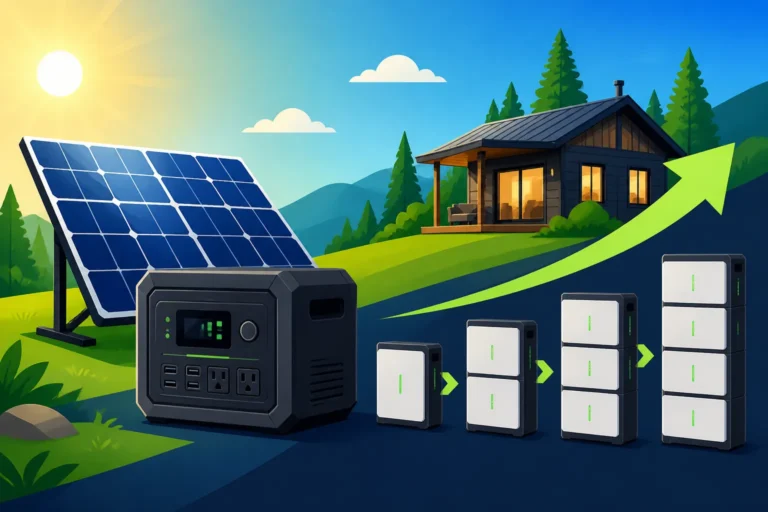
- Do you plan to expand in the future? It's often wise to design your system with future expansion in mind. This might mean starting with a slightly larger charge controller or choosing an inverter that can handle more wattage down the road. Planning for How to Design an Expandable System from the start can save you money and headaches later.
For many camper owners, the desire for freedom, quiet, and environmental responsibility outweighs the initial costs and complexities. For others, particularly those who camp infrequently or mostly at developed sites, a simpler setup or even just a generator might make more financial sense. However, the convenience and peace of mind that a well-designed off-grid solar system provides is often priceless for those who embrace the open road.
Disclaimer
The information provided in this article is for general informational purposes only and does not constitute professional advice. Off-grid solar system design and installation can be complex and involve electrical hazards. Always consult with qualified professionals and adhere to local codes and regulations when planning or installing any solar electric system.