Best Off-Grid Solar Kit Under $1,000
It's incredibly frustrating when you're dreaming of embracing off-grid living or just having reliable backup power, but every solar setup you see seems to cost an arm and a leg. Many people assume that anything truly effective for off-grid power is way out of reach financially, making the dream feel impossible. But I'm here to tell you that it's absolutely possible to get a functional off-grid solar kit for under $1,000 that can meet your basic needs, and this guide will show you exactly what to look for and what to expect.
Setting Realistic Expectations for Off-Grid Solar Under $1,000
When you're working with a budget under $1,000 for an off-grid solar kit, it's crucial to manage your expectations. We're not talking about powering a whole house with central air conditioning and multiple refrigerators here. Instead, we're focusing on smaller, more essential power needs that can still make a huge difference in your life, whether you're camping, living in a small RV, or need emergency backup.
Understanding Realistic Power Capabilities
With a sub-$1,000 budget, your system will likely be capable of powering low-draw appliances and charging smaller electronics. Think about what you absolutely need when the grid isn't available or when you're out in the wilderness. This usually includes things like LED lighting, charging your phone, tablet, and laptop, running a small fan, perhaps a portable radio, or even a mini-fridge for short periods.
For example, a typical kit in this price range might offer around 100-200 watts of solar panel input and a battery capacity of roughly 500-1000 watt-hours (Wh). To put that into perspective, running a few LED lights for several hours, charging a laptop twice, and keeping your phone topped up is a perfectly achievable daily load. You won't be able to run a microwave for five minutes or an electric water heater without draining your battery in a flash. It's all about making smart choices and prioritizing your energy use. This is where understanding How to Calculate Daily Energy Usage becomes incredibly important – it helps you match your needs to your budget.
Common Use Cases for Budget Systems
These affordable off-grid solar kits shine in specific scenarios where power demands are modest but reliability is key. They're perfect for:
- Weekend Camping Trips: Powering lights in your tent, charging devices, and running a portable cooler.
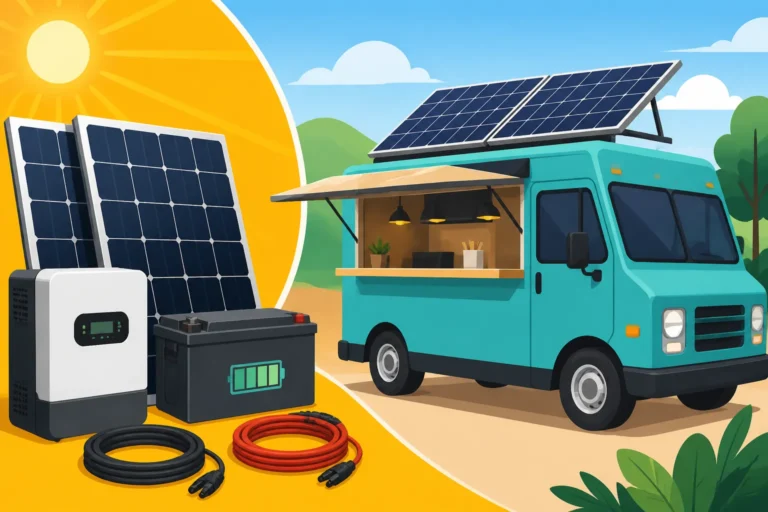
- RV and Van Life (Light Use): Keeping your essential electronics charged, running a water pump, or a small vent fan. For more extensive RV power, you'd be looking at a higher investment, but these kits can certainly get you started.
- Emergency Backup Power: During a power outage, these systems can keep your critical communication devices charged and provide essential lighting, acting as a crucial safety net.
- Remote Sheds or Workshops: Powering a few tools, lights, or charging batteries for cordless tools where extending grid power is costly or impossible.
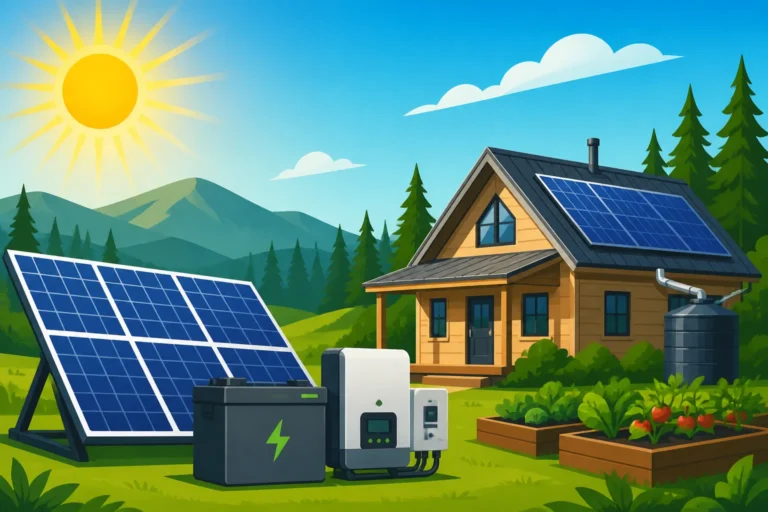
- Tiny Homes with Minimal Needs: If you're truly embracing minimalism, a sub-$1,000 system might power your lights, phone, and maybe a small laptop for basic work.
Imagine you're out camping in the backcountry of Idaho, far from any outlets. A small, portable solar setup under $1,000 lets you keep your headlamp charged, listen to music, and ensure your phone has enough juice for emergencies or navigation. It truly brings a sense of independence and comfort to remote locations.
Limitations and What You Won't Get
Let's be clear about what these budget-friendly systems won't deliver. You generally won't find:
- Whole-Home Power: Forget running your central air conditioning, electric oven, or even a full-sized refrigerator for an extended period. These require significantly larger investments, often into the tens of thousands of dollars, as detailed in our guide on How Much Does an Off-Grid Solar System Cost.
- High-Wattage Appliances: Appliances like hair dryers, coffeemakers, or power-hungry blenders are usually out of the question due to their high instantaneous power draw.
- Extended Autonomy for Heavy Loads: While you might get a day or two of backup power for essentials, these systems aren't designed to run a mini-split AC unit through a week of cloudy weather. The battery capacity simply isn't there. When you start exploring How Many Batteries for an Off-Grid System, you'll see why larger battery banks are needed for substantial autonomy.
- Complex System Monitoring and Management: While some portable power stations offer basic app connectivity, dedicated component systems in this range won't have the sophisticated monitoring features you'd find in higher-end setups like Victron Energy systems.
It's all about being realistic. A system under $1,000 is a fantastic starting point for basic needs, a valuable tool for specific applications, but not a full-scale home power solution.
Key Components of an Affordable Off-Grid Solar Kit
To build or buy an effective off-grid solar kit under $1,000, you need to understand the basic components and what you can realistically expect from them at this price point. Quality and efficiency are always factors, but here, we prioritize functionality and affordability.
Solar Panels for Budget Systems
For a system under $1,000, your solar array will likely be modest. We're generally talking about one or two panels, typically in the 100W to 200W range each.
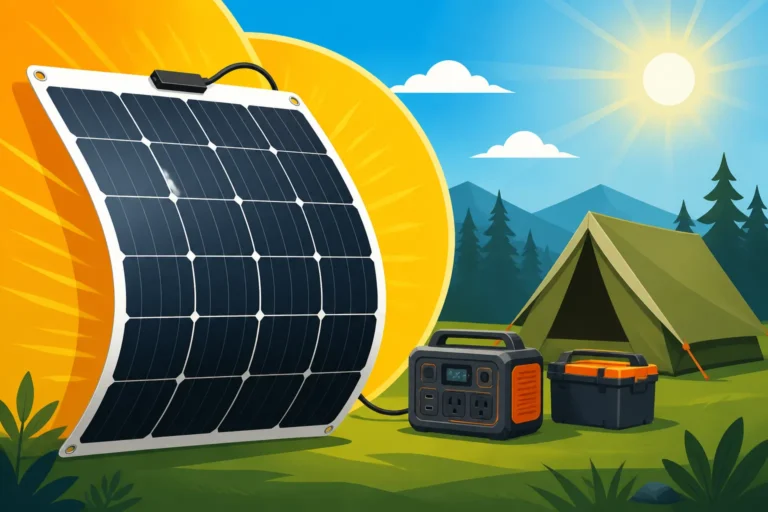
- Types: Monocrystalline panels are the most common and efficient choice, even for budget setups. They offer good performance in smaller sizes, which is ideal when space and budget are limited. Flexible solar panels can also be an option, particularly for RVs or vans, but they often come with a slightly higher cost per watt and potentially shorter lifespans compared to rigid panels.
- Portability: Many kits in this price range include portable solar panels, sometimes foldable, which are fantastic for camping or quick setups. Brands like Renogy and BougeRV offer reliable portable panels that are well-regarded for their durability and ease of use.
- Expectations: Don't expect to generate massive amounts of power daily. A 100W panel typically produces about 30-60 amp-hours (Ah) of charge per day in good sunlight, depending on your location and Peak Sun Hours Explained. This is sufficient for charging small devices and maintaining a modest battery bank.
Charge Controllers: PWM vs. MPPT
The charge controller is the brain of your solar charging system, regulating the power coming from your panels to safely charge your batteries.
- PWM (Pulse Width Modulation): At the sub-$1,000 price point, a PWM charge controller is very common. These are simpler, less expensive, and quite effective for smaller systems, especially if your solar panel voltage closely matches your battery bank voltage (e.g., a 12V panel charging a 12V battery). While they aren't as efficient as MPPT controllers, their cost-effectiveness makes them a solid choice for entry-level kits.
- MPPT (Maximum Power Point Tracking): If you're lucky and find a kit at the higher end of the sub-$1,000 budget, you might get a small MPPT charge controller. These are more efficient, especially in varied weather conditions or if your panel voltage is significantly higher than your battery voltage. They can extract up to 20-30% more power from your panels compared to a PWM controller, which can be a game-changer on cloudy days. Many pre-built portable power stations include advanced internal charge controllers that function similarly to MPPT.
Batteries: The Heart of Your Off-Grid System
The battery bank is arguably the most critical component, and often the most expensive, as our guide on the Cost of an Off-Grid Solar Battery Bank can attest. For under $1,000, your options will be specific:
- Lead-Acid (AGM): Many budget kits will feature a 12V 100Ah AGM (Absorbed Glass Mat) battery. These are sealed, maintenance-free, relatively affordable, and perform well in various temperatures. However, you should only discharge them to about 50% of their capacity to prolong their lifespan. This means a 100Ah AGM battery effectively gives you about 50Ah of usable power.
- LiFePO4 (Lithium Iron Phosphate): While generally more expensive, some smaller LiFePO4 batteries (e.g., 12V 50Ah or 80Ah) are starting to fall into this budget, especially during sales. LiFePO4 batteries offer a much longer lifespan, lighter weight, and can be discharged deeply (80-100%) without significant damage, giving you more usable capacity for their stated Amp-hour rating. If you can stretch your budget slightly or find a good deal, a LiFePO4 battery is almost always a better long-term investment. Check out the Best Off-Grid Solar Batteries for more detailed comparisons.
Inverters: Converting DC to AC Power
Unless you're planning a strictly DC-only setup, you'll need an inverter to convert the DC power from your batteries into usable AC power for most household electronics.
- Pure Sine Wave Inverters: For under $1,000, you'll typically find smaller pure sine wave inverters, ranging from 300W to 600W. A pure sine wave inverter is essential for sensitive electronics like laptops, medical devices (like CPAP machines), and anything with a motor. It produces clean, reliable power similar to what you get from the grid, preventing damage to your devices.
- Portable Power Stations: If you opt for an all-in-one portable solar generator, the inverter is integrated into the unit. These typically offer pure sine wave AC outlets, which is a major advantage for convenience and compatibility.
Wiring and Accessories
Most entry-level kits and portable power stations come with the necessary wiring and connectors. This usually includes:
- MC4 Connectors: Standard for connecting solar panels.
- Battery Cables: To connect your charge controller to your battery and your battery to your inverter.
- Fuses/Breakers: Crucial safety components to protect your system from overcurrents. Always ensure your kit includes appropriate fuses for both your solar input and battery output.
- Mounting Hardware: For rigid panels, you might get basic Z-brackets for roof mounting. Portable panels often come with kickstands.
Top Picks for Off-Grid Solar Kits Under $1,000
Navigating the market for an off-grid solar kit under $1,000 can feel overwhelming with so many options. The good news is that there are two main categories that excel in this price range: all-in-one portable solar generators and entry-level component kits.
Portable Solar Generators for Under $1,000
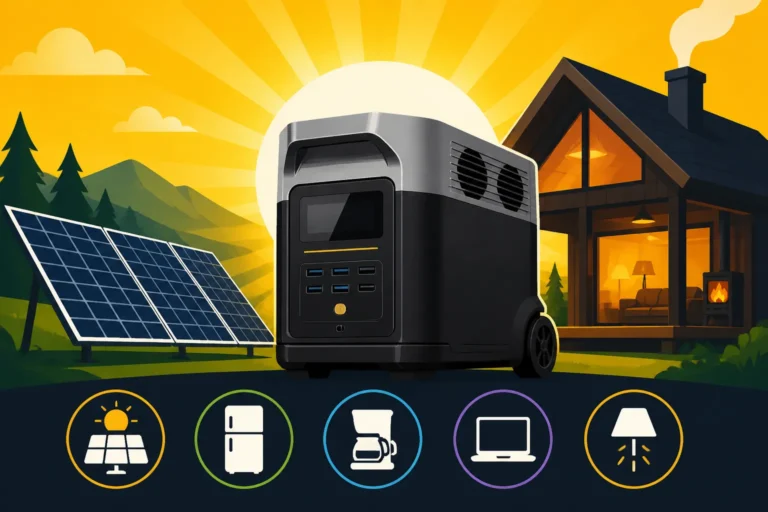
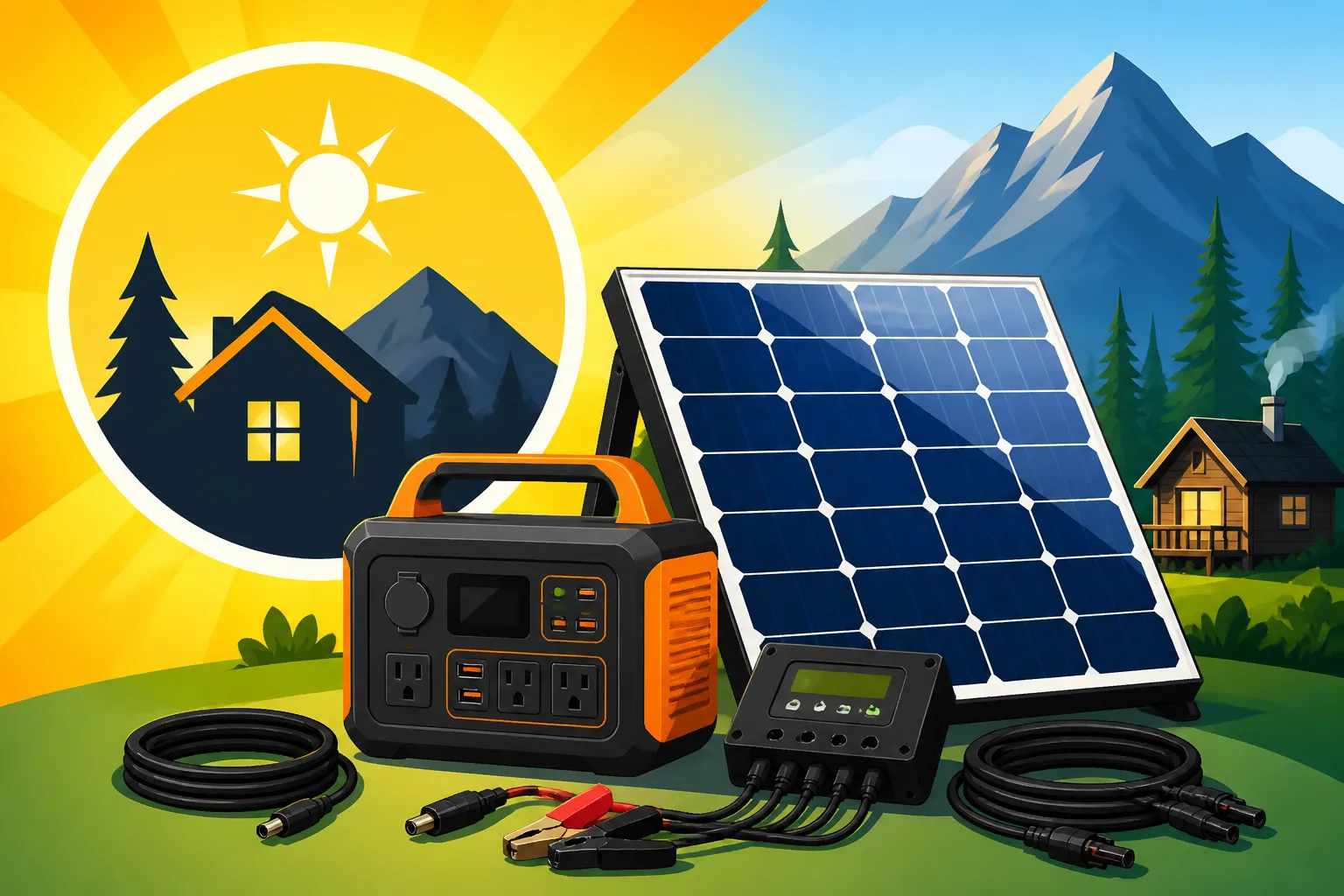
Portable solar generators, or power stations, are often the best bet for this budget. They are incredibly convenient because they combine the battery, inverter, and charge controller into one compact unit. All you usually need to add are solar panels, which are often sold as bundles or can be purchased separately.
- Ease of Use: These are essentially plug-and-play. You connect your solar panel, and it charges the internal battery. Then you plug your devices directly into the unit. This makes them ideal for beginners and those who don't want to deal with complex wiring.
- Integrated Components: The internal components are designed to work seamlessly together, eliminating compatibility concerns and simplifying troubleshooting. Many offer multiple output ports, including AC outlets, DC car ports, and USB ports.
- Brands to Look For: Companies like Jackery, EcoFlow, and Bluetti offer excellent options in this price range. For example, a Jackery Explorer 500 or Explorer 1000 (often found on sale or as part of a bundle for under $1,000) provides substantial battery capacity and a pure sine wave inverter, perfect for camping, RVing, or emergency backup. The EcoFlow River 2 Pro is another strong contender, often fitting within this budget and offering fast charging capabilities.
- What You Get: Typically, you'll find portable power stations with capacities ranging from 500Wh to 1000Wh, paired with a single 100W or 200W foldable solar panel. This setup can run lights, charge all your devices, and even power small appliances like a portable fridge for a good portion of the day.
Entry-Level Component Kits
If you prefer a more modular approach or want to build a semi-permanent installation for a shed or a small cabin, an entry-level component kit can be a great choice. These kits come with separate panels, batteries, charge controllers, and inverters.
- Flexibility: You have more control over individual component upgrades down the line. For instance, you could start with a basic AGM battery and later upgrade to a LiFePO4 battery without replacing the entire system.
- Learning Opportunity: Building a component kit offers a hands-on learning experience about how each part of an off-grid solar system functions.
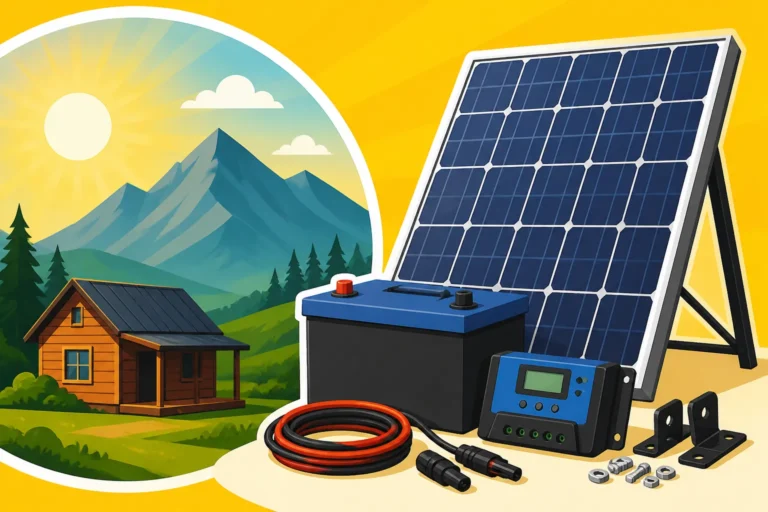
- Brands to Look For: Renogy and BougeRV are prominent brands that offer pre-packaged entry-level kits for under $1,000. A typical kit might include a 100W or 200W solar panel, a 100Ah 12V AGM battery, a PWM charge controller, and a small 300W pure sine wave inverter. You'd also get the necessary wiring and mounting hardware.
- Installation: While more involved than a portable power station, these kits are still relatively straightforward to install for someone with basic DIY skills. You'll need to know How to Wire an Off-Grid Solar System and handle connections carefully.
Here’s a comparison to help you weigh your options:
| Feature | Portable Solar Generator (e.g., Jackery Explorer 500) | Entry-Level Component Kit (e.g., Renogy 100W Kit) |
|---|---|---|
| Price Range (under $1000) | Typically $500 – $999 (often bundled with a panel) | $600 – $999 |
| Components Included | Battery, Inverter, Charge Controller (all-in-one) | Solar Panel, Battery, Charge Controller, Inverter, Wiring, Mounting |
| Ease of Setup | Very easy (plug-and-play) | Moderate (requires wiring and assembly) |
| Portability | High (carry handle, relatively light) | Low to Moderate (separate heavy components) |
| Expandability | Limited (can add more panels, but not internal battery) | High (can upgrade individual components) |
| Usable Battery (Wh) | 500-1000 Wh (often LiFePO4, so higher usable) | ~600 Wh (100Ah AGM at 50% DoD) |
| Typical Loads | Laptops, phones, lights, mini-fridge, CPAP, small tools | Laptops, phones, lights, small fans |
| Pros | User-friendly, compact, minimal setup, pure sine wave AC | Modular, customizable, good for fixed installations |
| Cons | Limited expandability, higher cost per Wh initially | More complex setup, heavier, often less efficient battery at price point |
Ultimately, your choice depends on your specific needs and comfort level with DIY. If you want instant power and minimal fuss, a portable power station like a Jackery is a fantastic choice. If you're building a fixed setup and want the flexibility to upgrade components over time, an entry-level kit provides a solid foundation.
Maximizing Value and Expanding Your System Later
When you’re starting with a budget under $1,000, every decision counts. It’s not just about getting power today, but also about setting yourself up for success and potential expansion down the road.
Energy Conservation Strategies for Small Systems
The most effective way to make a budget off-grid solar kit feel more powerful is to drastically reduce your energy consumption. It sounds simple, but many people overlook this crucial step.
- Embrace LED Lighting: If you're still using incandescent bulbs, switch to LEDs immediately. They use a fraction of the power and will extend your battery life dramatically. For instance, a traditional 60-watt bulb consumes as much power as a small laptop and two smartphones charging simultaneously, whereas an equivalent LED bulb might only use 8-10 watts.
- Choose Energy-Efficient Appliances: If you're buying a mini-fridge or a fan, look for DC-powered models or those specifically designed for low energy consumption. Appliances with an Energy Star rating are a good starting point. Running a refrigerator on off-grid solar requires careful sizing, and even small, efficient models consume a significant amount of power over 24 hours.
- Unplug Phantom Loads: Even when turned off, many electronics still draw a small amount of power (phantom loads). Unplug chargers, TVs, and other devices when not in use. This can cumulatively save precious watt-hours from your limited battery capacity.
- Charge During Peak Sun Hours: Schedule your charging of laptops, power tool batteries, or even running small appliances during the sunniest part of the day. This directly uses the power generated by your panels, reducing the drain on your battery bank. Our guide on How to Choose an Off-Grid Charge Controller highlights how important it is for efficient power transfer.
- Limit Heavy Appliance Use: Be mindful of when and how long you use anything with a heating element or a powerful motor. These are energy hogs. If you need hot water, consider propane-powered options for maximum efficiency and to save your precious battery power.
By adopting these habits, you might find that your small, sub-$1,000 system feels much more capable and lasts longer than you initially anticipated. It's about working with your system, not against it.
Phased Upgrades and Future-Proofing Your Setup
One of the smartest ways to approach off-grid solar on a budget is to think of it as a journey, not a single purchase. Your initial sub-$1,000 kit can be the first step in a larger, more robust system.
- Start Modular: If you choose a component kit rather than an all-in-one unit, you gain significant flexibility for upgrades. You could start with a single 100W panel and an AGM battery, then add a second 100W panel or upgrade to a more powerful MPPT charge controller later. You might even decide that Is Off-Grid Solar Worth the Cost for a full home, then phase into a larger setup.
- Increase Solar Array: The easiest upgrade is often adding more solar panels. If your charge controller can handle it (check its maximum input current and voltage), you can expand your solar array to generate more power daily. This will allow you to charge your existing battery bank faster or support a larger battery.
- Expand Battery Capacity: As your budget grows, investing in additional battery capacity is usually the next logical step. If you started with an AGM battery, you might add another identical one (ensuring they are the same age and type for parallel wiring) or eventually make the leap to a larger LiFePO4 bank, which offers superior performance and longevity, even though the upfront LiFePO4 vs Lead-Acid Battery Cost is higher.
- Upgrade Your Inverter: If you find yourself needing to run slightly more powerful AC appliances, you can upgrade your small 300W inverter to a 1000W or 2000W model, provided your battery bank can supply the necessary current.
- Choosing an Expandable System: When selecting your initial components, consider if they are part of a larger ecosystem. Brands like Renogy and BougeRV design their products to be relatively compatible, allowing for easier expansion. Even some portable power stations, like the EcoFlow Delta series or the larger Jackery models, can accept additional batteries or multiple solar panels, though they might push you over the initial $1,000 budget for the full setup. Thinking about How to Design an Expandable System from the start can save you headaches later.
DIY Savings: How Much Cheaper Is DIY Off-Grid Solar?
For those on a strict budget, doing it yourself (DIY) can lead to significant cost savings compared to purchasing a pre-built, fully integrated system, especially for the under $1,000 range. While professional installation costs can be prohibitive for small systems, DIY allows you to allocate almost your entire budget to components.
- Component Sourcing: Buying individual components (panels, charge controller, battery, inverter) from different suppliers can sometimes be cheaper than buying a pre-packaged kit. This allows you to hunt for sales and best deals on each part. For example, you might find a fantastic deal on Cost of Off-Grid Solar Panels from one vendor and a budget-friendly battery from another.
- Labor Costs: This is where the biggest savings come in. By doing the research, planning, and physical installation yourself, you completely eliminate labor charges. While it requires time, effort, and a commitment to learning DIY Off-Grid Solar Installation Step by Step, the financial rewards are substantial.
- Knowledge is Power: The process of building your own system teaches you invaluable skills in system design, wiring, and troubleshooting. This knowledge empowers you to maintain and repair your system independently, further saving on future maintenance costs.
- Tools and Expertise: Be honest about your comfort level. While basic tools are often sufficient for small systems, some aspects like proper wiring and grounding require attention to detail and adherence to safety standards. If you're unsure, it's always wise to consult resources or even hire an electrician for specific connections. However, for a sub-$1,000 system, many people find the DIY route perfectly manageable with online tutorials and guides.
In essence, by carefully planning, prioritizing energy efficiency, and being open to a phased approach, your initial sub-$1,000 off-grid solar kit can be a powerful stepping stone towards greater energy independence.
Disclaimer
The information provided in this guide is for general informational purposes only. While we strive to offer accurate and up-to-date advice, off-grid solar system design and installation can be complex. Always consult with qualified professionals and adhere to local electrical codes and regulations for safe and effective system implementation.