Best Off-Grid Solar for a Homestead
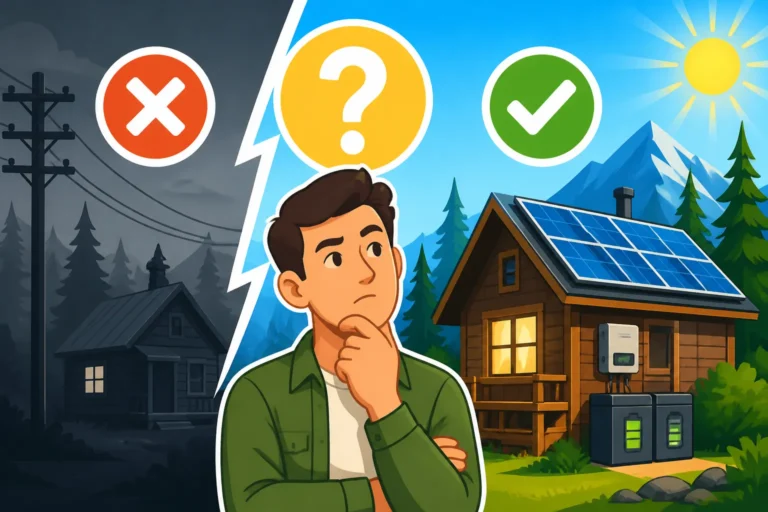
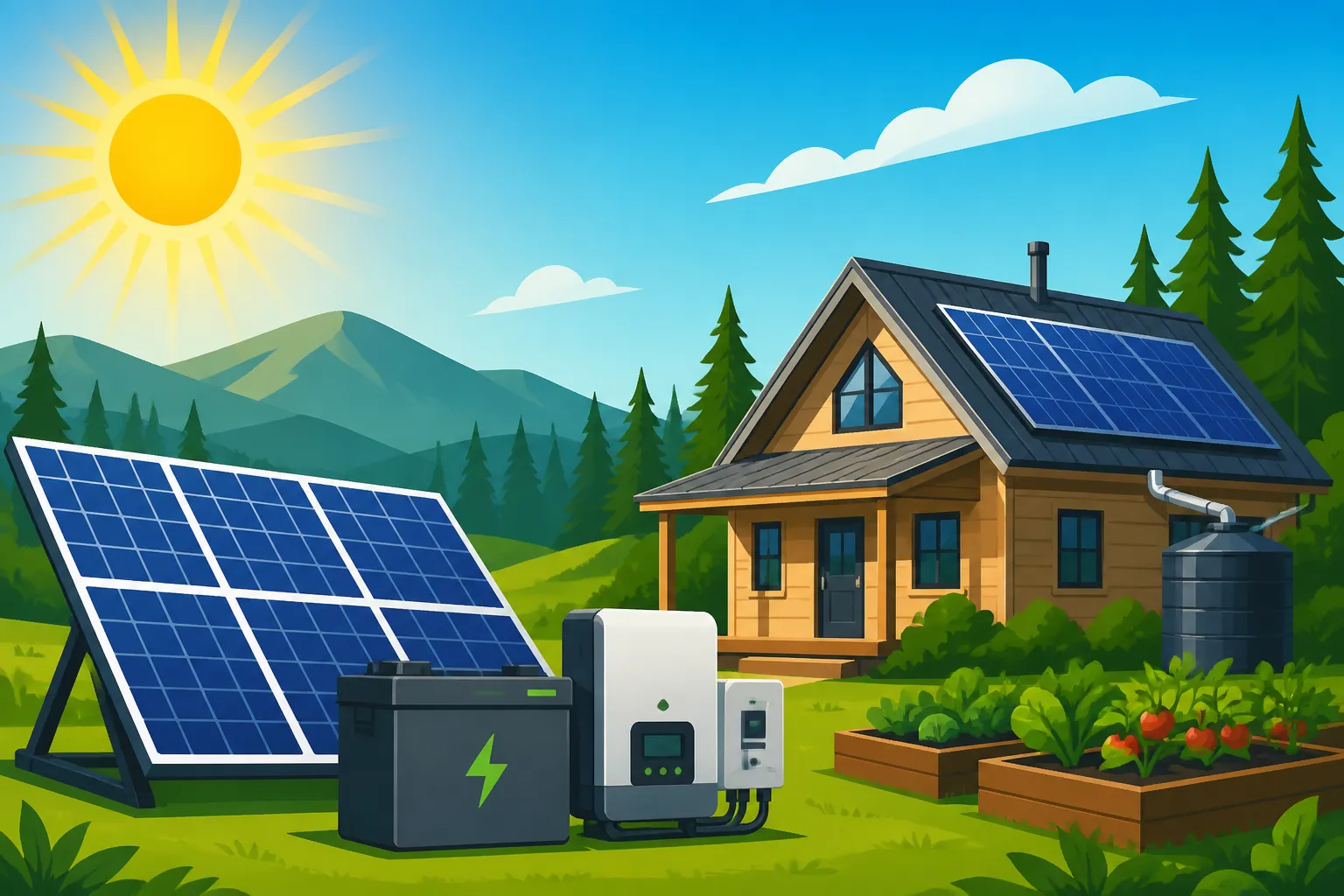
The dream of a self-sufficient homestead, powered by the sun, is incredibly appealing. Yet, the reality of figuring out the "best" off-grid solar system can feel overwhelming. You’re not just powering a few lights; you're running pumps, tools, refrigeration, and everything that keeps your unique slice of independence thriving, often far from reliable utility lines. This guide is here to demystify the process, helping you choose and design an off-grid solar setup perfectly suited for your homestead's demanding needs.
Understanding Your Homestead's Unique Energy Demands
Before you even start looking at equipment, you absolutely must understand your energy needs. This isn't a "one-size-fits-all" situation like a typical suburban home. Homesteads have unique, often heavy, and sometimes intermittent power demands that can throw a wrench into standard solar calculations. Skimping on this initial step is a surefire way to end up frustrated, constantly running out of power, or worse, damaging your equipment.
Conducting a Detailed Load Analysis
The first and most critical step is to perform a thorough load analysis. This means listing every single appliance and device you plan to use, from your refrigerator and well pump to your power tools, lights, internet router, and even your phone chargers. For each item, you need to know its wattage (how much power it consumes at any given moment) and, crucially, how many hours per day or week you'll use it.
Let's break this down further. Your well pump, for instance, might only run for 30 minutes a day, but it could draw a massive surge of power when it first kicks on. A chest freezer, on the other hand, might have a lower continuous draw but runs 24/7. Your power tools, like a circular saw or a welder, will have very high wattage but are only used for short, specific periods. Don't forget seasonal items – perhaps an incubator for chicks in the spring, a powerful fan in the summer, or additional heating in winter.
Grab a notepad or a spreadsheet and create categories:
- Lights: LED bulbs use far less power than incandescent.
- Refrigeration/Freezing: These are usually constant draws.
- Water Pumping: Often a significant power hog due to starting surges.
- Heating/Cooling: Mini-splits, fans, electric blankets – these can be huge.
- Kitchen Appliances: Microwave, toaster, coffee maker – short but high draws.
- Laundry: Washing machines, especially older ones, can be quite power-hungry.
- Electronics: Laptops, phones, internet routers, TVs.
- Workshop/Farm Equipment: Saws, drills, air compressors, electric fence chargers.
For each, find its wattage (often on a sticker or in the manual) and estimate its daily run time. Multiply watts by hours to get Watt-hours (Wh) per day. This gives you your total daily energy consumption, which is the baseline for your system design. You can dive deeper into this process by checking out our guide on How to Calculate Daily Energy Usage.
Accounting for Seasonal Variations and Future Growth
Homestead life isn't static, and neither is the sun. Your solar system needs to be robust enough to handle the ebbs and flows of both. In many regions, winter means significantly fewer peak sun hours and lower sun angles, leading to reduced solar panel output. This can be a huge frustration if your system was only sized for sunny summer days. Conversely, summer might bring higher demands for water pumping for irrigation or fans for cooling.
Consider the "worst-case scenario" for solar production, which is usually the shortest, cloudiest winter day, and ensure your system can still meet your critical loads. This often means oversizing your solar array and battery bank to account for these lean periods.
Beyond seasonal changes, homesteads tend to grow. You might start with powering a small cabin, then add a workshop, a greenhouse with fans, or even plan for an electric vehicle charging station down the road. Designing an off-grid solar system with future expansion in mind can save you a lot of headache and cost later. Think about choosing components that are easily scalable or a system voltage (like 48V) that supports larger loads more efficiently. This forethought is crucial because expanding an incompatible system can be almost as costly as starting from scratch.
Key Components of a Robust Homestead Off-Grid Solar System
Building a reliable off-grid system for a homestead requires careful selection of components. Each piece plays a vital role, and choosing wisely ensures efficiency, longevity, and the ability to handle the demands of farm life.
Selecting the Right Solar Panels
For a homestead, you're generally looking for durable, high-efficiency solar panels. Monocrystalline panels are typically the preferred choice. They offer higher power output per square foot, which is beneficial if you have limited space, or if you want to maximize energy harvest from your array. Their solid black appearance also tends to hold up well over time, even in harsh weather conditions.
When considering installation, ground mounts are often the unsung hero for homesteads. Unlike roof mounts, which are fixed and can be challenging to expand, ground mounts offer immense flexibility. You can optimize their tilt angle seasonally to capture more sun, especially in winter when the sun is lower. They are also much easier to access for cleaning and maintenance, which is crucial for maximizing efficiency. Plus, expanding a ground-mounted array is usually a simpler process if your energy needs grow. Protecting your investment from high winds and curious critters is also a consideration; robust racking is essential. For more details on choosing panels, check out our guide on Best Off-Grid Solar Panels.
Choosing a High-Capacity Battery Bank
The battery bank is arguably the most critical component of an off-grid homestead system – it's your reservoir of power. Without sufficient storage, all the solar panels in the world won't keep your lights on through the night or during a string of cloudy days. For homesteads, where reliable power is paramount for things like refrigeration, water, and perhaps even critical medical equipment, investing in a high-quality, high-capacity battery bank is non-negotiable.
While lead-acid batteries (like AGM or flooded lead-acid) are cheaper upfront, they have a shorter lifespan, require more maintenance, and can only be discharged to about 50% without significantly reducing their longevity. For the demands of a homestead, LiFePO4 (Lithium Iron Phosphate) batteries are generally the superior choice, despite their higher initial cost. They offer:
- Much longer lifespan: Often 10-15 years or more, easily outlasting lead-acid.
- Deeper discharge cycles: You can safely use 80-100% of their capacity.
- Higher efficiency: Less energy is lost during charging and discharging.
- Zero maintenance: No watering or equalization needed.
- Faster charging capabilities: Important for maximizing solar harvest on shorter sunny days.
When planning your battery bank, you need to calculate not just your daily usage but also your desired "days of autonomy" – how many days your system can power your homestead without any sun. For a remote homestead, aiming for 3-5 days of autonomy is a wise decision to buffer against extended bad weather. This will give you peace of mind that your well pump will still run and your food won't spoil even if the skies are grey for a week straight. Learn more about battery options and their costs in our articles like Cost of an Off-Grid Solar Battery Bank and Best Off-Grid Solar Batteries.
Inverters and Charge Controllers for Heavy Loads
These two components act as the brains and muscle of your solar system. They manage the power flow from your panels to your batteries and then convert it into usable household electricity.
Your charge controller is responsible for taking the variable power from your solar panels and safely charging your battery bank. For homesteads with larger arrays and a desire for maximum efficiency, an MPPT (Maximum Power Point Tracking) charge controller is the only way to go. MPPT controllers are significantly more efficient than their PWM counterparts, especially in conditions that aren't perfectly sunny (like partial shading or cooler temperatures), which means you'll extract more usable power from your solar panels throughout the day. This added efficiency translates directly into more charged batteries and more available power for your homestead.
The inverter is what transforms the DC (Direct Current) power stored in your batteries into AC (Alternating Current) power, which is what most of your household appliances use. For a homestead, you absolutely need a pure sine wave inverter with sufficient continuous wattage and, critically, high surge capacity.
- Pure Sine Wave: This produces clean, stable power identical to what you get from the utility grid. It's essential for sensitive electronics (computers, TVs) and ensures motors (like those in refrigerators, freezers, and especially well pumps) run efficiently and don't prematurely burn out. Modified sine wave inverters are cheaper but can damage or shorten the life of many appliances.
- High Continuous Wattage: This is the total power your inverter can supply constantly. It needs to be higher than the sum of all the appliances you anticipate running simultaneously on a regular basis.
- High Surge Capacity: This is paramount for homesteads. Appliances with motors (pumps, large refrigerators, power tools like saws or air compressors) draw a massive burst of power for a fraction of a second when they first start up – often 3 to 7 times their running wattage. Your inverter must be able to handle this surge without shutting down. Undersizing your inverter's surge capacity is a common and incredibly frustrating mistake, leading to tripped breakers and appliances that simply won't start.
Brands like Victron Energy, Sol-Ark, and Outback Power are popular choices for robust, high-quality inverters and charge controllers designed for serious off-grid applications. They offer advanced features, excellent monitoring, and the reliability that homesteaders need. Explore more in our guide on Best Off-Grid Solar Inverters.
Designing for Reliability and Scalability
An off-grid homestead isn't just a place to live; it's a living system, constantly evolving. Your solar setup needs to be just as adaptable and robust to handle whatever challenges come your way, from unpredictable weather to new projects.
Sizing Your System for Real-World Homestead Life
Sizing your off-grid solar system isn't just about adding up your average daily loads. It's about designing for reliability and peak demand in real-world conditions. Homesteads, by their nature, often have heavier and more erratic loads than a typical residential home. You might run a washing machine, a well pump, and a few power tools all within a short period, potentially on a partly cloudy day.
A good rule of thumb is to calculate your total daily Watt-hours, then add a buffer of 20-30% for unforeseen circumstances, efficiency losses, and future needs. Then, divide this adjusted daily Watt-hour figure by your region's "peak sun hours" (the effective hours of full sun exposure per day, which varies significantly by location and season). This will give you a ballpark for the total wattage of solar panels you'll need. However, remember to factor in those critical days of autonomy for your battery bank – this will drive the size of your battery storage. If you want to dive deep into the calculations, our detailed Off-Grid Solar System Sizing Guide and How to Size an Off-Grid Solar System can walk you through it step-by-step. It’s always better to slightly oversize your system than to constantly run short on power.
Integrating Backup Power Solutions
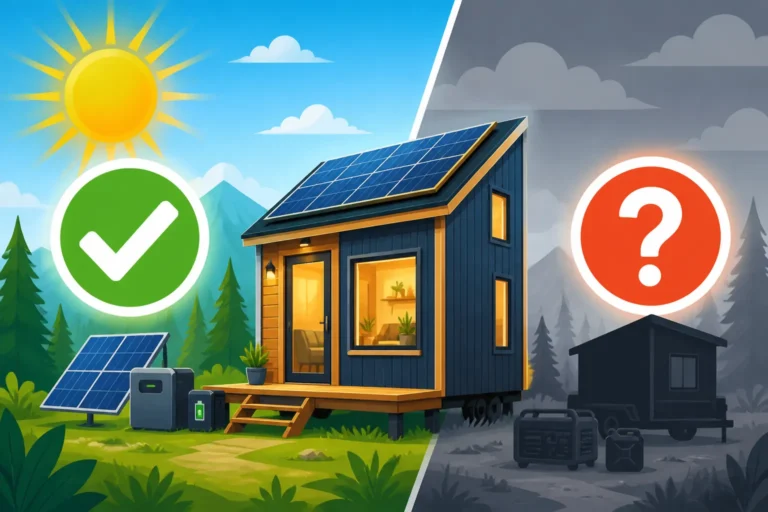
Even the best-designed off-grid solar system will face situations where it can't meet demand. Extended periods of heavy cloud cover, unexpected equipment failures, or simply higher-than-anticipated usage can drain your batteries faster than your panels can recharge them. This is where a reliable backup power solution becomes indispensable for a homestead.
A generator is the most common and robust backup. Whether it's gasoline, propane, or diesel, a generator can kick in to charge your batteries or directly power heavy loads when solar isn't sufficient. Many modern off-grid inverters can even be configured to automatically start a generator when battery voltage drops to a certain level, providing seamless backup. For example, a robust system might include a larger propane generator to handle the whole house during an extended winter storm.
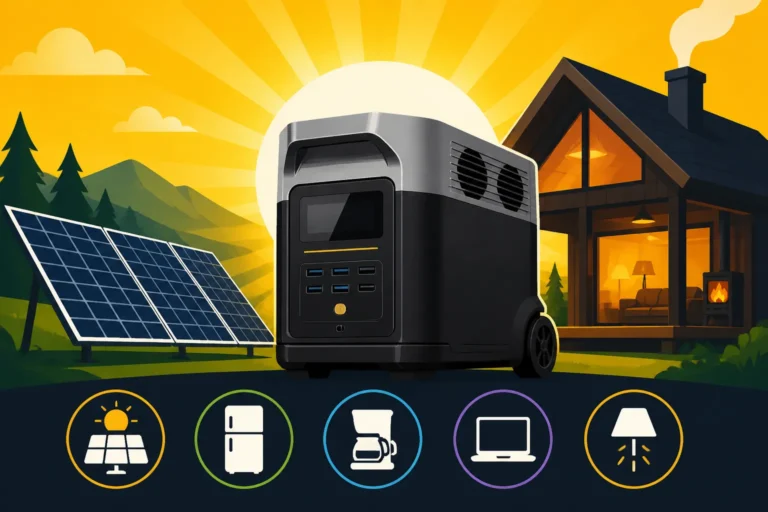
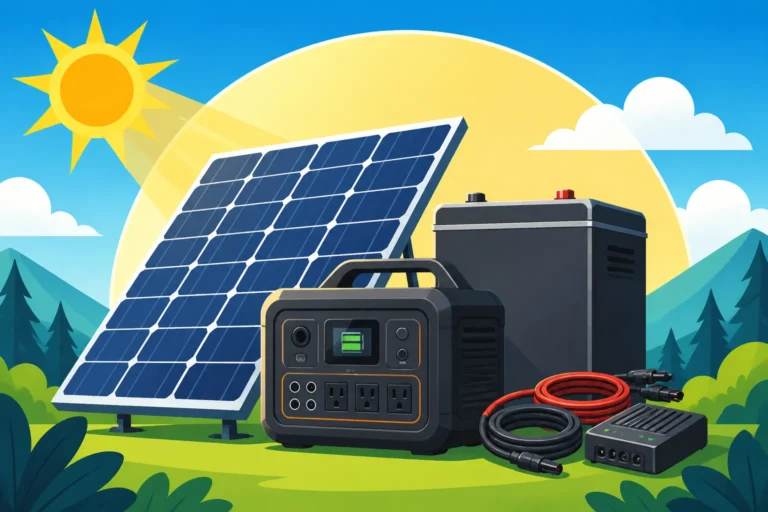
Beyond a large generator, smaller, portable power stations can also serve as excellent supplemental backup for critical devices. Imagine needing to charge your phone, run a small fan, or power a portable radio during a generator maintenance period or a lighter power dip. A reliable portable power station, like those offered by Jackery, can be a fantastic companion for these smaller, isolated needs. They're also great for taking power to remote areas of your homestead, like a distant shed where you need to run a small tool or charge batteries, without firing up the main generator or stringing long extension cords. This allows you to conserve your main battery bank for the heavier, more essential homestead loads.
Installation Considerations and Safety
Installing an off-grid solar system for a homestead is a significant undertaking. While many aspects can be tackled as a DIY project, safety and proper installation are paramount. Incorrect wiring, inadequate grounding, or poorly mounted panels can lead to system failure, equipment damage, or even fire hazards.
Consider these installation points:
- Mounting: If you're using ground mounts, ensure they are robustly anchored to withstand local wind loads. If going with a roof mount, proper sealing of penetrations is crucial to prevent leaks.
- Wiring: All wiring must be correctly sized for the current it will carry to prevent voltage drop and overheating. Use appropriate conduit for outdoor runs to protect against UV degradation and physical damage.
- Grounding and Fusing: These are non-negotiable safety features. Proper grounding protects against electrical surges and lightning strikes, while fuses and breakers protect your components from overcurrents. Understanding how to install fuses and breakers is critical.
- Local Codes: Even if you're off-grid, some local jurisdictions might have electrical codes or permit requirements, especially for fixed structures. It's always best to check with your local authority to ensure compliance and peace of mind.
While a DIY approach can save on Off-Grid Solar Installation Cost, there are times when bringing in a licensed electrician is highly recommended, especially for the AC side of your system, connecting the inverter to your main electrical panel, or integrating a generator. They can ensure everything is up to code and safe.
Practical Strategies for Homestead Off-Grid Solar Success
Going off-grid is a journey, not a destination. To truly succeed and enjoy the independence it offers, you need a smart approach to both your budget and your daily energy habits.
Budgeting and Phased Implementation
The initial cost of a comprehensive off-grid solar system for a homestead can be substantial. For a full-sized house and associated farm equipment, costs can easily range from $20,000 to $60,000 or more, depending on your energy needs and the components you choose. This figure can feel daunting, but it doesn't have to be an all-or-nothing proposition.
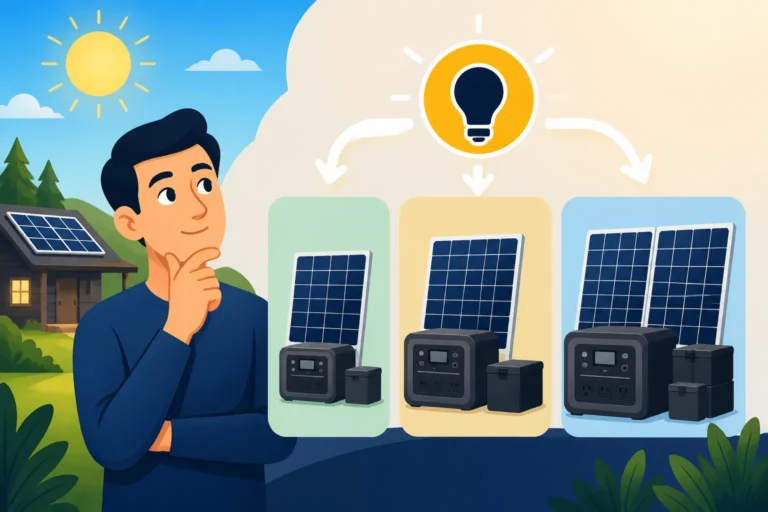
A highly effective strategy for homesteaders is phased implementation. Instead of trying to build the entire dream system at once, start with your absolute critical loads. For example:
- Phase 1: Essential Basics: Install a smaller system to power your lights, refrigerator, internet, and phone charging. This gets you off the grid for basic living.
- Phase 2: Water and Core Appliances: Expand your solar array and battery bank to reliably run your well pump and perhaps a washing machine.
- Phase 3: Workshops and Comforts: Add more panels and potentially a larger inverter to support power tools, a mini-split for heating/cooling, or other non-essential but desirable loads.
This approach allows you to spread the investment over time, learning as you go and fine-tuning your system based on real-world usage. It also makes budgeting more manageable. Think of it like building your homestead itself – it often happens in stages. Our guide on How to Budget for an Off-Grid Solar System offers more insights into planning your finances, and you can always look into the Cost of Expanding an Off-Grid System as your needs grow.
Optimizing Energy Use and Maintenance
Even with a perfectly sized system, a mindful approach to energy consumption is key to off-grid success. Every Watt-hour saved is a Watt-hour you don't need to generate or store.
Energy Optimization Tips:
- High-Efficiency Appliances: Invest in DC-powered appliances where possible (especially refrigerators and freezers, which are constant draws). Look for Energy Star rated AC appliances.
- LED Lighting: Switch all your lights to LEDs. They use a fraction of the power of incandescent bulbs.
- Load Management: Schedule heavy loads (like running your well pump, washing machine, or power tools) for sunny parts of the day when your panels are producing peak power. This minimizes drawing from your battery bank.
- Passive Design: Incorporate passive solar design into your homestead for heating and cooling to reduce reliance on active systems.
- Insulation: Good insulation in your home and outbuildings drastically reduces heating and cooling demands.
Maintenance is just as crucial. Off-grid systems are workhorses, and like any workhorse, they need regular care to perform optimally.
- Panel Cleaning: Keep your solar panels clean from dust, dirt, leaves, and snow. Even a thin layer of grime can significantly reduce their output.
- Battery Health: If you have lead-acid batteries, check electrolyte levels regularly and perform equalization charges as needed. For LiFePO4, ensure your charge controller settings are correct, and monitor voltage.
- Connections: Periodically check all electrical connections for tightness and signs of corrosion. Loose connections can lead to voltage drops or even fire hazards.
- System Monitoring: Utilize monitoring tools (many inverters and charge controllers come with apps or displays) to keep an eye on your system's performance, battery state of charge, and energy production. This helps you identify issues early.
Regular maintenance not only ensures maximum system efficiency but also extends the lifespan of your valuable components, preventing costly replacements down the line. We cover this in more detail in our article about Off-Grid Solar Maintenance Costs.
Here's a quick look at typical homestead appliance loads and their estimated power requirements, which can help you in your initial load analysis:
| Appliance / Device | Average Running Watts (W) | Typical Daily Use (Hours) | Estimated Daily Wh | Notes |
|---|---|---|---|---|
| LED Lighting (per bulb) | 5 – 15 | 4 – 8 | 20 – 120 | Replace incandescent bulbs for significant savings |
| Refrigerator (Energy Star) | 100 – 200 | 8 – 12 (compressor cycle) | 800 – 2400 | Peak draw when compressor starts (300-800W) |
| Chest Freezer (Energy Star) | 80 – 150 | 6 – 10 (compressor cycle) | 480 – 1500 | Critical item for homesteads, consider DC options |
| Well Pump (1/2 HP) | 750 – 1500 | 0.5 – 1 | 375 – 1500 | High surge on startup (2000-4000W), runs intermittently |
| Washing Machine | 500 – 2000 (peak) | 0.5 – 2 | 250 – 4000 | Can be a significant load; consider manual or efficient models |
| Laptop | 20 – 75 | 4 – 8 | 80 – 600 | Efficient compared to desktops |
| TV (LED) | 50 – 200 | 2 – 5 | 100 – 1000 | Varies greatly by size and type |
| Internet Router/Modem | 10 – 25 | 24 | 240 – 600 | Constant, essential draw |
| Microwave | 600 – 1500 | 0.1 – 0.25 | 60 – 375 | Short burst, very high draw |
| Coffee Maker | 800 – 1500 | 0.25 – 0.5 | 200 – 750 | Short burst, high draw |
| Power Drill (corded) | 400 – 700 | 0.1 – 0.5 | 40 – 350 | Intermittent use, high surge |
| Mini-Split AC/Heat | 800 – 2500 | 6 – 12 (seasonal) | 4800 – 30000+ | Can be the single largest load; requires careful sizing |
| Electric Fence Charger | 5 – 20 | 24 | 120 – 480 | Low continuous, but critical for livestock |
| Small Portable Power Station (e.g., Jackery) | N/A (charging) | Varies | N/A | Excellent for supplemental power, remote charging, or small critical backups |
Please remember that these are average estimates. Always check the specific wattage labels on your appliances for the most accurate data.
Disclaimer
The information provided in this guide is for general informational purposes only and does not constitute professional advice. Off-grid solar system design and installation can be complex and involve electrical hazards. Always consult with qualified professionals, electricians, and adhere to local codes and regulations before installing or modifying any electrical system.