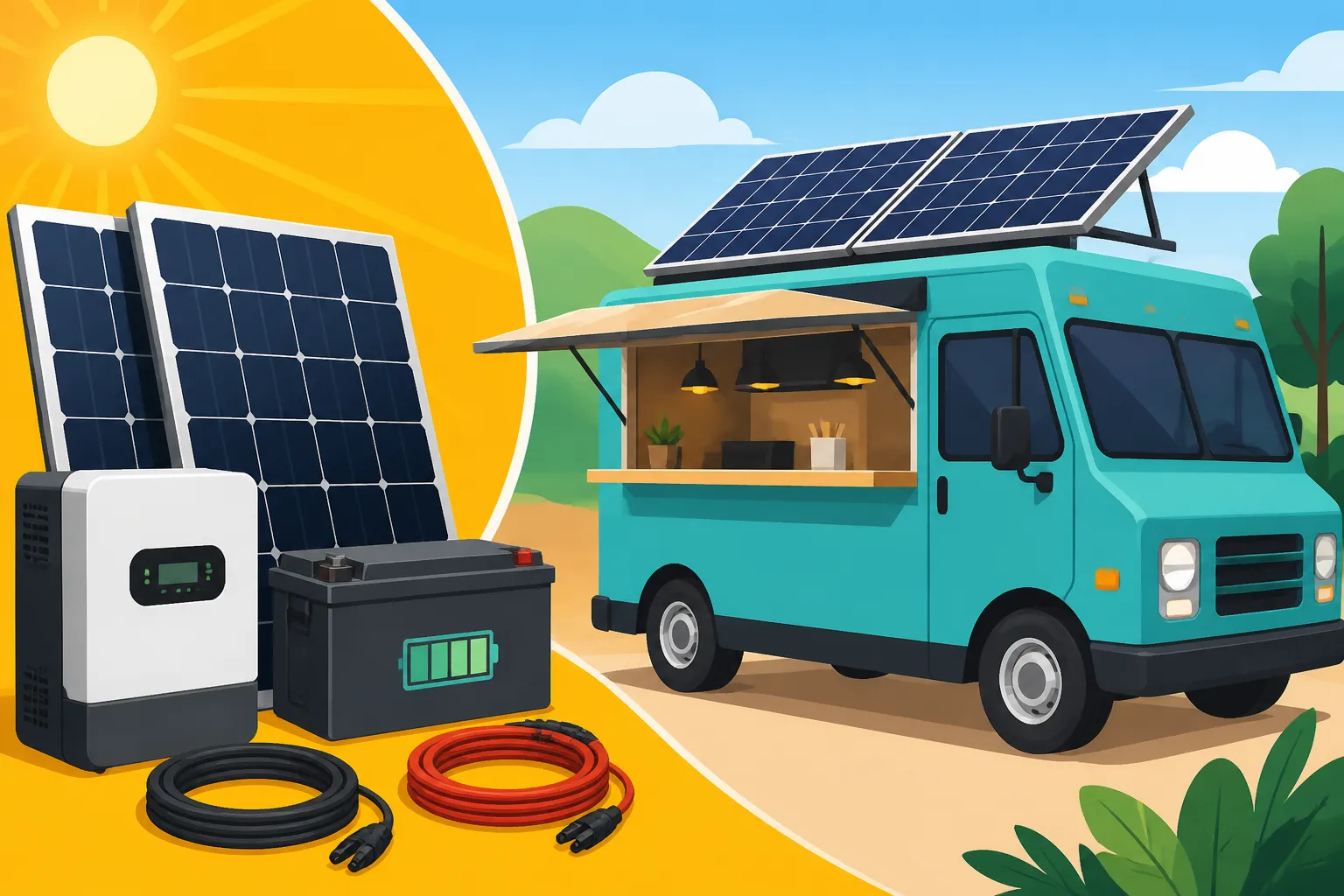
Best Off-Grid Solar Kit for a Food Truck
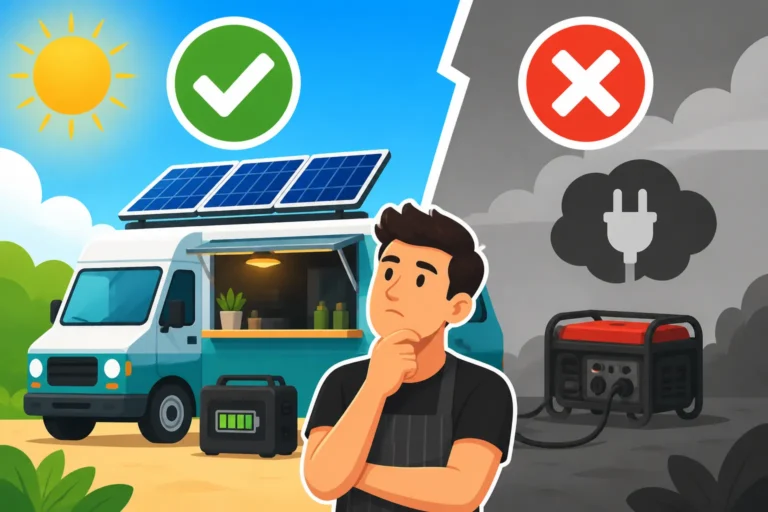
For food truck entrepreneurs, the dream of serving delicious creations often bumps up against a frustrating reality: the constant thrum of a loud, gas-guzzling generator. Not only are these noisy beasts expensive to run and maintain, but they also limit where you can set up shop, sometimes even annoying your customers and neighbors. This comprehensive guide will walk you through everything you need to know about choosing the best off-grid solar kit for your food truck, helping you achieve silent, reliable, and cost-effective power wherever your culinary adventures take you.
Why Off-Grid Solar is a Game-Changer for Food Trucks
Running a food truck is hard work, and dealing with unreliable, noisy power shouldn't be another headache. Traditional generators, while common, come with a host of downsides that directly impact your business, your wallet, and even your peace of mind. Shifting to an off-grid solar setup can genuinely transform your operation.
Breaking Free from Generator Noise and Fuel Bills
Let's be honest, the constant drone of a generator is not the ideal soundtrack for enjoying a gourmet burger or a artisanal taco. Beyond the noise pollution, which can detract from the customer experience and even limit your ability to operate in certain areas (think quiet residential streets or farmers' markets), there's the relentless financial drain. Fuel costs fluctuate, and buying gallons of gasoline or propane daily adds up significantly over time. Then there's the routine maintenance—oil changes, spark plug replacements, air filter cleaning—all contributing to operational expenses and downtime.
With off-grid solar, these issues largely disappear. Your power generation becomes virtually silent, creating a much more pleasant atmosphere for your customers and staff. Imagine setting up at a tranquil park or a bustling festival without the need to shout over engine noise. Environmentally, you're also dramatically reducing your carbon footprint, which is a fantastic selling point for conscious consumers. While the initial investment for a solar setup can seem substantial, the long-term savings on fuel and maintenance are truly significant, making the system essentially pay for itself over its lifespan. For a deeper dive into the financial aspects, you might want to check out our guide on Is Off-Grid Solar Worth the Cost.
Reliability and Mobility on the Go
One of the biggest advantages of a food truck is its mobility—the freedom to move to wherever the customers are. But what if your power source tethers you to specific locations with available shore power, or worse, fails you in the middle of a busy lunch rush? Off-grid solar gives you true energy independence. You're generating your own electricity from the sun, storing it in robust batteries, and drawing on it whenever you need it, whether you're parked by a beach, at a corporate event, or in a remote festival field.
This reliability means less stress about power outages or finding an electrical hookup. Your refrigerators stay cold, your griddle stays hot, and your POS system keeps humming, ensuring uninterrupted service. This freedom opens up new opportunities for vending in diverse locations, expanding your reach, and ultimately, your profits. It's about empowering your business to truly be on the go, without compromise.
Understanding Your Food Truck's Unique Power Demands
Before you even think about buying a solar panel, you need to understand precisely what you're powering. Food trucks are energy hogs, and their power demands are incredibly diverse. You're not just running a few lights; you're operating commercial-grade appliances that often have high surge requirements when they first kick on. Think about it:
- Refrigerators and Freezers: Crucial for food safety, these run continuously, though newer energy-efficient models draw less.
- Cooking Equipment: Griddles, fryers, microwaves, coffee makers, and ovens often demand significant wattage, especially if electric.
- Ventilation: Powerful exhaust fans are essential for comfort and safety, and they can pull a fair bit of power.
- Lighting: Both interior task lighting and exterior display lighting.
- Electronics: Point-of-Sale (POS) systems, tablets, cell phone chargers, maybe a radio or a small entertainment system.
- Comfort: Air conditioning or heating, if your truck has it, will be your single largest power draw by far.
It's vital to distinguish between an appliance's running wattage (what it uses consistently) and its starting wattage (the brief, higher spike it needs to turn on, especially for motor-driven appliances like fridges or blenders). Miscalculating these can lead to an undersized inverter that trips constantly, or an entire system that can't keep up. Our guide on Off-Grid Solar Load Calculation Explained can give you a more detailed walkthrough of this critical step.
Key Components of an Off-Grid Solar Kit for Food Trucks
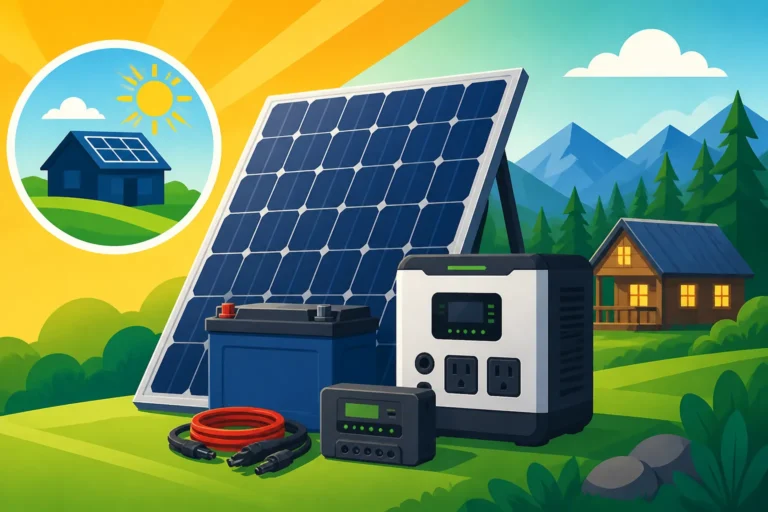
Building an effective off-grid solar system for a food truck isn't just about slapping a few panels on the roof. It's a carefully balanced ecosystem of components, each playing a crucial role in harvesting, storing, and delivering power efficiently.
Solar Panels: Your Energy Harvesters
The solar panels are, quite literally, your energy collectors. For a food truck, choosing the right type and number of panels is critical due to limited roof space and the dynamic nature of a mobile business.
- Rigid Solar Panels: These are the most common and efficient, typically made with monocrystalline cells. They offer excellent power output per square foot and are highly durable. The downside for food trucks can be their weight and the need for a robust mounting system. They often require tilt mounts to optimize sun exposure, which might be impractical for a vehicle that moves frequently and needs to maintain a low profile.
- Flexible Solar Panels: Lighter, thinner, and capable of conforming to slightly curved surfaces, flexible panels might seem ideal for RVs and food trucks. However, they generally have lower efficiency than rigid panels and are more susceptible to overheating, which can degrade performance and lifespan, especially on a hot metal roof. They also tend to be more expensive per watt.
When considering panels, you'll need to figure out How Many Solar Panels for Off-Grid Living your specific food truck needs. This depends on your total energy consumption and the amount of "peak sun hours" in your operating locations. Remember, more wattage means more power generated, but you're limited by the physical space on your truck's roof. A good quality rigid panel will likely offer the best performance and longevity for a primary food truck system. Brands like Renogy and Rich Solar offer reliable panels that can withstand the rigors of mobile use.
Batteries: The Heart of Your System
The battery bank is arguably the most crucial component of your off-grid food truck system. This is where all that hard-earned solar energy is stored for use, especially when the sun isn't shining or your demand is high.
- LiFePO4 (Lithium Iron Phosphate) Batteries: For food trucks, LiFePO4 batteries are the undisputed champions. They are significantly lighter than lead-acid, have a much longer lifespan (thousands of charge cycles), can be discharged much deeper without damage (typically 80-100% depth of discharge), and maintain a more consistent voltage throughout their discharge cycle. This means your appliances get stable power, and you get more usable energy from each battery. Their higher upfront cost is quickly offset by their longevity and superior performance. Brands like Battle Born, EG4, and Dakota Lithium are highly respected in the off-grid community for their robust LiFePO4 offerings.
- Lead-Acid Batteries (AGM, Gel, Flooded): While cheaper upfront, lead-acid batteries are heavy, have a shorter lifespan, can only be safely discharged to about 50% without damage, and require more ventilation (especially flooded types). For a demanding application like a food truck, the cons generally outweigh the pros. If you're looking into the cost difference, our article on LiFePO4 vs Lead-Acid Battery Cost provides an excellent comparison.
You'll need to calculate How Many Batteries for an Off-Grid System based on your daily energy usage and how many "days of autonomy" you want—meaning, how many days your system can run without any sun. For a food truck, aiming for at least 1-2 days of autonomy is wise to cover cloudy spells or extra-long event days.
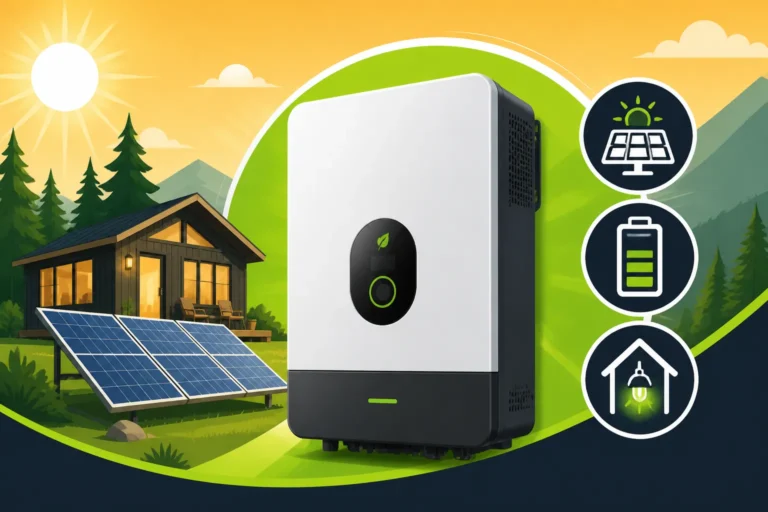
Inverter: Converting DC to AC Power
Your solar panels and batteries produce direct current (DC) power, but most of your food truck appliances (fridges, blenders, microwaves, POS systems) run on alternating current (AC). The inverter is the component that makes this crucial conversion.
- Pure Sine Wave Inverters: This is non-negotiable for a food truck. Pure sine wave inverters produce a clean, smooth power output that perfectly mimics grid power. This is essential for protecting sensitive electronics like your POS system, laptops, and variable-speed motors in modern refrigerators. Modified sine wave inverters, while cheaper, can damage these appliances, cause buzzing, and reduce efficiency.
- Inverter Sizing: You need to size your inverter to handle the highest simultaneous power draw from all your AC appliances, including their surge (starting) watts. If your microwave draws 1500W and your fridge kicks on with a 1200W surge, your inverter needs to handle at least 2700W continuously, with enough headroom for additional small loads or unexpected surges. It's almost always better to slightly oversize your inverter than to undersize it. Look for reliable brands like Victron Energy (MultiPlus line is very popular for off-grid), Sol-Ark, and Outback Power for robust and efficient inverters. These are often highlighted among the Best Off-Grid Solar Inverters.
Charge Controller and Other Essentials
Beyond the big three, several other components are critical for a safe, efficient, and user-friendly food truck solar setup.
- Charge Controller: This device regulates the voltage and current coming from your solar panels to your battery bank, preventing overcharging and optimizing the charging process.
- MPPT (Maximum Power Point Tracking) Charge Controllers: These are highly recommended for food trucks. MPPT controllers are significantly more efficient than PWM (Pulse Width Modulation) controllers, especially in varying weather conditions (partial shade, cloudy days, or different temperatures). They can extract up to 30% more power from your panels, which is huge when roof space is at a premium and every watt counts. They are also superior when your panel voltage is significantly higher than your battery bank voltage (e.g., 24V or 48V battery bank with 60-cell solar panels).
- PWM (Pulse Width Modulation) Charge Controllers: These are simpler and cheaper but less efficient. They are generally only suitable for very small systems where the panel voltage closely matches the battery voltage. Given the power demands of a food truck, an MPPT controller is almost always the superior choice. Many experienced off-gridders consider products from Victron Energy to be among the Best MPPT Charge Controllers due to their efficiency and connectivity.
- Fuses and Breakers: These are non-negotiable safety devices. Every major circuit (solar panel input, battery output, inverter output) needs appropriate fusing and circuit breakers to protect against overcurrents and short circuits, preventing fires and equipment damage.
- Wiring and Cables: Use the correct gauge wire for each circuit to prevent voltage drop and overheating. Undersized wires reduce efficiency and pose a serious fire risk.
- Battery Monitor: A good battery monitor (often a shunt-based system) provides accurate readings of your battery's state of charge, current draw, and power consumption. This is invaluable for managing your power and avoiding unexpectedly drained batteries.
Understanding Off-Grid Solar System Components Explained in detail will help you make informed decisions for a long-lasting and reliable system.
Sizing Your Food Truck Solar Kit: A Step-by-Step Approach
Accurate sizing is the foundation of a successful off-grid solar system, especially for a high-demand application like a food truck. Skimping on this step will lead to frustration, underperformance, and potentially costly upgrades down the road.
Performing a Comprehensive Load Analysis
This is where you become a detective, meticulously tracking every single electron your food truck uses. Don't guess – measure or research.
- List Every Electrical Appliance: From your fridge and freezer to your exhaust fan, water pump, lights, POS system, and even your phone charger.
- Find the Wattage: Look for the wattage (W) rating on the appliance label or in its manual. If only amps (A) are listed, multiply amps by voltage (V) to get watts (W = A x V).
- Estimate Daily Run Time: How many hours a day does each appliance run? Be realistic. A fridge might cycle on and off for 12 hours a day, while a fryer might be on standby for 8 hours but actively cooking for 4.
- Calculate Daily Watt-Hours (Wh): Multiply the wattage by the estimated daily run time for each appliance (Wh = W x Hours).
- Identify Surge Watts: For motor-driven appliances (fridges, blenders, some fans), find the starting or surge wattage, which can be 2-3 times higher than the running wattage. You'll need this for inverter sizing.
- Sum it Up: Add up all the daily Watt-hours to get your total daily energy consumption.
Example Scenario for a Small Food Truck:
| Appliance | Wattage (W) | Est. Run Time (hrs/day) | Daily Watt-Hours (Wh) | Surge Watts (W) |
|---|---|---|---|---|
| Fridge (Energy Star) | 150 | 10 | 1500 | 750 |
| Freezer (Chest) | 100 | 12 | 1200 | 500 |
| Lights (LED) | 50 | 6 | 300 | – |
| Exhaust Fan | 120 | 8 | 960 | 240 |
| POS System/Tablet | 30 | 10 | 300 | – |
| Water Pump | 60 | 0.5 | 30 | 120 |
| Total Daily Wh | 4290 Wh |
In this example, your total daily consumption is approximately 4.3 kWh. This is a critical number. You can learn more about How to Calculate Daily Energy Usage to refine this process for your specific truck.
Calculating Solar Panel and Battery Requirements
With your daily Watt-hour needs in hand, you can now determine how much generating and storage capacity you'll need.
-
Solar Panel Wattage:
- Account for System Losses: Solar systems aren't 100% efficient. Factor in losses from wiring, inverter conversion, temperature, and shading. A common estimate is 15-25% loss. So, if you need 4290 Wh, you might aim for 4290 / 0.75 = ~5720 Wh to be generated by your panels daily.
- Determine Peak Sun Hours: This is the average number of hours per day your panels receive direct, unobstructed sunlight (equivalent to 1000W per square meter). This varies greatly by location and season. For instance, a sunny summer day in Arizona might yield 6-7 peak sun hours, while a cloudy winter day in Seattle might only provide 1-2. Use resources like PVWatts Calculator (from NREL) to get accurate numbers for your primary operating locations and consider the worst-case scenario (e.g., winter).
- Calculate Panel Watts: Divide your required generated Watt-hours by your lowest expected peak sun hours. If you anticipate 3 peak sun hours in winter: 5720 Wh / 3 hours = ~1907 Watts. So, you'd need approximately 1900-2000 watts of solar panels. This might mean six 350W panels or eight 250W panels, depending on what fits your roof. Our article on How to Size an Off-Grid Solar System has even more detail.
-
Battery Capacity:
- Days of Autonomy: How many days do you want your system to run without any solar input? For a food truck, 1-2 days is a practical minimum to handle cloudy weather or extended events. Let's assume 2 days for our example.
- Total Wh Needed from Batteries: Your daily Wh x Days of Autonomy = 4290 Wh/day * 2 days = 8580 Wh.
- Convert to Amp-Hours (Ah): Battery capacity is often listed in Amp-hours. To convert Wh to Ah, you need to know your system's voltage (V). For larger food truck systems, 24V or 48V are common because they allow for smaller wires and higher efficiency. Let's assume a 24V system: 8580 Wh / 24V = 357.5 Ah.
- Factor in Depth of Discharge (DoD): For LiFePO4, you can use 80-100% DoD. If you aim for 90%: 357.5 Ah / 0.90 = ~397 Ah. So, you'd need roughly 400 Ah of LiFePO4 batteries at 24V. This could be four 100Ah 24V batteries in parallel, or eight 100Ah 12V batteries configured into a 24V bank. This calculation is key for how to size an off-grid battery bank.
Inverter Sizing for Peak Demand
Now let's revisit that surge wattage. You need an inverter that can handle the maximum instantaneous power draw from all your appliances running simultaneously, plus a buffer.
- Calculate Max Continuous Draw: Sum the running watts of all appliances that might operate at the same time. For our example, if the fridge (150W), freezer (100W), exhaust fan (120W), lights (50W), and POS (30W) are all running, that's 450W.
- Identify Largest Surge: Find the highest surge wattage from any single appliance. In our example, the fridge's 750W surge is the highest.
- Determine Inverter Size: The inverter needs to handle the total continuous load plus the largest single surge. So, 450W (continuous) + 750W (fridge surge) = 1200W.
- Add Headroom: It's smart to add a 20-30% buffer for safety and future expansion. 1200W * 1.3 = 1560W. So, a 1500W to 2000W pure sine wave inverter would be appropriate for this very small food truck example. Larger food trucks with microwaves, griddles, or mini-splits will need 3000W, 5000W, or even 8000W inverters. Remember, the inverter must also be rated for the correct system voltage (e.g., a 24V inverter for a 24V battery bank).
Installation Considerations and Practical Tips for Food Trucks
Once you've carefully sized your system, the installation phase requires attention to detail, safety, and the unique challenges of a mobile environment.
Mounting Panels on a Food Truck Roof
Mounting solar panels securely and effectively on a food truck is different from a stationary home installation.
- Security is Paramount: Your truck is moving, often at highway speeds, encountering bumps and vibrations. Panels must be mounted with heavy-duty, marine-grade hardware. Z-brackets or purpose-built RV mounting feet are common, often combined with a strong adhesive sealant like Sikaflex 221 to ensure they stay put.
- Aerodynamics: Consider how the panels affect your truck's aerodynamics, especially if they are rigid and sit high. Low-profile mounts are generally preferred. If using tilt mounts, ensure they can be securely locked down when the vehicle is in motion.
- Space and Shading: Map out your roof space. Where will vents, AC units, or roof hatches cause shading? Even partial shading can significantly reduce the output of an entire string of panels, especially with less advanced charge controllers. Try to place panels where they will receive maximum unobstructed sunlight throughout the day.
- Roof Penetrations: Any holes drilled into your roof for wiring must be meticulously sealed to prevent leaks. Use specialized RV cable entry glands and liberal amounts of waterproof sealant. This is a crucial part of any Off-Grid Solar Installation Guide.
Wiring for Safety and Efficiency
Proper wiring is not just about making things work; it's about making them safe and efficient. Electrical fires are a serious risk if components are not correctly wired and protected.
- Wire Gauge: This is critical. Undersized wires will heat up, cause voltage drop, and waste power, reducing your system's efficiency. Refer to wire gauge charts that specify the correct size for your current load and wire run length. For high-current runs, especially between batteries and inverter, use very thick (00 or 000 gauge) battery cables.
- Fuses and Breakers: Install DC-rated fuses and circuit breakers on the positive line of every major component: between panels and charge controller, between charge controller and batteries, and between batteries and inverter. This protects each component and the system as a whole from overcurrents. Also, install AC breakers on the inverter's output before it connects to your truck's AC distribution panel.
- Grounding: Your entire system, including the solar panel frames, inverter chassis, and battery bank enclosure (if metal), must be properly grounded to the truck's chassis. This provides a safe path for fault currents in case of an electrical short or lightning strike.
- Conduit and Cable Management: Route all cables neatly and protect them with UV-resistant conduit, especially on the exterior of the truck. Inside, use cable ties and clamps to secure wires, preventing chafing and damage from vibration. Our guide on How to Wire an Off-Grid Solar System covers these best practices extensively.
Maintenance and Troubleshooting for On-the-Go Operations
Even the best off-grid solar system requires some TLC to ensure peak performance, especially in a demanding food truck environment.
- Regular Cleaning: Solar panels get dirty quickly, especially on a food truck that might be exposed to exhaust fumes, cooking grease, and road grime. Clean your panels regularly with mild soap and water to maximize energy harvest.
- Battery Checks: For LiFePO4 batteries, maintenance is minimal. Just ensure terminals are clean and tight. If you opted for lead-acid (which is less ideal for food trucks), you'd need to check water levels periodically.
- System Monitoring: Regularly check your charge controller and inverter displays for any error codes or unusual readings. A good battery monitor will give you real-time insights into your power consumption and battery state.
- Troubleshooting: Common issues include low power output (often due to dirty panels, shading, or a loose connection), batteries not charging fully (could be a faulty charge controller setting or weak panels), or the inverter tripping (overload or surge too high). If you use a system with integrated monitoring, like many Victron or Renogy components offer, diagnosing these issues becomes much easier. For lighter supplementary loads, a portable power station like a Jackery Explorer can be a handy diagnostic tool or a temporary backup for critical small devices.
- Backup Generator: While the goal is to be solar-dominant, having a small, quiet inverter generator as a backup is a smart move for a food truck. It can bail you out during extended cloudy periods, unexpected high demand, or if a component in your solar system temporarily fails. It provides peace of mind and ensures your business never grinds to a halt due to lack of power. Consider the Cost of Adding a Generator to Off-Grid Solar when planning your budget.
Setting up an off-grid solar system for your food truck is an investment in your business's future—one that promises greater freedom, lower operating costs, and a quieter, cleaner operation. Take your time, do your research, and size your system correctly, and you'll be serving up deliciousness with the power of the sun.
Disclaimer
The information provided in this article is for general informational purposes only and does not constitute professional advice. Off-grid solar system design and installation can be complex and involve electrical hazards. Always consult with a qualified solar professional or licensed electrician to ensure your system is safely and correctly designed, installed, and compliant with all applicable local codes and regulations.