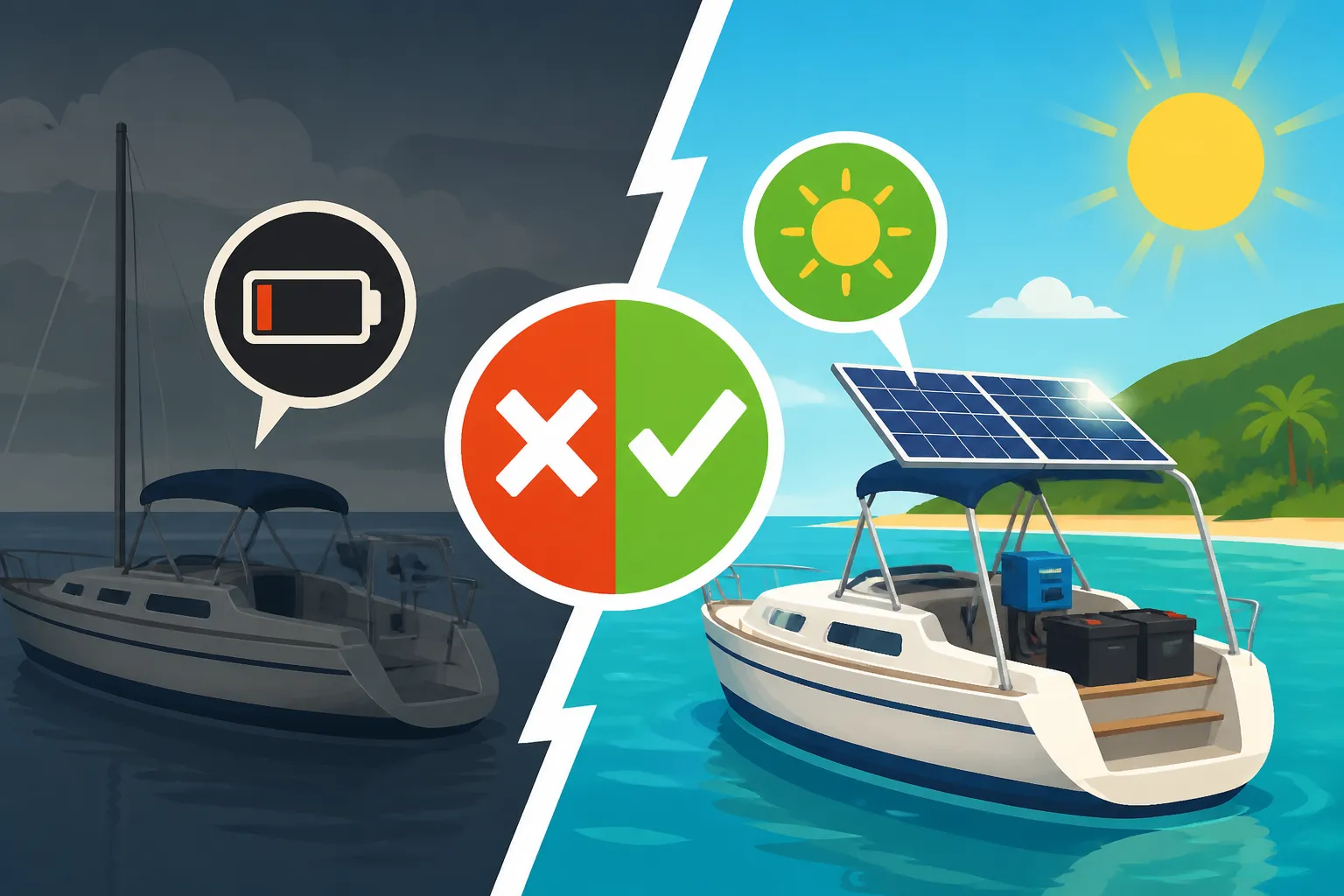
Is Off-Grid Solar Worth It for a Boat
The dream of casting off lines and exploring distant shores is often intertwined with a hidden frustration: how to keep the lights on, the fridge cold, and the navigation running without constantly firing up a noisy, fuel-guzzling generator or being tethered to shore power. For many boat owners, the question isn't just about escaping to the open water, but about how to truly live there sustainably. This guide will dive deep into whether off-grid solar power is a viable, worthwhile solution for powering your marine adventures.
The Unique Challenges of Boat Living and Power Needs
Life on the water is a fantastic adventure, but it comes with its own set of power challenges that land-based off-gridders don't always face. Before we even talk about solar, it's crucial to understand what makes powering a boat so different and, frankly, often more demanding.
Limited Space and Harsh Environments
One of the first things you realize on a boat, especially a smaller sailboat or a modest power cruiser, is just how precious every inch of space is. You can't just throw up an array of ground-mounted panels like you might at a cabin. Every component, from the solar panels themselves to the batteries and wiring, needs to be compact, efficient, and robust enough to withstand conditions that would make most land-based systems crumble. We're talking about constant exposure to saltwater, corrosive sea air, relentless UV radiation, and the vibrational stress of being underway. Imagine a squall hitting: your solar panels aren't just facing rain; they're getting blasted with salty spray, high winds, and possibly even green water over the deck. This demands marine-grade equipment that's built to last.
The Rattle and Hum of Traditional Generators
For years, the go-to solution for supplemental power on boats has been a noisy, fuel-burning generator. And if you've ever spent a peaceful evening at anchor only to have a neighboring boat fire up their generator, you know the frustration. The constant drone shatters the tranquility, pollutes the air, and eats into your fuel budget. Beyond the noise, generators require regular maintenance—oil changes, filter replacements, impeller checks—and they're just another piece of machinery that can break down at the worst possible moment. Plus, hauling jerry cans of diesel or gasoline through a crowded marina or in choppy seas is never a fun task. This very real struggle for quiet, reliable, and independent power is what often drives boat owners to seriously consider solar as an alternative, or at least a significant supplement.
Decoding the "Worth It" Question for Off-Grid Boat Solar
When someone asks "is it worth it?", they're usually thinking about two main things: money and convenience. For boat owners, the equation is a bit more complex, factoring in everything from peace of mind to environmental impact.
Financial Considerations: Upfront vs. Long-Term Savings
Let's not sugarcoat it: installing a robust off-grid solar system on a boat, especially one capable of powering significant loads like a refrigerator or an autopilot for extended periods, can be a substantial upfront investment. You're looking at the cost of high-quality marine-grade solar panels, often flexible or semi-flexible to fit curved surfaces, robust lithium iron phosphate (LiFePO4) batteries built for deep cycling, a reliable marine-grade inverter, and an efficient charge controller. The total investment for a moderate system capable of supporting a cruising couple could easily range from $5,000 to $15,000 or more, depending on your energy needs and chosen components. You might want to explore articles like How Much Does an Off-Grid Solar System Cost to get a broader perspective on expenses.
However, where solar truly shines is in the long-term savings and return on investment. Consider the ongoing costs of a generator: fuel, oil, filters, and eventual repairs or replacement. If you frequently anchor out and rely on a generator for hours each day, those fuel costs add up quickly. Many marinas also charge for shore power, and relying on that limits your freedom. With solar, once your system is installed, your "fuel" is free sunshine. Over the lifespan of your system—which can be 10-25 years for panels and 5-15 years for quality LiFePO4 batteries—those savings can easily offset the initial expenditure. For those who cruise extensively, the cumulative savings on fuel and marina fees can make off-grid solar incredibly financially attractive.
Lifestyle and Practical Benefits
Beyond the financial spreadsheet, the lifestyle benefits of off-grid solar on a boat are often the most compelling reasons to make the switch. Imagine waking up to the gentle lapping of waves, enjoying your morning coffee, and hearing nothing but the sounds of nature, without the thrum of a generator spoiling the peace. This quiet operation is a game-changer for many liveaboards and cruisers.
Then there's the independence. With a well-sized solar system, you're no longer limited to anchorages with shore power access or constantly worrying about fuel levels. You can drop anchor in that secluded cove, stay for days or even weeks, and still have your fridge running, your devices charged, and your navigation systems ready. This freedom opens up vast new cruising grounds and enhances the entire experience of being on the water. It also contributes to a smaller environmental footprint, as you're producing clean energy, reducing exhaust emissions, and minimizing noise pollution, which is a big win for many environmentally conscious mariners. For those interested in self-sufficiency, doing a DIY Off-Grid Solar Installation Step by Step can be a deeply rewarding project that enhances your understanding of your boat's systems.
Key Components of a Boat Off-Grid Solar System
Building a reliable off-grid solar system for a boat requires careful selection of components, each playing a crucial role in harnessing, storing, and delivering power.
Solar Panels: Choosing the Right Type for Marine Use
When it comes to solar panels for your boat, you're generally looking at two main types: rigid and flexible (or semi-flexible).
- Rigid Panels: These are the traditional, framed glass panels you see on homes. They offer the best efficiency and durability in terms of physical impact (within reason). However, their weight, bulk, and need for robust mounting structures (like a dedicated arch over the stern or a sturdy bimini frame) can be limiting on many boats. They are excellent if you have the space and structure to support them, offering maximum power output per square foot.
- Flexible/Semi-Flexible Panels: These panels are often preferred for boats due to their ability to conform to curved surfaces and their lighter weight. They can be mounted directly on deck, on a dodger, or sewn into a bimini top. Brands like Renogy and BougeRV offer popular flexible options. While they are more prone to heat degradation (which can reduce efficiency) and are generally less durable than rigid panels in terms of sustained foot traffic or sharp impacts, their versatility is a major advantage. When choosing, prioritize marine-grade panels that explicitly state resistance to salt spray and UV, as standard land-based flexible panels will degrade quickly. The efficiency of a panel is crucial when space is limited, so look for monocrystalline panels which generally offer higher power density. For a deeper dive into options, check out our guide on Best Off-Grid Solar Panels.
Batteries: The Heart of Your Boat's Power
The battery bank is arguably the most critical component of your boat's off-grid solar system. It stores the energy collected by your panels for use when the sun isn't shining.
- LiFePO4 (Lithium Iron Phosphate) Batteries: These are the undisputed champions for marine solar applications despite their higher upfront cost. They offer a much longer cycle life (thousands of cycles vs. hundreds for lead-acid), can be discharged much deeper without damage (typically 80-100% vs. 50% for lead-acid), are significantly lighter, and charge much faster. Their consistent voltage output means your electronics run better, and their internal Battery Management System (BMS) provides crucial protection. Many modern cruisers swear by brands like Battle Born and EG4 for their reliability and performance in marine settings.
- AGM (Absorbed Glass Mat) Batteries: These are a sealed lead-acid option that's a step up from traditional flooded lead-acid. They are spill-proof, maintenance-free, and tolerate vibration well. They are also less expensive than LiFePO4. However, they are still heavy, have a shorter cycle life, and should not be discharged below 50% without significantly impacting their lifespan. They are a decent budget-friendly option for smaller systems or less frequent use.
The choice of battery chemistry directly impacts the performance, longevity, and overall convenience of your system. Given the harsh marine environment and the critical need for reliable power, investing in quality LiFePO4 batteries from a reputable brand is almost always "worth it" for a serious off-grid boat setup. You can find more detailed information in our article on Best Off-Grid Solar Batteries. For smaller, occasional power needs, or as a portable backup, a solution like a Jackery portable power station might be a great lightweight alternative or supplement for charging small electronics.
Charge Controllers and Inverters: The Brains of the Operation
These components manage the flow of electricity, ensuring your batteries are charged safely and efficiently, and converting stored DC power into usable AC power for your appliances.
- Charge Controller: This device sits between your solar panels and your batteries. Its job is to regulate the voltage and current coming from the panels to prevent overcharging and damage to your batteries.
- MPPT (Maximum Power Point Tracking) Controllers: These are highly recommended for marine applications. They are significantly more efficient than PWM controllers, especially in conditions where light levels fluctuate (like partial shading from sails or rigging), or when temperatures vary. An MPPT controller can increase charge current by 10-30% or more compared to a PWM, meaning more power makes it into your batteries. Brands like Victron Energy are highly regarded for their robust and feature-rich MPPT controllers, which often include Bluetooth connectivity for easy monitoring. If you're pondering which type to get, our guide on How to Choose an Off-Grid Charge Controller provides an in-depth comparison.
- Inverter: This converts the DC power stored in your batteries into the AC power needed by most household appliances (like microwaves, coffee makers, or even an air conditioner).
- Pure Sine Wave Inverters: These are essential for boats. They produce a clean, stable waveform of AC power, identical to what you get from grid power. This is crucial for sensitive electronics, modern appliances, and anything with a motor, preventing damage and ensuring proper operation. Avoid "modified sine wave" inverters for anything beyond basic resistive loads like incandescent lights, as they can cause humming, overheating, and damage to many devices.
When selecting these components, always look for marine-specific versions or reputable brands known for their ruggedness and reliability, as they will be operating in a demanding environment.
Monitoring Systems
You wouldn't drive a car without a fuel gauge or speedometer, so why would you run your boat's critical power system without proper monitoring? A good battery monitor, like those offered by Victron or Renogy, will give you real-time insights into your battery's state of charge, current draw, voltage, and even estimated time remaining until empty. This information is vital for managing your energy consumption, preventing deep discharges (which can damage batteries), and ensuring you have enough power for your needs. Monitoring systems often include a shunt, which precisely measures all current flowing in and out of your battery bank. Having this visibility provides peace of mind and allows you to optimize your usage. We explain the setup process in detail in How to Install a Battery Monitor.
Sizing Your Off-Grid Solar System for Life at Sea
One of the biggest mistakes people make with off-grid solar, especially on a boat, is undersizing their system. It's better to slightly overestimate your needs than to constantly run out of power.
Calculating Your Daily Energy Consumption
This is the absolute first step. You need to know how much power you actually use. Grab a pen and paper (or a spreadsheet) and list every single electrical appliance you use on your boat, along with its wattage (or amperage and voltage) and how many hours per day you use it. Don't forget those phantom loads, like charging phones or even the current draw from your navigation instruments when not actively underway.
Here's a sample of common boat loads:
- Refrigerator/Freezer: Often the biggest draw. A typical marine 12V fridge might use 30-50W when running, but it cycles on and off. Estimate 500-1000 Watt-hours (Wh) per day, depending on size, insulation, and ambient temperature.
- Lights: LED lighting is highly efficient. A few LED cabin lights might consume 5-10W each. Estimate 50-100 Wh/day for general lighting.
- Navigation Electronics (Chartplotter, Radar, Autopilot): These can draw significant power when in use. A chartplotter might use 15-30W, radar 20-50W (when transmitting), and an autopilot 1-5A (12-60W) continuously, with much higher spikes during course corrections.
- Water Pump: For galley sink, shower. Typically 40-60W when running, but only for short bursts.
- Fans: Small 12V fans are efficient, 10-20W.
- Device Charging (Phones, Laptops, Tablets): Often overlooked. Laptops can draw 40-60W when charging, phones 5-10W.
- Entertainment (TV, Stereo): Varies widely.
- Microwave/Coffee Maker: High wattage, but short duration. These typically require an inverter to convert DC to AC.
Multiply the wattage by the hours of daily use for each item, then sum them up to get your total daily Watt-hour (Wh) consumption. This is your target. Our comprehensive guide on How to Calculate Daily Energy Usage can walk you through this process step-by-step.
Determining Panel and Battery Capacity
Once you have your daily Wh usage, you can start to size your components.
- Battery Bank Sizing: You'll want enough battery capacity to power your boat for at least 1-3 days without any solar input, accounting for cloudy weather or extended stays at anchor. This is known as "days of autonomy." If you use LiFePO4 batteries, you can safely use 80-100% of their rated capacity. If your daily usage is 2000Wh, and you want 2 days of autonomy, you'll need 4000Wh of usable battery capacity. Remember that batteries are often rated in Amp-hours (Ah), so you'll convert: Wh = V x Ah. For a 12V system, 4000Wh / 12V = 333 Ah. For a 24V system, 4000Wh / 24V = 166 Ah. Diving into How Many Batteries for an Off-Grid System offers more specific calculations.
- Solar Panel Sizing: Now, figure out how many watts of solar panels you need to replenish your battery bank daily. This depends heavily on your location and the "peak sun hours" you receive. Peak sun hours represent the equivalent number of hours per day when the sun's intensity averages 1000 watts per square meter. For marine applications, you might get 4-6 peak sun hours in sunny regions, but perhaps only 2-3 in cloudy areas or during winter.
- Calculation Example: If your daily consumption is 2000 Wh, and you get 4 peak sun hours per day, you'd need a minimum of 2000 Wh / 4 hours = 500W of solar panels. It's always a good idea to add a buffer (20-30% extra) to account for less-than-ideal conditions, panel degradation, and future expansion. So, you might aim for 600-700W of panels. Our article How Many Solar Panels for Off-Grid Living provides detailed strategies for this.
Here’s a simplified example of a boat's daily load:
| Appliance | Wattage (W) | Hours Used/Day | Total Wh/Day |
|---|---|---|---|
| Marine Refrigerator | 40 (avg) | 24 | 960 |
| LED Cabin Lights | 10 | 4 | 40 |
| Chartplotter | 25 | 6 | 150 |
| Autopilot | 30 | 6 | 180 |
| Water Pump | 50 | 0.5 | 25 |
| Phone Charging (x2) | 10 | 2 | 40 |
| Laptop Charging | 50 | 1 | 50 |
| Inverter Overhead | 15 | 24 | 360 |
| TOTAL DAILY USAGE | 1805 Wh |
Based on this, you'd need at least 1805 Wh of usable battery capacity (more for autonomy) and around 450-500W of solar panels (assuming 4 peak sun hours) just to break even on a sunny day.
Installation Realities and Maintenance on a Boat
Installing solar on a boat is different from a land-based system. Marine environments present unique challenges that demand specific considerations for mounting, wiring, and ongoing maintenance.
Mounting Panels Securely
This isn't just about getting the panels to stay put; it's about getting them to stay put through rough seas, high winds, and continuous vibration.
- Bimini/Dodger Mounts: Flexible panels can often be sewn into a bimini or dodger. This is lightweight and provides some shade, but ensures the panels get good airflow to prevent overheating. Rigid panels can also be mounted on top of a sturdy, reinforced bimini structure.
- Arch Mounts: A common solution for larger cruising boats is a dedicated stainless steel arch over the stern. This provides a strong, elevated platform for rigid panels, keeping them clear of deck clutter and providing good air circulation. It can also serve as a mounting point for other equipment like radar and dinghy davits.
- Deck Mounts: Flexible panels can be directly glued or screwed to flat deck surfaces. While convenient, this can limit walkability, and the lack of airflow underneath can significantly reduce panel efficiency, especially in hot climates.
- Rail Mounts: Smaller rigid or semi-rigid panels can be attached to stanchions or stern rails using specialized clamps. These are often adjustable for tilt, allowing you to optimize angle to the sun.
Regardless of the method, ensure all mounting hardware is marine-grade stainless steel, and use appropriate sealants for any deck penetrations to prevent leaks. The forces at sea are far greater than on land, so over-engineering your mounts is always a good idea.
Wiring and Safety
Wiring on a boat is a critical area where corners should never be cut. The corrosive saltwater environment demands specialized marine-grade wiring and components.
- Marine-Grade Wire: Use tinned copper wire, which resists corrosion far better than untinned wire. Ensure the wire gauge is appropriate for the current it will carry and the length of the run to prevent voltage drop and overheating. The American Boat and Yacht Council (ABYC) standards are the gold standard for marine electrical systems.
- Secure Connections: All connections should be crimped with high-quality crimpers and sealed with heat-shrink tubing (preferably with adhesive lining) to prevent moisture ingress. Solder connections alone are generally discouraged for marine applications due to their rigidity and propensity to crack under vibration.
- Fuses and Breakers: Every circuit must be properly fused or have a breaker to protect against overcurrent and short circuits, which can cause fires. This includes fusing the lines from your solar panels, between your charge controller and batteries, and from your batteries to your inverter.
- Grounding: Proper grounding of your entire system is essential for safety, protecting against electrical shocks and lightning strikes. Consult ABYC standards or a marine electrician.
Understanding the principles of Off-Grid Solar Wiring Diagram Explained is crucial for a safe and effective installation. If you're not confident in your electrical skills, it's always wise to consult a certified marine electrician.
Ongoing Care and Troubleshooting
Solar systems on boats are exposed to constant environmental stress, so regular maintenance is vital for longevity and performance.
- Panel Cleaning: Salt spray, bird droppings, and general grime can quickly accumulate on panels, significantly reducing their output. Rinse them regularly with fresh water (especially after sea passages) and clean with a mild soap and soft brush as needed.
- Connection Checks: Periodically inspect all electrical connections for corrosion, looseness, or signs of overheating. This includes MC4 connectors on your panels, terminal blocks, battery connections, and inverter connections.
- Battery Health: If you have lead-acid batteries, check electrolyte levels regularly. For LiFePO4, ensure your BMS is operating correctly and monitor its parameters. Protect batteries from extreme temperatures if possible, especially cold, as charging lithium batteries below freezing can cause permanent damage.
- Waterproofing: Recheck all seals and penetrations annually to ensure they remain watertight. Small leaks can lead to big problems.
Neglecting these basic maintenance steps can drastically shorten the lifespan of your system and lead to costly repairs. Proactive care is key to enjoying reliable, long-term power. You might be surprised at how much Off-Grid Solar Maintenance Costs can be reduced with regular DIY inspections.
Alternatives and Hybrid Solutions for Boat Power
While off-grid solar offers incredible advantages, it's not the only way to power a boat, nor does it have to be an exclusive solution. Many boat owners opt for a hybrid approach.
Relying Solely on Engine Alternators
Many smaller boats or weekend cruisers get by with just their main engine's alternator to charge batteries. While this works for short trips, relying solely on it for extended stays at anchor has major limitations. You have to run your engine for hours, burning fuel, creating noise, and putting wear and tear on an expensive piece of machinery just to charge batteries. This is far from ideal for a peaceful anchorage or for maintaining a good engine lifespan. Plus, standard engine alternators aren't typically designed for deep cycling house batteries efficiently, and may not fully charge modern LiFePO4 batteries without an external voltage regulator.
Solar Generators and Portable Power
For very small boats (think dinghies, kayaks, or minimalist cruising setups) or as a supplemental power source, portable solar generators can be an excellent alternative or addition. Brands like Jackery, EcoFlow, and Bluetti offer compact units that combine a battery, inverter, and charge controller into a single, easy-to-use package. You can connect portable solar panels directly to them.
These are fantastic for charging phones, laptops, running a small fan, or even a mini-fridge for a short period. Their portability means you can take them ashore or move them into direct sunlight. While they won't power a whole cruising boat with a large refrigeration unit and demanding navigation suite, they're perfect for basic needs, emergency backup, or for those just dipping their toes into solar power. Our guide to the Best Solar Generators for Off-Grid can help you find the right portable solution.
Wind and Hydro Generators
For serious long-distance cruisers, solar often forms the backbone of the energy system, but wind and hydro generators can be valuable supplements.
- Wind Generators: These excel in windy conditions, especially at anchor or on passage, where solar output might be reduced (e.g., at night or on cloudy days). They provide continuous charging whenever there's sufficient wind. However, they can be noisy, require dedicated mounting (often on an arch), and their output can be highly variable depending on wind speed.
- Hydro Generators: These generate power when the boat is moving through the water (either sailing or under tow). They can be incredibly efficient for long passages. However, they are only useful when underway and can introduce drag, affecting boat speed.
Combining solar with wind or hydro power creates a truly robust, redundant energy system, ensuring you have multiple ways to generate power regardless of the conditions.
Making the Decision: Is Off-Grid Solar for Your Boat?
Ultimately, the "worth it" factor for off-grid solar on your boat comes down to your individual needs, cruising style, and priorities. There's no one-size-fits-all answer, but we can look at scenarios where it really shines and where it might be overkill.
When Solar Shines Brightest
Off-grid solar is unequivocally worth it for:
- Long-Term Cruisers and Liveaboards: If your boat is your home, or you spend weeks and months at a time away from marinas, solar is a game-changer. The freedom from shore power, the reduced reliance on a noisy generator, and the long-term fuel savings are invaluable. It enables a lifestyle of true independence and remote exploration.
- Those Prioritizing Peace and Quiet: If the primary goal of your boating is to escape the noise and hustle, then the silent operation of a solar system will be one of its most cherished benefits. No more generator drone disturbing your tranquil evenings.
- Environmentally Conscious Sailors: Reducing your carbon footprint and minimizing noise/air pollution is a strong motivator for many. Solar helps achieve this by harnessing clean, renewable energy.
- Boats with Moderate to High Energy Needs: If you have a decent-sized fridge/freezer, a suite of navigation electronics, and a few comfort items like fans or a small water heater, solar is often the most practical and sustainable way to meet those needs without constant engine running.
When Other Options Might Be Better
For some boating scenarios, a full off-grid solar setup might be overkill or less cost-effective:
- Weekend Warriors and Marina Hoppers: If you primarily use your boat for day trips or spend most nights tied up in a marina with shore power, the significant upfront cost of a comprehensive solar system might not provide a quick return on investment. A small portable solar charger for device charging, perhaps from Jackery, might suffice.
- Very Small Boats with Minimal Needs: A dinghy, small runabout, or basic daysailer might only need power for a few navigation lights and a phone charger. In these cases, a single small flexible panel with a simple charge controller, or even just a portable power bank charged ashore, could be entirely adequate.
- Boats That Are Rarely Used: If your boat sits in a slip for most of the year and only sees occasional use, the capital expenditure for a full solar system might be hard to justify against infrequent utility or fuel costs.
- Extreme Budget Constraints: While solar saves money in the long run, the initial investment can be a barrier. If your budget is extremely tight, upgrading your existing alternator and focusing on energy-efficient appliances might be a more immediate solution, even if less ideal in the long term.
In conclusion, for many boat owners, especially those dreaming of extended cruising, remote anchorages, and true independence, off-grid solar isn't just "worth it"—it's an essential upgrade that transforms the entire boating experience.
Disclaimer
Please remember that the information provided in this guide is for general informational purposes only and does not constitute professional advice. Off-grid solar system design and installation, particularly in a marine environment, involve electrical work that can be dangerous if not performed correctly. Always consult with a qualified marine electrician or solar professional before undertaking any major system changes or installations on your boat to ensure safety and compliance with all applicable standards and regulations.