Is Off-Grid Solar Worth It for a Shed
Oh, the humble shed! It starts as a simple storage solution, a place for your lawnmower and garden tools. But then, it transforms, doesn't it? Suddenly, you envision it as a workshop, a quiet office retreat, a potting shed, or even a cozy "man cave" or "she-shed." The moment that vision hits, you're faced with the age-old problem: how do I get power out there without digging a trench across my perfectly manicured lawn or running an unsightly maze of extension cords? This guide is going to deep dive into that very dilemma, helping you figure out if off-grid solar is truly a worthwhile investment for your shed sanctuary.
Understanding Your Shed's Power Needs
Before you even start dreaming of solar panels glinting on your shed roof, the absolute first step is to get real about what you actually want to power. This isn't just a casual thought; it requires a bit of detective work into your own habits and a peek at appliance labels. Trust me, many folks jump straight to pricing out panels only to realize later they vastly underestimated or overestimated their needs.
What Appliances Are You Running?
Think about every single device, tool, or light fixture you plan to use in your shed. Are we talking about a single LED bulb and occasionally charging your phone? Or are you picturing a full-blown woodworking shop with a table saw, air compressor, and powerful dust collection system? The difference in power demand between those two scenarios is astronomical.
For instance, a couple of small LED lights might only pull 10-20 watts each, and charging a laptop could add another 50-70 watts. If you're running a small mini-fridge for beverages, that's a cyclical load that can draw 50-100 watts when the compressor kicks on, but it runs intermittently. An oscillating fan might be 30-50 watts. These are all relatively low-power items. However, if your dream shed involves power tools like a miter saw (1500-2000 watts), a shop vac (1000-1500 watts), or even a small space heater (1000-1500 watts), you're entering a whole different league of power consumption. Don't forget those momentary surge loads when motors start up – a saw might briefly pull significantly more than its running wattage.
Estimating Daily Energy Consumption
Once you have a list of all your potential loads, it’s time to crunch some numbers. This is where we calculate your daily energy usage, typically measured in Watt-hours (Wh). For each item, you'll need its wattage and how many hours per day you expect to run it.
Let's take a hypothetical shed. You plan to run two 10W LED lights for 4 hours a day (2 * 10W * 4h = 80 Wh). You'll charge your phone (10W) for 2 hours (10W * 2h = 20 Wh) and your laptop (60W) for 3 hours (60W * 3h = 180 Wh). Maybe you'll use a small cordless tool charger (50W) for 1 hour (50W * 1h = 50 Wh). For occasional use, let's say a small oscillating fan (40W) runs for 2 hours (40W * 2h = 80 Wh). Your total daily consumption for these items would be 80 + 20 + 180 + 50 + 80 = 410 Wh.
Now, add in those power tools. If you use a 1500W miter saw for just 15 minutes (0.25 hours) per day on average (1500W * 0.25h = 375 Wh), your total jumps significantly. suddenly you're looking at 410 Wh + 375 Wh = 785 Wh per day. This number is your baseline. Solar systems are built around this daily energy demand, plus a buffer for cloudy days and inefficiencies. Understanding this calculation is key to answering the question, "How to Calculate Daily Energy Usage?" accurately.
Benefits of Off-Grid Solar for Sheds
When you're trying to decide if going solar for your shed is "worth it," you're likely weighing the upfront cost against the long-term benefits and the sheer convenience. Let's talk about why so many people find it to be an incredibly rewarding solution.
Freedom from the Grid and Extension Cords
This is often the number one driver for people considering off-grid solar for their shed. Imagine a world where you don't have to wrestle with tangled, dirty extension cords stretching across your yard, tripping hazards, or the sheer inconvenience of having to unplug and replug things every time you move. It’s not just about aesthetics, though a yard free of electrical spaghetti is certainly a plus. It's also about safety. Extension cords, especially if they're not rated for outdoor use or if they're constantly exposed to the elements, can degrade, become damaged, and pose significant fire or electrocution risks.
With an off-grid solar setup, your shed becomes its own independent power island. You can place your shed virtually anywhere on your property, far from the main house, without needing to worry about utility access. This freedom opens up possibilities for remote workshops, private studios, or storage facilities that might be inconvenient or impossible to power with traditional grid connections. You get instant, reliable power right where you need it, whenever you need it, without the fuss.
Cost Savings Over Time
While the initial investment in off-grid solar might seem significant, it's crucial to look at the long game. What are your alternatives? The most common one is extending utility lines from your main house to the shed. This can involve substantial trenching, wiring, permitting, and labor costs. Depending on the distance and terrain, these costs can easily run into thousands, even tens of thousands of dollars. Digging through rock, crossing driveways, or dealing with complex landscaping can quickly inflate the price tag.
When you compare the initial outlay of a solar system to the potential costs of trenching, solar can often be the more economical choice, especially for sheds that are quite a distance from existing power. Once your solar system is installed, your "fuel" (sunlight) is completely free. You won't have monthly utility bills for your shed's power consumption, nor will you have the ongoing expense of gasoline if you're considering a gas generator as an alternative. While there are ongoing maintenance costs for an off-grid system, primarily battery replacement every 5-15 years depending on the type, these are often predictable and manageable compared to unexpected utility extension fees. This long-term perspective is vital when evaluating Off-Grid Solar vs Utility Extension Cost.
Potential Drawbacks and Costs
It's easy to get swept up in the dream of off-grid independence, but it's equally important to approach this decision with a realistic understanding of the challenges and financial commitments involved. Off-grid solar, while incredibly beneficial, isn't without its complexities.
Initial Investment and Component Breakdown
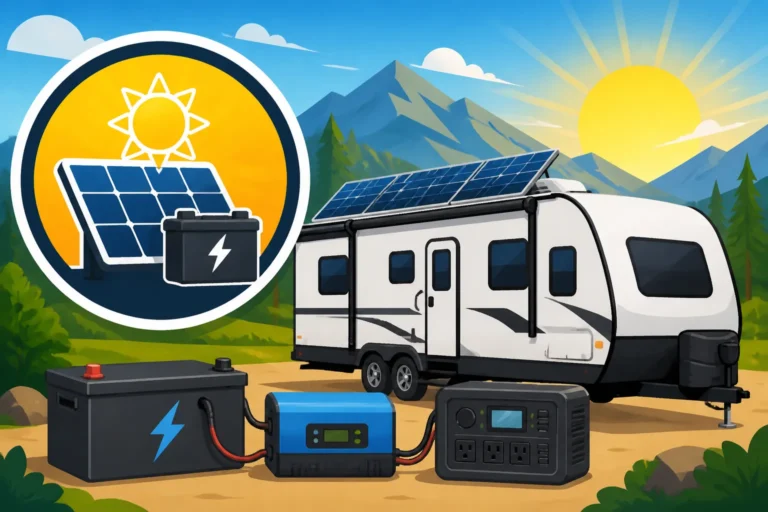
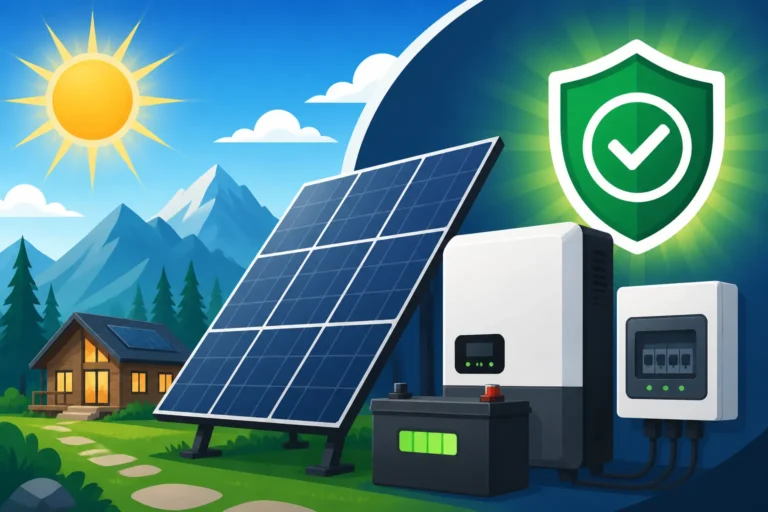
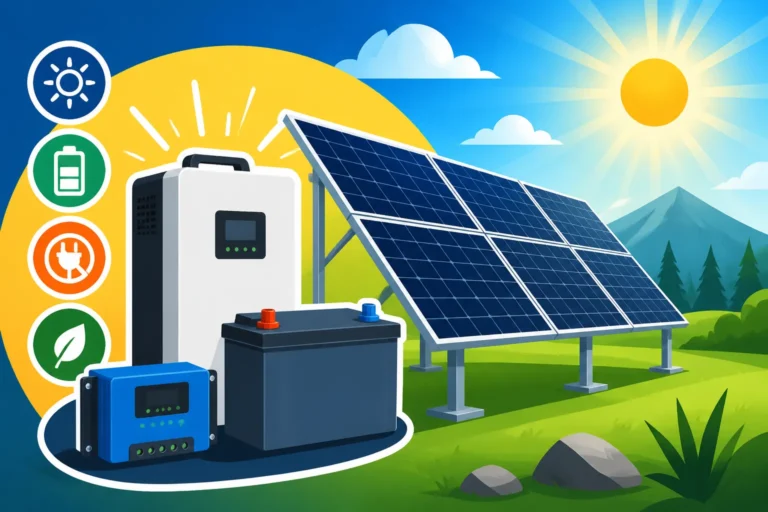
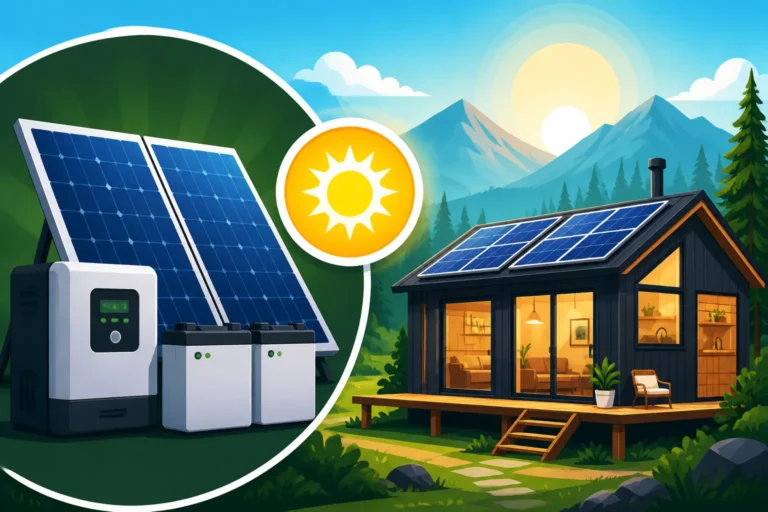
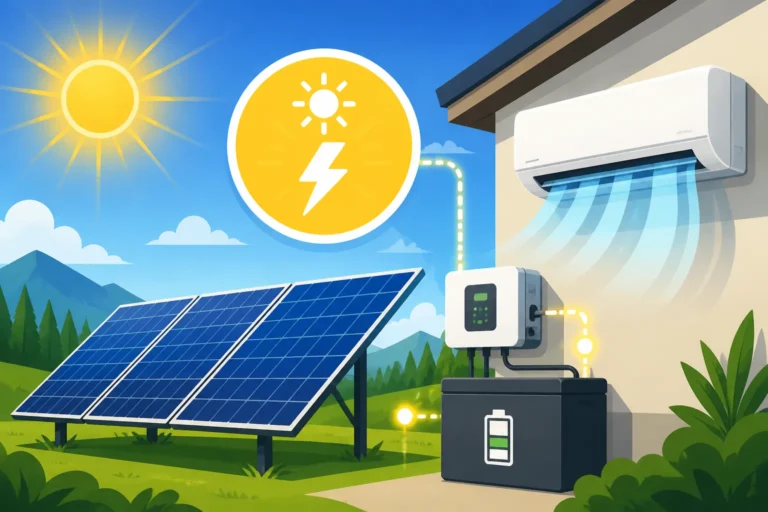
Let's not sugarcoat it: setting up an off-grid solar system requires an upfront financial commitment. This isn't a small expense, and it's important to understand where that money goes. You're not just buying solar panels. A complete system comprises several key components, each with its own cost:
- Solar Panels: These convert sunlight into electricity. The size and quantity depend on your power needs and available sun exposure. Prices can vary greatly based on wattage and brand. You can dive deeper into Cost of Off-Grid Solar Panels to get a clearer picture.
- Charge Controller: This device regulates the voltage and current coming from your solar panels to your batteries, preventing overcharging and optimizing battery life.
- Battery Bank: This is often the most expensive component, especially if you opt for high-capacity, long-lasting lithium iron phosphate (LiFePO4) batteries. The size of your battery bank determines how much power you can store for use when the sun isn't shining. Learn more about the Cost of an Off-Grid Solar Battery Bank.
- Inverter: This converts the DC (direct current) power from your batteries into AC (alternating current) power, which is what most standard household appliances and power tools use. The inverter's wattage needs to be sufficient to handle the total running wattage and surge wattage of all your connected devices. For more, explore the Cost of an Off-Grid Solar Inverter.
- Mounting Hardware, Wiring, and Safety Components: You'll need racks for your panels, various gauges of wiring, fuses, breakers, and disconnects to ensure a safe and code-compliant installation. The Cost of a Charge Controller for the entire system is relatively low compared to the other main components but is absolutely essential.
For a modest shed setup powering lights, charging, and small tools, you might be looking at a range from $1,000 for a very basic DIY kit to $5,000 or more for a more robust system with quality components and greater capacity. For heavier power tool usage, these costs can climb significantly, often reaching $10,000 or even higher if you need a large array and a substantial battery bank to handle continuous heavy loads.
Maintenance and System Limitations
Off-grid solar systems, while reliable, aren't entirely "set it and forget it." They do require some attention and have inherent limitations:
- Battery Lifespan & Replacement: Batteries have a finite lifespan. Lead-acid batteries might last 3-7 years, while LiFePO4 batteries can last 10-15 years or more. Eventually, they will need to be replaced, which is a significant recurring cost. Neglecting your batteries, whether by over-discharging or improper charging, can drastically shorten their life and necessitate earlier, costly replacements.
- Weather Dependency: Solar power is, by its very nature, dependent on the sun. Cloudy days, heavy snow cover, or even just shorter winter daylight hours will reduce your energy production. You need to size your system to account for these periods, often building in "days of autonomy" where your batteries can carry the load without sun. If you don't, you might find yourself without power when you need it most.
- Not for Heavy-Duty, Continuous Loads: While a properly sized system can handle occasional use of power tools, running energy-hungry appliances like electric heaters, large air conditioners, or multiple high-wattage tools continuously can quickly drain your battery bank and might require an impractically large and expensive solar array. For such intense demands, off-grid solar might not be the most practical or cost-effective primary solution without a significant investment in oversizing, or supplementing with a generator.
- Panel Cleaning: Solar panels can become less efficient if covered in dust, pollen, leaves, or bird droppings. Occasional cleaning, especially if your shed is under trees, will be necessary to ensure optimal performance.
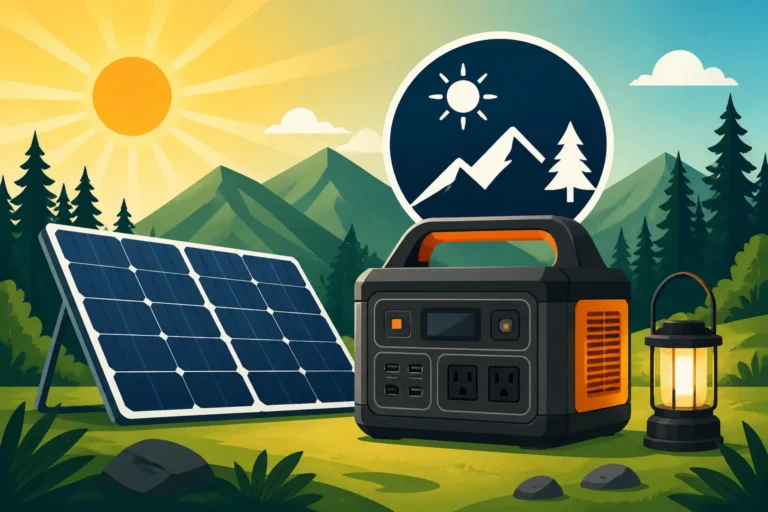
For those with very minimal power needs or highly sporadic usage, a portable solar generator might be a more fitting solution than a full, permanently installed off-grid system. A unit from a reputable brand like Jackery, for instance, offers plug-and-play convenience, can be easily moved, and typically costs less upfront than a custom-built system. It can be charged via a portable solar panel or even from the grid at your home, then brought to the shed for specific tasks. This eliminates the complexities of permanent installation and wiring, though it will have a smaller capacity and output than a dedicated, installed system.
Making the "Worth It" Decision: Factors to Consider
Deciding whether off-grid solar is truly "worth it" for your shed boils down to a personal evaluation of several key factors. There's no one-size-fits-all answer, so let's break down the considerations that will help you make an informed choice.
Usage Frequency and Power Demand
This is arguably the most critical factor. How often will you actually be using power in your shed, and what kind of power will it be?
- Infrequent, Low-Demand Use: If your shed is primarily for storage, and you only need a light on for 15 minutes a day or occasionally charge a drill battery, a full-blown off-grid solar system might be overkill and not economically "worth it." In this scenario, a small, simple solar light with a built-in battery, or a portable power station charged from your house, would be far more cost-effective. Think about products like the smaller Jackery Explorer models that are designed for exactly this kind of light, portable use.
- Regular, Moderate-Demand Use: This is the sweet spot where off-grid solar for a shed really shines. If you plan to use your shed regularly as a workshop for a few hours a day, running lights, a radio, charging tools, and occasionally using a small power tool like a jigsaw or drill, a dedicated off-grid system makes immense sense. The convenience and long-term savings from avoiding utility extension costs and generator fuel will likely outweigh the initial investment. You'll need to carefully follow a guide on How to Size an Off-Grid Solar System to match your panel and battery bank capacity to this usage.
- Frequent, High-Demand Use: If your shed is effectively becoming a second home, requiring continuous power for large appliances like air conditioning, multiple heavy-duty power tools running for hours, or electric heating, off-grid solar becomes much more expensive and complex. While possible, it would require a substantial investment in a very large solar array and a massive battery bank, significantly increasing the Off-Grid Solar Cost by System Size. In some cases, for very heavy usage, a hybrid approach (solar combined with a generator for peak loads) or even biting the bullet and extending grid power might be more practical, if financially feasible. You'd need to consider How Many Solar Panels for Off-Grid Living and How Many Batteries for an Off-Grid System at a much larger scale.
Location and Sun Exposure
Your shed's geographical location and its specific placement on your property play a huge role in the viability and efficiency of off-grid solar.
- Sunlight Availability: Solar panels need ample, unobstructed sunlight for as many hours as possible throughout the day. If your shed is constantly shaded by large trees, your house, or other structures, its solar production will be severely hampered. You might need to install your panels on a ground mount away from the shed, which adds complexity and cost to your setup. For more insights on optimal setup, consider resources like How to Design for Low Sun Regions.
- Climate: Areas with abundant sunshine year-round are ideal. In regions with long, dark winters or frequent heavy cloud cover, you'll need a significantly larger solar array and battery bank to compensate for reduced production, driving up the overall cost. Think about the shortest, cloudiest days and size your system for those conditions if you want year-round reliability.
- Distance from Main Grid: The further your shed is from the nearest utility connection point, the more financially attractive off-grid solar becomes compared to the astronomical costs of trenching and extending power lines. If your shed is just a stone's throw from your house, extending grid power might be cheaper, but you'd need to get quotes for both to be sure.
DIY vs Professional Installation
The path you choose for installation will profoundly impact the overall cost and, therefore, whether it feels "worth it" to you.
- DIY Installation: If you're handy, comfortable with electrical work (or willing to learn), and have the time, a DIY approach can significantly reduce labor costs. There are many excellent off-grid solar kits available that come with clear instructions, making the process more accessible for beginners. You can find out more about Cost of a DIY Off-Grid Solar Build. However, this route requires careful planning, adherence to safety protocols, and a good understanding of how each component works together. Making mistakes can be costly or, worse, dangerous.
- Professional Installation: Hiring a qualified solar installer ensures a safe, efficient, and typically warrantied system. They'll handle all the design, component sourcing, wiring, and mounting. This convenience comes at a premium, often adding 20-50% or more to the total project cost. However, for those uncomfortable with electrical work or tight on time, this can be an invaluable investment in peace of mind and system reliability. For a deeper dive into these options, check out DIY vs Professional Off-Grid Solar Cost.
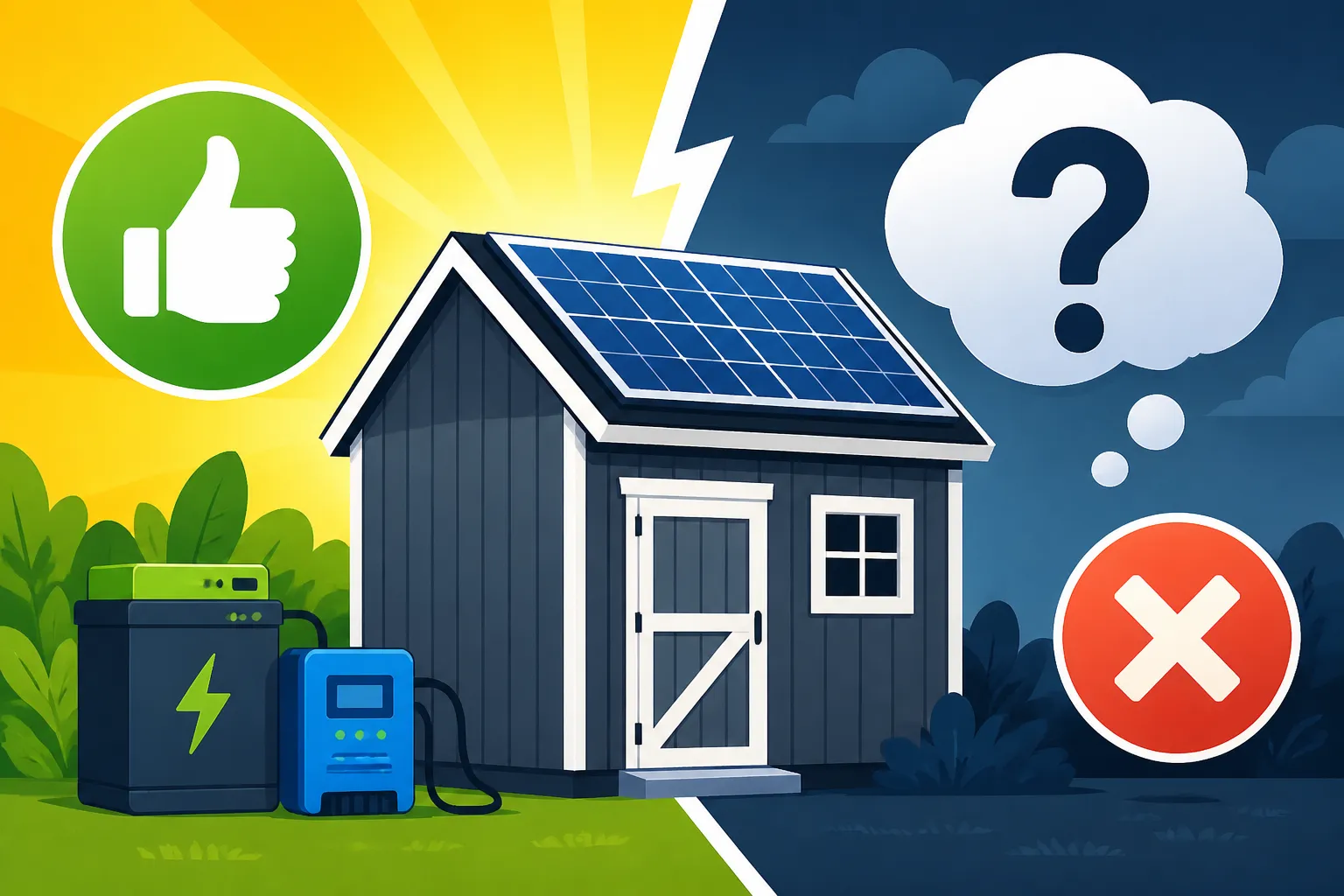
Ultimately, the "worth it" calculation is personal. Does the convenience of having power anywhere, free from the grid, justify the initial outlay and maintenance? For many, the answer is a resounding yes, especially when they consider the true cost of alternatives. It's about budgeting for your off-grid solar system realistically and matching the system to your real needs.
| Factor | Off-Grid Solar for a Shed (Pros) | Off-Grid Solar for a Shed (Cons) |
|---|---|---|
| Power Access | Complete freedom; power anywhere on your property. | Dependent on sun availability; limited by battery storage. |
| Installation | No trenching, no utility hookup fees. | Complex DIY; professional install adds significant cost. |
| Long-Term Cost | Free "fuel" (sunlight); no monthly electric bills. | High upfront cost; battery replacement is a recurring expense. |
| Maintenance | Relatively low maintenance, but batteries require care, panels need cleaning. | Batteries have finite lifespan; system needs monitoring. |
| Scalability | Can be expanded later if needs grow. | Initial sizing mistakes can be costly to correct. |
| Environmental Impact | Clean, renewable energy. | Manufacturing and disposal of components (especially batteries) have environmental footprint. |
| Convenience | Always-on power, no extension cords. | Power limitations; not suitable for continuous heavy loads. |
Disclaimer
Please remember that the information provided in this guide is for general informational purposes only and should not be construed as professional advice. Off-grid solar systems involve electricity and can be dangerous if not installed correctly. Always consult with a qualified electrician or solar professional before undertaking any electrical work or installing a solar power system. Local codes and regulations may apply, and permitting might be required for certain installations.