Best Ground-Mount Off-Grid Solar Kit
Trying to set up reliable power for your remote cabin, workshop, or even a tiny home without the hassle of climbing on roofs or worrying about structural integrity can feel like a real challenge. You want the independence of off-grid living, but the logistics of traditional solar panel installation can be daunting. This comprehensive guide is designed to walk you through everything you need to know about choosing the best ground-mount off-grid solar kit, helping you harness the sun's power with ease and confidence.
Why Ground-Mount Off-Grid Solar Kits Make Sense
When you envision off-grid solar, often the first image that comes to mind is panels neatly arranged on a rooftop. But for many, especially those with challenging roof angles, shading issues, or a desire for easier maintenance, a ground-mount system is an absolute game-changer. It offers a level of flexibility and accessibility that roof-mounted systems just can't match, allowing you to maximize your solar harvest and simplify your off-grid journey.
Accessibility and Maintenance Advantages
Let's be honest, who really loves climbing on a ladder, especially in winter or when it’s scorching hot, just to clean your solar panels? Not many! This is one of the biggest frustrations roof-mounted systems present. With a ground-mount kit, your panels are right there, at eye level or a comfortable height, making routine cleaning a breeze. You can easily wipe away dust, pollen, leaves, or even snow, ensuring your system is operating at peak efficiency year-round. This accessibility also translates to simpler inspections and any necessary repairs, which can save you a significant amount in professional service fees over the lifetime of your system. You can even check wiring connections or module performance without needing specialized safety equipment or worrying about heights.
Think about it: a quick hose-down or brush-off from the ground can make a huge difference in power output, especially if you live in an area prone to dust storms or heavy snowfall, like parts of Arizona or the Rocky Mountains.
Optimal Sun Exposure and Performance
One of the greatest benefits of a ground-mount system is the freedom it gives you to position your panels precisely for maximum sun exposure. Unlike a roof, which dictates the general orientation and tilt, a ground mount allows you to choose the perfect spot on your property—one that's clear of trees, buildings, or other potential shading culprits. You can orient your panels due south (in the Northern Hemisphere) and set the ideal tilt angle for your specific latitude and seasonal needs. This precision means you'll capture more sunlight throughout the day and year, directly impacting the amount of electricity your system generates.
For instance, if you're aiming for year-round off-grid living in a place like northern Michigan, you can adjust the tilt of your ground-mounted panels to be steeper in winter to better catch the lower-angle sun, then flatten them out for summer. This kind of seasonal optimization is significantly harder, if not impossible, with most roof-mounted setups. This ability to dial in your angle contributes significantly to how much solar you need to run an air conditioner or even How Many Solar Panels for Off-Grid Living.
Flexibility and Expandability for Future Needs
Life off-grid often evolves, and your power needs might too. Maybe you start with a small setup for basic lighting and charging, but later decide to add a well pump, a larger refrigerator, or even run some power tools in a workshop. A ground-mount system shines here because it's inherently more flexible and easier to expand than a roof-mounted one. You're not limited by the existing roof footprint or structural capacity. As long as you have available ground space, you can add more panels to your array, incrementally boosting your power generation.
This foresight in design is critical. Instead of having to tear down and rebuild, you can simply add more racking and panels adjacent to your existing setup. This modularity means that if you initially start with a smaller system to power a hunting cabin, you can easily expand it later if you decide to make it a full-time residence. This phased approach can also help manage the initial Off-Grid Solar Cost by System Size.
Essential Components of a Robust Ground-Mount Kit
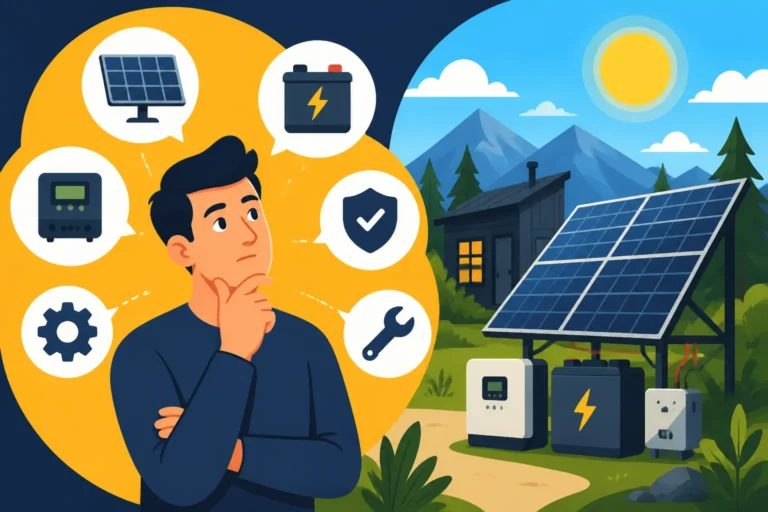
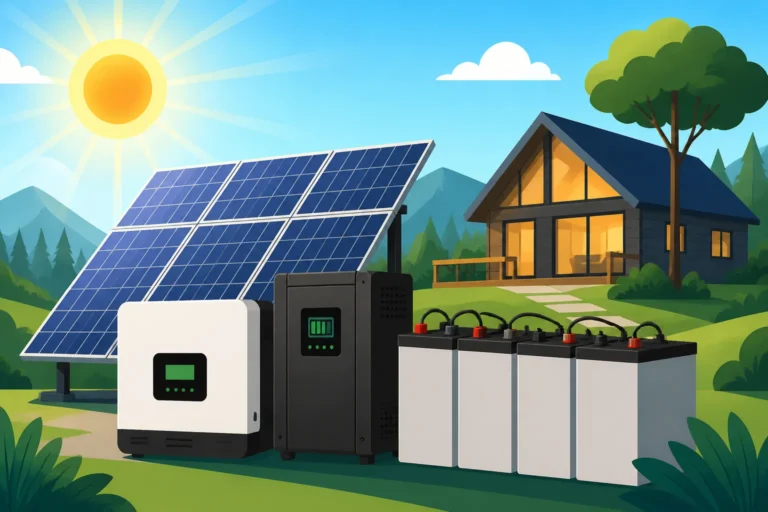
Understanding what goes into a ground-mount off-grid solar kit is crucial for making an informed decision. These systems are more than just solar panels; they're a symphony of interconnected components working together to keep your power flowing.
High-Performance Solar Panels
The solar panels themselves are, of course, the star of the show, converting sunlight into electricity. For off-grid ground-mount applications, you'll typically be looking at rigid monocrystalline panels. These offer excellent efficiency, meaning they can produce more power per square foot, which is great for maximizing energy capture from your dedicated ground space. Look for panels with high ratings (often 300W-450W per panel or more) and a good temperature coefficient, as extreme heat can reduce panel efficiency.
Durability is also key. Your ground-mounted panels will be exposed to all the elements, so ensure they have robust frames, tempered glass, and are rated to withstand significant wind and snow loads. Brands like Renogy and Rich Solar are popular choices, offering reliable panels suitable for off-grid use. It's not just about the wattage; it's about how consistently and reliably those watts are delivered over two decades or more.
Reliable Battery Bank and Inverter System
Once your panels generate electricity, it needs to be stored for when the sun isn't shining. This is where the battery bank comes in, acting as your energy reservoir. For serious off-grid applications, Best Off-Grid Solar Batteries are almost exclusively LiFePO4 (Lithium Iron Phosphate). While they have a higher upfront cost, their longer lifespan (often 10-15 years or more), deeper discharge cycles, and lack of maintenance make them incredibly cost-effective in the long run compared to traditional lead-acid batteries. The Cost of an Off-Grid Solar Battery Bank can be substantial, but the right choice will save you headaches and money down the line. To fully understand the differences, exploring a LiFePO4 vs Lead-Acid Battery Cost comparison can be enlightening.
The inverter is the brain that transforms the DC (direct current) power from your batteries into AC (alternating current) power, which is what most of your household appliances use. For any modern off-grid setup, you'll want a pure sine wave inverter. This ensures clean, stable power that won't damage sensitive electronics like laptops, TVs, or medical equipment. The size of your inverter will depend on the total wattage of all the AC devices you might run simultaneously, plus a surge capacity for starting motors. Many people opt for hybrid inverter-chargers, which integrate the functions of an inverter, battery charger (for generator backup), and solar charge controller into one unit, simplifying wiring and management. Consider a reliable brand like Victron Energy or Sol-Ark for robust inverter solutions.
Efficient Charge Controller and Robust Mounting Hardware
The charge controller is the vital link between your solar panels and your battery bank. Its job is to regulate the voltage and current coming from the panels, ensuring your batteries are charged safely and efficiently without being overcharged or damaged. For almost all but the smallest systems, an MPPT (Maximum Power Point Tracking) charge controller is the way to go. MPPTs are significantly more efficient than older PWM (Pulse Width Modulation) controllers, especially in varying light conditions or when the panel voltage doesn't perfectly match the battery voltage. This extra efficiency means more of the sun's energy actually makes it into your batteries.
Last but certainly not least, your ground-mount kit needs sturdy, durable mounting hardware. This includes the racking, rails, and anchoring system that securely holds your panels in place. Look for structures made from corrosion-resistant materials like aluminum or galvanized steel. The design should allow for adjustable tilt angles and be able to withstand local wind and snow loads. Some kits offer fixed tilt, while others provide adjustable options, which is a great feature for seasonal optimization. A robust frame and proper anchoring are paramount for the long-term safety and performance of your system.
Crucial Considerations When Choosing Your Kit
Selecting the right ground-mount off-grid solar kit isn't a one-size-fits-all decision. It requires careful thought about your unique power demands, environmental factors, and future aspirations.
Accurately Assessing Your Energy Needs
This is arguably the most critical step in designing any off-grid system. You simply cannot choose a kit effectively until you know how much power you actually use. This involves performing a detailed load analysis, listing every appliance and device you plan to power, its wattage, and how many hours per day you'll use it. Don't forget those "phantom loads" that draw power even when turned off! Summing these up will give you your daily watt-hour or kilowatt-hour (kWh) requirement.
For example, a small off-grid cabin might only need to power LED lights, a laptop, and a small refrigerator, consuming maybe 2-3 kWh per day. A larger homestead, however, with a well pump, washing machine, and multiple appliances, could easily consume 10-15 kWh or more daily. Underestimating your needs leads to frustration, dead batteries, and often, expensive upgrades down the line. You'll want to dive into resources like How to Calculate Daily Energy Usage or a full Off-Grid Solar System Sizing Guide to get this right.
Site Specifics and Local Climate Factors
The physical location of your ground-mount system profoundly impacts its design and performance. Consider your average peak sun hours—the equivalent number of hours per day when sunlight intensity averages 1,000 watts per square meter. This varies significantly by geographic location and season. Areas with fewer sunny days, like the Pacific Northwest, will require a larger solar array and battery bank than sunnier regions like the Southwest, even for the same daily energy consumption.
Beyond sun exposure, think about your local climate. Does your area experience heavy snowfall? You'll need a mounting system and panels rated for substantial snow loads. High winds are also a concern, requiring robust anchoring and panel racking. Extreme temperatures, both hot and cold, can affect battery performance, so proper battery housing and thermal management become crucial. If you're in a desert, you might also need to factor in dust buildup. These environmental considerations are vital for the long-term reliability and safety of your system.
Planning for Expandability and Budgeting Wisely
As mentioned earlier, planning for future expansion is a smart move. Even if your initial needs are modest, having the option to add more panels or battery capacity later can save you from a complete system overhaul. Look for kits or components that are modular and easily integrated into larger systems. This might mean choosing an inverter that can handle more input than your current array, or a battery management system (BMS) that can support additional battery modules.
Budgeting for an off-grid solar system is a significant undertaking, and it's essential to be realistic. While the idea of a "best" kit often conjures up images of top-tier, expensive equipment, the best kit for you is one that balances quality, performance, and cost within your budget. It's helpful to consider the lifetime cost rather than just the upfront price. High-quality components, like LiFePO4 batteries, might cost more initially but offer superior longevity and performance, leading to lower overall costs over their lifespan. Don't forget to factor in potential installation costs, even if you plan a DIY Off-Grid Solar Installation, as tools and unforeseen expenses can add up.
Understanding System Voltage Choices
Off-grid solar systems typically operate at 12V, 24V, or 48V. Your choice of system voltage affects everything from wire sizing to the type of components you'll need.
- 12V Systems: These are common for smaller applications like RVs, vans, or tiny sheds powering just a few DC loads. They are relatively simple to set up, but higher current flows mean thicker wires are needed for longer runs, leading to potential voltage drop issues if not properly designed.
- 24V Systems: A good middle-ground, often used for cabins or medium-sized off-grid setups. They allow for smaller wire gauges than 12V systems for the same power output, reducing cable costs and voltage drop.
- 48V Systems: These are generally preferred for larger homes or extensive off-grid properties. They offer the greatest efficiency by minimizing current, allowing for the smallest wire gauges and reducing energy losses. Most high-power inverters (3000W and up) are designed for 48V systems.
Deciding between these requires weighing your power needs, potential for expansion, and component availability. For a deeper dive, check out our guide on 12V vs 24V vs 48V: Which to Choose.
Recommended Features and Brands to Look For
Navigating the world of off-grid solar can be overwhelming with countless options available. Here's how to simplify your search and focus on quality and reliability.
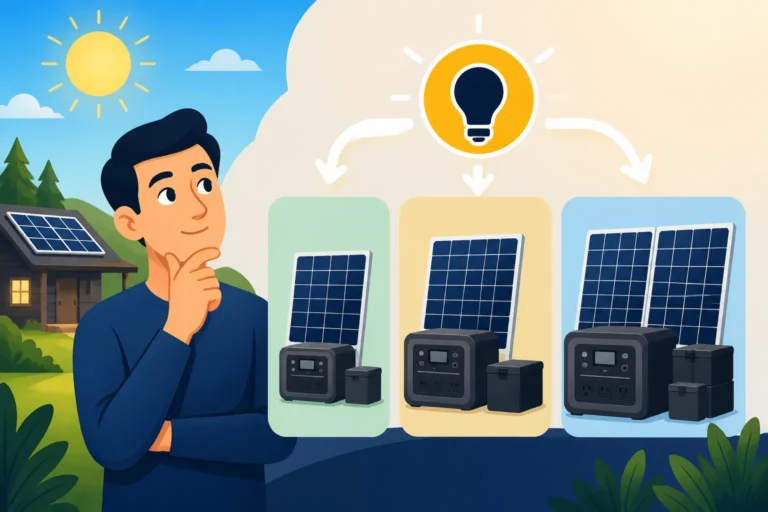
All-in-One vs. Component-Based Kits
You'll generally find two types of ground-mount solar kits:
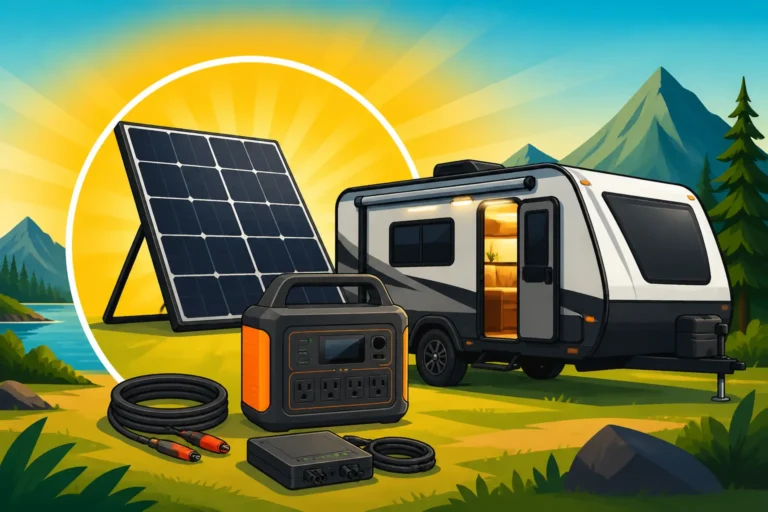
- All-in-One Kits: These bundles typically include panels, a battery, an inverter (often an inverter-charger), and a charge controller, along with basic mounting hardware and wiring. They are designed for simplicity and convenience, often marketed as "plug-and-play" or "Best Off-Grid Solar Kits for Beginners." While they offer an easy entry point, they might not be optimized for your specific needs or allow for much customization. Brands like EcoFlow or Jackery offer excellent portable power stations that can serve as the "brains" of a smaller all-in-one ground-mount system, combining inverter, charge controller, and battery into a single unit. For slightly larger, but still pre-configured systems, some manufacturers like Renogy also offer comprehensive kits.
- Component-Based Systems: This approach involves selecting each component—panels, batteries, inverter, charge controller, and mounting hardware—individually. While it requires more research and technical understanding, it allows for a highly customized, efficient, and often more robust system perfectly tailored to your energy profile and site conditions. This is often the route seasoned off-gridders take, allowing them to choose top-tier components like a Victron inverter, Battle Born batteries, and high-efficiency panels.
The choice depends on your comfort level with electrical work, your specific power demands, and your budget. For smaller, less critical applications, an all-in-one solution from a reputable brand like Jackery might be sufficient. For larger, more permanent installations, piecing together components often yields a more reliable and expandable system in the long run.
Reputable Brands and Essential Support
When investing in an off-grid solar kit, the brand matters. Look for companies with a proven track record, positive customer reviews, and excellent technical support. A good company won't just sell you a box of parts; they'll offer resources, wiring diagrams, and troubleshooting assistance.
- Panels: Look for brands like Renogy, Rich Solar, HQST, or Grape Solar.
- Inverters/Charge Controllers: Victron Energy, Sol-Ark, Outback Power, and Schneider Electric are highly regarded for their robust and reliable off-grid equipment. For more budget-friendly options, Growatt or EG4 have gained popularity.
- Batteries: Battle Born, EG4, SOK, and Victron are leading names for LiFePO4 batteries, known for their performance and longevity.
These brands often stand behind their products with solid warranties and accessible support channels, which is invaluable when you're relying on your system for daily power.
Warranties, Certifications, and Safety Standards
Don't overlook the importance of warranties. Solar panels typically come with 25-year performance warranties and 10-12 year product warranties. Inverters and charge controllers often have 5-10 year warranties, and LiFePO4 batteries can have 8-10 year warranties. These warranties are your assurance against manufacturing defects and premature failure, protecting your significant investment.
Certifications are also crucial for safety and performance. Look for panels that are UL listed, indicating they meet stringent safety standards. Inverters and other electrical components should also carry appropriate certifications (e.g., UL 1741 for inverters in the US, or comparable international standards). This ensures the equipment has been tested and deemed safe for use, minimizing risks of electrical fires or other hazards. Adhering to these standards is also vital if you plan to get permits or inspections for your off-grid solar system. Knowing the ins and outs of Off-Grid Solar Permits and Codes will be a critical part of your installation planning.
Sizing Examples for Different Ground-Mount Needs
To give you a clearer picture, let's look at some hypothetical scenarios for ground-mount off-grid solar kits. Remember, these are estimates, and your actual needs will vary based on your specific appliance usage and climate.
| Application Type | Estimated Daily Use (kWh) | Suggested Panel Wattage (W) | Suggested Battery Capacity (Ah @ 48V) | Suggested Inverter Size (W) | Key Considerations |
|---|---|---|---|---|---|
| Small Cabin/Shed | 1-2 kWh | 500-1000 W | 100-200 Ah | 1000-2000 W | Powers lights, phone charging, small fridge. Often uses 12V or 24V. Simpler setup, easy DIY. |
| Medium Cabin/RV | 3-5 kWh | 1500-2500 W | 200-400 Ah | 2000-3000 W | Handles larger fridge, microwave, TV, water pump. 24V or 48V recommended. Needs careful load management. |
| Full-Time Home | 8-15 kWh | 3000-6000 W | 600-1200 Ah | 5000-8000 W | Powers standard household appliances, possibly a well pump, small AC unit. Requires 48V. Professional installation or advanced DIY skills. Often includes a generator backup. A detailed guide on How to Size an Off-Grid Inverter will be crucial here. |
| Large Homestead | 15-30+ kWh | 6000-10000+ W | 1200-2000+ Ah | 8000-12000+ W | Runs multiple major appliances, workshop tools, large well pumps, and potentially central AC. Definitely 48V. Requires significant investment, advanced design, and often multiple inverter stacks. Understanding How to Design for Year-Round Off-Grid Power becomes paramount. |
This table provides a rough idea, but remember that factors like your specific solar insolation (peak sun hours) and desired days of autonomy (how long your batteries can power your home without sun) will heavily influence the precise sizing. Always refer to a comprehensive guide like How to Size an Off-Grid Solar System for accurate calculations.
Choosing the best ground-mount off-grid solar kit truly boils down to careful planning and understanding your specific needs. It's an investment in independence and sustainability, and with the right research, you can create a powerful, reliable system that serves you for years to come.
Disclaimer
The information provided in this guide is for general informational purposes only and does not constitute professional advice. Off-grid solar system design and installation can be complex and involve electrical hazards. Always consult with qualified professionals and adhere to local codes and regulations when planning and installing any solar power system.