Questions to Ask Before Buying Off-Grid Solar
Deciding to dive into the world of off-grid solar is a monumental step, full of exciting possibilities for freedom and self-reliance. But let's be honest, it can also feel incredibly overwhelming. There's a sea of information, components, and potential pitfalls, and it’s easy to feel like you’re trying to build a spaceship with only a screwdriver. Many folks jump in too quickly, buying components before truly understanding their needs, only to find themselves with a system that's either woefully inadequate or vastly oversized. This guide is here to walk you through the essential questions you need to ask before you open your wallet, ensuring you build an off-grid solar system that perfectly suits your unique lifestyle and won't leave you in the dark.
Understanding Your Energy Demands and Lifestyle
Before you even think about panels or batteries, the most crucial step is to get intimately familiar with your energy needs. This isn't just about guessing; it requires a bit of detective work and honest reflection about how you truly live. Skipping this part is like trying to bake a cake without knowing what ingredients you have, or how many people you're serving. You'll either end up with too little batter or a towering monstrosity no one can finish.
What is Your Daily Energy Consumption?
This is the bedrock of your entire system design. You need to perform a thorough load analysis to calculate your daily energy usage in watt-hours (Wh) or kilowatt-hours (kWh). Don't just list appliances; think about how long you use each one. A refrigerator runs 24/7, but a microwave only for a few minutes. Many people grossly underestimate this, leading to systems that constantly struggle to keep up. Take out a pen and paper, or open a spreadsheet, and list every single electrical item you plan to use, from lights and laptops to your well pump or air conditioner.
For instance, consider a small cabin. You might think, "I'll just have lights, a fridge, and charge my phone." But what kind of lights? LED or incandescent? How many hours per day? Is it a mini-fridge or a full-sized energy-efficient model? Will you have a water pump? A fan? A TV for movie nights? Will you ever use power tools in a workshop nearby? Each item adds to your total daily draw. For a truly deep dive, consider checking out resources like our guide on how to calculate your daily energy usage to make sure you don't miss anything critical. If you're planning to run things like a well pump or an air conditioner, remember that these have significant surge loads, meaning they require a burst of power much higher than their running wattage to start up. This will heavily influence your inverter choice.
Where Will Your System Be Located?
The physical location of your off-grid system plays a massive role in its design and efficiency. Are you powering a remote cabin in the mountains, a tiny home nestled in a valley, or a mobile RV crisscrossing the country? Each scenario presents unique challenges and opportunities for solar gain. The amount of sunlight your location receives throughout the year, known as "peak sun hours," is a critical factor for sizing your solar array.
For example, someone living in sunny Arizona will have a much easier time generating consistent power than someone in the cloudy Pacific Northwest, especially during winter months. Shading from trees, mountains, or even nearby buildings needs to be meticulously assessed. Even a small amount of shade on one part of a solar array can drastically reduce the output of all panels wired in series. You'll also need to consider temperature extremes; batteries perform differently in very hot or very cold conditions. If you're looking at a remote property, you might also be wondering about the trade-off between off-grid solar vs utility extension cost. Often, running utility lines for miles can be far more expensive than a robust solar setup.
What Kind of Off-Grid Lifestyle Will This System Support?
This question delves into the philosophy behind your off-grid choice. Are you aiming for full-time, year-round self-sufficiency, or is this a seasonal setup for a weekend cabin or an occasional RV trip? The difference in system requirements is enormous. A full-time off-grid home demands a robust system designed for reliability and extended days of autonomy (the number of days your batteries can power your home without any sun). This often means a larger solar array and a significantly larger battery bank.
Contrast that with a system for a hunting cabin used only a few weeks a year, or an RV that might only be off-grid for a few days at a time. For these less demanding scenarios, you might get by with a smaller, more portable setup, perhaps even a powerful solar generator like those offered by Jackery. These all-in-one units can be fantastic for casual use or emergency backup. Understanding your usage patterns will help you determine the optimal size and type of your system, preventing you from overspending on capacity you don't need or, worse, underbuilding and constantly running out of power. This insight is key to understanding whether off-grid solar is worth the cost for your particular application.
System Components and Configuration
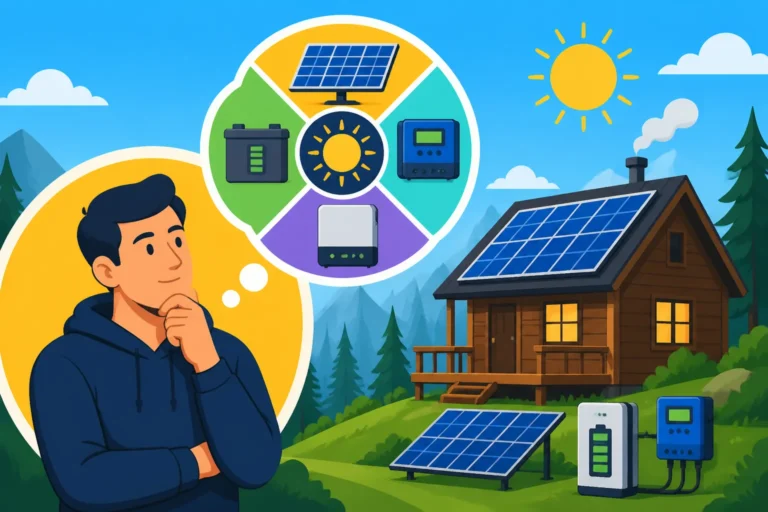
Once you have a clear picture of your energy needs and location, it's time to think about the hardware. The components of an off-grid solar system work together like an orchestra, and choosing the right instruments for your specific symphony is paramount.
What Type and Size of Solar Panels Do You Need?
Solar panels are your energy gatherers, and their type and quantity directly correlate to how much power you can generate. There are different types, primarily monocrystalline and polycrystalline, each with their own characteristics. Monocrystalline panels are generally more efficient and perform better in low-light conditions, but they tend to be more expensive. Polycrystalline panels are a bit less efficient but more budget-friendly.
The "size" refers to the total wattage of your solar array. This is where your daily energy consumption calculation comes back into play, combined with your location's peak sun hours. If you're in a sunny region, you might get away with fewer panels than someone in a consistently cloudy area, or someone who needs to power an air conditioner on off-grid solar. You'll also need to consider mounting options: roof mounts, ground mounts, or pole mounts, each with their own pros and cons regarding installation complexity, cost, and ability to adjust for optimal sun exposure. For those looking to understand the fundamental building blocks, exploring topics like the cost of off-grid solar panels can offer valuable insights.
How Big Should Your Battery Bank Be?
Your battery bank is the heart of your off-grid system, storing the solar energy collected during the day for use at night or on cloudy days. Without it, you'd only have power when the sun is shining directly on your panels. The size of your battery bank, typically measured in amp-hours (Ah) or kilowatt-hours (kWh), dictates your "days of autonomy"—how long you can run your essentials without any new solar input.
This is where many beginners fall short, underestimating how much battery capacity they truly need. Think about how many consecutive cloudy days you might experience in your region. In some areas, two to three days of autonomy is sufficient, but in others, especially during winter, you might need five or more. The choice of battery chemistry is also critical. Lead-acid batteries (flooded, AGM, Gel) are traditional and more budget-friendly upfront, but require more maintenance and have a shorter lifespan. Lithium Iron Phosphate (LiFePO4) batteries are gaining immense popularity for off-grid applications despite a higher initial cost, due to their longer lifespan, deeper discharge capabilities, lighter weight, and zero maintenance. Understanding the nuances, like the LiFePO4 vs Lead-Acid battery cost, is vital for long-term planning.
What Inverter and Charge Controller are Best for Your System?
These two components are the brains of your off-grid system. The charge controller manages the power coming from your solar panels, ensuring your batteries are charged efficiently and not overcharged. There are two main types: PWM (Pulse Width Modulation) and MPPT (Maximum Power Point Tracking). MPPT controllers are more efficient, especially in larger systems or varying weather conditions, as they can convert excess voltage from the panels into amperage, maximizing charging current. PWM controllers are simpler and more cost-effective for smaller systems.
The inverter takes the DC (direct current) power from your batteries and converts it into AC (alternating current), which is what most household appliances use. You'll need to match the inverter's continuous wattage rating to your expected peak load, and its surge rating to handle those demanding startup currents. A pure sine wave inverter is essential for sensitive electronics and motors, providing clean power similar to grid electricity. Modified sine wave inverters are cheaper but can damage certain devices. For a deeper dive, consider our guide on how to size an off-grid inverter to ensure you get the right fit. Many modern off-grid systems also leverage inverter-chargers, which combine the functions of an inverter, battery charger (for generator backup), and a transfer switch into one integrated unit, simplifying wiring and management.
Installation, Maintenance, and Longevity
Building an off-grid system isn't a one-time event; it's an ongoing relationship. Thinking through the installation process and understanding future maintenance will save you headaches and unexpected costs down the line.
Who Will Install Your Off-Grid System?
This is a major decision with significant cost implications and technical considerations. Do you plan to tackle the installation yourself as a DIY project, or will you hire professionals? A DIY off-grid solar installation can save you a substantial amount of money, but it requires a solid understanding of electrical wiring, safety protocols, and system components. If you're comfortable with electrical work and have a knack for problem-solving, it's definitely achievable. Many components, including those from brands like Renogy, are designed with DIYers in mind, offering clear instructions and support.
However, if you're not confident in your electrical skills, or if your system is large and complex, hiring a licensed electrician or an experienced solar installer is highly recommended. They can ensure the system is installed safely, correctly, and up to local electrical codes (even if you're off-grid, there might be local permitting or inspection requirements depending on your jurisdiction). The cost difference between DIY vs professional off-grid solar cost can be significant, so factor this into your budget early on. Remember, safety should always be your top priority when working with electricity.
What are the Maintenance Requirements and Lifespan of Components?
Off-grid systems, while generally robust, aren't entirely maintenance-free. Understanding what's involved will help you plan and budget. Solar panels typically require minimal maintenance—mostly cleaning off dirt, snow, or debris to ensure optimal performance. Their lifespan is impressive, often lasting 25-30 years with little degradation.
Batteries, on the other hand, require more attention, especially lead-acid types which need regular watering and monitoring. Lithium batteries are virtually maintenance-free, but like all batteries, their performance will eventually degrade over time. The lifespan of your battery bank is a critical factor in the total lifetime cost of an off-grid solar system. Most LiFePO4 batteries are rated for thousands of charge cycles, offering 10-15 years or more of usable life, while lead-acid batteries might only last 3-7 years depending on usage and maintenance. Inverters and charge controllers are generally reliable, but like any electronic device, they can fail and may need replacement every 10-15 years. Regular inspection of wiring for corrosion or loose connections is also crucial. Knowing the Off-Grid Solar Maintenance Costs upfront helps avoid surprises.
How Can You Plan for Future Expansion or Changes?
Life rarely stays static, and your energy needs might evolve over time. Perhaps you start with a small cabin and later decide to add a workshop, or your family grows, increasing your electricity consumption. Designing your initial system with future expansion in mind can save you a lot of money and hassle. This means choosing an inverter that can handle additional load, a charge controller that can accommodate more panels, and a battery bank that can be easily expanded by adding more modules.
For example, choosing a 48V system from the outset might be a better long-term choice for a potential whole-house setup than starting with a 12V system, which is more suited for smaller applications like an RV. Many inverter models, especially those from brands like Victron Energy or Sol-Ark, are designed to be stackable, allowing you to add more units in parallel to increase your total power output. Thinking about scalability now prevents you from having to completely overhaul your system later. This long-term view is essential for a true understanding of the Off-Grid Solar Return on Investment.
Financial and Regulatory Considerations
Going off-grid is a significant investment, and understanding the financial landscape, including potential incentives and regulatory hurdles, is just as important as knowing your amps and volts.
What is Your Budget and How Will You Finance It?
Let's be real: off-grid solar can be a substantial upfront investment. The total cost can vary wildly, from a few thousand dollars for a basic cabin setup to well over $30,000 for a full-sized home. Knowing your budget ceiling from the start helps you make realistic choices about system size, component quality, and whether you'll DIY or hire professionals. You'll need to consider the cost of an off-grid solar battery bank, the cost of off-grid solar panels, and all the auxiliary equipment.
Financing options exist beyond just paying cash. Some homeowners might be able to incorporate the cost into a construction loan for a new build. Others might look into specific solar financing options offered by lenders, or even personal loans. While federal tax credits like the Investment Tax Credit (ITC) traditionally applied to grid-tied systems, it's worth exploring if your specific off-grid setup qualifies for any portion of the 2026 Solar Tax Credit and Off-Grid Systems, especially if it's considered part of a new residential energy property. Research any state incentives for off-grid solar as well, as these can vary widely and significantly reduce your net cost. Don't forget to budget for potential hidden costs of going off-grid, such as permitting, land clearing, or trenching.
Are There Permits or Regulations You Need to Follow?
"Off-grid" often conjures images of complete freedom from rules, but that's not always the case. Depending on your location, even an off-grid system might be subject to local building codes, electrical codes, and permitting requirements. These regulations are primarily in place for safety, ensuring that your system is installed correctly to prevent hazards like electrical fires. Some counties or states may require permits for any new electrical installation, regardless of whether it's connected to the utility grid.
It's absolutely crucial to check with your local planning department or building inspector before you start any work. They can inform you about specific requirements, necessary inspections, and the process for obtaining permits. Ignoring these rules can lead to fines, stop-work orders, or even being forced to remove or modify your system. While it might seem like a bureaucratic hurdle, understanding off-grid solar permits and codes upfront will save you from potential legal issues and ensure your system is safe and sound for the long haul.
Final Considerations for a Seamless Transition
Beyond the nuts and bolts, there are a few overarching questions that can make your off-grid journey smoother and more successful.
How Will You Monitor and Manage Your System?
An off-grid system isn't a "set it and forget it" affair, especially if you're serious about long-term reliability. Effective monitoring allows you to track your solar production, battery state of charge, and energy consumption. This data is invaluable for understanding your system's performance, identifying potential issues before they become major problems, and making informed decisions about your energy usage.
Many modern inverters and charge controllers come with built-in monitoring capabilities, often accessible via a mobile app or a web portal. Brands like Victron Energy are well-known for their comprehensive and user-friendly monitoring platforms. A good battery monitor, usually incorporating a shunt, provides accurate readings of your battery's state of charge, voltage, and current flow, which is far more reliable than simply looking at voltage. Being able to see how much power your panels are producing, how much is going into your batteries, and how much you're consuming throughout the day will empower you to manage your energy more efficiently and prolong the life of your expensive battery bank.
| Component Category | Key Questions to Ask Yourself | Why It Matters |
|---|---|---|
| Energy Needs | What appliances will I run? For how long? Any heavy loads (well pump, AC)? | Determines total system size, battery capacity, and inverter power. |
| Location | How much sun does my site get? Any shading? Temperature extremes? | Impacts panel quantity, type, and battery performance/protection needs. |
| Lifestyle | Full-time or seasonal use? How many days of autonomy do I need? | Dictates overall system robustness, battery bank size, and potential for generators. |
| Budget | What's my realistic budget? Will I DIY or hire? | Influences component choices, quality, and overall project scope. |
| Expansion | Do I foresee adding loads in the future? | Allows for modular design, preventing costly system overhauls later. |
| Regulations | What permits or codes apply in my area? | Ensures legal compliance and system safety. |
| Maintenance | Am I willing to perform regular battery maintenance? How long do I expect components to last? | Informs battery chemistry choice (lead-acid vs. lithium) and long-term costs. |
| Monitoring | How will I track system performance and battery health? | Crucial for efficient energy management and troubleshooting. |
What is Your Backup Plan for Extended Low-Sun Periods?
Even the most meticulously designed off-grid solar system can face challenges, especially during prolonged periods of bad weather, heavy snow, or system malfunctions. A robust off-grid setup always includes a backup plan. For many, this means incorporating a fossil fuel generator. Generators, whether propane, gasoline, or diesel, can kick in to charge your batteries when solar input is insufficient. Some advanced inverter-chargers can even automatically start a generator when battery voltage drops to a certain level, providing a seamless backup solution.
Consider the fuel storage and noise implications of a generator. Will it be a small portable unit for emergencies, or a larger, permanently installed standby generator? Portable power stations, like the Jackery Explorer series, can also serve as excellent supplementary backup, especially for critical small loads like CPAP machines or communication devices. Thinking through your backup strategy and factoring in the cost of adding a generator to off-grid solar ensures you're never truly left without power, even when nature throws its worst at your solar array.
How Committed Are You to Energy Conservation?
Finally, an off-grid system truly thrives when paired with a conscious commitment to energy conservation. Unlike being grid-tied where you might not think twice about leaving lights on or running multiple high-draw appliances simultaneously, off-grid living requires a shift in mindset. Every watt-hour you consume comes directly from your system, and ultimately, from the sun.
This isn't about deprivation, but about efficiency and awareness. Choosing energy-efficient appliances (like those Energy Star rated refrigerators or LED lighting), turning off lights when you leave a room, line-drying clothes when possible, and being mindful of peak usage times can significantly reduce your overall energy footprint. This approach can, in turn, allow you to build a smaller, more affordable solar system, while still maintaining a comfortable lifestyle. Embracing conservation is not just about saving money on your solar build; it's about truly embracing the independence and self-sufficiency that off-grid living offers. It's about optimizing your system for year-round off-grid power, rather than constantly fighting against your own consumption habits.
Disclaimer
The information provided in this article is for general informational purposes only and does not constitute professional advice. Off-grid solar system design and installation can be complex and involve significant safety risks. Always consult with qualified professionals, such as licensed electricians or certified solar installers, and adhere to all local codes and regulations before undertaking any off-grid solar project.