Best 3000W Off-Grid Solar Kit
Feeling overwhelmed by the sheer number of off-grid solar options out there, especially when you're trying to figure out what a "3000W off-grid solar kit" even means for your specific needs? You're not alone. Many folks get lost in the wattage, amp-hours, and technical jargon, making the dream of energy independence feel more like a headache. This guide is designed to cut through the confusion and help you understand what to look for in the best 3000W off-grid solar kit, ensuring you make an informed decision for your power needs.
Decoding the 3000W Off-Grid Solar Kit
When you see a "3000W off-grid solar kit," it typically refers to the continuous output capability of the inverter included in the kit, meaning it can steadily provide 3000 watts of alternating current (AC) power to run your appliances. It's a sweet spot for many small-to-medium off-grid setups, offering a good balance between power and practicality.
What "3000W" Actually Refers To
It's really important to clarify what that "3000W" signifies. Often, it refers to the inverter's continuous output capacity. This means the inverter can safely and consistently supply 3000 watts of power to your connected devices. For example, if you're running a refrigerator (around 150-200W), a few lights (50W), a TV (100W), and charging a laptop (50W), you're well within that 3000W limit. However, many appliances, especially those with motors like well pumps, microwaves, or power tools, have a much higher "surge" wattage when they first start up. A good 3000W inverter will also have a surge rating, often double its continuous output (e.g., 6000W for a few seconds), to handle these momentary power spikes.
The "3000W" could also refer to the peak power output of the solar panel array, but this is less common for kit naming conventions when discussing the overall power system. If a kit specified "3000W of solar panels," that means you'd have an array capable of producing 3000 watts under ideal sunlight conditions. This panel wattage is crucial for recharging your batteries, but it's the inverter that dictates how much power you can actually use at any given moment. A well-designed 3000W inverter kit will likely come with a solar array sized to adequately recharge the battery bank, often between 1000W and 2000W, depending on your location's peak sun hours and desired days of autonomy.
Who Needs a 3000W System
A 3000W off-grid solar system is incredibly versatile and hits a sweet spot for a wide range of independent power needs. It's powerful enough to run many creature comforts without being an overly complex or prohibitively expensive installation. Think about your daily life: What appliances do you rely on? This system size can handle the essentials and a fair bit more.
This kind of system is often ideal for a small cabin in the woods that sees weekend or seasonal use, a tiny home dweller looking for full-time independence, or even a well-equipped RV for extended boondocking adventures. You could comfortably power a standard energy-efficient refrigerator, a microwave for quick meals, a television, your laptop and phone chargers, a range of LED lights, and even some smaller power tools for projects around your off-grid property. It might also be enough to run a small well pump for domestic water, though sizing for a well pump surge is critical. For those embarking on Off-Grid Solar for a Hunting Cabin or a remote workshop, a 3000W setup often provides just the right amount of juice to keep things humming.
Essential Components of a Quality 3000W Off-Grid Solar Kit
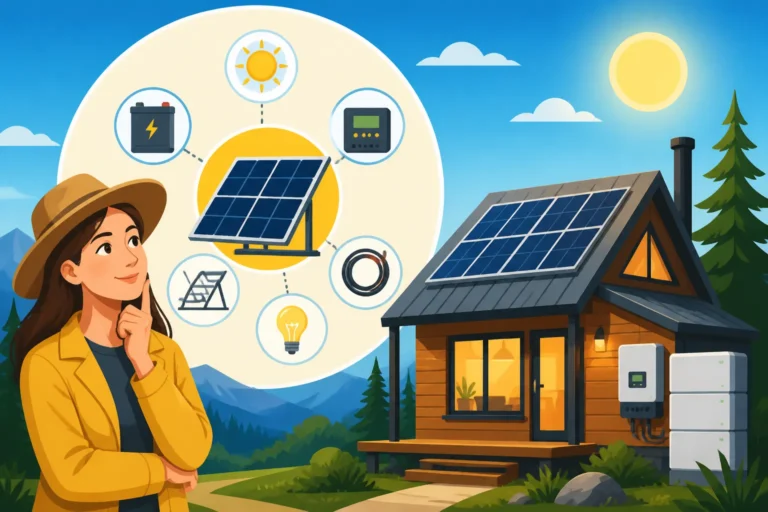
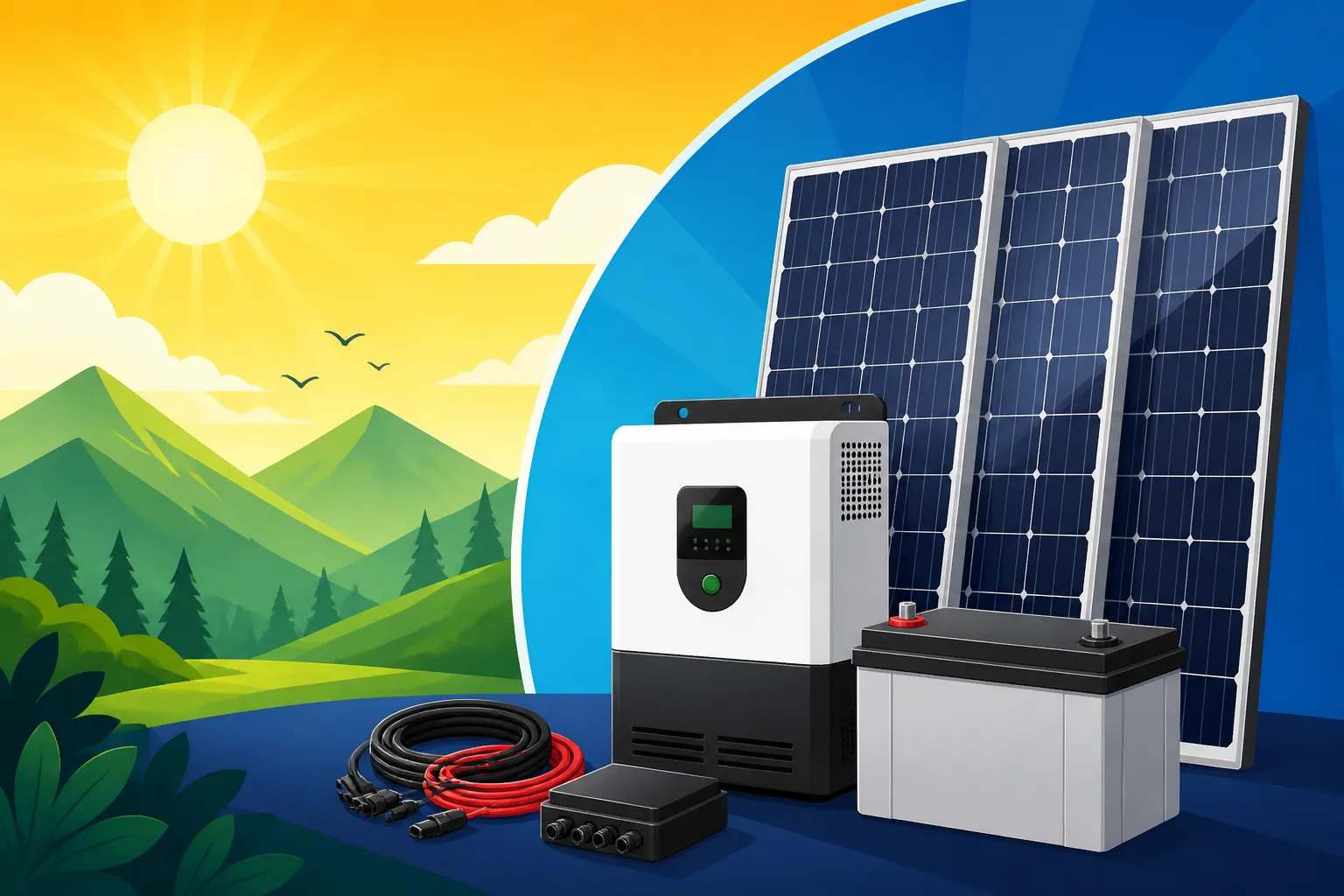
Building a reliable 3000W off-grid solar system involves more than just a few solar panels. It’s a symphony of components working together, each playing a critical role in generating, storing, and delivering power to your home or vehicle. Understanding these parts will help you differentiate between various kits and ensure you're getting a robust solution that truly meets your long-term energy needs.
High-Performance Solar Panels
The heart of any solar system is, of course, the solar panels. For a 3000W inverter kit, you'll need an array of panels sized appropriately to recharge your battery bank. Most high-quality kits will include monocrystalline solar panels, known for their efficiency and compact size, making them excellent for maximizing power generation even in limited spaces. Panels typically come in wattages ranging from 100W to over 400W each. To adequately charge a battery bank for a 3000W inverter system, you might be looking at anywhere from 4 to 8 (or more) panels, depending on their individual wattage and your daily energy consumption. For example, a system with 6 x 300W panels would give you an 1800W array, which is a common and effective size for many 3000W inverter setups, especially when coupled with sufficient battery storage.
Durability is another key factor. You want panels that can withstand harsh weather conditions, from heavy snow to intense sun. Look for panels with sturdy aluminum frames and tempered glass. While rigid panels are most common for permanent installations, some kits designed for RVs or vans might include flexible solar panels, which can be lighter and easier to mount on curved surfaces, though they typically have a slightly lower efficiency and lifespan compared to their rigid counterparts. For more on how many panels you might need, check out our guide on How Many Solar Panels for Off-Grid Living.
Robust Battery Bank
The battery bank is arguably the most critical component of an off-grid system, as it stores the energy generated by your panels for use when the sun isn't shining. For a 3000W off-grid setup, you'll want a substantial battery bank to provide several days of autonomy, especially during cloudy weather or heavy usage.
When it comes to battery chemistry, you'll primarily encounter two types in off-grid kits: deep-cycle lead-acid (including flooded, AGM, and Gel) and Lithium Iron Phosphate (LiFePO4). LiFePO4 batteries are generally the superior choice for off-grid applications despite a higher initial LiFePO4 vs Lead-Acid Battery Cost. They offer significantly longer cycle life, deeper discharge capabilities (you can use more of their stated capacity without damaging them), faster charging, and are much lighter. For a 3000W inverter system, you'd typically want a battery bank with at least 200-400 amp-hours (Ah) at a 48V system voltage, or even more for larger daily loads and longer backup. This translates to roughly 10-20 kilowatt-hours (kWh) of usable energy. A 48V system is often preferred for larger setups like a 3000W kit, as it allows for smaller wire gauges and reduces power loss compared to 12V or 24V systems. Knowing How Many Batteries for an Off-Grid System is vital for reliable power.
The Inverter and Charge Controller
These two components are the brains and brawn of your electrical system. The inverter converts the direct current (DC) power stored in your batteries into usable alternating current (AC) for your household appliances. For almost all modern off-grid applications, you absolutely need a pure sine wave inverter. This type of inverter produces clean, stable electricity that mimics grid power, essential for protecting sensitive electronics like computers, medical devices, and even many motor-driven appliances. Modified sine wave inverters are cheaper but can damage or poorly run many modern devices, so steer clear. The 3000W continuous rating we've been discussing is key here, along with a high surge rating for those starting loads. Many advanced inverters are also "inverter-chargers," meaning they can manage charging your batteries from a generator or shore power if you have one. For specific models, you might look into robust units like those from Victron Energy or Sol-Ark, which are popular choices among serious off-gridders.
The charge controller acts as a gatekeeper between your solar panels and your battery bank. Its job is to regulate the voltage and current coming from the panels to prevent overcharging and damage to your batteries. For a 3000W kit, you'll almost certainly want an MPPT (Maximum Power Point Tracking) charge controller. MPPT controllers are significantly more efficient than their older PWM (Pulse Width Modulation) counterparts, especially in varying light conditions and when your panel array voltage is higher than your battery bank voltage. They can extract up to 30% more power from your solar panels, which translates directly to faster charging and more usable energy, particularly critical for larger systems. Choosing the Best MPPT Charge Controllers will ensure your batteries get the most out of your solar array.
Balance of System Components
A complete, high-quality 3000W off-grid solar kit won't just dump the major components on your doorstep. It will also include the "Balance of System" (BOS) components, which are crucial for safe and efficient operation. This includes all the necessary wiring and cables, properly sized for the current they'll carry to prevent voltage drop and overheating. You'll also need fuses and circuit breakers to protect your components from overcurrents and short circuits, along with disconnect switches on both the DC (solar array and battery) and AC (inverter output) sides for safety during maintenance or emergencies. Quality kits often provide mounting hardware for the solar panels, whether for roof mounts or ground mounts. Don't overlook these smaller, but vital, parts; they ensure your system is safe, code-compliant, and performs optimally.
Key Factors to Consider When Choosing Your 3000W Kit
Selecting the right 3000W off-grid solar kit isn't a one-size-fits-all scenario. Your personal situation, location, and aspirations for off-grid living will heavily influence what kit makes the most sense for you. Taking the time to evaluate these factors before making a purchase can save you headaches and expenses down the road.
Your Specific Energy Needs and Usage Patterns
This is the absolute first step. Before you even look at specific kits, you need to understand how much power you actually use and when. Creating a detailed load analysis is non-negotiable. List every appliance you plan to run, its wattage, and how many hours per day you'll use it. Don't forget those smaller things that add up, like phone chargers or an electric toothbrush. This will give you your total daily watt-hour (Wh) or kilowatt-hour (kWh) consumption. For a deep dive, check out How to Calculate Daily Energy Usage.
Beyond the daily total, consider your usage patterns. Do you run high-draw appliances mostly in the morning, evening, or sporadically throughout the day? Do you have seasonal variations – perhaps an air conditioner in the summer or electric heaters in the winter? These patterns affect how quickly your batteries drain and how efficiently your panels can recharge them. A 3000W kit is designed for a significant load, but if your daily consumption is consistently pushing that limit, or if you have prolonged periods of low sunlight, you might need a larger battery bank or even more solar panels than a standard kit provides. You'll want to ensure your system can provide adequate power for off-grid solar for year-round living if that's your goal, or if you're only planning off-grid solar for seasonal use.
System Expandability and Scalability
Life changes, and so might your energy needs. What if you decide to add another appliance, expand your cabin, or even purchase an electric vehicle down the line? A good off-grid solar kit should ideally offer some level of expandability. Look for systems that use modular components, allowing you to easily add more solar panels, increase your battery bank capacity, or even upgrade your inverter down the road.
Many quality off-grid brands design their equipment with scalability in mind. For instance, some inverter models can be stacked in parallel to increase their output wattage, or their battery management systems can integrate additional battery modules seamlessly. Investing in an expandable system from the outset, even if you start small, can save you from having to completely replace your system in the future, which can be a significant hidden cost. Consider the system voltage too; starting with a 48V system, even for a 3000W inverter, makes it easier to scale up to much larger power needs compared to a 12V or 24V setup.
Brand Reputation and Support
The world of off-grid solar has exploded, and with it, the number of brands offering kits. While it might be tempting to go for the cheapest option, the long-term reliability and support you receive can make a huge difference. Reputable brands often use higher-quality components, have better manufacturing standards, and offer comprehensive warranties and customer service.
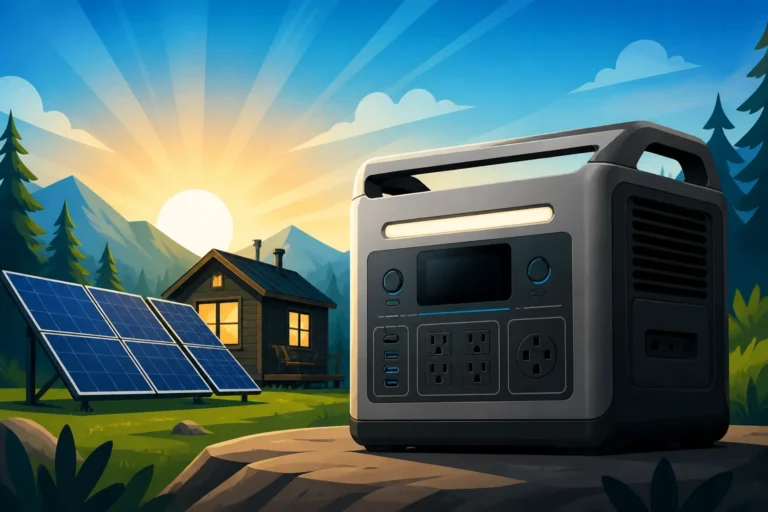
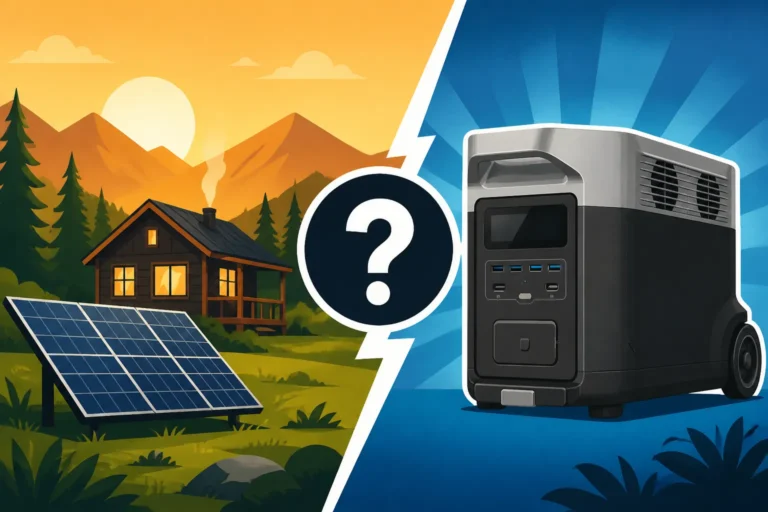
Look for companies with a proven track-record in the off-grid space. Brands like Renogy, EcoFlow with their Power Kits, and even dedicated component manufacturers like Victron Energy (though they don't sell full "kits" in the same way) are well-regarded for their robust equipment. You might also encounter brands like Jackery, which is renowned for its portable power stations and solar generators. While a large Jackery power station like the Jackery 2000 Plus might provide 2200W of continuous output and a substantial battery, a dedicated "3000W off-grid solar kit" typically refers to a more permanently installed system with separate components for panels, batteries, inverter, and charge controller. However, for smaller, more temporary setups or as an augmentation to a larger system, a robust portable power station could certainly play a role. Always research user reviews, warranty details, and the availability of technical support. Knowing that you can get help if something goes wrong is invaluable when you're relying on your system for daily power.
Cost Versus Value
Naturally, cost is a major consideration for anyone looking at off-grid solar. A 3000W off-grid solar kit can range significantly in price, typically from $5,000 to $15,000 or more, depending on the components' quality, battery chemistry, and system features. While it's easy to focus on the upfront price tag, it's crucial to think about long-term value.
A cheaper kit might use less efficient panels, lower-quality lead-acid batteries with a shorter lifespan, or an inverter with fewer features. While the initial savings seem appealing, you might end up spending more on replacements and maintenance over time. For example, Off-Grid Solar Battery Replacement Cost Over Time can be substantial if you opt for cheaper, shorter-lived batteries. Investing in higher-quality components, like LiFePO4 batteries and an MPPT charge controller, typically offers a lower Off-Grid Solar Payback Period Explained and better overall value due to their durability, efficiency, and longer lifespan. Don't forget to factor in potential Off-Grid Solar Maintenance Costs as well. For a broader overview of expenditures, our guide on How Much Does an Off-Grid Solar System Cost provides a complete breakdown.
Choosing the Best 3000W Off-Grid Solar Kit
So, how do you pick the best 3000W off-grid solar kit for you? It comes down to a careful evaluation of your lifestyle, budget, and willingness to tackle DIY aspects. There isn't a single "best" kit, but rather the best fit for your unique situation.
Assessing Your Specific Needs
First and foremost, revisit your energy audit. Are you powering a tiny home with modern, energy-efficient appliances, or an older cabin with a few power hogs? Your average daily consumption, peak loads, and desired days of autonomy will directly dictate the size of your battery bank and the necessary wattage of your solar array. For instance, if you anticipate running an air conditioner for short bursts, your inverter’s surge capacity becomes paramount, and you'll need a robust battery bank to handle the sustained draw. On the other hand, if your needs are mostly limited to lights, charging devices, and a small fridge, you might be able to get by with a smaller, more budget-friendly battery and solar panel array that still integrates with a 3000W inverter. Understanding exactly How to Size an Off-Grid Solar System is the bedrock of this process.
Consider your geographical location too. Do you live in an area with abundant sunshine year-round, or do you face long, cloudy winters? This will impact the number of solar panels you need to ensure consistent recharging. Someone in sunny Arizona will need fewer panels than someone in the Pacific Northwest to achieve the same daily energy harvest. These environmental factors significantly influence the overall Cost of an Off-Grid Solar System.
Evaluating Kit Inclusions and Brands
When comparing kits, dive deep into the specifications of each component. Don't just look at "3000W inverter," but ask: Is it pure sine wave? What's its surge rating? Does it have a good efficiency rating? For batteries, are they LiFePO4 or lead-acid? What is their usable capacity and cycle life? How many Ah (amp-hours) are they, and at what voltage (12V, 24V, or 48V)? For charge controllers, is it MPPT or PWM? What's its maximum input voltage and current?
Look for brands that offer comprehensive kits where components are well-matched and designed to work together seamlessly. Renogy, for example, offers various kits tailored for different applications, from RVs to cabins, and their components are generally compatible. EcoFlow also provides impressive "Power Kits" that simplify installation with integrated components and user-friendly interfaces, often including their robust LiFePO4 batteries and efficient MPPT charging. While a Jackery portable power station like the Jackery Explorer 3000 Pro can provide 3000W (with a 6000W surge) and has a substantial battery, it’s typically a single, portable unit rather than a modular, build-your-own-style kit with separate panels and components for a permanent dwelling. However, for those needing high-wattage portable power or a very simplified, plug-and-play setup for a small cabin, these integrated units offer compelling benefits. Always look for kits that include quality wiring, fuses, breakers, and clear instructions for How to Install an Off-Grid Solar System.
DIY Versus Turnkey Solutions
Decide how much hands-on involvement you want. Many 3000W off-grid solar kits are designed for DIY installation, offering significant cost savings. If you're comfortable with electrical work and have the right tools, assembling a kit can be a rewarding project and a great way to save money. However, even with a DIY kit, it's often wise to consult with an electrician for the final connections or a professional for permitting inspections to ensure safety and compliance. We have an entire article on the DIY vs Professional Off-Grid Solar Cost that can help you weigh the pros and cons.
Alternatively, some companies offer more turnkey solutions, where a kit can be installed by certified professionals. This often costs more upfront but provides peace of mind regarding correct installation and adherence to electrical codes. For larger, more complex systems or if you're not confident in your electrical skills, a professional installation might be the safer and more reliable route. Remember, even off-grid systems may have specific local permitting and inspection requirements.
| Component Group | Key Considerations for a 3000W Kit | Typical Recommendations for Quality |
|---|---|---|
| Solar Panels | Total wattage (1000W-2000W+ for battery recharge), efficiency, durability, mounting type. | Monocrystalline, 300W-400W panels, durable frames, good warranty. |
| Battery Bank | Usable capacity (10-20+ kWh), cycle life, depth of discharge, system voltage (48V ideal for 3000W). | LiFePO4 batteries (e.g., Battle Born, EG4), high Ah rating, integrated BMS. |
| Inverter | Continuous output (3000W), surge capacity (6000W+), pure sine wave, efficiency, possibility for generator integration. | Pure sine wave, reputable brand (e.g., Victron, Sol-Ark, Growatt), high efficiency, good cooling. |
| Charge Controller | MPPT technology, appropriate sizing for panel array VOC and current, temperature compensation, programming options. | MPPT controller (e.g., Victron, Renogy), slightly oversized for array, robust programming features. |
| BOS Components | Proper cable gauges, high-quality fuses/breakers, DC/AC disconnects, sturdy mounting hardware, battery monitoring. | UL-listed components, marine-grade cables (if applicable), clear labeling, included battery monitor. |
| Expandability | Modular design for adding panels/batteries, scalable inverter, standard connectors. | Systems where components can be easily added or upgraded over time without full replacement. |
Installation and Maintenance Considerations
Once you've chosen your 3000W off-grid solar kit, the journey isn't over. Proper installation and ongoing maintenance are crucial for ensuring your system performs reliably for years to come. Skipping steps here can lead to costly repairs, reduced efficiency, or even dangerous situations.
DIY vs Professional Installation
Many smaller off-grid solar kits are marketed as DIY-friendly, and for a reasonably handy individual, assembling the components can be a fulfilling project. If you're tackling the installation yourself, make sure you have a solid understanding of basic electrical principles, safety protocols, and the specific instructions provided with your kit. There are excellent online resources, forums, and YouTube channels dedicated to guiding DIYers through the process of How to Wire an Off-Grid Solar System and connecting all the various components correctly. Tools you might need include wire crimpers, multimeters, wrenches, and safety gear. However, even if you do most of the work yourself, it's often a smart idea to have a licensed electrician review your wiring and make the final critical connections to your main electrical panel or subpanel, especially if you're connecting it to a structure like a cabin or tiny home. This ensures everything is up to code and, most importantly, safe.
For larger or more complex 3000W systems, or if you're simply not comfortable with electrical work, hiring a professional installer is often the best choice. While this adds to the overall Off-Grid Solar Installation Cost, it provides peace of mind that the system is correctly sized, safely installed, and optimized for performance. Professionals are also well-versed in local codes and permitting requirements, which can save you a lot of hassle.
Permitting and Local Codes
This is an area often overlooked by aspiring off-gridders, but it's incredibly important. Even if you're entirely off the utility grid, many counties and municipalities still have regulations regarding electrical systems, structural integrity of panel mounts, and fire safety. You might need to obtain permits for installing your solar panels, electrical wiring, and battery storage, especially if they are attached to a permanent structure. Failing to secure the necessary permits can lead to fines, forced system removal, or difficulties when you try to sell your property later.
Before you even start buying components, it's highly recommended to check with your local planning or building department. They can provide detailed information on specific permit requirements for off-grid solar systems in your area. This includes things like setback requirements for panels, grounding standards, and suitable enclosures for batteries and inverters. Some areas may require a professional electrician or installer to sign off on the work, even for DIY projects. Being proactive about Off-Grid Solar Permits and Codes will prevent future headaches.
Ongoing Maintenance
An off-grid solar system isn't a "set it and forget it" solution, although modern systems require far less intervention than older ones. Regular, albeit minimal, maintenance will extend the life and efficiency of your 3000W system. This typically involves:
- Cleaning Solar Panels: Dust, pollen, bird droppings, and snow can significantly reduce panel efficiency. A simple rinse with water and a soft brush a few times a year is usually sufficient.
- Checking Battery Connections: Ensure all battery terminals are clean and tight. For lead-acid batteries, you'll need to regularly check electrolyte levels and top up with distilled water. LiFePO4 batteries are virtually maintenance-free in this regard.
- Inspecting Wiring and Components: Periodically check all wiring for signs of wear, fraying, or rodent damage. Ensure fuses and breakers are in good condition and all connections remain secure.
- Monitoring System Performance: Many modern inverters and charge controllers come with monitoring apps or displays that allow you to track energy production, consumption, and battery state of charge. Regularly checking these metrics can help you identify issues early.
By staying on top of these maintenance tasks, you'll ensure your 3000W off-grid solar kit continues to provide reliable, clean power for your independent lifestyle.
Disclaimer
The information provided in this article is for general informational purposes only and does not constitute professional advice. Off-grid solar system design and installation can be complex and involve electrical hazards. Always consult with qualified professionals and adhere to all local codes and regulations before undertaking any solar project.