Best 2000W Off-Grid Solar Kit
It’s a common frustration: you're ready to embrace the freedom of off-grid living, or maybe you just need reliable backup power, and you start looking at solar kits. The market is flooded with options, and figuring out which 2000W off-grid solar kit actually delivers what it promises can feel like navigating a maze blindfolded. This guide is here to cut through the confusion, helping you understand what makes a 2000W kit truly effective and how to pick the perfect one for your unique power needs.
Why a 2000W Off-Grid Solar Kit is a Sweet Spot for Many
Choosing the right power capacity for your off-grid dreams is perhaps the most critical decision you'll make. Many folks find themselves caught between tiny setups that can barely charge a phone and massive, expensive systems designed for full-sized homes. A 2000W off-grid solar kit often hits that sweet spot, offering enough juice for comfortable living without demanding an astronomical budget or a complex installation process. It's truly a versatile size that opens up a world of possibilities for everything from remote cabins to robust RV setups and even essential home backup.
Understanding Power Needs for a 2000W System
When we talk about a "2000W off-grid solar kit," we're generally referring to the continuous output capability of the inverter, which is the heart of your system. This means the system can reliably deliver 2000 watts of alternating current (AC) power at any given moment. To put that into perspective, consider common household appliances. A typical refrigerator might draw 100-200 watts when running, a microwave around 1000-1500 watts, and a well pump could easily hit 1000-2000 watts (or more for starting surge) when it kicks on.
Understanding your daily energy usage, not just instantaneous watts, is crucial. This is usually measured in watt-hours (Wh) or kilowatt-hours (kWh). A 2000W kit isn't just about what you can run right now, but how long you can run it for, and how quickly your solar panels can replenish that energy. For instance, running a 100W light bulb for 10 hours consumes 1000 Wh, or 1 kWh. A 2000W system, with a properly sized battery bank and solar array, aims to meet these kinds of daily demands consistently. You can dive deeper into this by reading our guide on how to calculate your daily energy usage.
Common Use Cases for a 2000W System
The versatility of a 2000W system makes it ideal for a variety of applications. It’s powerful enough to handle significant loads but typically manageable in terms of footprint and cost.
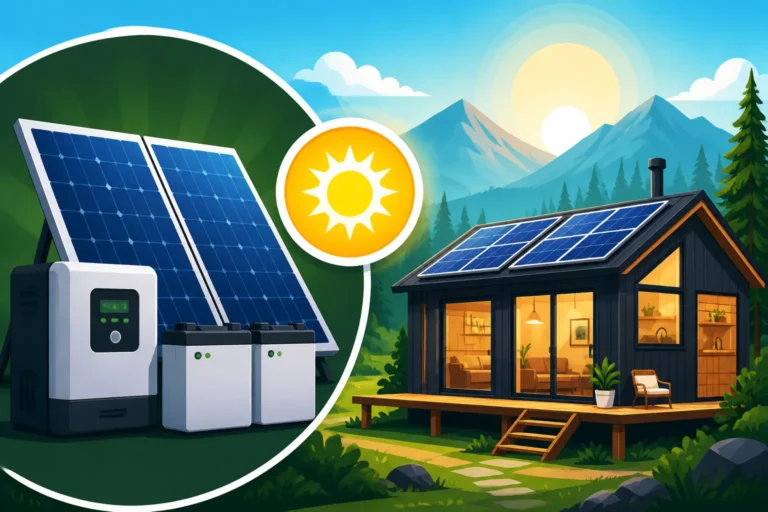
- Small Off-Grid Cabins: Imagine a cozy cabin in the woods. A 2000W system can comfortably power lights, a water pump, a small refrigerator, charge your laptops and phones, and even run a small TV or satellite internet system. It’s perfect for weekend getaways or even full-time living with careful energy management. You might consider a Off-Grid Solar Cost for a Hunting Cabin
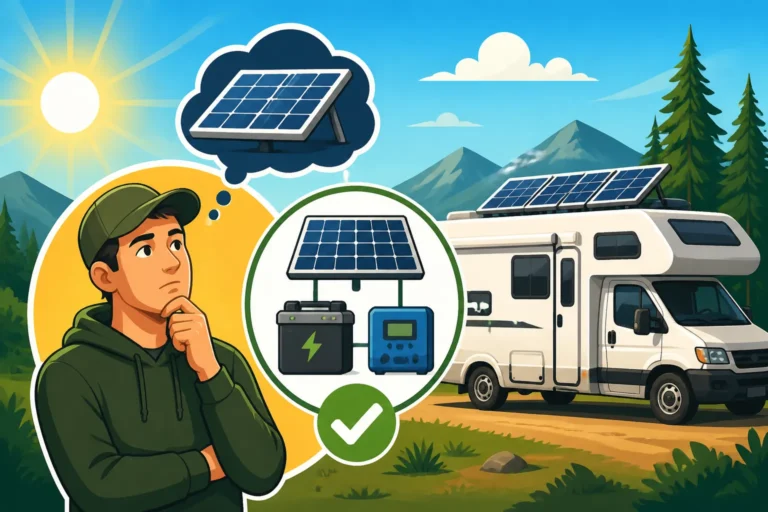
- Robust RV or Van Life Setups: For those living on the road, a 2000W kit is often the standard for serious comfort. It can power a full-sized RV refrigerator, multiple lights, charging stations, and even handle a small air conditioner for short bursts or a microwave for quick meals. This level of power significantly enhances the "glamping" experience, moving beyond basic essentials to real creature comforts. Many van lifers seek similar setups, as detailed in our guide on Off-Grid Solar Cost for Van Life
- Essential Home Backup: While not a whole-home solution for a large property, a 2000W kit can be an invaluable asset during power outages. It can keep your most critical appliances running: the refrigerator, a few lights, medical devices like a CPAP machine, and communication devices. This offers peace of mind when the grid goes down due to storms or other disruptions.
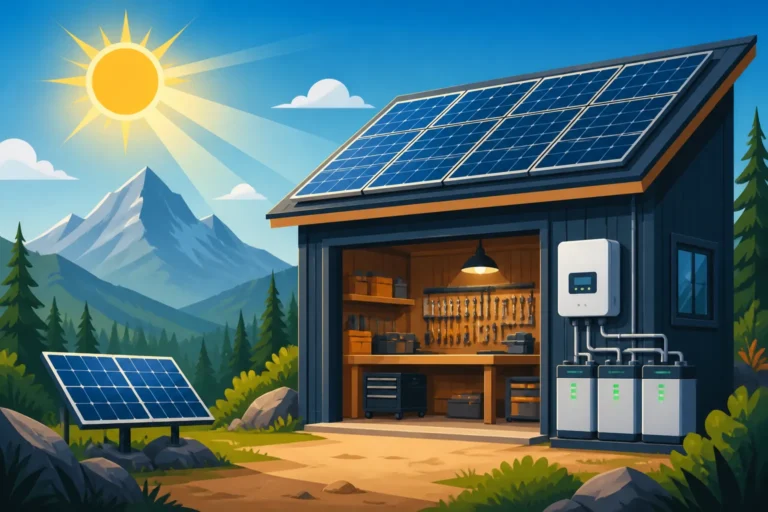
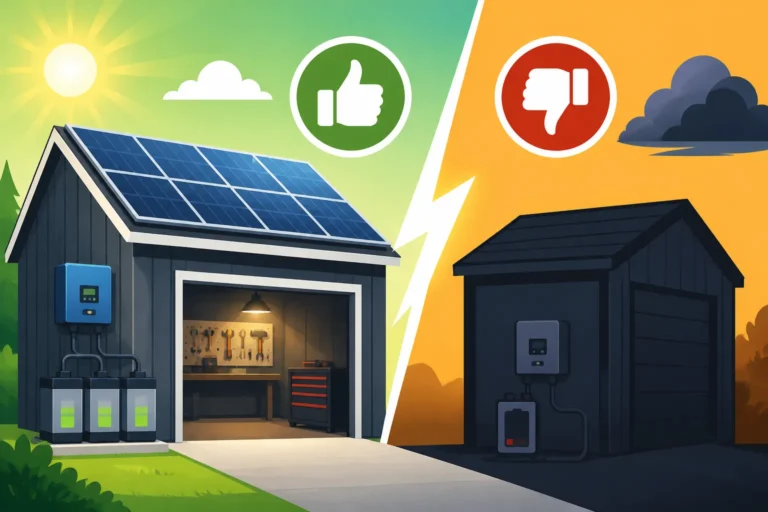
- Workshops or Garages: If you have a remote workshop where you use power tools occasionally, a 2000W inverter can handle many saws, drills, and chargers. Just be mindful of the tools' starting surge requirements, which can often be much higher than their running wattage. Understanding What a 2000W Off-Grid System Can Power and Cost
Key Components of a Comprehensive 2000W Off-Grid Solar Kit
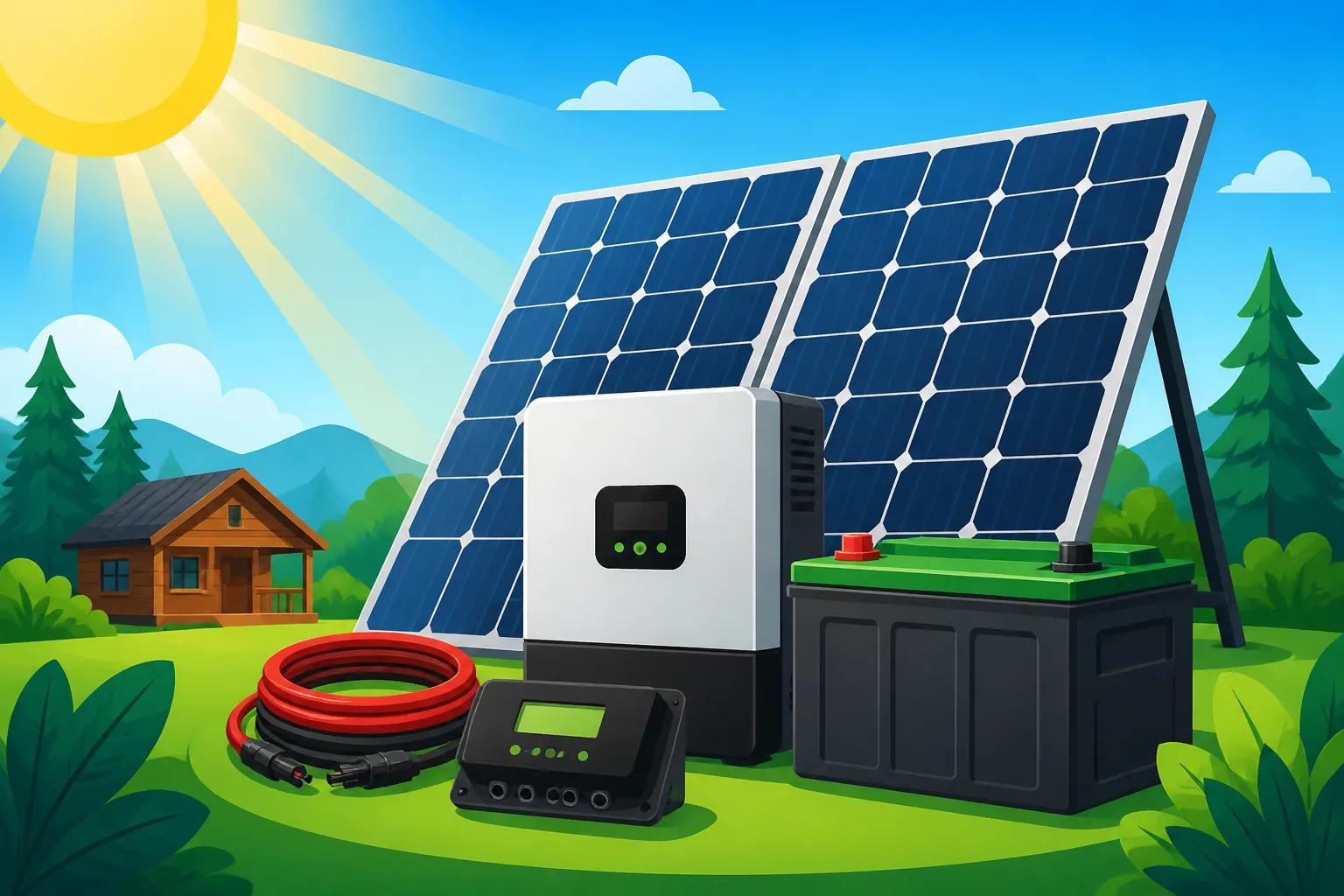
A 2000W off-grid solar kit isn't just one item; it's a carefully balanced ecosystem of components working together to harvest, store, and deliver power. Understanding each part is essential to choosing a kit that truly meets your needs.
Solar Panels for Reliable Energy Generation
The solar panels are your energy collectors, turning sunlight into usable electricity. For a system capable of continuously outputting 2000W through its inverter, you'll need a substantial solar array to keep your batteries charged, especially if you're drawing that power regularly.
Most 2000W inverter systems are paired with a solar array that generates anywhere from 800 watts to 2000 watts (or even more) of panel power. The exact wattage depends heavily on your daily energy consumption and the amount of peak sun hours you receive. For example, if you're in a sunny region like Arizona, 800W of panels might keep a small 2000W system topped off for moderate usage. If you're in a cloudy area like the Pacific Northwest, or plan to use significant power, you might need 1500W to 2000W+ of panels to ensure adequate charging, particularly in winter. The type of panel matters too; monocrystalline panels are generally more efficient and perform better in lower light conditions compared to polycrystalline. You can learn more about choosing the right panels in our guide to Best Off-Grid Solar Panels
Batteries and Storage Capacity for Sustained Power
The battery bank is arguably the most critical component of any off-grid system, especially for a 2000W setup. It's where the energy from your solar panels is stored for use when the sun isn't shining. A 2000W inverter needs a battery bank that can not only supply 2000 watts for a desired duration but also handle the continuous discharge without damaging the batteries.
For a 2000W output, a 12V system would draw roughly 167 amps (2000W / 12V), which is a very high current and requires thick, expensive cabling. This is why many 2000W systems, especially for more sustained usage, typically operate at 24V or even 48V. A 48V system drawing 2000W only pulls about 42 amps (2000W / 48V), making wiring much simpler and more efficient. As for capacity, for a system with a 2000W inverter, you'd ideally want a battery bank providing at least 200-400 amp-hours (Ah) at 24V or 100-200Ah at 48V if using LiFePO4 batteries (which allow for deeper discharge). This would give you a usable capacity of roughly 5-10 kWh, enough to run many appliances for several hours or critical ones overnight. Lithium iron phosphate (LiFePO4) batteries are highly recommended for their longevity, depth of discharge, and lighter weight, though they do come with a higher upfront cost compared to lead-acid options. Our detailed comparison of LiFePO4 vs Lead-Acid Battery Cost
Inverters and Charge Controllers: The Brains of the Operation
These two components act as the brains and muscle of your off-grid solar kit, making sure power flows correctly and safely.
- Inverter: As mentioned, the "2000W" in "2000W kit" primarily refers to the inverter's continuous output capacity. A pure sine wave inverter is paramount for sensitive electronics, ensuring the power delivered is as clean and stable as what you'd get from the utility grid. Many modern kits, especially all-in-one solar generators, come with built-in pure sine wave inverters. For larger component systems, brands like Victron, Sol-Ark, and Renogy offer reliable 2000W+ pure sine wave inverters that are highly regarded in the off-grid community. These inverters often have a "surge" rating, allowing them to temporarily provide more than 2000W to start motors or other demanding appliances. This feature is crucial for items like well pumps or refrigerators that have a high initial power draw. Learn more in our guide to Best Off-Grid Solar Inverters
- Charge Controller: This device sits between your solar panels and your battery bank. Its job is to regulate the voltage and current coming from the panels, ensuring your batteries are charged efficiently and safely, preventing overcharging. For any substantial off-grid system like a 2000W kit, an MPPT (Maximum Power Point Tracking) charge controller is almost always the superior choice. MPPT controllers are significantly more efficient than their PWM (Pulse Width Modulation) counterparts, especially in varying light conditions or when the panel voltage is much higher than the battery voltage. They can extract up to 30% more power from your panels, which is a big deal when you're relying entirely on solar. Understanding the difference between MPPT vs PWM Charge Controllers is key to maximizing your system's performance.
| Component | Primary Function | Typical 2000W Kit Considerations |
|---|---|---|
| Solar Panels | Convert sunlight into electricity | 800W – 2000W+ array, Monocrystalline preferred, consider tilt and orientation. |
| Battery Bank | Store energy for later use | 200-400Ah (24V LiFePO4) or 100-200Ah (48V LiFePO4), ensure deep-cycle capability. |
| Inverter | Convert DC battery power to AC appliance power | 2000W continuous pure sine wave output, look for high surge capacity. |
| Charge Controller | Regulate power from panels to batteries | MPPT controller essential for efficiency, matches panel voltage to battery voltage. |
| Cabling/Fusing | Safe electrical connections and circuit protection | Properly sized wiring for voltage and amperage, appropriate circuit breakers and fuses for safety. |
Factors to Consider When Choosing a 2000W Kit
Beyond the individual components, several overarching factors will influence which 2000W off-grid solar kit is the best fit for you. Thinking through these aspects before you buy can save you a lot of headaches and expense down the line.
System Expandability and Future Needs
One of the biggest regrets off-gridders have is not planning for expansion. Your power needs might grow over time, or you might realize you want to add more comfort items. A truly "best" 2000W kit should offer some degree of expandability.
Can you easily add more solar panels to the charge controller? Does the inverter have room to grow, or can it be paralleled with another unit? Is the battery bank designed to accept additional modules down the road, or are you stuck with the initial capacity? Some all-in-one solutions, like the Jackery Explorer series, offer modular battery packs that allow you to increase storage capacity with relative ease. For traditional component systems, ensure your charge controller can handle higher array wattage and that your inverter has a larger capacity than your initial loads. Planning for future expansion from the outset, even if it means slightly oversizing a component or two, is far more cost-effective than having to replace entire system parts later. Check out our advice on How to Design an Expandable System for more ideas.
Ease of Installation and DIY Friendliness
The complexity of installation varies wildly between different 2000W off-grid solar kits. For many, the appeal of going off-grid is the DIY spirit, but not everyone is an experienced electrician.
- All-in-One Solar Generators: These are by far the easiest to install, often requiring little more than plugging in the solar panels. Products like the
JackerySolar Generator 2000 Plus are essentially plug-and-play, making them ideal for beginners, RVs, vans, or temporary setups. They integrate the inverter, charge controller, and battery into one portable unit. - Pre-wired Kits: Some kits come with major components (inverter, charge controller, battery monitoring) pre-wired onto a backplate or inside an enclosure. This significantly reduces the complexity of wiring and ensures correct connections, often making them more DIY-friendly than buying individual components.
- Component Kits: If you buy individual panels, batteries, inverters, and charge controllers, you'll have the most flexibility and often the best value, but the installation will be more involved. You'll need to understand wiring diagrams, proper cable sizing, fusing, and grounding. While empowering, this route often requires a steeper learning curve or the assistance of a qualified electrician. Consider whether the DIY vs Professional Off-Grid Solar Cost savings are worth the extra effort and potential complexity.
Climate, Shading, and Sun Hours
Where you live and the specific conditions of your installation site will profoundly impact how a 2000W solar kit performs.
- Peak Sun Hours: This is the equivalent number of hours per day when solar irradiance averages 1000 watts per square meter. A region with 5 peak sun hours means that, on average, your panels will produce their rated power for 5 hours a day. The more peak sun hours you have, the smaller your solar array can be to achieve your daily energy goals. Conversely, areas with fewer peak sun hours (like northern latitudes in winter, or consistently cloudy regions) will require a larger solar array to generate the same amount of power. Learning about Peak Sun Hours Explained can help you properly size your array.
- Shading: Even partial shading on one panel can drastically reduce the output of an entire string of panels. Trees, buildings, or even dust and bird droppings can create significant shading issues. When planning your installation, aim for an area that receives direct sunlight for the longest possible duration throughout the day, year-round. If shading is unavoidable, consider panels with bypass diodes or using micro-inverters/power optimizers for each panel to mitigate the impact.
- Temperature: Solar panels operate most efficiently at cooler temperatures. In extremely hot climates, panel output can actually decrease. On the other hand, extremely cold weather can impact battery performance if not properly managed, especially with lead-acid batteries. LiFePO4 batteries generally perform better in cold, but their charging efficiency might still be affected, or they may require heating elements. Designing for these environmental factors, particularly How to Account for Cloudy Days or extreme temperatures, is essential for year-round reliability.
Top Picks and Considerations for 2000W Kits
When looking for the "best" 2000W off-grid solar kit, it's less about a single perfect product and more about finding the right solution for your specific needs, balancing convenience, cost, and expandability.
All-in-One Solar Generators vs. Component Systems
This is a fundamental choice for anyone considering a 2000W system. Each approach has distinct advantages and disadvantages.
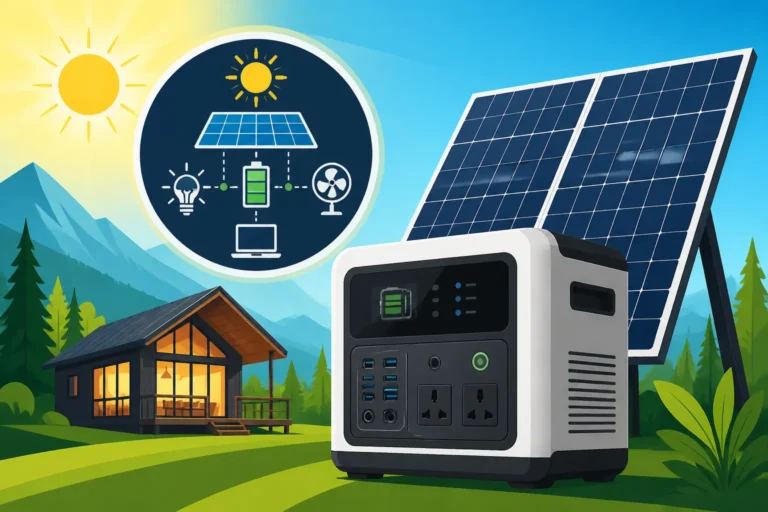
- All-in-One Solar Generators: These units, often referred to as portable power stations, combine the battery, inverter, and charge controller into a single, compact, and often portable device. Brands like
Jackery(with models like the Explorer 2000 Plus or Pro), EcoFlow, and Bluetti offer popular options that provide 2000W (or more) continuous output.- Pros: Extremely easy to set up (plug and play), portable, often feature multiple output ports (AC outlets, USB, 12V), and usually come with a sleek design. Many are expandable with additional battery packs. Ideal for RVs, camping, emergency backup, or small, temporary setups.
- Cons: Higher cost per watt-hour compared to building a component system, less customizable, and internal components might not be easily replaceable or repairable. The maximum solar input is often limited, meaning you can't always connect a huge array of panels for super-fast charging.
- Best For: Beginners, those prioritizing portability, RV/van life, and reliable emergency backup. If you need something that just works right out of the box, an all-in-one like a
Jackeryunit can be a fantastic choice.
- Custom Component Systems: This involves purchasing each major component—panels, batteries, inverter, charge controller—separately and assembling them.
- Pros: Highly customizable to your exact power needs, generally offers a better cost-per-watt-hour value for larger systems, components can be upgraded or replaced individually, and often allows for a much larger solar array and battery bank capacity. You have more control over the quality and specific features of each component, like choosing between Best Off-Grid Solar Inverters from different manufacturers.
- Cons: Requires more technical knowledge for design and installation, not portable (typically a fixed installation), and takes up more space. The upfront planning and wiring can be daunting for novices.
- Best For: Permanent off-grid homes, cabins, workshops, or anyone who wants maximum control, expandability, and long-term value. This route allows you to build a system perfectly tailored to your unique requirements.
Evaluating Brands and Support
When investing in a 2000W off-grid solar kit, the brand behind the product matters. You're not just buying hardware; you're investing in reliability, safety, and customer support.
Look for brands with a proven track record in the off-grid solar industry. Reputable companies often offer better warranties, accessible customer service, and readily available spare parts or technical documentation. Forums and online reviews can be invaluable resources for gauging real-world experiences with different manufacturers. For all-in-one units, Jackery, EcoFlow, and Bluetti are popular names, largely known for their integrated design and user-friendliness. For component-based systems, brands like Victron Energy, Outback Power, Renogy, and EG4 are widely respected for their quality inverters, charge controllers, and batteries. Good customer support means that if something goes wrong, or if you simply have a question about how to optimize your system, you can get the help you need without frustration. Our guide to the Best Off-Grid Solar Brands can offer more insights.
Budgeting for a 2000W System
The cost of a 2000W off-grid solar kit can vary widely, typically ranging from $1,500 for a basic, smaller battery all-in-one unit to $5,000-$10,000+ for a robust, expandable component system with high-capacity lithium batteries and premium components.
It’s crucial to consider not just the initial purchase price but also the Lifetime Cost of an Off-Grid Solar System. This includes:
- Installation Costs: While DIY can save money, if you're uncomfortable with electrical work, factor in the cost of hiring a qualified electrician.
- Maintenance Costs: While solar systems are relatively low maintenance, batteries may need periodic checks, and panels might need cleaning.
- Future Upgrades/Replacements: Batteries, especially lead-acid, have a finite lifespan and will eventually need to be replaced. Even LiFePO4 batteries, while lasting much longer, will eventually reach their end of life.
- Accessories: Don't forget mounting hardware, cables, fuses, breakers, and possibly a battery monitoring system. These small costs can add up quickly.
When budgeting, think long-term. A slightly more expensive kit with better components and expandability might offer significant savings and greater reliability over its lifespan compared to a cheaper, less robust option that needs frequent repairs or early replacement. You can get a clearer picture of potential expenses by looking into Off-Grid Solar Kit Price Ranges.
Disclaimer
The information provided in this guide is for general informational purposes only and does not constitute professional advice. Off-grid solar system design and installation can be complex and involve electrical hazards. Always consult with qualified professionals and adhere to local electrical codes and regulations.