Off-Grid Solar for Emergency Preparedness
Few things are more unsettling than the lights going out when you least expect it, leaving you scrambling in the dark, worried about your food spoiling, or worse, unable to communicate with loved ones. Whether it's a winter storm knocking out power for days, a summer blackout, or simply living somewhere off the beaten path where the grid is notoriously unreliable, having a plan for uninterrupted power isn't just a convenience – it's a necessity. This comprehensive guide will walk you through how off-grid solar systems can be your ultimate ally in preparing for any emergency, ensuring you have reliable power when the grid inevitably fails.
Why Off-Grid Solar is Essential for Emergency Preparedness
In an increasingly unpredictable world, relying solely on the centralized power grid for your home's energy needs can feel like putting all your eggs in one basket. From local transformer issues to widespread outages, the grid's vulnerabilities are becoming more apparent. This is where the true value of an off-grid solar setup shines, offering a robust, self-sufficient solution for staying powered through any crisis.
The Fragility of the Traditional Grid
Let's face it, we’ve all experienced it. One minute you're watching a movie, the next, everything goes dark. Sometimes it's a minor inconvenience, fixed in an hour or two. Other times, like after a major hurricane hits the Florida coast or an ice storm blankets the Midwest, those outages can stretch for days, even weeks. The traditional grid, while generally reliable, is a sprawling, complex network vulnerable to a myriad of threats.
Natural disasters are a huge culprit. Hurricanes, tornadoes, blizzards, wildfires – they all wreak havoc on power lines, substations, and other critical infrastructure. Beyond weather, there are other issues like equipment failures, human error, and even cyberattacks that can plunge vast areas into darkness. Think about the massive Northeast blackout of 2003, affecting 50 million people. These events aren't just hypotheticals; they're real, and they happen with increasing frequency. Having a plan that doesn't depend on those fragile lines is no longer just for remote homesteaders; it's smart planning for anyone.
Uninterrupted Power for Critical Needs
When the power goes out, it’s not just about comfort; it's about critical needs. For families with infants, elderly members, or individuals relying on medical equipment like a CPAP machine, a sustained power outage can quickly become a life-threatening situation. An off-grid solar system provides that peace of mind, ensuring your essential appliances keep running.
Imagine keeping your refrigerator and freezer cold, preserving weeks' worth of food that would otherwise spoil. Or having lights to navigate your home safely at night, especially important if you have young children. Beyond that, a robust off-grid system means you can charge phones and laptops, staying connected to emergency services and news updates. It means being able to run a well pump for fresh water, or even a small heater or air conditioner to maintain a safe indoor temperature. These aren't luxuries; they're fundamental to safety and well-being during an emergency. The ability to maintain these basics, even when the world outside is in chaos, is precisely why off-grid solar systems are becoming a cornerstone of modern emergency preparedness plans.
Understanding Key Components for Emergency Off-Grid Systems
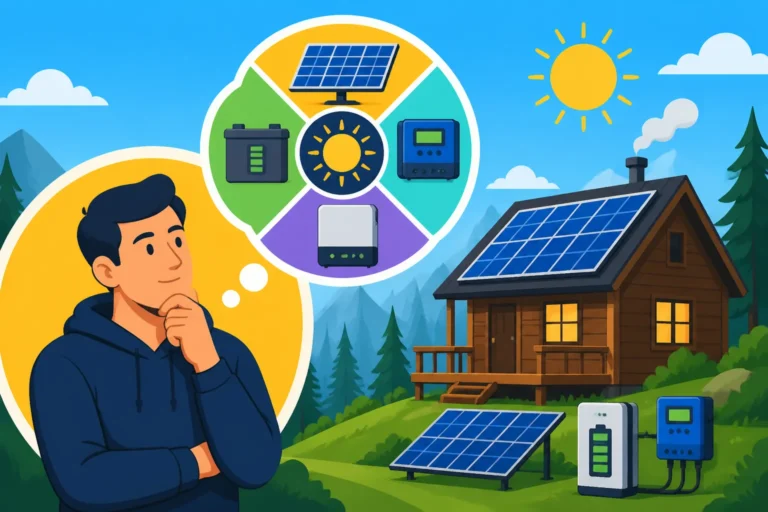
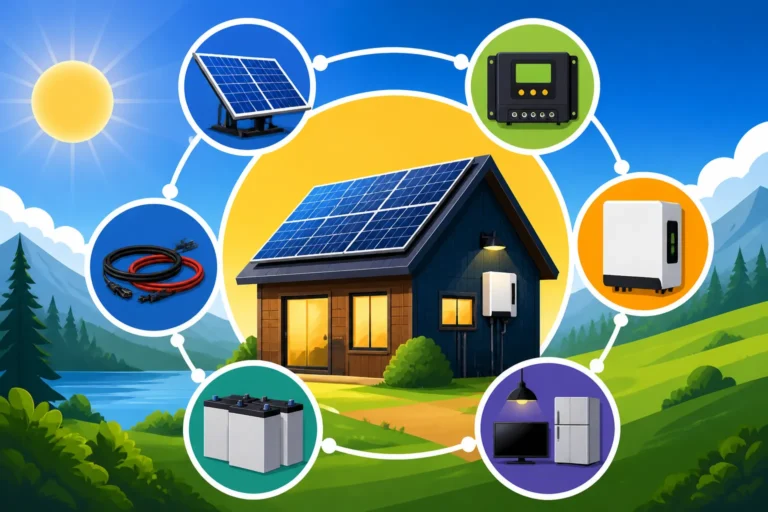
Diving into off-grid solar can seem daunting, but it's really about understanding a few core components that work together to harvest, store, and deliver power. For emergency preparedness, choosing the right components isn't just about efficiency; it's about reliability and resilience. Each part plays a vital role in ensuring your system can handle whatever an outage throws your way.
Solar Panels: Your Lifeline to the Sun
Solar panels are the initial collectors of energy, the eyes that see the sun's power and convert it into electricity. For an emergency system, you'll want panels that are robust and efficient. Monocrystalline panels are a popular choice due to their higher efficiency and durability, performing well even in less-than-ideal light conditions, which is crucial if you're experiencing cloudy days during an emergency.
When planning for emergency use, consider both fixed and portable options. Fixed panels on your roof or a ground mount provide a steady, reliable source, but portable panels can be incredibly useful for supplementing power or setting up a smaller, temporary system. Think about being able to adjust portable panels to catch the best sun angle throughout the day, or even setting them up at a different location if your primary site is shaded or damaged. Factors like panel wattage, physical size, and mounting options will all impact your overall system design.
Batteries: The Heart of Your Emergency Power Reserve
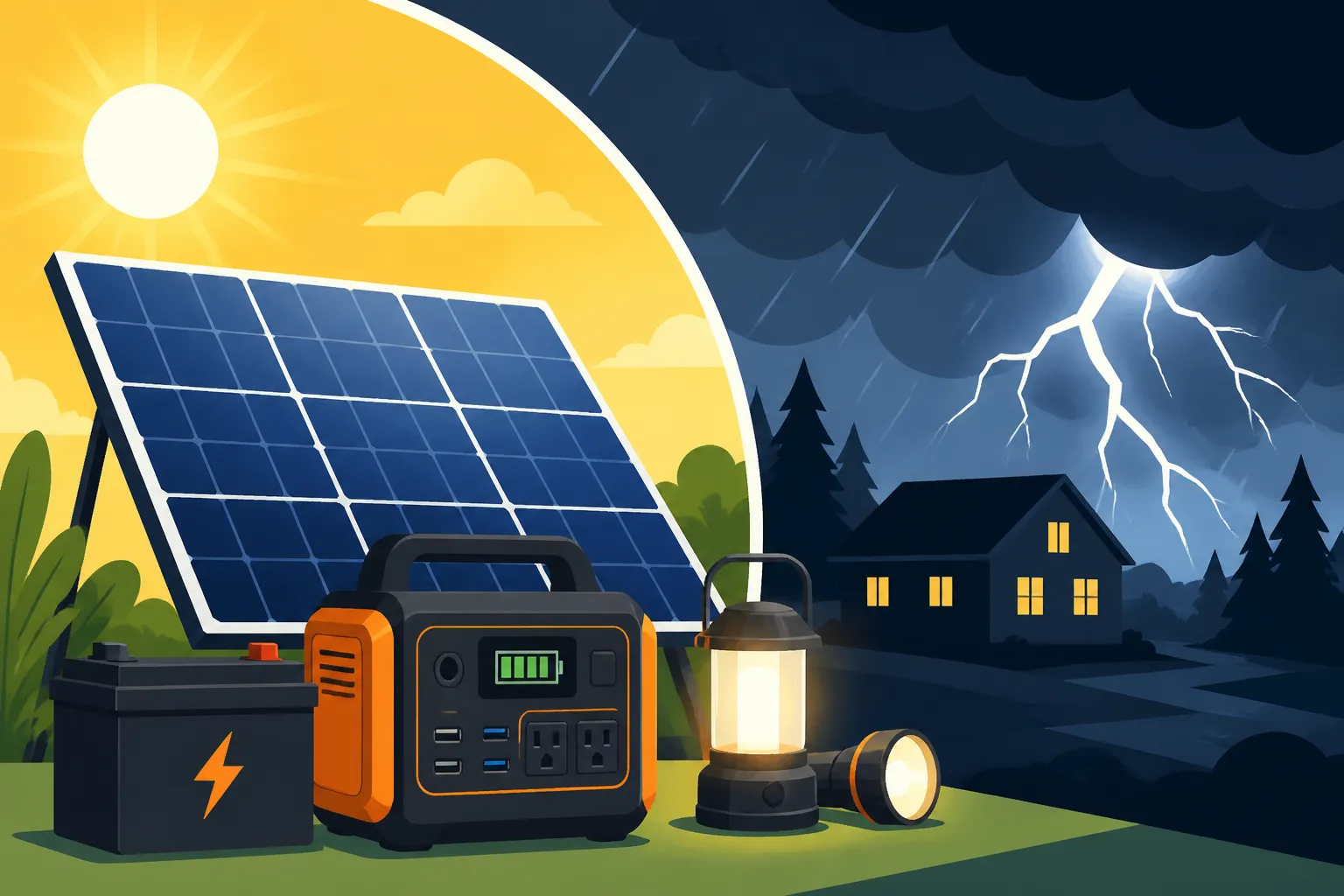
If solar panels are your collectors, batteries are your storage tanks. They hold the energy gathered by the panels, making it available when the sun isn't shining – like at night, or during those dreaded long stretches of cloudy weather. For emergency power, your battery bank is arguably the most critical component. Without it, you only have power when the sun is directly hitting your panels, which isn't practical for continuous use.
Modern off-grid systems increasingly rely on lithium iron phosphate (LiFePO4) batteries due to their longer lifespan, deeper discharge capabilities, and lighter weight compared to traditional lead-acid batteries. While the initial investment might be higher, their longevity and performance often make them more cost-effective in the long run. When considering your emergency setup, you'll want to think about your required "days of autonomy" – how many days your battery bank can power your essential loads without any input from the solar panels. This calculation is vital for ensuring you don't run out of power during extended periods of bad weather. Understanding How Batteries Drive Off-Grid Solar Cost will give you a clearer picture of the investment required.
Inverters and Charge Controllers: The Brains of the Operation
These two components act as the system's management team, ensuring that the power flows smoothly and safely from your panels to your batteries, and then to your appliances. A charge controller, specifically an MPPT (Maximum Power Point Tracking) controller, regulates the voltage and current coming from your solar panels, optimizing the charge going into your batteries and preventing overcharging, which can damage them. If you're looking for Best MPPT Charge Controllers, there are many reliable brands like Victron Energy and Renogy that offer excellent performance.
The inverter is what converts the direct current (DC) electricity stored in your batteries into alternating current (AC) electricity, which is what most household appliances use. For emergency preparedness, a pure sine wave inverter is highly recommended because it provides clean, stable power that won't harm sensitive electronics. Modified sine wave inverters are cheaper but can cause issues with certain devices. Choosing a quality inverter, such as those listed among the Best Off-Grid Solar Inverters, is paramount for protecting your electronics and ensuring consistent power during an outage. An inverter also needs to be sized correctly to handle the combined wattage of all appliances you anticipate running simultaneously, including any surge loads from motors like a refrigerator compressor or a well pump.
Sizing Your Emergency Off-Grid System for Reliability
One of the biggest mistakes people make when planning an off-grid solar system for emergency preparedness is underestimating their power needs. During a crisis, you don't want to find yourself rationing power or having to decide which critical appliance to turn off. A properly sized system is a reliable system, giving you peace of mind that you'll have power when it matters most.
Performing a Critical Load Analysis
The very first step, and arguably the most important, is to conduct a thorough critical load analysis. This means identifying every single appliance, light, and device you absolutely need to run during an emergency, and then determining how much power each one consumes and for how long. Don't just guess! Grab your appliance manuals, or use a Kill-A-Watt meter to get real-world measurements.
Start by making a list: refrigerator, freezer, well pump, lights, phone chargers, medical devices, perhaps a small heater or fan. For each item, note its wattage (or amps and voltage, from which you can calculate wattage) and how many hours per day you expect to use it. Remember to account for surge wattage for things like refrigerators or well pumps, which draw significantly more power for a brief moment when they start up. Adding up all these daily watt-hours will give you your total daily energy consumption. For a deep dive into this, check out our guide on How to Calculate Daily Energy Usage. This meticulous accounting is the foundation of a reliable emergency power setup.
Calculating Days of Autonomy and System Oversizing
Once you know your daily energy needs, the next crucial step is to determine your "days of autonomy." This refers to how many consecutive days your battery bank can sustain your critical loads without any additional charge from your solar panels. For emergency preparedness, aiming for at least 3-5 days of autonomy is a common recommendation, especially in areas prone to extended periods of cloudy weather or intense storms.
To achieve this, you'll need to calculate the total capacity of your battery bank (in watt-hours or amp-hours at your system voltage) and ensure it's large enough. Remember that batteries should not be fully discharged regularly; LiFePO4 batteries generally tolerate deeper discharges (80-100%) but lead-acid batteries (AGM, Gel) are best kept above 50% to prolong their life. Beyond battery sizing, consider oversizing your solar array. This means installing more solar panels than strictly necessary for an average sunny day. This extra capacity is a lifesaver during shorter winter days, periods of heavy cloud cover, or when panels are less efficient due to dirt or snow. Learning How to Calculate Days of Autonomy and How to Account for Cloudy Days will be invaluable in designing a truly resilient system.
Considering Expansion for Future Needs
Building an emergency off-grid system isn't a "set it and forget it" task, especially if your needs might grow over time. It's wise to design your initial system with future expansion in mind. Maybe you start with enough power for just critical medical devices and a refrigerator, but later decide you want to add an electric composting toilet or a more robust communication setup.
When selecting components, choose an inverter and charge controller that have some headroom. For example, if your initial calculations suggest a 3000-watt inverter, opting for a 4000-watt or even 5000-watt model allows you to add more appliances later without having to replace this core component. Similarly, picking a charge controller with a higher amperage rating than your current solar array requires means you can add more solar panels down the line without needing a new controller. This modular approach helps spread out the cost and effort of your off-grid journey, making the investment more manageable and sustainable over time.
Portable Solutions and Backup Strategies for Emergencies
While a robust, permanently installed off-grid system offers the ultimate peace of mind, there are also excellent portable solutions and complementary backup strategies that are vital for comprehensive emergency preparedness. These options provide flexibility, redundancy, and the ability to scale your power needs depending on the situation.
The Role of Solar Generators
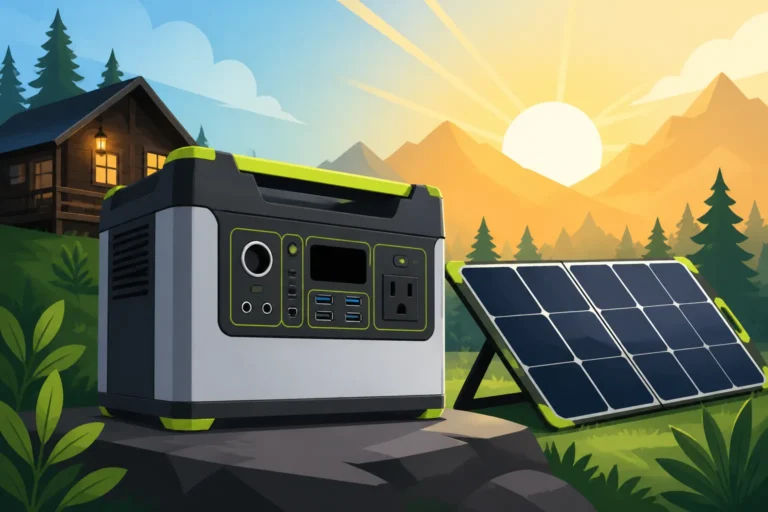
For many, especially those just dipping their toes into emergency power, a portable solar generator is an incredibly accessible and valuable tool. These all-in-one units combine a battery, inverter, and charge controller into a compact, easily transportable package. They're perfect for powering smaller critical loads like charging phones, running a medical device like a CPAP, or keeping a mini-fridge cold. You simply connect a portable solar panel, like a foldable Jackery SolarSaga, to the unit, and you're collecting power.
Solar generators offer unparalleled flexibility. You can use them indoors without fear of fumes (unlike gas generators), move them from room to room, or even take them with you if you need to evacuate. Brands like Jackery, EcoFlow, and Bluetti have robust offerings that can power a surprising array of devices. While they won't typically run an entire house, they are fantastic for supplementing a larger system or serving as a standalone solution for minimal essential needs. If you're wondering which ones are best, check out our guide on Best Solar Generators for Off-Grid use. They're quick to deploy and require minimal setup, making them ideal for sudden outages.
Integrating a Generator for Redundancy
Even the most thoughtfully designed off-grid solar system can face challenges, especially during extended periods of very low sun exposure or unexpectedly high power demands during an emergency. This is where a traditional gas or propane generator can provide invaluable redundancy. Think of it as your ultimate backup plan, kicking in when your solar array simply can't keep up or your batteries are running low.
A fossil fuel generator can quickly recharge your battery bank, allowing you to cycle through cloudy days or handle surge loads that might overwhelm your inverter. Many modern off-grid inverters, especially from brands like Victron or Sol-Ark, have generator input capabilities and can even automatically start and stop a generator based on battery state of charge. This automation ensures your system remains topped up without constant monitoring. While they produce noise and fumes and require fuel storage, their ability to provide significant power on demand makes them a cornerstone of a truly resilient emergency setup. Factor in the Off-Grid Solar Generator Backup Cost when budgeting, as fuel expenses and maintenance are ongoing considerations.
Mobile and Modular Emergency Kits
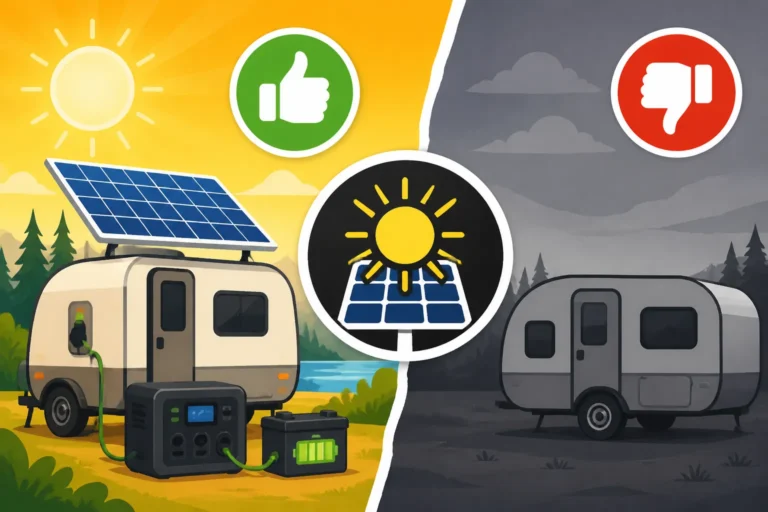
Emergency preparedness isn't just about your home; it's also about mobility. For those who might need to bug out or simply prefer a flexible setup, mobile and modular off-grid kits are excellent. These can range from smaller solar generators mentioned earlier to more comprehensive systems designed for vehicles like RVs, campers, or vans.
Imagine having a portable setup that can be deployed quickly at a cabin, a remote campsite, or even in a temporary shelter. These kits often feature foldable solar panels, easily stackable batteries, and compact inverters, all designed for quick connection and disconnection. They allow you to scale your power based on the situation – a small kit for charging devices, a larger one for running a fridge and lights in a more permanent mobile base. For example, equipping your RV with a dedicated off-grid solar system ensures you have power even if campgrounds are closed or grid connections are down. You can find comprehensive guides like Best Off-Grid Solar Kit for an RV that detail these mobile solutions, emphasizing lightweight, durable components that can withstand travel and varied conditions. This kind of flexibility ensures you're prepared no matter where you find yourself when an emergency strikes.
Installation and Maintenance for Emergency Readiness
Having all the right components for your off-grid solar system is only half the battle. Proper installation ensures safety and efficiency, while regular maintenance guarantees your system is ready to spring into action precisely when you need it most. Skimping on either of these can turn your emergency power solution into a costly disappointment.
DIY vs Professional Installation for Preparedness
When it comes to setting up an off-grid solar system, you often face a crucial decision: tackle it yourself or hire a professional? For emergency preparedness, this choice has significant implications. A DIY approach can save a substantial amount on upfront costs, which is appealing for many. If you're handy with electrical work, comfortable with wiring diagrams, and meticulous about following safety codes, installing a system yourself can be a rewarding way to gain a deep understanding of your power setup. Many resources and kits are available, but remember that mistakes in wiring or sizing can be dangerous and costly. Consider our guide on DIY vs Professional Off-Grid Solar Cost to weigh your options.
On the other hand, professional installation offers peace of mind. Certified installers ensure your system is compliant with all local codes, properly grounded, and optimized for performance and safety. In an emergency, you want to be absolutely sure your system will work without fail. A professional can also advise on the best placement for panels to maximize sun exposure and integrate components seamlessly. While more expensive, the expertise and warranty often associated with professional installation can be invaluable for a critical emergency power system, especially if you're not confident in your electrical skills.
Essential Maintenance for System Longevity
An off-grid solar system, much like a reliable vehicle, requires ongoing care to perform optimally, especially when it's designated for emergency use. You wouldn't want to find out your backup generator doesn't start when a storm hits, right? The same goes for your solar setup. Regular maintenance is key to its longevity and readiness.
One of the simplest yet most effective tasks is keeping your solar panels clean. Dust, pollen, leaves, and bird droppings can significantly reduce their efficiency. A quick rinse with water and a soft brush a few times a year, or more frequently if you live in a dusty area, can make a big difference. Batteries, especially lead-acid types, require more attention: checking water levels, cleaning terminals, and ensuring they are properly charged and discharged. Even maintenance-free LiFePO4 batteries benefit from periodic voltage checks and ensuring their connections are tight. Regularly inspecting all wiring for signs of wear, corrosion, or critter damage is also crucial. Don't forget to check your inverter and charge controller for any error codes or unusual noises. Ignoring these small tasks can lead to reduced performance or, worse, system failure when you need it most. Dive deeper into this topic with our Off-Grid Solar Maintenance Costs guide.
Safety Considerations and Best Practices
Electricity, especially in a high-voltage system, demands respect. Safety is paramount when installing and maintaining an off-grid solar setup for emergency preparedness. The goal is to create a reliable system that also keeps you and your family safe.
Always ensure proper grounding for all components – panels, racking, inverters, and battery enclosures. This protects against electrical surges and lightning strikes. Use appropriate wire gauges for all connections to prevent overheating and voltage drop. Install DC and AC disconnects to safely isolate components during maintenance or in an emergency. Battery banks, particularly lead-acid, can produce flammable gasses, so proper ventilation is critical, and they should be stored in a well-ventilated area, away from ignition sources. Label all circuits clearly and keep a detailed wiring diagram for your system. If you're not experienced with electrical work, it's always best to consult with or hire a licensed electrician for critical parts of the installation, especially AC wiring. Taking shortcuts with safety can turn your emergency power source into a serious hazard.
| Emergency Power Option | Pros | Cons | Ideal Use Case |
|---|---|---|---|
| Solar Generator | Portable, silent, no fumes, easy setup, clean energy. | Limited capacity, slower charging than generators, higher cost per Wh. | Small critical loads (phones, CPAP, mini-fridge), mobile backup, apartment living. |
| Small Off-Grid System | Self-sufficient, expandable, covers essential loads, quiet. | Higher initial cost, requires installation, fixed location. | Cabins, tiny homes, detached workshops, primary home essential circuits. |
| Gas/Propane Generator | High power output, quick refueling, relatively low initial cost. | Noisy, fumes (must be used outdoors), requires fuel storage/resupply. | Whole-house backup for short-term outages, charging large battery banks. |
| Hybrid Off-Grid (Solar + Generator) | Ultimate reliability, combines best of both worlds, fuel efficiency. | Highest initial cost, more complex installation/maintenance, still uses fuel. | Full-time off-grid living, maximum emergency preparedness, long-term resilience. |
Disclaimer
The information provided in this article is for general informational purposes only and does not constitute professional advice. Off-grid solar system design and installation can be complex and involve electrical hazards. Always consult with qualified professionals, follow local codes and regulations, and prioritize safety when working with electrical systems.