Best Off-Grid Solar Kit for a Hunting Cabin
Living the dream of a hunting cabin retreat is all about escaping the daily grind, reconnecting with nature, and enjoying the peace and quiet of the wilderness. But let's be honest, that peace can be shattered pretty quickly by the constant roar of a gas generator, not to mention the hassle of hauling fuel and the endless maintenance. It's frustrating when you just want a reliable, silent, and sustainable power source. This comprehensive guide is designed to help you navigate the often-confusing world of off-grid solar, ensuring you pick the absolute best kit to keep your hunting cabin comfortable and functional without the headaches.
Understanding Your Hunting Cabin's Unique Power Needs
Before you even start looking at shiny solar panels or beefy batteries, the most crucial step is to really understand what kind of power your hunting cabin truly needs. This isn't just about throwing a few panels up; it's about crafting a system that works for your specific lifestyle, whether you're a weekend warrior or someone who spends weeks at a time communing with nature. Skimping on this step leads to frustrating power shortages or, conversely, overspending on a system far more robust than you'll ever need.
Assessing Your Daily Energy Consumption
Think of your cabin as a miniature ecosystem of appliances. Every light, every phone charger, every coffee maker, and especially every refrigerator or well pump, has a power appetite. Your first task is to become a detective and figure out what that appetite truly is. Grab a notepad and walk through your cabin, listing every single electrical item you might want to run. For each item, find its wattage (usually printed on a label or in the manual) and estimate how many hours per day you'll use it. For instance, a few LED lights might draw a mere 10 watts each for 4 hours a night, while a small mini-fridge could pull 50-70 watts but run intermittently for 12-16 hours a day. Don't forget those sneaky "phantom loads" – things that draw power even when off, like phone chargers plugged in.
Once you have these numbers, multiply the wattage by the hours of use for each item to get its daily watt-hours (Wh). Sum all these up, and you'll have your estimated total daily energy consumption in watt-hours. This number is your golden ticket; it dictates the size of your entire solar system, from the number of panels to the capacity of your battery bank. If you want to dive deeper into this, checking out our guide on how to calculate daily energy usage can provide an even more detailed breakdown.
Accounting for Intermittent vs. Continuous Use
Most hunting cabins aren't primary residences, meaning your power usage patterns are likely different. Are you a weekend hunter who just needs lights, a way to charge a phone, and maybe a small fan for comfort? Or do you spend weeks at a time, needing to run a refrigerator, a small well pump, and perhaps even a microwave? The distinction here is critical. A system designed for occasional, light use will be vastly different (and cheaper!) than one built for extended, heavier consumption. Consider the seasons, too. You might need more heating or cooling in certain months, or your solar harvest might be lower in winter dueg to shorter days and lower sun angles.
It's also important to factor in surge loads. Some appliances, like a well pump or a power tool, might have a much higher "starting wattage" (surge) than their continuous "running wattage." Your inverter needs to be able to handle these brief but intense power spikes. Failing to account for these can lead to your system shutting down unexpectedly just when you need it most.
Considering Future Expansion and Contingencies
While it's smart to start with what you need now, it's also wise to think a little ahead. Will you eventually want to add a small TV, a better coffee maker, or perhaps upgrade to a larger refrigerator? Building in a little headroom, or designing a system that can be easily expanded, can save you money and headaches down the road. It's much easier to add another solar panel or battery later if your initial components and wiring were chosen with expansion in mind.
Beyond expansion, think about contingencies. What if you have a string of cloudy, rainy days? How will your system cope? Many off-grid cabin dwellers budget for several "days of autonomy" – meaning their battery bank can power their cabin for a few days without any sun. This is where sizing your off-grid battery bank becomes paramount. A small, portable solar generator, like a Jackery Explorer 1000, can also serve as an excellent emergency backup or a convenient power source for smaller, portable tasks, allowing you to conserve your main system's energy.
Key Components of a Robust Hunting Cabin Solar Kit
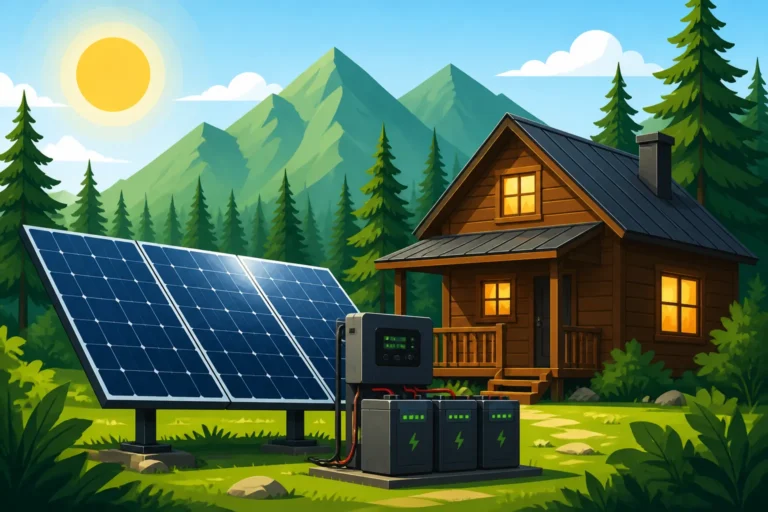
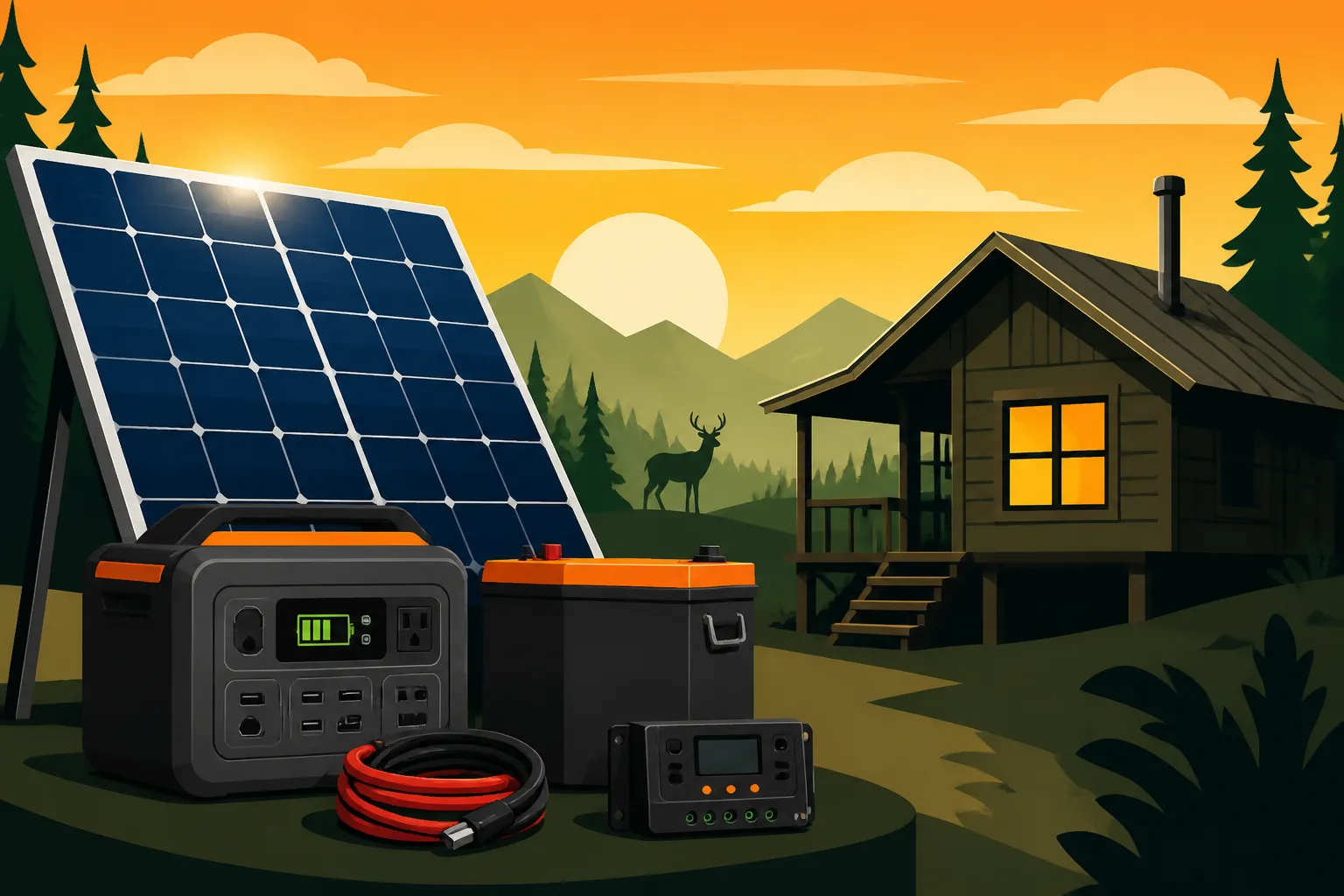
An off-grid solar kit isn't just a single item; it's a carefully orchestrated symphony of components working together to capture, store, and deliver power. Understanding each part is essential for making an informed decision and ensuring your cabin's system runs smoothly.
Solar Panels: The Power Harvesters
These are the stars of the show, silently converting sunlight into electricity. For a hunting cabin, you'll typically be looking at rigid monocrystalline or polycrystalline panels. Monocrystalline panels are generally more efficient, meaning they can produce more power in a smaller footprint, which can be advantageous if roof space is limited. Polycrystalline panels are usually a bit more budget-friendly.
- Mounting Options: How you mount your panels is crucial for maximizing sun exposure and ensuring their longevity.
- Roof Mount: If your cabin roof has good sun exposure and is structurally sound, roof mounting is a popular choice. It keeps panels out of the way and provides a clean aesthetic. Make sure to consider the angle and orientation for optimal sunlight throughout the seasons.
- Ground Mount: For cabins with heavily shaded roofs or if you want the flexibility to adjust the panel angle seasonally, a ground mount is an excellent option. This also makes cleaning and maintenance easier.
- Portable Panels: For smaller, temporary needs, or to supplement a fixed array, portable panels are fantastic. Many solar generators, including popular Jackery models, come with their own foldable, portable solar panels, making them incredibly versatile for on-the-go power or adding a quick boost to your cabin's battery bank.
When planning your setup, consider how many solar panels for off-grid living you'll need based on your calculated energy consumption and local sunlight hours.
Batteries for Reliable Storage
Batteries are the heart of your off-grid system, storing the solar energy generated during the day for use at night or on cloudy days. Without them, you'd only have power when the sun is shining directly on your panels.
- LiFePO4 (Lithium Iron Phosphate): These are the darlings of modern off-grid systems. They offer superior cycle life (meaning they last much longer), a deeper depth of discharge (you can use more of their stored energy without damaging them), and are much lighter than traditional lead-acid batteries. While their upfront cost is higher, their longevity and performance often make them more cost-effective in the long run. If you're comparing options, take a look at the LiFePO4 vs Lead-Acid Battery Cost.
- Lead-Acid (AGM/Gel): Absorbed Glass Mat (AGM) and Gel batteries are sealed, maintenance-free versions of lead-acid batteries. They are generally less expensive upfront but have a shorter lifespan and a shallower recommended depth of discharge, meaning you can only use about half of their rated capacity regularly without shortening their life. They are heavier and more sensitive to temperature extremes. For a hunting cabin that might sit unused for extended periods, AGM batteries require careful charging and monitoring to prevent damage.
The choice between battery chemistries depends on your budget, anticipated usage, and desired lifespan. For most long-term, reliable cabin setups, LiFePO4 is the superior choice if your budget allows.
Inverters and Charge Controllers
These two components are the brains and brawn that manage the flow of electricity.
- Charge Controller: This device regulates the voltage and current coming from your solar panels to your battery bank. It prevents overcharging, which can severely damage batteries, and ensures they charge efficiently.
- MPPT (Maximum Power Point Tracking): MPPT charge controllers are more efficient, especially in varying light conditions and when panel voltage differs significantly from battery voltage. They can extract more power from your panels, leading to faster charging and more available energy, which is a huge benefit for an off-grid cabin.
- PWM (Pulse Width Modulation): PWM controllers are simpler and less expensive but also less efficient. They are generally better suited for smaller systems where cost is the primary concern, and maximizing every watt isn't as critical. For a hunting cabin, especially if you plan to expand, an MPPT charge controller is almost always the better choice.
- Inverter: Solar panels and batteries typically produce direct current (DC) electricity, but most of your cabin appliances (lights, fridge, microwave) run on alternating current (AC). The inverter's job is to convert that DC power into usable AC power.
- Pure Sine Wave Inverters: These produce a clean, smooth AC waveform, identical to what you get from the grid. This is essential for sensitive electronics, modern appliances, and anything with a motor (like your fridge or well pump). Always opt for a pure sine wave inverter for your cabin to avoid damaging your electronics.
- Modified Sine Wave Inverters: These are cheaper but produce a "choppier" waveform that can cause issues with many modern appliances, leading to inefficiencies, buzzing, or even damage. Avoid them for anything more than basic resistive loads like incandescent lights or simple heaters.
When choosing an inverter, remember to size it to handle the combined running wattage of all AC appliances you might use simultaneously, plus the surge wattage of the largest motor-driven appliance. You might find our guide on how to size an off-grid inverter helpful here.
Choosing the Right Off-Grid Solar Kit for Your Hunting Cabin
Now that you understand the individual components, let's look at how to piece them together into a kit that makes sense for your specific hunting cabin. There's no one-size-fits-all solution, as every cabin and every user has different needs and budgets.
Matching Kit Size to Your Power Profile
Think about your daily power usage, as discussed earlier. This will be the primary driver of your kit's size.
- Basic / Minimalist Kits (100W – 400W):
- Best for: Weekend use, very light loads. Think charging phones, a few LED lights, maybe a small fan, and recharging small devices.
- Components: Often includes one or two solar panels, a small charge controller, a modest battery (perhaps 100Ah-200Ah), and a low-wattage pure sine wave inverter (300W-700W). Some portable solar generators, like a Jackery Explorer 1500, could fit this profile, offering an all-in-one solution for basic needs.
- Considerations: These are typically very affordable and easy to install. They're perfect if your cabin is truly a "roughing it" experience with just a few modern comforts.
- Moderate Comfort Kits (500W – 1500W):
- Best for: Longer stays, running a small energy-efficient refrigerator, multiple lights, charging laptops, a small water pump, and perhaps a microwave for brief periods.
- Components: Usually 2-4 solar panels, an MPPT charge controller, a more substantial battery bank (200Ah-400Ah, preferably LiFePO4), and an inverter in the 1000W-2000W range. These kits strike a good balance between comfort and cost.
- Considerations: This is where many off-grid cabins fall. It provides enough power for most essential appliances without requiring a massive initial investment.
- Robust / Full Comfort Kits (2000W – 5000W+):
- Best for: Extended periods, running larger refrigerators, multiple power tools, entertainment systems, potentially small heaters or air conditioning units, and robust well pumps.
- Components: Multiple high-wattage panels (4+), a powerful MPPT charge controller, a large LiFePO4 battery bank (400Ah+), and a substantial inverter (3000W-5000W+), often an inverter-charger hybrid unit for advanced power management.
- Considerations: These systems provide near-home comfort but come with a significantly higher price tag and require more complex installation. They are often chosen by those who spend considerable time at their cabin or use it as a semi-permanent residence. For these larger setups, exploring options like the EcoFlow Power Kit might be beneficial due to their integrated nature.
Evaluating Different Kit Types
Solar kits come in various forms, each with pros and cons for a hunting cabin.
- Pre-Configured All-in-One Kits: These are designed for convenience. Reputable brands often bundle panels, a charge controller, inverter, and sometimes batteries into one package.
- Pros: Easy to purchase, components are matched for compatibility, often come with basic wiring diagrams. Great for beginners.
- Cons: Less customizable, you might pay for components you don't fully need, or it might not be perfectly optimized for your specific cabin's unique demands.
- DIY Component Kits: This involves buying each major component (panels, batteries, charge controller, inverter) separately.
- Pros: Maximum flexibility, you can choose best-in-class components for each part, potentially more cost-effective if you shop smart.
- Cons: Requires more research, technical knowledge for compatibility, and more complex wiring. The cost of a DIY off-grid solar build can vary wildly.
- Portable Solar Generators: These are essentially an all-in-one battery, inverter, and charge controller, often with the option to connect external solar panels.
- Pros: Extremely portable, plug-and-play simplicity, great for very light use or as a backup. Brands like Jackery, Bluetti, and Goal Zero offer excellent options that are super user-friendly. A Jackery Explorer, for example, is great for taking power where you need it, whether inside the cabin or out by the campfire.
- Cons: Limited power output and storage capacity compared to a custom-built system. Not suitable for running high-demand appliances continuously. They can be a great starting point for how to budget for an off-grid solar system, allowing you to gradually upgrade.
Specific Recommendations and Brands for Cabin Use
When it comes to hunting cabins, reliability and durability are paramount. You're often in a remote location, so equipment needs to withstand harsh weather and be generally robust.
For a basic setup, consider a high-quality portable power station. The Jackery Explorer 1500 or Jackery Explorer 2000 Plus are fantastic choices that can power lights, charge devices, and even run a small fridge for a day or two. They are easy to deploy, require no permanent installation, and can be charged via solar, car, or a generator when needed. They offer an immediate, no-fuss power solution.
For more integrated systems, look at established solar brands like Renogy, Grape Solar, or Rich Solar for panels and complete kits. They offer reliable components and often provide good customer support. For batteries, Battle Born Batteries and EG4 are highly regarded for their LiFePO4 options, known for their longevity and robust performance. For inverters and charge controllers, Victron Energy and MidNite Solar are premium choices known for their exceptional quality and advanced features, though they come with a higher price point. If you're building a more robust system, investing in quality components from these brands can greatly enhance your system's overall reliability and lifespan.
| Kit Type | Daily Power Usage (Wh) | Core Components | Typical Appliances | Pros | Cons | Est. Cost Range (USD) |
|---|---|---|---|---|---|---|
| Basic Portable | 100-500 | Portable power station (e.g., Jackery), 100-200W portable panel | Phone, laptop, LED lights, small fan | Easy setup, portable, no installation | Limited capacity, not for continuous heavy use | $500 – $2,000 |
| Weekend Warrior | 500-1500 | 200-400W panels, 100-200Ah LiFePO4 battery, 700-1500W inverter, MPPT charge controller | Phone, laptop, LED lights, small fridge, water pump (intermittent) | More sustained power, expandable, relatively simple DIY | Still limited for major appliances | $1,500 – $4,000 |
| Extended Stay | 1500-4000 | 800-1500W panels, 200-400Ah+ LiFePO4 battery, 2000-3000W inverter, MPPT charge controller | All above + microwave, TV, power tools (intermittent), larger fridge | Good comfort level, robust for longer periods | Higher cost, more complex installation, larger footprint | $4,000 – $10,000 |
| Full Comfort | 4000W+ | 2000W+ panels, 400Ah+ LiFePO4 bank (48V), 3000-5000W+ inverter-charger | All above + mini-split AC, well pump (continuous), washing machine | Near grid-level comfort, high reliability | Significant investment, professional installation often recommended | $10,000 – $25,000+ |
Note: Costs are estimates and can vary widely based on brand, quality, and installation method.
Installation Considerations and Maintenance for Your Hunting Cabin Solar
Getting your solar kit is only half the battle; setting it up correctly and maintaining it is crucial for a reliable, long-lasting power system. Even for experienced DIYers, off-grid solar can have its quirks.
DIY Installation vs. Professional Help
Many hunting cabin owners are handy and capable of tackling a DIY solar installation. If you choose this path, be prepared for a learning curve. There's a wealth of information available, from detailed wiring diagrams to online communities offering advice. However, it's vital to follow all safety precautions, especially when working with electricity and heavy panels. Proper grounding, fuse sizing, and wire gauges are non-negotiable for safety and system efficiency. You can find detailed guides on how to install an off-grid solar system that cover everything from mounting panels to connecting batteries and inverters.
For larger, more complex systems or if you're not comfortable with electrical work, hiring a qualified electrician or solar installer is highly recommended. They can ensure your system is safely installed, properly configured, and potentially even help with local permitting if required (though many remote cabin locations have fewer requirements). Even if you DIY most of it, consider bringing in an electrician for the final connections to your cabin's electrical panel if you have one.
Site-Specific Mounting and Wiring
Your cabin's location will dictate a lot about your installation.
- Panel Placement: Ideally, panels should face true south (in the Northern Hemisphere) at an angle that maximizes sun exposure year-round or seasonally, depending on your primary use. Avoid shading from trees or other structures. A simple compass app on your phone and a sun path calculator can help you determine the best orientation.
- Weatherproofing: Hunting cabins are exposed to the elements. Ensure all roof penetrations for wiring are properly sealed to prevent leaks. Conduit should be used to protect outdoor wiring from UV damage and critters.
- Battery Location: Batteries need a protected, well-ventilated space. LiFePO4 batteries are more forgiving of temperature extremes than lead-acid, but extreme cold can still reduce their performance and charging capabilities. A insulated, heated battery box is ideal in cold climates. Lead-acid batteries also release hydrogen gas during charging, so ventilation is critical to prevent dangerous gas buildup.
- Inverter/Charge Controller Placement: These components should be in a dry, accessible location, preferably close to the batteries to minimize voltage drop in the heavy-gauge battery cables.
For temporary or smaller setups, the simplicity of a portable power station with its own solar panel often sidesteps many of these complex installation concerns. You just set up the panel in the sun, plug it into your Jackery, and you're good to go.
Maximizing Longevity and Performance
A well-installed off-grid solar system still needs a little love to keep humming along efficiently for years.
- Cleaning Panels: Dust, pollen, leaves, and bird droppings can significantly reduce your panels' efficiency. Periodically clean them with water and a soft brush or squeegee, especially after major weather events.
- Battery Care: For LiFePO4 batteries, "care" mostly means not routinely over-discharging them (though they tolerate deep cycles well) and ensuring they charge properly. For lead-acid batteries, regular checks of water levels (if flooded) and ensuring they don't sit in a low state of charge for long periods are vital. You can learn more about how to maintain an off-grid battery bank.
- System Monitoring: Many modern charge controllers and inverters come with displays or even Bluetooth/Wi-Fi connectivity, allowing you to monitor your system's performance, battery state of charge, and power consumption from an app. This can help you identify issues early and adjust your usage.
- Wiring Inspections: Periodically check all connections for corrosion or loosening, especially after extreme temperature changes. Ensure animal pests haven't chewed through any exposed wiring.
By taking a thoughtful approach to planning, choosing the right components (whether it's a versatile Jackery or a full-blown custom system), and committing to proper installation and maintenance, your hunting cabin can become a truly self-sufficient sanctuary, providing quiet, reliable power for all your wilderness adventures.
Disclaimer
The information provided in this guide is for general informational purposes only and does not constitute professional advice. Off-grid solar system design and installation can be complex and involve electrical hazards. Always consult with qualified professionals and adhere to local codes and regulations before undertaking any solar project.