Best Off-Grid Solar Kit with Battery and Inverter
It's incredibly frustrating to sift through countless components and technical jargon when all you want is a straightforward solution to power your off-grid dreams. Many folks feel overwhelmed trying to piece together a solar system, wondering if they're missing something crucial. This guide is here to cut through that confusion, helping you understand what truly makes an off-grid solar kit complete with a battery and inverter, so you can confidently choose the best system for your unique needs without the guesswork.
Understanding What Makes a "Kit" Complete
When you're diving into the world of off-grid living, the idea of a "kit" sounds like a dream come true, right? You envision a neatly packaged box with everything you need, a simple instruction manual, and voilà—power! While some kits are remarkably comprehensive, it's essential to understand what actually constitutes a truly complete, reliable off-grid solar system. It's not just about panels and a battery; it's about a fully integrated solution that works harmoniously.
Beyond the Basics: What a True All-in-One Kit Includes
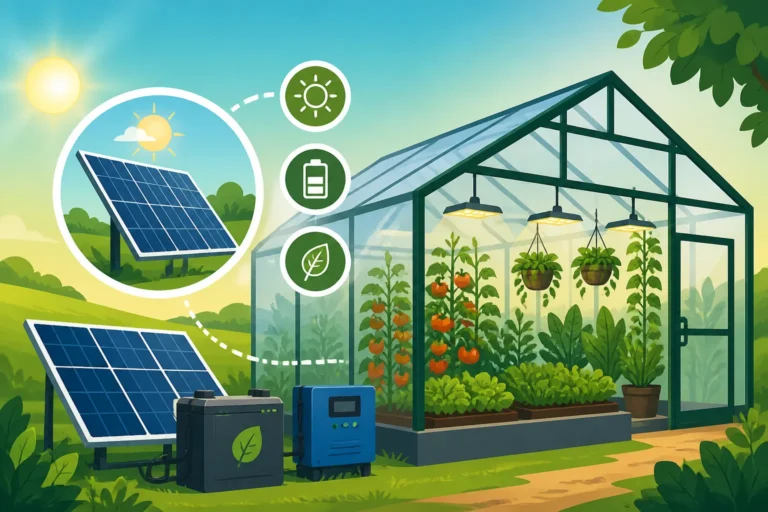
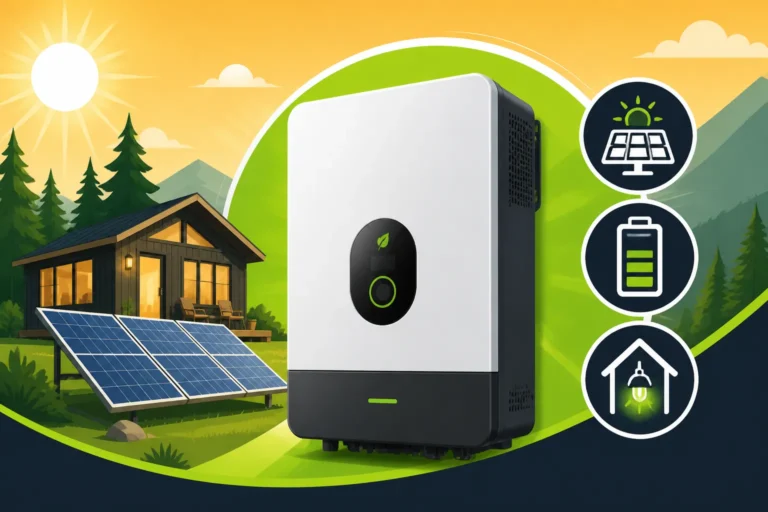
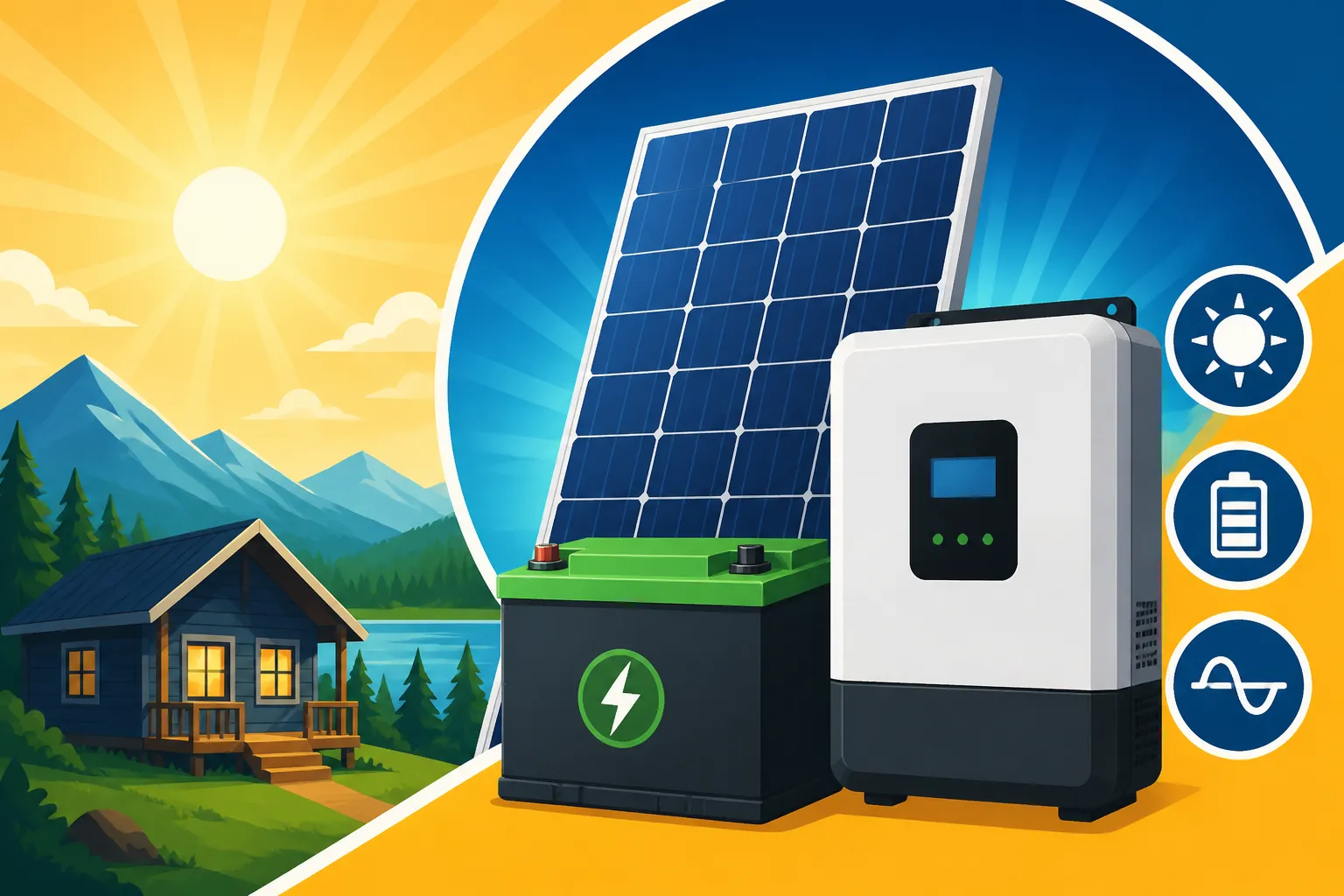
A real all-in-one off-grid solar kit should ideally include the four core components: solar panels to capture sunlight, a charge controller to manage that energy, a battery bank to store it, and an inverter to convert it into usable AC power for your appliances. But truly comprehensive kits go a step further. They often bundle in all the necessary wiring, connectors, mounting hardware for your panels, and critical safety components like fuses and breakers.
Imagine setting up a remote cabin in the mountains. You’ve got your beautiful panels, a beefy battery, and a powerful inverter, but then you realize you’re missing the right gauge wire to connect everything, or the MC4 connectors to link your panels, or even the fuses that protect your system from electrical surges. That's where the frustration sets in, and why a true all-in-one kit aims to mitigate these headaches. It's designed to give you peace of mind, knowing that the manufacturer has thought through the compatibility and included almost every piece of the puzzle. This integrated approach not only saves you countless trips to the hardware store but also reduces the risk of incorrect component matching, which can be a real issue for beginners.
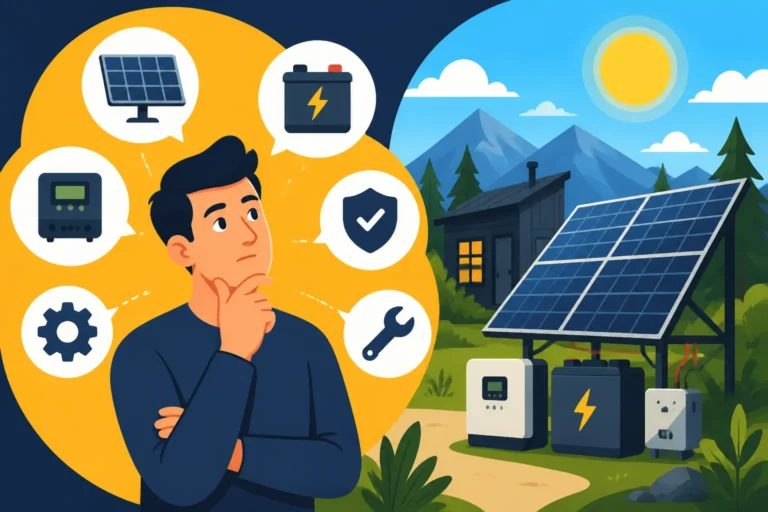
The convenience factor for beginners cannot be overstated. For someone new to solar, the sheer volume of choices for each component can be paralyzing. Do you need an MPPT or PWM charge controller? What kind of battery cables are appropriate? Which fuses go where? A well-designed kit often pre-selects these components, ensuring they are correctly sized and compatible, dramatically lowering the barrier to entry for aspiring off-gridders. This means less time researching obscure specifications and more time enjoying the freedom of generating your own power.
The Allure of Integrated Power Stations vs. Component Kits
Now, let's talk about the two main flavors of "kits" you'll encounter: the traditional component-based kit and the increasingly popular integrated power station. Both have their merits, and understanding the distinction is key to choosing what's right for you.
Traditional component kits, often offered by brands like Renogy or Grape Solar, are exactly what they sound like: a collection of individual parts (panels, charge controller, battery, inverter) that you assemble. These kits offer incredible flexibility. You might start with a basic setup and then upgrade your inverter later, or add more batteries as your power needs grow. This modularity means you can truly customize your system to your exact specifications, which is a huge advantage for experienced DIYers or those with very specific, evolving power demands. For example, if you decide you need to run a well pump for your remote cabin, you might swap out your inverter for a larger one with higher surge capacity without having to replace the entire system. This approach allows for a deeper understanding of each component and greater control over your system's design and expansion, which can be immensely satisfying for the hands-on enthusiast.
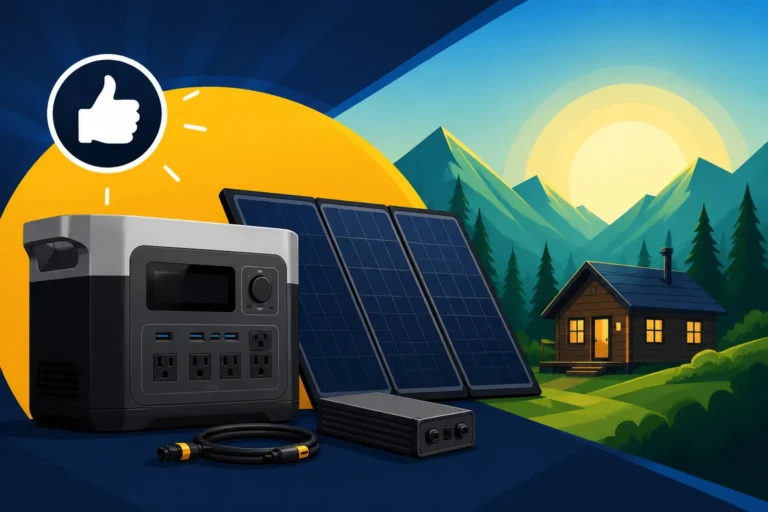
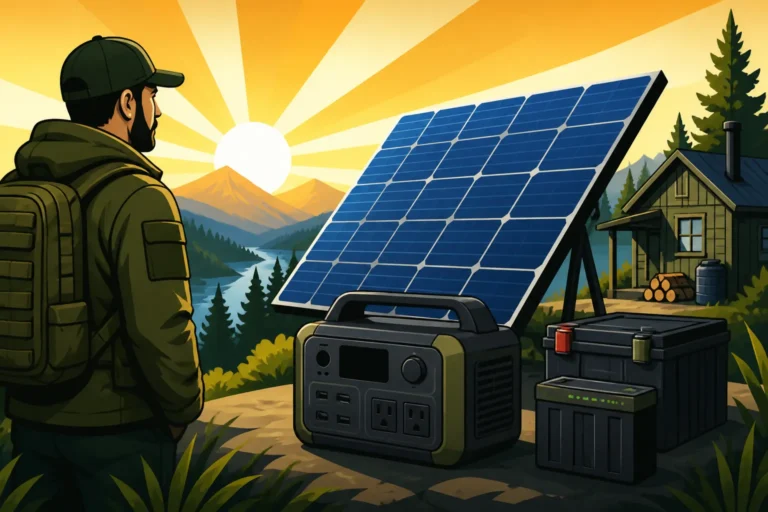
On the other hand, integrated power stations, like those from Jackery or EcoFlow, are a different beast entirely. These units combine the battery, inverter, and charge controller into a single, often portable, box. You typically just plug in your solar panels directly, and you're good to go. The simplicity is astounding: no complex wiring diagrams, no worrying about matching component voltages, just plug-and-play. These are fantastic for casual camping, emergency backup, or smaller, less permanent off-grid setups, like powering a small shed or a mobile workstation. For someone who just wants to charge their laptop, run some LED lights, and keep their phone juiced up while camping, a Jackery power station paired with its portable solar panels is an elegant, hassle-free solution. However, this simplicity often comes at the cost of expandability and raw power output. You're typically limited by the unit's internal battery capacity and inverter size, and upgrading means buying a whole new unit, not just a component.
So, when does an all-in-one power station make the most sense? If you prioritize portability, ease of use, and quick setup for modest power needs, then an integrated unit is a fantastic choice. If you're building a more permanent, robust off-grid home or cabin and want the flexibility to scale, repair, and customize, then a component-based kit, even if it requires a bit more upfront learning, will likely serve you better in the long run. There's no right or wrong answer, only the best fit for your lifestyle and power goals.
Key Considerations When Choosing Your Kit
Alright, so you're ready to ditch the grid or at least get a reliable backup, and you're thinking about an off-grid solar kit with a battery and inverter. But before you get swept away by shiny panels and big numbers, we need to talk turkey about what truly matters. Picking the right kit isn't about finding the most powerful or the cheapest; it's about finding the right fit for your specific needs. And let me tell you, overlooking these crucial steps is where most people end up with a system that's either overkill, underpowered, or simply not right for their lifestyle.
Your Power Needs and Daily Energy Consumption
This is, without a doubt, the absolute first step. You cannot begin to choose a solar kit until you know how much power you actually use. It’s like trying to buy a car without knowing if you need a daily commuter or a heavy-duty pickup for towing. People often underestimate their energy consumption, or just guess, which leads to systems that can't keep up on cloudy days or when they decide to plug in an extra appliance.
The goal here is to do a proper load analysis. This means listing every single appliance, device, and light fixture you plan to power with your off-grid system. For each item, you need to find its wattage (how much power it draws) and estimate how many hours per day you'll use it. For instance, a small LED light might draw 10 watts and run for 5 hours, while a refrigerator might draw 100 watts and run for 12 hours (it cycles on and off). Multiplying watts by hours gives you watt-hours (Wh), which is your daily energy consumption for that device. Add all these up, and you'll have your total daily watt-hour requirement. This crucial figure directly informs how large your solar panel array and battery bank need to be. If you're wondering how to properly crunch these numbers, our guide on How to Calculate Daily Energy Usage goes into much greater detail and provides practical worksheets.
Let's look at some real-world examples. If you're powering a small hunting cabin that you visit on weekends, you might only need enough juice for some LED lights, charging a phone, and a small radio. Your daily consumption might be a mere 500 Wh. For this, a smaller, simpler kit with perhaps 200-400 watts of panels and a 100Ah 12V lithium battery could easily suffice. However, if you're planning on full-time RV living with a refrigerator, microwave, TV, and perhaps even a small air conditioner, your daily consumption could easily soar to 3000-5000 Wh or more. This would necessitate a much larger array of panels, a substantial battery bank (likely 24V or 48V), and a robust inverter. Underestimating these needs will leave you perpetually running out of power, constantly managing your loads, and ultimately frustrated with your off-grid experience.
Battery Chemistry and Capacity
Once you have a handle on your energy consumption, the battery bank becomes the heart of your off-grid system. It stores the solar energy generated during the day for use at night or on cloudy days, and your choice here profoundly impacts performance, longevity, and overall cost. You'll primarily be looking at two main types: LiFePO4 (lithium iron phosphate) and lead-acid (which includes AGM and Gel variants).
LiFePO4 batteries have become the darling of the off-grid world, and for good reason. They offer superior cycle life (thousands more charge/discharge cycles than lead-acid), can be discharged much deeper (typically 80-100% Depth of Discharge, or DoD, without damage), are significantly lighter, and often perform better in a wider range of temperatures. While their upfront cost is higher, their longevity and performance often make them more cost-effective over the system's lifespan. For example, a single 100Ah LiFePO4 battery might provide the same usable energy as two 100Ah lead-acid batteries due to the deeper discharge capability, reducing your physical footprint and overall weight. Many integrated power stations, like those from Jackery, now utilize LiFePO4 technology for these very benefits, offering impressive lifespan and reliable power delivery in a compact package. If you want to dive deeper into the cost comparison, check out our article on LiFePO4 vs Lead-Acid Battery Cost.
Lead-acid batteries, specifically AGM (Absorbent Glass Mat) and Gel, are still viable, especially for those on a tighter budget or with less demanding power needs. They are generally much cheaper upfront and don't require the same complex battery management systems (BMS) that lithium batteries do. However, they have a shorter cycle life, can only be safely discharged to about 50% DoD without significantly shortening their lifespan, and are much heavier. This means you need significantly more lead-acid capacity to get the same usable energy as LiFePO4. If you have a weekend cabin with minimal power needs and a strict budget, a couple of AGM batteries might be a perfectly reasonable starting point. However, for full-time living or systems requiring maximum reliability and minimal maintenance, LiFePO4 is usually the preferred choice due to its long-term benefits and operational efficiency.
Choosing the right capacity for your battery bank is about ensuring you have enough "days of autonomy." This refers to how many days your battery bank can power your essential loads without any new solar input (i.e., during prolonged cloudy weather). For most people, 2-3 days of autonomy is a good target, but this will vary depending on your location's weather patterns and your risk tolerance. Calculating this involves taking your total daily watt-hour usage and multiplying it by your desired days of autonomy, then dividing by the battery's usable DoD and voltage to get the required Ah capacity. It’s a bit of math, but absolutely critical for a reliable system.
Inverter Type and Output
The inverter is the workhorse that transforms the DC (direct current) power stored in your batteries into AC (alternating current) power, which is what most of your household appliances use. Without it, you’d be limited to only 12V or 24V DC devices. Getting the right inverter means understanding its type and its output capabilities.
First, let's talk about type: Pure Sine Wave vs. Modified Sine Wave. A pure sine wave inverter produces electricity that is virtually identical to what you get from the grid. This is crucial for sensitive electronics like laptops, medical equipment, and appliances with motors (refrigerators, microwaves), as it prevents damage and ensures they run efficiently. Almost all modern off-grid systems and quality integrated kits, including portable power stations from reputable brands, use pure sine wave inverters. You absolutely want a pure sine wave inverter for peace of mind and the longevity of your electronics.
Modified sine wave inverters are cheaper but produce a "choppier" waveform. While they might power simple resistive loads like old incandescent light bulbs or heating elements, they can cause buzzing in audio equipment, make motors run hotter and less efficiently, and can potentially damage sensitive electronics. Honestly, with the declining cost of pure sine wave inverters, it's rarely worth the risk to opt for a modified sine wave one for anything beyond the most basic, non-sensitive applications.
Next is output: continuous wattage vs. surge wattage. The continuous wattage is the maximum power the inverter can supply constantly. This should be high enough to handle all your running appliances simultaneously. For instance, if you're running a refrigerator (100W), a few lights (50W), and a TV (100W) all at once, you need an inverter with at least 250W continuous output.
However, many appliances, especially those with motors, have a surge wattage – a brief, much higher power draw when they first start up. A well pump, refrigerator compressor, or microwave can demand two to ten times its running wattage for a fraction of a second. Your inverter must be able to handle this momentary surge without tripping. So, if your refrigerator typically draws 100W but surges to 800W on startup, your inverter needs a surge capacity of at least 800W, even if its continuous rating for all other combined loads is lower. Properly sizing your inverter is paramount to avoiding frustrating power interruptions, and our guide on How to Size an Off-Grid Inverter can walk you through the calculations needed. Don't cheap out on the inverter; it's often the first component to fail if undersized or of poor quality.
Solar Panel Wattage and Expandability
Your solar panels are your energy collectors, the components that convert sunlight into electricity. The total wattage of your solar array directly determines how much energy you can generate on a sunny day to recharge your batteries and power your loads.
The key question is: "How many watts do you need to recharge your batteries daily, considering your average sun hours?" This is where your load analysis (daily watt-hours) comes back into play. You need enough panel wattage to replenish the energy consumed from your battery bank, plus a buffer for efficiency losses and less-than-perfect sun conditions. Most areas average 4-6 "peak sun hours" per day. If your system needs to generate 2000 Wh per day, and you have 5 peak sun hours, you'd ideally need a 400W solar array (2000 Wh / 5 hours = 400W) to achieve this. It's always a good idea to slightly oversize your array, especially if you live in an area prone to cloudy days or plan to use more power in the winter when sun angles are lower. Our comprehensive guide on How Many Solar Panels for Off-Grid Living offers detailed calculations and scenarios to help you figure this out.
When it comes to panel types, you'll mainly hear about monocrystalline and polycrystalline. Monocrystalline panels are generally more efficient, meaning they convert a higher percentage of sunlight into electricity, making them ideal if you have limited roof space. They also tend to perform slightly better in low-light conditions. Polycrystalline panels are typically a bit less efficient but are also generally less expensive per watt. For most off-grid applications, monocrystalline is usually preferred due to its space efficiency and slightly better performance, especially in conditions that aren't perfectly sunny.
Finally, think about expandability. Many people start with a smaller off-grid system and realize they want more power down the line. Can your chosen kit accommodate additional panels? Look for charge controllers that can handle higher amperage or voltage input than your initial array, or inverters that allow for parallel expansion. Some kits, particularly pre-packaged component kits, are designed with expansion in mind, offering flexibility to add more panels, batteries, or even another inverter in the future. Portable power stations, while convenient, often have fixed input limits, meaning you can only connect a certain amount of solar panel wattage, which might limit your ability to scale up significantly later on. Planning for future expansion, even if you don't use it immediately, can save you a lot of money and hassle down the road.
Decoding Different Off-Grid Kit Types
Navigating the vast array of off-grid solar kits can feel like trying to find a specific needle in a haystack of needles. It's not just about the components, but about how these components are packaged and optimized for different applications. A kit designed for a weekend warrior's van is vastly different from one meant to power a permanent off-grid homestead. Understanding these distinctions will help you hone in on the perfect solution for your specific adventure or dwelling.
Small Scale Kits for RVs, Vans, and Cabins
When we talk about small-scale off-grid solar kits, we're generally looking at systems designed for more mobile or intermittent use. Think RVs, converted vans for the #vanlife crowd, pop-up campers, or rustic hunting and fishing cabins that might only see use on weekends or during specific seasons. These kits prioritize efficiency, portability (or compact installation), and usually operate on a 12-volt (12V) system, which is common for vehicles and smaller DC appliances.
A typical small-scale kit might feature 100W to 800W of solar panels. For instance, a basic kit for an RV might come with two 100W panels, a small MPPT charge controller, a 100Ah 12V LiFePO4 battery, and a 1000W pure sine wave inverter. This setup is perfect for powering essential comforts: running your LED interior lights, charging laptops and smartphones, operating a small 12V refrigerator (a common appliance in RVs), and perhaps a small fan or water pump. The emphasis here is on simplicity and meeting modest energy demands without significant structural modifications or complex wiring. Brands like Renogy and BougeRV offer popular kits tailored for these applications, often including Z-brackets for easy panel mounting on vehicle roofs. If you're looking for guidance specific to these setups, our article on the Best Off-Grid Solar Kit for an RV might be particularly helpful.
The beauty of these kits is their often straightforward installation process. Many are designed with the DIY enthusiast in mind, offering clear instructions and pre-terminated cables. For example, a basic portable Jackery power station paired with foldable solar panels provides an immediate, plug-and-play solution that can be set up in minutes, perfect for camping trips or temporary power needs at a remote campsite. While these aren't traditional "kits" in the component sense, they serve the same function for many users, offering a complete solar charging and power output solution without any complex wiring. The focus is always on getting power quickly and reliably to a limited number of essential devices, ensuring that your mobile adventures or rustic retreats are comfortable and connected without relying on noisy generators or campground hookups.
Medium to Large Scale Kits for Tiny Homes and Full-Size Residences
Stepping up in size and capability, medium to large-scale off-grid solar kits are built for more permanent dwellings – think tiny homes, guest houses, or even full-sized off-grid homesteads. These systems are designed to handle a much greater electrical load, mimicking many of the conveniences of a grid-tied home. This usually means a jump to higher system voltages, commonly 24-volt (24V) or 48-volt (48V), which allows for smaller wire gauges and reduced power loss over longer distances, especially critical for more extensive wiring runs.
These kits will typically include a substantial solar array, ranging from 1000W to well over 10,000W. The battery banks are significantly larger, often multiple LiFePO4 batteries wired in series or parallel to achieve the desired voltage and amp-hour capacity. The inverters in these setups are also much more robust, frequently in the 3000W to 12000W range, and almost exclusively pure sine wave to ensure compatibility with all household appliances. These powerful inverters can handle the surge demands of appliances like electric well pumps, washing machines, microwaves, full-sized refrigerators, and even small air conditioning units or mini-splits. You'll often find advanced MPPT charge controllers capable of handling higher currents and voltages from larger solar arrays.
Consider a family living in a tiny home off-grid. They'll need consistent power for cooking appliances, a refrigerator, lighting throughout the day and evening, a water pump, and perhaps even a dedicated workspace with computers. Such a setup might require a 48V system with 3000W-5000W of panels and a 400Ah-600Ah 48V battery bank. This scale of system requires more careful planning for installation, panel placement (ground mounts or robust roof mounts), and often involves a subpanel in the home to distribute power safely. The investment is considerably higher, but so is the level of comfort and functionality. For an in-depth look at what's needed for larger applications, our guide on the Best Off-Grid Solar Kit for a Whole House can provide valuable insights. These systems are about achieving genuine energy independence and providing a comfortable, modern living experience without compromise.
Hybrid Inverter Kits: The Best of Both Worlds?
Now, let’s talk about a fascinating category that blurs the lines: hybrid inverter kits. These systems are often seen as a bridge between off-grid and grid-tied solar, offering a versatile solution for those who want backup power, energy independence, and potentially grid interaction.
What exactly is a hybrid inverter? Unlike a purely off-grid inverter that only draws power from batteries or solar, a hybrid inverter has the unique ability to manage power flow from multiple sources: solar panels, a battery bank, and the utility grid (if available) or a generator. It can intelligently decide where to draw power from, where to send excess power, and how to charge your batteries. For instance, during a power outage, it automatically switches to battery power. When your batteries are low, it can prioritize charging them from solar, or even from the grid (if configured and available) or a generator. Some can even export excess solar power back to the grid, though this isn't typically the primary function for a kit labeled as "off-grid."
The benefits are compelling. For homes that are grid-tied but experience frequent power outages, a hybrid inverter kit offers seamless backup power, often without the homeowner even noticing the grid went down. It can charge batteries from solar during the day and then use that stored energy at night, reducing reliance on expensive peak-hour grid electricity. For completely off-grid setups, a hybrid inverter simplifies generator integration. Instead of manually starting a generator to charge batteries, many hybrid inverters can automatically kick on a backup generator when battery levels drop below a certain threshold and shut it off once they're recharged. This automated process ensures continuous power without constant monitoring.
However, this sophistication comes with increased complexity and often a higher price tag. Hybrid systems require more intricate setup and programming, and they might involve compliance with local utility regulations if you plan any grid interaction. While they offer unparalleled flexibility, they are generally not plug-and-play like a simple portable power station. Brands like Sol-Ark and Victron Energy are renowned for their high-quality hybrid inverter solutions, offering advanced features and robust performance. If you're looking for a system that provides both strong off-grid capability and smart energy management, a hybrid inverter kit could truly offer the best of both worlds, providing resilience and efficiency for your unique power situation.
Top Brands and What They Offer in Integrated Kits
When you're making the leap to off-grid solar, the brand you choose can significantly impact your experience, from the quality and reliability of your components to the level of customer support you receive. It’s not just about buying hardware; it’s about investing in a system that will reliably serve your needs for years to come. Let's explore some of the leading names in the off-grid solar space and what makes their kits stand out.
Renogy: Accessible and Comprehensive Solutions
Renogy has carved out a strong reputation as a go-to brand for DIY-friendly off-grid solar solutions. They are particularly popular among RVers, van lifers, and small cabin owners due to their comprehensive, yet accessible, range of products and kits. Renogy's strength lies in providing complete packages that aim to take the guesswork out of component matching, which is a huge relief for many first-time solar installers.
Their kits typically include high-efficiency monocrystalline solar panels, a suitable MPPT (Maximum Power Point Tracking) charge controller (often with smart features and Bluetooth connectivity for monitoring), deep-cycle batteries (ranging from AGM to their popular LiFePO4 options), a pure sine wave inverter, and all the necessary cables, connectors, and mounting hardware. For example, a common offering might be their 400W 12V Premium Kit, which provides enough power for essential lights, charging, and a small fridge, complete with mounting brackets for an RV roof. Renogy kits are designed with a focus on ease of installation and expandability, often allowing users to add more panels or batteries later as their power needs grow. This modularity means you can start small and scale up without having to replace your entire setup.
What truly sets Renogy apart is their commitment to providing educational resources and straightforward guides, making the complex world of solar power more understandable for the average person. Their product ecosystem is well-integrated, meaning their components are designed to work seamlessly together, simplifying the setup process. While their equipment might not always be considered "high-end" compared to some industrial-grade brands, Renogy offers an excellent balance of quality, performance, and affordability, making off-grid solar attainable for a wide audience. They’ve done a lot to empower individuals to build their own solar independence, which is incredibly valuable in this space.
Victron Energy: Premium Performance and Modularity
For those who demand the absolute best in reliability, efficiency, and advanced control, Victron Energy stands out as a premium brand in the off-grid solar arena. While they don't typically offer "kits" in the all-in-one sense that Renogy does, their integrated ecosystem of high-performance components allows for the creation of incredibly robust and sophisticated off-grid systems. When people talk about building a truly dependable, long-lasting off-grid power plant, Victron components are often at the top of the list.
Victron's product lineup is extensive, featuring top-tier multi-function inverter/chargers like their MultiPlus and Quattro series, highly efficient SmartSolar MPPT charge controllers, powerful battery monitors (BMV series), and sophisticated system controllers (Color Control GX, Cerbo GX) that provide unparalleled monitoring and control capabilities. Their equipment is known for its rugged build quality, exceptional efficiency, and advanced features, such as remote monitoring and firmware updates, intelligent load management, and seamless integration with generators. For example, a Victron MultiPlus inverter/charger can prioritize solar, use battery power, integrate with a generator for automatic charging, and even act as a UPS (Uninterruptible Power Supply) if you're grid-tied with backup. This level of control and system intelligence is what attracts serious off-gridders and those building large, permanent installations.
The appeal of Victron is for users who seek maximum performance, longevity, and the ability to fine-tune every aspect of their energy system. While the initial investment is higher, the reliability, efficiency, and extensive lifespan of Victron components often justify the cost over many years. Their ecosystem is designed for modularity and scalability, allowing users to build a custom system piece by piece and expand it as needed. For anyone building a large off-grid home or a mission-critical power system where failure is not an option, Victron Energy offers the peace of mind that comes with industry-leading quality and support.
Jackery and EcoFlow: Portable Power Stations with Solar Integration
In a different corner of the "off-grid kit" market, we have portable power stations, with Jackery and EcoFlow leading the charge. These brands have redefined convenience for smaller, more temporary off-grid power needs, effectively delivering an integrated "kit" in a single, user-friendly package. For many, especially those just dipping their toes into solar or needing power on the go, these units are incredibly appealing.
Think about the simplicity: a Jackery Explorer power station combines a battery, an inverter, and a charge controller into one compact unit. You simply plug in compatible solar panels (often foldable and portable), and the unit starts charging. Then, you plug your devices directly into its AC outlets, USB ports, or 12V car socket. It's truly plug-and-play, eliminating all the complex wiring and compatibility concerns of a traditional component system. A common Jackery setup for weekend camping might include a Jackery Explorer 1000 and two SolarSaga 100W panels. This provides enough power to keep phones, cameras, laptops charged, run a small cooler, and power LED lights throughout the trip. Our review of the Jackery 2000 Plus for Off-Grid: Specs and Review can give you a deeper look into one of their larger, more capable units.
EcoFlow also offers a compelling range, with popular models like the EcoFlow Delta and River series. Their units are known for incredibly fast charging speeds (both from AC and solar), high surge capacities, and often boast a more modern, rugged design. The EcoFlow Delta Pro, for example, is a powerhouse that can even integrate with a home's electrical system, acting as a robust home backup battery. You can learn more about its capabilities in our article on the EcoFlow Delta Pro for Off-Grid: Specs and Review. These portable power stations are ideal for camping, tailgating, emergency preparedness, or even providing auxiliary power for a remote workshop. They shine where portability, quick setup, and ease of use are paramount, offering a clean, quiet alternative to traditional gas generators for a wide range of applications. While they might not be suitable for powering an entire house indefinitely, for temporary or small-scale off-grid power, brands like Jackery and EcoFlow offer fantastic, integrated solutions that many find indispensable.
Installation, Maintenance, and Long-Term Value
Choosing the right off-grid solar kit is a huge step, but it’s just the beginning of your journey toward energy independence. How you install, maintain, and care for your system will directly impact its performance, longevity, and ultimately, the value you get from your investment. Many people focus so heavily on the initial purchase that they overlook these critical aspects, leading to costly mistakes or premature system failures down the line. Let’s talk about ensuring your off-grid dream doesn't turn into a maintenance nightmare.
DIY vs. Professional Installation
The question of whether to install your off-grid solar kit yourself or hire a professional is a common dilemma, and there’s no one-size-fits-all answer. Both approaches have distinct advantages and disadvantages that you need to weigh carefully based on your skills, budget, and the complexity of your chosen system.
DIY installation can offer significant cost savings. Labor costs for professional solar installation can range from a few thousand dollars to upwards of $10,000 or more, depending on the size and complexity of your system. By doing it yourself, you primarily pay for the components, which can make going off-grid feel much more accessible financially. It also provides an invaluable learning experience; understanding every wire, connection, and setting in your system empowers you to troubleshoot issues quickly and perform your own maintenance. For smaller, simpler kits, like those designed for RVs or basic cabins, the installation is often straightforward enough for someone with a good mechanical aptitude and a willingness to follow instructions diligently. However, it's crucial to acknowledge that solar power involves electricity, and mistakes can be dangerous, leading to equipment damage, fire hazards, or even serious injury. Proper grounding, circuit protection, and understanding wiring diagrams are non-negotiable. If you're tackling it yourself, our guide on DIY vs Professional Off-Grid Solar Cost offers a comprehensive breakdown to help you make an informed decision.
On the other hand, hiring a professional solar installer brings expertise, safety, and peace of mind. Professionals are well-versed in electrical codes, safety standards, and optimal system design. They can ensure your system is installed correctly, efficiently, and in compliance with any local permits or regulations (which, even for off-grid, might be required depending on your location and setup). For larger, more complex systems—especially those involving high-voltage components, integrating with existing electrical panels, or requiring intricate roof mounts—the expertise of a certified electrician or solar professional is often invaluable. While the upfront cost is higher, the assurance of a safe, compliant, and optimized system, along with potential warranty protections on the installation itself, can easily outweigh the DIY savings. Imagine the frustration of spending weeks on a DIY install only to find a critical error or a hidden electrical hazard; that's the kind of headache a professional can help you avoid.
Understanding Warranties and Customer Support
When investing in an off-grid solar kit, the purchase price is only one part of the equation. Just as critical are the warranties provided by the manufacturers and the quality of their customer support. These factors reflect a brand's confidence in its products and can save you a significant amount of stress and money down the line.
Solar panels typically come with two types of warranties: a product warranty (covering manufacturing defects) and a performance warranty (guaranteeing a certain percentage of power output over time). Product warranties usually range from 10 to 25 years, while performance warranties can extend up to 25 or even 30 years, assuring that your panels will still produce, for instance, 80% of their rated power after two decades. Batteries, especially LiFePO4, often carry substantial warranties, sometimes 5 to 10 years or even more, reflecting their improved longevity. Inverters and charge controllers usually have shorter warranties, typically 2 to 5 years, though some premium brands offer longer coverage. Always read the fine print: what conditions void the warranty? Is it transferable if you sell your property? Does it cover labor for replacement, or just the component itself?
Beyond the stated warranty periods, the quality of customer support is paramount. If you encounter a problem with a component in your kit, how easy is it to get help? Is the support team knowledgeable and responsive? Can you reach them by phone, email, or live chat? Brands like Renogy, known for their DIY-friendly approach, often have extensive online resources and dedicated support channels for troubleshooting. For integrated portable power stations, a brand like Jackery or EcoFlow often excels in providing direct-to-consumer support, streamlining the process if a unit needs servicing. Nothing is more frustrating than having an expensive piece of equipment fail and being unable to get a clear resolution or replacement from the manufacturer. Prioritizing brands with a strong reputation for standing behind their products and offering accessible, helpful customer service will contribute significantly to your long-term satisfaction and the operational resilience of your off-grid system.
Maximizing the Lifespan of Your Off-Grid System
Once your off-grid solar kit is installed and humming along, proper maintenance is key to maximizing its lifespan and ensuring a consistent, reliable power supply. Neglecting routine care is a surefire way to shorten the life of your components and face unexpected repair costs. Think of it like taking care of a car; regular oil changes and check-ups prevent major breakdowns.
First, your solar panels: these hardy devices don't require much, but keeping them clean is crucial. Dust, dirt, pollen, bird droppings, and accumulated leaves can significantly reduce their power output. A simple rinse with a hose and a soft brush or squeegee (using mild soap if necessary) once or twice a year, or more frequently if you live in a dusty area, can make a big difference. Always clean them when they are cool, ideally in the early morning or evening, to prevent thermal shock and ensure your cleaning solution doesn't dry too quickly. Regularly inspect your panels for any physical damage, loose connections, or signs of rodent chewing on wiring.
Your battery bank is arguably the most critical component for maintenance. For LiFePO4 batteries, monitoring their state of charge and ensuring they operate within recommended temperature ranges is important. While they are low-maintenance, a good battery monitor will help you track their health. For lead-acid batteries, maintenance is more involved: regularly check electrolyte levels (for flooded lead-acid, not sealed AGM/Gel) and top up with distilled water as needed, keep terminals clean and free of corrosion, and ensure they are adequately ventilated. Regardless of chemistry, avoid routinely discharging your batteries too deeply, and ensure they get a full charge periodically. Proper charging parameters set on your charge controller and inverter are essential for battery health. Any unusual smells, swelling, or excessive heat from batteries should be investigated immediately. Our guide on Off-Grid Solar Maintenance Costs provides a deeper dive into what to expect over the long term.
Finally, regularly inspect all other components: check your charge controller for any error codes, ensure your inverter is free from obstructions for proper ventilation, and confirm that all wiring connections are tight and secure. Loose connections can lead to resistance, heat buildup, and potential fire hazards. Pay attention to any strange noises, smells, or flickering lights, as these can be early indicators of a problem. Proactive maintenance and vigilance will not only extend the life of your off-grid solar kit but also ensure your journey toward energy independence is smooth and uninterrupted.
| Feature | Small Kit (e.g., Van/Small Cabin) | Medium Kit (e.g., Tiny Home) | Large Kit (e.g., Whole House) |
|---|---|---|---|
| Typical Wattage | 100W – 800W | 1000W – 3000W | 3000W – 10000W+ |
| Battery Type | LiFePO4, AGM | LiFePO4, AGM, Gel | LiFePO4 (primary), Flow |
| Battery Capacity | 50Ah – 200Ah (12V) | 200Ah – 600Ah (24/48V) | 600Ah – 1000Ah+ (48V) |
| Inverter Size | 500W – 2000W (Pure Sine) | 2000W – 5000W (Pure Sine) | 5000W – 12000W+ (Pure Sine) |
| System Voltage | 12V | 12V, 24V, 48V | 48V (typically) |
| Common Uses | Lights, phones, laptop, small fridge | Lights, fridge, microwave, small AC, well pump | All household appliances, multiple AC units |
| Starting Cost (Approx.) | $500 – $3,000 | $3,000 – $10,000 | $10,000 – $50,000+ |
Disclaimer
Please remember that the information provided in this guide is for general informational purposes only and is not intended as professional advice. Off-grid solar system design and installation can be complex and involve electrical hazards. Always consult with qualified professionals, adhere to local building codes, and prioritize safety when working with electrical systems.