Best Off-Grid Solar for Cloudy Regions
Living off-grid is a dream for many, but for those in perpetually cloudy regions, the vision of abundant solar power can quickly turn into a frustrating reality. The constant worry about dim skies impacting your energy supply, the struggle to keep batteries charged, and the sheer unpredictability of generation can make achieving true energy independence feel like an uphill battle. This comprehensive guide is here to tackle those very frustrations, diving deep into strategies and equipment choices that will empower your off-grid solar system to thrive, even when the sun plays hide-and-seek.
Understanding the Challenges of Cloudy Regions for Off-Grid Solar
It’s no secret that solar panels need sunlight to produce electricity, but the extent to which clouds can dampen that production is often underestimated. For those living in areas like the Pacific Northwest or parts of the Northeast, where overcast days are common, planning an off-grid system requires a fundamentally different approach than for someone basking in the Arizona desert. The struggle is real, and it’s about more than just a few less hours of direct sun.
Reduced Solar Irradiance and Energy Production
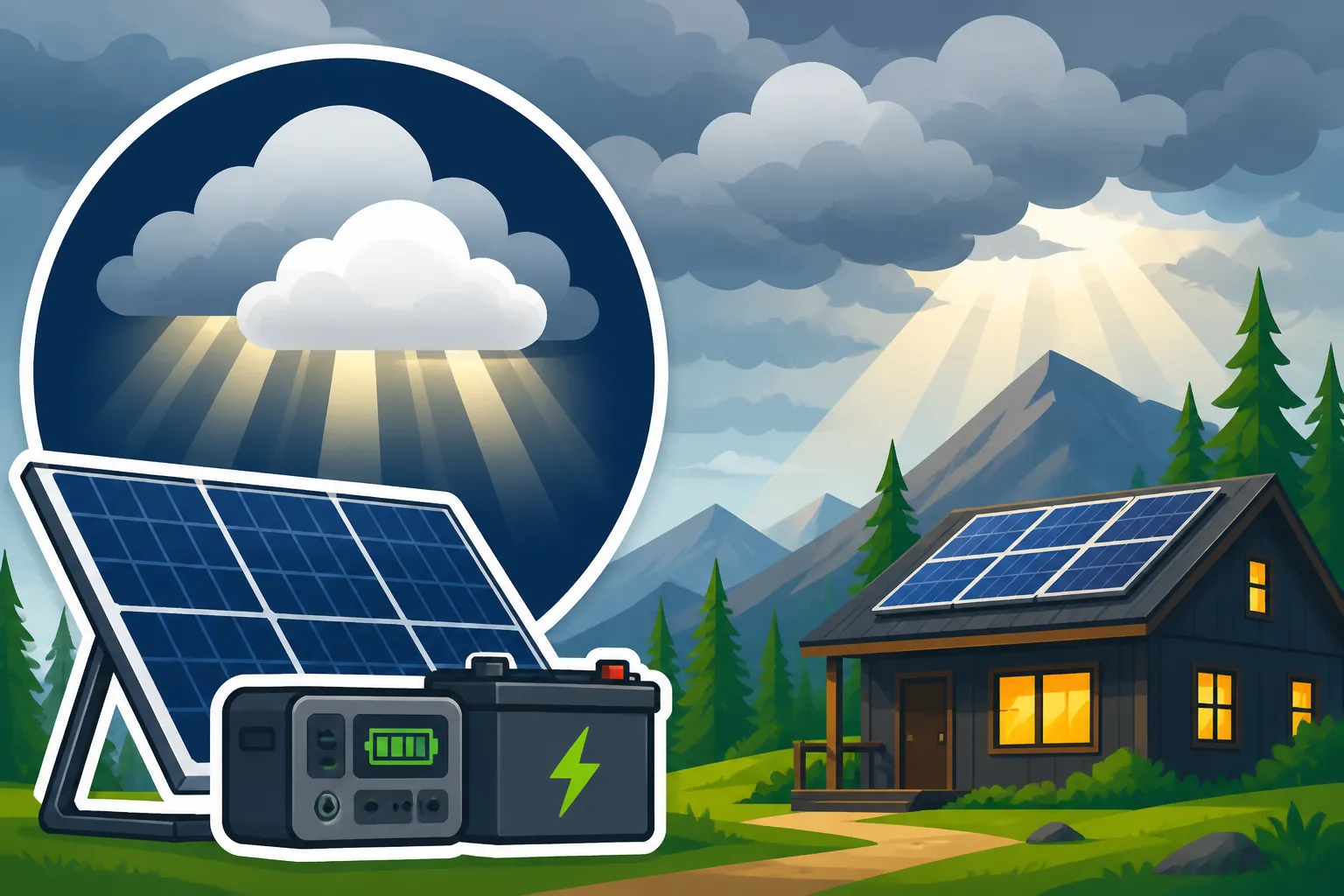
The most obvious challenge in cloudy regions is the significant drop in solar irradiance, which is the amount of solar power received per unit area. When heavy clouds roll in, they can block a substantial percentage of direct sunlight, sometimes reducing it by 70-90% or more. What you’re left with is primarily diffuse light, which solar panels can still convert into electricity, but at a much lower efficiency. This means that on a typical overcast day, your solar array might only be generating a fraction of its rated capacity.
Imagine you've carefully sized your system based on average peak sun hours, only to find that your batteries are consistently running low by evening. This isn't a flaw in your math; it's the harsh reality of prolonged low-irradiance conditions. Your panels, designed to perform optimally under direct sun, are simply not getting the fuel they need. This consistent underperformance can lead to a cycle of anxiety, constantly monitoring your battery state of charge and making tough decisions about which appliances to run and which to forgo. It's a frustrating situation that many off-gridders in these areas face, making careful planning even more crucial.
Shorter Sunlight Hours and Seasonal Variations
Beyond the density of the clouds, many cloudy regions also contend with inherently shorter daylight hours, especially during winter months. This combination creates a double whammy: less intense sun for fewer hours each day. For example, a region that might get 5 “peak sun hours” on a clear summer day might only get 1-2 effective peak sun hours on a cloudy winter day. This dramatically impacts the total energy your system can harvest.
The seasonal swing can be brutal. You might have a perfectly capable system in summer, easily keeping up with your energy demands, only to find yourself constantly running a backup generator or severely rationing power once fall turns to winter. This variability demands a system that isn't just designed for the average day, but rather for the worst-case scenario, or at least a realistic assessment of the most challenging months. Understanding these local solar patterns, not just annual averages, is absolutely key to designing a resilient off-grid setup. Ignoring these seasonal challenges is one of the most Common Off-Grid Sizing Mistakes people make.
The Psychological Toll of Low Power
Let’s be honest, living off-grid is supposed to be about freedom and self-sufficiency, not constant stress about whether your lights will stay on. The psychological impact of consistently running low on power in cloudy regions can be immense. It can manifest as “battery anxiety,” where you’re constantly checking your charge controller, making micro-decisions about turning off a light here or unplugging a device there. This isn’t the carefree lifestyle you envisioned.
It can lead to friction within a household, particularly if some members are less mindful of consumption than others. The fear of deep-discharging expensive batteries, the annoyance of flickering lights, or the inability to run essential appliances like a well pump or refrigerator when needed, can chip away at the joy of off-grid living. This frustration is a clear signal that your system needs to be robustly designed to handle these environmental realities, ensuring peace of mind and consistent power, even on the gloomiest of days.
Optimizing Your Solar Array for Dimmer Days
When you’re dealing with less-than-ideal solar conditions, every watt counts. The goal isn’t just to install panels, but to install the *right* panels in the *right* way, and in sufficient quantity, to squeeze every possible electron out of the available sunlight. This is where strategic choices in equipment and design really pay off.
Choosing High-Efficiency Solar Panels
Not all solar panels are created equal, especially when it comes to performance in low-light conditions. While any panel will produce less power on a cloudy day, some are significantly better at capturing diffuse light than others. Look for monocrystalline panels, which generally offer higher efficiency ratings (often 20% or more) compared to their polycrystalline counterparts. These panels are typically more expensive per watt, but their ability to convert more of the available light into electricity can be invaluable in a cloudy environment.
Beyond the basic panel type, research specific models known for their strong "low-light performance." Some manufacturers specifically design their cells or modules with advanced features that improve diffuse light capture. While it's hard to put an exact percentage on it without specific testing, generally, higher-quality, higher-efficiency panels will outperform cheaper, lower-efficiency alternatives in challenging conditions. Investing a bit more upfront here can mean the difference between having adequate power and consistently falling short. Consider reading reviews for specific brands like Renogy Solar Panels Review for Off-Grid or Rich Solar Solar Panels Review for Off-Grid to get a sense of real-world performance.
Maximizing Panel Placement and Tilt Angles
Even the best panels won’t perform if they’re not positioned correctly. In cloudy regions, optimizing placement and tilt becomes even more critical. First, prioritize an unshaded location. Even small amounts of shade on just one panel can drastically reduce the output of an entire series string. If shading is unavoidable, consider micro-inverters or optimizers for each panel, which can help mitigate the impact of partial shading.
Next, consider your tilt angle. While the general rule is to tilt panels at an angle roughly equal to your latitude for year-round production, in cloudy regions, especially if winter is your most challenging season, you might consider optimizing for winter sun. This means a steeper tilt to capture the lower-angle winter sun more effectively and allow snow to slide off more easily. Adjustable tilt mounts can be a game-changer, allowing you to seasonally adjust the angle for maximum efficiency. Orienting your panels correctly is part of Designing an Off-Grid Solar System Step by Step.
The Benefits of Oversizing Your Solar Array
This is perhaps the most crucial strategy for cloudy regions: oversizing your solar array. Since you know you’ll be getting significantly less power per panel on average, especially in winter or during extended cloudy spells, the simplest solution is to install more panels than a system in a sunny climate would typically need for the same load. This doesn’t mean you’re wasting money; it means you’re building in a crucial buffer.
By oversizing, you increase your chances of meeting your daily energy demands even when irradiance is low. For example, if your How Many Solar Panels for Off-Grid Living calculation suggests 10 panels for average clear-day consumption, you might consider installing 15 or 20 panels in a cloudy area. This additional capacity acts as your secret weapon, allowing you to generate sufficient power even at 30-50% efficiency. While it adds to the initial Cost of Off-Grid Solar Panels, the long-term benefit of consistent power and reduced reliance on generators often outweighs this expense, providing a greater sense of security and genuine off-grid independence.
Battery Storage: Your Cloudiest Day Ally
If your solar panels are the engine of your off-grid system, your battery bank is the fuel tank. In cloudy regions, a robust and intelligently managed battery bank is not just important; it’s absolutely non-negotiable. This is where you store the precious energy harvested during those rare sunny breaks or even the meager output of diffuse light, ensuring you have power when the sun completely disappears.
Sizing Your Battery Bank for Extended Autonomy
Autonomy, in off-grid terms, refers to how many days your battery bank can power your essential loads without any additional input from your solar panels or other charging sources. For sunny climates, 2-3 days of autonomy might be sufficient. However, in persistently cloudy regions, you absolutely need to aim for more. We’re talking 3-5 days, or even more, depending on your local weather patterns and personal comfort level. This means your How Many Batteries for an Off-Grid System calculation will need to be much more generous.
To figure out your ideal battery size, you need a precise understanding of your daily energy consumption (your "load analysis") and a realistic assessment of how long cloudy periods tend to last in your area. If you frequently experience week-long stretches of overcast skies, then designing for 7 days of autonomy would be a wise, albeit more expensive, choice. This significantly larger How to Size an Off-Grid Battery Bank will provide the crucial buffer needed to weather those long, dim stretches without constantly worrying about your power reserves.
The Advantages of Lithium Iron Phosphate LiFePO4 Batteries
When it comes to battery chemistry for off-grid systems, especially in challenging environments, LiFePO4 (Lithium Iron Phosphate) batteries are increasingly becoming the gold standard. While their upfront LiFePO4 vs Lead-Acid Battery Cost is higher than traditional lead-acid batteries, their advantages in a cloudy region are profound.
First, LiFePO4 batteries can be discharged much deeper (typically 80-100% Depth of Discharge, or DoD) without significant damage to their lifespan, compared to lead-acid batteries (which are generally recommended for 50% DoD). This means a 100Ah LiFePO4 battery offers nearly twice the usable capacity of a 100Ah lead-acid battery. Second, they have a much higher charge and discharge efficiency, meaning less energy is wasted as heat during charging and discharging cycles. This is critical when every watt from your panels is precious. Third, their cycle life is vastly superior, often lasting 10-15 years or more, easily outperforming lead-acid batteries, which might only last 3-7 years. This longer lifespan translates into fewer replacements and a better long-term return on investment. Brands like Battle Born or EG4 offer excellent reliability for off-grid applications.
Here's a quick comparison:
| Feature | Lead-Acid (Deep Cycle AGM) | Lithium Iron Phosphate (LiFePO4) |
|---|---|---|
| Usable Capacity (DoD) | ~50% | 80-100% |
| Cycle Life | 300-1200 cycles | 3000-7000+ cycles |
| Charge Efficiency | 75-85% | 95-99% |
| Charge Speed | Slower, multi-stage | Much faster, constant current |
| Weight | Very heavy | Significantly lighter |
| Maintenance | Some (ventilation, checks) | Virtually none |
| Temperature Range | Sensitive to cold charging | Better, but needs low-temp cutoff |
| Cost (per usable Wh) | Lower initial | Higher initial, lower long-term |
Monitoring and Managing Battery Health
Having a large, high-quality battery bank is great, but you also need to protect your investment. Accurate monitoring is crucial, especially in systems subject to irregular charging from cloudy conditions. A reliable battery monitor, like those offered by Victron Energy, provides real-time data on your state of charge, voltage, current in/out, and even historical data on energy consumed and produced. This allows you to truly understand your system’s performance and make informed decisions.
Beyond monitoring, implementing robust battery management is essential. For LiFePO4 batteries, a good Battery Management System (BMS) is usually built-in, protecting against overcharge, over-discharge, over-current, and temperature extremes. For any battery type, ensure your charge controller settings are optimized for your specific chemistry, providing the correct bulk, absorption, and float voltages. This attention to detail will help maximize battery lifespan, which is a major factor in the Lifetime Cost of an Off-Grid Solar System.
Integrating Supplementary Power Sources
Even with an oversized solar array and a massive battery bank, there will be times in chronically cloudy regions when you just can’t keep up. This is where supplementary power sources become indispensable. They aren’t just backups; they’re integral components of a truly resilient off-grid system in challenging environments.
The Role of Backup Generators in Off-Grid Systems
For most off-gridders in cloudy regions, a reliable backup generator is not a luxury; it’s a necessity. Think of it as your insurance policy against extended periods of low sun. When your battery bank dips below a predetermined threshold (say, 50% for lead-acid or 20% for LiFePO4), your generator kicks in to top up your batteries and carry your loads. This prevents deep cycling of your batteries, which extends their life and ensures you always have power.
Modern generators can be integrated with your off-grid inverter/charger system to start automatically when battery voltage drops, and shut off once they're recharged. This makes them seamless and hands-off. When choosing a generator, consider fuel type (propane, diesel, gasoline), noise level, and power output that can handle your largest surge loads while charging your batteries efficiently. While Off-Grid Solar vs Generator Fuel Cost is a valid concern, the peace of mind and battery longevity a generator provides are often worth the expense in these challenging locales. Even compact, portable solar generators like a high-capacity Jackery can serve as a temporary backup or to power specific tools during an emergency.
Wind Turbines and Hydro Power Considerations
While solar is typically the primary energy source, cloudy regions might also benefit from other renewable energy solutions, particularly if they have consistent wind or water resources. Small-scale wind turbines can be a fantastic complement to solar, as wind often blows when the sun isn’t shining. A hybrid wind-solar system can provide a much more consistent energy supply, leveraging the strengths of both. However, wind turbines require careful siting, a good wind resource, and can be noisy, so they aren’t for everyone.
Similarly, if you have access to a year-round stream or river with sufficient flow and head (vertical drop), micro-hydro power can provide continuous, 24/7 energy. This is often considered the "holy grail" of off-grid power due to its reliability. However, hydro systems are highly site-specific, require permits, and can involve significant upfront installation costs. Both wind and hydro are advanced topics but worth investigating if your property has suitable resources and you're truly committed to minimizing generator run-time.
Utilizing Portable Power Stations
In addition to a traditional backup generator, portable power stations, often referred to as “solar generators,” can be an incredibly useful tool for off-grid living in cloudy regions. While they can’t power an entire house for days on end, they offer flexibility and convenience. Imagine needing to power a specific workshop tool far from your main inverter, or providing backup power for a CPAP machine during an emergency without firing up your main generator.
Brands like Jackery, EcoFlow, and Bluetti offer a range of portable power stations with built-in inverters and LiFePO4 batteries. They can be charged from solar panels, a wall outlet, or your vehicle's 12V port. They're excellent for camping, remote work, or providing temporary power for critical devices during a prolonged cloudy spell when you're conserving your main battery bank. They can also be a good way to "phase" your off-grid build, starting with a portable solution before investing in a full system.
Energy Conservation and Load Management Strategies
No matter how large your solar array or battery bank, the cheapest watt is always the one you don’t use. In cloudy regions, where every photon counts, aggressive energy conservation and smart load management are not just good practices—they are absolutely essential for making your off-grid system viable and reducing your overall off-grid solar cost.
Conducting a Thorough Energy Audit
Before you even think about buying equipment, you need to understand exactly where your energy is going. This is where an energy audit comes in. Go through every appliance and device you own and list its wattage and how many hours per day you use it. Don’t guess; look at appliance labels, use a Kill-A-Watt meter, or consult online resources for common power draws. This painstaking process is the foundation for your How to Calculate Daily Energy Usage.
An eye-opening exercise for many, an energy audit often reveals "phantom loads"—devices that draw power even when turned off or in standby mode. Identifying these can lead to significant savings. For example, a TV that uses 1W in standby mode might not seem like much, but over 20 hours a day, that's 20Wh, or 600Wh per month. Multiply that across several devices, and it adds up quickly. Knowing your exact consumption allows you to accurately Off-Grid Solar System Sizing Guide and prevents the frustration of an undersized system.
Prioritizing Essential Loads and Energy-Efficient Appliances
Once you know your consumption, you can prioritize. What absolutely *must* run, and what can be used sparingly or turned off entirely during critical periods? In a cloudy climate, running non-essential, high-draw appliances like electric water heaters or space heaters directly from your batteries is usually a recipe for disaster. These types of loads are often better handled by propane, wood, or a generator.
Invest in the most energy-efficient appliances you can afford. Look for Energy Star ratings, especially for refrigerators, freezers, and washing machines. Consider DC-powered appliances where possible, as they avoid the efficiency losses associated with converting DC battery power to AC power via an inverter. LED lighting, laptop computers instead of desktops, and efficient water pumps can dramatically reduce your daily energy footprint, making it easier for your solar array to keep up even on dreary days. Remember, the smaller your baseline consumption, the more forgiving your system will be during prolonged cloudy spells.
Smart Home Automation and Usage Habits
Technology can be a great ally in energy conservation. Smart plugs can be programmed to turn off certain devices when not in use or during low-sun hours. Smart thermostats can optimize heating and cooling (if you’re using electric options sparingly). Even basic habits, like charging devices during peak sun hours, doing laundry on sunny days, or simply remembering to turn off lights when leaving a room, make a huge difference.
Consider an How to Design for Year-Round Off-Grid Power mentality that integrates your lifestyle with your energy production. If you know a cloudy week is coming, consciously scale back on discretionary loads. This active management of your energy budget, rather than a passive "set it and forget it" approach, is what truly defines successful off-grid living in challenging environments. It's about being in tune with your system and the natural rhythms of solar production.
System Monitoring and Maintenance in Cloudy Climates
Living off-grid, especially in a region prone to cloudy weather, isn’t a “set it and forget it” affair. Your system is a living, breathing entity that needs constant attention, observation, and care to ensure it performs optimally and reliably. Neglecting these aspects can lead to reduced efficiency, unexpected downtime, and costly repairs down the line.
Essential Monitoring Tools and Practices
A robust off-grid solar system in a cloudy region relies heavily on accurate and real-time data. You need to know what your panels are producing, what your batteries are doing, and what your loads are consuming. Investing in a good battery monitor is paramount, providing critical information like state of charge, voltage, current in/out, and historical data. Many modern inverters and charge controllers, especially from brands like Victron Energy or Sol-Ark, offer comprehensive monitoring platforms, often accessible via a smartphone app or web portal. This allows you to remotely check your system’s health, even when you’re not physically present.
Beyond digital tools, it’s crucial to perform regular visual inspections. Are your panels clean? Is there any noticeable shading? Are all connections secure and free from corrosion? Listen for unusual noises from your inverter or charge controller. Keeping a log of daily production and consumption can also help identify trends, troubleshoot issues, and understand how various weather patterns impact your energy balance. This level of engagement helps you anticipate problems before they become critical.
Regular Maintenance for Peak Performance
Maintenance becomes even more critical when every watt is precious. Dirty solar panels can lose significant efficiency – studies show up to 25% or more in some cases. In rainy, cloudy regions, panels might get washed somewhat, but mud, dust, bird droppings, and pollen can still accumulate and stubbornly cling, especially if you have an extended dry spell. Regular cleaning, ideally with just water and a soft brush or squeegee, will ensure they are always converting light at their maximum potential.
For batteries, particularly lead-acid, regular checks of electrolyte levels and terminal cleaning are essential. Even LiFePO4 batteries, while low-maintenance, benefit from periodic inspection of connections. Reviewing your inverter and charge controller settings annually ensures they are still optimized for your battery type and seasonal conditions. Proactive maintenance prevents small issues from escalating into major system failures, which can be devastating when you're already fighting against low sun. Learn more about Off-Grid Solar Maintenance Costs to budget properly.
Preparing for Extreme Weather Events
Cloudy regions often come with other challenging weather conditions like heavy rain, snow, or even ice storms. Your off-grid system needs to be built to withstand these elements. Ensure your panel mounts are robust and rated for your local wind and snow loads. Regular checks for loose bolts or damaged racking are vital. If you experience heavy snowfall, safely clearing snow from your panels can significantly improve winter production.
Protecting your outdoor electrical components from moisture is also key. All wiring should be in appropriate conduit, and junction boxes should be watertight. Consider surge protection for your system, especially if your area experiences frequent lightning. Having a plan for generator refueling and maintenance in adverse weather, and ensuring spare parts for critical components (like fuses or an extra charge controller) are on hand, can make all the difference in maintaining your independence during the toughest conditions. This foresight is part of building a How to Design a Reliable Off-Grid System.
Disclaimer
Please remember that this guide provides general information and recommendations. The design and installation of an off-grid solar system can be complex and should always adhere to local electrical codes and safety standards. Consult with qualified solar professionals or electricians for specific advice tailored to your unique location, energy needs, and local regulations. While we strive for accuracy, the information provided here is for educational purposes only and should not be considered a substitute for professional expertise.