Best Off-Grid Solar Kit for a Whole House
Embarking on the journey to power your entire home off the grid can feel like a monumental task, riddled with technical jargon, daunting costs, and the fear of making a costly mistake. Many folks dream of true energy independence, only to get overwhelmed by the sheer scale of figuring out what it actually takes to run a whole house without a utility bill. This comprehensive guide is here to cut through the confusion, helping you understand the best off-grid solar kit options available for a whole house, how to choose one that fits your unique needs, and what to realistically expect on this exciting path.
Defining "Whole House" Off-Grid Power
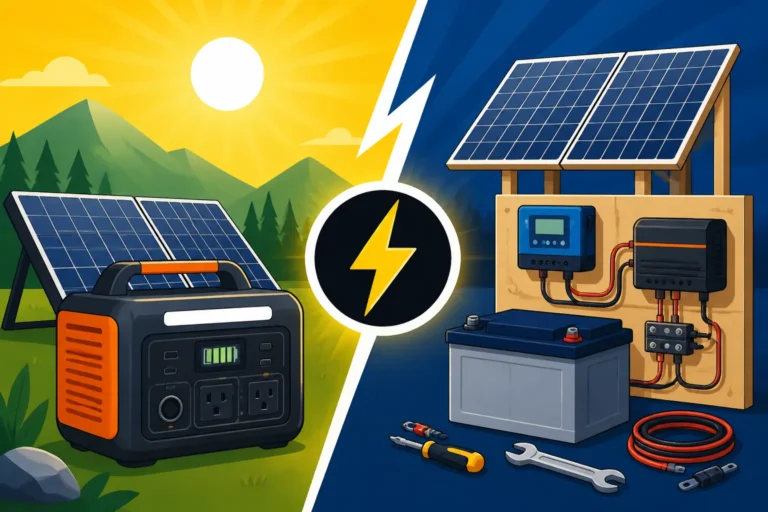
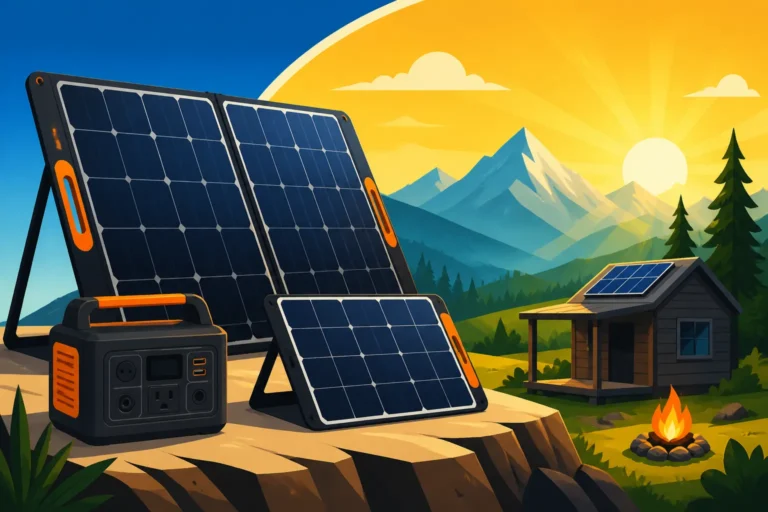
When we talk about "whole house" off-grid power, it’s not just about turning on a few lights or charging your phone. We're talking about running your entire household as if it were still connected to the utility grid – think refrigerators, washing machines, well pumps, air conditioning, and all the creature comforts you've grown accustomed to. This level of self-sufficiency requires a robust and carefully designed system, far beyond what a simple portable solar generator like a basic Jackery unit could provide, though those certainly have their place for smaller, temporary needs.
Understanding Your Energy Footprint
The very first step, and arguably the most crucial, is to get a crystal-clear picture of your current energy consumption. Without this, any "kit" you buy will either be wildly undersized, leaving you frustrated and in the dark, or massively oversized, leading to unnecessary expense. It’s like trying to buy shoes without knowing your foot size – you’re just guessing!
To truly understand your energy footprint, you'll need to conduct a thorough load analysis. This involves listing every single appliance and device in your home that consumes electricity, from the biggest culprits like your well pump or electric water heater, down to your phone chargers and LED light bulbs. For each item, you need to know its wattage (how much power it draws when running) and how many hours per day or week it typically operates. This process can be a bit tedious, but it's foundational. Many appliances have labels indicating their wattage, or you can use a kill-a-watt meter to measure actual consumption. Remember that starting (surge) wattage can be much higher than running wattage for motors, like those in refrigerators or air conditioners, and your inverter will need to handle these spikes. Understanding How to Calculate Daily Energy Usage is vital here.
Realistic Expectations for Full Independence
Let's be real: going completely off-grid with a "whole house" system is a significant commitment. It’s not just about buying hardware; it’s often about a shift in lifestyle. While modern off-grid systems are incredibly capable, they still rely on sunlight. This means you’ll become much more aware of weather patterns, energy-hungry appliances, and your overall consumption habits. You might find yourself doing laundry on sunny days, or making conscious decisions about when to run the vacuum cleaner.
It's important to set realistic expectations. For instance, expecting to run multiple electric heaters and a central air conditioner simultaneously, year-round, in a large, inefficient home purely on solar in a cloudy climate might lead to disappointment and an astronomically expensive system. Instead, consider energy-efficient alternatives like propane or wood heat, passive cooling strategies, and upgrading to energy-star rated appliances. The goal isn't just to replace grid power with solar; it's to create a sustainable and efficient energy ecosystem for your home. This foundational understanding will save you headaches and money in the long run.
Core Components of a True Whole-House Off-Grid System
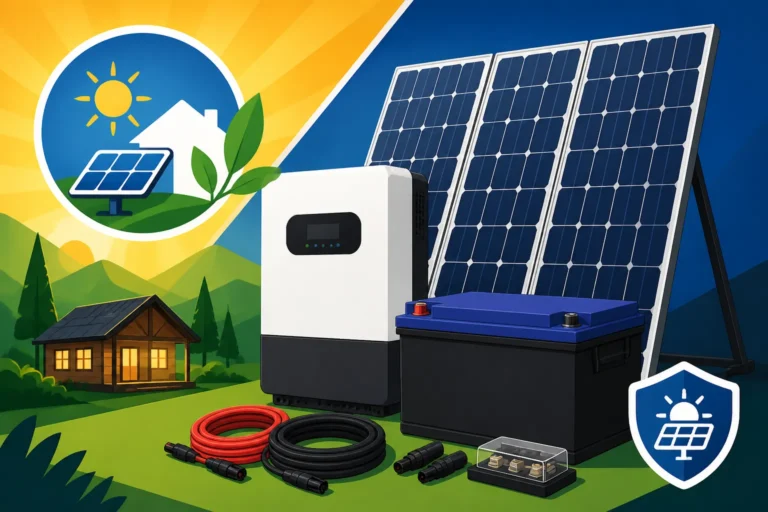
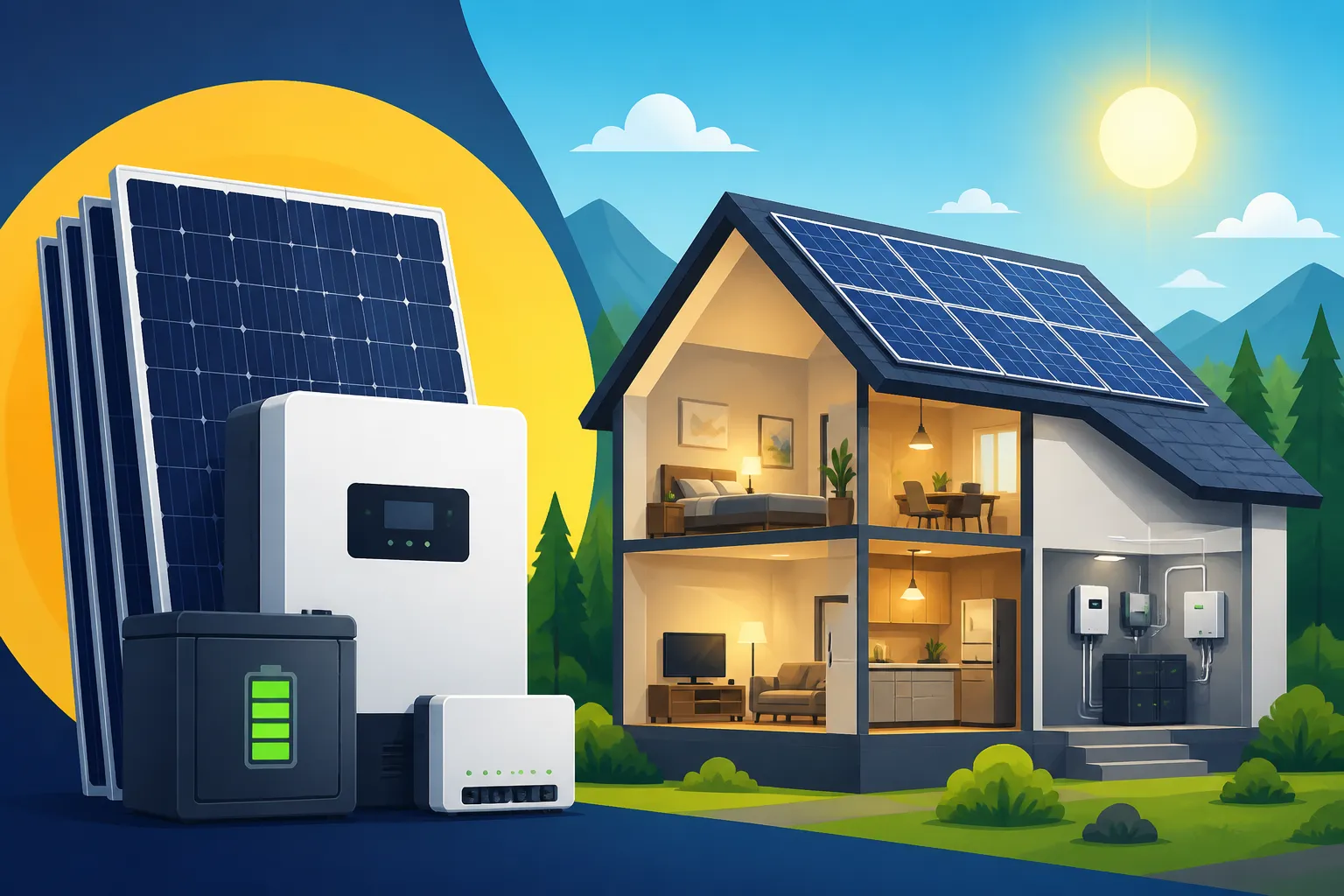
Unlike smaller, simpler setups for RVs or cabins, a whole-house off-grid solar kit is a complex, integrated system. It's much more than just a few panels and a battery. We're talking about a symphony of robust components working in harmony to keep your lights on and your water flowing, day in and day out.
The Powerhouse: Solar Panels
Your solar panels are the workhorses, diligently converting sunlight into electricity. For a whole-house system, you're not looking at just one or two panels; you're likely considering a sizable array. These typically come in monocrystalline varieties due to their higher efficiency and better performance in low-light conditions, which is crucial for maximizing energy harvest throughout the day and across seasons.
The size of your array will directly correspond to your energy needs and the amount of peak sunlight hours your location receives. For a typical family home, you might need anywhere from 5 kW to 15 kW (5,000 to 15,000 watts) or more of solar panels. This usually translates to 15 to 45 individual 300-400W panels. Factors like shading, roof space, and desired aesthetic will influence whether you opt for roof-mounted or ground-mounted installations. Remember, more panels mean more power generation, but also more space required and higher initial investment. If you're wondering How Many Solar Panels for Off-Grid Living, that article goes into much more detail.
The Energy Bank: Battery Storage
Batteries are the heart of any off-grid system, storing the solar energy generated during the day for use at night or on cloudy days. For a whole-house setup, you'll need a substantial battery bank – think multiple batteries wired together to provide the necessary capacity and voltage.
The most common choices for whole-house systems today are Lithium Iron Phosphate (LiFePO4) batteries. While they have a higher upfront cost than traditional lead-acid batteries, their longer lifespan (often 10-15 years or more), deeper discharge capabilities (you can use more of their stated capacity without damaging them), higher efficiency, and virtually maintenance-free operation make them a superior long-term investment. They're also much lighter and more compact. The capacity of your battery bank, measured in kilowatt-hours (kWh), will determine how long your home can run on stored power without sunshine – often referred to as "days of autonomy." For a resilient whole-house system, aim for at least 3-5 days of autonomy, especially if you live in an area with frequent cloudy weather. To get a better grasp on specific battery needs, check out How Many Batteries for an Off-Grid System.
The Brain: Inverter and Charge Controller
These two components are the intelligent managers of your solar power system. The charge controller sits between your solar panels and your batteries, regulating the voltage and current coming from the panels to safely charge your battery bank. For larger whole-house systems, you’ll almost certainly want an MPPT (Maximum Power Point Tracking) charge controller. These are significantly more efficient than their PWM counterparts, especially crucial when you're trying to squeeze every last watt out of your array.
The inverter is what truly brings your off-grid system to life for household use. Solar panels and batteries produce DC (Direct Current) power, but most household appliances run on AC (Alternating Current). The inverter converts that DC power into usable AC power. For a whole house, you need a pure sine wave inverter, as modified sine wave inverters can damage sensitive electronics and run motors inefficiently. The inverter’s continuous power rating (e.g., 5000W, 8000W, 12000W) must be able to handle the combined running wattage of all your essential appliances, plus a significant surge capacity for things like well pumps or refrigerators starting up. Many whole-house systems utilize inverter-chargers, which integrate the functions of an inverter, a battery charger (for a generator backup), and often a transfer switch into one sophisticated unit, simplifying wiring and management. Brands like Victron and Sol-Ark are popular for their robust, high-capacity inverter-chargers, designed for demanding applications.
Sizing Your Whole-House Off-Grid Solar System for Reliability
This is where the rubber meets the road. Getting your system sizing right is paramount for continuous, reliable power. You can't just pick a random kit and hope it works for your entire house; that's a recipe for constant frustration and expensive upgrades down the line. It's about meticulously matching your energy consumption with your energy generation and storage capabilities.
Performing a Detailed Load Analysis
As we touched on earlier, a detailed load analysis is your foundational step. Let's dig a bit deeper into what that truly entails. You're not just listing appliances; you're quantifying their energy appetite.
For example, a modern energy-efficient refrigerator might run for 8 hours a day, drawing 100 watts when running. That's 800 Watt-hours (Wh) per day. But when it starts up, its compressor might momentarily pull 600-800 watts for a few seconds – your inverter needs to be able to handle that surge.
A well pump, on the other hand, might only run for 30 minutes a day but could draw 1500 watts while running and surge to 3000-5000 watts on startup. You need to account for both scenarios.
It's helpful to categorize your loads into "essential" and "non-essential." Essential loads are what you absolutely cannot live without (fridge, lights, water pump, critical medical devices). Non-essential loads are things you could temporarily do without or run less frequently (dishwasher, washing machine, power tools, electric oven). This helps you prioritize and make smart choices during times of low solar production. Creating a spreadsheet with columns for appliance name, wattage, hours of daily use, daily Wh, and surge wattage will give you a clear picture of your total daily Watt-hour consumption and peak instantaneous power needs. This process is fully explained in our guide on Off-Grid Solar Load Calculation Explained.
Calculating Solar Array and Battery Bank Needs
Once you have your total daily Watt-hour consumption from your load analysis, you can begin to calculate the required size of your solar array and battery bank. This isn't just a simple division; you need to factor in efficiency losses and "days of autonomy."
First, let's talk batteries. If your house uses, say, 10,000 Wh (10 kWh) per day, and you want 3 days of autonomy (meaning 3 days of power stored in your batteries with no sun), you'll need a battery bank with a usable capacity of at least 30 kWh. Remember, LiFePO4 batteries allow for deep discharge, often to 80-90% or more, while lead-acid batteries are typically limited to 50% discharge. This means for the same usable capacity, you need a much larger rated capacity with lead-acid. Our article on How Much Battery Capacity You Need provides a detailed calculation method.
Next, the solar array. This needs to be large enough to recharge your battery bank and power your daily loads, even on less-than-perfect days. You'll need to know your "peak sun hours" – the average number of hours per day when your solar panels receive direct, maximum-intensity sunlight, which varies significantly by location and season. If you need 10 kWh daily and have an average of 4 peak sun hours, you might think you need a 2.5 kW array (10,000 Wh / 4 hours). However, you must factor in system losses (inverter inefficiency, cable losses, temperature, dust, etc.), which can easily reduce output by 15-30%. So, you'd need to oversize your array significantly. A good rule of thumb is to aim for your array to produce 1.2 to 1.5 times your daily consumption to account for these losses and ensure sufficient charging, especially in winter or on cloudy days.
Choosing the Right System Voltage
For whole-house off-grid systems, you'll almost always be looking at higher system voltages, specifically 24V or 48V. While 12V systems are common for smaller applications like RVs or sheds, they are simply not efficient or practical for powering an entire home.
Higher voltages offer several distinct advantages:
- Reduced Current: For a given amount of power, higher voltage means lower current (Amps). Lower current means you can use smaller, less expensive wiring, and there's less energy lost due to resistance in the cables (voltage drop). This is a huge benefit over longer cable runs often found in residential installations.
- Easier Inverter Sizing: High-power inverters (5kW and up), which are essential for whole-house systems, are typically designed for 24V or, more commonly, 48V battery banks.
- Scalability: It's much easier to scale up a 48V system with multiple batteries and charge controllers than a 12V system, making future expansion more straightforward.
Most experienced off-grid enthusiasts and professionals recommend 48V for whole-house applications due to its superior efficiency and compatibility with high-power equipment. It strikes the best balance between manageability and performance for significant energy demands. We delve deeper into 12V vs 24V vs 48V: Which to Choose if you want to understand the specifics.
Key Factors in Selecting an Off-Grid Whole-House Kit
Once you've done your homework on energy consumption and sizing, the next step is to actually start looking at what's out there. The market for off-grid solar equipment has exploded, offering a bewildering array of options. Choosing the "best" kit isn't about finding a one-size-fits-all solution; it's about finding the right fit for your specific needs, budget, and comfort level with DIY versus professional installation.
Kit Completeness and Scalability
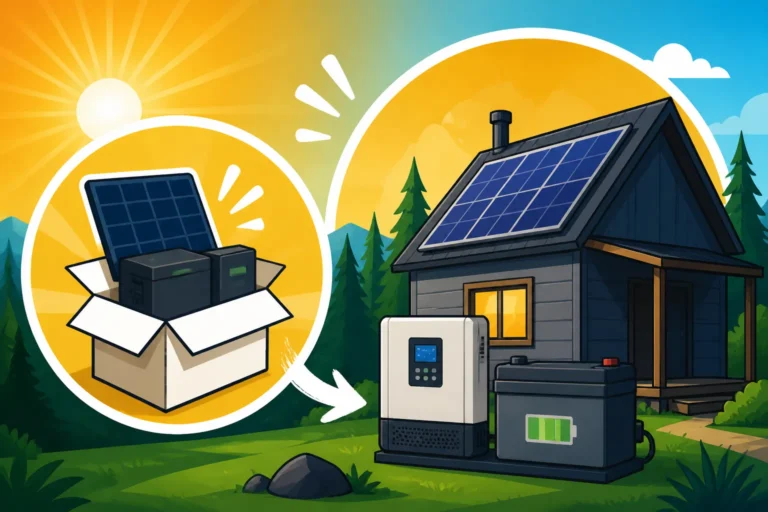
When evaluating off-grid solar kits for a whole house, pay close attention to what's actually included. Some kits are truly "all-in-one," providing panels, batteries, an inverter/charge controller, mounting hardware, and even necessary cabling and safety disconnects. Others might just provide the core electronics or panels, leaving you to source the rest. For a whole-house system, an all-inclusive kit from a reputable vendor can simplify the purchasing and installation process considerably.
Beyond what's in the box today, consider the kit's scalability. Life changes, and so might your energy needs. You might add an electric vehicle, a new workshop, or more power-hungry appliances in the future. Can the system be easily expanded by adding more panels, batteries, or even an additional inverter? Look for systems with modular components and communication protocols that allow for seamless integration of future additions. A system that locks you into a specific proprietary expansion path could be limiting and expensive down the road. Some brands, like EcoFlow's Power Kits, offer a relatively complete modular approach that can be a good starting point for a flexible system, though a full whole-house system would likely require more custom integration.
Brand Reputation and Component Quality
This is not the place to pinch pennies on no-name components. Your whole-house off-grid system is a critical infrastructure investment. You want reliable, high-quality components from established brands with a proven track record. Skimping on quality can lead to frequent breakdowns, poor performance, reduced lifespan, and ultimately, higher costs and frustration.
Look for brands known for their durability and performance in harsh off-grid conditions. For panels, companies like REC Solar, Canadian Solar, or Trina Solar are widely respected. For inverters and charge controllers, Victron Energy, Sol-Ark, Outback Power, and Schneider Electric are industry leaders, known for their robust features, excellent customer support, and advanced monitoring capabilities. When it comes to batteries, brands like Battle Born, EG4, and SOK for LiFePO4 batteries are popular choices, alongside larger industrial battery providers. While a Jackery Explorer 1000 is a fantastic portable power station for camping, it's not the same league as a multi-component system from Victron designed to power a full home. Research reviews, forum discussions, and professional opinions. The Best Off-Grid Solar Brands article offers a deep dive into reputable manufacturers.
Warranty, Support, and Installation Considerations
A comprehensive warranty is your safeguard against manufacturing defects or premature component failure. Solar panels typically come with 25-year performance warranties and 10-12 year product warranties. Inverters usually have 5-10 year warranties, and LiFePO4 batteries often carry 10-year warranties. Understand what each warranty covers and the process for making a claim.
Customer support is equally critical. When you're dealing with a complex off-grid system, you will have questions or need troubleshooting assistance. A company with responsive, knowledgeable technical support can be invaluable. This might be the manufacturer directly, or your kit provider/installer.
Finally, think about installation. Are you planning a DIY installation to save on costs? Many homeowners successfully install their own systems, especially with good instructions and community support. However, a whole-house system involves significant electrical work, including high-voltage DC and AC wiring, grounding, and potentially connection to your home's main electrical panel. If you're not experienced with electrical systems, hiring a qualified electrician or an experienced off-grid solar installer is highly recommended for safety and compliance with local codes. Even if you DIY most of it, you might want a professional to handle the final connections and inspection. Our guide on DIY vs Professional Off-Grid Solar Cost can help you weigh these options.
The Investment: Understanding the Cost of Off-Grid Whole-House Power
Let's not beat around the bush: powering an entire house off the grid is a significant financial investment. It's often the single biggest hurdle for most people. However, viewing it as just an expense misses the point; it’s an investment in long-term energy independence, resilience, and often, an increase in property value. Understanding the various cost components will help you budget effectively and avoid surprises.
Breaking Down the Total System Price
The "total system price" for a whole-house off-grid solar kit can vary wildly, generally ranging from $15,000 to $50,000+ for a typical family home, depending heavily on energy consumption, chosen components, and desired days of autonomy. Let's break down where that money goes:
- Solar Panels: These usually account for 15-25% of the total cost. Quality panels cost between $0.80 and $1.50 per watt. For a 10 kW array, that's $8,000 to $15,000.
- Battery Bank: This is often the most expensive component, easily 30-50% of the total. A 30 kWh LiFePO4 battery bank could cost anywhere from $10,000 to $25,000 or more, depending on brand and capacity. Cost of an Off-Grid Solar Battery Bank explains this in detail.
- Inverter/Charge Controller: These crucial components can make up 10-20% of the cost. A high-quality, whole-house rated inverter-charger (e.g., a Victron MultiPlus-II or Sol-Ark 12K) can range from $3,000 to $10,000+.
- Mounting Hardware: Racking for your solar panels (either roof or ground mount) adds another 5-10%, typically $1,000 to $3,000+.
- Balance of System (BOS) Components: This includes all the miscellaneous but essential items: wiring, fuses, breakers, disconnect switches, combiner boxes, conduit, grounding equipment, and monitoring devices. This can be another 5-15% of the total, often $1,000 to $5,000.
Here's a simplified cost breakdown for a hypothetical 10kW off-grid whole house system with 30kWh LiFePO4 batteries:
| Component | Estimated Cost Range | Percentage of Total |
|---|---|---|
| Solar Panels (10kW) | $8,000 – $15,000 | 15-25% |
| Battery Bank (30kWh) | $10,000 – $25,000 | 30-50% |
| Inverter/Charge Control | $3,000 – $10,000 | 10-20% |
| Mounting Hardware | $1,000 – $3,000 | 5-10% |
| Balance of System | $1,000 – $5,000 | 5-15% |
| Total System Cost | $23,000 – $58,000+ | 100% |
Keep in mind these are rough estimates, and actual prices fluctuate. For a comprehensive overview, read our article on How Much Does an Off-Grid Solar System Cost.
DIY Versus Professional Installation Costs
Installation costs are another significant variable. If you choose a full professional installation, it can add 20-50% to your total system cost, depending on labor rates in your area, the complexity of the installation, and any necessary trenching or structural modifications. For a $30,000 system, that could mean an additional $6,000 to $15,000 or more. This covers site assessment, system design, labor, permitting, and inspection fees.
However, if you're comfortable with DIY, you can save a substantial amount on labor. Many off-gridders opt to install their own systems, often relying on online resources, community knowledge, and local electricians for specific tasks like main panel tie-ins. The savings can be immense, but the trade-off is your time, effort, and the responsibility for ensuring safety and compliance. Even with DIY, you'll still have costs for tools, consumables, and potentially an electrician for final hookups or inspections. If you're considering a partial DIY approach, looking into Off-Grid Solar Installation Cost can give you more perspective.
Long-Term Value and Potential Savings
While the upfront cost is significant, consider the long-term value. Once installed, your primary energy source – the sun – is free. This means eliminating monthly utility bills, which can easily add up to hundreds of dollars per month or thousands annually. Over the lifespan of your system (20-30 years for panels, 10-15+ for batteries), these savings can be substantial, often equaling or exceeding the initial investment.
Furthermore, an off-grid solar system provides unparalleled energy security and resilience. You're no longer susceptible to power outages, grid failures, or volatile electricity price increases. In remote locations, the cost of extending utility lines can easily rival or even exceed the cost of an off-grid solar system. This is a crucial comparison point for many, as detailed in Off-Grid Solar vs Utility Extension Cost. While there are maintenance costs, especially for battery replacement down the line, these are generally predictable and manageable compared to unforeseen grid expenses.
Beyond the Kit: Enhancing Your Whole-House Off-Grid Lifestyle
An off-grid solar kit provides the foundation, but true energy independence for a whole house often involves integrating additional strategies and tools. It's about building a resilient and sustainable lifestyle, not just installing hardware.
Integrating Backup Generators and Other Sources
Even the most meticulously sized solar system can struggle during extended periods of very cloudy weather or during winter months in northern latitudes where sun exposure is minimal. This is where a fossil fuel generator, typically propane or diesel, becomes your best friend. A backup generator isn't meant to run continuously; rather, it's there to "top off" your batteries when solar production is insufficient.
Many modern inverter-chargers are designed to work seamlessly with generators. They can automatically start the generator when battery levels drop too low and shut it off once the batteries are sufficiently charged. This provides critical redundancy and peace of mind, ensuring you always have power, no matter what the sun is doing. Some people also integrate small wind turbines or even micro-hydro systems if they have suitable resources, though these are less common for typical residential use. Think of a powerful portable unit like a Jackery 2000 Pro or similar as a possible very minor supplement for specific, small loads during an outage, but for real whole-house backup, you're looking at a much larger, dedicated generator integrated into your system. Our article on Cost of Adding a Generator to Off-Grid Solar can help with budgeting.
Monitoring and Maintenance for Longevity
Once your whole-house off-grid system is up and running, your job isn't over. Regular monitoring and routine maintenance are crucial for ensuring its longevity and optimal performance. Many modern inverters and charge controllers come with sophisticated monitoring apps or web interfaces (e.g., VictronConnect, Sol-Ark app) that allow you to track real-time power production, battery state of charge, consumption, and system health from your phone or computer. Learning to interpret this data helps you understand your system's performance and identify potential issues early.
Maintenance is generally straightforward.
- Solar Panels: Keep them clean! Dust, pollen, bird droppings, and leaves can significantly reduce output. A simple rinse with a hose or a soft brush can do wonders. Inspect them periodically for damage or loose connections.
- Batteries: For LiFePO4, maintenance is minimal, primarily monitoring their state of health. For lead-acid (if you opted for them), you'll need to regularly check electrolyte levels and top them off with distilled water. Ensure your battery bank is kept at a stable temperature, away from extreme heat or cold, to maximize lifespan.
- Wiring and Connections: Periodically inspect all wiring, terminals, and connections for corrosion, tightness, or signs of overheating.
- Inverter/Charge Controller: Keep the area around these components clean and clear of obstructions to ensure proper ventilation. Check for any error codes or unusual noises.
A proactive approach to maintenance will prevent small issues from becoming expensive problems and help your investment last for decades.
The Journey to Energy Independence
Choosing the best off-grid solar kit for a whole house is more than just a purchase; it's a step towards a fundamentally different relationship with energy. It's about self-reliance, sustainability, and freedom from ever-increasing utility bills. It's a journey that starts with careful planning, smart choices, and a willingness to understand the intricacies of your own power system.
Whether you're looking to escape the grid entirely, build a resilient backup power system, or simply reduce your carbon footprint, the technology and resources are available to make your whole-house off-grid dream a reality. Take your time, do your research, and don't be afraid to ask for help from seasoned off-gridders or professionals. The reward of true energy independence is well worth the effort.
Disclaimer
The information provided in this article is for general informational purposes only and does not constitute professional advice. Off-grid solar system design and installation can be complex and involve significant electrical hazards. Always consult with qualified professionals, such as licensed electricians or certified solar installers, to ensure your system is safely and correctly designed, installed, and compliant with all local codes and regulations. Always prioritize safety when working with electricity.