Off-Grid Battery Bank Installation Mistakes to Avoid
Embarking on the journey of off-grid living or powering a remote setup with solar is incredibly liberating, but let's be honest, the battery bank can feel like the most intimidating part. So many people jump in, excited to cut the cord, only to find themselves scratching their heads, battling flickering lights, or worse, facing serious safety concerns, all because of a few easily avoidable battery installation mistakes. This comprehensive guide is here to walk you through the most common pitfalls so you can build a reliable, safe, and efficient off-grid power system.
Undervaluing Planning and Sizing Requirements
One of the biggest blunders people make with off-grid battery banks isn't even about the physical installation, but the planning that precedes it. It’s easy to get caught up in the allure of big, shiny batteries without truly understanding what your unique power needs demand. This oversight can lead to a system that’s either constantly running out of juice or is drastically overbuilt, costing you more than necessary.
Overlooking Accurate Load Calculations
Before you even think about buying a single battery, you absolutely must do a thorough load analysis. This means listing every single appliance and device you plan to power, noting its wattage, and estimating how many hours per day you'll use it. People often forget "phantom loads" or underestimate occasional heavy-hitters like a microwave, well pump, or coffee maker. A quick mental tally is rarely enough; you need to measure or look up the exact specifications.
For example, imagine you plan to run a small refrigerator. You might see its running watts are low, say 100W. But what about its starting wattage? That compressor kicks on with a surge that can be 5-10 times its running wattage for a brief moment. If your battery bank and inverter aren't sized to handle that surge, your fridge won't even start, or it'll cause your inverter to trip. This is a common frustration, and one that often sends people back to the drawing board, or worse, leads to purchasing inadequate equipment that then needs replacing. You can learn more about How to Calculate Daily Energy Usage to get this critical step right.
Choosing Insufficient Battery Capacity
Once you have your load calculations, the next mistake is not translating that accurately into battery capacity. Many assume a bigger battery bank is always better, but it's about right-sizing for your daily energy consumption and desired "days of autonomy" – how long your system can run without sun. A common misstep is failing to account for bad weather, cloudy days, or increased seasonal usage.
If you size your battery bank too small, you’ll constantly be worried about power outages, especially during extended periods of low sunlight. You’ll be deeply disappointed when your lights dim prematurely or your critical appliances shut off. Conversely, oversizing significantly adds to the upfront Off-Grid Solar Cost: Complete Breakdown without proportional benefit, leading to unused capacity that slowly degrades over time. Finding that sweet spot requires a careful balance between your energy needs, local solar insolation data, and your budget for How Much to Budget for Off-Grid Batteries.
Selecting the Wrong Battery Chemistry
The world of off-grid batteries has expanded dramatically beyond traditional lead-acid. While lead-acid (like flooded or AGM) has been the workhorse for decades, Lithium Iron Phosphate (LiFePO4) batteries have become incredibly popular due to their longer lifespan, deeper discharge capabilities, and lighter weight. However, many newcomers still fall into the trap of choosing a battery chemistry that doesn't align with their usage patterns or climate.
For instance, installing lead-acid batteries in an area that experiences frequent, deep discharges and then expecting them to last a decade is unrealistic. Lead-acid batteries are sensitive to discharge depth and benefit from being kept above 50% state of charge. LiFePO4 batteries, on the other hand, can be routinely discharged much deeper without significant degradation. If you're building a full-time residence in a cold climate, forgetting that many LiFePO4 batteries require an internal heating element to charge below freezing could lead to a non-functional system in winter. Understanding the pros and cons, and the LiFePO4 vs Lead-Acid Battery Cost, is paramount to avoiding costly replacements or underperformance later on.
Major Wiring and Connection Blunders
Once the planning is done and the components are on hand, the actual wiring process is where many DIYers hit a wall. Electrical work can be daunting, and mistakes here aren't just inefficient; they can be downright dangerous.
Incorrect Wiring of Batteries
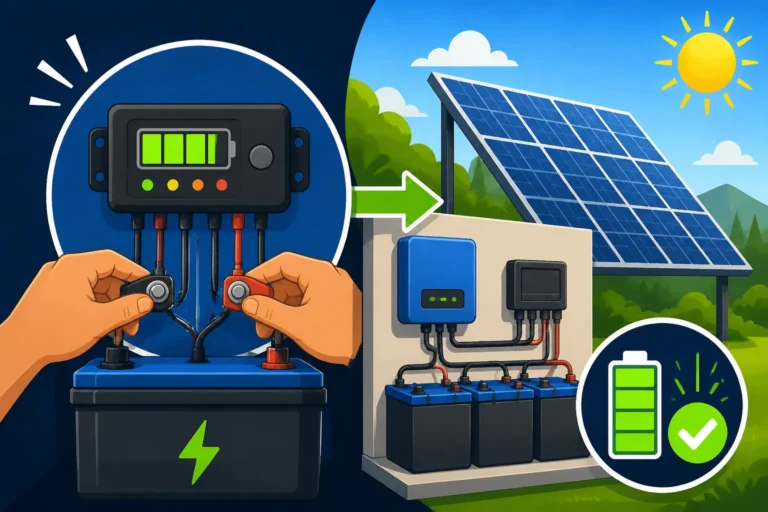
Connecting batteries in series or parallel seems straightforward, but it's a critical step that often goes wrong. Wiring batteries incorrectly can lead to uneven charging, premature battery failure, or even a hazardous short circuit. For instance, if you're aiming for a 24V or 48V system with multiple 12V batteries, you'll need to wire them in series, and then multiple series strings can be wired in parallel for increased capacity. Mixing up these connections, or failing to ensure all batteries in a series string are of the same age and capacity, creates imbalances.
Unevenly charged batteries mean some are overworked while others sit underutilized, shortening the lifespan of your entire bank. This is particularly crucial when dealing with a significant investment in your Cost of an Off-Grid Solar Battery Bank. It's absolutely vital to follow precise wiring diagrams and double-check every connection point. If you’re building a substantial system, even small variations in internal resistance can lead to long-term problems. Take your time, consult detailed guides on How to Wire a Battery Bank, and perhaps even get a second set of eyes on your setup before powering it up.
Undersized Cables and Connections
You've calculated your loads, you've chosen your batteries, but have you considered the wires that connect everything? This is a surprisingly common oversight. Using cables that are too thin for the amount of current (amps) they need to carry, or for the distance they span, leads to "voltage drop." Voltage drop means energy is lost as heat in the wires, reducing the efficiency of your system and potentially damaging components.
Think about it: if your batteries are trying to send 100 amps to your inverter, and your cables are barely adequate, that energy is being wasted. Your inverter will receive less voltage than it expects, working harder, drawing more current, and ultimately shortening its lifespan. Moreover, undersized cables can overheat, posing a serious fire risk. Always consult a wire sizing chart that considers both current and distance. You can often find high-quality, appropriately sized cables and connectors from reputable brands on platforms like Amazon, but always verify their gauge and ratings. Understanding How to Size Wire and Cables is non-negotiable for a safe and efficient system.
Neglecting Fuses and Breakers
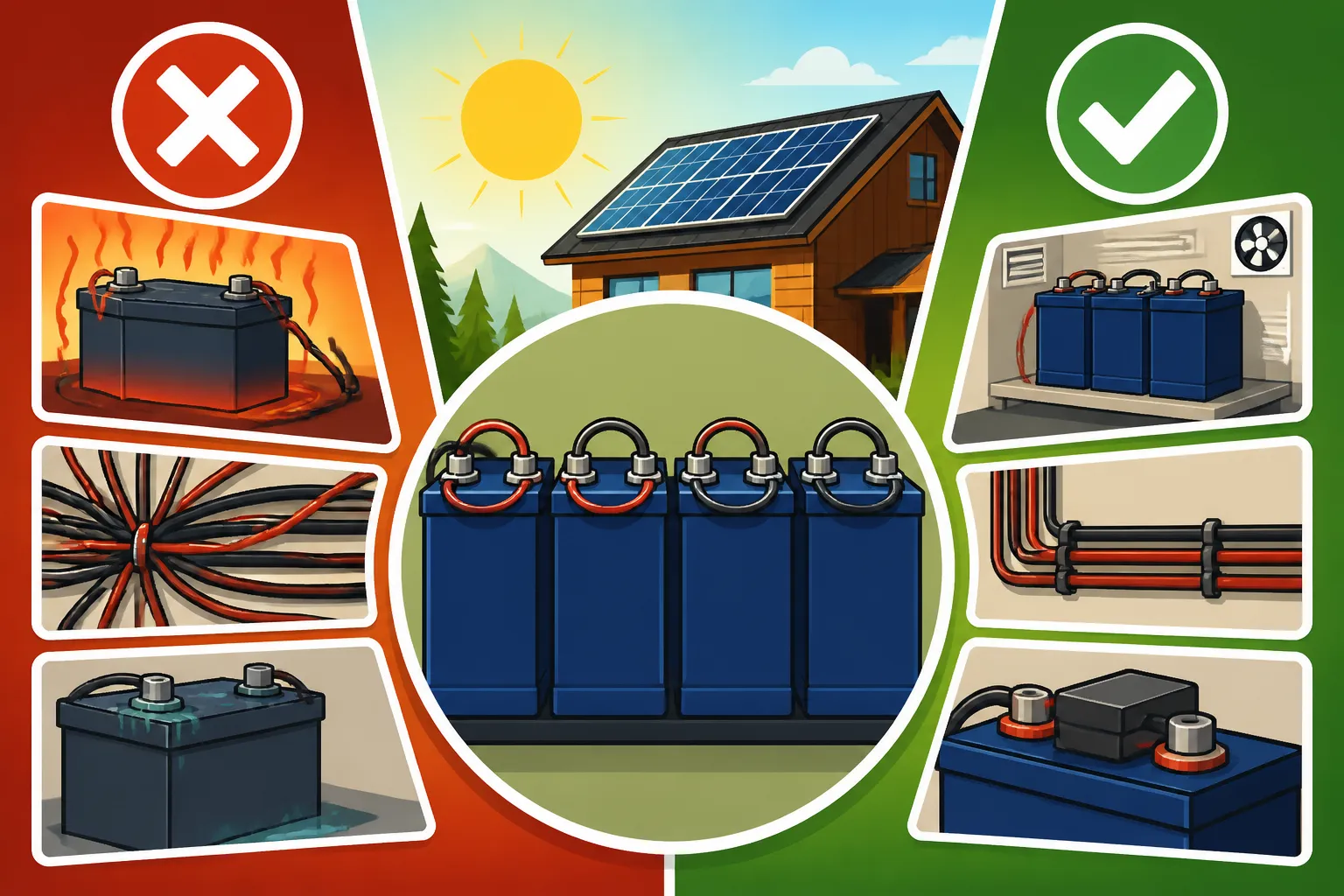
This might be the most dangerous mistake: skipping or improperly installing fuses and breakers. These essential safety devices are designed to protect your components and prevent fires in the event of a short circuit or overcurrent. Imagine a scenario where a loose wire touches something it shouldn't, causing a massive surge of current. Without a fuse or breaker to interrupt the circuit, that current could rapidly melt wires, ignite insulation, or even cause your batteries to dangerously overheat.
Every major component in your off-grid solar system – from your solar panels to your charge controller, and especially your battery bank – needs proper overcurrent protection. This means fuses for the battery output, between the charge controller and batteries, and often between the inverter and batteries. Never use a fuse that’s rated too high for the circuit it's protecting. It’s like putting a band-aid on a gaping wound. Investing in good quality DC-rated circuit breakers or fuses, readily available from suppliers like Renogy or specialized electrical shops, is a small cost compared to the potential damage or disaster you could face.
| Common Wiring Mistake | Consequence | Essential Solution |
|---|---|---|
| Incorrect Series/Parallel | Uneven battery wear, reduced lifespan, poor performance. | Follow precise diagrams; ensure batteries are matched; use proper bridging. |
| Undersized Cables | Voltage drop, wasted energy, component damage, fire risk. | Consult wire sizing charts for current and distance; use appropriate gauge cables. |
| No Fuses/Breakers | Short circuits, component damage, fire hazard, system failure. | Install correctly sized DC-rated fuses/breakers for all major components and battery output. |
| Loose Connections | Intermittent power, arcing, heat buildup, fire risk. | Double-check all terminals; use proper crimping tools; apply anti-corrosion grease when appropriate. |
| Unlabeled Wiring | Confusion, difficulty troubleshooting, safety hazard during maintenance. | Label all cables clearly (positive/negative, component names, voltage). |
Overlooking Environmental and Safety Factors
Off-grid battery banks are powerful energy storage units, and their environment plays a huge role in their performance, longevity, and safety. Ignoring these factors can lead to serious headaches and potential danger.
Poor Ventilation Practices
Batteries, especially lead-acid types (flooded, AGM, gel), produce gases during charging and discharging cycles. Hydrogen gas, in particular, is highly flammable and can accumulate in poorly ventilated spaces. Even LiFePO4 batteries, while not off-gassing, require adequate airflow to prevent overheating, especially if they are heavily worked or stored in a confined space.
Enclosing a battery bank in a sealed, unvented box or room is an invitation for trouble. The accumulation of hydrogen can lead to an explosion with just a spark. Even if fire isn't a direct risk, high temperatures can significantly shorten battery life, regardless of chemistry. For flooded lead-acid, you absolutely need active ventilation to vent gases to the outside. For other types, ensuring ample space around batteries and passive airflow prevents heat buildup. How to Ventilate a Battery Enclosure is a critical topic that every off-gridder should study.
Exposing Batteries to Extreme Temperatures
Batteries are Goldilocks when it comes to temperature: they don't like it too hot, and they don't like it too cold. Operating or storing batteries outside their recommended temperature range is a surefire way to reduce their capacity, shorten their lifespan, and decrease their efficiency.
In hot climates, high temperatures can accelerate the chemical reactions inside batteries, leading to faster degradation and electrolyte evaporation in lead-acid types. You'll literally watch your battery capacity diminish prematurely. In cold climates, the internal resistance of batteries increases, reducing their usable capacity and making them less efficient at accepting a charge. For LiFePO4 batteries, charging them below freezing temperatures (typically 32°F or 0°C) can cause irreversible internal damage, a problem solved by heated batteries or careful placement. If your system is destined for a region with harsh winters, understanding How to Protect Batteries from Cold is paramount. Building an insulated, temperature-controlled battery box or locating your bank in a conditioned space can make a world of difference.
Neglecting Proper Grounding
Electrical grounding is not just a suggestion; it's a critical safety measure that protects you, your equipment, and your structure from electrical faults and lightning strikes. Many off-grid setups, especially smaller ones in RVs or cabins, sometimes overlook this crucial step, viewing it as an unnecessary complication. However, an ungrounded system leaves an open pathway for dangerous currents in the event of a fault.
Proper grounding means connecting your battery bank, inverter, charge controller, and solar panel frames to a common ground point, which is then connected to an earth ground rod. This creates a safe path for fault currents to dissipate into the earth, tripping breakers and preventing electrocution or fire. While local codes for off-grid systems can vary wildly, best practices dictate that grounding is always a priority. Don't assume that because you're off-grid, the rules of electrical safety don't apply. They do, perhaps even more so when you're your own utility company!
Mismanaging Maintenance and Monitoring
Even the best-designed and installed battery bank won't last if it's not properly cared for. Many off-gridders, once their system is up and running, treat their batteries as a "set it and forget it" component, only to be surprised by premature failure or reduced performance.
Ignoring Battery Monitoring Systems
A common mistake is installing a battery bank without a proper monitoring system. Without a way to accurately track your battery's state of charge (SOC), voltage, current in/out, and temperature, you're essentially driving blind. You won't know if your batteries are being consistently over-discharged, undercharged, or if one cell is failing.
A good battery monitor, like those offered by Victron Energy or even simpler ones you can find on Amazon, provides crucial insights into the health of your battery bank. It tells you exactly how much energy you have left, how much is coming in, and how much is going out. This information is invaluable for managing your energy consumption and ensuring your batteries remain within healthy operating parameters. Just like you wouldn't drive your car without a fuel gauge, you shouldn't run your off-grid system without a clear picture of your battery's status. Investing in How to Install a Battery Monitor correctly will extend the life of your entire system.
Improper Charging Regimes
Batteries, particularly lead-acid, are sensitive to how they are charged. Consistently undercharging or overcharging them is a leading cause of early battery death. Undercharging leads to sulfation in lead-acid batteries, where lead sulfate crystals build up on the plates, reducing capacity. Overcharging, on the other hand, can cause excessive gassing, electrolyte loss, and grid corrosion, shortening life. Even LiFePO4 batteries, while more forgiving, can suffer if exposed to prolonged high voltages or improper cell balancing.
Your charge controller is the brain of your charging system. It needs to be properly configured for your specific battery type and chemistry, including settings for bulk, absorption, float (for lead-acid), and often equalization. Many off-grid solar kits, especially from brands like Renogy, come with charge controllers that have pre-set profiles, but it's essential to verify these settings match your specific batteries. Regularly checking your charge controller's settings and ensuring it's functioning optimally is a vital part of your Off-Grid Solar Maintenance Guide. Don't just plug and play; understand the charging cycles your batteries need.
Neglecting Regular Inspections and Maintenance
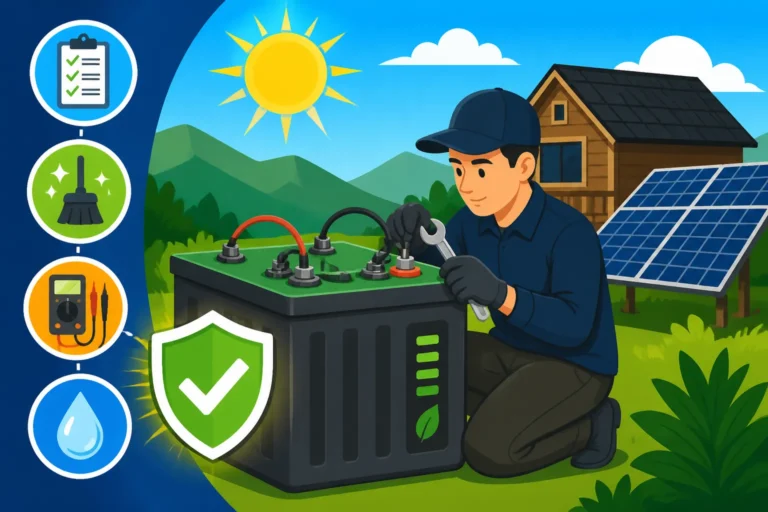
Finally, the mistake of neglecting routine inspections and maintenance catches up with many off-gridders. Batteries aren't maintenance-free, especially flooded lead-acid types which require periodic checking and topping off of electrolyte levels with distilled water. Even "maintenance-free" AGM or gel batteries benefit from visual inspections to ensure terminals are clean and tight, and that there are no signs of swelling or leaks.
Loose connections can cause resistance, leading to heat buildup and energy loss. Corroded terminals increase resistance and reduce charge efficiency. A quick monthly or quarterly check can identify these issues before they become major problems. For example, if you notice one battery in a bank consistently performing poorly, it might be an early sign of a failing cell, which could drag down the performance of the entire bank. Catching and addressing these issues early can prevent a small problem from turning into an expensive and frustrating system failure.
Disclaimer
This guide provides general information and recommendations for avoiding common off-grid battery bank installation mistakes. Always consult with qualified professionals and adhere to all local electrical codes and safety regulations before installing or modifying any electrical system. Working with electricity can be dangerous, and improper installation can lead to injury, property damage, or death.