How to Maintain an Off-Grid Battery Bank
If you've taken the plunge into off-grid living, you know that your battery bank isn't just a component—it's the very heart of your electrical system. Neglect it, and you're looking at frustrating power outages, premature battery failure, and potentially thousands of dollars in unexpected replacement costs. This guide is all about giving you the practical know-how to keep your off-grid batteries healthy, maximizing their lifespan and ensuring your independent power supply remains rock-solid.
The Undeniable Importance of Off-Grid Battery Maintenance
Let's be real for a moment: going off-grid is an investment. And a significant chunk of that investment, often the most substantial single cost, is tied up in your battery bank. It’s not just about the initial outlay; it’s about the peace of mind that comes with knowing your power source is reliable. When you're out there relying solely on the sun, or a combination of sun and wind, your batteries are what bridge the gap between sunshine and nighttime, between peak generation and peak demand. Ignoring them is like ignoring the check engine light on your only vehicle far from town. You might get by for a bit, but disaster is looming.
Protecting Your Financial Investment
Batteries aren't cheap. Whether you've opted for robust lithium iron phosphate (LiFePO4) or more traditional lead-acid, you've spent good money. Think about the Cost of an Off-Grid Solar Battery Bank alone—it’s often a substantial portion of your total How Much Does an Off-Grid Solar System Cost investment. Proper maintenance directly impacts how long those batteries will last, saving you from having to shell out for replacements much sooner than anticipated. For instance, a well-maintained LiFePO4 battery might last 10-15 years or more, while a neglected one could degrade significantly in half that time. Similarly, flooded lead-acid batteries, which require more hands-on care, can be surprisingly resilient if tended to, but will quickly fail if ignored. This isn't just about saving money in the short term; it's about reducing your Lifetime Cost of an Off-Grid Solar System.
Ensuring System Reliability and Safety
Imagine being deep in the winter, the sun barely peeking out, and suddenly your lights flicker, then die. Your well pump stops. Your heater fan ceases to blow. This isn't just inconvenient; it can be downright dangerous. A healthy battery bank ensures your critical loads run consistently. Beyond functionality, there's a serious safety aspect. Overcharging, undercharging, improper ventilation, or damaged terminals, especially with lead-acid batteries, can lead to thermal runaway, off-gassing, and even fire. Lithium batteries, while generally safer, can still pose risks if their Battery Management System (BMS) is compromised or they are subjected to extreme conditions outside their operating parameters. Regular checks help you catch these issues before they escalate, securing both your power and your property.
Essential Daily, Weekly, and Monthly Battery Checks
Getting into a routine for checking your battery bank might sound like a chore, but it really becomes second nature once you start. It’s like checking your oil and tires – small steps that prevent major headaches down the road. The frequency of these checks largely depends on your battery chemistry and how intensely you use your system, but here’s a general breakdown that’s a good starting point for most off-grid setups.
Visual Inspections: The First Line of Defense
Your eyes are your best diagnostic tool when it comes to battery maintenance. A quick visual sweep can reveal a lot.
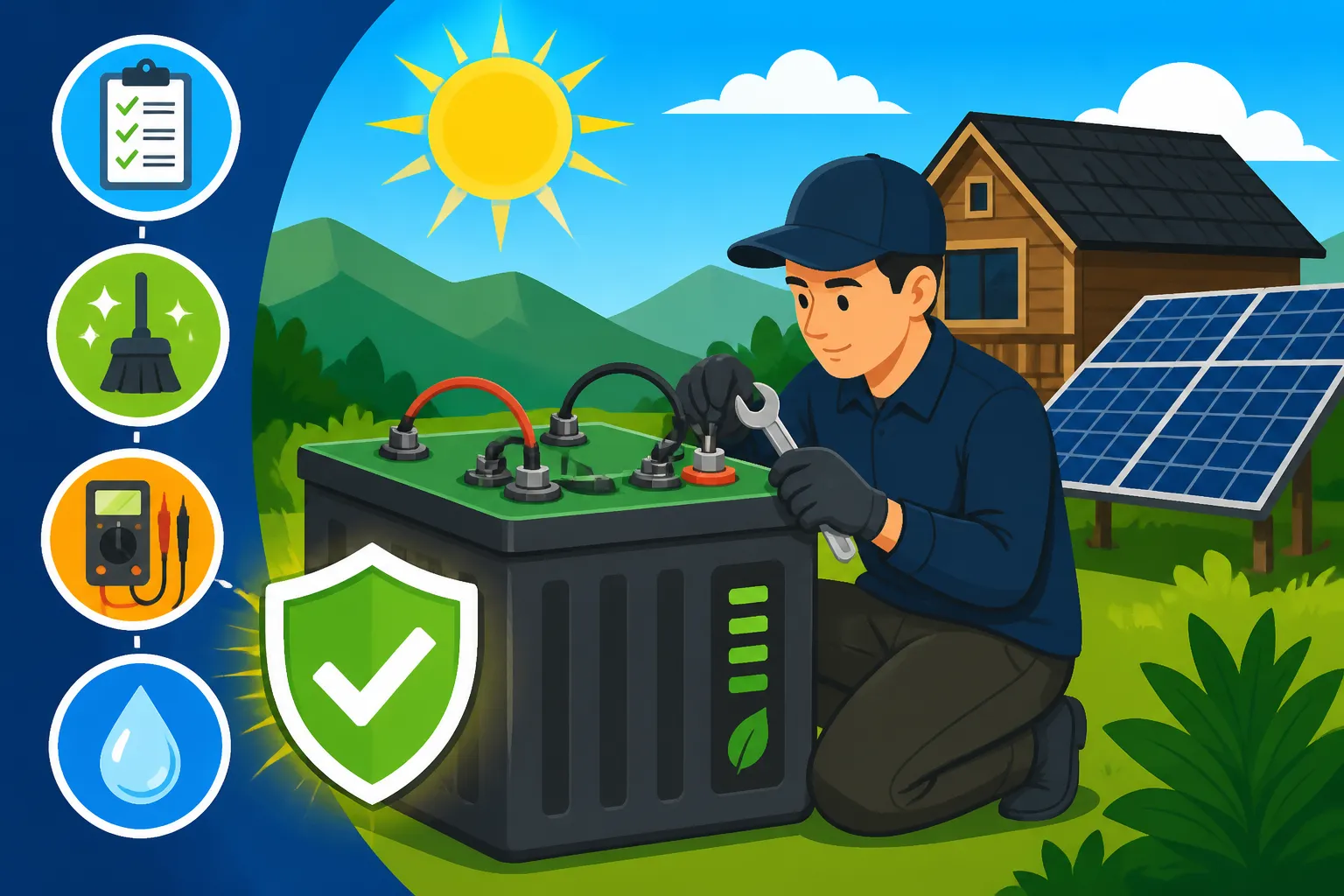
- Corrosion and Cleanliness: This is a big one, especially for lead-acid batteries. Look for any white, greenish, or bluish crusty buildup around the battery terminals, posts, or cables. This corrosion acts as a resistor, impeding current flow and causing heat buildup, which can damage your system and reduce efficiency. Use a stiff brush and a paste of baking soda and water to gently scrub it away. Once clean and dry, a thin layer of dielectric grease or a purpose-made battery terminal protector (you can often find these on Amazon or at local auto parts stores) can prevent future buildup. Always ensure your terminals are tight and secure; loose connections are a major source of resistance and heat.
- Cracks, Leaks, and Swelling: Inspect the battery casings themselves. Any cracks, bulges, or leaks are red flags. A bulging battery could indicate overcharging, internal gas buildup, or a failing internal cell – all serious issues. Leaks mean corrosive acid (in lead-acid) or potentially flammable electrolytes (in lithium) are escaping, which is both dangerous and damaging. If you spot these, it’s usually time to replace the battery immediately and investigate the cause.
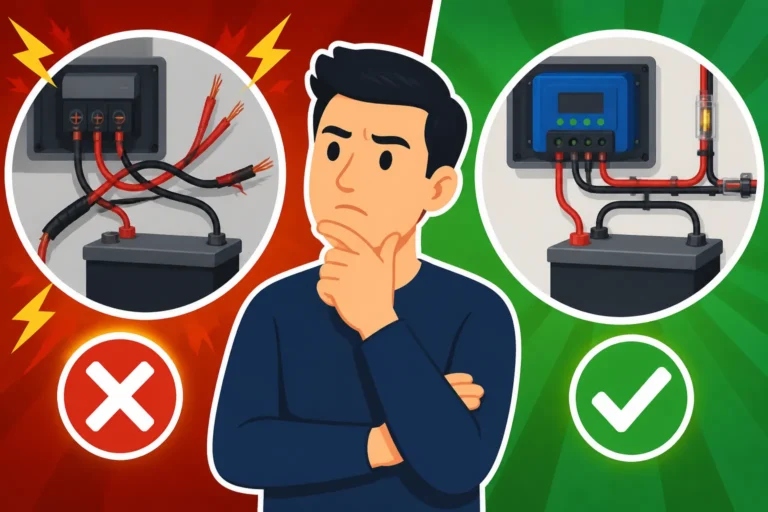
- Cable and Connection Integrity: Trace your battery cables from the posts to your inverter, charge controller, and busbars. Are they frayed? Are the insulation layers intact? Are they securely fastened? Rodents love to chew on wires, and vibrations can loosen connections over time, especially in mobile applications like an Off-Grid Solar Cost for an RV or a van. Ensure all connections are tight and that cables are properly supported to prevent strain.
Voltage and State of Charge Monitoring
Knowing your battery's voltage and state of charge (SoC) is like knowing how much fuel is in your car. This is often an everyday check, easily done with a good battery monitor.
- Understanding Voltage Readings: For 12V lead-acid batteries, a fully charged battery is around 12.6-12.8V at rest. For LiFePO4, it’s typically 13.4-13.6V. Crucially, voltage drops significantly under load. You want to see the resting voltage, ideally in the morning before the sun hits your panels or after a few hours of no significant draw. This gives you the most accurate snapshot of your battery's health. Consistently low resting voltage, even after a full charge cycle, could signal a problem. A precise battery monitor, like those offered by Victron Energy or Renogy, can track this for you, often displaying it via an app.
- State of Charge (SoC): While voltage gives you an idea, a shunt-based battery monitor provides a much more accurate SoC percentage. This device measures current in and out of your battery bank, giving you a real-time "fuel gauge." For lead-acid batteries, it's vital not to regularly discharge below 50% (and ideally not below 80% for optimal lifespan). For LiFePO4, you can safely discharge deeper, often to 20%, but avoiding extreme deep discharges still extends their life. Regularly observing your SoC helps you understand your daily usage patterns and ensures you’re not over-discharging, which is one of the quickest ways to kill a battery. Learning How to Calculate Daily Energy Usage can further refine your understanding.
Hydration and Temperature Management
These are less about daily checks and more about environmental awareness and periodic intervention.
- Distilled Water for Flooded Lead-Acid Batteries: If you have flooded lead-acid batteries (the kind with removable caps), electrolyte levels are critical. As batteries cycle, the water in the electrolyte can evaporate or be consumed through gassing, especially during charging. This exposes the internal plates, leading to sulfation and permanent damage. Check the levels monthly (or more often in hot climates or with heavy use) and top up with distilled water only. Never use tap water, as the minerals will contaminate the electrolyte and shorten battery life. The plates should always be fully submerged.
- Temperature Considerations: Batteries are finicky about temperature. Both extreme heat and extreme cold can reduce their performance and shorten their lifespan.
- Heat: High temperatures accelerate chemical reactions, which can lead to faster degradation and increased water loss in lead-acid batteries. Ensure your battery bank is stored in a cool, well-ventilated area, away from direct sunlight or heat sources. Proper ventilation also helps dissipate hydrogen gas emitted by lead-acid batteries during charging.
- Cold: Cold temperatures reduce battery capacity and efficiency. While LiFePO4 batteries generally perform better in cold than lead-acid, most require specific charging parameters or internal heating elements when ambient temperatures drop below freezing (0°C/32°F) to prevent damage during charging. For lead-acid, cold reduces available capacity but doesn't damage them unless they are allowed to freeze when discharged. A discharged lead-acid battery’s electrolyte has a lower specific gravity and will freeze more readily. Keeping batteries adequately charged and protected from extreme cold is crucial, as detailed in our guide on How to Protect Batteries from Cold.
Deep Dive into Specific Battery Types and Their Care
Not all batteries are created equal, and neither are their maintenance needs. Understanding the specifics of your battery chemistry is paramount to providing the right care.
The Nuances of Lead-Acid Battery Maintenance
Lead-acid batteries, while older technology, are still prevalent in many off-grid systems dueiving their lower upfront cost compared to lithium. However, they demand more attention.
Flooded Lead-Acid Batteries: The Hands-On Approach
These are the workhorses often found in larger, stationary off-grid installations, known for their robustness and ability to handle significant discharge cycles if cared for. However, they require the most active maintenance.
- Specific Gravity Readings: Beyond just voltage, checking the specific gravity of the electrolyte in each cell with a hydrometer provides the most accurate indication of its individual state of charge and overall health. A fully charged cell typically reads around 1.265-1.280. Variations between cells indicate an imbalance or a failing cell, which can drag down the performance of the entire bank. You'll want to take these readings after the battery has been at rest and fully charged, ideally once a month. If you see persistent low readings in a cell, or significant differences between cells, it's a sign to investigate further.
- Equalization Charges: This is a controlled overcharge specifically for flooded lead-acid batteries. Its purpose is twofold: to remove sulfate crystals that can build up on the plates (a process called sulfation, which reduces capacity) and to bring all cells in a battery bank to a uniform state of charge. Sulfation is a primary killer of lead-acid batteries, especially if they are frequently undercharged or left in a discharged state. Most modern charge controllers, like those from Outback Power or MidNite Solar, have an equalization setting. You'll typically perform an equalization charge every 1-3 months, or when you notice specific gravity differences between cells. Always ensure good ventilation during equalization, as batteries will off-gas more hydrogen.
- Ventilation Requirements: Flooded lead-acid batteries release hydrogen gas and oxygen when charging, especially during equalization. Hydrogen is highly flammable. Therefore, these batteries must be housed in a well-ventilated area, preferably in a dedicated battery box or room that vents directly to the outside. Never store them in sealed, unventilated spaces where gas can accumulate. Proper ventilation is not just about battery health; it's a critical safety measure.
Sealed Lead-Acid Batteries: AGM and Gel
AGM (Absorbent Glass Mat) and Gel batteries are sealed, meaning they don't require water top-ups and don't off-gas significantly under normal charging conditions, making them lower maintenance than flooded types.
- No Water Needed: This is their biggest advantage. You won't be checking electrolyte levels or adding distilled water. This makes them much more convenient for applications like an Off-Grid Solar Cost for a Camper or remote cabins where regular access might be difficult.
- Sensitive to Overcharging: While less prone to water loss, AGM and Gel batteries are very sensitive to overcharging, which can permanently damage them by creating internal gas bubbles that can't escape. This leads to permanent capacity loss. It's crucial that your charge controller is configured with the correct charging voltages and temperatures compensation settings specifically for AGM or Gel batteries. Never use a flooded lead-acid charging profile for these batteries.
- Temperature Still Matters: Although sealed, extreme temperatures still impact their performance and lifespan. Keep them within their recommended operating temperatures to get the most out of them. A battery monitor that includes temperature sensing is incredibly useful here.
Embracing the Ease of Lithium Iron Phosphate (LiFePO4)
LiFePO4 batteries have become the darling of the off-grid world for good reason: they are incredibly low-maintenance and offer a significantly longer cycle life.
- Integrated Battery Management System (BMS): This is the magic behind LiFePO4's ease of use. A quality LiFePO4 battery, like those from Battle Born or EG4, comes with an integrated BMS. This system monitors individual cell voltage, temperature, and current flow. It protects the battery from overcharging, over-discharging, over-current, and extreme temperatures. It also balances the cells, ensuring they charge and discharge uniformly. This means you don't have to worry about equalization charges or specific gravity readings. The BMS handles all the intricate balancing and protection internally.
- Minimal User Maintenance: For you, this translates to primarily visual inspections and ensuring your charging parameters (from your charge controller and inverter charger) are correctly set for LiFePO4 batteries. You'll still want to check terminals and cables for corrosion or looseness, but the internal chemistry is largely self-managed by the BMS.
- Cold Weather Charging Caveats: While LiFePO4 batteries tolerate cold well for discharge, charging them below freezing can cause permanent damage (lithium plating). Many higher-end LiFePO4 batteries now come with internal heating elements, allowing them to self-heat before accepting a charge in cold conditions. If yours doesn't, you must ensure the battery is warmed above freezing before charging, or bring it indoors. This is a crucial point for anyone running an Off-Grid Solar Cost in Cold Climates.
| Feature / Battery Type | Flooded Lead-Acid | AGM Lead-Acid | LiFePO4 (Lithium) |
|---|---|---|---|
| Water Check/Top-up | Monthly-Quarterly | Never | Never |
| Specific Gravity | Monthly | Never | Never |
| Equalization Charge | Quarterly-Bi-annually | Never (Harmful) | Never (BMS balances) |
| Ventilation | Essential (Hydrogen gas) | Recommended (Minimal gas) | Recommended (Minimal gas) |
| Terminal Cleaning | Often | Periodically | Periodically |
| Overcharge Sensitivity | Moderate | High | Very High (BMS protects) |
| Deep Discharge Tolerance | Low (damaging below 50%) | Medium (damaging below 50%) | High (safe to 20%) |
| Cold Charging | Okay (Capacity reduced) | Okay (Capacity reduced) | Harmful below 0°C (unless heated) |
| Monitoring Needs | Voltage, SG, Temp | Voltage, Temp | BMS Data (Voltage, SoC, Temp) |
Troubleshooting Common Battery Bank Issues and Extending Lifespan
Even with diligent maintenance, issues can sometimes pop up. Knowing how to troubleshoot and, more importantly, how to proactively extend the life of your battery bank will save you stress and money in the long run.
Recognizing and Addressing Common Problems
Being able to spot the early warning signs of battery trouble can make all the difference.
- Rapid Voltage Drop or Quick Discharge: If your battery bank seems to lose charge much faster than usual, or if the voltage plummets significantly under a modest load, it's a sign that something is amiss. For lead-acid, this could indicate sulfation, a shorted cell, or simply that the battery is nearing the end of its life. For LiFePO4, it might point to an imbalance in cells (though the BMS should manage this), a faulty BMS, or an internal cell failure.
- Action: For lead-acid, try an equalization charge if appropriate. If the problem persists, test individual batteries or cells with a load tester to identify the culprit. For lithium, check your BMS data for cell voltages and temperatures. If a single battery is consistently underperforming, it may need to be isolated and replaced.
- Consistent Low Voltage Despite Charging: If your batteries never seem to reach their full voltage (e.g., 12V lead-acid stays below 12.5V even after a full day of sun), it suggests an incomplete charge cycle or degradation. This could be due to:
- Insufficient Solar Input: Your solar array might not be large enough for your energy demands or local sun hours. Consider if you need to Oversize Your Solar Array.
- Faulty Charge Controller: The charge controller might not be correctly configured, or it could be malfunctioning, not sending enough current or voltage to fully charge the batteries.
- Battery Degradation: The batteries might simply be losing capacity due to age or past abuse.
- Action: Check all connections, verify charge controller settings, and consider testing your solar panel output. If all components seem fine, the batteries themselves might be failing.
- Excessive Heat During Charging/Discharging: Batteries naturally warm up slightly during heavy use, but excessive heat, especially to the touch, is a major warning sign. This could indicate an internal short, a failing cell, or severe overcharging (particularly dangerous for sealed lead-acid).
- Action: Immediately disconnect the load or charging source if a battery is overheating. Allow it to cool down. Check for physical damage like bulging. Investigate the cause – is it a component failure (inverter, charge controller)? Or is it a failing battery?
- BMS Errors (for LiFePO4): Your LiFePO4 battery's BMS is designed to protect it, and sometimes it will trigger an error or shut down the battery. This is usually a good thing, as it's preventing damage.
- Action: Consult your battery's manual for specific error codes. Common errors include low voltage cutoff (you've discharged too deeply), high voltage cutoff (overcharged), or temperature protection. Address the underlying cause before attempting to restart the battery. It could be that your How to Size an Off-Grid Battery Bank wasn't quite right for your needs.
Maximizing Battery Health and Longevity
Prevention is always better than cure, especially when it comes to expensive battery banks.
- Proper Charging Profiles and Settings: This is probably the most critical aspect of battery longevity. Ensure your charge controller and inverter charger are programmed for your specific battery type (flooded, AGM, Gel, or LiFePO4) and chemistry.
- Bulk, Absorption, Float: These are the three main stages for lead-acid batteries. Bulk charges the battery rapidly. Absorption slowly tops it off to 100%. Float maintains it there. Incorrect voltages or durations for these stages can severely shorten life.
- LiFePO4 Charging: Lithium batteries have simpler charging stages, usually just bulk and float (or absorption). The key is to never exceed the maximum charging voltage and to ensure the charge current is within the battery's specified limits. Many newer charge controllers from brands like Victron and Renogy are "smart" and can be easily configured or even auto-detect battery types.
- Avoiding Deep Discharges (Especially for Lead-Acid): As mentioned, lead-acid batteries suffer cumulative damage from being routinely discharged below 50% state of charge. While LiFePO4 tolerates deeper discharges, even they benefit from not being run completely flat too often.
- Action: Monitor your state of charge diligently. If you find yourself frequently hitting low SoC levels, it's a clear sign you might need more battery capacity or more solar panels. Consider reviewing your Off-Grid Solar System Sizing Guide.
- Appropriate System Sizing and Usage: This goes hand-in-hand with avoiding deep discharges. An undersized battery bank or solar array will constantly be stressed, leading to premature failure. If you're running heavy loads like an air conditioner or a well pump, ensure your system, including the inverter, is adequately sized for both the continuous draw and any surge loads. Our guides on How Many Batteries for an Off-Grid System and How Many Solar Panels for Off-Grid Living can help you dial this in.
- Regular Software/Firmware Updates: For systems with smart inverters, charge controllers, or battery monitoring systems (especially for LiFePO4 batteries), periodically check for and install firmware updates. Manufacturers often release updates that improve performance, add features, or fix bugs, all of which can contribute to better battery health and system efficiency.
Disclaimer
The information provided in this guide is for general informational purposes only and does not constitute professional electrical or solar engineering advice. Off-grid solar systems involve high voltages and currents that can be dangerous. Always consult with a qualified electrician or solar professional before installing, modifying, or maintaining any off-grid electrical system. Adhere to all local codes, regulations, and manufacturer instructions.