Off-Grid Solar Installation Tools Needed
Thinking about setting up your own off-grid solar system can feel like diving into a bottomless toolbox, leaving you wondering if you have everything you need before you even start. It's easy to feel overwhelmed by the sheer number of tools and specialized equipment mentioned in online forums or videos. This guide will walk you through all the essential tools you'll need, from the basics to more specialized gear, making sure you're prepared for a smooth and successful DIY off-grid solar installation, no matter the scale of your project.
The Essential Hand Tools for Basic Installation
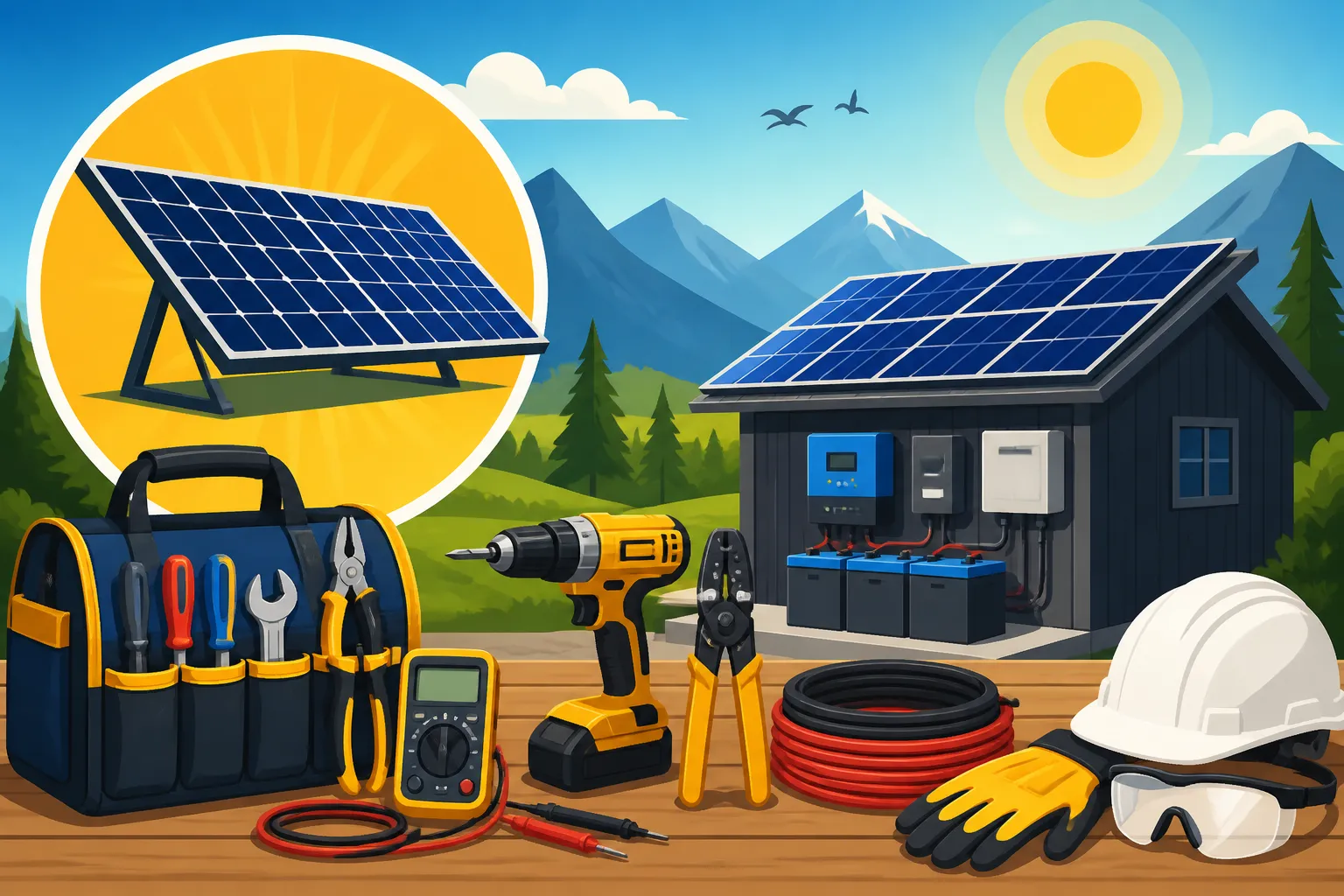
Even the most complex off-grid solar system starts with fundamental hand tools. These aren't fancy, but they are absolutely indispensable for almost every step of the process. Having good quality, reliable versions of these tools can make a world of difference in your efficiency and the safety of your work. Don't underestimate the power of a well-stocked basic toolbox when you're embarking on your off-grid adventure.
Measuring and Marking Tools
Before you cut a wire or drill a hole, you absolutely need to know where and how much. Accurate measurements are critical in solar installation, from panel placement to wire lengths. Trying to eyeball things is a recipe for frustration and costly mistakes.
You'll definitely need a reliable tape measure, preferably one that's at least 25 feet long for measuring distances on roofs or across ground mounts. A good quality pencil or marker for making clear lines on surfaces like wood, metal, or conduit is also essential. For more precise layout work, a carpenter's square or speed square will help you ensure everything is perfectly straight and plumb. When you're planning your array and trying to visualize where everything will go, even a simple retractable tape measure can be your best friend. Imagine trying to install solar panels without knowing the exact dimensions of your roof space or the distance to your charge controller – it's simply not feasible. Getting these initial measurements right will save you countless headaches down the line and is a crucial first step in any off-grid solar system design.
Cutting and Stripping Tools
When you're dealing with electrical wiring, having the right cutting and stripping tools isn't just about convenience; it's about safety and ensuring proper electrical connections. Improperly stripped wires can lead to loose connections, arcing, and even fire hazards, so invest in quality here.
A good pair of wire cutters designed for electrical work will be your go-to for cutting various gauges of wire cleanly. Don't use your household scissors or regular pliers; they'll fray the wires and make your job harder. More importantly, you'll need a reliable wire stripper. Many seasoned off-grid installers swear by automatic wire strippers for their speed and consistency, especially when you have many connections to make. These handy tools precisely remove the insulation without nicking the copper strands, which is vital for maintaining the wire's conductivity and integrity. For larger gauge cables, like those running from your battery bank to your inverter, you might need a heavier-duty cable cutter and specialized cable strippers. Making sure your connections are clean and secure is paramount for any long-lasting system, and these tools are the backbone of that precision.
Fastening and Securing Tools
Once everything is measured and cut, it's time to put it all together. This is where your fastening and securing tools come into play, ensuring that all components are firmly attached and safe.
A solid set of screwdrivers, both Phillips and flathead, in various sizes is a must-have. You'll encounter countless screws, from small terminals on charge controllers to larger ones on mounting brackets. A wrench set, including both open-end and box-end wrenches, will be necessary for tightening bolts on solar panel racking, battery terminals, and other hardware. An adjustable wrench can serve as a versatile backup but try to use correctly sized wrenches whenever possible to avoid stripping bolts. For smaller electrical connections, a set of nut drivers can be incredibly useful. Remember, loose connections can lead to resistance, heat, and potential system failure, so taking the time to properly fasten everything is critical. Whether you're securing panels to your roof or tightening down lug nuts on an inverter, these tools ensure a robust and reliable installation.
Electrical Safety and Testing Equipment
Working with electricity, especially high-voltage DC systems found in off-grid solar, demands an unwavering commitment to safety. You're not just dealing with the potential for discomfort; serious injury or even fatalities can occur if proper precautions aren't taken. Investing in the right safety and testing equipment isn't an option; it's a non-negotiable part of your off-grid solar installation.
Personal Protective Equipment (PPE)
Your safety is the top priority, and PPE is your first line of defense against potential hazards like electrical shock, falling objects, or chemical splashes from batteries. Never, ever skip your PPE.
At a minimum, you'll need insulated gloves rated for the voltage you'll be working with. Standard work gloves won't cut it for electrical safety; look for gloves specifically designed for electrical work. Safety glasses or goggles are also crucial to protect your eyes from debris, sparks, or battery acid. When you're spending time on a roof or climbing around a ground mount, a hard hat can prevent head injuries from unexpected bumps or dropped tools. Steel-toed boots can protect your feet from heavy panels or batteries. For tasks involving battery maintenance or connection, consider a face shield for enhanced protection, especially when working with lead-acid batteries that can vent hydrogen gas or acid. Proper safety gear isn't just about compliance; it's about making it home safe and sound after a long day of work on your system.
Multimeters and Clamp Meters
You can't troubleshoot or verify your system's performance if you can't measure electrical values. A good multimeter and a clamp meter are your eyes and ears into the flow of electricity in your off-grid setup.
A digital multimeter (DMM) is essential for measuring voltage (DC and AC), current (amps), and resistance (ohms). You'll use this constantly to check panel output, battery voltage, continuity of wires, and verify that components are receiving power as expected. For instance, when you're first connecting your panels, you'll want to measure their open-circuit voltage (Voc) to ensure they're working correctly before hooking them up to your charge controller. A clamp meter, specifically one that can measure DC current, is incredibly useful because it allows you to measure current without breaking the circuit. You simply clamp it around a wire, and it gives you a reading. This is invaluable for checking current draw from appliances or verifying how much current your solar panels are producing under load. Reliable brands like Fluke or Klein Tools offer excellent, durable options that are worth the investment for their accuracy and safety features. Learning How to Test an Off-Grid Solar System effectively relies heavily on mastering these devices.
Wire Tracers and Continuity Testers
Sometimes, the simplest tools are the most powerful for diagnosing issues or verifying connections. Wire tracers and continuity testers fall into this category, saving you immense time and frustration.
A basic continuity tester is used to determine if an electrical path exists between two points. This is incredibly helpful for checking if a wire is broken, if a fuse is good, or if a switch is working. For example, if you've run a long wire through conduit, you can quickly check its continuity before making final connections. A wire tracer or toner kit is even more advanced. If you have a bundle of wires and need to identify which one goes where, you can attach a transmitter to one end and use a receiver to "trace" the signal along the wire, identifying it without having to unravel your entire setup. This is particularly useful in complex systems or when running wires inside walls or conduits where visibility is limited. When you're trying to figure out How to Wire an Off-Grid Solar System with multiple runs, a wire tracer can be an absolute lifesaver, preventing misconnections and potential short circuits.
Power Tools for Efficiency and Larger Systems
While hand tools lay the groundwork, power tools significantly boost efficiency and capabilities, especially when dealing with larger off-grid solar installations or projects involving robust mounting structures. They can turn hours of manual labor into minutes, making your DIY journey much more manageable.
Drilling and Driving Tools
Drilling holes and driving fasteners manually can quickly become exhausting and time-consuming. Power drills and impact drivers are truly game-changers for off-grid solar work.
A good cordless drill is indispensable for drilling pilot holes, mounting brackets, and assembling various components. Look for one with decent torque and battery life. Even better, an impact driver is fantastic for driving lag screws into rafters for roof mounts or securing bolts on ground mounts. Its rotational hammering action makes quick work of tough fasteners without stripping screw heads. For installing roof-mounted solar panels, you'll be drilling many holes through roofing material and into structural members, so having a reliable drill with various drill bits (wood, metal, masonry) is critical. Make sure your drill has a clutch setting to prevent over-tightening smaller screws. When you're trying to figure out How to Install Roof-Mounted Solar Panels or How to Install Ground-Mounted Solar Panels, the sheer volume of fasteners makes these tools a necessity, not a luxury. Having multiple batteries charged and ready to go will keep your momentum flowing throughout the day.
Grinding and Fabrication Tools
Depending on the complexity of your mounting solution or if you're building custom brackets, you might find yourself needing tools that can cut and shape metal. This is more common for robust, custom ground-mount systems or modifying existing structures.
An angle grinder can be incredibly useful for cutting metal conduit, trimming mounting rails, or deburring edges. Make sure to use appropriate safety guards and PPE (gloves, face shield, hearing protection) when operating an angle grinder, as it's a powerful and potentially dangerous tool. For precise cuts on metal tubing or strut, a chop saw with a metal-cutting blade can provide cleaner results than an angle grinder. While not every off-grid solar installer will need these tools, for those tackling more ambitious or customized projects, they can be essential for achieving a professional finish. If you're building a substantial structure for your panels, perhaps a system designed to house many panels like those needed for How Many Solar Panels for Off-Grid Living, these fabrication tools become much more relevant.
Specialty Tools for Specific Components
While many tools are general-purpose, some specific components in an off-grid system might require a unique touch. Being prepared with these specialty tools can prevent damage and ensure correct installation.
If you're using heavy-gauge battery cables, you'll likely be installing crimp lugs. While you can try to hammer them on, a hydraulic crimper or a heavy-duty battery cable crimper is the proper tool for creating secure, low-resistance connections. These crimpers ensure a tight, reliable bond between the cable and the lug, which is vital for carrying high currents from your batteries to your inverter safely. For example, Renogy often provides quality components, but the right crimper ensures their cables perform optimally. Some battery monitors or smart shunt systems might require specific small screwdrivers or torx bits that aren't typically found in standard sets. Always check the instruction manuals for your specific components, like your inverter or charge controller, to see if they recommend any proprietary or specialized tools for installation or configuration. Overlooking these specific requirements can lead to stripped screws or compromised connections.
Mounting and Structural Support Tools
Mounting solar panels securely and safely is one of the most physically demanding and critical aspects of any off-grid solar installation. These tools are all about getting your panels into position and ensuring they stay there, no matter the weather.
Ladder and Scaffolding Essentials
Unless your panels are going directly on the ground, you're going to be working at height. Safety here is paramount, as falls are a leading cause of construction injuries.
A sturdy extension ladder is a basic requirement for roof-mounted systems or even reaching high points on ground mounts. Always ensure your ladder is rated for the weight of you and your tools, and use proper ladder safety techniques, like securing the base and extending it three feet above the edge you're accessing. For more extensive or longer-term work at height, scaffolding can provide a much safer and more stable platform. While it might seem like an extra expense, renting scaffolding can significantly improve safety and efficiency, especially if you're installing a large array or working on a challenging roof pitch. Never compromise on your safety when working off the ground; a fall could derail your entire off-grid dream.
Panel Lifting and Positioning Aids
Solar panels, especially larger ones, can be surprisingly heavy and awkward to maneuver, particularly when you're trying to get them onto a roof or into a tight space. Having a few aids can make this job much safer and easier.
Panel lifting straps or specialized panel clamps can help you safely carry and position panels without risking damage to the panels themselves or injury to yourself. These can distribute the weight more evenly and provide better grip. For larger panels or if you're working alone, a panel lift or hoist can be a worthwhile investment or rental. These devices allow you to safely raise panels to roof height without manual strain. Even simple suction cup handles can aid in carefully placing panels once they're near their final position. Remember, damaging a panel during installation is a costly mistake, both in terms of money and time. When you're getting ready to How to Install Off-Grid Solar Panels, thinking about how you'll safely move them into place is just as important as the actual wiring.
Specialized Mounting Hardware Tools
Solar panel mounting systems, whether roof or ground mounts, often use specific hardware that requires particular tools for proper assembly and tightening. These tools ensure the structural integrity of your entire array.
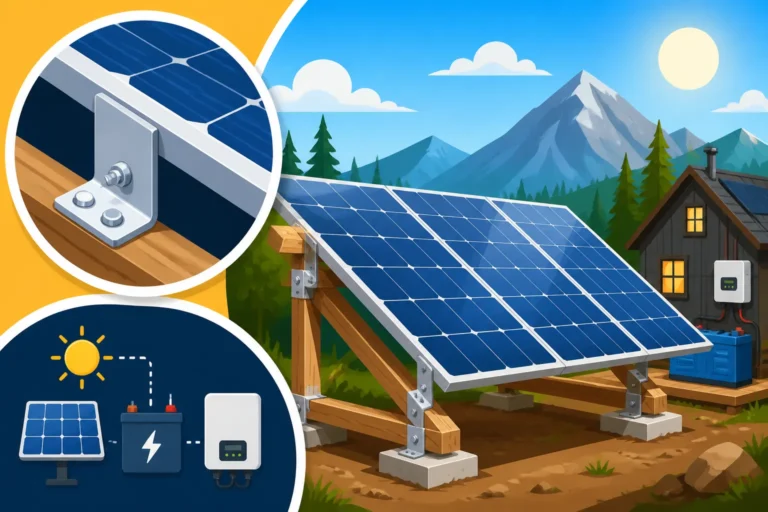
Most solar racking systems use specialized clamps and fasteners, often requiring specific hex keys (Allen wrenches) or socket sizes. Ensure you have a complete set of these, including T-handle hex keys for better leverage. Many mounting systems also use stainless steel hardware that needs to be properly torqued to prevent loosening over time due to wind or vibration. A torque wrench is invaluable for ensuring bolts are tightened to the manufacturer's specifications. This prevents both under-tightening (which can lead to unstable panels) and over-tightening (which can strip threads or damage components). For ground mounts that use large anchors or helical piles, you might need a heavy-duty impact wrench or even specialized pile drivers. Even for simpler tasks like securing rails, a quality wrench set and impact driver are critical. Investing in the right tools here directly contributes to the long-term durability and safety of your solar investment.
Wiring and Connection Specific Tools
The electrical connections are the heart of your off-grid solar system. Getting these right requires precision and specific tools to ensure high conductivity, minimal resistance, and utmost safety. Skimping on these tools can lead to inefficient power transfer, overheating, and even fire.
MC4 Crimping Tools
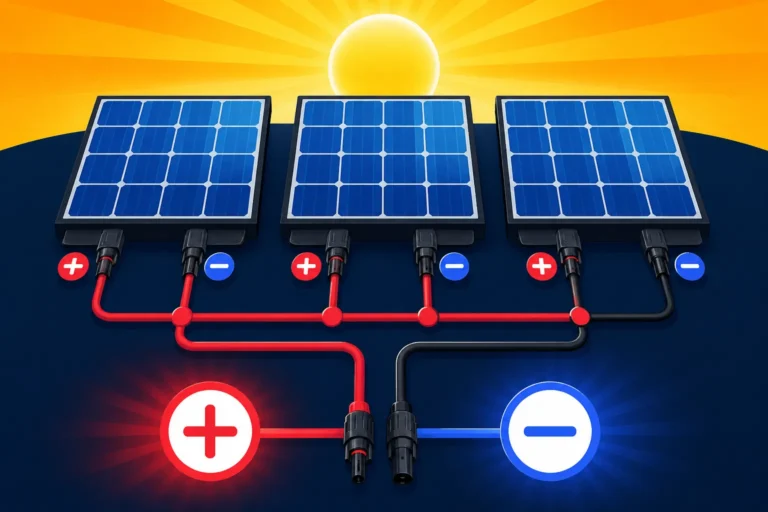
MC4 connectors are the standard for connecting solar panels to each other and to the charge controller. They are weatherproof, easy to use, and reliable – but only if they are properly crimped.
A dedicated MC4 crimping tool is absolutely essential. Trying to crimp MC4 connectors with pliers or other improvised tools will result in poor connections that can lead to power loss, arcing, and serious safety hazards. The proper crimping tool ensures a tight, gas-tight connection between the wire and the metal pin of the MC4 connector, which then clicks securely into the plastic housing. Many kits on Amazon will include a basic MC4 crimper. You'll also want an MC4 removal tool, which helps safely disconnect MC4 connectors without damaging the locking tabs, a common issue for DIYers without the right tool. If you're putting together a system, understanding how to handle these connections is key to DIY Off-Grid Solar Installation Step by Step. Without a proper crimper, you're compromising the integrity of your entire solar array.
Cable Management and Conduit Tools
Keeping your wiring organized and protected is not just about aesthetics; it's about safety, longevity, and ease of maintenance. Cables exposed to the elements or left messy can degrade quickly or become trip hazards.
If you're running conduit to protect your wires from UV damage, physical abrasion, or pests, you'll need conduit cutters (for PVC conduit) or a hacksaw (for metal conduit). A conduit bender is also necessary for making neat, precise bends in metal conduit to follow the contours of your building or mounting structure. For general cable management, a supply of UV-resistant zip ties is indispensable for neatly bundling wires and securing them to mounting rails or structural members. Cable clips and clamps can also help secure individual wires or small bundles. Labeling tools, like a permanent marker and electrical tape or a dedicated label maker, are also crucial for clearly identifying positive, negative, and ground wires, as well as specific circuits. This makes troubleshooting and future expansion infinitely easier. Proper cable management contributes directly to the overall reliability of your system and ensures that your Off-Grid Solar Wiring Diagram Explained translates into a clean, functional setup.
Battery Connection Tools
The battery bank is often the most critical (and sometimes the most intimidating) component of an off-grid system. The connections here need to be robust and secure to handle high currents safely.
You'll need heavy-duty wire cutters for thick battery cables and a specialized battery cable stripper that can handle large gauges like 2/0 or 4/0 AWG. As mentioned earlier, a hydraulic crimper is highly recommended for securing lugs to these cables, ensuring a perfect connection. A set of quality battery terminal wrenches is also essential for tightening the nuts on your battery terminals. These are often specialized non-sparking wrenches if you're working with lead-acid batteries, to minimize the risk of accidental sparks around hydrogen gas. A battery terminal cleaner brush will help remove corrosion and ensure good contact. When connecting multiple batteries, like when you learn How to Connect Batteries, Inverter, and Panels, a reliable set of these tools is non-negotiable for both performance and safety. Maintaining clean and tight battery connections is one of the most important things you can do for the longevity and efficiency of your battery bank.
Organization and Maintenance Tools
A successful off-grid solar system isn't just about the initial installation; it's about its ongoing performance and reliability. Having the right tools for organization and maintenance ensures your system runs smoothly for years to come and makes future troubleshooting a breeze.
Tool Storage and Portability
Imagine searching for a tiny hex key in a pile of sawdust and wires. Good organization saves time, reduces frustration, and prevents tools from getting lost or damaged.
A sturdy toolbox, tool bag, or even a rolling tool chest is essential for keeping your tools organized and protected. For off-grid installations, especially if you're working in remote locations or on a property with multiple buildings, portability is key. A durable tool belt or vest can also be incredibly useful for keeping frequently used hand tools within easy reach while you're up on a ladder or working on a panel. Labeling your toolboxes and organizing small parts like screws, nuts, and connectors in compartmentalized bins will save you countless hours of searching. When you're knee-deep in a project, the last thing you want is to be interrupted by a frantic search for a specific wrench or bit. Think about how much easier it is to maintain your vehicle when all your automotive tools are in one place; the same principle applies to your solar setup.
Cleaning and Maintenance Supplies
Just like any other valuable asset, your off-grid solar system needs regular cleaning and maintenance to perform at its best. Having the right supplies on hand makes these tasks simple and effective.
For your solar panels, a soft brush or squeegee, a hose, and a bucket of mild, non-abrasive soap (or just water for light cleaning) are usually all you need to keep them free of dust, pollen, and bird droppings. Regular cleaning ensures maximum energy harvest, which is vital for maintaining power when you need it most. For battery terminals, a battery terminal cleaner and anti-corrosion spray can prevent buildup and ensure good electrical contact. A can of compressed air can be useful for blowing dust out of charge controllers or inverters, keeping their cooling vents clear. Remember that even though some components like solar panels are robust, they still benefit from occasional inspection and cleaning. Understanding Off-Grid Solar Maintenance Costs and how simple upkeep can save you money in the long run highlights the importance of these basic supplies.
Essential Off-Grid Solar Installation Tools Checklist
Here's a quick rundown of some of the critical tools we've discussed, categorized for easy reference. Remember, the exact tools you need will depend on the scale and complexity of your specific off-grid project.
| Tool Category | Specific Tools | Primary Function |
|---|---|---|
| Measuring & Marking | Tape Measure, Pencil/Marker, Carpenter's Square | Accurate layout, component placement, wire length measurement |
| Cutting & Stripping | Wire Cutters, Wire Strippers, Cable Cutters | Cleanly cutting and stripping insulation from wires and cables |
| Fastening & Securing | Screwdriver Set, Wrench Set, Adjustable Wrench | Tightening screws, bolts, and nuts on terminals, brackets, and components |
| Electrical Safety | Insulated Gloves, Safety Glasses, Hard Hat | Personal protection against electrical shock, debris, and impact |
| Electrical Testing | Digital Multimeter, DC Clamp Meter, Continuity Tester | Measuring voltage, current, resistance; verifying circuits and connections |
| Power Tools | Cordless Drill/Impact Driver, Drill Bit Set | Drilling holes, driving fasteners, assembling mounting structures |
| Mounting Aids | Extension Ladder, Panel Lifting Straps | Safe access to elevated work areas; securely moving and positioning solar panels |
| Wiring Specific | MC4 Crimping Tool, MC4 Disconnect Tool | Creating secure, weather-tight connections for solar panel cabling |
| Cable Management | Conduit Cutters/Bender, UV-Resistant Zip Ties | Protecting and organizing wires, running conduit |
| Battery Specific | Hydraulic Crimper, Battery Terminal Wrenches, Cleaner | Creating robust connections for heavy-gauge battery cables; maintaining terminals |
| Organization | Toolbox/Tool Bag, Tool Belt | Storing and transporting tools, keeping frequently used items accessible |
| Maintenance | Soft Brush, Hose, Battery Anti-Corrosion Spray | Cleaning solar panels; maintaining battery terminals |
This table provides a great starting point for gathering your essential toolkit. For more specifics on what you'll need for your particular setup, check out guides like Off-Grid Solar Equipment Explained and remember that quality tools are an investment in the safety and longevity of your solar system.
Wrapping Up Your Off-Grid Tool Checklist
Embarking on a DIY off-grid solar installation is an incredibly rewarding endeavor, giving you true energy independence. But let's be real, it's also a significant project that requires proper planning and the right gear. Trying to get by with makeshift tools or skipping essential safety equipment isn't just inefficient; it's downright dangerous and can lead to costly mistakes.
By taking the time to gather the necessary hand tools, investing in quality electrical safety and testing equipment, and utilizing power tools for efficiency, you're setting yourself up for success. Don't forget the specialized items for mounting and wiring, and always remember that good organization and regular maintenance tools will keep your system running smoothly for years. Whether you're a seasoned DIYer or just starting, having a well-stocked and appropriate toolbox is the foundation of a successful off-grid solar journey. Good luck, and happy building!
Disclaimer
This guide is intended for informational purposes only and does not constitute professional electrical or construction advice. Off-grid solar system installation involves working with high voltage electricity and heavy equipment, which can be dangerous. Always consult with qualified professionals and adhere to all local electrical codes and safety regulations. The author and publisher are not responsible for any injury or damage resulting from the use or misuse of the information provided herein.