How to Ventilate a Battery Enclosure
You’ve invested a lot of time, effort, and hard-earned cash into setting up your off-grid solar battery bank, and the last thing you want is for it to fail prematurely, or worse, become a safety hazard. Many folks don't realize just how vital proper ventilation is for these powerhouses, often just stuffing them into a cabinet or shed and calling it a day. This guide is here to walk you through exactly why and how to effectively ventilate a battery enclosure, ensuring your system runs safely, efficiently, and for many years to come.
Why Battery Enclosure Ventilation is Absolutely Crucial
When you're dealing with stored energy, especially in the amounts an off-grid system needs, there are inherent risks that need careful management. Batteries, regardless of their chemistry, aren't just inert boxes of power; they're dynamic chemical systems that can produce gases and heat. Ignoring these factors can lead to serious consequences, from reduced battery life to outright dangerous situations.
Protecting Your Investment from Harmful Gases
If you're running traditional lead-acid batteries—think flooded lead-acid (FLA) or even some sealed AGM types under certain conditions—they produce hydrogen gas during the charging process, particularly when they're gassing towards the end of their charge cycle. Hydrogen is no joke; it's highly flammable and, in sufficient concentrations, can be explosive. Imagine a small spark from a connection, or even a static discharge, in an enclosed space full of hydrogen – it’s a recipe for disaster.
Beyond the explosive risk, lead-acid batteries also emit corrosive fumes over time. These fumes can degrade nearby electronics, rust metal components, and generally shorten the lifespan of everything in the enclosure, including your vital charge controller or inverter. I’ve seen setups where the terminals and busbars were practically eaten away by acid fumes because the enclosure was sealed up tight. Even sealed lead-acid batteries (AGM and Gel) can vent if overcharged or exposed to high temperatures, though they do it far less than their flooded counterparts.
For lithium iron phosphate (LiFePO4) batteries, while they don't produce hydrogen gas like lead-acid batteries, they can still vent if there's an internal fault or extreme overcharging. When lithium batteries vent, they can release a mix of flammable and toxic gases, and in the worst-case scenario, lead to thermal runaway and fire. So, while the immediate gassing concern might be lower, proper airflow is still absolutely essential. Understanding the differences between LiFePO4 vs Lead-Acid Battery Cost often highlights that while lithium is more expensive upfront, its safety and longevity benefits are significant, especially with proper care like ventilation.
Preventing Overheating for Optimal Performance and Lifespan
Heat is the silent killer of batteries. All battery chemistries perform best within a specific temperature range. When batteries get too hot, their internal resistance increases, leading to less efficient charging and discharging. For lead-acid batteries, sustained high temperatures accelerate plate corrosion and water loss, dramatically shortening their useful life. A battery rated for 10 years might only last 3-5 years if consistently operated in an enclosure that's too hot.
Lithium batteries, while more tolerant of temperature swings, are not immune. High temperatures can degrade their internal components, reduce their capacity over time, and increase the risk of thermal runaway. Most LiFePO4 batteries have internal Battery Management Systems (BMS) that will shut them down if they get too hot, but this is a protective measure, not a sign of optimal operation. You want to avoid those shutdowns to ensure continuous, reliable power.
Beyond the batteries themselves, an enclosure houses other critical components like your inverter, charge controller, and wiring. These electronics also generate heat and have their own operating temperature limits. Overheating can cause components to fail, leading to costly replacements or system downtime. When you consider the effort to Install an Off-Grid Solar System, protecting these components is paramount.
Types of Ventilation Systems for Off-Grid Batteries
When it comes to keeping your battery enclosure breathing, you generally have two main approaches: passive or active ventilation. Each has its pros and cons, and the best choice for you will depend on the size of your system, your budget, and the specific environment your batteries are in.
Passive Ventilation: Simple Yet Effective
Passive ventilation relies on natural air movement, often referred to as convection, to exchange air within the enclosure. It's the simplest and most cost-effective method because it doesn't require any electrical components or moving parts.
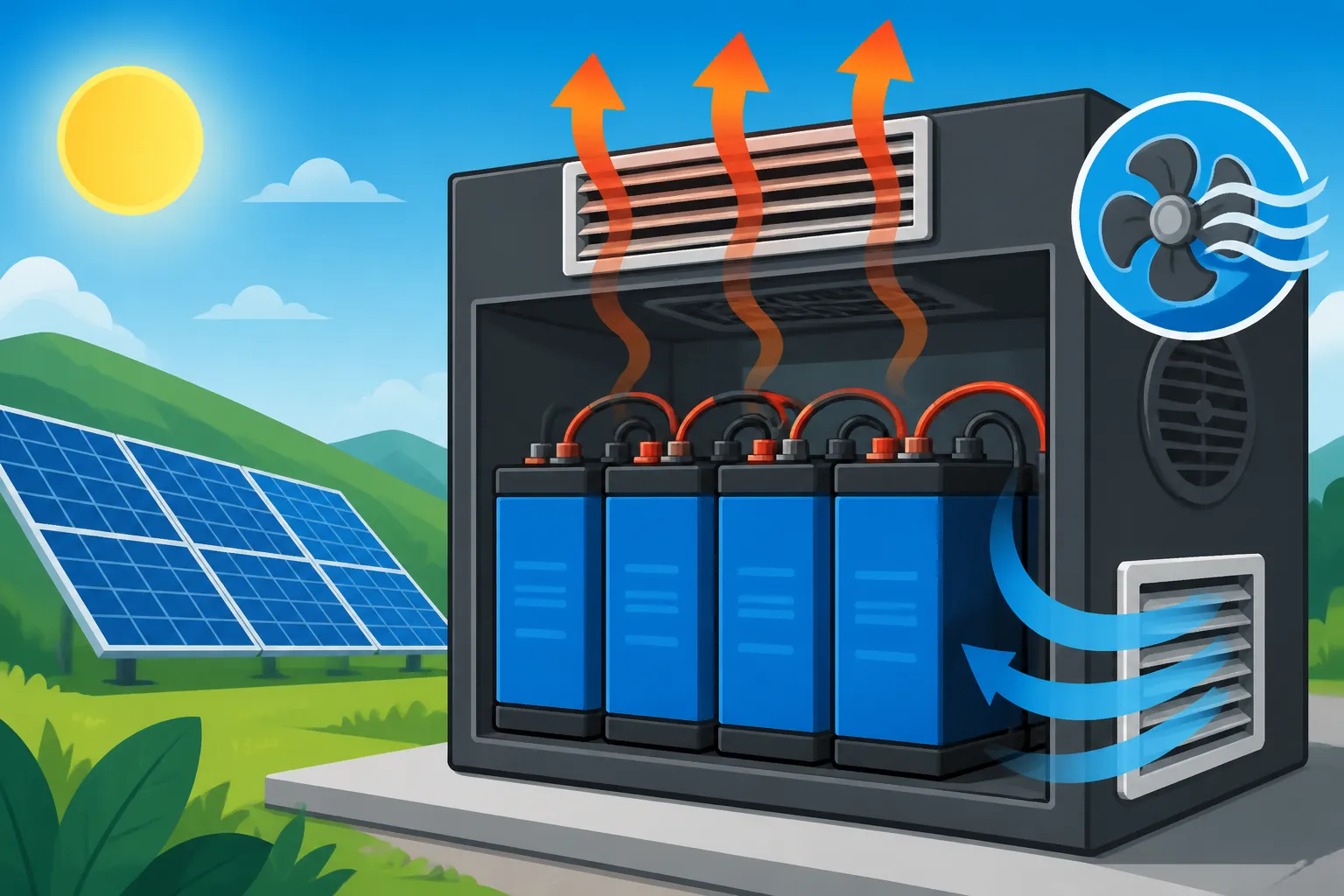
The basic idea is to create openings at different heights in your enclosure. Since hot air rises and hydrogen gas (being lighter than air) also rises, you'll want an intake vent positioned low on one side of the enclosure and an exhaust vent positioned high on the opposite side. This setup encourages a natural flow: cooler, denser air enters through the lower vent, pushes the warmer, gassy air upwards, and allows it to exit through the upper vent. Think of it like a chimney effect.
For instance, if you've built a sturdy How to Build a Battery Box for your lead-acid batteries in a shed, you might cut a 4×10 inch opening near the bottom on one wall and another near the top on the opposite wall. These openings should be covered with fine mesh screens (like aluminum insect screen) to keep out bugs, dust, and rodents. The key is ensuring these vents are clear and unobstructed. Passive systems are great for smaller battery banks or enclosures where the ambient temperature isn't excessively high and gassing is minimal. They also have the benefit of being silent and requiring no power, which is always a plus in an off-grid setup.
However, passive systems do have limitations. They are dependent on temperature differences and any external airflow (like wind). On still, humid days, or in very hot climates with little air circulation, passive ventilation might not be sufficient to effectively cool your batteries or dissipate hydrogen. If you’re pushing your batteries hard, or if they’re getting warm, natural convection alone might not be enough to keep them within their optimal operating range.
Active Ventilation: Taking Control of Airflow
Active ventilation takes things a step further by using electrically powered fans to force air movement in and out of the enclosure. This method gives you much more control over the airflow and can be far more effective at removing heat and gases, especially in challenging environments or with larger battery banks.
An active system typically involves one or more fans drawing fresh air into the enclosure (intake) or pushing stale air out (exhaust), or a combination of both. These fans can be simple DC computer fans, small inline duct fans, or even dedicated explosion-proof fans for serious lead-acid setups. Many off-grid enthusiasts find good quality, low-power DC fans on platforms like Amazon or specialized solar suppliers.
The real magic of active ventilation comes when you pair these fans with thermostats or humidity sensors. A thermostat can be set to kick on the fan(s) once the internal enclosure temperature exceeds a certain threshold (e.g., 80°F or 27°C), ensuring that your batteries stay cool even during peak charging or discharge cycles. For lead-acid batteries, some advanced charge controllers or battery monitors (like those from Victron or Renogy) can even integrate with a temperature sensor and activate a fan relay when the batteries are actively gassing or reaching a set temperature. This ensures that the ventilation only runs when needed, conserving precious battery power.
Active systems overcome the limitations of passive ventilation by providing consistent airflow regardless of external conditions. They are particularly vital for larger systems, batteries housed in poorly insulated spaces, or those in hot climates. While they consume a small amount of power, the benefits of prolonged battery life and enhanced safety far outweigh this minor energy draw. Just be sure to properly Wire an Off-Grid Solar System for these components, including appropriate fuses and switches.
Designing Your Battery Enclosure Ventilation System
Designing an effective ventilation system isn't just about cutting holes; it requires a bit of thought about airflow dynamics, safety, and component selection. This is where a little planning goes a long way to ensure both efficiency and longevity for your system.
Calculating Airflow Needs and Fan Sizing
The goal of ventilation is to achieve a certain number of air changes per hour (ACH). For general heat dissipation, aim for 2 to 6 ACH. However, if you have lead-acid batteries that produce hydrogen, you'll need to calculate the minimum airflow required to dilute the hydrogen to a safe concentration (below 1% by volume, though 4% is the lower explosive limit). A common recommendation for lead-acid battery banks is 1 cubic foot per minute (CFM) of airflow per 100 Ah of battery capacity for a 48V system. For a 12V system, which has more cells, this requirement might be higher.
Here’s a simplified way to think about it:
- Calculate Enclosure Volume: Measure the length, width, and height of your battery enclosure in feet. Multiply them together to get the volume in cubic feet (e.g., 3 ft x 2 ft x 2 ft = 12 cubic feet).
- Determine Target ACH: Let's say you're aiming for 5 air changes per hour.
- Calculate Required CFM:
- Volume (cu ft) x ACH = Total air changes per hour
- Total air changes per hour / 60 minutes = Required CFM
- Example: 12 cu ft x 5 ACH = 60 cubic feet per hour (CFH)
- 60 CFH / 60 minutes = 1 CFM
While 1 CFM might seem small, remember that this is for continuous airflow. If you're only ventilating during charging or when temperatures rise, you might opt for a larger fan that can quickly clear the air. When selecting a fan, look for its CFM rating. Many small computer fans range from 20-100 CFM, while inline duct fans can be much higher. For a more precise calculation for lead-acid batteries, consult specific guidelines from battery manufacturers or the National Electrical Code (NEC) article 480, which often dictates minimum ventilation requirements for stationary battery installations. You might also want to review how to calculate Off-Grid Solar Load Calculation Explained to understand how fan power consumption fits into your overall energy budget.
Placement Strategies for Optimal Air Exchange
The placement of your vents and fans is critical for efficient air exchange. For both passive and active systems, the fundamental principle is to create a clear path for air to enter, circulate, and exit.
- Low Intake, High Exhaust: This is the golden rule, especially for lead-acid batteries. Since hydrogen rises, the exhaust vent should always be at the highest point of the enclosure. The intake vent should be at the lowest point, ideally on the opposite side to promote cross-ventilation. This ensures that lighter-than-air hydrogen is effectively swept out.
- Opposing Sides: Placing intake and exhaust on opposing walls maximizes the "sweep" of air across the entire battery bank, preventing stagnant pockets where gases or heat can accumulate.
- Consider Prevailing Winds: If your enclosure is outdoors (like a shed for your Off-Grid Solar Cost for a Shed), position vents to take advantage of natural breezes. For example, place the intake vent on the side facing the prevailing wind.
- Fan Orientation: If using active ventilation, exhaust fans are often more effective as they pull air through the enclosure, creating negative pressure that draws in fresh air through the intake. Intake fans push air in, creating positive pressure, which can be useful for keeping dust out if the intake air is filtered.
- No Obstructions: Ensure no items (like tools, wires, or even the batteries themselves) block the airflow paths. Keep a clear space around the vents, both inside and outside the enclosure.
- Insulation: While not strictly ventilation, good insulation for your battery enclosure helps stabilize temperatures, reducing the need for constant, high-power ventilation. This is especially important if you're looking for Off-Grid Solar Cost in Cold Climates or hot ones.
Essential Components and Safety Measures
Beyond just fans and holes, several other components and safety considerations are crucial for a well-designed battery enclosure ventilation system.
- Spark-Proof Fans: For lead-acid battery enclosures, using marine-grade or explosion-proof fans is highly recommended. These fans are designed to prevent any electrical sparks from igniting hydrogen gas. While standard computer fans might be tempting due to their low cost and availability on Amazon, they are generally not suitable for environments with explosive gas risks.
- Screens: All intake and exhaust vents must be covered with fine, non-corrosive mesh screens to prevent insects, rodents, and debris from entering the enclosure. This also prevents accidental contact with fan blades.
- Ducting: If your enclosure is inside a larger structure (like a house or garage) or if you want to vent gases away from the immediate area, use appropriate, flame-retardant ducting to direct the exhaust outside.
- Fuses and Wiring: All active ventilation components (fans, thermostats) must be properly wired with appropriate gauge wire and protected by fuses or circuit breakers. This is critical for preventing electrical fires. Consult your system's overall Off-Grid Solar Wiring Diagram Explained to integrate these components safely.
- Gas Detectors: For lead-acid systems, installing a hydrogen gas detector can provide an additional layer of safety, alerting you if hydrogen concentrations become dangerous, even with a ventilation system in place.
- Battery Monitoring: Modern battery monitors often include temperature sensors that can be placed directly on or near your batteries. This data is invaluable for understanding how effective your ventilation is and can even trigger alarms if temperatures get too high. Some advanced systems allow you to program a specific output, often called an auxiliary output, to turn on a fan based on battery temperature or voltage, especially useful for systems using components from brands like Victron Energy or the more robust offerings from Renogy.
- Fire Suppression: While not directly ventilation, having a small, portable fire extinguisher (ABC or CO2 type) readily accessible near any battery bank is always a wise precaution, especially for lithium-ion systems where thermal runaway can lead to intense fires.
Practical Tips for DIY Ventilation and Maintenance
Embarking on a DIY off-grid solar journey means taking responsibility for every detail, and battery enclosure ventilation is no exception. Here are some practical tips to help you get it right and keep it running smoothly.
Materials and Tools for a Robust Setup
Choosing the right materials and having the necessary tools will make your ventilation project much easier and ensure its durability.
- For Enclosure Openings: Use a jigsaw, hole saw, or reciprocating saw for cutting openings in wood, plastic, or thin metal. Ensure your cuts are clean and precise to allow for a good seal around vents.
- Vent Grilles/Covers: Look for durable, weather-resistant plastic or metal vent grilles. Stainless steel or marine-grade aluminum are excellent choices for outdoor installations due to their resistance to corrosion, especially from lead-acid battery fumes. You can find a wide variety of these on Amazon or at local hardware stores.
- Mesh Screens: Fine, non-corrosive mesh, like aluminum or fiberglass insect screen, is essential to keep pests out. Secure it firmly with caulk, staples, or small screws.
- Ducting: If you're running ducts, use appropriate sizes (typically 3-inch or 4-inch diameter for small fans). Rigid PVC pipe or flexible aluminum ducting are common choices. Ensure any flexible ducting is rated for the environment and won't easily crimp or tear.
- Sealants: High-quality silicone caulk or weatherproof sealant is crucial for sealing around all cuts, vents, and fan housings to prevent water ingress and air leaks.
- Fans: As discussed, choose DC fans that match your system voltage (12V, 24V, or 48V). Check their CFM rating and noise level. For lead-acid, prioritize spark-proof models if possible. You can often find suitable, reliable fans through suppliers that also carry solar equipment, sometimes directly from brands like Renogy or specialized electronics retailers.
- Tools: Beyond cutting tools, you'll need wire strippers, crimpers, a multimeter for testing connections, screwdrivers, and possibly a drill for mounting fans and grilles. Always have appropriate personal protective equipment (PPE) like safety glasses and gloves.
- Consider a dedicated off-grid solar kit: Some kits come with pre-designed battery boxes or enclosures that have ventilation provisions, making your job easier.
When you're building out a new enclosure, perhaps following a guide on How to Build a Battery Box, always think about ventilation from the very start. It's much harder to retrofit a good system than to integrate it into the initial design. Remember that the overall cost of an off-grid solar system needs to factor in these smaller but crucial safety components.
Ongoing Monitoring and Troubleshooting
Installing a ventilation system is a fantastic step, but it’s not a “set it and forget it” solution. Regular monitoring and occasional maintenance are key to ensuring it continues to operate effectively.
- Visual Inspections: Periodically check all vents and fan openings for obstructions like dust, spiderwebs, or nesting insects. Keep them clear. Also, inspect the screens for tears or damage.
- Listen for Fans: If you have an active system, listen for the fans when they should be operating. If they’re silent when temperatures are high, investigate the power connection, thermostat, or fan motor.
- Check Temperatures: If your battery monitor includes temperature logging, review it regularly. If you notice a consistent upward trend or sudden spikes in battery temperature, it's a sign that your ventilation might not be adequate or could be failing. You might need to Add a Generator to Your Design as a backup if overheating is causing shutdowns.
- Cleanliness: Over time, dust and debris can accumulate on fan blades and within ducts, reducing airflow. Use compressed air or a soft brush to clean fan blades and intake filters (if installed).
- Test Gas Detectors: If you have hydrogen gas detectors, follow the manufacturer's instructions for regular testing to ensure they are still functional.
- Battery Maintenance: For flooded lead-acid batteries, part of your regular How to Maintain an Off-Grid Battery Bank includes checking electrolyte levels. This is also a good time to observe if there are any signs of excessive gassing or corrosion within the enclosure, which could indicate ventilation issues.
- Wiring Checks: Periodically inspect wiring for any signs of wear, corrosion, or loose connections. This is part of general Off-Grid Solar Safety and Grounding best practices.
Troubleshooting usually starts with the simplest solutions. Is a vent blocked? Is the fan getting power? Is the thermostat set correctly? For more complex issues, consulting the fan or controller manual can often provide diagnostic steps. Remember that proactive maintenance prevents much larger, more expensive problems down the road, and ensures your batteries continue providing reliable power for years.
Passive vs. Active Ventilation Comparison
To help you decide which system might be best for your off-grid battery setup, here's a quick comparison of the key characteristics of passive and active ventilation.
| Feature | Passive Ventilation | Active Ventilation |
|---|---|---|
| Method | Natural convection (hot air rises, cool air enters) | Electrically powered fans force air movement |
| Components | Intake/exhaust vents, mesh screens | Fans (DC), thermostat/controller, vents, mesh screens, wiring |
| Cost | Very low (materials for vents) | Moderate (fans, controller, wiring, possibly spark-proof) |
| Power Consumption | None | Low to moderate (depends on fan size & run time) |
| Effectiveness | Good for small banks, mild climates, minimal gassing; relies on environmental factors | Excellent for all setups, especially large banks, hot climates, high gassing; consistent airflow |
| Control | Minimal (depends on natural airflow) | High (can be controlled by temperature, charge state) |
| Maintenance | Keep vents clear, check screens | Clean fans, check wiring, test controller/thermostat |
| Noise Level | Silent | Low to moderate (fan noise) |
| Safety for H2 | Requires careful vent sizing and placement | Better for hydrogen dilution, especially with spark-proof fans |
| Ideal For | Small RV/van setups, cabins with minimal loads, temperate climates | Full-time off-grid homes, larger battery banks, extreme climates, critical systems |
Ultimately, the choice between passive and active ventilation, or a hybrid system combining both, should be based on a thorough assessment of your specific needs, the type of batteries you use, the environment they're in, and your budget. Prioritizing safety and the longevity of your investment should always be at the forefront of your decision.
Disclaimer
Please be aware that the information provided in this guide is for general informational purposes only and is not a substitute for professional advice. Off-grid solar systems involve high voltages and stored energy, which can be dangerous. Always consult with a qualified electrician or solar professional before designing, installing, or modifying any electrical system. Adhere to all local electrical codes, regulations, and manufacturer instructions for all components. Safety should always be your top priority.