How to Avoid Off-Grid Wiring Hazards
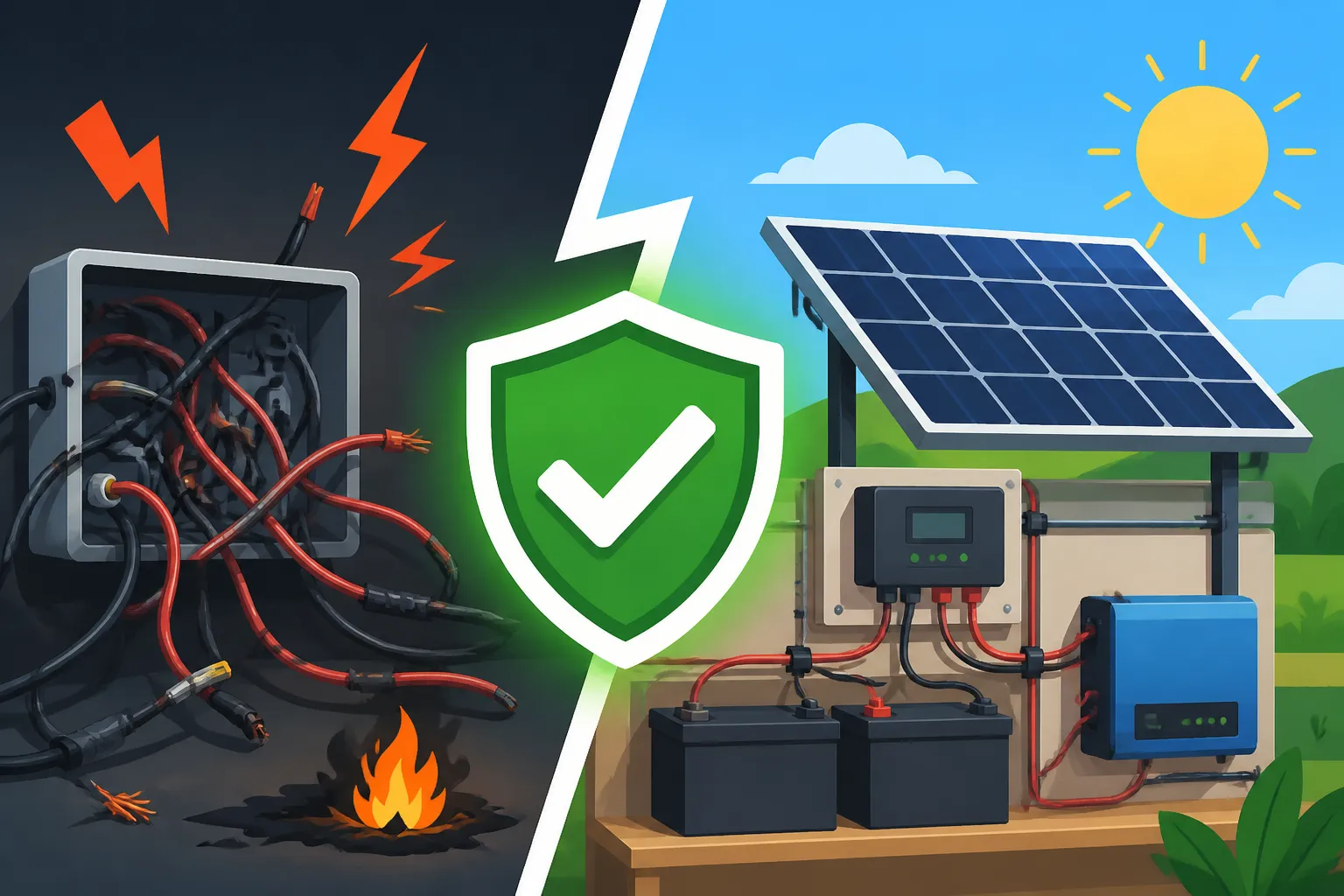
Building your own off-grid solar system is incredibly empowering, but it can also feel like navigating a maze of wires, terminals, and intimidating electrical terms. One wrong connection or overlooked detail can lead to serious hazards like electrical fires, dangerous shocks, or permanently damaged equipment. This guide will walk you through the most critical wiring safety practices, helping you understand and avoid common pitfalls to ensure your off-grid power system is both reliable and safe.
The Hidden Dangers of Off-Grid Electrical Systems
When you're dealing with electricity, whether it's grid-tied or off-grid, there's an inherent risk. However, off-grid systems present a few unique challenges that even experienced DIYers can sometimes overlook. Unlike a grid-tied setup that often has utility company oversight and strict local code enforcement, your off-grid system, especially if it's a DIY project, puts the onus entirely on you to ensure safety. This isn't just about making things work; it's about protecting yourself, your loved ones, and your property from potentially catastrophic failures. The raw power generated by solar panels and stored in batteries is no joke, and respecting that power is the first step towards a safe installation.
Understanding DC vs AC Hazards
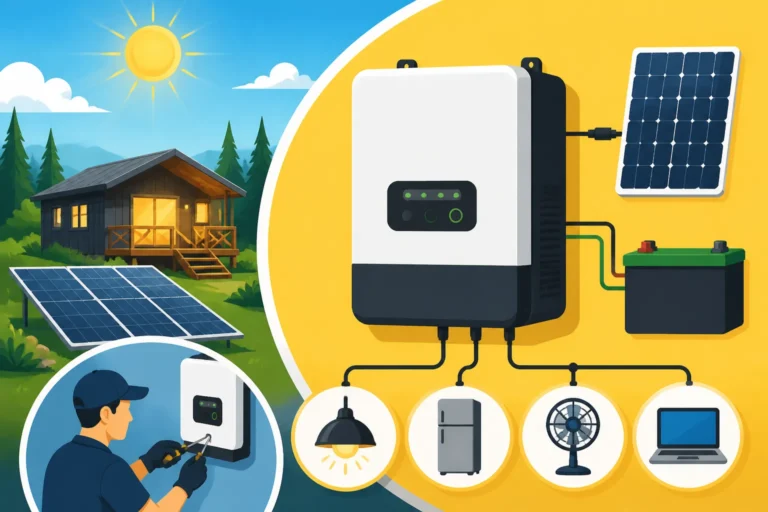
In an off-grid system, you'll primarily be dealing with two types of current: Direct Current (DC) and Alternating Current (AC). Each comes with its own set of dangers, and it's crucial to understand the difference. Solar panels produce DC power, and your batteries store it as DC. This DC power then typically flows to a charge controller and then to an inverter, which converts it into AC power, the kind of electricity most household appliances use.
DC power, especially from a large solar array or a battery bank, can deliver extremely high currents. While the voltage might seem lower than household AC (12V, 24V, 48V systems are common), the amperage can be lethal. DC arcs are also particularly stubborn and difficult to extinguish once they start, posing a significant fire risk. Imagine a loose battery terminal sparking; that arc can quickly generate intense heat, melting components and igniting nearby materials. On the other hand, AC power, typically 120V or 240V, carries the familiar shock hazard we associate with wall outlets. While AC is often easier to interrupt than DC, both can be deadly if not handled with extreme caution and proper insulation.
The Peril of Improper Grounding
Grounding isn't just an option; it's a fundamental safety requirement that diverts dangerous fault currents away from your equipment and, more importantly, away from you. An improperly grounded system is an accident waiting to happen. If a live wire accidentally touches the metal casing of your inverter, for example, and the inverter isn't properly grounded, that casing becomes electrified. Anyone touching it could receive a severe, potentially fatal, electrical shock.
For off-grid systems, grounding often means establishing a dedicated grounding electrode system, usually consisting of one or more grounding rods driven deep into the earth. All metallic enclosures, such as your inverter chassis, solar panel frames, and mounting racks, need to be bonded to this grounding system. This creates a safe path for fault currents, allowing circuit breakers or fuses to trip and de-energize the faulty circuit. Skipping this step or doing it incorrectly is one of the most dangerous off-grid solar installation mistakes to avoid.
Essential Safety Measures for Every Off-Grid Wire Run
Safety in off-grid wiring isn't about guesswork; it's about following established electrical principles and best practices. Think of it like building a sturdy house – you wouldn't skip the foundation or use flimsy materials. The same applies to your electrical system. Every wire, every connection, and every component plays a role in the overall safety and reliability.
Proper Wire Sizing and Overcurrent Protection
One of the most common and dangerous mistakes is using wires that are too small for the current they need to carry. Undersized wires act like thin straws trying to handle a firehose of water – they overheat. Overheating wires can melt their insulation, lead to short circuits, and, ultimately, cause electrical fires. To avoid this, you need to calculate the current (amperage) that will flow through each wire run and select a wire gauge (thickness) that can safely handle that current, while also considering the length of the run to prevent excessive voltage drop. We have a detailed guide on How to Size Wire and Cables that can help you with this critical step.
Equally important is overcurrent protection, which comes in the form of fuses or circuit breakers. These devices are your system's first line of defense against overloads and short circuits. They are designed to trip or blow when the current exceeds a safe level, cutting off power before damage occurs. Every major component – your solar panel array, battery bank, and inverter – needs its own appropriately sized overcurrent protection. For instance, you wouldn't use a 50-amp fuse on a circuit designed for 20 amps. This would allow too much current to flow before tripping, risking fire. Many off-grid components, like those from Renogy, often come with recommendations for appropriate fusing and wiring, but it's always up to you to verify these calculations for your specific setup. If you're unsure about how to properly choose these, check out our guide on How to Size Fuses and Breakers.
Secure Connections and Cable Management
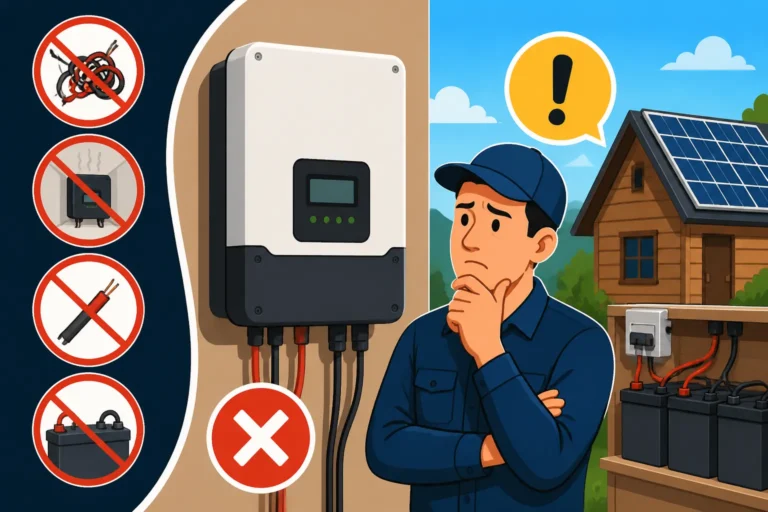
Loose connections are another significant source of trouble. A connection that isn't tight can create resistance, which generates heat. This heat can melt wires, damage terminals, and even lead to arcs and fires. Always use the correct terminals and crimpers for your wire size, ensuring a secure, low-resistance connection. For larger cables, such as those connecting your inverter to your battery bank, use high-quality, properly crimped lugs. Many DIYers might be tempted to just twist wires together or use inadequate connectors, but this is a serious hazard.
Beyond individual connections, proper cable management is vital. Wires should be routed neatly, supported, and protected from physical damage. This means using conduit where wires pass through walls or are exposed to the elements, and securing cables to prevent them from rubbing against sharp edges or sagging over time. An off-grid solar system isn't a "set it and forget it" kind of thing; it's a robust setup that deserves the same level of care and attention as any other critical infrastructure. You can find comprehensive information on Off-Grid Solar Wiring Best Practices to ensure your system is tidy and safe.
Common Off-Grid Wiring Blunders to Steer Clear Of
Even with the best intentions, mistakes can happen. Recognizing the most frequent errors in off-grid wiring can help you avoid them and build a safer, more reliable system. It's often the small, seemingly insignificant details that can lead to big problems down the line.
Overlooking Voltage Drop and Amperage
Voltage drop is a phenomenon where the electrical potential (voltage) decreases along the length of a wire due to resistance. While some voltage drop is inevitable, excessive drop can lead to reduced efficiency, poor component performance, and, crucially, overheating wires. This is especially prevalent in 12V and 24V DC systems where currents are higher, and the voltage margins are tighter. Longer wire runs, particularly between solar panels and the charge controller, or between the battery bank and the inverter, are prime candidates for significant voltage drop.
To combat this, you need to deliberately select a larger wire gauge than the minimum required for current capacity alone, especially for longer runs. Failing to account for voltage drop means your inverter might not get enough power, your batteries won't charge as efficiently, and your wires could be working harder (and hotter) than intended. Our guide on How to Prevent Voltage Drop in Off-Grid Wiring offers detailed calculations and tables to help you get this right. Remember, even a small increase in wire size can make a huge difference in long-term performance and safety.
Mixing Components and Inadequate Testing
It's tempting to piece together an off-grid system from various components found at different retailers or even used. While this can sometimes save money, it also introduces compatibility risks. Not all charge controllers work seamlessly with all battery chemistries, and not all inverters are designed to handle certain surge loads or integrate with specific battery management systems. This incompatibility can lead to inefficient operation, premature component failure, or even safety issues if, for example, a charge controller overcharges a battery.
Always aim for components that are known to work well together, and if you're mixing brands, thoroughly research their compatibility. Many reputable brands, like Victron Energy or Renogy, offer complete ecosystem solutions where all components are designed to integrate seamlessly, often with detailed Off-Grid Solar Wiring Diagram Explained that show how everything connects. Once your system is wired, never assume it's safe. Thorough testing is absolutely critical. Use a multimeter to check voltages at various points, verify polarity, and ensure no unexpected currents are flowing. Even a simple initial load test can reveal issues before they become serious problems.
Component-Specific Wiring Considerations
While general wiring principles apply across the board, each major component in your off-grid solar system has its own unique wiring requirements and potential hazards. Understanding these specifics is key to a robust and safe installation. It’s not just about connecting red to red and black to black; it’s about understanding the power flows and protection needs.
Solar Panel Array Wiring Safety
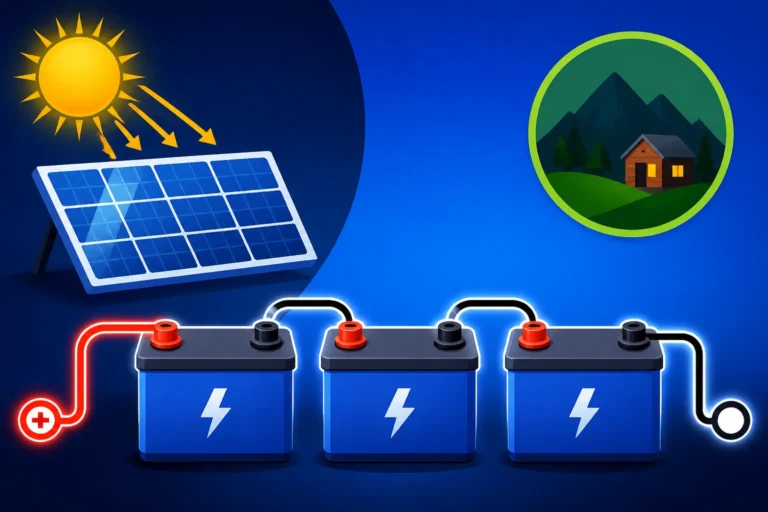
Your solar panels are the start of your power generation. Wiring them correctly is paramount, both for performance and safety. Panels produce DC voltage and current, and depending on your system voltage, you'll either wire them in series, parallel, or a combination of both. Wiring panels in series increases voltage, while parallel wiring increases current. Incorrect wiring can lead to dangerous voltages, reduced power output, or even damage to your charge controller. A helpful resource is our detailed article on How to Wire Solar Panels in Series vs Parallel.
Beyond the wiring configuration, physical considerations are crucial. All outdoor wiring, especially from panels, must be UV-resistant and rated for direct burial or conduit use. Exposed wiring can degrade over time due to sun exposure, leading to cracked insulation and potential short circuits. Use MC4 connectors designed for solar applications, ensuring they are properly crimped and seated to maintain a weatherproof seal. Also, remember to include proper overcurrent protection (fuses or breakers) at the combiner box or near the charge controller input to protect against fault currents originating from the array.
Battery Bank Wiring Best Practices
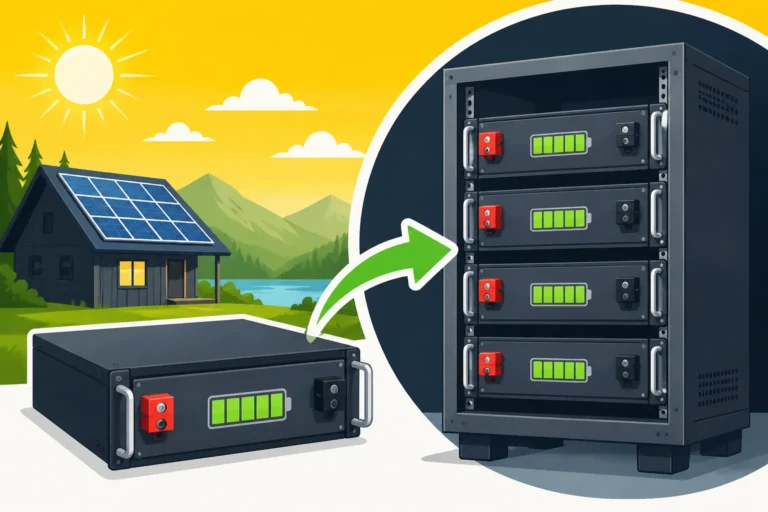
The battery bank is arguably the most critical and potentially dangerous component in an off-grid system if mishandled. Batteries, especially large banks, can deliver immense currents, capable of welding tools or causing severe burns and fires if accidentally shorted. When wiring a battery bank, extreme care is needed. Use appropriately sized battery cables and high-quality, sealed terminals. All connections must be robust and corrosion-free. When connecting multiple batteries, ensure they are of the same type, age, and capacity, and follow the manufacturer's recommendations for series or parallel connections. Our guide on How to Wire an Off-Grid Battery Bank details these configurations.
Crucially, always install a main battery disconnect switch and appropriate fusing for the battery bank. This allows you to safely isolate the batteries for maintenance or in an emergency and provides vital overcurrent protection for the entire system. For example, if you're building a system with a large 48V LiFePO4 battery bank, you'll need heavy gauge cables and fuses capable of handling several hundred amps, much like what you might find on Amazon for heavy-duty marine applications. Never work on battery wiring without first disconnecting the solar array and any loads, and always wear appropriate personal protective equipment, including insulated gloves and eye protection.
Inverter and Charge Controller Connections
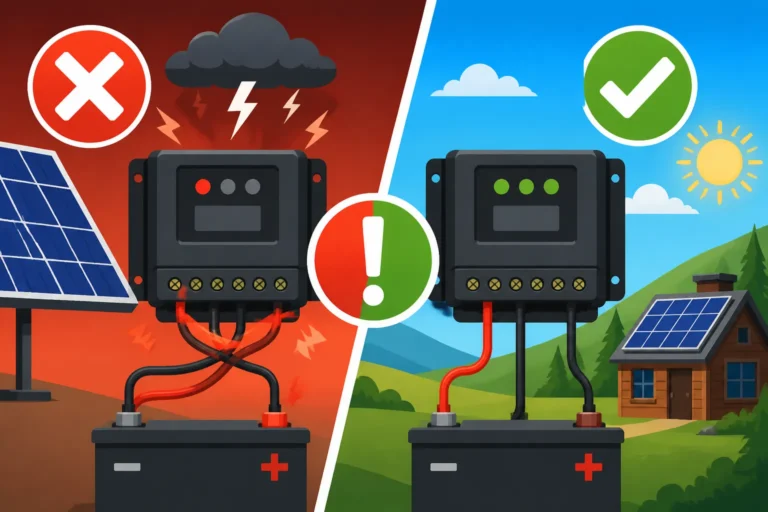
The inverter and charge controller are the brains of your off-grid system, managing power flow and conversion. Their connections are vital. The charge controller sits between your solar panels and your battery bank, regulating the power to prevent overcharging and damage. Ensure that the solar input, battery output, and load output (if present) are wired with the correct polarity and wire gauge, and that the connections are tight. Wiring a charge controller incorrectly can lead to damage to your batteries or the controller itself.
The inverter converts your battery's DC power into usable AC power. This component typically handles the highest currents in your system, especially on the DC input side. Therefore, the DC cables connecting the inverter to the battery bank must be extremely robust and as short as possible to minimize voltage drop and resistance. A major error here can lead to excessive heat, fire, or inverter failure. Always consult your inverter's manual for specific wiring requirements, grounding instructions, and recommended fuse sizes. Many quality inverters, like the Victron MultiPlus series, provide very clear terminal markings and detailed instructions for safe installation. Knowing How to Size an Off-Grid Inverter is also crucial for overall system health and safety.
Tools and Best Practices for a Safe Installation
A safe and efficient off-grid solar installation relies not only on knowledge but also on having the right tools and adopting a methodical approach. Skimping on tools or rushing through steps can lead to dangerous errors.
The Right Tools for the Job
You wouldn't attempt brain surgery with a butter knife, and you shouldn't tackle off-grid electrical work without the proper tools. Investing in quality tools is an investment in your safety and the longevity of your system. Here's a rundown of essential tools:
- Multimeter: Absolutely non-negotiable for checking voltage, current, and continuity.
- Wire Strippers: Specific to the gauge of wire you're using, ensuring clean, precise strips without damaging strands.
- Crimpers: For creating secure, gas-tight connections with terminals and lugs. Different crimpers are needed for different terminal types (e.g., open barrel, insulated, non-insulated). For MC4 connectors, dedicated MC4 crimpers are a must.
- Torque Wrench/Screwdriver: Many electrical connections specify a torque setting. Overtightening can strip threads, while undertightening leads to loose, resistive connections.
- Cable Cutters: Heavy-duty cutters for large gauge battery cables.
- Conduit Benders/Tools: If you're running wires in conduit, you'll need the right tools for cutting and bending.
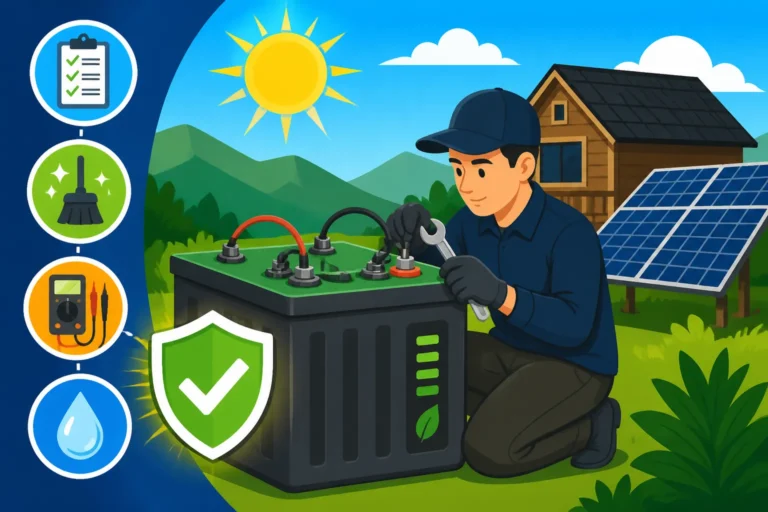
- Personal Protective Equipment (PPE): Insulated gloves, safety glasses, and appropriate clothing are a must whenever you're working with electricity, especially batteries.
Having the right tools ensures that every connection is made properly, reducing the risk of failures caused by poor workmanship.
Following or Adapting Electrical Codes
While many off-grid installations are not directly subject to the full spectrum of local building and electrical codes (especially in remote areas), these codes, like the National Electrical Code (NEC) in the U.S., represent decades of accumulated safety knowledge. Even if you're not legally required to adhere to them, adopting their principles for Off-Grid Solar Permits and Codes is a smart, proactive approach to safety.
These codes provide guidelines for everything from wire sizing, overcurrent protection, and grounding to conduit use and component clearances. They are designed to prevent fires, electrical shocks, and other hazards. For instance, the NEC dictates spacing for conductors, labeling requirements, and disconnecting means. While you might not be able to replicate every detail of a grid-tied installation, understanding the spirit and intent of these codes will significantly enhance the safety and reliability of your off-grid system. There are excellent resources, often available online, that summarize relevant code sections for DC and renewable energy systems. Even without formal inspections, building to code-like standards is the gold standard for your own protection.
| Component Group | Key Wiring Hazards & Considerations | Essential Safety Practices |
|---|---|---|
| Solar Panels | High DC voltage/current, exposed wiring to elements, improper series/parallel connections, physical damage | Use UV-rated solar cables (e.g., 10 AWG), proper MC4 connectors, combine series strings with appropriately rated fuses/breakers, secure mounting to prevent wind damage. Ensure proper grounding of panel frames and racking. |
| Charge Controller | Incorrect polarity, undersized wiring, incompatible voltage/current ratings, lack of overcurrent protection | Wire "Battery First" then "Solar Panels," ensure correct polarity, use wire gauges based on array current, install appropriate fuses between panels & controller, and controller & batteries. Match controller type (MPPT/PWM) to system needs. |
| Battery Bank | Extremely high currents (short circuit risk), off-gassing (lead-acid), loose terminals, reverse polarity | Use heavy-gauge battery cables, properly crimped lugs, secure terminals, install main battery disconnect & fuse, ensure adequate ventilation (for lead-acid), wire same type/age batteries, wear PPE. |
| Inverter | High DC current input, AC output hazards, improper grounding, undersized wiring, inadequate surge capacity | Short, heavy-gauge DC cables to battery, proper AC output wiring with circuit breakers, robust grounding to chassis, ensure pure sine wave for sensitive electronics, confirm surge rating for appliances (e.g., well pump starting). |
| General Wiring | Voltage drop, physical damage, inadequate insulation, fire risk, shock hazard | Size wires for current and length, use conduit for protection, properly support cables, secure all connections, label circuits, use properly rated junction boxes and enclosures. Always test with a multimeter before energizing. |
Disclaimer
The information provided in this guide is for educational and informational purposes only and does not constitute professional electrical advice. Working with electricity can be dangerous and poses risks of injury, property damage, and death. Always consult with a qualified electrician or solar professional before installing or modifying any electrical system. Follow all local codes and regulations, and prioritize safety above all else. The author and publisher are not responsible for any damage or injury resulting from the misuse or misapplication of this information.