Real-World Off-Grid Solar Cost Examples
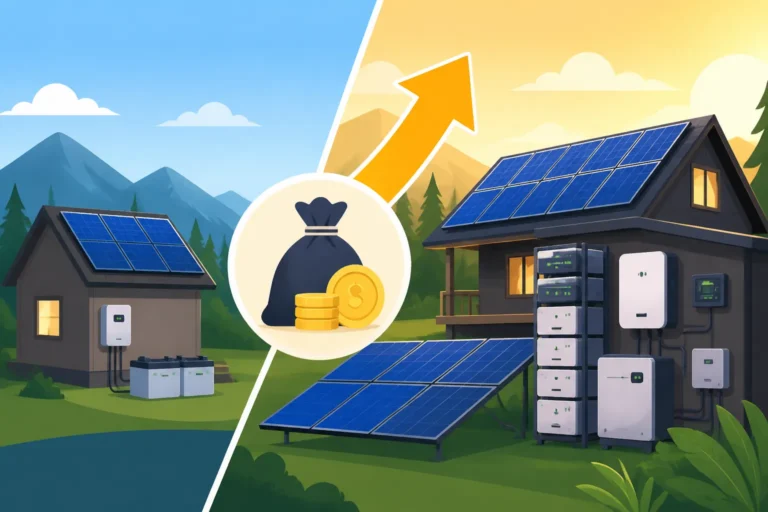
One of the biggest hurdles folks face when dreaming about off-grid living or just getting reliable backup power is the big unknown: "How much is this actually going to cost me?" It’s easy to get overwhelmed by conflicting figures and fear that achieving energy independence is only for the super-rich. This comprehensive guide will walk you through real-world off-grid solar cost examples, providing practical breakdowns for various setups and helping you understand what to truly budget for.
The Sticker Shock of Going Off-Grid
It's completely normal to feel a pang of anxiety when you start looking into the price tags associated with off-grid solar. You might see numbers ranging from a few hundred dollars to tens of thousands, and it can feel like you need an economics degree just to make sense of it all. This wide variance isn't just arbitrary; it reflects the sheer customization inherent in off-grid systems and the different needs people have. For someone living in a small RV part-time, their needs and budget will be wildly different from a family establishing a full-time homestead in a remote location.
Why Initial Figures Can Be Misleading
When you first dip your toes into the world of off-grid solar, you're likely to encounter a lot of broad estimates. A quick online search might give you a range, but it rarely delves into the nuances that make up that total. These initial figures often don't differentiate between the bare essentials for a minimalist setup and a robust system designed for modern comforts, complete with air conditioning, a well pump, and all the creature comforts of a grid-tied home. It's like asking "how much does a car cost?" – the answer depends entirely on whether you're looking at a used sedan or a brand-new luxury SUV. Without understanding what's included, these numbers can either give you false hope or, more often, make you feel like your off-grid dreams are simply out of reach.
Moreover, many online "calculators" or quick-glance guides might focus solely on the main components – panels, batteries, inverter – and neglect all the crucial little bits and pieces that add up. We're talking about wiring, fuses, disconnects, mounting hardware, conduit, and even labor costs if you're not doing a full DIY installation. This oversight can lead to significant budget overruns if you're not prepared. It’s the small, overlooked items that often trip people up, causing frustration and delays in their journey toward energy independence. This is why getting a complete breakdown of off-grid solar costs is so important from the outset.
Factors That Inflate Perceived Costs
Beyond just the components, several factors can make the "cost of off-grid solar" appear higher than it might be for your specific situation. One major factor is the assumed load. Many estimates automatically assume you want to power a full-sized house with all its typical appliances, when in reality, many off-gridders are quite mindful of their energy consumption. By choosing energy-efficient appliances, adjusting habits, and being selective about what you power, you can significantly reduce your system requirements and, consequently, the overall cost. For instance, swapping out an electric water heater for a propane one or opting for a low-power DC refrigerator can make a massive difference in the size of the battery bank and solar array you need.
Another inflating factor is often the assumption of professional installation. While professional installers bring expertise and peace of mind, they also come with a significant labor cost. For many adventurous souls, a DIY approach to how to install an off-grid solar system can dramatically reduce the financial outlay. Of course, this requires a willingness to learn, research, and put in the physical effort, but the savings can be substantial. Permitting and inspection fees, though sometimes necessary, can also add unexpected layers to the initial cost. It’s these hidden layers that make it crucial to look beyond the headline figures and really dig into the specifics of your own project.
Breaking Down Real-World Off-Grid Solar System Costs
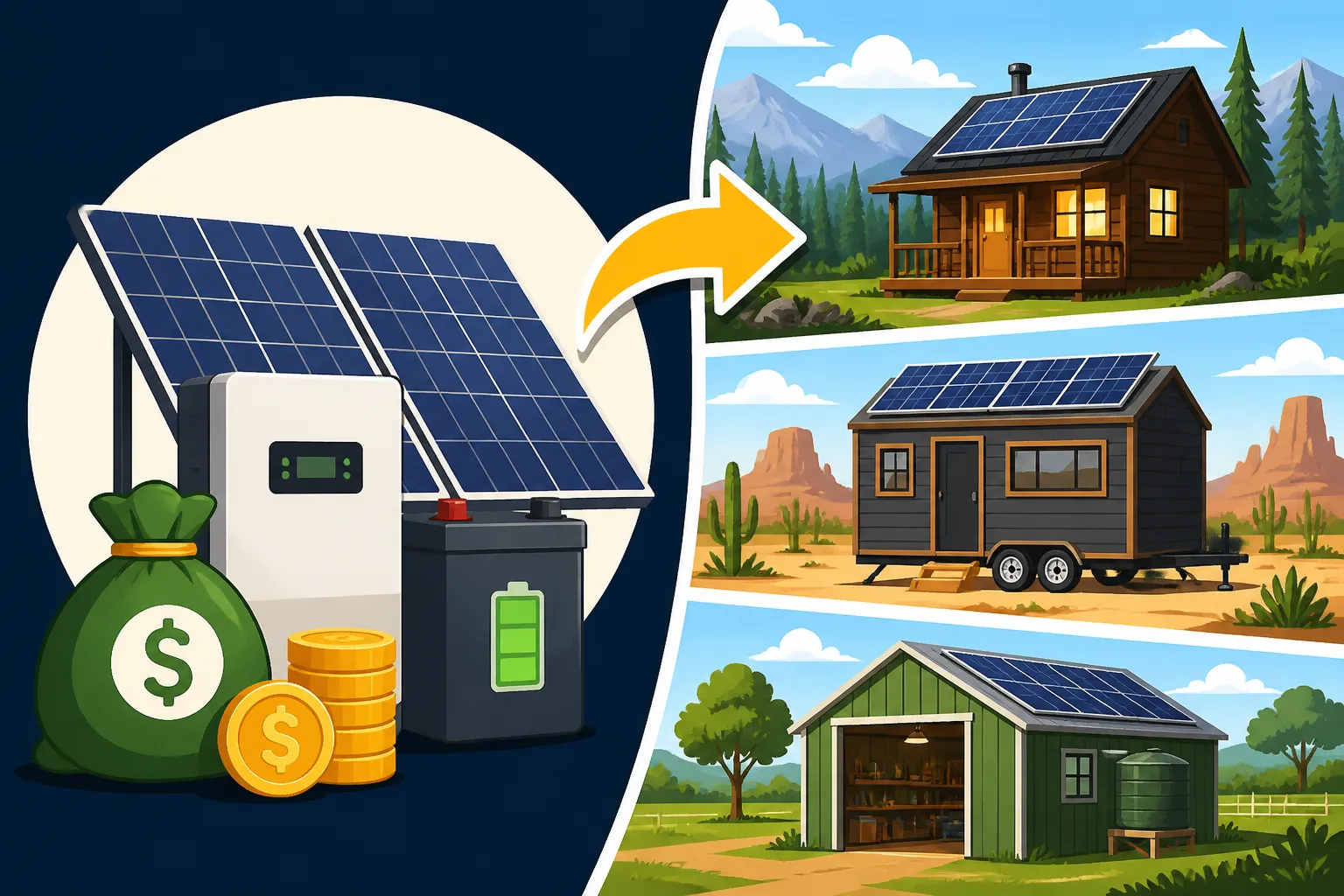
Let's get down to the nitty-gritty. What does off-grid solar actually cost for different real-world scenarios? The truth is, there's no one-size-fits-all answer, but we can look at typical setups to give you a clearer picture. Your specific needs, location, and desired level of comfort will always be the ultimate determinants of your budget.
Small Scale Systems RVs Vans Cabins
For many, the off-grid journey begins small—perhaps a weekend warrior RV, a van conversion for nomadic living, or a compact hunting cabin that only sees use a few times a year. These setups are usually designed for essential loads: lighting, phone charging, a small fan, and maybe a 12V refrigerator.
- RV/Van Life (Basic): A minimalist system for occasional use might run you $500 – $2,500. This could include a couple of 100W-200W solar panels, a small 100Ah LiFePO4 battery (or a couple of lead-acid), a basic charge controller, and a small inverter. Think about a simple setup from brands like Renogy or BougeRV, often found on marketplaces like Amazon. This kind of system is perfect for charging laptops, running LED lights, and keeping your phone topped up. For more specific details, you can explore the Off-Grid Solar Cost for an RV.
- Example: Imagine a weekend camper who wants to power their mini-fridge, some string lights, and charge their devices. They might opt for a 200W flexible solar panel kit, a 100Ah lithium battery, and a 1000W inverter. Components might cost around $1,500 if they shop smart for deals online and do the installation themselves.
- RV/Van Life (Moderate): If you're looking to run more creature comforts, like a larger fridge, a microwave occasionally, or even a small air conditioner for short bursts, your costs climb to $3,000 – $8,000. This level often involves 400W-800W of solar panels, 200-400Ah of lithium batteries, and a 2000W-3000W pure sine wave inverter.
- Example: A couple living full-time in their van might go for 600W of solar panels on their roof, a 400Ah Battle Born or similar LiFePO4 battery bank, a high-quality MPPT charge controller, and a 3000W inverter/charger. This robust system would allow them to run most standard appliances, excluding heavy-duty electric heating or constant AC. The cost for components could easily hit $6,000-$8,000, assuming self-installation.
- Hunting/Remote Cabin (Basic): For a small, seasonal cabin with basic lighting and a few outlets, you might budget $1,500 – $5,000. This would typically involve 300W-600W of solar panels, 200-400Ah of lead-acid or a single 200Ah lithium battery, and a 1500W-2000W inverter. This is enough for lights, a small TV, and charging portable devices. Learn more at Cost to Power a Cabin with Solar.
- Example: A remote hunting cabin that only gets used a few weekends a year could be powered by two 200W rigid panels on a simple ground mount, a couple of 100Ah AGM batteries, a small Renogy charge controller, and a 1500W inverter. This kind of setup, especially if sourced through online retailers like Amazon and installed DIY, could come in around $2,000-$3,000.
Medium Scale Systems Tiny Homes Workshops
Stepping up a bit, medium-scale systems are for those who need more consistent power for slightly larger loads or longer periods. Think tiny homes, small workshops, or even a remote office that requires reliable power for computers and tools. These systems often aim for near full-time living or working conditions.
- Tiny Home/Small Workshop (Moderate Use): For a tiny home or workshop powering standard appliances like a refrigerator, lights, water pump, and occasional power tools, expect to spend anywhere from $7,000 – $15,000. This usually means 800W-1500W of solar panels, a 400-800Ah LiFePO4 battery bank (or a larger bank of high-quality lead-acid), and a 3000W-5000W pure sine wave inverter.
- Example: A couple living in a 300 sq ft tiny home in rural Oregon might install 1200W of solar panels on their roof, a 400Ah 48V EG4 lithium battery bank, a Victron MultiPlus inverter/charger, and a robust MPPT charge controller. They'd also need proper wiring, fusing, and mounting hardware. A DIY installation might see the component costs hovering around $10,000-$12,000. This system could comfortably run their fridge, lights, water pump, a small television, and charge their electronics.
- Expanded Workshop/Remote Office (Heavy Use): For situations needing more substantial power for tools, heating/cooling, or multiple users, the budget can range from $12,000 – $25,000. This involves 1500W-3000W of solar panels, 800Ah-1200Ah or more of LiFePO4 batteries, and a 5000W-8000W inverter.
- Example: A woodworker in North Carolina sets up a remote workshop needing to run saws, drills, and an air compressor. They might install 2500W of ground-mounted solar, two 200Ah 48V SOK lithium batteries, a powerful Sol-Ark or Outback inverter, and a robust charge controller. Factoring in specialized wiring, conduit, and perhaps some professional assistance for the main hookup, this system could easily be in the $18,000-$22,000 range.
Large Scale Systems Full-Time Homesteads
This is where off-grid solar really shines for those committed to complete energy independence. These systems are designed to power a full-sized home with all the modern amenities, often including energy-intensive appliances like washing machines, well pumps, and sometimes even smaller air conditioning units or mini-splits.
- Family Home/Homestead (Standard): For a family looking to power a small-to-medium-sized home (1,000-2,000 sq ft) with typical usage, expect to pay $20,000 – $45,000. This includes 3kW-8kW of solar panels, 1000-2000Ah (or more) of high-capacity LiFePO4 batteries, and an 8000W-12000W inverter, often paired with an integrated inverter/charger.
- Example: A family of four in rural Texas wants to power their 1,500 sq ft home. They install a 5kW ground-mounted solar array, a 1500Ah 48V EG4 PowerPro battery bank, and a 12kW Sol-Ark 12K inverter/charger. They hire an electrician for the main panel tie-in and critical wiring. The total cost, including all components, racking, wiring, and partial professional installation, could easily be $30,000-$40,000. This robust system handles their refrigerator, well pump, washing machine, lights, and entertainment system with ease.
- Large Home/Energy-Intensive Homestead: For larger homes, significant air conditioning, electric heating, or properties with heavy power demands (e.g., extensive workshops, multiple outbuildings), costs can go from $40,000 – $75,000+. This typically involves 8kW-15kW+ of solar panels, 2000Ah+ of LiFePO4 batteries, and 12kW-20kW+ inverter systems, often with multiple inverters or commercial-grade components.
- Example: A homesteader in Arizona with a large home and an extensive permaculture setup needs to run a powerful well pump, multiple refrigerators, several freezers, and a mini-split AC for significant portions of the year. They opt for a 10kW solar array, a substantial 2500Ah 48V battery bank composed of multiple SOK or Battle Born units, and two powerful Victron Quattro inverter/chargers operating in a split-phase configuration. Given the complexity and scale, they hire a specialized off-grid solar installer, bringing the total project cost to $60,000-$70,000. This high-capacity system allows them near-grid equivalence in their power consumption habits.
Here's a quick overview table to summarize these real-world cost examples:
| System Size/Application | Typical Solar Array Size | Typical Battery Capacity (LiFePO4) | Inverter Size | Estimated Cost Range (DIY components) | Common Uses |
|---|---|---|---|---|---|
| Small RV/Van (Basic) | 100W – 200W | 100Ah (12V) | 500W – 1000W | $500 – $2,500 | Lights, device charging, small fridge |
| Moderate RV/Cabin | 400W – 800W | 200Ah – 400Ah (12V) | 1500W – 3000W | $3,000 – $8,000 | Larger fridge, microwave, water pump, small AC bursts |
| Tiny Home/Workshop | 800W – 1500W | 400Ah – 800Ah (48V) | 3000W – 5000W | $7,000 – $15,000 | Standard home appliances, tools, consistent power |
| Small-Med Homestead | 3kW – 8kW | 1000Ah – 2000Ah (48V) | 8000W – 12000W | $20,000 – $45,000 | Full home power, well pump, washing machine, limited AC |
| Large Homestead/Heavy Use | 8kW – 15kW+ | 2000Ah+ (48V) | 12kW – 20kW+ | $40,000 – $75,000+ | Large home, heavy AC, multiple outbuildings, extensive power tools |
Note: These ranges are for components for a DIY installation. Professional installation can add 20-50% or more to the total cost.
Component Specific Cost Examples
Understanding the overall system cost is one thing, but knowing how much each individual piece contributes can really help you budget and prioritize. Each component has its own price range, driven by quality, brand, and capacity. For a deeper dive into these specifics, you might find our article on Off-Grid Solar Cost: Complete Breakdown particularly useful.
The True Cost of Off-Grid Solar Panels
Solar panels are often the most visible part of an off-grid system, and their prices have come down significantly over the years. However, the cost per watt can vary based on efficiency, brand reputation, and whether you're buying in bulk or individually.
- Individual Panels: For smaller systems or additions, you might buy 100W-200W panels individually. A good quality 100W monocrystalline panel can cost anywhere from $80-$150, while a 200W panel might be $150-$250. Brands like Renogy, Rich Solar, and Newpowa are popular for individual purchases, often available on Amazon. For example, a single 100W panel might cost around $99 if you catch a sale.
- Larger Panels/Bulk: When building a larger system, you'll typically look for 300W-400W residential panels. These can range from $0.70 to $1.20 per watt, meaning a 400W panel could cost $280-$480. Buying a pallet of panels often brings the cost per watt down further. For instance, a 5kW array might consist of thirteen 400W panels, costing roughly $3,640 – $6,240 just for the panels. You can explore more about cost of off-grid solar panels to understand this better.
- Mounting Hardware: Don't forget the racking! Roof mounts, ground mounts, or pole mounts add to the cost. Simple Z-brackets for an RV might be $30-$50 per panel, while a robust ground mount system for a 5kW array could be anywhere from $1,500-$4,000 depending on materials and complexity.
Batteries The Heart of the System
Batteries are arguably the most expensive single component in an off-grid solar system, and for good reason—they store your precious energy. The choice between lead-acid and lithium iron phosphate (LiFePO4) will drastically impact both upfront cost and long-term value.
- Lead-Acid Batteries (Deep Cycle AGM/Gel): These are the more budget-friendly upfront option. A 100Ah 12V AGM battery can cost $200-$350. However, they have a shorter lifespan (2-5 years), shallower depth of discharge, and require more maintenance. For a moderate cabin setup needing 400Ah at 12V, you might buy four 100Ah AGM batteries for around $800-$1,400. Their cost to replace off-grid solar batteries can add up over time.
- Lithium Iron Phosphate (LiFePO4) Batteries: While more expensive initially, LiFePO4 batteries offer a much longer lifespan (10+ years), deeper discharge capabilities, and are virtually maintenance-free. A 100Ah 12V LiFePO4 battery typically ranges from $300-$800, depending on the brand (e.g., Battle Born, Renogy, SOK, EG4). For a 400Ah 12V equivalent, you'd look at $1,200-$3,200 for lithium. For larger systems, 48V server rack style batteries are becoming popular, offering excellent value. A 48V 100Ah (approx. 5kWh) LiFePO4 battery might cost $1,500-$3,000.
- Example: A small van setup might use a single 100Ah 12V LiFePO4 battery from a brand like Renogy, costing around $450-$600. For a larger tiny home, two 48V 100Ah (5kWh each) EG4 server rack batteries might be used, costing roughly $4,000-$6,000 for 10kWh of storage. This is a significant portion of the cost of an off-grid solar battery bank.
- Portable Power Stations/Solar Generators: For very small, temporary needs, all-in-one units like a Jackery Explorer 1000 or a Bluetti AC200MAX can provide integrated battery and inverter power. These range from $500 to $2,500+ depending on capacity, offering a convenient, albeit less scalable, solution.
Inverters and Charge Controllers
These are the brains and brawn of your electrical system, converting raw solar power into usable electricity and managing the battery charge.
- Charge Controllers: These regulate the power flow from your solar panels to your batteries. MPPT (Maximum Power Point Tracking) controllers are more efficient and typically cost more than PWM (Pulse Width Modulation) controllers.
- PWM: Less expensive, suitable for smaller, simpler systems. A small PWM controller for a 200W system might be $20-$50.
- MPPT: More efficient, especially in varying light conditions, and essential for larger systems. A good MPPT controller for a 600W system could be $100-$300, while a high-capacity MPPT controller for a multi-kilowatt array from brands like Victron or Outback could run $400-$1,000+. For more, see cost of a charge controller.
- Inverters: These convert the DC power from your batteries into usable AC power for your household appliances. Pure sine wave inverters are crucial for sensitive electronics, while modified sine wave inverters are cheaper but not recommended for most modern appliances.
- Small Inverters: For RVs or small cabins, a 1000W-2000W pure sine wave inverter can cost $150-$500.
- Mid-Size Inverters: For tiny homes or workshops, a 3000W-5000W inverter from a reputable brand like Renogy, AIMS Power, or Growatt might be $600-$1,500.
- Large Inverters/Inverter-Chargers: For full homesteads, you're looking at robust inverter-chargers that can handle significant loads and often integrate with a backup generator. Brands like Victron, Sol-Ark, and Schneider Electric offer 8000W-15000W+ units that can cost anywhere from $3,000-$10,000+. These are significant contributors to the cost of an off-grid solar inverter.
Hidden Costs and Long-Term Savings
Beyond the main components, there are often overlooked costs that can sneak up on you. However, it's also vital to remember the significant long-term savings and benefits that off-grid solar provides, making it a worthwhile investment.
Installation and Permitting Surprises
While many off-gridders opt for DIY installations to save money, there are still costs involved, even if it's just your time and effort. If you choose professional installation, labor costs can add 20% to 50% (or even more) to your overall budget. For a $20,000 system, this could mean an extra $4,000-$10,000. It's why DIY vs Professional Off-Grid Solar Cost is a crucial consideration.
- Wiring, Fuses, Disconnects: These seemingly small items add up quickly. High-quality, properly sized copper wiring, circuit breakers, fuses, disconnect switches, and conduit are essential for safety and efficiency. Budget anywhere from $500-$2,000 for these electrical incidentals, depending on system size and complexity.
- Tools: If you're going DIY, you might need to invest in some specialized tools like a crimper for MC4 connectors, a multimeter, wire strippers, and possibly a torque wrench for panel mounting. These can add another $100-$500 to your initial outlay.
- Permitting and Inspections: Depending on your location, especially for permanent structures, you may need to obtain permits and undergo inspections to ensure your system meets local electrical codes. These fees and the time involved can be unpredictable, ranging from a few hundred dollars to over a thousand. Always check with your local authority before starting a large project to avoid hidden costs of going off-grid.
Maintenance and Upgrade Expenses
Off-grid systems, while robust, aren't entirely set-it-and-forget-it. There are ongoing costs, although they are generally minor compared to the initial investment.
- Battery Replacement: This is the most significant long-term expense. While LiFePO4 batteries last a decade or more, they will eventually need replacing. Factoring in the Off-Grid Solar Battery Replacement Cost Over Time is crucial for a realistic long-term budget. For instance, replacing a 10kWh LiFePO4 bank in 10-15 years might cost $4,000-$6,000 (though prices may drop). Lead-acid batteries will need replacing every few years.
- Component Wear and Tear: Inverters, charge controllers, and other electronics have lifespans, typically 5-15 years. While durable, components can fail, requiring replacement. Budget a small contingency fund for this.
- Cleaning and Inspection: Panels need occasional cleaning, especially in dusty areas, to maintain efficiency. Wiring connections should be checked periodically. These are more about time than direct cash, but they are part of off-grid solar maintenance costs.
- Upgrades and Expansion: As your energy needs change or technology improves, you might want to expand your system. This could mean adding more panels, batteries, or a larger inverter. Designing an expandable off-grid solar system from the start can make future upgrades easier and more cost-effective.
Unexpected Long-Term Financial Benefits
Despite the upfront costs, going off-grid offers substantial long-term financial benefits that often outweigh the initial investment.
- Elimination of Utility Bills: This is the big one. Once your system is up and running, you're no longer paying for electricity. This provides predictable energy costs and protection from rising utility rates. Over decades, this can save tens of thousands of dollars. Our guide, How Off-Grid Solar Saves Money Long-Term, dives into this in detail.
- Increased Property Value: A fully functional, well-designed off-grid solar system can significantly increase the value of your property, particularly in remote areas where grid access is expensive or non-existent.
- Energy Independence and Resilience: While not a direct financial saving, the peace of mind that comes with reliable power, free from outages, is invaluable. This self-sufficiency can prevent losses due to spoiled food during blackouts or lost work time.
- Avoided Grid Extension Costs: For remote properties, extending utility lines can cost $20,000 to $100,000+ per mile. In these scenarios, off-grid solar can be significantly cheaper from day one. Compare this further in Off-Grid Solar vs Utility Extension Cost.
- Tax Credits and Incentives: Depending on your location, you might qualify for federal, state, or local incentives that can reduce the net cost of your system. For instance, the federal solar tax credit (Investment Tax Credit) can apply to off-grid systems, offering a significant percentage back as a tax credit. Always check the latest information on topics like the 2026 Solar Tax Credit and Off-Grid Systems.
Understanding these real-world cost examples is the first step towards making your off-grid solar dream a reality. It empowers you to budget realistically, make informed decisions, and appreciate the true value of energy independence.
Disclaimer
The cost estimates provided in this guide are for informational purposes only and are subject to change based on market conditions, product availability, specific brands, geographic location, and individual project complexity. It is highly recommended to obtain multiple quotes from suppliers and installers, and to conduct thorough research specific to your project before making any purchasing decisions. Professional advice from a qualified solar installer or electrician is always recommended for system design and installation.