Off-Grid Solar Cost for a Greenhouse
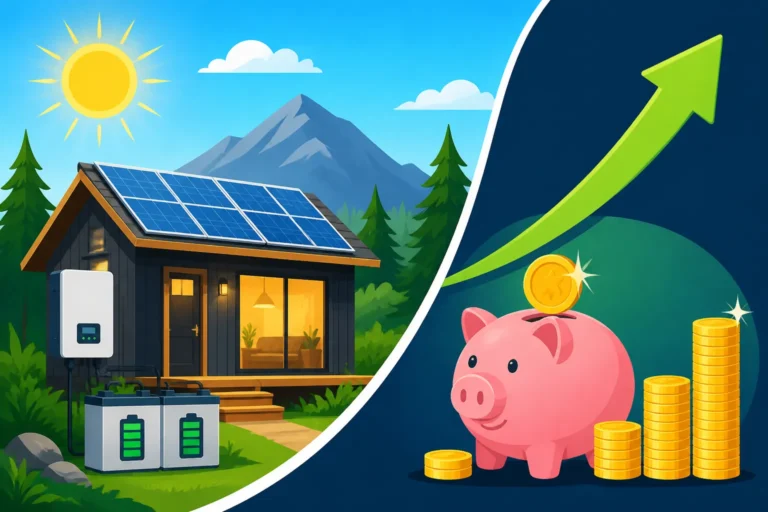
Dreaming of a self-sufficient greenhouse, brimming with life, without being tethered to the utility grid? It’s a beautiful vision, but for many, the practical question quickly becomes: "How much is this actually going to cost me?" The uncertainty of budgeting for an off-grid solar system for your greenhouse can be daunting, especially when you're trying to figure out if it's truly feasible. This guide will meticulously break down the typical expenses involved, from the solar panels soaking up the sun to the batteries storing that precious energy, so you can confidently plan your sustainable growing space.
Understanding the Essentials of Greenhouse Solar Power
Before we dive into the nitty-gritty of dollars and cents, let's take a moment to really understand what an off-grid solar system for a greenhouse entails and why it might be the perfect solution for your green thumb ambitions.
Why Go Off-Grid for Your Greenhouse
There's a unique satisfaction that comes with growing your own food, and extending that independence to your energy supply for the greenhouse is incredibly appealing. Many folks dream of having a greenhouse in a remote corner of their property, far from existing power lines, or simply want to reduce their environmental footprint and utility bills. The frustration of needing power for fans, small heaters, automated watering systems, or supplemental grow lights, only to find that extending grid power would be exorbitantly expensive, is a common hurdle.
Going off-grid means complete energy independence for your greenhouse. You're not subject to power outages that could devastate a delicate crop, nor are you tied to fluctuating electricity rates. Imagine a cloudy winter day, knowing your batteries have enough juice to keep your sensitive plants warm and lit, all powered by the sun. It's about resilience, sustainability, and ultimately, greater control over your growing environment. This is especially true for those with homesteads far from city infrastructure, where the cost to run power lines can easily run into the tens of thousands of dollars.
Key Components of an Off-Grid Greenhouse Solar System
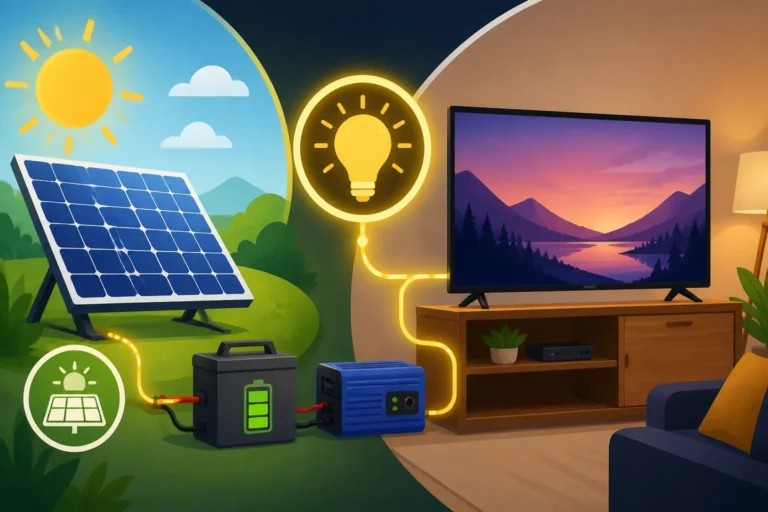
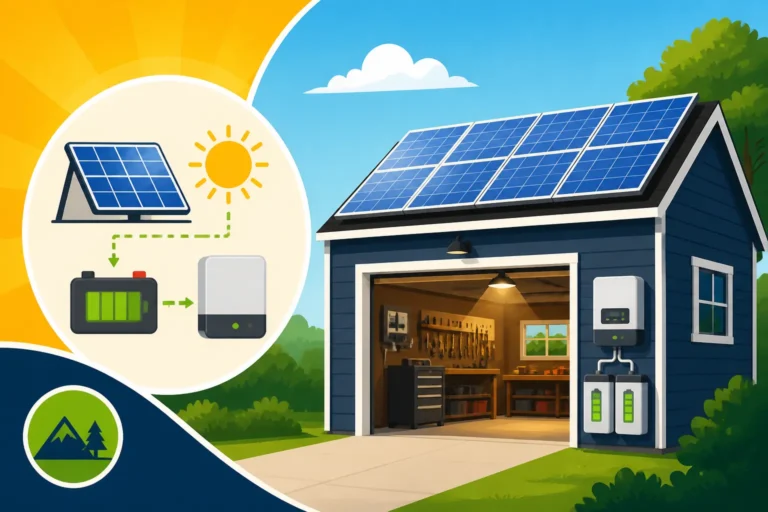
An off-grid solar system isn't just a panel and a light bulb; it's an interconnected network of components designed to reliably capture, store, and deliver power. Understanding these pieces is crucial before you can even begin to estimate costs.
First, you have the solar panels themselves. These are the workhorses, converting sunlight into direct current (DC) electricity. They come in various wattages and physical sizes, and their efficiency ratings can impact how much space you need for your array.
Next up are the batteries, which are arguably the most critical and often the most expensive component in an off-grid system. They store the electricity generated by your panels so you have power during the night or on cloudy days. Without batteries, you'd only have power when the sun is shining directly on your panels.
Then there's the charge controller. This clever device sits between your solar panels and your batteries. Its job is to regulate the voltage and current coming from the solar panels to prevent overcharging your batteries, which can drastically reduce their lifespan. It's like a smart traffic cop for your electrical flow.
The inverter is what transforms the stored DC power from your batteries into alternating current (AC) power, which is what most standard household appliances and greenhouse equipment (like fans, heaters, or pumps) use. Not all greenhouses need AC power if they only run DC loads, but most will have at least a few AC devices.
Finally, you have the "balance of system" components, which include all the wiring, mounting hardware, fuses, breakers, and disconnect switches. These are often overlooked but are essential for a safe, efficient, and durable system. The quality and gauge of your wiring, for example, can impact performance and safety significantly. Proper mounting ensures your panels stay put through high winds and snow.
Deconstructing the Costs: What You'll Actually Pay
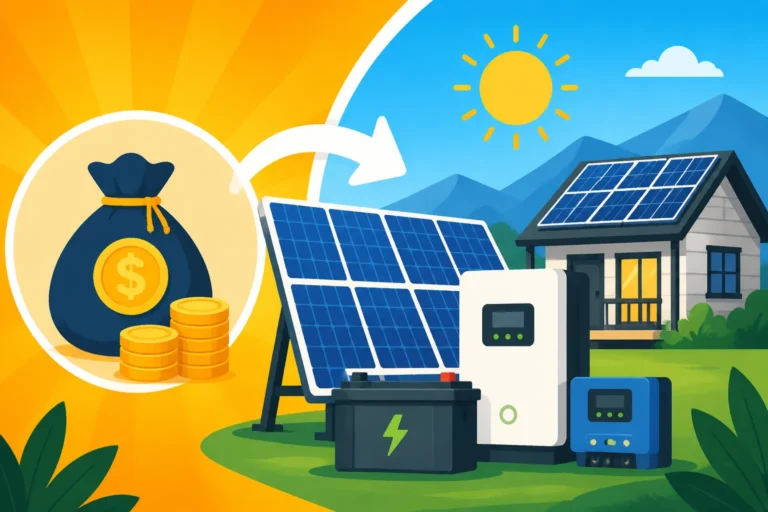
Now that we know the players, let's talk about their price tags. The cost of an off-grid solar system for a greenhouse can vary wildly based on size, desired autonomy, and component quality. It's rarely a one-size-fits-all answer.
Solar Panels: The Price of Sunlight Capture
When it comes to solar panels, you'll find a wide range of options, each with its own cost implications. The price typically ranges from $0.80 to $1.50 per watt for the panels themselves, not including mounting or installation.
- Monocrystalline vs. Polycrystalline: Monocrystalline panels are generally more efficient, meaning they can produce more power in a smaller footprint, but they also tend to be more expensive. Polycrystalline panels are a bit less efficient but are often more budget-friendly. For a greenhouse, if space isn't a premium, polycrystalline might be a good way to save some initial cash. However, if you're trying to fit a lot of power into a small roof area, monocrystalline panels are usually the better bet.
- Efficiency vs. Cost: Higher efficiency panels, while costing more upfront, might reduce the number of panels you need, saving on mounting hardware and wiring. It’s a trade-off that requires careful consideration of your available space and long-term goals.
- Panel Degradation Over Time: Keep in mind that solar panels degrade slightly over time, usually around 0.5% to 1% per year. While this isn't a direct upfront cost, it's a factor in the long-term performance and value of your initial investment. You can learn more about how different components contribute to the overall bill in our guide, What Drives Off-Grid Solar Costs.
For a small greenhouse (e.g., 8×10 feet) needing 200-400 watts, you might spend $160-$600 on panels. A larger enthusiast setup (e.g., 10×20 feet) requiring 800-1500 watts could see panel costs of $640-$2,250. For a more substantial, semi-commercial greenhouse needing 2000-5000 watts, panels alone could set you back $1,600-$7,500.
Batteries: The Heart of Your Off-Grid System
This is where the bulk of your off-grid budget often goes, and for good reason. Batteries store the energy that keeps your greenhouse running when the sun isn't shining. The costs can range significantly depending on the battery chemistry and capacity. To really dig into this, you might find our article How Batteries Drive Off-Grid Solar Cost incredibly helpful.
- LiFePO4 vs. Lead-Acid: Lithium Iron Phosphate (LiFePO4) batteries are the modern favorite for off-grid applications. They are more expensive upfront (often $150-$400 per 100Ah 12V battery, or more for larger 48V units) but offer a much longer lifespan (2,000-10,000 cycles vs. 500-1,500 for lead-acid), deeper discharge capabilities, and require virtually no maintenance. Lead-acid batteries (like AGM or Gel) are cheaper initially ($100-$300 per 100Ah 12V battery) but have a shorter lifespan, can only be discharged to about 50% without damaging them, and require more attention. For a long-term, reliable greenhouse system, many opt for LiFePO4 despite the higher initial cost.
- Capacity Needs: The more power you need stored (e.g., for multiple days of cloudy weather), the larger your battery bank will need to be, and thus, the higher the cost. This is directly related to your desired "days of autonomy." A small greenhouse might get by with one or two 100Ah 12V LiFePO4 batteries for around $300-$800. A larger setup might require several 200Ah 12V or 100Ah 48V batteries, pushing costs to $1,500-$6,000+.
- Longevity and Replacement Costs: While LiFePO4 batteries last many years (10-15+ years is common), lead-acid batteries might need replacement every 3-5 years, adding recurring costs that can outweigh the initial savings. Knowing the Cost to Replace Off-Grid Solar Batteries is an important consideration for your long-term budget. Our comprehensive article, Cost of an Off-Grid Solar Battery Bank, provides a detailed breakdown of these expenses.
Inverters and Charge Controllers: The Brains of the Operation
These components are essential for managing and converting your solar power. Their costs depend on their type, size, and features.
- Charge Controllers: You'll typically choose between PWM (Pulse Width Modulation) and MPPT (Maximum Power Point Tracking) controllers. PWM controllers are simpler and cheaper (often $30-$150) but less efficient, especially in varying light conditions. MPPT controllers are more advanced and efficient (often $100-$600+), extracting up to 30% more power from your panels, making them a worthwhile investment for most serious off-grid systems. For a detailed look at the investment, check out Cost of a Charge Controller.
- Inverters: The inverter converts your battery's DC power into usable AC power.
- Pure Sine Wave Inverters are recommended for sensitive electronics and most AC appliances, providing clean power similar to what you get from the grid. These range from $150-$1,000+ depending on wattage (e.g., 1000W to 5000W).
- Modified Sine Wave Inverters are cheaper (often $50-$200) but produce a "choppier" waveform that can damage certain electronics or make motors run inefficiently. They are generally not recommended for anything beyond basic resistive loads like incandescent lights.
- For a greenhouse, you'll likely need a pure sine wave inverter to run fans, pumps, or specialized grow lights efficiently and safely. A 2000W pure sine inverter, which is a good mid-range size for many greenhouse needs, might cost around $300-$600. For a larger system, you might need a 5000W inverter, which could be $800-$1,500+. For more details on this component, see Cost of an Off-Grid Solar Inverter.
Mounting, Wiring, and Balance of System (BOS) Costs
These are the unsung heroes of your solar setup, often overlooked in initial budget discussions but absolutely critical for functionality and safety.
- Mounting Hardware: Whether you're mounting panels on the greenhouse roof or a separate ground mount, you'll need sturdy racking. Roof mounts can be simpler but require careful sealing. Ground mounts allow for optimal tilt and orientation but might need concrete footings. Costs can range from $50-$200 per panel for basic kits, or more for heavy-duty ground mounts with adjustable tilt.
- Wiring and Cabling: You'll need appropriate gauges of DC wire for connecting panels to the charge controller and batteries, and AC wire for connecting the inverter to your loads. Don't skimp here; undersized wires can lead to voltage drop and fire hazards. High-quality copper wire, especially for longer runs, can add a few hundred dollars.
- Fuses, Breakers, and Disconnects: These are non-negotiable safety components. They protect your system from overcurrents and allow you to safely disconnect power for maintenance. A robust set of breakers and fuses will typically cost $100-$300.
- Enclosures and Junction Boxes: Protecting your electrical components from the elements is vital. Weatherproof enclosures for charge controllers, inverters, and wiring junctions are necessary.
- Labor (if not DIY): If you're not doing a full DIY installation, hiring an electrician or solar professional can add significant costs, typically 10-20% of the total system cost, or even more for complex installations. However, this ensures proper installation and safety compliance. For a general idea of these costs, refer to Off-Grid Solar Installation Cost.
Factors That Significantly Influence Your Greenhouse Solar Budget
Beyond the individual component prices, several overarching factors will heavily sway the final cost of your off-grid greenhouse solar system. Thinking through these carefully at the planning stage can save you a lot of headaches and money down the line.
Size and Energy Demands of Your Greenhouse
This is perhaps the most fundamental determinant of your costs. A small 8×10 foot hobby greenhouse used only for starting seedlings in spring will have vastly different energy needs than a 20×30 foot commercial operation running year-round.
- Small Hobby Greenhouse: You might only need power for a small fan, a low-wattage heat mat, and perhaps a few LED grow lights for a few hours a day. Your total daily energy consumption might be in the range of 300-1000 Watt-hours (Wh). This would require a smaller solar array (e.g., 200-400W) and a modest battery bank.
- Larger Enthusiast Greenhouse: If you're running automatic vents, a more powerful circulation fan, a small pump for irrigation, and supplemental lighting for longer durations, your energy needs could jump to 1,000-3,000 Wh per day. This necessitates more panels and a larger battery bank.
- Semi-Commercial or Year-Round Greenhouse: Operations relying on robust heating systems, high-intensity grow lights, multiple pumps, and climate control will have significantly higher demands, possibly 5,000-10,000+ Wh per day. This pushes the system into the realm of a small residential off-grid setup.
To accurately budget, you absolutely must conduct a thorough Off-Grid Solar Load Calculation Explained. This involves listing every electrical appliance you plan to run, its wattage, and how many hours per day it will operate. This calculation is the first step in understanding How to Size an Off-Grid Solar System appropriately.
Climate and Seasonal Usage
Where your greenhouse is located and when you plan to use it have a huge impact on system sizing and cost.
- Sunlight Availability: Areas with abundant, consistent sunlight (like the American Southwest) will require fewer panels to generate the same amount of power compared to cloudy regions (like the Pacific Northwest or parts of the Northeast). You'll need to research your area's "peak sun hours" to accurately size your array.
- Winter Needs: If you plan to heat your greenhouse through winter or provide supplemental lighting during short, dark days, your system will need to be significantly larger. Winter often means fewer sun hours and higher energy demands (especially for heating). Our article on How Winter Affects Off-Grid Sizing offers critical insights here.
- Cloudy Days: You'll need enough battery capacity to power your greenhouse through several consecutive cloudy days – typically 2-3 days of "autonomy" is a good starting point. This directly increases your battery bank size and cost. Learn more about planning for this in How to Account for Cloudy Days.
- Cooling in Summer: Paradoxically, summer can also drive up energy demand for fans and evaporative coolers if your greenhouse isn't designed for passive cooling, requiring more solar input.
DIY vs. Professional Installation
Deciding whether to tackle the installation yourself or hire a professional is one of the biggest cost decisions you'll make.
- DIY Installation: This is often the most budget-friendly option in terms of direct cash outlay, as you save on labor costs. However, it requires a significant time investment, a good understanding of electrical systems, and a commitment to safety. Mistakes can be costly, both in terms of damaged equipment and potential hazards. Many reputable brands, like Renogy and EcoFlow, offer comprehensive kits and excellent online resources to guide DIYers. For those on a tight budget, the initial savings can be substantial, as highlighted in DIY vs Professional Off-Grid Solar Cost.
- Professional Installation: Hiring a qualified electrician or solar installer ensures the system is designed, installed, and wired correctly, meeting all safety standards and local codes. This provides peace of mind and often comes with warranties on workmanship. The downside is the added expense, which can range from a few thousand dollars for a small system to well over $10,000 for a large, complex setup. However, it's often a worthwhile investment if you're not comfortable with electrical work or if your system is large and complex.
Quality of Components and Brands
Just like with anything else, you get what you pay for in off-grid solar. There's a vast spectrum of quality and price points for every component.
- Budget vs. Premium: You can find very inexpensive solar panels and inverters, particularly from generic brands found on online marketplaces like Amazon. While these might work for very light-duty, intermittent use, they often come with shorter warranties, lower efficiencies, and questionable long-term reliability. For a greenhouse that you rely on, investing in slightly higher quality can prevent premature failures.
- Reputable Brands: Brands like Victron Energy, Outback Power, Renogy, and MidNite Solar are known for their high-quality, durable, and reliable components, though they come with a higher price tag. They often offer better customer support, longer warranties, and advanced features. For portable solutions or smaller systems, brands like Jackery offer integrated power stations that can be easily paired with solar panels for greenhouse needs, providing a convenient all-in-one solution without complex wiring. Understanding the pros and cons of different brands and products is crucial, and you can delve deeper into this topic with our guide on Best Off-Grid Solar Equipment Explained and Best Off-Grid Solar Brands.
Real-World Cost Scenarios for Greenhouse Solar
To give you a clearer picture, let's look at a few hypothetical greenhouse scenarios and their potential off-grid solar costs. Please remember these are estimates, and actual prices will vary based on your location, specific component choices, and current market conditions.
Budget-Friendly Setup for a Small Hobby Greenhouse (e.g., 8×10 ft)
Let's say you have a small backyard greenhouse where you want to run a small exhaust fan (20W, 6 hours/day), a heat mat (50W, 4 hours/day), and a few LED grow lights (30W, 5 hours/day).
Daily Energy Need: (20W6h) + (50W4h) + (30W*5h) = 120Wh + 200Wh + 150Wh = 470 Wh/day.
Accounting for losses and a bit of buffer, let's target 600-800 Wh/day.
- Solar Panels: Two 100W monocrystalline panels ($200-$300). You might even consider a portable 200W kit from a brand like Renogy or Jackery, which often bundles panels with a basic charge controller.
- Battery: One 100Ah 12V LiFePO4 battery (around $300-$450). This provides about 600Wh of usable power, enough for one cloudy day.
- Charge Controller: A basic 20A MPPT charge controller ($100-$150).
- Inverter: A small 300-500W pure sine wave inverter ($80-$150).
- Mounting & BOS: Simple roof mounts for panels, wiring, fuses ($100-$200).
Estimated Total Cost (DIY): $780 – $1,250
This system would be perfect for seasonal use or for minimal year-round loads. You can explore systems of this size further in our article on the Cost of a 400W Off-Grid Solar System.
Mid-Range System for a Larger Enthusiast Greenhouse (e.g., 10×20 ft)
This greenhouse might run a larger exhaust fan (40W, 8 hours/day), a small circulation pump for hydroponics (75W, 10 hours/day), a more substantial grow light array (200W, 6 hours/day), and possibly a small space heater (500W, 2 hours/day – used intermittently).
Daily Energy Need: (40W8h) + (75W10h) + (200W6h) + (500W2h) = 320Wh + 750Wh + 1200Wh + 1000Wh = 3,270 Wh/day.
With buffer, aim for 4,000-5,000 Wh/day.
- Solar Panels: Four to six 200W panels (800-1200W total) ($800-$1,800).
- Battery: Two 200Ah 12V LiFePO4 batteries (or a single 100Ah 48V battery for better efficiency) ($800-$1,600). This provides roughly 2.4 kWh of usable power, supporting about 0.5-0.7 days of autonomy. For 2-3 days of autonomy, you would need 4-6 batteries. So let's aim for 3 batteries here, for approx 1.8kWh usable, giving about half a day of solid backup.
- Charge Controller: A 40-60A MPPT charge controller ($250-$400).
- Inverter: A 2000W pure sine wave inverter ($300-$600).
- Mounting & BOS: More substantial ground or roof mount, heavy-gauge wiring, safety components ($300-$700).
Estimated Total Cost (DIY): $2,450 – $5,100
This system allows for more consistent year-round use and a wider range of powered equipment. You can find more information about systems in this range in Cost of a 1000W Off-Grid Solar System.
Robust System for a Semi-Commercial or Year-Round Greenhouse (e.g., 20×30 ft)
This greenhouse might include a powerful exhaust fan, multiple large circulation fans, irrigation pumps, significant high-output grow lights, and a substantial heating element or mini-split AC unit (e.g., 1000-2000W, used seasonally).
Daily Energy Need: This could easily range from 8,000 Wh to 20,000 Wh or more per day, depending on the intensity of use, climate, and insulation. Let's assume an average of 10,000 Wh/day.
- Solar Panels: Eight to twelve 400W panels (3,200-4,800W total) ($2,500-$7,200).
- Battery: Four to six 200Ah 12V LiFePO4 batteries (wired in series for 48V, or purpose-built 48V batteries like EG4 server rack batteries) for 4.8 kWh – 7.2 kWh usable capacity ($3,000-$9,000). This would provide ample storage for 1-2 days of autonomy.
- Charge Controller: A large 80-100A MPPT charge controller (or multiple smaller ones) ($400-$800).
- Inverter: A 5000W pure sine wave inverter, possibly an inverter-charger hybrid for generator backup integration ($800-$2,000).
- Mounting & BOS: Robust ground mount system, heavy-duty wiring, dedicated DC and AC breaker boxes, surge protectors ($500-$1,500).
- Generator Backup: For year-round reliability, especially in winter or during extended cloudy periods, many larger off-grid systems integrate a backup generator with auto-start capabilities. The Cost of Adding a Generator to Off-Grid Solar can range from $500-$3,000+ for the generator itself, plus installation.
Estimated Total Cost (DIY): $7,200 – $23,500+
For this level of system, hiring a professional for at least consultation or partial installation is highly recommended due to the complexity and safety considerations. Our guide on Cost of a 3000W Off-Grid Solar System provides an excellent resource for breaking down these larger setups.
Here’s a simplified comparison table for these scenarios:
| Component | Small Hobby (400W array) | Enthusiast (1000W array) | Semi-Commercial (4000W array) |
|---|---|---|---|
| Solar Panels | $200 – $300 | $800 – $1,800 | $2,500 – $7,200 |
| Batteries (LiFePO4) | $300 – $450 (1x100Ah 12V) | $800 – $1,600 (2x200Ah 12V) | $3,000 – $9,000 (4-6x200Ah 12V or 48V) |
| Charge Controller (MPPT) | $100 – $150 (20A) | $250 – $400 (40-60A) | $400 – $800 (80-100A) |
| Inverter (Pure Sine) | $80 – $150 (300-500W) | $300 – $600 (2000W) | $800 – $2,000 (5000W) |
| Mounting & BOS | $100 – $200 | $300 – $700 | $500 – $1,500 |
| Total Estimated DIY Cost | $780 – $1,250 | $2,450 – $5,100 | $7,200 – $23,500+ |
| Optional Generator | N/A | N/A | $500 – $3,000+ (Added Cost) |
As you can see, the cost range for off-grid solar for a greenhouse is incredibly broad, mirroring the diverse needs and sizes of greenhouses themselves. The key is to start with a realistic assessment of your energy demands and then build your system from there, prioritizing quality where it counts most, like batteries and charge controllers, to ensure long-term reliability for your beloved plants.
Disclaimer
The information provided in this guide is for general informational purposes only and does not constitute professional advice. Off-grid solar system design and installation can be complex and involve electrical hazards. Always consult with qualified professionals and adhere to all local codes and regulations when planning or installing an off-grid solar system.