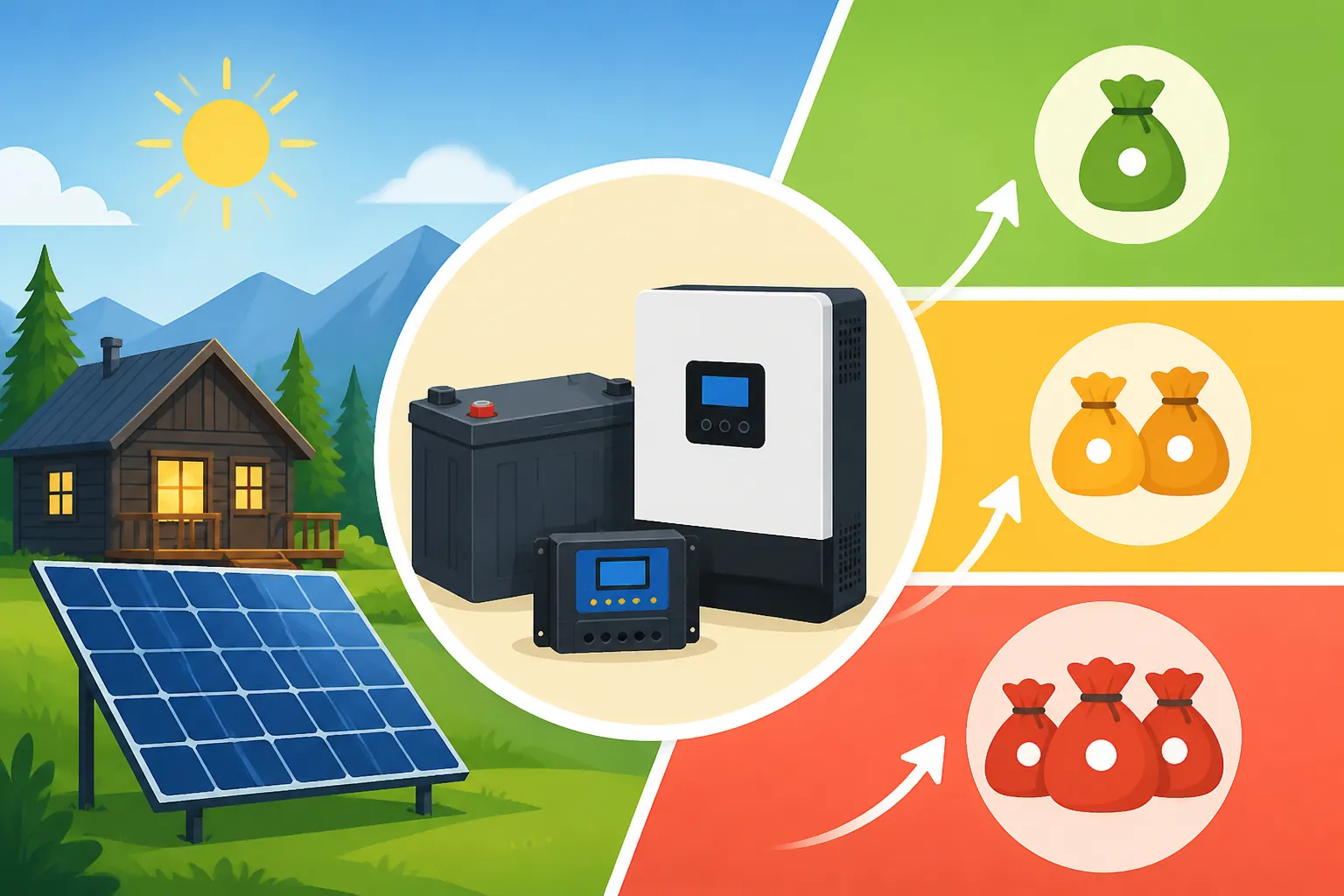
Off-Grid Solar Kit Price Ranges
Trying to figure out how much an off-grid solar kit actually costs can feel like you're trying to hit a moving target. With so many options out there, from tiny setups for weekend adventures to robust systems for full-time homesteading, it's easy to get overwhelmed by the sheer range of prices. This guide is here to untangle that complexity, giving you a clear, realistic understanding of off-grid solar kit price ranges so you can budget wisely and find the perfect solution for your independent power needs.
Understanding the Basics of Off-Grid Solar Kits
Before we dive into the nitty-gritty of pricing, let's talk about what an "off-grid solar kit" actually is. For many, the idea conjures images of just solar panels, but a true kit is a thoughtfully curated collection of components designed to work together to generate, store, and convert solar energy for your specific needs. Understanding these foundational elements is crucial to appreciating the price variations.
What's in a Standard Off-Grid Solar Kit
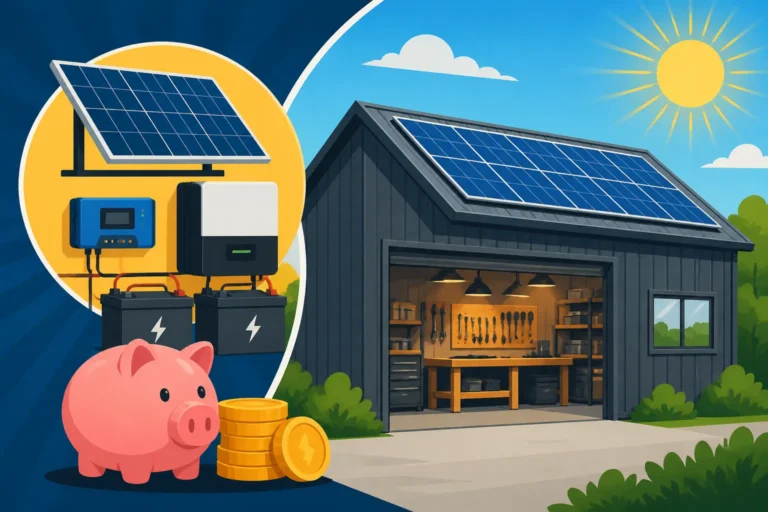
A typical off-grid solar kit isn't just panels; it's a complete ecosystem. At its heart, you'll find the solar panels themselves, which are responsible for capturing sunlight and converting it into DC (direct current) electricity. But that's just the beginning. You'll also get a charge controller, which is a vital component that regulates the voltage and current coming from the solar panels, ensuring your batteries are charged safely and efficiently without overcharging.
Then there are the batteries, arguably the most critical and often the most expensive single component in an off-grid system. Batteries store the energy generated by your panels so you can use it when the sun isn't shining, like at night or on cloudy days. Finally, most kits include an inverter, which takes the DC power from your batteries and converts it into AC (alternating current) power, the kind of electricity most household appliances use. Some kits might also throw in mounting hardware for the panels, necessary wiring, and safety disconnects, making them a more complete package. However, it’s important to remember that the quality and capacity of each of these components will significantly impact the overall cost. For a deeper dive into all the pieces, check out our guide on Off-Grid Solar System Components Explained.
Why Kits Are a Popular Choice
For many folks looking to dip their toes into the world of independent power, or even those ready to jump in headfirst, off-grid solar kits offer a compelling solution. The biggest draw is convenience; rather than spending countless hours researching individual components, trying to figure out if they're compatible, and then sourcing them all separately, a kit provides a pre-engineered package. This takes a lot of the guesswork and stress out of the equation, especially for beginners or those who prefer a more straightforward installation process.
Kits can be a fantastic starting point, offering a streamlined path to power for various applications like RVs, cabins, or even small sheds. They eliminate much of the complex system design work, which can be a huge relief if you're not an electrical engineer. Plus, many reputable brands that sell kits offer comprehensive customer support, making troubleshooting easier if you run into any snags. This "all-in-one" approach, even if it sometimes means less customization, provides a solid foundation for your off-grid journey.
Factors Influencing Off-Grid Solar Kit Prices
It's tempting to want a single, straightforward answer to "How much does an off-grid solar kit cost?" but the reality is that prices vary wildly. Think of it like buying a car: a compact economy model and a luxury SUV are both "cars," but their price tags are in entirely different universes. The same goes for off-grid solar kits, and several key factors drive these differences.
System Size and Power Output
One of the most significant determinants of a kit's price is its overall size and power output. This isn't just about how many solar panels are included, but the collective capacity of the entire system to generate and deliver electricity. A small, portable kit designed to charge a phone and a few lights in a van will naturally cost far less than a robust system capable of powering an entire remote cabin with a refrigerator, well pump, and all the creature comforts.
System size is typically measured in watts for the solar array and watt-hours or amp-hours for the battery bank. As you scale up your power needs, requiring more panels, larger batteries, and a more powerful inverter, the price climbs proportionally. For instance, a 100W kit might cost a few hundred dollars, while a 5000W kit capable of significant residential power could easily run into the tens of thousands. Our article on Off-Grid Solar Cost by System Size offers a more detailed breakdown.
Battery Chemistry and Capacity
The type and capacity of the battery bank are often the single largest cost drivers in an off-grid solar kit. Historically, many kits included lead-acid batteries, which are cheaper upfront but have a shorter lifespan, require more maintenance, and offer a lower usable depth of discharge. Today, the market has largely shifted towards Lithium Iron Phosphate (LiFePO4) batteries, and for good reason. While the initial investment for LiFePO4 is significantly higher, they offer a much longer cycle life (often 10+ years), higher efficiency, faster charging, and can be discharged much deeper without damage.
For example, a small lead-acid battery bank might add a few hundred dollars to a kit, whereas a comparable capacity LiFePO4 battery bank could add thousands. The total capacity, measured in amp-hours (Ah) or kilowatt-hours (kWh), directly correlates with how much energy you can store and use. If you're building a system that needs multiple days of autonomy, meaning it can run without sun for an extended period, you'll need a much larger (and more expensive) battery bank. You can explore this further in our discussion on the Cost of an Off-Grid Solar Battery Bank.
Inverter and Charge Controller Quality
The inverter and charge controller are the brains and brawn of your off-grid system, and their quality and capabilities play a substantial role in the overall kit price. Inverters come in various types, with pure sine wave inverters being the gold standard for running sensitive electronics, as they produce clean, consistent power. Modified sine wave inverters are cheaper but can damage certain appliances or cause them to run inefficiently. A high-quality pure sine wave inverter, especially one with a high surge capacity to handle motor startup loads from appliances like refrigerators or well pumps, will add significantly to the cost.
Similarly, charge controllers come in two main types: PWM (Pulse Width Modulation) and MPPT (Maximum Power Point Tracking). MPPT charge controllers are more efficient, especially in varying light conditions and when the panel voltage is much higher than the battery voltage, allowing them to extract more power from your panels. This efficiency comes at a higher price point than a basic PWM controller, but it can be a worthwhile investment in the long run. Brands like Victron Energy or Sol-Ark offer premium inverter/charger and MPPT controller solutions that are reflected in the higher price tags of kits that include them.
Brand Reputation and Warranty
Just like any other major purchase, the brand behind your off-grid solar kit can influence its price. Established brands with a long track record of reliability, excellent customer service, and robust warranties often command a premium. This isn't just about paying for a name; it's about investing in peace of mind. A reputable brand is more likely to provide high-quality components that are rigorously tested, designed to last, and backed by a solid warranty that protects your investment.
Think about it: a no-name kit from an unknown manufacturer might look like a steal initially, but if a component fails six months down the line and you can't get support or a replacement, that "deal" quickly becomes a costly headache. Brands like Renogy, EcoFlow, or Jackery have built strong reputations in the off-grid community for offering reliable products and support, and their kits often reflect that value in their pricing. When you're making a significant investment in your power independence, a strong warranty and a trustworthy brand can be invaluable.
Breaking Down Price Ranges by System Size and Application
When we talk about off-grid solar kit prices, it’s most helpful to categorize them by the scale of their intended use. What works for a weekend camping trip simply won't cut it for a full-time residence. Let's look at some typical price ranges based on common applications.
Small Kits: Portable and Basic Needs
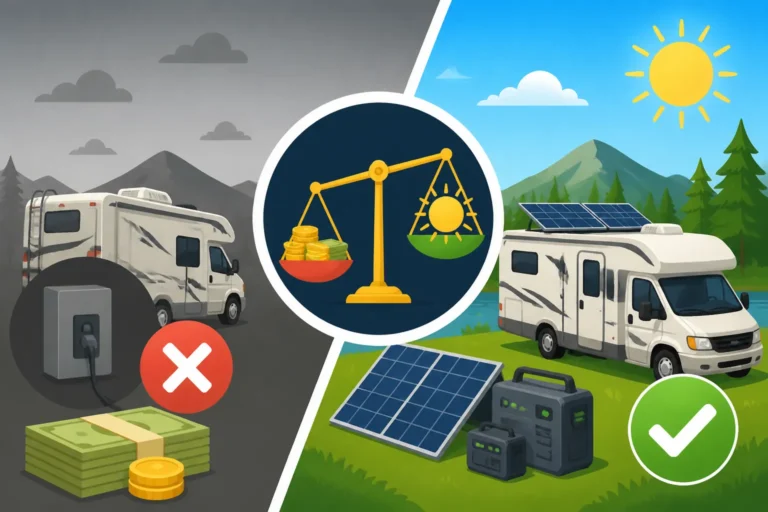
For those just starting out or needing power for minimal demands, small off-grid solar kits are incredibly popular. These kits typically range from 100 watts to 400 watts. They’re perfect for charging personal electronics, running a few LED lights, powering a small fan, or keeping a laptop charged while you're on the go. You'll often find these types of kits targeted at RVers, van lifers, campers, or for small remote structures like sheds and hunting blinds.
A basic 100W to 200W kit with a small portable panel, a simple charge controller, a modest lead-acid battery (or a small power station with an integrated LiFePO4 battery), and a small inverter can cost anywhere from $200 to $1,500. These are often available on platforms like Amazon, where brands like Jackery or Goal Zero offer portable power stations that integrate many of these components into a single unit, which can then be paired with a portable solar panel. While they provide excellent convenience for low-power needs, they are not designed for running larger appliances or providing continuous power for an extended period. For an idea of what these can power, check out our guide on the Cost to Power an RV with Solar.
Medium Kits: Moderate Power for Cabins or Tiny Homes
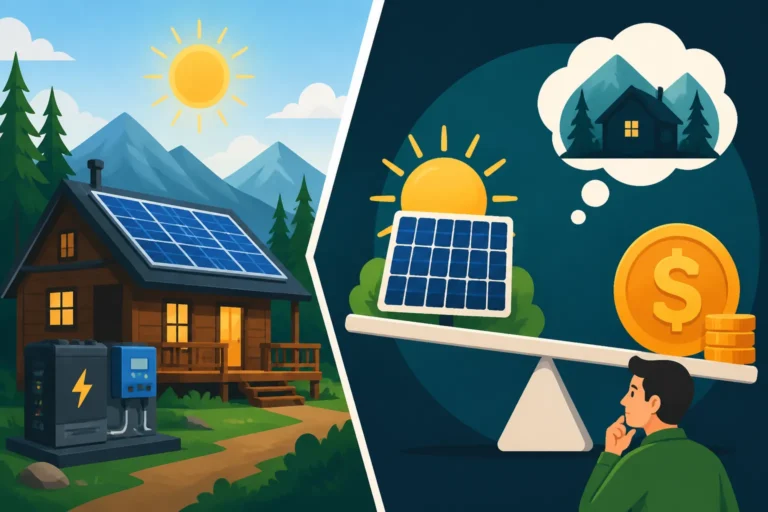
Stepping up in size, medium-sized off-grid solar kits are designed to handle more substantial energy requirements, making them ideal for cabins, tiny homes, larger RVs, or even small workshops. These systems typically range from 500 watts to 2,000 watts of solar panel capacity, coupled with significantly larger battery banks and more robust inverters. They are built to run essential appliances like a small refrigerator, water pump, multiple lights, and charge various devices simultaneously.
The price range for these kits usually falls between $2,000 and $10,000. At the lower end, you might find systems with smaller LiFePO4 batteries or slightly less powerful inverters. As you move towards the higher end of this range, kits will feature larger LiFePO4 battery banks (often 200Ah or more at 12V or 24V), higher-efficiency MPPT charge controllers, and pure sine wave inverters with decent surge capabilities. Brands like Renogy often offer well-rounded kits in this category. These kits are often a sweet spot for those seeking a balance between cost and functionality for part-time or even semi-full-time off-grid living, such as in a remote cabin. Learn more about the Cost to Power a Cabin with Solar.
Large Kits: Whole-Home and High-Demand Applications
When you're looking to power a full-sized off-grid home, a large homestead, or a substantial workshop with power tools, you're entering the realm of large off-grid solar kits. These systems are designed for serious power demands, typically ranging from 3,000 watts up to 10,000 watts or more in solar panel capacity. They feature extensive battery banks, often operating at 48V, and high-power inverter/chargers that can handle significant continuous loads and large surge currents.
These comprehensive systems can range dramatically in price, from $10,000 to $40,000+, depending on the total power output, battery storage capacity, and the quality of components. At this scale, you're often looking at multiple large solar panels, potentially multiple high-capacity LiFePO4 batteries (such as those from EG4 or Battle Born), and sophisticated inverter/charger units that can manage AC loads, DC loads, and potentially integrate with a backup generator. These kits provide the power independence needed for year-round living, allowing you to run major appliances like air conditioners, washing machines, and even electric ovens, mimicking the power capabilities of a grid-tied home. It's a significant investment, but one that provides true energy autonomy.
Here’s a quick overview of typical off-grid solar kit price ranges:
| Kit Size (Approx. Watts) | Typical Application | Components Included (Common) | Estimated Price Range (USD) |
|---|---|---|---|
| 100W – 400W | Small RV, Van, Shed, Camping | 1-2 Panels, Small PWM Controller, Portable Power Station/Small Battery, Small Inverter | $200 – $1,500 |
| 500W – 2000W | Larger RV, Tiny Home, Small Cabin, Workshop | 2-8 Panels, MPPT Controller, Mid-size LiFePO4 Battery Bank, Pure Sine Inverter | $2,000 – $10,000 |
| 3000W – 10,000W+ | Full-time Cabin, Homestead, Off-Grid Home | 10+ Panels, High-Power MPPT Controller, Large 48V LiFePO4 Bank, Advanced Inverter/Charger | $10,000 – $40,000+ |
Beyond the Kit: Hidden Costs and Long-Term Value
It's easy to get fixated on the initial sticker price of an off-grid solar kit, but that's rarely the full financial picture. Just like buying a house means more than just the mortgage, investing in off-grid solar involves considering additional costs and the long-term value it provides. Ignoring these can lead to unpleasant surprises down the road, so let's shed some light on what else to expect.
Installation Costs and DIY Savings
While many off-grid solar kits are advertised as "DIY-friendly," the reality of installation can add a significant chunk to your total cost. If you're planning to install the system yourself, you'll save on labor, but you'll need to account for tools, potential learning curves, and the time investment. Basic installations, like those for an RV or a small shed, might be straightforward enough for a handy individual. However, larger, more complex systems for an entire home often require professional installation. This is especially true when it comes to safely wiring high-voltage components, integrating with your existing electrical system, and ensuring everything meets local codes.
Professional off-grid solar installation cost can range from a few thousand dollars for medium-sized systems to upwards of $10,000 for large residential setups, depending on the complexity, location, and local labor rates. While going the DIY route can definitely help you save money, it's crucial to be honest with yourself about your skill level and available time. Improper installation can lead to safety hazards, system inefficiencies, and even component damage, ultimately costing you more in the long run. Our article on DIY vs Professional Off-Grid Solar Cost provides a detailed comparison to help you make this decision.
Maintenance and Replacement Expenses
Off-grid solar systems aren't truly a "set it and forget it" solution, though modern systems are remarkably reliable. There are ongoing maintenance tasks and, eventually, replacement costs to consider. Solar panels typically have a lifespan of 25-30 years, but their efficiency might slowly degrade over time. The real workhorse, and the component with the most predictable replacement schedule, is the battery bank.
Lead-acid batteries generally need replacing every 3-7 years, depending on usage and maintenance. LiFePO4 batteries, while more expensive upfront, can last 10-15 years or even longer, significantly reducing their long-term cost of ownership. Still, even with LiFePO4, you'll eventually face the Cost to Replace Off-Grid Solar Batteries. Beyond batteries, you might incur costs for cleaning panels, checking connections, replacing fuses, or updating firmware on your inverter. While these aren't typically huge annual expenses, budgeting for them ensures your system remains reliable and efficient throughout its lifespan.
Permitting and Additional Components
Depending on your location and the scale of your off-grid system, you might face costs related to permitting and inspections. Many jurisdictions, even for off-grid properties, require permits to ensure electrical safety and compliance with building codes, particularly for larger, permanent installations. These fees can vary widely, from a few hundred to over a thousand dollars. Skipping permits might seem like a shortcut, but it can lead to hefty fines or issues if you ever sell the property.
Furthermore, "kit" often means core components, but there might be other items you need to purchase separately. This could include heavy-gauge wiring, conduit, safety disconnect switches, surge protectors, a robust battery enclosure, or even a backup generator for those periods of extended cloudy weather. While many comprehensive kits include a lot, always read the fine print. These extra components can quickly add up, so it's wise to budget an additional 10-20% beyond the kit's price for these often-overlooked necessities. A thorough Off-Grid Solar Cost: Complete Breakdown can help you identify all potential expenses.
Navigating Purchase Options and Finding the Best Value
With a clearer picture of what influences off-grid solar kit prices and the hidden costs involved, let's talk about how to smartly navigate the market. Finding the "best value" isn't always about the cheapest option; it's about finding the right balance of quality, performance, and cost for your unique needs.
Online Retailers vs. Specialty Shops
Where you buy your off-grid solar kit can significantly impact both the price and the support you receive. Online retailers, including major platforms like Amazon, offer a vast selection, competitive pricing, and the convenience of home delivery. You'll find everything from small, portable power stations paired with solar panels (like those from Jackery or Bluetti) to larger, more complete kits. The downside can sometimes be a lack of personalized advice or in-depth technical support specific to system design. You're often responsible for understanding what you need and ensuring compatibility.
On the other hand, specialty solar shops, whether online or local, tend to focus exclusively on solar power and related components. While their prices might sometimes be slightly higher, they often provide invaluable expertise, customized system design assistance, and robust technical support. They can help you tailor a kit to your exact energy needs, factoring in your climate, usage patterns, and future expansion plans. For complex systems, the guidance from a specialty provider can be well worth any additional cost. For a complete overview of products, consult The Complete Off-Grid Solar Buyer's Guide.
Evaluating Kit Inclusions and Exclusions
When comparing different off-grid solar kits, don't just look at the headline price. Dive deep into what's actually included. Some kits are truly comprehensive, providing panels, a charge controller, an inverter, batteries, mounting hardware, and all necessary wiring and fuses. Others might be more basic, offering just the panels and a controller, leaving you to source the batteries, inverter, and mounting solutions separately.
Always scrutinize the specifications of each component within the kit. What's the brand and model of the inverter? Is it pure sine wave? What's the battery chemistry and its usable capacity? What kind of charge controller is included? A seemingly cheaper kit might be using lower-quality components that won't last as long or perform as efficiently, making it more expensive in the long run. Ensure the kit's components are sized appropriately for your estimated energy usage; our guide on Off-Grid Solar Kits: What to Buy can help you identify what's crucial.
Tips for Budgeting and Phased Builds
Realistically, a high-quality off-grid solar system is a significant investment, especially for larger applications. It's okay if you can't afford everything upfront. Many off-gridders choose to implement a phased build strategy, starting with a smaller, essential system and expanding it over time as budget allows. You might begin with enough solar and battery capacity to run your lights, charge devices, and power a small fridge, then later add more panels, expand your battery bank, or upgrade your inverter to handle larger loads like a well pump or air conditioning.
To make this successful, it's crucial to design your initial system with future expansion in mind. Choose an inverter and charge controller that can handle increased capacity, and select a battery management system (BMS) that can integrate additional battery modules. Creating a detailed budget, accounting for all potential costs, is also paramount. Our article How to Budget for an Off-Grid Solar System offers practical advice on planning your expenses. Remember, the goal is sustainable, reliable power, and sometimes getting there means taking a thoughtful, step-by-step approach rather than trying to do it all at once.
Disclaimer
The information provided in this article is for general informational purposes only and does not constitute professional advice. Off-grid solar system costs, components, and installation requirements can vary significantly based on location, specific energy needs, local regulations, and market conditions. Always consult with qualified solar professionals and electricians before making purchasing decisions or attempting any installations to ensure safety and compliance.