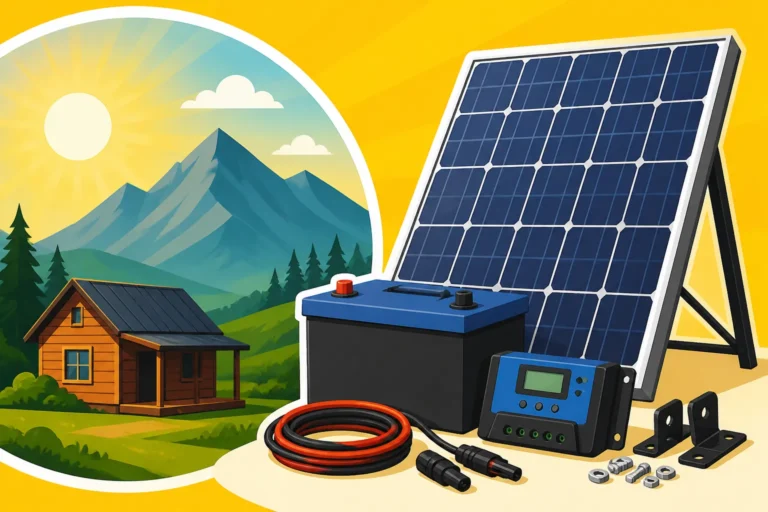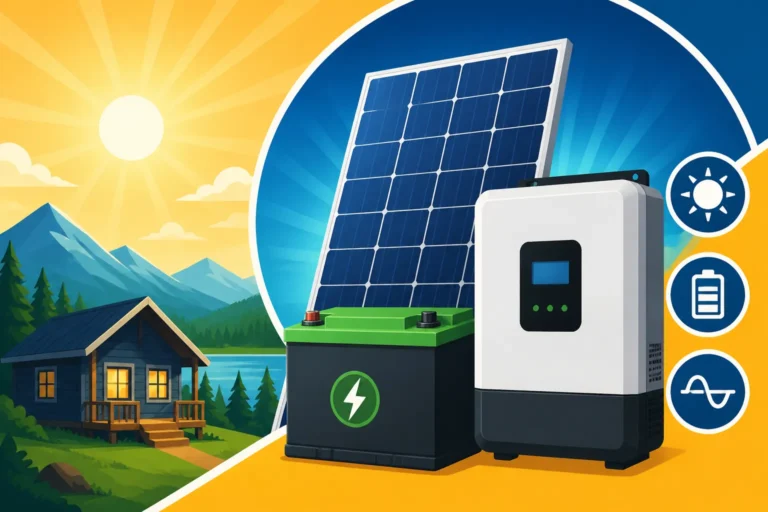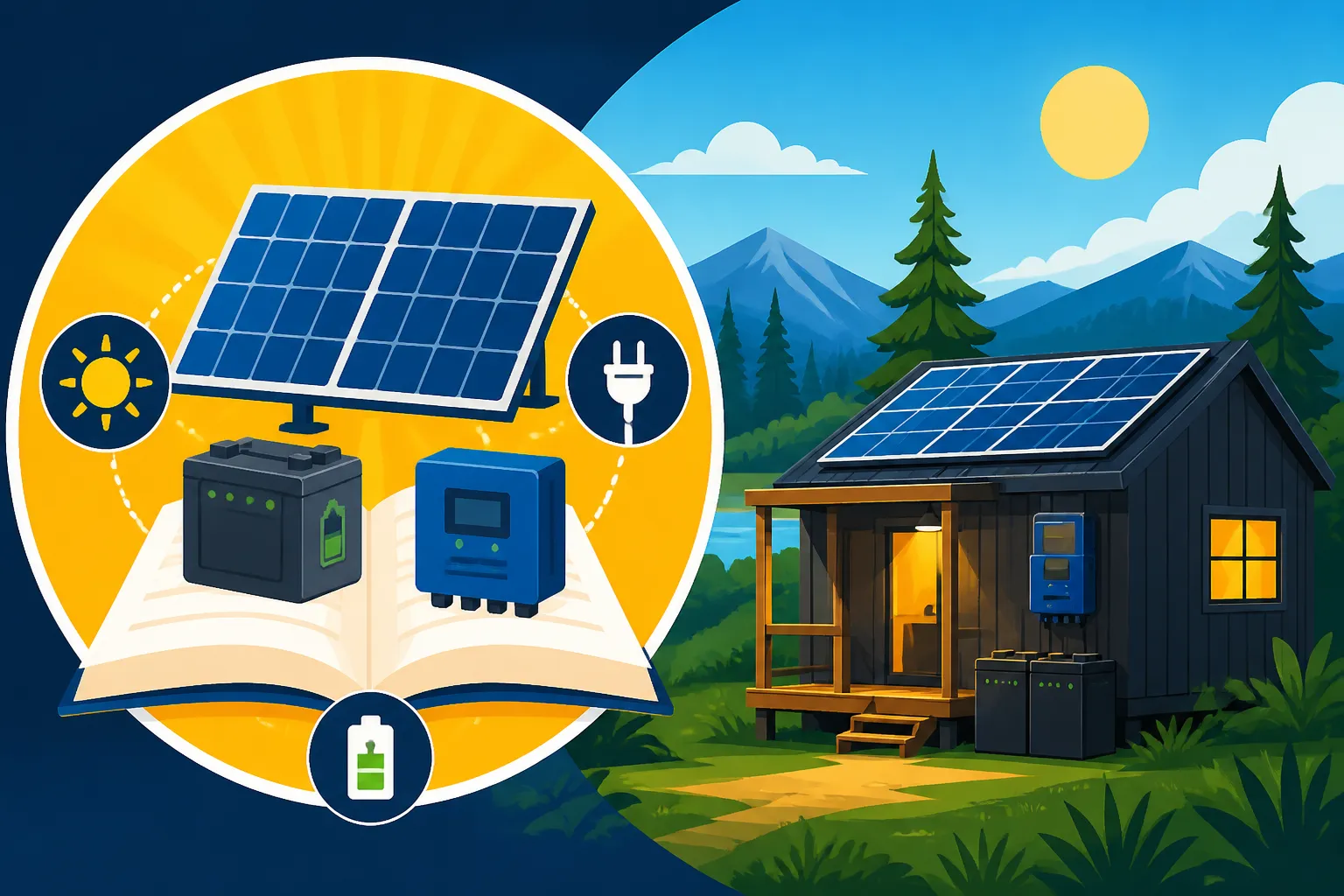
The Complete Off-Grid Solar Buyer’s Guide
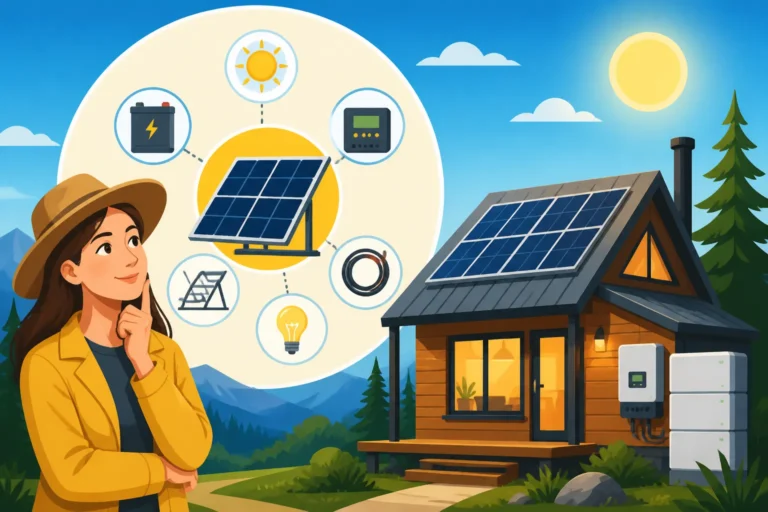
It's incredibly common to feel completely overwhelmed when you first start exploring the world of off-grid solar. The sheer volume of information, the technical jargon, and the conflicting advice can make you want to throw your hands up and just stick with your utility bill, no matter how much you dislike it. But taking charge of your own power supply, whether for a remote cabin, an RV, or even your full-time home, is an achievable dream. This comprehensive buyer's guide aims to be your friendly, no-nonsense roadmap, cutting through the noise and equipping you with the knowledge to confidently choose and implement the perfect off-grid solar system for your unique situation, paving the way for true energy independence.
Understanding Your "Why": The First Step to Off-Grid Living
Before you even think about panels or batteries, the most crucial step in embarking on your off-grid solar journey is to deeply understand why you're doing it. What's your ultimate goal? What problems are you trying to solve? This isn't just a philosophical question; your "why" directly dictates the scale, complexity, and cost of your system. Trying to skip this part is like building a house without a blueprint – you might end up with something, but it probably won't be what you truly need. Many people jump straight into researching components, only to realize later that they don't even know what they're powering or for how long.
Identifying Your Energy Needs and Lifestyle
Let's be real, most of us are accustomed to unlimited power from the grid. When you go off-grid, you become your own power company. This means knowing exactly what you need to power and how often. Are you just looking to keep a few lights on and charge your phone in a weekend cabin? Or are you planning to run a full-sized refrigerator, a well pump, and even an air conditioner for year-round living? These are vastly different scenarios requiring dramatically different systems.
Start by making a list of every single electrical appliance you intend to use. Don't forget the small things like hair dryers, coffee makers, and phone chargers – they add up! For each item, try to find its wattage (how much power it consumes at any given moment) and estimate how many hours per day or week you'll be using it. This is often called a Off-Grid Solar Load Calculation Explained and it's absolutely fundamental. It might sound tedious, but trust me, it's the foundation of everything else. Without a solid load analysis, you're guessing, and guessing in off-grid solar usually leads to either an undersized system (frustration!) or an oversized one (wasted money!). Remember, it's not just about the appliances themselves, but your habits. Someone who works from home on a laptop all day will have very different energy needs than someone who only uses their computer for an hour in the evening. Be honest with yourself about your true power consumption habits.
Defining Your Off-Grid Location and Climate Challenges
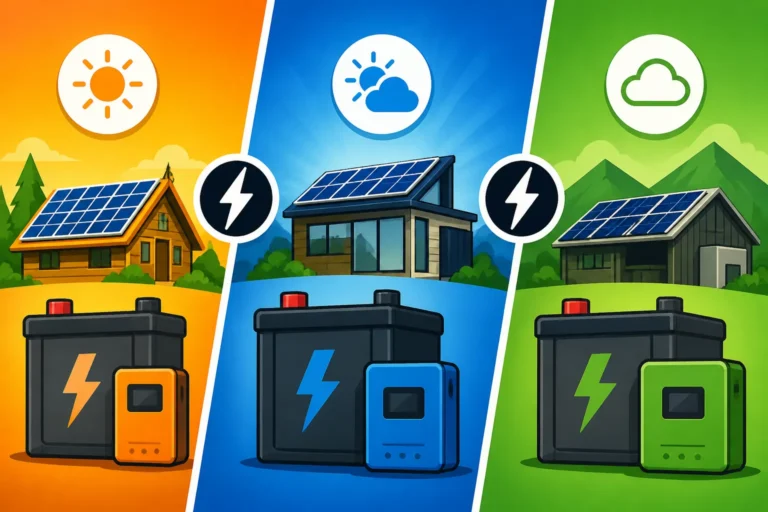
Where your off-grid solar system will be located plays a massive role in its design. A property in sunny Arizona will have different solar considerations than one nestled in the cloudy Pacific Northwest. The amount of "peak sun hours" your location receives each day directly influences how many solar panels you'll need. You'll also need to consider seasonal variations. Do you get heavy snow in winter that will cover your panels? Are there long stretches of cloudy, rainy days?
Think about the ambient temperatures as well. Extreme heat can reduce solar panel efficiency, while extreme cold impacts battery performance, especially with lead-acid batteries. If you're looking at a remote cabin in a heavily wooded area, shading will be a major factor that needs careful planning. A ground mount system might be necessary if your roof is constantly shaded by trees. Furthermore, consider accessibility. Is your property easy to reach with heavy equipment for installation, or will you need more portable, DIY-friendly solutions? Understanding these environmental factors upfront helps you make smarter choices about panel type, battery chemistry, and overall system resilience. For example, if you're looking to power a remote cabin, you'll want to carefully consider the Cost to Power a Cabin with Solar in your specific climate.
Deciphering Off-Grid Solar System Components
Once you have a clear picture of your energy needs and environmental context, it’s time to wrap your head around the main components that make an off-grid solar system tick. This can feel like learning a new language, but think of it as assembling a team where each member has a vital role. You wouldn't build a car without knowing what an engine or wheels do, right? The same goes for your solar setup. Trying to jump into purchasing without understanding the basic function of each piece is a recipe for confusion and costly mistakes.
Solar Panels: Your Energy Harvesters
Solar panels are the hardworking backbone of your system, quietly converting sunlight into electricity. They're essentially your mini power plants. When photons from the sun hit the photovoltaic (PV) cells in the panels, they knock electrons loose, creating an electric current. This is DC (Direct Current) electricity, much like what comes out of a car battery. The efficiency and durability of panels vary, impacting how much power you can generate, especially in limited space or challenging conditions.
There are generally a few types you’ll encounter: monocrystalline, polycrystalline, and flexible panels. Monocrystalline panels are typically the most efficient, meaning they produce more power per square foot, which is fantastic if you have limited roof space or want to maximize energy harvest. Polycrystalline panels are a bit less efficient but often more budget-friendly. Flexible panels are great for curved surfaces, like RV roofs, or situations where weight is a major concern, though they tend to be less efficient and more expensive per watt than their rigid counterparts. When considering Cost of Off-Grid Solar Panels, you'll see a range of prices depending on these factors, as well as the manufacturer's reputation and warranty. It's not just about the cheapest panel; it's about the best value and performance for your specific conditions.
Batteries: The Heart of Your Off-Grid System
If solar panels are your power generators, batteries are your power storage units. Without them, your lights would go out as soon as the sun sets or hides behind clouds. Batteries store the excess energy produced by your panels during the day, so you can draw on it whenever you need it – at night, on cloudy days, or during periods of high demand. This is arguably the most critical and often the most expensive part of an off-grid system, making Cost of an Off-Grid Solar Battery Bank a significant consideration.
Choosing the right battery bank is paramount for off-grid success. You'll primarily encounter two main types: lead-acid (like flooded lead-acid or AGM) and lithium-ion (specifically LiFePO4, or Lithium Iron Phosphate). Lead-acid batteries are a traditional choice, often cheaper upfront, but they require more maintenance, have a shorter lifespan, and can only be discharged to about 50% of their capacity without significant damage. LiFePO4 batteries, on the other hand, are a game-changer for off-grid living. While they have a higher initial cost, they offer a much longer lifespan (often 10-15 years), can be discharged deeper (80-100%), are virtually maintenance-free, and perform better in a wider range of temperatures. For many, the long-term value of LiFePO4 batteries outweighs the higher upfront investment. You'll want to delve into LiFePO4 vs Lead-Acid Battery Cost to understand the true comparison.
Inverters: Converting Power for Your Appliances
Think of the inverter as the translator in your system. As we mentioned, solar panels and batteries produce DC (Direct Current) power. But almost all your standard household appliances – refrigerators, TVs, laptops, power tools – run on AC (Alternating Current) power, which is what comes out of the wall outlets in a grid-tied home. The inverter's job is to take that DC power from your batteries and transform it into usable AC power for your devices.
There are two main types of inverters relevant to off-grid: pure sine wave and modified sine wave. Pure sine wave inverters produce a clean, smooth waveform of AC power that is identical to grid power. This is essential for sensitive electronics (like computers, medical equipment, and modern appliances) to run efficiently and without damage. Modified sine wave inverters are less expensive, but they produce a "choppier" waveform, which can cause issues with certain electronics, make motors run hotter, or even damage some devices over time. For any serious off-grid setup, a pure sine wave inverter is almost always recommended, even if it means a higher initial Cost of an Off-Grid Solar Inverter. It's not a component you want to skimp on if you value your appliances! Some advanced inverters also integrate a battery charger and even a transfer switch, acting as a central brain for your entire electrical system.
Charge Controllers: The Brains of the Operation
The charge controller is often the unsung hero of your off-grid solar system. Its primary role is to manage the power flow from your solar panels to your batteries. Without it, your panels could overcharge your batteries, severely damaging them and shortening their lifespan. It's like having a smart regulator that ensures your batteries get exactly what they need, no more, no less, and prevents power from flowing backward from the batteries to the panels at night.
There are two main types of charge controllers: PWM (Pulse Width Modulation) and MPPT (Maximum Power Point Tracking). PWM controllers are simpler and more affordable. They essentially connect the solar panel directly to the battery, allowing the panel voltage to "float" down to match the battery voltage, which means some potential power is lost. They are typically best suited for smaller, simpler systems where cost is the absolute priority. MPPT controllers, on the other hand, are much more sophisticated. They can efficiently convert the higher voltage from your solar panels down to the appropriate battery charging voltage, "tracking" the maximum power point of the solar array to extract up to 10-30% more power, especially in cooler conditions or when battery voltage is low. While they come with a higher Cost of a Charge Controller, the increased efficiency often makes them a worthwhile investment for larger or year-round off-grid systems, helping you get more out of your solar panels.
Sizing Your System for Real-World Demands
This is where the rubber meets the road. You understand the components, but how do you know how much of each you actually need? Sizing an off-grid solar system correctly is hands down the most critical and often the most intimidating part of the entire process. Get it wrong, and you'll either be constantly running out of power or paying for far more system than you actually need. Many aspiring off-gridders get stuck here, feeling paralyzed by the calculations. But it's not rocket science, just careful planning and a bit of math. This step-by-step approach will empower you to tackle this challenge head-on. If you want to dive deeper, our guide on How to Size an Off-Grid Solar System offers even more detailed calculations.
Conducting a Detailed Load Analysis
Remember that list of appliances and your daily usage estimates? Now it's time to turn that into concrete numbers. This detailed "load analysis" is the absolute cornerstone of proper system sizing. For each appliance, you need to determine its wattage (how much power it consumes when it's running) and the hours per day it will operate. Then, multiply these two figures to get the watt-hours (Wh) per day for each item.
For example, a typical energy-efficient refrigerator might use 100 watts and run for 8 hours a day (cycling on and off). That's 100W * 8h = 800 Wh per day. A laptop charger might be 60W used for 5 hours = 300 Wh per day. Sum up all these daily watt-hour figures, and you'll get your total daily energy consumption in Wh. This is your target, the amount of energy your solar system needs to generate and store every single day. Don't forget those occasional, high-draw appliances like microwaves, blenders, or power tools. While they might only run for short bursts, their high wattage can significantly impact your inverter sizing. Knowing How to Calculate Daily Energy Usage is a foundational skill for any off-grid enthusiast.
Calculating Solar Array and Battery Bank Capacity
Once you have your total daily watt-hour consumption, you can start calculating your solar panel array size and battery bank capacity.
Battery Bank Sizing: Your battery bank needs to be large enough to store your daily energy needs, with some extra capacity for cloudy days (known as "days of autonomy"). If your daily consumption is 3000 Wh, and you want 2 days of autonomy, you'd need 6000 Wh of usable battery capacity. Remember the discharge depth for different battery types: lead-acid typically only offers 50% usable capacity, while LiFePO4 gives you 80-100%. This means you'll need a much larger rated capacity for lead-acid to achieve the same usable capacity. Understanding How Many Batteries for an Off-Grid System is critical for reliable power.
Solar Panel Sizing: To figure out how many solar panels you need, you'll divide your daily watt-hour consumption by the "peak sun hours" your location receives. Peak sun hours are not simply how many hours the sun is out; it's the equivalent number of hours per day when solar irradiance averages 1,000 watts per square meter. A good estimate for most of the US is 4-5 peak sun hours, but this varies significantly by season and location. So, if you need 3000 Wh daily and have 5 peak sun hours, you'd need a 600-watt solar array (3000 Wh / 5h = 600W). However, you'll want to add a buffer for system losses (like wiring, temperature, and dust) and potentially oversize your array slightly, especially if you anticipate future expansion. Don't forget to consider how How Many Solar Panels for Off-Grid Living really translates into physical space and mounting.
Planning for Days of Autonomy and Seasonal Variations
A common rookie mistake is to size a system based purely on average daily consumption without accounting for the realities of weather. You won't always have perfectly sunny days. "Days of autonomy" refers to how long your battery bank can power your loads without any new charge coming in from your solar panels. For critical systems, 3-5 days of autonomy is a good target, especially if you live in an area prone to extended cloudy periods or heavy snowfall. This means your battery bank needs to be significantly larger than just one day's worth of power.
Seasonal variations are also a huge factor. Winter often brings shorter days, lower sun angles, and more frequent cloud cover. If you plan to live off-grid year-round, you must size your system for your worst-case winter scenario, even if that means oversizing for summer. Neglecting this will leave you in the dark and cold when you need power the most. Many folks in northern climates add a backup generator to their system to supplement during these low-sun periods, which is a very pragmatic approach to maintain reliability. This detailed planning ensures you have reliable power, no matter what Mother Nature throws your way.
Navigating the Types of Off-Grid Solar Systems
The world of off-grid solar isn't a one-size-fits-all solution. Just like choosing a vehicle, you have different categories to consider, each with its own advantages and ideal use cases. Understanding these fundamental system types will help you narrow down your options and focus your research, preventing you from getting lost in the weeds of individual components before you even know which type of system best suits your vision for energy independence.
All-in-One Solar Generators and Portable Solutions
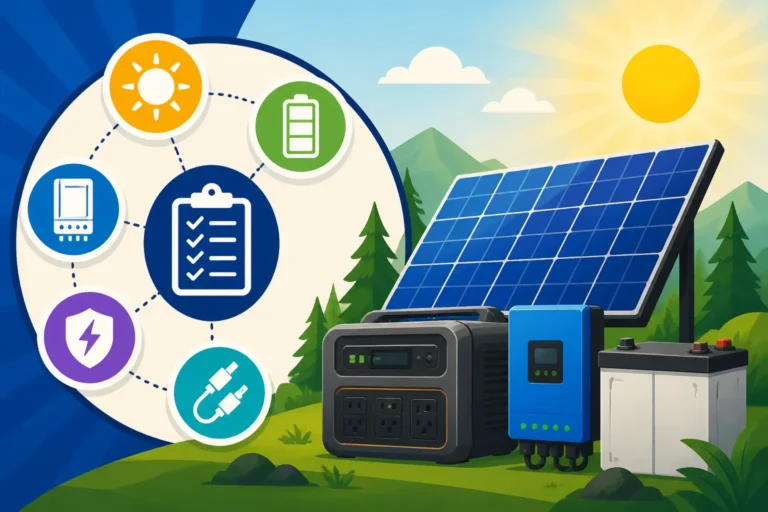
For those dipping their toes into off-grid living, or for smaller, more temporary needs, portable solar generators and all-in-one power stations are an excellent starting point. These devices combine a battery, inverter, and charge controller into a single, often suitcase-sized unit. They are incredibly user-friendly, require minimal setup, and are fantastic for applications like camping, van life, emergency backup, or powering small cabins. You simply plug in your solar panels, and then plug your appliances directly into the unit.
Brands like Jackery, Goal Zero, and EcoFlow have popularized these solutions, offering a range of capacities from small units to power a laptop to larger ones capable of running a refrigerator for a day or more. While they offer convenience and portability, their main drawback is their scalability and overall capacity. They are generally not designed to power an entire home or a large homestead for extended periods. However, for those starting out, or for powering specific loads like a remote workshop or a food truck, they can be an incredibly efficient and accessible way to get Best Solar Generators for Off-Grid up and running quickly. It's important to remember their limitations; they're generally not meant to be the sole power source for substantial, permanent structures.
Component-Based DIY Systems: The Build-Your-Own Approach
At the other end of the spectrum are the component-based, DIY (Do-It-Yourself) systems. This is where you purchase each major component – solar panels, batteries, inverter, charge controller, wiring, and safety devices – separately and assemble them into a cohesive system. This approach offers the ultimate flexibility, customization, and often, the most cost-effective solution in the long run. It allows you to tailor every aspect of the system to your exact needs, choosing specific brands, sizes, and configurations.
Building a DIY system is incredibly rewarding, but it demands a higher level of technical knowledge and hands-on skill. You'll need to understand electrical wiring, system architecture, safety protocols, and how to properly connect all the different components. This path is often chosen by those looking to power a full-time off-grid home, a large RV, or a substantial cabin, where specific power demands and long-term reliability are paramount. It allows for easier upgrades and expansions down the line. While the initial learning curve can be steep, the sense of accomplishment and the deep understanding you gain about your own power system is unparalleled. You'll find that going the DIY route can significantly reduce your Off-Grid Solar Installation Cost by eliminating labor fees.
Pre-Designed Off-Grid Kits: A Balanced Option
For many people, pre-designed off-grid solar kits strike a sweet spot between the simplicity of an all-in-one generator and the complexity of a full DIY build. These kits typically include all the major components – panels, batteries, inverter, charge controller, and often the necessary wiring and mounting hardware – packaged together by a manufacturer or vendor. The system is designed to work together, taking much of the guesswork out of component compatibility and sizing.
Kits come in various sizes and configurations, from small RV kits to larger whole-home systems. They often provide clear instructions or even pre-wired components, making the installation process much more straightforward than sourcing everything individually. While you might pay a bit more than a completely self-sourced DIY system, you gain peace of mind knowing that all components are matched and designed to integrate seamlessly. This can be an excellent option for those who want a robust, expandable system without having to become an electrical engineer overnight. Brands like Renogy and Grape Solar offer a variety of pre-designed kits that cater to different power needs and budgets, providing a solid foundation for your off-grid aspirations. Choosing a kit is a great way to simplify your journey, and you can explore Off-Grid Solar Kit Price Ranges to find one that fits your budget.
Choosing the Right Equipment: Brands and Technologies
Once you’ve got a handle on your energy needs and the general system type you're leaning towards, it's time to get into the nitty-gritty of equipment selection. This is where individual components and brands come into play, and it can feel like a deep dive into an ocean of specifications and reviews. Don't worry, we'll break down the key considerations to help you make informed decisions, ensuring you invest in reliable and efficient gear.
Selecting Solar Panels: Monocrystalline, Polycrystalline, Flexible
The choice of solar panels isn't just about how much power they produce; it's also about physical space, durability, and cost-effectiveness for your specific environment.
- Monocrystalline Panels: These are the workhorses of the solar world. Made from a single crystal of silicon, they are identifiable by their uniform dark black color and rounded edges on the cells. They boast the highest efficiency rates (typically 18-22%), meaning they convert more sunlight into electricity per square foot. This is a huge advantage if you have limited roof space, like on an RV or a small cabin, or if you're trying to maximize output in less-than-ideal sun conditions. While they might have a higher upfront cost per panel, their superior performance often makes them a better long-term value, especially where space is a premium.
- Polycrystalline Panels: These panels are made from multiple silicon fragments melted together, giving them a slightly mottled blue appearance and square cells. They are less efficient than monocrystalline panels (typically 15-17%) but are generally more affordable to manufacture. If you have ample space and a tighter budget, polycrystalline panels can be a cost-effective choice. They perform well, just require more physical area to achieve the same wattage output as monocrystalline.
- Flexible Panels: Often seen on RVs, vans, and boats, these panels are lightweight and can conform to curved surfaces. They're typically less efficient (10-15%) and more expensive per watt than rigid panels, but their unique mounting capabilities make them invaluable for certain mobile or space-constrained applications. They also tend to have a shorter lifespan due to exposure and heat dissipation issues compared to rigid panels. Ensure proper adhesion and ventilation if you go this route.
Beyond type, consider the panel's construction quality, temperature coefficient (how much efficiency drops in heat), and the warranty offered by the manufacturer. Reputable brands like Renogy, Rich Solar, and Newpowa offer robust options for various off-grid needs.
Battery Chemistry: LiFePO4 vs. Lead-Acid
This is perhaps the most significant decision you'll make regarding your system's longevity, performance, and overall cost. The battery bank can often be the most expensive single component, so choose wisely. We touched on this earlier, but let's dive a little deeper.
| Feature | LiFePO4 (Lithium Iron Phosphate) | Lead-Acid (AGM/Flooded) |
|---|---|---|
| Initial Cost | Higher | Lower |
| Lifespan | Very Long (3,000-10,000+ cycles, 10-15+ years) | Shorter (300-1,200 cycles, 3-7 years) |
| Usable Capacity | 80-100% (can deep cycle without damage) | ~50% (deep discharge severely shortens lifespan) |
| Weight | Much Lighter | Very Heavy |
| Maintenance | Virtually None (Internal BMS manages everything) | Regular (checking water levels for flooded, equalization) |
| Efficiency | Very High (minimal energy loss during charge/discharge) | Moderate (more energy lost as heat) |
| Temperature | Good performance, but internal heating often needed in extreme cold | Performance degrades significantly in cold, prone to freezing |
| Self-Discharge | Very Low | Moderate to High |
| Mounting | Can be mounted in any orientation | Must be mounted upright (flooded), limited angles for AGM/Gel |
| Safety | Very stable chemistry, built-in BMS protection | Can off-gas hydrogen (flooded), less integrated protection |
While the upfront cost of LiFePO4 batteries is higher, their vastly superior lifespan, usable capacity, and lack of maintenance often make them the more economical choice in the long run. They truly shine in performance and convenience for off-grid applications. Brands like Battle Born, EG4, and SOK are highly regarded for their robust LiFePO4 offerings.
Inverter Types and Features for Off-Grid Living
Your inverter is critical for running AC appliances. As discussed, a pure sine wave inverter is a must for almost all modern off-grid systems. Beyond that, consider these features:
- Continuous vs. Surge Wattage: The continuous wattage is what the inverter can handle steadily. The surge wattage is a higher peak it can handle for a short burst (e.g., when a motor starts up). Make sure your inverter's surge capacity can handle the starting watts of your most demanding appliance, like a well pump or refrigerator compressor. Our guide on What Size Inverter to Run A Well Pump can help with this specific calculation.
- Efficiency: A more efficient inverter wastes less power as heat, meaning more of your precious battery energy makes it to your appliances. Look for efficiencies above 90%.
- Integrated Charger/Transfer Switch: Many modern off-grid inverters, often called "inverter-chargers," combine an inverter with a powerful battery charger. This is incredibly useful if you plan to integrate a backup generator, as the inverter-charger can automatically switch to generator power and charge your batteries when solar input is low. Some even have an automatic transfer switch (ATS) built-in, seamlessly switching between power sources.
- System Voltage: Off-grid systems typically operate at 12V, 24V, or 48V. For smaller systems (up to 1500-2000W), 12V might be sufficient. Larger systems (2000W and above) generally benefit from 24V or 48V, as higher voltages allow for thinner wiring (saving cost and reducing voltage drop) and greater efficiency.
Reputable inverter brands include Victron Energy, Sol-Ark, Outback Power, and Growatt. Each offers a range of options catering to different system sizes and complexities.
Exploring Reputable Brands and Their Offerings
When you're building an off-grid solar system, you're making a significant investment in your independence. You want components that are reliable, durable, and backed by solid customer support. Skimping on quality can lead to headaches, costly repairs, and frustrating power outages down the line.
For Solar Panels: Look for Tier 1 manufacturers known for quality control, good warranties, and proven performance. While global giants like Canadian Solar, Jinko Solar, and Trina Solar are popular, many specialized off-grid brands also offer excellent panels, such as Renogy, Rich Solar, and Newpowa. Read reviews, check datasheets for temperature coefficients and warranty specifics, and consider purchasing from suppliers with good reputations.
For Batteries: As discussed, LiFePO4 is king for serious off-grid use. Leading brands include Battle Born Batteries, SOK, and EG4. These companies often offer comprehensive battery management systems (BMS) built into their batteries, which protect them from overcharge, over-discharge, and temperature extremes, extending their lifespan and ensuring safety. For smaller, more portable needs, companies like Jackery offer excellent all-in-one solutions that integrate high-quality LiFePO4 cells.
For Inverters and Charge Controllers: This is where top-tier brands really stand out. Victron Energy is renowned for its high-quality, robust, and highly configurable inverter-chargers and MPPT charge controllers, favored by many full-time off-gridders. Sol-Ark is another powerhouse, known for its all-in-one hybrid inverters that simplify complex systems. Outback Power and Growatt also offer reliable solutions. For charge controllers, Victron and Morningstar are often cited for their efficiency and reliability. While the initial investment in these premium brands might seem higher, their performance, longevity, and often superior customer support pay dividends over the years.
When researching, also check for UL or ETL certifications on components, which ensure they meet safety and performance standards. Don't be afraid to read user reviews and seek advice from experienced off-gridders in online forums. Your best bet is to balance quality with your budget, prioritizing critical components like batteries and inverters for maximum reliability.
Budgeting for Off-Grid Independence: Costs and Savings
Let's talk money, because for most of us, this is a huge factor in deciding whether to take the plunge into off-grid solar. The idea of energy independence is liberating, but the upfront cost can feel daunting. It’s vital to approach your budget with a realistic mindset, understanding not just the initial investment but also the long-term operational and maintenance costs. Trying to find the absolute cheapest way to set up off-grid solar can often lead to a system that fails to meet your needs, or worse, requires costly repairs down the road. Our Off-Grid Solar Cost: Complete Breakdown guide can provide even more detail on this critical topic.
Breaking Down the Initial Investment
The initial cost of an off-grid solar system varies wildly, ranging from a few hundred dollars for a basic portable setup to well over $50,000 for a large, whole-home system. This significant variability is precisely why understanding your "why" and conducting a thorough load analysis is so crucial. Here's a general breakdown of where your money will go:
- Solar Panels: These are relatively affordable per watt now, often making up 10-20% of your total cost. Prices vary based on panel type (mono, poly, flexible) and brand.
- Batteries: This is usually the single largest expense, often consuming 30-50% of your budget. LiFePO4 batteries, while more expensive upfront, offer better long-term value.
- Inverter/Charger: Expect to spend 15-25% of your budget here. High-quality pure sine wave inverter-chargers with advanced features are worth the investment for reliability.
- Charge Controller: A smaller but essential component, typically 5-10% of the cost. MPPT controllers are more efficient but pricier than PWM.
- Mounting Hardware: Racking for your panels (roof or ground mount) can add 5-10% to the cost. Don't skimp here; panels need to be securely fastened.
- Wiring, Fuses, Breakers, Disconnects: These safety and connectivity components are often overlooked but critical, adding another 5-10%.
- Labor (if professional install): If you hire an electrician or solar installer, labor can be a significant portion, sometimes 20-30% of the total project cost.
Keep in mind that factors like system voltage (12V, 24V, 48V) also influence costs, as higher voltages can reduce wiring costs. While the thought of a large initial outlay can be intimidating, remember you're investing in long-term independence and significant savings on utility bills.
Understanding Long-Term Operating and Maintenance Costs
The beauty of solar is that sunlight is free! However, "operating cost" isn't zero. While off-grid solar systems require less maintenance than, say, a diesel generator, they aren't entirely set-it-and-forget-it.
- Battery Replacement: This is the big one. Even LiFePO4 batteries have a lifespan, typically 10-15 years. Lead-acid batteries will need replacing much sooner, perhaps every 3-7 years. The Off-Grid Solar Battery Replacement Cost Over Time can be substantial, so factoring this into your long-term budget is crucial.
- Cleaning: Panels need to be cleaned periodically to maintain optimal efficiency, especially in dusty or pollen-heavy environments. This is usually a DIY task but can involve equipment or labor.
- Component Wear and Tear: Inverters, charge controllers, and other electronics are robust but can eventually fail. Budgeting for potential replacement of smaller components after 10-20 years is wise.
- Generator Fuel/Maintenance: If you have a backup generator, you'll have ongoing costs for fuel (gasoline, propane, diesel) and regular maintenance (oil changes, filter replacements).
Properly maintained, a high-quality off-grid solar system can deliver decades of reliable power. The key is to be proactive with maintenance and prepare for eventual battery replacements. Our comprehensive Off-Grid Solar Maintenance Costs guide has more information.
Hidden Costs and Unexpected Expenses to Anticipate
Oh, the "hidden costs." They're the sneaky expenses that often catch new off-gridders by surprise and can quickly derail a carefully planned budget. Don't let them blindside you!
- Permitting and Inspections: Depending on your location and the size of your system, you may need permits from local authorities and electrical inspections. These fees can range from a few hundred to over a thousand dollars and vary widely by county or state. Ignoring permits can lead to legal issues or safety hazards.
- Site Preparation: Do you need to clear trees for optimal sun exposure? Run conduit underground? Pour a concrete pad for a ground mount? These civil works can add significant costs and effort.
- Tools and Equipment: If you're going the DIY route, you'll need specialized tools like multimeters, wire crimpers, solar cable strippers, and potentially safety gear. While some are a one-time purchase, they add to the initial outlay.
- Shipping and Freight: Large items like solar panels and batteries can be heavy and bulky. Freight shipping costs, especially to remote locations, can be surprisingly high. Always get a shipping quote upfront.
- Conversions and Upgrades: Sometimes, existing appliances or wiring in your cabin or RV aren't ideal for off-grid efficiency. You might find yourself upgrading to DC refrigerators or more energy-efficient LED lighting, which adds to the overall cost but reduces your energy load.
- Contingency Fund: Always, always, always budget an extra 10-15% as a contingency fund. There will be unforeseen challenges, unexpected parts you need, or small mistakes that require a quick fix. Having this buffer will save you a lot of stress.
By anticipating these hidden costs and building them into your budget from the start, you'll have a much smoother and less stressful journey to off-grid living.
Installation Considerations: DIY vs. Professional
Once all your equipment is selected and purchased, the next big hurdle is getting it all installed. This stage is where many people decide between the satisfaction and cost savings of a DIY approach versus the peace of mind and expertise of professional installation. There's no single "right" answer; it truly depends on your skill set, comfort level with electrical work, available time, and budget.
Pros and Cons of a DIY Off-Grid Solar Setup
The allure of a DIY off-grid solar setup is strong, and for good reason. It offers a unique combination of benefits:
- Cost Savings: This is often the biggest driver. By doing the labor yourself, you can save a significant portion of the total system cost, potentially thousands of dollars that would otherwise go to installation fees. Our guide on How Much Cheaper Is DIY Off-Grid Solar delves deeper into these savings.
- Deep Understanding: When you build your system from the ground up, you gain an intimate knowledge of every component and how it connects. This makes troubleshooting and future maintenance much easier.
- Customization: You have complete control over every detail, from panel layout to wire routing and battery bank enclosure design, ensuring it perfectly fits your unique needs and property.
- Sense of Accomplishment: There's immense satisfaction in knowing you've built your own power system, providing you with true energy independence.
However, the DIY route isn't for everyone, and it comes with serious considerations:
- Technical Skill Required: You need a solid understanding of basic electrical principles, wiring diagrams, and safety protocols. Mistakes can be dangerous and costly.
- Time Commitment: Researching, planning, purchasing, and installing all take a considerable amount of time and effort. It's not a weekend project for a full home system.
- Safety Risks: Working with high-voltage DC from solar panels and high-amperage batteries carries inherent risks of electrocution, fire, or injury if not handled correctly. Proper grounding and fusing are non-negotiable.
- Warranty Issues: Some equipment warranties may be voided if not installed by a certified professional. Always check the manufacturer's terms.
- Lack of Support: If you run into complex issues, you're primarily on your own to troubleshoot, although online communities can be a great resource.
For simpler systems, like a small RV setup or a basic shed power, DIY is often manageable. For larger, more complex whole-home systems, a high degree of confidence and experience is essential.
When to Call in the Experts
Even if you're handy, there are definitely situations where bringing in professional help is the smarter and safer choice. This is where DIY vs Professional Off-Grid Solar Cost becomes more about value than just price.
- Complex Systems: If you're building a large system with multiple inverter-chargers, generator integration, or complex AC/DC wiring for a full-time residence, a professional installer or electrician can ensure everything is correctly sized, wired, and configured for optimal performance and safety.
- Permitting and Code Compliance: Navigating local building codes and obtaining permits can be a bureaucratic nightmare. Professionals are familiar with these requirements and can ensure your system meets all legal standards, which is crucial for safety and resale value.
- Safety Concerns: If you're uncomfortable working with high-voltage DC or high-amperage battery banks, or if your property presents unique installation challenges (like a very high roof pitch), a professional reduces the risk of serious injury or equipment damage.
- Warranty Preservation: Many high-end components require professional installation for their warranties to remain valid. A certified installer often provides an installation warranty as well, offering additional peace of mind.
- Time Constraints: If you simply don't have the time to dedicate to a lengthy DIY project, hiring professionals can get your system up and running much faster.
A hybrid approach is also common: doing some of the simpler tasks yourself (like panel mounting) but hiring an electrician for the complex wiring, inverter hookup, and final connections. This can help balance cost savings with expert assurance.
Permitting, Codes, and Safety Essentials
Regardless of whether you go DIY or professional, understanding permitting, electrical codes, and safety is paramount. This isn't just bureaucracy; it's about protecting your investment and, more importantly, your life. Our Off-Grid Solar Safety and Grounding guide provides a deep dive into these topics.
- Permitting: Many jurisdictions require permits for solar installations, even off-grid ones. This is to ensure the system meets structural and electrical safety standards. Check with your local building department before you start any work. Failure to obtain permits can result in fines, forced removal of your system, or difficulties with insurance coverage.
- National Electrical Code (NEC): The NEC sets the standards for electrical installations in the U.S., and while off-grid systems often have some specific exemptions, many of its principles still apply. Proper wire sizing, overcurrent protection (fuses and breakers), grounding, and disconnect switches are all covered by code requirements. If you're DIYing, invest in a copy of the NEC handbook and familiarize yourself with relevant sections, or consult with an electrician who understands off-grid systems.
- Grounding and Bonding: This is a critical safety measure that protects against electrical shock and lightning strikes. All metal components of your solar array, racking, and electrical system must be properly grounded and bonded to a common ground point.
- Disconnects: Easily accessible DC and AC disconnect switches are essential. These allow you to safely shut down the system for maintenance, repairs, or in case of an emergency.
- Proper Wire Sizing: Undersized wiring can lead to voltage drop (loss of power) and, more dangerously, overheating and fire. Always size your wires according to the current they will carry and the distance, consulting appropriate tables and calculations.
- Personal Protective Equipment (PPE): When working on any electrical system, always wear appropriate PPE, including insulated gloves, safety glasses, and non-conductive footwear. Never work on a live system alone.
Taking these safety and regulatory aspects seriously is not just about compliance; it's about building a system that is safe, reliable, and will serve you well for many years to come.
Future-Proofing Your Off-Grid Investment
One of the biggest mistakes an off-grid homeowner can make is to design a system that can't grow or adapt to changing needs. Life happens! Your energy consumption might increase, you might add new appliances, or your family size could grow. Planning for the future from day one will save you immense headaches and expense down the line, ensuring your initial investment remains relevant and valuable. It’s all about building a solid foundation that you can expand upon, rather than having to tear everything down and start over. Our guide on How to Design an Expandable System offers excellent strategies for this foresight.
Designing for Scalability and Expansion
When you're first getting started, it's easy to focus solely on meeting your current power needs. But consider this: it's far easier and more cost-effective to add components to an existing system than to replace an entire undersized setup.
- Oversize Your Charge Controller and Inverter: These components are often the bottlenecks for expansion. If you think you might add more panels in the future, buy a charge controller that can handle a higher maximum PV input voltage and amperage. Similarly, an inverter with a higher continuous wattage rating than your current needs allows you to add more loads later without needing a full replacement. For example, if your current loads need a 2000W inverter, consider a 3000W or 4000W model if your budget allows.
- Modular Battery Bank: Choose batteries that can be easily added to. LiFePO4 batteries are excellent for this as they typically come in individual 12V or 48V modules that can be wired in parallel to increase capacity. When expanding, try to add new batteries of the same age and type to maintain balance and performance.
- Pre-wire for More Panels: If you're installing a ground mount or have plenty of roof space, run extra conduit or leave space on your combiner box for additional solar panel strings. This makes adding more panels in the future a simple plug-and-play operation rather than a major re-wiring project.
- Flexible Wiring Paths: Plan your cable runs with future expansion in mind. Use conduit that is larger than currently needed, or install junction boxes that can accommodate additional circuits.
Thinking ahead can truly save you a fortune. It might mean a slightly higher upfront cost for certain components, but that cost pales in comparison to the expense of replacing major parts of your system because you outgrew them too quickly.
Integrating Backup Power Solutions
Even the most robust off-grid solar system benefits from a backup power source. While solar is fantastic, there will always be those extended periods of bad weather, unexpected component failures, or unusually high power demands that push your system to its limits. A well-integrated backup solution acts as your safety net, ensuring you're never truly without power.
- Propane/Gasoline Generator: This is the most common and often most cost-effective backup. A traditional generator can kick in when your batteries get low, charging them via your inverter-charger and providing direct power to your loads. Look for quiet, fuel-efficient models. Some advanced inverter-chargers can even be programmed to automatically start and stop a generator based on battery state of charge. This is a huge convenience feature.
- Wind Turbines: For locations with consistent, strong winds, a small wind turbine can complement solar, often generating power when solar is weakest (at night or on stormy days). They require careful siting and can be noisy, but offer excellent diversification of your power sources.
- Micro-hydro: If you have access to a consistent, year-round water source with sufficient head and flow, micro-hydro can provide incredibly reliable, 24/7 power, often becoming the primary power source for those lucky enough to have it.
- Manual Backup Chargers: For smaller systems, having a robust battery charger that can run off a smaller, portable generator (like a Jackery or similar unit with AC output) or even another vehicle can be a simple, manual backup solution for emergencies.
Having a diversified or robust backup strategy means you can enjoy the peace of mind that comes with knowing you're prepared for anything, making your off-grid experience truly resilient.
Ongoing Maintenance and Monitoring for Longevity
An off-grid solar system, especially one you rely on daily, isn't a "set it and forget it" installation. Like any complex system, it requires ongoing care and attention to ensure maximum longevity and efficiency. Regular maintenance is key to protecting your significant investment and preventing costly breakdowns.
- Regular Cleaning: Solar panels get dirty. Dust, pollen, bird droppings, and leaves can significantly reduce their output. A simple cleaning a few times a year, or more often in dusty areas, can maintain optimal power generation.
- Battery Health Checks: For lead-acid batteries, this means checking electrolyte levels (for flooded types) and ensuring terminals are clean and tight. For LiFePO4, monitoring battery management system (BMS) data is important, though physical maintenance is minimal. Regularly check battery voltage to ensure they are holding a charge.
- Wiring and Connections: Periodically inspect all wiring for signs of wear, fraying, or rodent damage. Ensure all connections (at panels, combiner boxes, charge controllers, inverters, and batteries) are tight and free of corrosion. Loose connections can lead to resistance, heat, and power loss.
- Monitoring System Performance: Many modern charge controllers and inverters come with apps or display screens that allow you to monitor power generation, consumption, and battery state of charge. Regularly reviewing this data can help you spot issues early, like a drop in panel output or unusual battery discharge patterns, before they become major problems.
- Component Inspections: Visually inspect your inverter, charge controller, and other electronics for any signs of overheating, strange noises, or error codes. Keep vents clear of dust and debris.
By integrating these simple maintenance routines into your off-grid lifestyle, you'll extend the life of your system, maximize its efficiency, and avoid many potential frustrations. Investing a little time in prevention can save you a lot of money and inconvenience in repairs.
Disclaimer
The information provided in this guide is intended for educational and informational purposes only and does not constitute professional advice. Off-grid solar system design and installation involve electrical components and high voltages, which can be dangerous if not handled properly. Always consult with qualified professionals, adhere to local electrical codes, and prioritize safety when working with solar power systems. The author and publisher are not responsible for any actions taken based on the information provided herein.