How to Add Up Your Off-Grid Loads
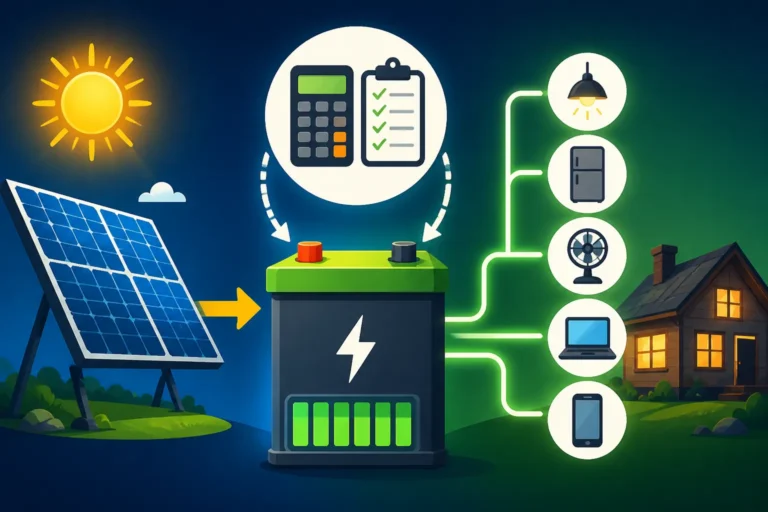
One of the biggest headaches aspiring off-grid dwellers face is the constant worry: will I have enough power? It’s a completely valid concern, because nobody wants to invest their hard-earned money and time into a solar system only to find out their lights flicker, their fridge struggles, or their batteries die prematurely. This guide is designed to take the guesswork out of that crucial first step – accurately adding up your off-grid electrical loads so you can design a system that reliably meets your energy needs, day in and day out.
Why Accurately Calculating Your Off-Grid Loads is Crucial
Embarking on the journey to off-grid living, whether in a cozy cabin, a bustling RV, or a full-fledged homestead, is incredibly exciting. But amidst the dreams of self-sufficiency and independence, there's a practical cornerstone that often gets underestimated: understanding your energy consumption. Many folks jump straight into buying solar panels or batteries, only to discover later that their system is either woefully inadequate or unnecessarily oversized. Getting a handle on your electrical loads from the start isn't just about numbers; it's about peace of mind and the long-term success of your off-grid venture.
Avoiding Power Shortages and Frustration
Imagine settling into your off-grid cabin after a long, cloudy day, ready to make dinner, only to realize your battery bank is nearly depleted. The refrigerator isn't cooling properly, the lights are dim, and forget about running the microwave. This isn't just an inconvenience; it's a major source of stress and can quickly erode the joy of off-grid living. These are the real-world impacts of an undersized system, where you haven't accurately accounted for all your daily electrical needs.
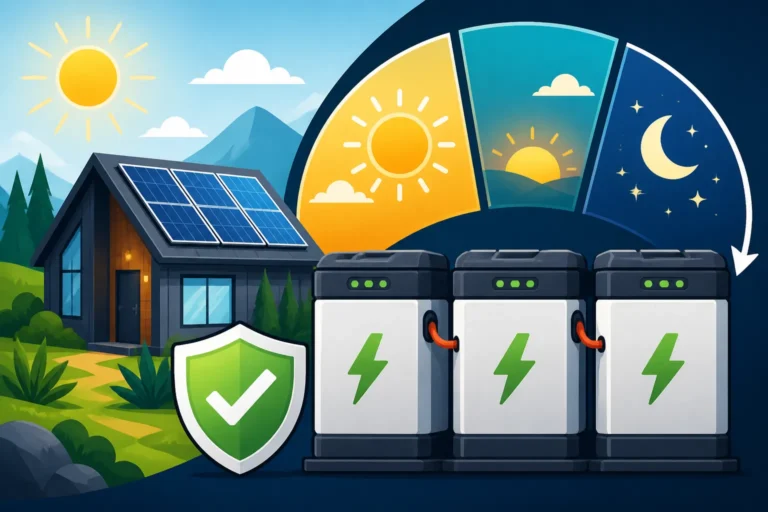
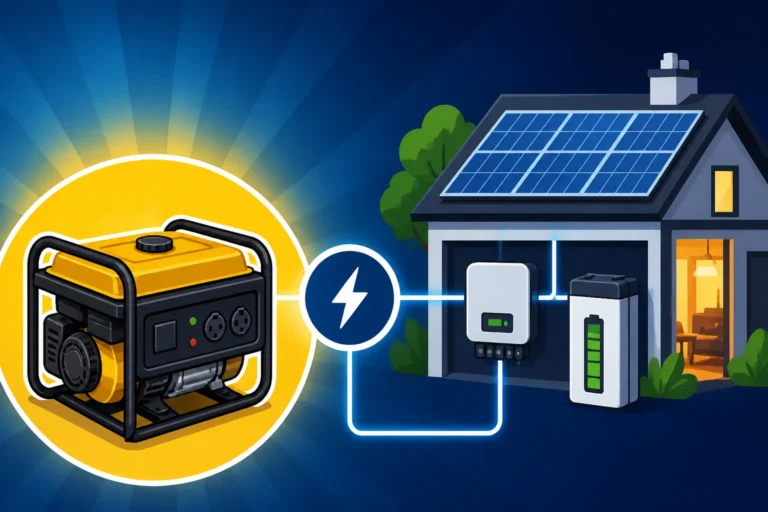
Underestimating your loads can lead to a domino effect of problems. Your batteries are constantly being pushed to their limits, draining too deeply. This over-discharge is a major killer of battery life, especially for lead-acid batteries, but it’s not great for lithium-ion (LiFePO4) batteries either. You might find yourself constantly rationing power, turning off essential appliances, or even resorting to a noisy, fuel-guzzling generator more often than you'd like, completely defeating the purpose of a quiet, solar-powered lifestyle. A proper load analysis ensures you have enough stored energy to handle your routine, even during stretches of inclement weather, preventing those frustrating moments of "lights out."
Optimizing Your System Investment
Let's be honest, building an off-grid solar system is a significant investment. You want every dollar to count, and that means right-sizing your components from the very beginning. If you don't accurately calculate your off-grid loads, you risk either buying a system that's too small and constantly leaving you wanting more, or one that's far too large and has you sitting on expensive, unused capacity. Oversizing might seem like a safe bet, but it means unnecessary upfront costs for panels, batteries, and inverters that you simply don't need.
Conversely, an undersized system will inevitably require costly upgrades down the line. You'll end up buying more panels, more batteries, or a larger inverter sooner than expected, potentially paying more in the long run than if you had just sized it correctly from the start. Think of it like buying a car: you wouldn’t buy a tiny compact if you needed to haul a family of five and a week's worth of groceries every day. You'd assess your needs and choose appropriately. The same principle applies here. An accurate load calculation is your roadmap to a cost-effective and efficient system, allowing you to effectively How to Budget for an Off-Grid Solar System and make smart purchasing decisions.
Extending Battery Lifespan
Your battery bank is arguably the most critical, and often the most expensive, component of your off-grid solar system. Its lifespan is directly tied to how it's used, particularly how deeply it's discharged on a regular basis. Consistently deep cycling, or draining your batteries down to very low states of charge, dramatically shortens their life. This is where an accurate load calculation becomes a battery's best friend.
By knowing precisely how much energy you consume daily, you can size your battery bank to comfortably meet those needs without pushing it to its limits. This ensures your batteries operate within their optimal depth of discharge (DoD), leading to more charge cycles and a significantly longer service life. For example, if you know you need 5 kWh per day, you wouldn't want a battery bank that only holds 5 kWh, because you'd be discharging it completely every day. Instead, you'd aim for a bank perhaps twice that size, allowing you to only use 50% of its capacity, which is much healthier for most battery chemistries. This thoughtful approach to sizing, derived from a solid load analysis, is key to maximizing the return on your Cost of an Off-Grid Solar Battery Bank investment.
Step-by-Step Guide to Performing a Load Analysis
Alright, let's roll up our sleeves and get into the nitty-gritty of figuring out exactly how much power your off-grid lifestyle demands. This isn't a complex math problem, but it does require a bit of diligent observation and record-keeping. The goal is to get a realistic picture of your energy consumption so you can build a system that won't leave you in the dark. This process is fundamental to learning How to Calculate Off-Grid Solar Needs.
Inventorying Your Appliances and Devices
This is where the fun begins, or at least the meticulous part! Start by making a comprehensive list of every single electrical device you plan to use in your off-grid setup. And I mean everything. Don't just think about the big power hungry items. Consider the small stuff too, because those watts add up.
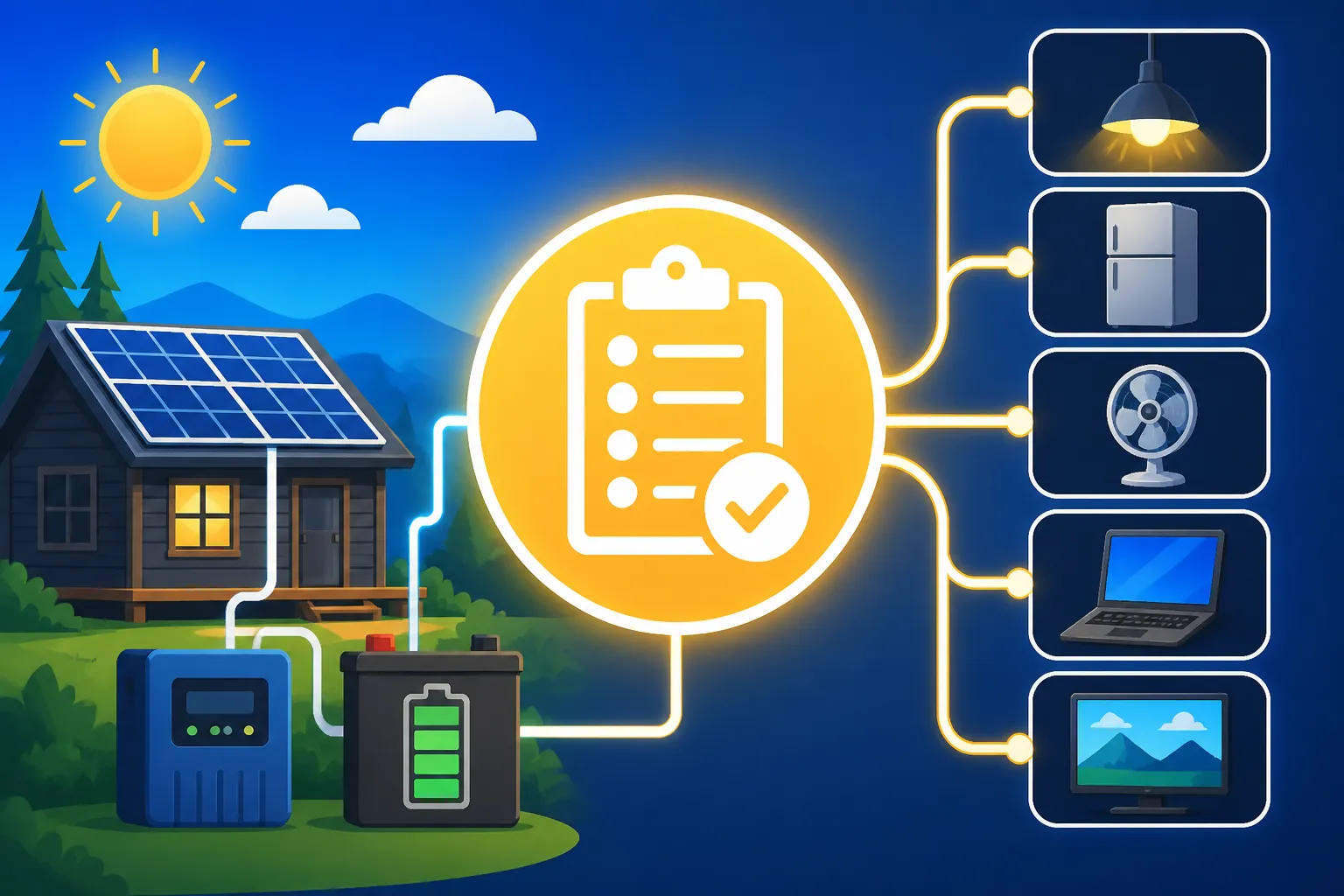
Walk through your space, whether it's an RV, a cabin, or your eventual off-grid home, and jot down every light, fan, phone charger, laptop, coffee maker, water pump, refrigerator, microwave, TV, stereo, power tool, and medical device (like a CPAP machine). Even things you only use occasionally, like a vacuum cleaner or a blender, need to be on this list. Be as detailed as possible. For instance, instead of just "lights," note "5 LED ceiling lights" or "2 incandescent reading lamps." For each item, you'll want to record its wattage, which we'll cover next. This inventory is the very first step in How to Do an Off-Grid Load Analysis.
Understanding Appliance Wattage and Run Time
Once you have your comprehensive list, the next step is to figure out the wattage for each item and estimate how many hours per day you'll actually use it. This is where the magic happens and you start to see your power consumption take shape.
Finding Wattage:
- Appliance Labels: Many appliances have a label or sticker, often on the back or bottom, that specifies its wattage (W) or current (Amps, A) and voltage (V). If it only gives Amps and Volts, you can calculate wattage using the formula: Watts = Amps x Volts. For AC appliances, this is usually straightforward (e.g., 120V in North America). For DC appliances (like in an RV), it'll be 12V, 24V, or 48V.
- User Manuals or Online Search: If you can't find a label, check the product manual or do a quick online search for the make and model number. Manufacturers often list power consumption specifications.
- Kill-a-Watt Meter: For common household AC appliances, a "Kill-a-Watt" meter is an invaluable tool. You simply plug the appliance into it, and it tells you the real-time wattage draw. These are relatively inexpensive and readily available on platforms like Amazon or local hardware stores. This gives you a truly accurate reading, especially for things like refrigerators that cycle on and off.
- Estimates: If all else fails, you can use general estimates for common appliances, but be aware these are less precise. For example, a modern LED bulb might be 7-10W, a laptop charger 40-80W, a small fridge 50-150W when running (but it cycles).
Estimating Run Time:
This is crucial for determining daily energy usage. Be realistic, not aspirational. If you think you'll only use your coffee maker for 5 minutes, but in reality, you tend to brew two pots and let it sit on the warmer, factor in that actual usage.
- Lights: How many hours are they typically on each day? Separately for morning, afternoon, evening.
- Refrigerator/Freezer: These run intermittently. If you're using a Kill-a-Watt, you can measure total kWh over 24 hours. Otherwise, estimate its run-time percentage (e.g., a fridge might run 30-50% of the time, depending on ambient temperature and how often you open it).
- Electronics: How many hours is your laptop charging or in use? Your phone? Tablet?
- Water Pump: How many minutes a day does it run to fill tanks, wash dishes, or for showers?
- Heavy-Draw Appliances: Tools, microwaves, hair dryers – these are often high wattage but low run-time. Factor in those short, intense bursts.
Converting Watts to Watt-Hours (Daily Energy Consumption)
Now that you have your wattage and estimated daily run time for each item, it's time to calculate the daily energy consumption in Watt-hours (Wh). This is the bedrock of your entire off-grid solar system design.
The formula is simple:
Watt-hours (Wh) = Watts (W) x Hours per Day (h)
Let’s walk through some examples:
-
LED Light: If you have an 8-watt LED light that you use for 6 hours a day:
8 W x 6 h = 48 Wh per day -
Laptop: A 60-watt laptop charger used for 4 hours a day:
60 W x 4 h = 240 Wh per day -
Refrigerator: Let's say your refrigerator draws 80 watts when it's running, and you've determined (perhaps with a Kill-a-Watt meter over 24 hours, or a good estimate) that it actively runs for about 8 hours total over a 24-hour period:
80 W x 8 h = 640 Wh per day -
Water Pump: A 100-watt water pump that runs for a total of 30 minutes (0.5 hours) per day:
100 W x 0.5 h = 50 Wh per day
Do this for every single item on your inventory list. Then, sum up all the individual Watt-hours to get your Total Daily Watt-Hours. This number represents your total energy demand for a typical day. Understanding Watts vs Watt-Hours vs Amp-Hours Explained is really key here.
Here's a simple table to help you organize your calculations:
| Appliance / Device | Wattage (W) | Est. Hours/Day (h) | Daily Watt-Hours (Wh) | Notes |
|---|---|---|---|---|
| LED Ceiling Light (x4) | 10 | 5 | 200 | (4 lights * 10W * 5h) |
| Laptop | 60 | 4 | 240 | Charging/use time |
| Refrigerator | 80 (running) | 8 (total run time) | 640 | Use a Kill-a-Watt for accuracy |
| Water Pump | 100 | 0.5 | 50 | Showers, dishes, handwashing |
| Phone Charger | 10 | 2 | 20 | For one phone |
| TV (LED Smart) | 70 | 3 | 210 | Evening entertainment |
| Coffee Maker | 1000 | 0.1 (6 min) | 100 | Quick brew, no warming plate |
| Microwave | 1200 | 0.05 (3 min) | 60 | Short bursts for heating |
| Total Estimated Daily Load | — | — | 1520 Wh | This is your target daily consumption! |
Remember, this is your baseline. It's an estimate, and actual usage might vary. It’s always a good idea to slightly overestimate your usage rather than underestimate it, to give yourself a comfortable buffer. This total daily Watt-hours number is what you'll use to determine How Many Watts of Solar You Need and How Much Battery Capacity You Need.
Accounting for Critical Factors in Your Load Calculation
Your basic load calculation in Watt-hours per day is a fantastic starting point, but it's not the whole story. Several critical factors can significantly impact your real-world energy needs and the components you'll choose for your system. Ignoring these can lead to frustration or unexpected expenses down the road.
Surge Loads and Inverter Sizing
One of the most commonly overlooked aspects of off-grid system design is the concept of "surge loads." While your load analysis calculates continuous running wattage, many appliances, especially those with motors (like refrigerators, well pumps, power tools, or even some microwaves), require a much higher burst of power for a very short duration when they start up. This initial power spike is called the surge wattage.
For example, a refrigerator might run continuously at 100 watts, but its compressor could demand 800-1000 watts for a second or two when it kicks on. If your inverter is only sized for the continuous running wattage of all your appliances, it will trip or fail when these surge loads hit. This is why it's vital to identify appliances with significant surge requirements and choose an inverter capable of handling them. A general rule of thumb is to look for an inverter with a surge rating at least 2-3 times its continuous rating, and ensure that the largest single surge load you anticipate (e.g., your well pump) can be handled by the inverter's surge capacity. Companies like Renogy offer a range of pure sine wave inverters with robust surge capabilities, making them a popular choice for many off-gridders. Understanding How to Size an Off-Grid Inverter adequately for both continuous and surge loads is a crucial part of preventing system shutdowns.
Seasonal Variations and Days of Autonomy
Off-grid living means you're at the mercy of the sun – or lack thereof. The amount of sunlight your solar panels receive changes dramatically throughout the year, impacting your power generation. Summer days are long and bright, offering abundant solar production. Winter, however, brings shorter daylight hours, lower sun angles, and often more cloudy or stormy weather. This means your panels will produce significantly less power during the colder months.
When you're performing your load calculation, you need to consider your worst-case scenario for generation, which is typically winter. You also need to factor in days of autonomy, which refers to how many days your battery bank can power your essential loads without any solar input (e.g., during extended cloudy spells or snow cover). If you plan to live off-grid year-round, you'll need to calculate your winter loads (which might be higher if you use electric heaters or more lights) and size your battery bank for at least 3-5 days of autonomy. For seasonal cabins or RVs used primarily in summer, you might get away with fewer days. For more on this, check out our guide on How to Calculate Days of Autonomy. You definitely want to consider How Winter Affects Off-Grid Sizing to avoid being caught short when the sun hides for a week straight.
Future Expansion and Buffer Room
The off-grid journey often evolves. What starts as a basic setup for essential lighting and charging might eventually include a larger refrigerator, a more powerful well pump, or even an electric vehicle charger. It's easy to make Common Off-Grid Sizing Mistakes by not considering future needs. Planning for future expansion from the outset can save you a lot of hassle and expense.
When you finalize your load calculation, it's wise to add a buffer of 10-20% to your total daily Watt-hours. This extra capacity provides flexibility for unforeseen increases in consumption, the addition of a new appliance, or simply days when you use more power than anticipated. While you don't want to wildly oversize your system (refer back to optimizing your investment!), a little buffer goes a long way. This foresight allows you to design an expandable system, perhaps by installing extra mounting rails for additional panels later or purchasing an inverter that can handle more wattage than your initial needs. Thinking about future needs ensures your off-grid system can grow with you.
Practical Tools and Resources for Your Load Analysis
While the concept of adding up your off-grid loads might seem daunting at first, there are plenty of practical tools and resources available to make the process easier and more accurate. You don't have to be an electrical engineer to get this right!
Using a Spreadsheet for Organization
Let’s be honest, trying to keep track of all your appliances, their wattages, and run times on a scrap piece of paper is a recipe for disaster. A simple spreadsheet (like Google Sheets, Microsoft Excel, or LibreOffice Calc) is your best friend here. It allows you to organize your data clearly, perform calculations automatically, and easily adjust variables if your plans change.
You can set up columns for:
- Appliance Name
- Wattage (W)
- Estimated Hours Used Per Day (h)
- Calculated Daily Watt-Hours (Wh)
- Notes (e.g., "surge load," "winter only," "future addition")
- Quantity (if you have multiple of the same item)
This structured approach makes it simple to see your total daily load at a glance and makes it easy to experiment with different usage patterns. If you realize your daily total is too high, you can quickly identify which appliances are consuming the most power and consider energy-efficient alternatives or reducing their run time. Creating this kind of structured record is a practical aspect of Off-Grid Solar Load Calculation Explained.
Online Calculators and Apps
Beyond your trusty spreadsheet, the digital world offers numerous resources to streamline your load analysis. Many solar equipment manufacturers and off-grid solar suppliers provide free online calculators that walk you through the process. You input your appliances, their wattages, and estimated run times, and the calculator does the math for you, often providing recommendations for panel and battery bank sizes.
For instance, companies like Renogy offer their own comprehensive solar calculators on their websites, which can be incredibly helpful. These tools often incorporate factors like peak sun hours for your location and desired days of autonomy, which we discussed earlier. While these calculators are excellent starting points, always double-check the results with your own understanding and calculations. They are generalized tools, and your specific circumstances might require slight adjustments. Some apps are also available for smartphones or tablets that allow you to input your loads on the go, making it convenient if you're planning an RV or van conversion.
Consulting with Off-Grid Experts
Sometimes, even with all the tools and guides, you might encounter specific challenges or simply want the assurance that you're making the right choices. This is especially true for larger, more complex off-grid systems designed for full-time homes with heavy loads like well pumps, mini-splits, or workshops. In these cases, consulting with an off-grid solar expert can be an invaluable investment.
These professionals have years of experience designing and installing systems in various environments. They can help you fine-tune your load calculations, recommend the most appropriate components (from Best Off-Grid Solar Batteries to charge controllers), and ensure your system adheres to safety standards and local codes. While DIY is a fantastic and often cost-effective route, knowing when to bring in an expert for a sanity check or a full system design can prevent costly mistakes and provide peace of mind. Many companies offer consultation services, sometimes even virtually, allowing you to tap into their knowledge from anywhere. Don't hesitate to reach out if you feel overwhelmed or have particularly unique energy requirements.
Disclaimer
The information provided in this guide is for general informational purposes only. While we strive to offer accurate and up-to-date advice, off-grid solar system design and installation can be complex and depends on many variables unique to your specific situation, location, and local regulations. Always consult with qualified professionals, refer to manufacturer specifications, and adhere to all applicable electrical codes and safety guidelines when designing, installing, or maintaining an off-grid solar system. Personal injury, property damage, or other losses may result from improper installation or use.