How Many Batteries to Run A Water Heater
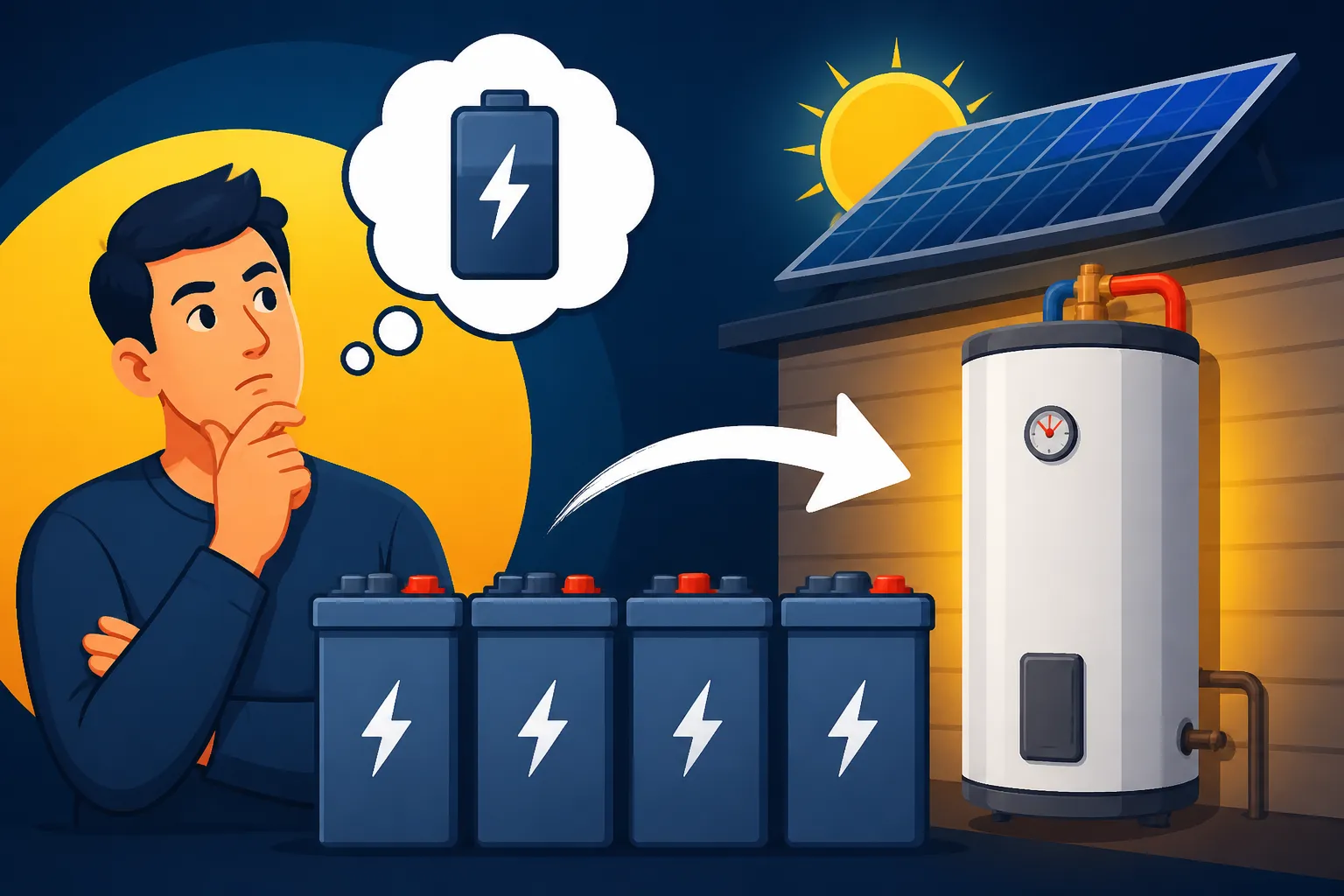
The dream of heating your water without relying on the grid is incredibly appealing, promising endless hot showers fueled by the sun. But then reality hits: water heaters are notorious energy hogs, and figuring out how many batteries you'll actually need to keep one running off-grid can feel like trying to solve a complex math problem while blindfolded. Many people get frustrated when they realize a small battery bank suitable for lights and a laptop won't even make a dent in their water heater's demands. This guide is here to demystify that process, walking you through the practical calculations and considerations so you can confidently determine the right battery bank size for your off-grid water heating needs, avoiding costly mistakes and cold showers.
Understanding Your Water Heater's Energy Appetite
Before you can even begin to think about batteries, you really need to get a firm grasp on just how much power your water heater consumes. This isn't just a number; it's a dynamic beast that changes based on several factors, making it one of the trickiest appliances to power off-grid. Many folks assume a simple "wattage rating" is all they need, but that's just the start of the story.
The Watts and Watt-Hours Breakdown
First, let's clear up some common confusion: watts and watt-hours are not interchangeable, and understanding the distinction is absolutely critical for off-grid sizing.
- Watts (W): This is the instantaneous power draw, like how bright a lightbulb is or how much juice your coffee maker pulls at the moment it's heating. For an electric water heater, this number is often quite high, typically ranging from 1,500W to 4,500W for standard residential models. This is the figure you'll see on the appliance label, and it tells you how big your inverter needs to be to handle the load. If your water heater is 3,000W, your inverter needs to be able to supply at least that much power, ideally with some headroom for surge.
- Watt-Hours (Wh) or Kilowatt-Hours (kWh): This is the total energy consumed over a period of time. Think of watts as speed and watt-hours as distance. A 3,000W water heater running for one hour consumes 3,000 Wh (or 3 kWh) of energy. This is the number you really need for battery sizing, as it represents the total energy your batteries must store and deliver. Your battery bank needs to have enough watt-hours of usable capacity to meet your daily hot water demand.
The challenge with water heaters is that they don't run continuously. A tank-style electric water heater cycles on and off throughout the day to maintain the water temperature. A tankless electric heater only draws power when hot water is actually being demanded. This intermittent nature makes estimating daily watt-hour consumption much harder than, say, a refrigerator that runs consistently. You need to estimate how many hours your water heater will actively draw its full wattage over a 24-hour period.
Factors Influencing Water Heater Consumption
So, how do you get a realistic watt-hour estimate? It's not just about the nameplate wattage. Several real-world factors play a huge role in how much energy your water heater will gobble up. Ignoring these can lead to a severely undersized battery bank and a very unhappy off-grid experience.
- Tank Size and Insulation: A larger tank holds more hot water, but it also takes more energy to heat initially and loses heat more slowly if well-insulated. A poorly insulated tank in a cold basement will cycle more often, using more energy. For instance, a 50-gallon tank will need more energy to reach temperature than a 30-gallon tank, assuming the same starting and target temperatures.
- Hot Water Usage Habits: This is perhaps the biggest variable. Do you take quick, cool showers, or long, hot soaks? Do you do laundry with hot water daily? Wash dishes by hand or run a dishwasher? A family of four with multiple daily showers and heavy hot water use will have vastly different energy needs than a single person who only uses hot water occasionally. Be honest with yourself here; underestimating your usage is a common trap.
- Incoming Water Temperature: In colder climates, incoming well water might be near freezing in winter, requiring significantly more energy to heat it to a usable temperature than warmer summer water. This is a crucial, often overlooked factor when planning for year-round off-grid living, especially in places like Minnesota or Maine.
- Ambient Temperature: If your water heater is in a cold utility room or an unheated shed, it will lose heat to its surroundings faster and cycle more frequently than one in a warm, climate-controlled space, especially if the tank insulation isn't top-notch.
Types of Water Heaters and Their Demands
While "water heater" might sound generic, there are different types, and their energy demands vary wildly, particularly when considering off-grid applications.
- Electric Tank Water Heaters: These are the most common in grid-tied homes. They typically have two heating elements (e.g., two 4,500W elements) that cycle on and off to maintain a set temperature in a large insulated tank. While they don't draw their full wattage constantly, their peak draw is very high, and their cumulative daily consumption can be substantial, often 10-20 kWh per day for a standard household. Powering one of these fully with batteries is a massive undertaking, often requiring a system that's borderline commercial in scale.
- Electric Tankless (On-Demand) Water Heaters: These are even more demanding in terms of instantaneous power. They heat water only when a tap is opened, providing an endless supply. However, to heat water fast enough, they require immense wattage—often 18,000W to 36,000W (that's 18-36 kW!). This instantaneous surge makes them virtually impossible to power directly from a typical off-grid battery bank and inverter system. The inverter size needed would be prohibitively expensive, not to mention the battery bank required to support such a huge load even for short periods. Most off-gridders avoid these entirely for battery-powered systems.
- Propane/Natural Gas Water Heaters with Electric Ignition: These are often the pragmatic choice for off-grid hot water. The actual heating comes from burning fossil fuels, but they still require a small amount of electricity for the control board, igniter, and sometimes a vent fan. This electrical draw is minimal, often just tens of watts, and is easily handled by even a small off-grid system. The main cost and dependency here is on the fuel supply (propane tank refills, etc.), not a massive battery bank. For anyone seriously considering a truly independent hot water solution, exploring a propane on-demand heater with minimal electric draw is often the way to go.
Calculating Your Daily Battery Needs
Now that you understand the energy requirements, let's get down to the brass tacks of figuring out how many batteries you'll actually need. This isn't just guesswork; it involves careful calculation and considering the realities of off-grid living, like cloudy days.
Step-by-Step Load Analysis for Water Heating
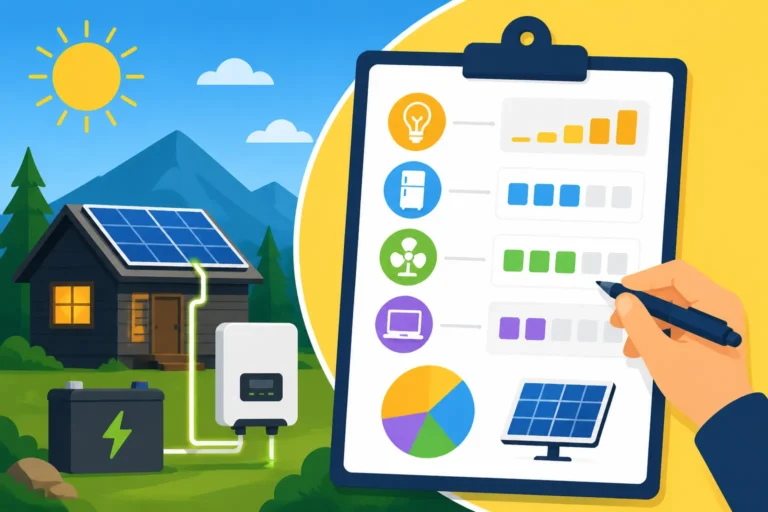
A proper load analysis is the foundation of any off-grid system design. For your water heater, it means quantifying its daily energy draw.
- Find the Wattage: Look at the nameplate on your electric tank water heater. It will list the wattage, typically for each element. For example, two 4,500W elements. Remember, they usually don't both fire at once, but the inverter needs to handle the largest single element's draw, or potentially the combined draw if both can activate simultaneously (less common). Let's assume a single element of 4,500W for our peak demand.
- Estimate Daily Run Time: This is the tricky part. You need to estimate how many cumulative hours that 4,500W element will be active throughout the day. This requires observing your habits.
- Initial Heat-Up: If you turn it on cold, it might run for an hour or two initially.
- Reheating after Showers/Usage: Each hot shower or heavy hot water draw will trigger a reheat cycle. A 10-minute shower might cause the element to run for 20-30 minutes.
- Phantom Loss (Standby): Even with no usage, the tank will slowly cool and the element will cycle periodically to maintain temperature. This could be an hour or two of element run time over 24 hours just for standby.
- Realistic Daily Estimate: For a small, conservative off-grid household with an electric tank water heater, you might estimate the element runs for a total of 2-4 hours per day. For a more typical family, this could easily jump to 4-6 hours or more. Let's use 4 hours for our example.
- Calculate Daily Watt-Hours: Multiply the wattage by the estimated daily run time.
- Example: 4,500W * 4 hours = 18,000 Wh (or 18 kWh) per day.
- This 18 kWh is the minimum energy your battery bank needs to supply daily, before accounting for efficiency losses. This amount often surprises people when they first calculate it, highlighting why How Much Solar to Run A Water Heater is such a common question.
Factoring in Days of Autonomy
Off-grid living isn't always sunny. You need to prepare for periods of low sun or heavy usage without immediate recharging. This is where "days of autonomy" comes in.
- What is Days of Autonomy? It's the number of days your battery bank can power your essential loads without any input from your solar panels or other charging sources. For a critical appliance like a water heater (if you insist on it being battery-powered), you'll want at least 2-3 days of autonomy, especially in climates with frequent cloudy weather. Some people even aim for 5 days in winter-heavy regions.
- Impact on Battery Size: If your water heater consumes 18 kWh per day and you want 3 days of autonomy, your battery bank needs to store a total of 18 kWh * 3 days = 54 kWh of usable energy. This is a substantial amount. This is a huge factor when considering How Much Battery Capacity You Need.
- Peak Sun Hours: Your ability to recharge this massive battery bank also depends on your location's "peak sun hours" – the equivalent hours per day of full-intensity sunlight. In winter or cloudy regions, these hours are much lower, meaning your solar array has less time to replenish the batteries. This further emphasizes the need for larger battery storage to bridge those gaps, as explored in How Winter Affects Off-Grid Sizing.
Converting Energy to Battery Capacity (Ah and kWh)
Batteries are rated in Amp-hours (Ah) and sometimes Watt-hours (Wh or kWh). You need to do some conversions to ensure your calculations are accurate, and crucially, you must account for inverter efficiency.
- Account for Inverter Efficiency: Your inverter isn't 100% efficient. It typically operates at 85-95% efficiency when converting DC battery power to AC household power. This means you need to pull more energy from your batteries than your appliance actually uses.
- If your water heater needs 18 kWh (AC) and your inverter is 90% efficient, you'll need 18 kWh / 0.90 = 20 kWh of DC energy from your batteries per day.
- Calculate Usable Battery Capacity (Wh/kWh): Now, take your daily DC energy requirement and multiply it by your desired days of autonomy.
- Example: 20 kWh/day * 3 days autonomy = 60 kWh of usable battery storage needed.
- Convert to Amp-Hours (Ah) Based on System Voltage: Batteries are often sold with Ah ratings. To convert kWh to Ah, you need to know your system voltage (e.g., 12V, 24V, 48V).
- Formula: Ah = (Wh / Voltage)
- For a 48V system: 60,000 Wh / 48V = 1,250 Ah.
- This 1,250 Ah is the usable capacity. If you're using lead-acid batteries, which you can only safely discharge to 50% without severely shortening their lifespan, you'd need double that nominal capacity. For lithium (LiFePO4) batteries, you can typically use 80-100% of their rated capacity.
- This critical conversion is detailed in guides like Watts vs Watt-Hours vs Amp-Hours Explained and How to Calculate Battery Amp-Hours Needed.
Let's summarize a scenario in a table:
| Parameter | Example Value (Electric Tank Water Heater) | Notes |
|---|---|---|
| Water Heater Wattage (W) | 4,500 W | Peak instantaneous draw |
| Estimated Daily Run Time | 4 hours | Cumulative time element is active over 24 hrs |
| Daily AC Energy (Wh/kWh) | 18,000 Wh (18 kWh) | Wattage x Run Time |
| Inverter Efficiency | 90% | Typical range: 85-95% |
| Daily DC Energy (Wh/kWh) | 20,000 Wh (20 kWh) | AC Energy / Inverter Efficiency (18 / 0.9) |
| Days of Autonomy | 3 days | How many cloudy days you need to power through |
| Total Usable Battery DC Energy (Wh/kWh) | 60,000 Wh (60 kWh) | Daily DC Energy x Days of Autonomy (20 kWh x 3) |
| System Voltage | 48V | Higher voltage is more efficient for large loads |
| Total Usable Battery Capacity (Ah) | 1,250 Ah (at 48V) | Total Usable DC Energy / System Voltage (60,000 Wh / 48V) |
| Nominal Capacity if Lead-Acid | 2,500 Ah | (Usable Ah / 0.50) due to 50% Depth of Discharge (DoD) limit |
| Nominal Capacity if LiFePO4 | 1,300-1,500 Ah | (Usable Ah / 0.80 or 0.90) due to 80-90% DoD, allowing for some buffer |
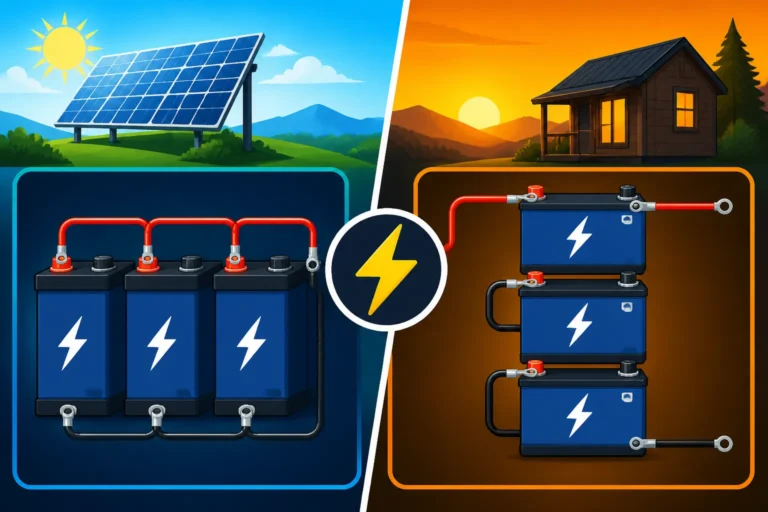
As you can see, 60 kWh of usable battery storage is a huge battery bank, likely consisting of many individual batteries. For instance, if you're looking at 100Ah 48V LiFePO4 batteries (which are less common than 12V or 24V, but illustrate the point), you'd need 12-13 of them (1250 Ah / 100 Ah = 12.5). More commonly, you'd find 12V 200Ah LiFePO4 batteries. For a 48V system, you'd need four of these in series to get a 48V 200Ah module. To reach 1250 Ah usable, you'd need roughly 6-7 such 48V modules in parallel (1250 / 200 = 6.25), meaning a total of 25-28 individual 12V 200Ah batteries. This gives you a clear picture of Cost of an Off-Grid Solar Battery Bank.
Choosing the Right Battery Chemistry and System Voltage
When you're dealing with substantial energy demands like a water heater, your choices in battery chemistry and system voltage become even more critical. It's not just about capacity; it's about efficiency, longevity, and overall cost-effectiveness.
Lithium-Ion LiFePO4 vs. Lead-Acid Considerations
This is one of the biggest debates in the off-grid community, and for a load like a water heater, the differences are stark. For more detailed insights, check out LiFePO4 vs Lead-Acid Battery Cost.
-
Lead-Acid Batteries (Flooded, AGM, Gel):
- Pros: Generally lower upfront cost per Ah. Readily available.
- Cons:
- Limited Depth of Discharge (DoD): You can only safely use about 50% of their rated capacity without significantly shortening their lifespan. This means if you need 60 kWh of usable energy, you'd need a nominal lead-acid bank with 120 kWh of capacity. That doubles your physical footprint and initial cost compared to what seems like the raw "Ah" rating.
- Shorter Cycle Life: Typically 500-1,500 cycles.
- Lower Efficiency: Less efficient at charging and discharging, especially at higher loads.
- Maintenance: Flooded lead-acid requires regular watering and proper ventilation due to off-gassing. AGM and Gel are sealed, but still have the DoD and cycle life limitations.
- Weight and Size: Extremely heavy and bulky for the amount of usable energy they provide.
- Verdict: While cheaper upfront, the true lifetime cost of using lead-acid for a high-demand application like a water heater is often higher due to the need for larger banks, more frequent replacement, and lower efficiency. The sheer size and weight would also be a logistical nightmare for a 60 kWh bank.
-
Lithium Iron Phosphate (LiFePO4) Batteries:
- Pros:
- High Depth of Discharge (DoD): Can be safely discharged to 80-100% of their capacity, meaning a 60 kWh LiFePO4 bank provides nearly 60 kWh of usable energy. This significantly reduces the nominal capacity you need to buy.
- Longer Cycle Life: Typically 3,000-7,000+ cycles, translating to a much longer lifespan (10-20 years or more).
- High Efficiency: Very efficient charge and discharge cycles, wasting less energy.
- Lower Weight and Smaller Footprint: Lighter and more compact for the usable energy stored.
- Maintenance-Free: No watering or off-gassing.
- Better Performance under Load: Maintain voltage better under high current draw, which is great for things like water heaters. Many reputable brands like Renogy offer excellent LiFePO4 options suitable for serious off-grid use.
- Cons: Higher upfront cost per Ah. Can be sensitive to very cold charging temperatures (though many modern LiFePO4 batteries have built-in low-temperature cutoffs or even internal heaters).
- Verdict: For a power-hungry appliance like a water heater in an off-grid setup, LiFePO4 batteries are almost always the superior choice when considering long-term value, performance, and convenience. The higher upfront cost is often offset by their longevity and usable capacity. This is why How Batteries Drive Off-Grid Solar Cost is such an important topic.
- Pros:
System Voltage: 12V, 24V, or 48V?
The voltage of your off-grid system has a profound impact on efficiency, component sizing, and safety, especially when you're drawing significant power. This is a choice you should make early in your design process, as detailed in How to Choose System Voltage.
-
12V Systems:
- Pros: Common for smaller RVs, vans, and basic setups. Many small DC appliances are 12V.
- Cons: Not suitable for large loads like electric water heaters. To deliver 4,500W at 12V, you'd need an insane 375 amps (P=V*I, so I=P/V). This requires incredibly thick, expensive cabling to prevent voltage drop and overheating, and very robust components. Very inefficient for high power.
- Verdict: Absolutely not recommended for powering an electric water heater.
-
24V Systems:
- Pros: A step up in efficiency from 12V. Reduces current by half compared to 12V for the same wattage, meaning smaller wires.
- Cons: Still pretty high current for a 4,500W load (187.5 amps). Still requires substantial wiring and component sizing.
- Verdict: Possibly for a very small, highly insulated electric water heater with minimal usage, but generally pushing the limits of practicality for typical water heater demands.
-
48V Systems:
- Pros: Highly recommended for high-power loads like water heaters. Reduces current significantly (4,500W at 48V is 93.75 amps), allowing for much thinner, less expensive wiring and more efficient power transfer. Components like inverters and charge controllers are often more efficient and robust at 48V for larger systems.
- Cons: Fewer readily available 48V DC appliances (though most off-grid homes convert to AC anyway). Initial learning curve for those used to 12V.
- Verdict: If you are serious about powering an electric water heater off-grid, a 48V system is almost a necessity for practical reasons of efficiency, safety, and component cost. This is especially true when considering How Many Batteries for an Off-Grid System for larger installations. Many excellent components, including some from brands like Victron Energy or Sol-Ark, are designed to shine at 48V.
Putting It All Together: Real-World Scenarios and Practical Tips
So, you've done the math, you understand the components, but what does this really look like on the ground? Let's explore some common off-grid scenarios and discuss some practical ways to make hot water more feasible.
Small Cabin, Weekend Use Example
Imagine a small, rustic cabin used primarily on weekends, maybe a few days a month. One or two people use hot water for dishes and quick showers. Instead of a full-size residential water heater, they might have a small 6-gallon electric tank water heater, drawing around 1,500W, or perhaps a small propane on-demand unit.
- Electric Option: If they chose a 1,500W electric heater, and only ran it for 1 hour total per day (briefly for a shower and dishes), that's 1,500 Wh or 1.5 kWh. With inverter losses (let's say 10%), that's 1.67 kWh DC from batteries. If they want 2 days of autonomy, they need 3.34 kWh of usable battery capacity.
- For a 48V LiFePO4 system, that's 3340 Wh / 48V = 69.5 Ah usable. A single 100Ah 48V LiFePO4 battery (if available, more likely multiple smaller 12V or 24V in series/parallel) would easily cover this. This is much more manageable than a full-time residence.
- Propane Option (Recommended): A small propane on-demand water heater (like a Camplux or Eccotemp) might draw 0.5-1 amp at 12V for ignition and controls, which is 6-12W. Over 24 hours, even running for an hour of actual hot water delivery, the total electrical draw is negligible, maybe 50-100 Wh. This can be easily powered by a small 12V battery, making it the clear winner for efficiency and cost in this scenario. For those building smaller systems, researching Best Off-Grid Solar Kit for a Cabin often reveals a preference for propane hot water.
Full-Time Off-Grid Home: The Realistic Expectations
For a full-time off-grid home with a family, trying to power a standard residential electric tank water heater (e.g., 4,500W, 18 kWh/day average) with batteries alone is an extreme challenge. As our earlier calculation showed, you'd be looking at a minimum of 60 kWh of usable battery capacity.
- Cost Implications: A 60 kWh LiFePO4 battery bank, depending on the brand and configuration (e.g., EG4 Battery Review for Off-Grid Solar, Battle Born Battery Review for Off-Grid Solar), could easily cost $25,000 to $40,000 or more just for the batteries, not including the equally large solar array, inverter, and charge controller needed to support it. This significantly drives up the Off-Grid Solar Cost: Complete Breakdown.
- Space and Weight: This many batteries will take up a significant amount of space and weigh thousands of pounds. Proper installation, ventilation, and safety measures are paramount, as outlined in Off-Grid Solar Installation Guide.
- The Solar Array: To recharge 20 kWh daily (our example's daily DC draw), even in good sun, you'd need a substantial solar array. If your location gets 5 peak sun hours a day, you'd need a 4,000W (4 kW) solar array just for the water heater (20 kWh / 5 hours = 4 kW). This is often on top of the solar panels needed for all other household loads, making the overall system size immense. See How Many Solar Panels for Off-Grid Living for more on this.
Given these realities, most off-gridders prioritize alternatives for full-time hot water in larger homes:
- Propane Tankless Water Heaters: These are the most common and practical solution for full-time off-grid hot water. They provide on-demand hot water with minimal electrical draw, relying on propane for the heating. Brands like Rinnai and Takagi are popular for their reliability.
- Solar Thermal Water Heaters: These systems use solar collectors to directly heat water, which is then stored in an insulated tank. They require no electricity for the primary heating, though pumps and controls might need a small amount. They are highly efficient but have a higher upfront cost and require plumbing integration. They can significantly reduce, or even eliminate, the need for electrical water heating in many climates.
- Wood-Fired Water Heaters: For those with access to wood, a wood stove with a water jacket or a dedicated wood-fired hot water heater can provide hot water during colder months, integrating with an electric element for backup.
- Efficient Electric Water Heaters with Timers: If you must use electric, choose the most energy-efficient tank model possible. Use a timer to only allow heating during peak solar production hours. For example, if your largest solar generation happens between 10 AM and 3 PM, set the water heater to only draw power then. This ensures you're using directly generated solar power rather than depleting your battery bank, as covered in How to Design for Year-Round Off-Grid Power.
The overarching practical advice: While it's technically possible to run an electric water heater entirely from batteries and solar, for any significant hot water demand, it is generally not the most cost-effective or practical solution for most off-grid homes. The sheer battery and solar array size needed makes the upfront investment incredibly high, often diverting funds that could be better spent on other essential off-grid systems. It is usually more sustainable and affordable to heat water using another fuel source (propane, wood, solar thermal) and use your precious battery power for lighting, refrigeration, communication, and other critical electrical loads. For truly self-sufficient living, diversifying your energy sources for different needs is key.
Disclaimer
Please remember that going off-grid involves inherent risks. All information provided is for educational and entertainment purposes only. Always consult with certified professionals like electricians, plumbers, and solar installers before undertaking any off-grid solar installation. Local codes and regulations vary, and ensuring your system is safe, compliant, and properly sized is paramount. I am a lifestyle blogger, not a licensed professional.