Best Inverter for Off-Grid Solar
Trying to navigate the world of off-grid solar can feel like deciphering a secret language, especially when it comes to choosing the right inverter. It’s a crucial piece of the puzzle, essentially the heart that turns your solar panels' raw power into usable electricity for your home or RV, and picking the wrong one can lead to constant headaches, appliance failures, or even a completely dead system. This comprehensive guide is here to demystify off-grid inverters, walking you through everything you need to know to make an informed, confident decision.
Understanding the Core Function of an Off-Grid Solar Inverter
Before we dive into the nitty-gritty of choosing the best off-grid solar inverter, it’s really important to grasp what this vital piece of equipment actually does. Think of your entire off-grid solar setup as a complex symphony, and the inverter is the conductor that makes sure all the instruments play in harmony, delivering the right sound – or in this case, the right kind of power – to your appliances. Without a good conductor, things can go off-key quickly.
What an Inverter Actually Does in Your System
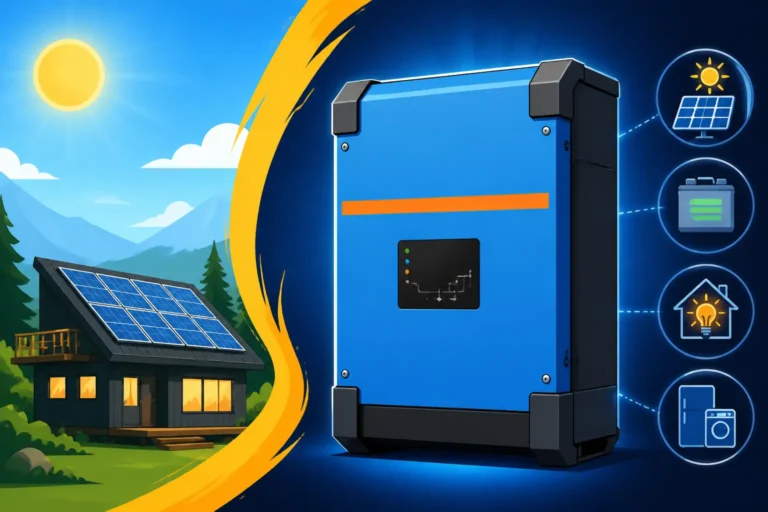
At its most basic level, an off-grid solar inverter takes the direct current (DC) power generated by your solar panels and stored in your batteries, and converts it into alternating current (AC) power. Why is this so crucial? Well, nearly all your standard household appliances, from your refrigerator to your microwave, and even your smartphone charger, run on AC power. Your solar panels and batteries, however, produce or store DC power. It's like having a car that runs on diesel, but you only have gasoline available – you need a converter to make it work. The inverter is that essential bridge.
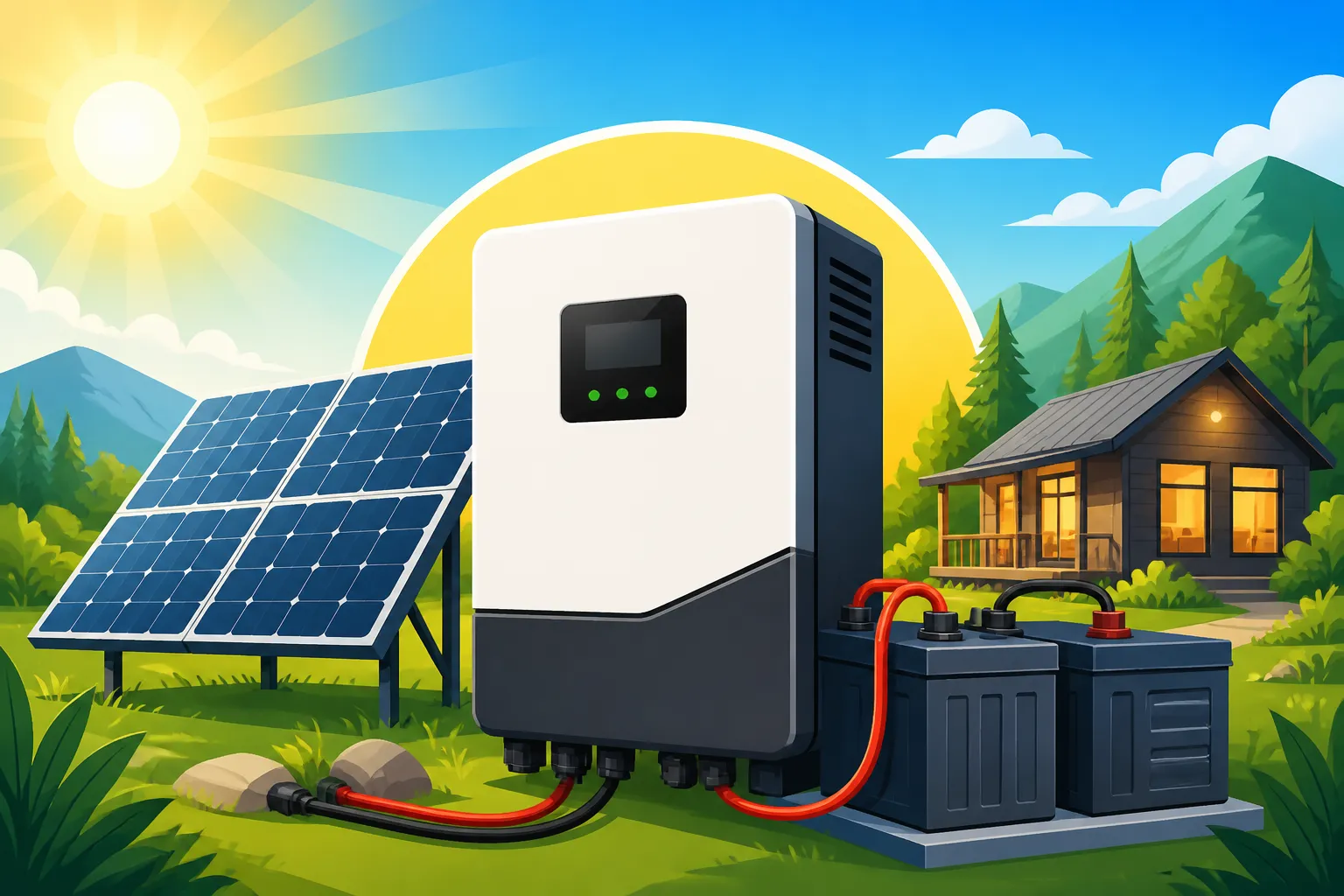
When your solar panels are soaking up the sun, they're producing DC electricity. This DC electricity either flows directly to your charge controller to charge your battery bank or, if your batteries are full and you're using power, it might bypass some of the charging process and head straight to your inverter. The inverter then steps in, performing a complex electronic dance to transform that DC into AC, which is then distributed through your home's electrical panel to all your hungry appliances. It’s a continuous, dynamic process, ensuring you have a steady, reliable power supply, much like a miniature utility grid right on your property.
Why an Off-Grid Inverter is Different from Grid-Tied
This is where many people get tripped up. While grid-tied systems also use inverters, the role of an off-grid inverter is fundamentally different and, frankly, more demanding. A grid-tied inverter's primary job is to synchronize with the existing utility grid, converting your solar DC power into AC power that matches the grid's frequency and voltage. If the grid goes down, most grid-tied inverters are designed to shut off immediately for safety reasons, preventing "back-feeding" power onto downed lines. They are essentially partners with the utility company.
An off-grid inverter, however, is a standalone powerhouse. It has to create its own stable AC waveform, effectively establishing its own micro-grid. It doesn't have the luxury of leaning on the utility company for stability or to absorb excess power. Instead, it must manage all aspects of power generation and demand itself. This means it needs to be robust, capable of handling fluctuating loads, and often includes an integrated battery charger and sometimes even a transfer switch for a generator. It's not just converting power; it's actively managing your entire independent electrical system. This fundamental difference in function means off-grid inverters are designed with different capabilities and often come with higher price tags and more complex features than their grid-tied cousins. If you're wondering how these vital components fit into the larger picture, take a moment to explore an in-depth guide on Off-Grid Solar System Components Explained.
Types of Off-Grid Solar Inverters
When you start looking at off-grid solar inverters, you'll quickly discover there isn't a one-size-fits-all solution. Different types of inverters are designed for various applications, budgets, and power quality requirements. Understanding these distinctions is absolutely critical to making the right choice for your specific needs, because putting the wrong type of inverter in place can lead to a world of frustration and potentially damaged electronics.
Pure Sine Wave Inverters: The Gold Standard
If you're aiming for a reliable off-grid system that can power virtually any appliance without a hitch, the pure sine wave inverter is your go-to. These inverters produce an AC waveform that is nearly identical to the power you get from the utility grid in your home. This smooth, continuous wave is what sensitive electronics, modern appliances with microprocessors, and anything with an AC motor (like refrigerators, well pumps, or power tools) expect to see.
Why is this important? Appliances are designed to run on a very specific type of power, and a pure sine wave ensures they operate efficiently, quietly, and most importantly, without damage. Using a pure sine wave inverter means your microwave won't buzz excessively, your laptop charger won't overheat, and your expensive LED TV won't flicker or fail prematurely. While they tend to be more expensive than other types, the peace of mind and the compatibility with all types of loads make them the undeniable standard for permanent off-grid living, whether in a cabin, an RV, or a full-sized off-grid home. When considering how to get the best power, it's essential to understand the direct comparison outlined in our article on Pure Sine Wave vs Modified Sine Wave Inverters.
Modified Sine Wave Inverters: Budget-Friendly with Strong Caveats
On the other end of the spectrum, we have modified sine wave inverters, sometimes referred to as "modified square wave" inverters. These inverters are significantly less expensive than their pure sine wave counterparts, making them attractive for those on a tight budget or with very basic power needs. However, the cost savings come with substantial compromises in power quality. Instead of a smooth, sinusoidal wave, a modified sine wave inverter produces a stepped or blocky waveform. It's an approximation of a pure sine wave, but definitely not the real thing.
This "choppy" power can be problematic for many modern electronics. While they might power simple resistive loads like incandescent light bulbs or old-school toasters just fine, they can cause issues with anything sensitive. Motors might run hotter, buzz louder, or even burn out. Digital clocks might run fast, and sensitive medical equipment (like CPAP machines) can malfunction. Some appliances simply won't work at all, or worse, they could be permanently damaged. If you're building a full-fledged off-grid system for continuous living, especially if you have sensitive electronics, medical devices, or appliances with motors, a modified sine wave inverter is generally not recommended. They are best reserved for temporary, low-power applications where only very basic, non-sensitive items need to be run, like a simple work light or a fan, or for emergency backup scenarios where appliance longevity isn't the primary concern. You can often find smaller, inexpensive modified sine wave inverters on platforms like Amazon, but be wary of their limitations.
Low Frequency vs. High Frequency Inverters
Beyond the waveform, off-grid inverters are also categorized by their operating frequency, which refers to the frequency at which their internal transformers convert DC to AC. This distinction has significant implications for durability, surge capacity, and overall performance, especially under demanding loads.
Low-frequency inverters utilize large, robust transformers, often made of copper. This design makes them incredibly heavy but also exceptionally durable and capable of handling substantial surge loads. Surge capacity is vital for off-grid systems because many appliances, especially those with motors like refrigerators, well pumps, or power tools, draw a massive spike of power (known as "starting watts") for a fraction of a second when they first turn on. A low-frequency inverter can typically absorb these large surges without tripping or failing, providing more stable and reliable power for demanding applications. They are also generally more resilient to harsh environmental conditions and have a longer lifespan, often making them the preferred choice for permanent residential off-grid systems where reliability and consistent power are paramount. Brands like Victron Energy and Outback Power are well-known for their robust low-frequency inverter offerings.
High-frequency inverters, in contrast, use much smaller, lighter, and more compact electronic components and transformers. This makes them more efficient at lower loads and generally more affordable. They're excellent for smaller, less demanding applications like RVs, vans, or tiny homes where space and weight are at a premium, and the surge requirements aren't as extreme. However, their surge capabilities are typically not as impressive as low-frequency units. While they still provide pure sine wave power, they might struggle with very high startup loads from large motors, potentially tripping internal breakers or failing if continuously overloaded. They are also often less durable in extreme conditions. The choice between low and high frequency often boils down to the specific loads you intend to run and the overall robustness you require for your system. For those designing a system from the ground up, understanding how these components work together is covered in depth in our article on Off-Grid Solar System Design Basics.
Key Factors to Consider When Choosing Your Off-Grid Inverter
Choosing an off-grid inverter isn't just about picking a fancy brand or the cheapest option. It’s a careful balancing act, and there are several critical factors that you absolutely must consider to ensure your system performs reliably and meets all your power needs. Overlooking any of these could lead to an undersized, inefficient, or even incompatible system, resulting in frustration and costly replacements down the line.
Power Rating: Continuous vs. Surge Wattage
This is arguably the most important specification for any inverter. The power rating tells you how much electricity the inverter can deliver. But it’s not just one number; there are two crucial figures you need to understand: continuous wattage and surge wattage.
Continuous Wattage (or Rated Power) refers to the amount of power the inverter can deliver consistently, day in and day out, without overheating or failing. This rating should be equal to or greater than the sum of all the running watts of the appliances you plan to operate simultaneously. For example, if you're running a refrigerator (150W), a few lights (100W total), and a laptop (60W) at the same time, your continuous load is 310W. Your inverter's continuous rating should comfortably exceed this. It's often a good idea to add a buffer, maybe 20-30%, for future expansion or unexpected loads.
Surge Wattage (or Peak Power) is the maximum power the inverter can supply for a very short period, typically a few milliseconds to a few seconds. This is critical for appliances with motors, such as refrigerators, well pumps, air conditioners, or power tools. These devices draw significantly more power at startup (their "starting watts") than they do during continuous operation. For instance, a refrigerator might run at 150W continuously, but surge to 1000-1500W for a split second when the compressor kicks on. Your inverter's surge rating must be high enough to handle the highest single surge you expect in your system. If your inverter can't handle the surge, the appliance won't start, or the inverter will simply shut down. For a detailed breakdown of how to calculate these needs, check out our guide on How to Size an Off-Grid Inverter.
System Voltage Compatibility: 12V, 24V, 48V
Your inverter must be compatible with your battery bank's voltage. The most common system voltages for off-grid applications are 12V, 24V, and 48V. Choosing the right system voltage is a foundational decision that impacts your entire system design, from wire sizing to the number of batteries you'll need.
- 12V Systems: These are typically used for smaller applications like RVs, vans, small cabins, or basic emergency backup setups. They are simpler to configure, and many common DC appliances are readily available in 12V. However, at higher power outputs, 12V systems require much thicker, more expensive wiring to minimize voltage drop and handle the higher current. They are less efficient for larger loads and longer wire runs.
- 24V Systems: Offering a good balance, 24V systems are common for mid-sized cabins, tiny homes, or more robust RV setups. They are more efficient than 12V for similar power outputs, reducing wire gauge requirements and voltage drop. Many inverters and charge controllers are available for 24V.
- 48V Systems: This is the preferred voltage for larger, more powerful off-grid homes and substantial energy demands. 48V systems are the most efficient, allowing for thinner wiring, longer distances between components, and less power loss. They also often allow for more scalable battery banks. Many high-capacity inverters and charge controllers are designed for 48V, making them ideal for whole-house power. If you're exploring the nuances of this decision, our article on How to Choose System Voltage offers further guidance.
Always ensure your inverter's input voltage matches your battery bank's voltage exactly. Trying to connect a 12V inverter to a 24V battery bank, or vice-versa, will result in damage to one or both components.
Efficiency and Standby Consumption
Efficiency is key to getting the most out of your stored energy. An inverter's efficiency rating (usually expressed as a percentage) indicates how much of the DC power it draws from the batteries it successfully converts into usable AC power, with the remainder lost as heat. A typical pure sine wave inverter might have an efficiency of 85-95%. A higher efficiency means less energy wasted, which translates to longer battery life and less reliance on your solar panels or generator.
Equally important is standby consumption, also known as "idle current" or "no-load current." This is the power the inverter consumes simply by being turned on, even when no appliances are actively drawing power. For off-grid systems, especially smaller ones, this can be a significant drain on your batteries over 24 hours. A good off-grid inverter will have very low standby consumption (e.g., less than 0.5 amps for a 12V system). Some advanced inverters feature "power save" or "search" modes, where they periodically check for a load and only fully power up when an appliance is detected, further minimizing standby drain. Don't underestimate the impact of standby consumption; it can quietly deplete your battery bank overnight, leaving you without power by morning.
Built-in Features and Expandability
Modern off-grid inverters, especially those from reputable brands, often come packed with additional features that can greatly enhance your system's functionality and simplify installation.
- Integrated Battery Charger: Many off-grid inverters are actually "inverter-chargers." This means they not only convert DC to AC but also contain a multi-stage battery charger that can take AC power from a generator or the grid (if you're using it for backup) and efficiently charge your battery bank. This significantly streamlines your system, eliminating the need for a separate battery charger.
- Automatic Transfer Switch: An integrated transfer switch is another highly valuable feature, particularly if you plan to use a backup generator. This allows the inverter to automatically switch your loads from battery power to generator power (or vice versa) when battery voltage drops to a preset level or when generator power becomes available. This seamless transition ensures uninterrupted power and takes the guesswork out of managing your backup sources.
- Monitoring and Communications: Advanced inverters offer sophisticated monitoring capabilities, allowing you to track energy production, consumption, battery state of charge, and system health via a remote display, a computer interface, or even a smartphone app. Brands like Victron Energy excel in this area with their comprehensive Venus OS and VictronConnect app, allowing you to monitor and control almost every aspect of your system remotely. This level of insight is invaluable for optimizing your system and troubleshooting issues.
- Expandability: Consider if the inverter allows for future expansion. Can you easily add more inverters in parallel to increase your total power output? Some high-end units are designed for this, allowing you to start with a smaller system and grow it as your needs or budget evolve. When you're planning for future growth, our guide on Cost of Expanding an Off-Grid System provides excellent insights.
| Feature | Description | Importance for Off-Grid |
|---|---|---|
| Waveform | Pure Sine Wave vs. Modified Sine Wave. Defines power quality. | Critical: Pure sine wave essential for sensitive electronics and motors to prevent damage and ensure optimal performance. |
| Continuous Power | Max power inverter can output constantly. | Critical: Must meet or exceed simultaneous running loads (plus buffer). |
| Surge Power | Max power inverter can output for a short duration (startup). | Critical: Must handle highest single startup surge from motors (refrigerators, pumps, AC). |
| System Voltage | Inverter's DC input voltage (12V, 24V, 48V). | Critical: Must match battery bank voltage for compatibility. Impacts wiring size and efficiency. |
| Efficiency | Percentage of DC input converted to AC output; remaining lost as heat. | High: Higher efficiency means less wasted battery power, longer runtimes, and less solar/generator use. |
| Standby Draw | Power consumed by inverter when no load is present. | High: Low standby draw is vital to prevent battery depletion overnight. Look for power-save modes. |
| Integrated Charger | Ability to charge batteries from AC (generator/grid). | High: Simplifies system, allows generator backup charging, often more efficient than separate units. |
| Transfer Switch | Automatically switches loads between battery/inverter and external AC source (generator). | High: Essential for seamless backup power integration and automation. |
| Monitoring | Ability to track system performance (power, battery, faults) via display/app. | Medium to High: Crucial for system optimization, troubleshooting, and peace of mind. |
| Parallel Capable | Can multiple inverters be linked to increase output power. | Medium: Useful for future expansion or very large systems, offering flexibility and redundancy. |
Top Contenders for Off-Grid Solar Inverters
Alright, let's talk about some of the brands and specific models that consistently rise to the top when people are building out their off-grid solar systems. The market is full of options, but some names have truly earned their reputation for reliability, performance, and innovation. We’ll look at the premium players, the solid mid-range workhorses, and some budget-friendly considerations.
Premium and Feature-Rich Options
When budget isn't the absolute primary concern and you demand unparalleled reliability, advanced features, and robust performance, you'll find a few brands dominating the premium end of the off-grid inverter market. These companies often set the standard for what's possible in off-grid power management.
Victron Energy is a name you'll hear consistently among experienced off-gridders. Hailing from the Netherlands, Victron offers an extensive range of inverter-chargers, with their MultiPlus and Quattro series being particularly popular. The Victron MultiPlus series, for example, combines a powerful pure sine wave inverter, a sophisticated battery charger, and a high-speed AC transfer switch into one compact unit. They are renowned for their exceptional build quality, high surge capability (often twice their continuous rating), and incredible versatility. What truly sets Victron apart is its advanced connectivity and monitoring capabilities. With a vast ecosystem of compatible devices (like battery monitors, solar charge controllers, and system controllers), all integrated through their VE.Bus and VE.Can communication protocols, you can monitor and manage every aspect of your system remotely via their intuitive VictronConnect app or the more comprehensive Venus OS. While the upfront Cost of an Off-Grid Solar Inverter from Victron can be substantial, their longevity, reliability, and unparalleled control make them a favorite for full-time off-grid homes and critical applications.
Sol-Ark is another heavy hitter, particularly with their all-in-one hybrid inverter systems like the Sol-Ark 12K or 15K. These units are not just inverters; they're complete power management hubs. They typically include a powerful pure sine wave inverter, multiple MPPT solar charge controllers, a generator input, and an automatic transfer switch, all integrated into one robust box. Sol-Ark systems are designed for ease of installation and offer exceptional surge capabilities and high efficiency. Their user-friendly interface and comprehensive monitoring (both locally and via cloud connectivity) make them a strong choice for those who want a powerful, streamlined solution that can manage solar, batteries, generator, and even grid-tie backup (if applicable) seamlessly. They are often chosen for larger homes or those looking for a relatively straightforward, yet extremely capable, installation.
Reliable Mid-Range Performers
For many off-gridders, a premium inverter might be out of reach, but they still need something dependable that won't break the bank. This is where reliable mid-range performers shine, offering excellent value and solid functionality without all the bells and whistles of the highest-end units.
EG4 Electronics has made a significant splash in the market, particularly with their all-in-one hybrid inverters. They offer units like the EG4 6500EX-48, which integrates a powerful 6500W pure sine wave inverter, an 80A MPPT charge controller, and a 60A AC charger. These units are designed to be highly versatile, capable of handling significant loads, and are known for their strong performance, especially when paired with their popular LiFePO4 server rack batteries. EG4 offers a compelling balance of performance, features, and affordability, making them a popular choice for full-time RVers, tiny homes, and mid-sized off-grid cabins. Their focus on user-friendliness and robust components has earned them a loyal following.
Outback Power has been a stalwart in the off-grid and critical power industry for decades. Their inverters, like the FX and Radian series, are known for their industrial-grade build quality and extreme durability. Outback inverters are often low-frequency, meaning they utilize heavy transformers that give them exceptional surge capabilities and a reputation for being workhorses in harsh environments. While their interfaces might not be as sleek or modern as some newer brands, their reliability and ability to withstand demanding applications are unquestionable. They are a common choice for remote cabins, workshops, and homesteads where long-term, trouble-free operation is paramount. For many, Outback represents a classic, proven path to off-grid power.
Renogy is a brand that comes up frequently, especially for smaller to medium-sized off-grid setups, like those in RVs, vans, or small sheds. While they offer a wide range of solar components, their inverter line, such as the Renogy 2000W Pure Sine Wave Inverter, provides a cost-effective entry point into reliable off-grid power. Renogy inverters are generally high-frequency designs, which makes them lighter and more compact. They're a solid choice for powering typical household appliances, sensitive electronics, and even some smaller motor loads. While they might not boast the same advanced communications or heavy-duty surge capabilities as Victron or Outback, they offer good performance and are readily available, including through online retailers like Amazon. They also offer all-in-one units that combine an inverter with a charge controller, which can simplify a system for beginners, especially when looking at a guide on Off-Grid Solar Kits: What to Buy.
Budget-Conscious Choices and Their Trade-offs
If your budget is extremely tight, there are options available that can get you up and running. However, it’s crucial to understand the trade-offs involved with these lower-cost inverters. You’re typically sacrificing features, durability, efficiency, and potentially power quality.
Many generic pure sine wave inverters are available from various manufacturers, often found on Amazon or other large online marketplaces. While some of these can offer decent performance for the price, it's a bit of a gamble. Key considerations when going this route include:
- Questionable Surge Capacity: Even if they claim a high surge rating, many budget inverters struggle to deliver it consistently or for a sufficient duration, leading to nuisance trips with motor loads.
- Lower Efficiency: Less efficient power conversion means more wasted battery power, requiring you to generate more solar or run your generator more often.
- Limited Customer Support and Warranty: Support can be non-existent or difficult to access, and warranties might be short or hard to claim.
- Reduced Durability: Components may not be as robust, leading to a shorter lifespan, especially under continuous, demanding use or in extreme temperatures.
For instance, you might find a 3000W pure sine wave inverter for a few hundred dollars from a lesser-known brand. This might work for a very basic setup in a garage or shed where continuous, critical power isn't needed, and you're mostly running lights or charging devices. However, for anything resembling a full-time living situation, the risks associated with reliability and potential damage to your appliances usually outweigh the initial cost savings. If you must go budget, stick to pure sine wave and understand its limitations. Sometimes, it's better to start with a smaller, higher-quality inverter from a known brand like Renogy and scale up later, rather than buying a cheap, oversized unit that becomes a constant headache. For those exploring more about budget options, our article on How to Save Money on an Off-Grid Solar Build might be helpful.
Common Mistakes to Avoid When Selecting an Off-Grid Inverter
Choosing an off-grid inverter is a significant investment, and like any complex decision, it's easy to fall into common traps. These mistakes can lead to frustrating performance issues, premature equipment failure, or even a completely unworkable system. Learning from the common missteps of others can save you a lot of time, money, and headaches down the road. For general planning, it's always good to be aware of Common Off-Grid Sizing Mistakes.
Underestimating Surge Loads
One of the most frequent and costly mistakes off-gridders make is underestimating the surge requirements of their appliances. It's easy to look at the "running watts" listed on your refrigerator or microwave and assume that's all your inverter needs to handle. However, as we discussed, appliances with electric motors (refrigerators, freezers, air conditioners, well pumps, washing machines, power tools, blenders, vacuum cleaners) demand a momentary burst of power—a "surge"—that can be several times their continuous running wattage.
Imagine your 200W refrigerator compressor kicking on. It might briefly pull 1500W for a fraction of a second. If your inverter's surge capacity is only 1000W, that refrigerator won't start, or your inverter will immediately trip its overload protection. If you have multiple motor-driven appliances, you typically only need to size for the largest single surge you anticipate. However, if you plan to run a well pump and a washing machine simultaneously, you need to account for both their running watts and ensure the inverter can handle the largest individual surge. Failing to properly calculate your surge loads means you’ll end up with an inverter that can't reliably power your essential appliances, no matter how large its continuous rating might seem. A thorough Off-Grid Solar Load Calculation Explained can help prevent this critical error.
Ignoring System Voltage and Compatibility
Another foundational mistake is not ensuring complete voltage compatibility across your entire off-grid system, especially between your battery bank and your inverter. As tempting as it might be to mix and match components, your inverter must operate at the same nominal DC voltage as your battery bank (12V, 24V, or 48V).
Trying to connect a 12V inverter to a 24V battery bank, for example, will likely result in immediate damage to the inverter, the batteries, or both. The voltage difference is too significant for the inverter's internal electronics. Conversely, connecting a 24V inverter to a 12V battery bank means the inverter won't receive enough voltage to operate correctly, or it will simply indicate a low voltage error and refuse to turn on. This compatibility extends to other components too; your charge controller's output voltage must match your battery bank's voltage, and your solar panel array's voltage (Voc and Vmp) needs to be within the operating range of your charge controller. A mismatch in system voltage creates a bottleneck or a hazardous condition that can prevent your system from working at all or lead to expensive component failures. Our article on How to Wire an Off-Grid Solar System emphasizes the importance of these connections.
Overlooking Customer Support and Warranty
In the exciting rush to get an off-grid system up and running, many people overlook the practicalities of long-term ownership, especially when it comes to customer support and warranty. While a brand might offer an attractive price point, what happens if something goes wrong a year or two down the line?
Investing in an inverter from a reputable brand with a proven track record of excellent customer service and a solid warranty can save you immense frustration and money. Brands like Victron Energy, Sol-Ark, and Outback Power are known for their reliable support networks and standing behind their products. Even mid-range brands like EG4 and Renogy have established customer service teams that can assist with troubleshooting or warranty claims. A cheap, no-name inverter might save you a few hundred dollars initially, but if it fails and you can't get support or a replacement under warranty, you're back to square one, often having to buy an entirely new unit. Always research customer reviews regarding support, read the warranty terms carefully, and consider the availability of spare parts or repair services. In an off-grid scenario, where reliable power is paramount, having confidence in your manufacturer's support can be just as important as the inverter's technical specifications. Remember, you're not just buying a piece of equipment; you're investing in a reliable power solution.
Disclaimer
Please remember that this guide provides general information and recommendations. Off-grid solar system design and installation can be complex and involve electrical hazards. Always consult with qualified professionals and adhere to all local electrical codes and safety regulations when designing, installing, or servicing your off-grid solar system. The author and publisher are not liable for any damages or injuries resulting from the misuse or misinterpretation of this information.