Are EcoFlow Panels Good for Off-Grid
Many off-gridders, especially those new to the lifestyle, often wonder if popular, portable solar panel brands can truly cut it for sustained, independent power. It's a valid concern, as the market is flooded with options, and it's easy to get confused between a weekend camping setup and a reliable system for continuous living. This comprehensive guide is here to shed light on whether EcoFlow panels are a good choice for your off-grid aspirations, breaking down their features, benefits, and the crucial considerations you need to make before investing.
Understanding EcoFlow Solar Panels for Off-Grid Living
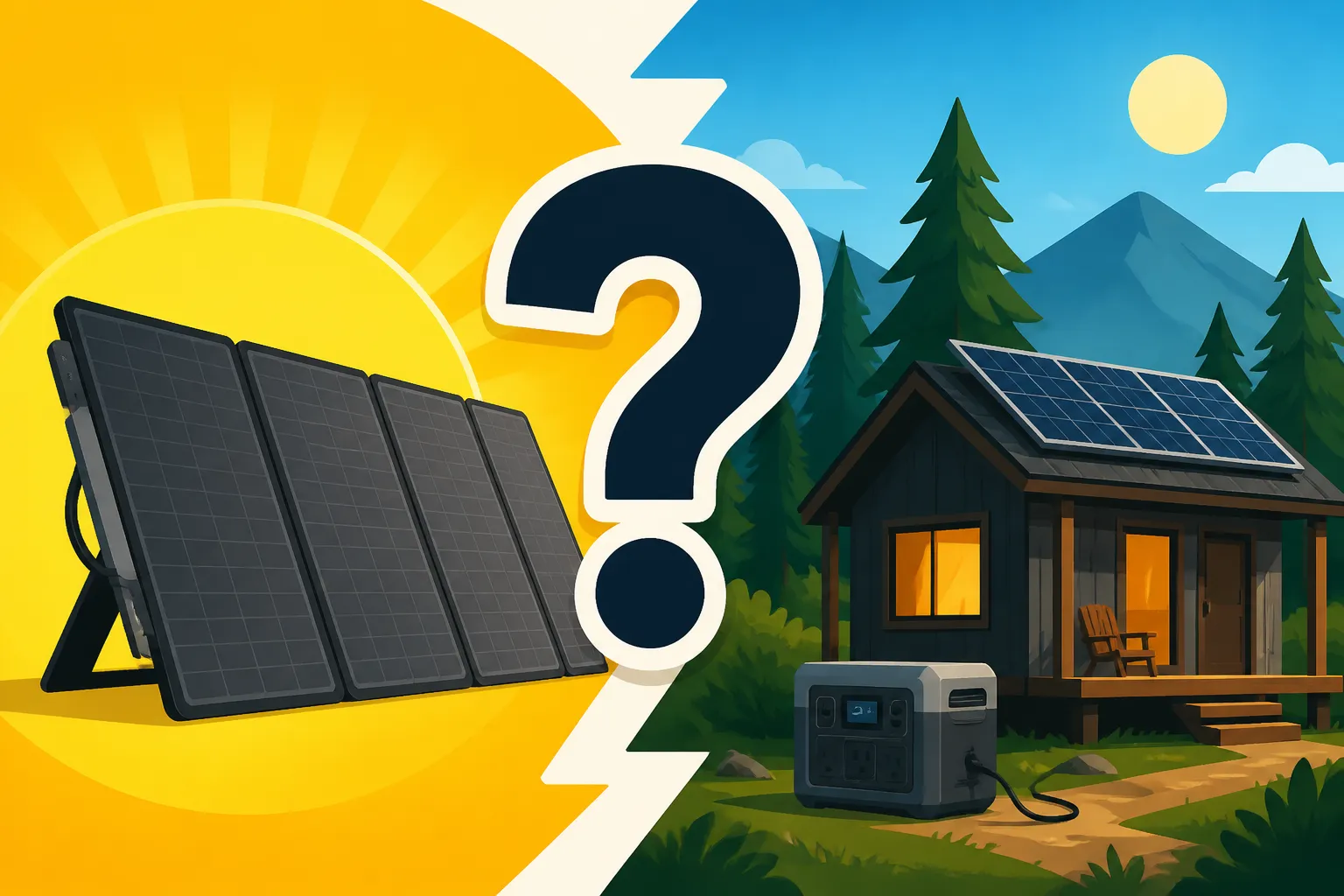
When you first dive into the world of off-grid solar, you quickly realize there's a vast spectrum of equipment out there. On one end, you have robust, permanently installed systems, and on the other, highly portable solutions designed for temporary use. EcoFlow panels often sit in a unique space, bridging the gap between ultra-portable camping gear and more substantial, albeit still modular, off-grid power solutions.
The EcoFlow Philosophy: Portable Power Meets Off-Grid Needs
EcoFlow has carved out a significant niche by focusing on integrated, user-friendly portable power solutions. Their primary philosophy revolves around creating a seamless ecosystem where their solar panels are designed to perfectly complement their powerful portable power stations, like the EcoFlow Delta and River series. This integrated approach is a huge draw for many off-gridders, particularly those who are living in RVs, vans, or tiny homes where space and ease of deployment are critical. The idea is to take the guesswork out of system design – you buy the panels, you buy the power station, and they just work together.
For someone just starting their off-grid journey, or perhaps downsizing from a larger, more complex system, this simplicity is incredibly appealing. You don't need to be an electrical engineer to understand how to connect an EcoFlow panel to an EcoFlow power station. It’s often a plug-and-play experience, which can alleviate a lot of the initial intimidation that comes with designing your own solar setup. This focus on accessibility makes their panels a viable starting point for many, even if their long-term off-grid plans might evolve into something more custom. They aim to get you powered up quickly, whether you're at a remote cabin for the weekend or embarking on a long-term nomadic adventure.
Types of EcoFlow Panels and Their Design
EcoFlow offers a range of solar panels, each designed with specific use cases in mind, but all sharing a common thread of portability and efficiency. Most of their panels utilize high-efficiency monocrystalline silicon cells, which are known for their ability to convert sunlight into electricity effectively, even in less-than-ideal conditions. This is a significant factor when you're relying solely on the sun for power.
Their lineup typically includes:
- Foldable Portable Solar Panels: These are the most common and recognizable EcoFlow panels. They often come in briefcase-style designs, complete with built-in kickstands, making them incredibly easy to set up, adjust to the sun's angle, and pack away. They are ideal for campers, RVers, van lifers, or anyone who needs to quickly deploy and redeploy their solar array. Models like the 110W, 160W, 220W, and 400W foldable panels are staples in their collection.
- Rigid Solar Panels: While still designed for flexibility in placement, these are more akin to traditional panels but often lighter and more aesthetically pleasing for permanent installations on RV roofs, small cabins, or sheds. They offer a robust design suitable for longer-term outdoor exposure without the need for constant packing and unpacking.
- Flexible Solar Panels: For curved surfaces or situations where weight is a critical concern, EcoFlow also offers flexible panels. These can conform to the contours of a van roof or boat deck, providing a stealthy and aerodynamic solution.
All these panels typically come with standard MC4 connectors, which are crucial for off-grid applications. This compatibility means that even if you're primarily using them with an EcoFlow power station, you could theoretically connect them to other charge controllers or battery systems, given the right adapters and voltage matching. However, their design truly shines when integrated within the EcoFlow ecosystem, which optimizes charging and performance. If you're looking into specific types, you might want to consider what makes the Best Portable Solar Panels or Rigid vs Flexible Solar Panels right for your situation.
Key Features and Benefits of EcoFlow Panels for Off-Grid Setups
Choosing the right solar panels for off-grid living is a huge decision, and EcoFlow panels bring several compelling features to the table that make them attractive, especially for certain types of independent power users. It’s not just about generating electricity; it’s about how that generation fits into your daily life and specific needs.
High Efficiency and Portability
One of the standout advantages of EcoFlow panels is their impressive efficiency ratings, often reaching upwards of 23%. For off-gridders, this means more power generated from a smaller footprint, which is invaluable whether you're limited by roof space on an RV or trying to minimize the visual impact on a small cabin. In real-world scenarios, where sunlight isn't always perfect, higher efficiency helps you squeeze every last watt out of the available sun. Imagine being parked in a partially shaded campsite, or needing to quickly generate power before a storm rolls in – that extra efficiency can make a significant difference in topping off your batteries.
Their portability, however, is truly a game-changer for many. Unlike bulky, rigid panels that are fixed in place, EcoFlow's foldable and lightweight designs allow for dynamic sun tracking. You can easily move them throughout the day to follow the sun's path, maximizing your energy harvest, especially during those precious morning and late afternoon hours. This is particularly beneficial for mobile setups like RVs or vans, where parking spots might not always be ideal for solar exposure. Being able to set up and tear down panels in minutes makes them incredibly practical for temporary camps, emergency backup power, or even for seasonal off-grid cabins where you only need power during certain months. It also means you can easily store them away when not in use, protecting your investment from harsh weather or theft.
Integration with EcoFlow Power Ecosystem
Perhaps the biggest draw for many is the seamless integration of EcoFlow panels with their renowned portable power stations. When you combine, say, a 400W EcoFlow panel with an EcoFlow Delta Pro for Off-Grid: Specs and Review or an EcoFlow Delta 2 for Off-Grid: Specs and Review, you're not just getting individual components; you're getting a fully optimized system. EcoFlow's power stations come equipped with advanced Maximum Power Point Tracking (MPPT) charge controllers, which are far superior to older Pulse Width Modulation (PWM) controllers. MPPT technology dynamically adjusts the voltage and current from the solar panels to maximize the power going into your batteries, leading to faster and more efficient charging, especially in variable weather conditions.
This integrated approach simplifies the entire off-grid power experience. For beginners, it eliminates the need to separately source and wire components like charge controllers, inverters, and battery monitors, which can be daunting. The EcoFlow app often provides real-time monitoring of power input, output, and battery status, giving you complete control and insight into your energy usage. This "plug-and-play" aspect is a huge advantage, reducing the complexity and potential for error in setting up an off-grid system, making it incredibly appealing for those who want to focus more on living off-grid and less on the intricacies of electrical engineering. It’s essentially an Best All-in-One Off-Grid Power Stations solution, streamlining your setup significantly.
Durability and Weather Resistance
Off-grid living means facing the elements head-on, and your solar equipment needs to be up to the task. EcoFlow panels are generally built with durability in mind, often featuring robust construction that includes multiple layers of protective materials. Many of their panels boast a high IP (Ingress Protection) rating, such as IP68 for water and dust resistance, meaning they can withstand heavy rain, splashes, and dusty environments without compromising performance. This level of protection is essential for panels that are frequently deployed outdoors in various climates.
For instance, their panels often use a multi-layered construction with a highly durable ETFE (Ethylene Tetrafluoroethylene) film. This material is known for its excellent light transmittance, self-cleaning properties, and resistance to corrosion, UV radiation, and high temperatures, ensuring longevity and consistent performance over time. While no panel is indestructible, this thoughtful design minimizes the risk of damage from environmental factors, offering peace of mind to off-gridders who can't always provide perfectly sheltered conditions for their equipment. Whether you're in the scorching desert or a damp, rainy climate, these panels are designed to keep working, making them a reliable component in a resilient off-grid system.
Considerations and Potential Drawbacks for Off-Grid EcoFlow Users
While EcoFlow panels offer undeniable advantages, especially in portability and ease of use, it's crucial to approach any off-grid investment with a realistic understanding of its limitations. What works perfectly for a weekend warrior might fall short for a full-time homesteader. Balancing convenience with long-term performance and cost is key.
Cost Versus Traditional Panels
One of the most frequently discussed aspects of EcoFlow panels, particularly when considering larger off-grid installations, is their cost-per-watt. Generally speaking, EcoFlow panels tend to be more expensive per watt than many traditional, rigid solar panels. This higher price point is largely due to the premium placed on their portability, integrated kickstands, specialized construction (like the ETFE coating), and brand ecosystem. You're often paying for the convenience, the compact design, and the seamless compatibility with EcoFlow's power stations.
For example, a high-quality 400W foldable EcoFlow panel might cost significantly more than four individual 100W rigid panels purchased from a general supplier or a brand like Renogy on Amazon. If your goal is to build a large, permanent solar array for a full-sized off-grid home, the cumulative cost of acquiring enough EcoFlow panels to meet your energy demands could become prohibitive. While the initial investment for a small, portable setup might seem reasonable, scaling up can quickly reveal the difference in Cost of Off-Grid Solar Panels when comparing specialized portable units to bulk-purchased standard panels. It's a trade-off: are you paying for ultimate flexibility and integration, or for raw, affordable power capacity? For many with permanent installations, the latter often wins out due to budget constraints and the desire to maximize watt-hours per dollar.
Scalability for Larger Systems
For individuals aiming to power a modest RV, a small van, or a remote hunting cabin, EcoFlow's larger portable panels or even their EcoFlow Power Kit for Off-Grid: Specs and Review can be more than sufficient. They are designed to deliver a respectable amount of power for essential appliances and electronics. However, when you start talking about powering a full-sized off-grid homestead with multiple appliances, well pumps, heating/cooling systems, and continuous high energy consumption, EcoFlow panels, particularly the portable versions, begin to show their limitations in scalability.
A typical off-grid home might require a solar array generating 5,000 watts (5kW) or even 10,000 watts (10kW) or more to maintain comfortable year-round living. Achieving this kind of power output with numerous individual EcoFlow foldable panels would be cumbersome, expensive, and logistically challenging. Imagine setting up and moving a dozen or more 400W panels daily to chase the sun, or dedicating massive amounts of space to store them. While EcoFlow offers power kits that aim to provide more integrated and scalable solutions, they still cater to a mid-range market, typically not designed for the heavy-duty, grid-comparable demands of a large off-grid home. For such large-scale needs, a system built with traditional, higher-wattage fixed panels is almost always more practical and cost-effective. You would be looking at how to calculate your How Many Solar Panels for Off-Grid Living and find that fixed solutions are often the best route for truly massive power needs.
Long-Term Fixed Installation Suitability
While EcoFlow's rigid panels are certainly more robust than their foldable counterparts and can be mounted, the primary design ethos of most EcoFlow panels leans towards portability and ease of temporary setup rather than permanent, heavy-duty fixed installations. Traditional solar panels, like those from Renogy or other well-known manufacturers, are built with sturdy aluminum frames, designed to be securely bolted to complex racking systems that can withstand high winds, snow loads, and years of continuous outdoor exposure. Their mounting points are standardized, and their form factor is optimized for permanent attachment.
EcoFlow's foldable panels, with their integrated kickstands and lighter construction, aren't typically designed to be permanently bolted down. Even their rigid panels might not always offer the same level of structural rigidity or standardized mounting options as panels specifically made for roof or ground mounts. This means you might need to get creative with mounting solutions, or accept a less robust installation if you try to permanently fix them. For a permanent off-grid cabin, for instance, you'd want panels that are designed to endure decades on a rooftop without constant adjustments or concerns about their structural integrity in extreme weather. This is where the dedicated, robust Off-Grid Solar Panels truly shine, offering peace of mind that a portable solution, no matter how good, just can't match for long-term fixed applications.
Integrating EcoFlow Panels into Your Off-Grid System
So, are EcoFlow panels good for off-grid? The answer, like most things in the off-grid world, is "it depends." They excel in specific scenarios and offer unique advantages that make them a fantastic choice for many, while perhaps not being the best fit for every single type of off-grid setup. Understanding where they shine, and how to maximize their potential, is key to making an informed decision.
Best Use Cases for EcoFlow Panels Off-Grid
EcoFlow panels truly come into their own when portability, flexibility, and ease of deployment are paramount. They are an outstanding solution for a variety of off-grid applications where a fixed, complex system isn't practical or necessary:
- RV and Van Life: This is arguably where EcoFlow panels shine brightest. The ability to quickly set up and adjust panels to capture optimal sunlight, then fold them away for travel, is invaluable. They integrate seamlessly with popular RV and van setups using EcoFlow power stations, making them a top choice for a convenient How to Size an Off-Grid System for a Rv.
- Small Cabins or Tiny Homes (Seasonal Use): For a cabin used primarily on weekends or seasonally, where you don't need continuous, massive power, EcoFlow's ability to provide quick power and then be packed away for security or winterization is a huge benefit. This reduces maintenance and the risk of weather damage or theft during unoccupied periods.
- Camping and Overlanding: For those who frequently move campsites or venture into remote areas, EcoFlow panels paired with their power stations offer reliable power for charging devices, running portable fridges, and powering lights, ensuring comfort even far from any outlet.
- Emergency Preparedness and Backup Power: Given their rapid setup and storage capabilities, EcoFlow panels are excellent for creating a resilient backup power system. In the event of a grid outage, you can quickly deploy them to keep essential devices running.
- Remote Workshops or Sheds: For smaller, temporary power needs in a shed, greenhouse, or workshop that isn't connected to the main grid, a flexible EcoFlow setup can provide enough juice for tools, lighting, and other electronics without the hassle of a full permanent installation.
In these scenarios, the convenience, efficiency, and integrated nature of the EcoFlow ecosystem often outweigh the higher per-watt cost, making them a genuinely good option.
Mixing and Matching with Other Components
While EcoFlow systems are designed for seamless integration within their own brand, the reality of off-grid living often involves a bit of mixing and matching. The good news is that most EcoFlow solar panels come with standard MC4 connectors. This means that, in theory, you can connect them to third-party charge controllers and battery banks, as long as you pay close attention to voltage and current compatibility. This is a critical point: you cannot simply plug any solar panel into any charge controller without verifying that their electrical specifications match.
For instance, if you have a non-EcoFlow 12V or 24V battery bank with a separate MPPT charge controller (perhaps a robust unit from Victron or Outback), you can connect EcoFlow panels to it. You’ll need to ensure the panel's open-circuit voltage (Voc) and short-circuit current (Isc) are within the charge controller's acceptable input range. This flexibility allows off-gridders to expand existing systems or to build a hybrid setup, perhaps starting with an EcoFlow power station for simplicity and later adding more conventional components for greater capacity. Many components, including various charge controllers and deep-cycle batteries, can be found on sites like Amazon, often with competitive pricing, or from specialized off-grid suppliers that offer brands like Renogy for a diverse range of solar equipment. However, remember that using EcoFlow panels outside their integrated power stations means you lose some of the "smart" features and optimized charging algorithms built into their ecosystem. When you're thinking about building out your system, remember to consider How to Choose an Off-Grid Solar Panels carefully.
Maximizing Performance and Longevity
Regardless of the brand, getting the most out of your solar panels in an off-grid setting requires careful planning and ongoing attention. EcoFlow panels, with their high efficiency and portability, offer excellent potential for energy harvest, but only if used correctly.
- Optimal Placement and Tilt: The biggest advantage of portable EcoFlow panels is the ability to adjust them. Throughout the day, or as seasons change, remember to re-angle your panels to face the sun directly. For fixed installations, even temporary ones, aiming for a south-facing orientation (in the Northern Hemisphere) and an appropriate tilt angle will maximize your daily energy production. You might want to consider how Best Tilt Angle for Off-Grid Panels can change seasonally.
- Minimizing Shading: Even partial shading on a solar panel can drastically reduce its output due to the way solar cells are wired. Be vigilant about trees, buildings, or even accumulated dirt and snow that might cast shadows on your panels. Utilize their portability to move them into unshaded areas whenever possible.
- Regular Cleaning: Dust, pollen, bird droppings, and leaves can accumulate on your panels, reducing their efficiency. A quick wipe-down with water and a soft cloth can significantly improve performance. This is particularly easy with EcoFlow's smooth surfaces.
- Understanding Your Energy Needs: To truly make any off-grid system work, you need to have a clear picture of your energy consumption. Over-relying on a smaller EcoFlow setup for heavy loads will lead to frustration. Make sure you've calculated your How to Calculate Off-Grid Solar Needs and understand your daily watt-hour requirements. This will help you know if your EcoFlow panels, even optimally managed, can meet your demands, especially when considering How to Design for Low Sun Regions during winter months.
- Battery Health: Your panels generate power, but your battery bank stores it. The health and capacity of your batteries are just as important as your solar array. Ensure your Best Off-Grid Solar Batteries are properly maintained and sized for your needs, providing sufficient How Many Batteries for an Off-Grid System to store the energy your panels collect. Understanding how Peak Sun Hours Explained impacts daily charge cycles is also vital for long-term battery health.
By proactively managing these aspects, you can ensure that your EcoFlow panels deliver reliable, consistent power, making your off-grid experience as smooth and sustainable as possible. Ultimately, the question Is Off-Grid Solar Worth the Cost often comes down to how effectively you design and manage your system, irrespective of the specific brand of panels you choose.
| Feature | EcoFlow Portable/Rigid Panels (Typical) | Traditional Rigid Panels (Typical) |
|---|---|---|
| Portability | High (Foldable, lightweight, kickstands) | Low (Fixed, heavy, requires separate racking) |
| Efficiency | Very High (often 22-23%) | High (18-22%) |
| Cost per Watt | Higher (due to features, integration) | Lower (especially for bulk purchases) |
| Installation | Quick setup, plug-and-play with EcoFlow P.S. | Permanent mounting, complex wiring with components |
| Scalability | Good for small to medium needs (e.g., RV, cabin) | Excellent for large systems (e.g., whole home) |
| Durability | Good (ETFE, high IP ratings for portability) | Excellent (Heavy-duty frames for fixed installation) |
| Integration | Best with EcoFlow power stations/kits | Works with any compatible charge controller/inverter |
| Maintenance | Easy to clean, store away | Periodic cleaning, fixed exposure to elements |
Disclaimer
The information provided in this article is for general informational purposes only and does not constitute professional advice. Off-grid solar system design and installation can be complex and involve electrical hazards. Always consult with qualified professionals and adhere to local codes and regulations before installing or modifying any solar power system.