Is Off-Grid Solar Worth the Cost
Deciding whether to take the leap into off-grid solar can feel like standing at the edge of a deep canyon, looking down at what seems like an intimidating financial chasm. Many folks are excited by the promise of energy independence but get bogged down by the upfront costs, wondering if the numbers will ever truly add up to a worthwhile investment. It's a completely valid concern, and navigating the complex landscape of equipment, installation, and long-term savings requires a clear-eyed look at the real value. This comprehensive guide is here to help you dissect the true worth of off-grid solar, moving beyond the sticker shock to see the complete picture of financial, environmental, and lifestyle benefits.
Understanding the Initial Investment for Off-Grid Solar
Let's be real: the initial cost of setting up an off-grid solar system isn't pocket change. It's often the biggest hurdle for people dreaming of shedding those utility bills. But it's crucial to understand that "cost" isn't a single, flat number. It's a collection of many pieces, each with its own price tag, and these components come together to form your customized power solution. Thinking about it in parts, rather than one huge lump sum, can make it feel a lot more manageable.
Component Costs: Panels, Batteries, Inverter, and More
When you're building an off-grid system, you're essentially creating your own miniature power grid. At the heart of it are the solar panels themselves, which capture sunlight and convert it into electricity. The price of panels varies wildly depending on their wattage, efficiency, and brand, with more efficient monocrystalline panels often costing a bit more per watt but taking up less space. Then there are the batteries, which are arguably the most expensive single component in many off-grid setups. These are your energy storage bank, keeping you powered through the night or during cloudy days. Lithium iron phosphate (LiFePO4) batteries are becoming increasingly popular for their longevity and depth of discharge, but they do come with a higher upfront price than traditional lead-acid options. Understanding the differences is key, as highlighted in our guide on LiFePO4 vs Lead-Acid Battery Cost.
Beyond these major players, you'll need an inverter to convert the DC power from your batteries into the AC power that most household appliances use. The size and type of inverter (pure sine wave is essential for sensitive electronics) will influence its cost. A charge controller is another critical piece of equipment, regulating the flow of power from your panels to your batteries to prevent overcharging and maximize efficiency. Don't forget the mounting hardware for your panels (roof or ground mounts), the wiring, fuses, breakers, and disconnects – all essential for a safe and functional system. For a deeper dive into all the pieces, our article on Off-Grid Solar Cost: Complete Breakdown offers a thorough examination. Each part contributes to the overall sum, and choosing the right combination depends entirely on your specific energy needs and budget.
Installation Costs: DIY vs. Professional
Once you have all your components, the next big question is: who's putting it all together? This is where the DIY versus professional installation debate comes into play, and it significantly impacts your overall cost. If you're handy, have a good understanding of electrical systems, and enjoy learning, a DIY approach can save you a substantial amount of money on labor. Many people choose to go this route, especially for smaller systems like those for RVs or cabins, finding a wealth of information online to guide them. You can source components individually, sometimes finding great deals on platforms like Amazon, or opt for a complete off-grid solar kit that simplifies the process.
However, if you're dealing with a larger, whole-house system or if you're simply not comfortable with electrical work, hiring a professional installer is usually the safer and more reliable option. Professionals bring expertise, ensure your system is up to code, and can often help with permitting, which can be a maze in itself. While paying for labor will definitely increase your initial outlay, it can save you headaches, costly mistakes, and potential safety hazards down the line. The cost of a professional installation can vary dramatically based on your location, the complexity of the system, and the installer's rates. It’s worth exploring DIY vs Professional Off-Grid Solar Cost to see which path makes the most sense for your situation.
Hidden Costs and Unexpected Expenses
It’s easy to focus on the big-ticket items like panels and batteries, but some costs are less obvious and can sneak up on you if you’re not prepared. These "hidden costs" aren't necessarily nefarious; they're just part of the real-world reality of setting up an off-grid system. Think about things like permitting fees and inspections. Depending on where you live, even an off-grid system might require permits, especially if it involves structures or significant electrical work. These fees can range from a few hundred to a couple of thousand dollars.
Another often overlooked expense is site preparation. Do you need to clear trees for optimal sun exposure? Build a secure enclosure for your battery bank? Run extensive trenching for underground wiring? These tasks can add considerable cost, whether you do them yourself or hire a contractor. Tools are another consideration for DIYers; you might need specialized crimpers, multimeters, or safety gear. And what about long-term maintenance? While solar panels are low maintenance, batteries, especially lead-acid ones, require periodic checks and eventually replacement. Even LiFePO4 batteries, with their longer lifespan, will eventually need to be swapped out, and the Cost to Replace Off-Grid Solar Batteries can be a significant future expense. Always budget a contingency fund for those unexpected little things that always seem to crop up.
The Long-Term Financial Benefits of Going Off-Grid
While the initial investment in off-grid solar can be substantial, the true "worth" of such a system often reveals itself over the long haul. This isn't just about saving money; it's about shifting your financial paradigm from ongoing payments to an upfront investment that pays dividends in various ways for years to come. Thinking about your power costs not as a monthly bill but as a fixed asset can drastically change your perspective.
Eliminating Monthly Utility Bills
This is, for many, the holy grail of off-grid living: saying goodbye to the monthly utility bill. Imagine never again seeing those fluctuating charges for electricity usage, peak demand, and all those baffling line items. Once your off-grid system is paid for and fully operational, your primary source of power generation is free sunshine. This translates into predictable, fixed energy costs (essentially, the amortized cost of your system components) rather than ever-increasing rates from a utility company. Over the past few decades, electricity prices have consistently risen, and there's little to suggest this trend will reverse. By going off-grid, you effectively lock in your energy costs and become immune to these price hikes.
This benefit is particularly significant for high-energy users or those in areas with expensive electricity. For a typical family home that might be spending $150-$300 a month on electricity, these savings compound rapidly. Over a system's 25-year lifespan, eliminating those bills can easily equate to tens of thousands of dollars in savings. It's not just about the money, though; there's a profound psychological benefit to not being beholden to a utility company. That feeling of true energy independence is invaluable to many, and the financial freedom it provides is a tangible, long-term return on your initial investment.
Avoiding Grid Connection Fees and Infrastructure Costs
For many remote properties, the decision to go off-grid isn't just about independence; it's a matter of practicality and severe financial savings. If your property is far from existing utility lines, the cost to extend those power lines can be astronomical. We're talking tens of thousands, sometimes even hundreds of thousands of dollars, depending on the distance, terrain, and required infrastructure (poles, transformers, easements). These are costs that a utility company will typically pass directly on to you, the property owner, often requiring a substantial upfront payment.
In these scenarios, off-grid solar often becomes not just "worth it" but the only economically viable option. Even a robust whole-house off-grid solar system, which might cost $30,000 to $70,000, can be significantly cheaper than extending the grid over several miles. Our guide on Off-Grid Solar vs Utility Extension Cost delves into this comparison in detail. By choosing off-grid, you bypass all these exorbitant infrastructure development fees. You're building your own power solution on your terms, without the need for trenching through neighbors' land or negotiating with utility companies, providing a clear and immediate financial advantage.
Potential for Increased Property Value
While direct evidence can be harder to quantify than with grid-tied solar (which has well-documented property value increases), an off-grid solar system can absolutely add value to your property, especially in certain markets. For remote properties where grid connection is prohibitively expensive or non-existent, a fully functional off-grid power system transforms a raw piece of land or an unusable cabin into a livable, desirable asset. A property with established, reliable off-grid power is far more attractive than one that requires a prospective buyer to embark on a costly and complex utility extension project.
Beyond remote locations, there's a growing demographic of buyers who prioritize sustainability, self-sufficiency, and lower long-term living costs. An off-grid home appeals directly to these individuals. The value isn't just in the equipment; it's in the capability the system provides. It offers independence, resilience during power outages, and a drastically reduced cost of living, all of which are increasingly sought-after features. While specific real estate market conditions will influence the exact premium, many off-grid homeowners find that their investment is recouped, at least in part, when it comes time to sell, making it a valuable capital improvement.
Lifestyle and Intangible Returns on Investment
Beyond the spreadsheets and financial calculations, there’s a whole other layer of "worth" that off-grid solar provides – the intangible benefits. These aren't reflected in dollar signs on a ledger, but they contribute profoundly to quality of life, peace of mind, and personal values. For many, these lifestyle advantages are just as, if not more, compelling than the pure financial returns.
Energy Independence and Reliability
Imagine a world where you're not constantly checking the weather forecast for storms that might knock out power, or worrying about grid failures during extreme heat or cold. That's the core promise of energy independence that off-grid solar delivers. When your power comes from your own solar panels and is stored in your own batteries, you are in control. This means no more dependence on aging utility infrastructure, no more blackouts during severe weather, and no more vulnerability to regional grid issues. This newfound self-reliance is a huge draw for homesteaders, remote cabin owners, and anyone who values self-sufficiency.
This independence often translates directly into enhanced reliability. While no system is 100% foolproof, a well-designed off-grid solar system with a properly sized battery bank and perhaps a backup generator (see Cost of Adding a Generator to Off-Grid Solar) provides a level of consistent power that can sometimes surpass the grid, especially in areas prone to outages. For instance, if you live in a rural area of Northern California where wildfires are a growing concern and utility companies initiate public safety power shutoffs (PSPS), being off-grid means your lights stay on, your fridge stays cold, and your well pump keeps working. This practical resilience, knowing your home will remain powered no matter what the external circumstances, is an immeasurable return on investment.
Environmental Impact and Sustainability
For many choosing off-grid solar, a significant part of its "worth" is the positive environmental impact. Reducing your carbon footprint and contributing to a more sustainable future is a powerful motivator. By generating your own clean electricity from the sun, you are directly reducing your reliance on fossil fuels that contribute to climate change and air pollution. Every kilowatt-hour you generate with solar panels means one less kilowatt-hour produced by a coal, natural gas, or nuclear power plant. This aligns deeply with a desire to live a more eco-conscious life.
This commitment to sustainability extends beyond just electricity generation. Off-grid living often encourages a more mindful approach to resource consumption overall. When you're directly responsible for generating and storing your own power, you naturally become more aware of how much energy your appliances consume. This often leads to adopting more energy-efficient habits and choosing high-efficiency appliances, further reducing your overall environmental impact. It's a holistic approach to living that benefits not just you, but the planet as well, offering a deep sense of satisfaction and purpose.
Peace of Mind and Preparedness
In an increasingly unpredictable world, the peace of mind that comes from being energy self-sufficient is a priceless commodity. Whether it's concerns about natural disasters, economic instability, or simply the desire to be better prepared for unforeseen circumstances, off-grid solar offers a robust solution. Knowing that your home is capable of generating its own power provides a profound sense of security. You don't have to scramble for flashlights or worry about food spoilage during a multi-day power outage. Your essential systems, from refrigeration to communication, remain operational.
This sense of preparedness extends to your daily life. It means you can choose to live in more remote, tranquil locations without sacrificing modern conveniences. It empowers you to build a homestead or a cabin without the immediate need for a costly grid connection. For those pursuing van life or RV adventures, a well-designed solar setup, often including portable power stations like those from Jackery, means reliable power wherever the road takes them. This freedom from worry, the ability to thrive independently, and the resilience against external disruptions truly encapsulate the intangible worth of an off-grid solar system.
Factors That Significantly Impact Cost-Effectiveness
The question "Is off-grid solar worth the cost?" doesn't have a universal answer. It’s highly personal and depends on a multitude of factors unique to your situation. What makes it a fantastic investment for one person might make it less appealing for another. Understanding these variables is crucial to accurately assessing its worth for you.
Your Current Energy Consumption Habits
One of the biggest drivers of off-grid solar cost, and therefore its ultimate worth, is your daily energy consumption. The more power you need, the larger and more expensive your system will have to be. This means more solar panels, a bigger battery bank, and a more robust inverter. A tiny home with efficient appliances and mindful usage might only need a 2,000-watt solar array, costing perhaps $8,000-$15,000. In contrast, a full-sized family home with multiple refrigerators, an electric water heater, central air conditioning, and frequent power tool use could easily require a 10,000-watt (10kW) system, pushing costs upwards of $30,000-$70,000 or more.
Before even thinking about components, the absolute first step is to conduct a thorough energy audit, often called a load analysis. This means listing every appliance and device you plan to run, determining its wattage, and estimating how many hours per day it will operate. This exercise will give you a clear picture of your daily watt-hour (Wh) or kilowatt-hour (kWh) needs. Knowing this number is paramount, as it directly dictates the size of your solar array and battery bank. If you can reduce your energy footprint before sizing your system, you can significantly reduce your initial investment, making the off-grid transition much more cost-effective. Check out our guide on How to Calculate Daily Energy Usage for a comprehensive walkthrough.
Location, Sunlight Availability, and Climate
Where you live plays a massive role in how much solar power you can generate and, consequently, how large your system needs to be. Areas with abundant sunshine year-round, like Arizona or Southern California, will require fewer solar panels to meet a specific energy demand compared to cloudy regions like the Pacific Northwest or parts of New England. The amount of "peak sun hours" your location receives on average throughout the year is a critical metric in system sizing. If you have fewer peak sun hours, you'll need more panels to generate the same amount of electricity.
Beyond raw sunshine, consider your local climate. Cold weather actually improves solar panel efficiency, but shorter winter days mean less sun. Conversely, extreme heat can slightly decrease panel efficiency. Snow accumulation can block panels entirely, requiring regular clearing or a design that accounts for it. Furthermore, certain climates might necessitate more robust mounting solutions or specialized components designed for harsh conditions, all of which impact cost. Someone in Florida dealing with hurricanes might need more durable racking than someone in a sheltered valley in Oregon. These environmental factors directly influence the size and resilience required for your system, affecting the overall Off-Grid Solar Cost in Cold Climates or other challenging environments.
System Sizing and Future Expansion Plans
Getting your system sizing right is paramount to its cost-effectiveness. An undersized system will leave you constantly short on power, leading to frustration and potentially needing a costly emergency generator. An oversized system, while offering plenty of power, means you’ve spent more than necessary on components you don't fully utilize, diminishing your return on investment. The goal is to design a system that reliably meets your actual needs without excessive waste. This involves calculating not just daily energy usage but also factors like days of autonomy (how long your batteries can power you through cloudy days) and surge loads (the extra power needed to start certain appliances like well pumps or refrigerators). Our guide on How to Size an Off-Grid Solar System is an excellent resource for this complex process.
It's also wise to consider future expansion. While you might start with a modest setup, your energy needs could grow over time – perhaps you add a new workshop, a bigger freezer, or decide to convert more appliances to electric. Designing an expandable system from the outset, by perhaps oversizing your charge controller or inverter slightly, or ensuring your battery enclosure can accommodate more units, can save you money and headaches down the road. Retrofitting an entirely new system can be far more expensive than simply adding components to a thoughtfully designed, expandable setup. This foresight in planning significantly contributes to the long-term worth of your initial investment.
Comparing Off-Grid Solar to Alternative Power Solutions
To truly understand if off-grid solar is "worth the cost," it's essential to compare it against other ways of getting or producing electricity. Each alternative has its own set of pros, cons, and financial implications. A direct comparison helps highlight where off-grid solar shines and where other options might be more suitable.
Off-Grid Solar vs. Grid-Tied Solar
Many people confuse off-grid solar with grid-tied solar, but they are fundamentally different systems with distinct cost structures and benefits. Grid-tied systems are connected to the main utility grid, sending excess power back to it (often via net metering) and drawing power from it when solar production is low. These systems are generally cheaper to install than off-grid systems because they don't require a large battery bank – the grid acts as their "battery." They also tend to have a quicker payback period due to net metering credits and lower upfront costs.
However, grid-tied solar doesn't provide power during a grid outage (unless you have a specialized, more expensive battery backup component). This means you're still dependent on the utility company. Off-grid solar, conversely, provides complete energy independence and resilience against blackouts, but at a higher initial cost due to the necessity of batteries. The comparison often boils down to your primary goal: maximum financial return and grid reliance (grid-tied), or complete independence and blackout protection (off-grid). For a detailed financial breakdown, see Off-Grid Solar vs Grid-Tied Cost Comparison.
Off-Grid Solar vs. Generator-Only Power
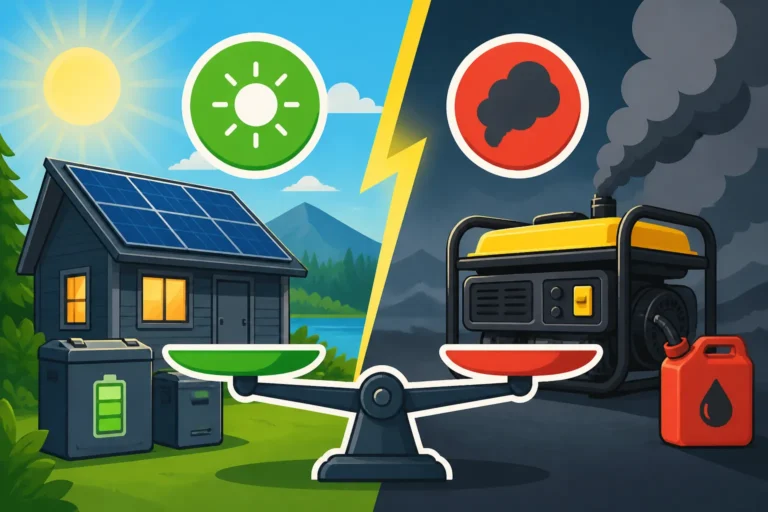
For remote cabins, workshops, or even homes, a common alternative to solar is relying solely on a gasoline or diesel generator. Generators offer instant power on demand and a relatively low upfront cost compared to a full solar setup. You can pick one up from an Amazon basics selection or a local hardware store for a few hundred to a few thousand dollars, and poof, you have electricity. This makes them attractive for intermittent use or as an emergency backup.
The downside, however, is the ongoing operational cost. Generators require fuel, which can be expensive and needs to be transported and stored. They also require regular maintenance, oil changes, and eventually, parts replacement or even full replacement. They're noisy, produce emissions, and contribute to air pollution. Over the long term, the Off-Grid Solar vs Generator Fuel Cost comparison heavily favors solar. While solar has a higher initial investment, its "fuel" (sunlight) is free. Over a system's lifespan, the cumulative cost of running a generator often far exceeds the cost of a solar system, making solar the more economical and certainly more environmentally friendly choice for consistent power needs.
Off-Grid Solar vs. Utility Extension Costs
As touched upon earlier, this is where off-grid solar often presents an undeniable financial win. If you're building a new home or cabin on a property that's more than a quarter-mile or so from existing utility lines, the cost to bring in grid power can be astronomical. Utility companies typically charge per foot or per mile for trenching, pole installation, and transformer setup. These costs can quickly escalate to $20,000, $50,000, or even over $100,000 for remote locations.
In such scenarios, a comprehensive off-grid solar system, even a large one designed for a whole house, can be significantly more affordable than the utility company's quote to connect you to the grid. You get energy independence, no monthly bills, and often a more resilient power supply for a fraction of the price of extending power lines. For anyone considering building in a rural or remote area, getting a quote for utility extension should be one of your first steps, as it will very quickly clarify the cost-effectiveness of off-grid solar. It's often the deciding factor that makes off-grid solar not just "worth it," but the overwhelmingly superior choice.
Strategies to Make Off-Grid Solar More Affordable
The upfront cost can feel daunting, but there are smart ways to approach an off-grid solar project that can significantly reduce the financial burden and make it a more achievable goal. It's not about cutting corners, but rather about strategic planning and leveraging available resources.
Phased Installation and Budgeting
You don't have to build your dream off-grid system all at once. For many, a phased approach is the most realistic and financially sensible way to go. Start with the essentials: enough panels and battery storage to power your most critical loads (lights, refrigeration, water pump, basic electronics). This might mean beginning with a smaller system, perhaps focused on DC-only appliances, or a modest AC setup. As your budget allows, you can then add more solar panels to increase generation capacity, expand your battery bank for longer autonomy, or upgrade your inverter to handle more significant loads.
This approach requires careful planning to ensure compatibility between components as you grow. For instance, if you start with a 12V system but foresee needing a 48V system for future expansion, it might be more cost-effective in the long run to plan for a 48V compatible charge controller and inverter from the outset, even if you only fill it with 12V components initially. Budgeting wisely involves setting realistic financial goals for each phase and continually monitoring your actual energy usage to inform future upgrades. This allows you to spread the substantial initial Off-Grid Solar Cost by System Size over time, making it much more manageable.
Utilizing Government Incentives and Tax Credits
While off-grid systems historically faced more challenges accessing incentives than grid-tied ones, the landscape is improving, and it's always worth checking what's available. The federal solar tax credit, officially known as the Investment Tax Credit (ITC), has been a significant boon for solar adoption. While originally designed primarily for grid-tied systems, certain off-grid components can qualify if they meet specific criteria, especially if the system is part of a dwelling. It's not a direct payment, but a credit that reduces the amount of federal income tax you owe. Staying informed about the 2026 Solar Tax Credit and Off-Grid Systems is crucial, as policies can change.
Beyond federal incentives, many states and even some local municipalities offer their own rebates, grants, or property tax exemptions for renewable energy installations. These can sometimes apply to off-grid systems, particularly for rural development or energy independence initiatives. Researching state-specific programs in your area is vital. Websites like DSIRE (Database of State Incentives for Renewables & Efficiency) are excellent resources. While incentives won't cover the entire cost, they can significantly reduce your net investment, making off-grid solar a much more attractive proposition financially.
Smart Equipment Choices and DIY Contributions
Making savvy choices when it comes to equipment can have a huge impact on your overall cost. For example, while top-tier brands like Victron or Sol-Ark offer incredible performance and features, there are also many reliable mid-range options that provide excellent value for money. Do your research on brands and compare specifications. Sometimes, a slightly less efficient panel at a much lower price point, when you have ample space, can be more cost-effective than investing in the absolute highest efficiency panel. For batteries, while LiFePO4 offers longevity, a well-maintained AGM battery bank can be a more budget-friendly starting point for smaller systems.
Embracing the DIY spirit for as much of the installation as you comfortably can is another powerful cost-saving strategy. Even if you're not wiring the entire system, performing tasks like panel mounting, running conduit, or building a battery enclosure yourself can shave thousands off professional labor costs. Many people find satisfaction in learning these skills and taking ownership of their power system. Platforms like YouTube and online forums are brimming with tutorials and advice. Just remember to prioritize safety and consult with a qualified electrician for critical wiring aspects if you're unsure. Taking advantage of sales or purchasing components online through retailers like Amazon can also yield significant savings.
Calculating Your Off-Grid Solar Payback Period
When asking if off-grid solar is "worth the cost," one of the most practical ways to evaluate it is by calculating its payback period. This metric tells you how long it will take for the savings from your solar system to offset its initial investment. It provides a concrete number to help you understand the financial return.
Simple Payback Calculation Method
The simplest way to calculate the payback period is to divide your total initial investment by your annual savings.
Formula: Payback Period (Years) = Total System Cost / Annual Savings
Let's break this down with an example. Suppose your total off-grid solar system, including components and installation, costs $25,000. To determine your annual savings, you'd look at what you would have spent on electricity from the grid (or on generator fuel if you were using one). If your average monthly utility bill was $200, your annual savings would be $200 x 12 = $2,400.
Using the formula: $25,000 / $2,400 = 10.42 years.
This means that in just over ten years, your off-grid solar system would have "paid for itself" through the money you saved on electricity. After that point, all the power you generate is essentially free, increasing your financial net worth year after year. For remote properties where the alternative is a $50,000 grid extension, the "savings" in avoiding that cost make the payback period almost immediate from that perspective. For a deeper understanding, our article on Off-Grid Solar Payback Period Explained offers more context.
Considerations Beyond Simple Payback
While the simple payback calculation is a great starting point, it doesn't tell the whole story. Several other factors influence the real financial return and overall worth of your system:
- Inflation and Rising Energy Costs: The simple payback calculation uses today's energy prices. However, utility rates are likely to increase over time. This means your annual savings will actually grow year after year, effectively shortening your true payback period. Factor in an average annual utility rate increase (historically 2-5% per year) for a more accurate long-term projection.
- Maintenance and Replacement Costs: Your system isn't entirely maintenance-free. Batteries will eventually need to be replaced, inverters might fail, and panels might need occasional cleaning. Factor in a small annual amount for maintenance and a larger lump sum for battery replacement (e.g., every 10-15 years for LiFePO4, or 3-7 years for lead-acid). These ongoing costs extend the payback slightly. Our guide on Off-Grid Solar Maintenance Costs provides more detail.
- System Lifespan: Solar panels typically come with 25-year performance warranties, and quality inverters often last 10-15 years. LiFePO4 batteries can last 10-20 years. This means your system will likely continue to produce free electricity for many years after its initial payback period, providing pure savings.
- Property Value Increase: As mentioned earlier, the added value to your property from a robust off-grid system isn't easily quantifiable in a payback calculation but is a significant financial benefit upon sale.
- Incentives: Any tax credits or rebates you receive effectively lower your "Total System Cost," directly shortening your payback period.
Considering these factors paints a more nuanced, and often more optimistic, picture of the long-term financial worth of off-grid solar. It's an investment that pays dividends not just in energy, but in financial security and independence.
Real-World Scenarios: When Off-Grid Solar Truly Shines (or doesn't)
The "worth" of off-grid solar is highly context-dependent. What's a phenomenal investment for one application might be overkill or impractical for another. Let's look at some common scenarios to illustrate when off-grid solar really makes sense and when other options might be better.
Remote Cabins and Homesteads
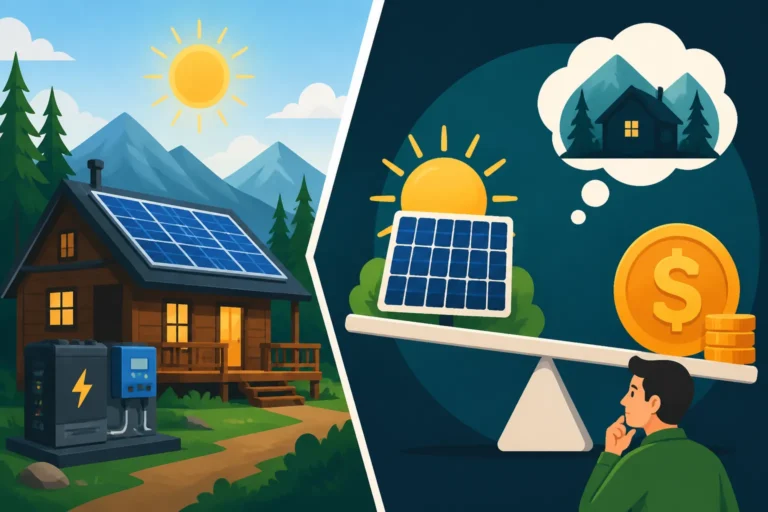
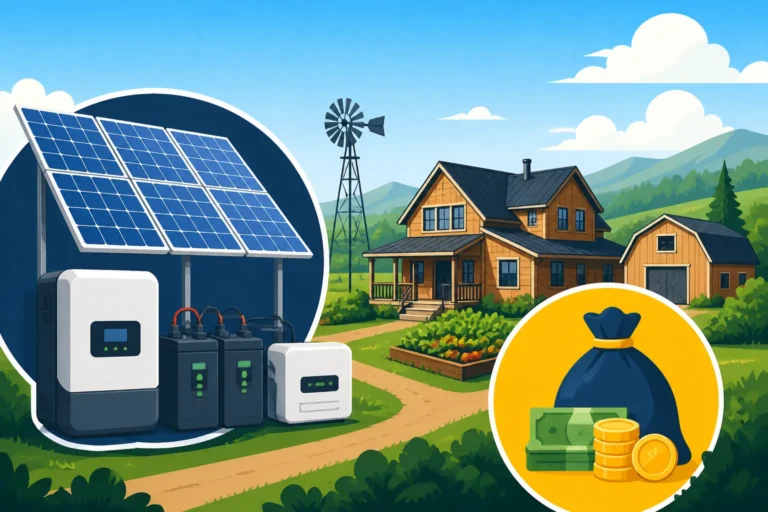
This is arguably where off-grid solar shines brightest. For a hunting cabin nestled deep in the woods or a full-blown homestead aiming for self-sufficiency miles from the nearest power pole, off-grid solar isn't just "worth it" – it's often the only economically sensible choice. The alternative, extending utility lines, can cost tens of thousands, if not hundreds of thousands, of dollars. In these cases, even a substantial off-grid system for a cabin can be a fraction of that cost, offering immediate and significant savings.
For a cabin, a system designed to run basic lights, a small refrigerator, and some charging ports might cost anywhere from $5,000 to $15,000. If you wanted to power a full homestead with a well pump, washing machine, and other modern conveniences, you might be looking at $20,000 to $50,000 or more. But compared to the cost of trenching power lines for miles, these figures are often a steal. Plus, the peace of mind that comes with knowing your remote retreat has its own reliable power source, free from grid outages, is invaluable. Our guide on Cost to Power a Cabin with Solar provides a deeper look into this specific application.
RVs, Vans, and Mobile Living
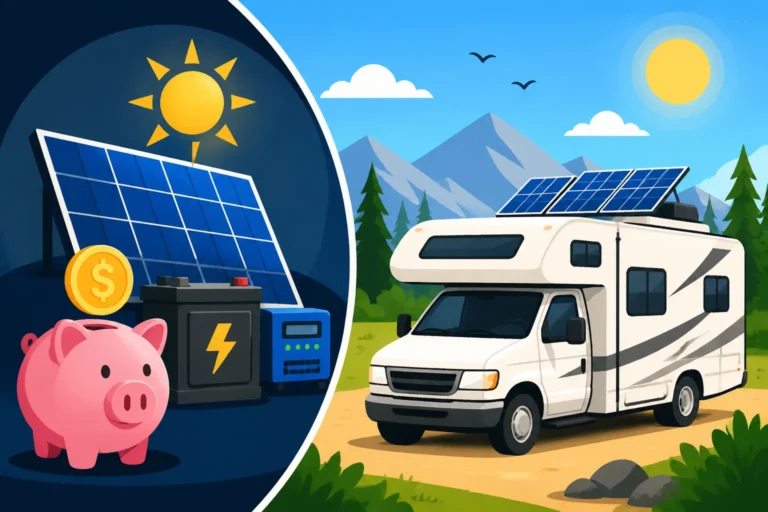
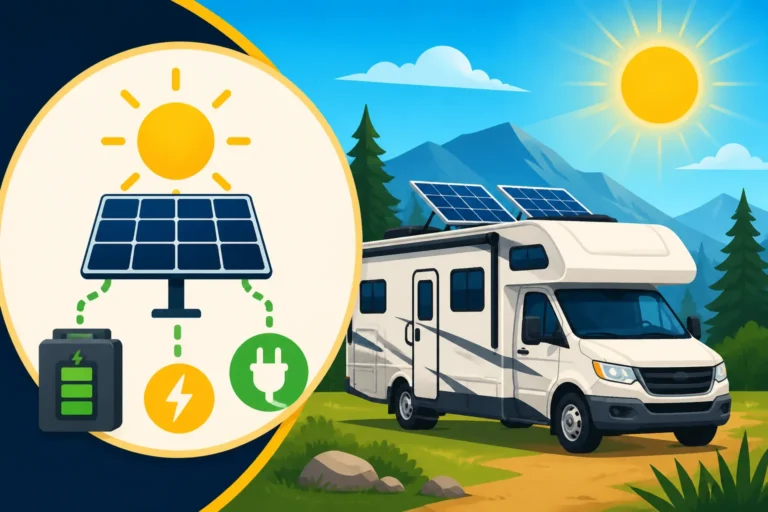
For the nomadic lifestyle of RVers, van lifers, and campers, off-grid solar is almost a necessity for comfortable living. While small portable generators can provide power, they are noisy, smelly, and require constant refueling. A well-designed solar system allows for silent, clean power generation, letting you truly disconnect and enjoy nature without disturbing your surroundings. Whether it's running a refrigerator, charging laptops, or powering essential lights, solar provides the freedom to boondock for extended periods without needing shore power hookups.
The cost for RV or van solar systems varies widely based on needs. A basic setup for charging phones and lights might be $1,000-$3,000, often utilizing flexible panels and a portable power station like a Jackery Explorer series unit. For those wanting to run an RV air conditioner or a full electric kitchen, systems can range from $5,000 to $15,000, featuring multiple rigid panels, larger battery banks, and powerful inverters. While the upfront cost can be a factor, the enhanced freedom, reduced reliance on campgrounds, and elimination of generator fuel costs make it incredibly "worth it" for dedicated full-time or frequent mobile dwellers. You can dive deeper into this topic with our piece on Off-Grid Solar Cost for an RV.
Backup Power for Grid-Tied Homes
While typically grid-tied solar offers battery backup for grid outages, some homeowners want true off-grid capabilities for emergencies without fully disconnecting from the grid. This might involve a smaller, dedicated off-grid system that operates independently, or a robust solar generator. For instance, someone living in an area prone to hurricanes in Florida might install a small off-grid system purely for emergency use to power critical loads like a refrigerator, lights, and a medical device. This system wouldn't interact with the grid at all, offering complete isolation.
The "worth" here isn't about daily cost savings, but about resilience and preparedness. The cost would typically be lower than a full whole-house off-grid system, perhaps $5,000 to $15,000, depending on the number of critical loads you wish to power and for how long. The primary return on investment in this scenario is peace of mind, knowing that you have a reliable power source when the grid inevitably goes down. This is especially valuable in areas with frequent or prolonged power outages where the cost of spoiled food, lost productivity, or critical medical device failure far outweighs the investment in backup power.
Off-Grid Solar Worth: A Decision Table
To summarize the various considerations, here's a table to help you weigh the factors when deciding if off-grid solar is worth it for your specific situation:
| Factor | Off-Grid Solar is Most Worth It When… | Off-Grid Solar is Less Worth It When… |
|---|---|---|
| Grid Access | No grid access or extremely high utility extension costs. | Grid access is readily available and inexpensive. |
| Energy Goals | Absolute energy independence, blackout protection, self-sufficiency. | Primary goal is maximum financial return on investment with grid reliance. |
| Location | Remote cabin, homestead, RV, van life, boat; areas with unreliable grid. | Urban/suburban setting with stable, reliable grid power. |
| Consumption | Mindful, efficient energy users; willing to adapt habits. | High, unchecked energy consumption without willingness to conserve. |
| Budget | Sufficient upfront capital or ability to phase installation. | Very tight budget, prioritizing lowest possible upfront cost. |
| Environmental | Strong desire to reduce carbon footprint and live sustainably. | Environmental impact is not a primary concern. |
| Skill Level | Willingness to DIY components or learn system management. | Prefer a completely hands-off, "set it and forget it" utility solution. |
| Long-Term View | Focus on long-term savings, asset value, and peace of mind over decades. | Focus solely on immediate, short-term financial returns and quick payback. |
Disclaimer
Please note that the information provided in this guide is for general informational purposes only and does not constitute professional financial, electrical, or engineering advice. Off-grid solar system costs and benefits can vary significantly based on your specific location, energy consumption, equipment choices, and local regulations. Always consult with qualified professionals, such as a certified solar installer, electrician, and a financial advisor, before making any decisions regarding your off-grid solar project. Tax incentives and rebates are subject to change and depend on individual eligibility.