Off-Grid Solar Design for Full-Time Living
Transitioning to full-time off-grid living is an exciting dream, but the reality of ensuring reliable power, day in and day out, can feel overwhelming. Many folks dive in only to find their system can't keep up with daily demands, leading to frustration, cold showers, and dark evenings. This comprehensive guide will walk you through the essential steps to design an off-grid solar system specifically tailored for the continuous, robust power needs of a permanent residence, helping you avoid common pitfalls and achieve true energy independence.
Understanding Your Energy Footprint for Full-Time Living
One of the biggest mistakes people make when dreaming of off-grid life is underestimating their daily power needs. When you're used to the limitless energy of the grid, it's easy to forget just how much electricity a modern home consumes. For full-time off-grid living, you're not just powering a few lights and a phone charger; you're looking at refrigerators, well pumps, water heaters, perhaps even air conditioning, all day, every day. Getting this initial assessment wrong means you'll either spend too much on an oversized system or, more commonly, find yourself constantly running out of juice.
The Daily Load Analysis Deep Dive
Before you even think about buying solar panels or batteries, you need to become an energy detective and perform a detailed load analysis. This isn't just a quick guess; it's a meticulous accounting of every single electrical device you plan to use, how many watts it draws, and for how long each day. Think about your routine: what appliances turn on in the morning? What runs continuously? What are your evening entertainment habits? A refrigerator, for example, doesn't run constantly but cycles on and off throughout the day. A well pump might only run for short bursts, but its starting wattage (surge) can be significantly higher than its running wattage. This detailed analysis will form the backbone of your entire system design. Without it, you're just throwing money at components hoping they'll work.
To accurately determine your daily energy usage, list every appliance and electronic device you use. For each item, note its wattage (often found on a label on the appliance itself or in its manual) and estimate how many hours per day it will be in operation. Don't forget those phantom loads, like phone chargers plugged in even when not charging, or devices in standby mode. These small draws add up quickly over 24 hours. For items with motors, like refrigerators, pumps, or power tools, remember to account for both their running watts and their much higher starting (surge) watts. This surge capacity is critical when you How to Size an Off-Grid Inverter. You can also use a watt-meter, readily available online, to plug in your devices and get real-time consumption data, which is far more accurate than relying on manufacturer specs alone.
Accounting for Seasonal Variations and Lifestyle Needs
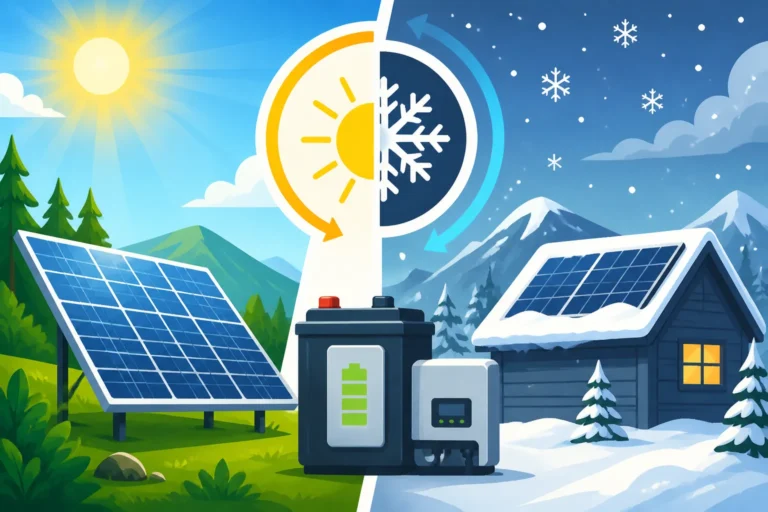
Off-grid living isn't static; your energy needs and generation capabilities will fluctuate throughout the year. Winter brings shorter daylight hours and often more demand for heating (if you're using electric heaters or blowers), while summer might mean increased air conditioning use. Your system design needs to account for these seasonal peaks and troughs, especially for How Winter Affects Off-Grid Sizing. Many people design for their average usage but forget about the extremes, leading to power shortages during cloudy winter weeks or excessive generator use when the sun isn't shining its brightest.
Beyond seasonal changes, consider your specific lifestyle. Are you a minimalist who only needs basic lighting and a laptop, or do you run a home office with multiple monitors, a robust workshop, or large kitchen appliances? Do you host guests frequently, increasing hot water demand or device charging? Perhaps you're a night owl who uses more power after dark, demanding a larger battery bank. For example, if you plan to run a full-sized refrigerator and an electric well pump, your system will look vastly different than someone using a cooler and hauling water. Be realistic about your actual power consumption habits, not just your ideal ones. This thoughtful approach ensures your off-grid system truly supports your full-time life, rather than becoming a source of constant compromise and frustration. You can explore topics like Off-Grid Solar Design for Full-Time Living to understand more about designing for continuous power.
Sizing Your Solar Array for Continuous Power
Once you have a solid grasp of your energy consumption, the next step is to figure out how many solar panels you’ll need to generate enough electricity to meet that demand consistently. This is where the rubber meets the road, quite literally. An undersized array means your batteries will constantly be low, forcing you to rely on a generator. An oversized array, while providing ample power, can be an unnecessary upfront expense if not planned correctly. For full-time living, consistency and reliability are paramount.
Calculating Your Panel Needs Based on Peak Sun Hours
The number of solar panels you need isn't just about your total daily watt-hour consumption; it's also heavily influenced by the amount of usable sunlight your location receives throughout the year. This is where "peak sun hours" come into play. Peak sun hours refer to the equivalent number of hours per day when solar irradiance averages 1,000 watts per square meter. Most areas in the U.S. might see 4-6 peak sun hours on average, but this number changes dramatically with the seasons and your geographic location. A desert home in Arizona will have vastly different peak sun hours than a cabin in the Pacific Northwest, especially in winter. You need to calculate your solar panel wattage by dividing your total daily watt-hour needs by your lowest average daily peak sun hours, typically found in winter, and then add a buffer for efficiency losses and cloudy days. This ensures your system can keep up even during the less-than-ideal months.
For instance, if your load analysis determined you need 5,000 Wh per day, and your location experiences an average of 3 peak sun hours in December, you'd calculate: 5,000 Wh / 3 peak sun hours = 1,667 W. This means you'd need at least 1,667 watts of solar panels. But that's just the baseline. You also need to factor in various losses: panel temperature derating, inverter efficiency, wire losses, and dirt/shading. A common rule of thumb is to add a 20-30% buffer to your calculated solar array size to account for these factors and ensure robust performance, especially during challenging weather. So, our 1,667 W system would realistically need closer to 2,000-2,200 W of panels. Don't forget that different panel types can have varying efficiencies, so researching Best Off-Grid Solar Panels is a good idea. Brands like Renogy offer a wide range of monocrystalline panels known for their efficiency and durability, making them a popular choice for permanent installations.
Panel Placement and Optimizing for All Seasons
Where and how you place your solar panels can have a massive impact on their performance, particularly for a full-time residence where consistent power is key. South-facing (in the Northern Hemisphere) is generally ideal for maximizing year-round production, but the optimal tilt angle often changes with the seasons. For example, a steeper tilt angle in winter helps catch lower-angle sun, sheds snow more easily, and can be more effective than a flatter angle designed for summer. Many off-gridders opt for adjustable ground mounts or pole mounts that allow them to change the tilt angle manually a few times a year. This flexibility can significantly boost your power harvest during critical times.
Beyond orientation and tilt, you must meticulously plan for shading. Even a small shadow from a nearby tree branch or a chimney stack can drastically reduce the output of an entire string of panels if they are wired in series. Microinverters or optimizers, while adding complexity and cost, can mitigate shading issues by allowing each panel to operate independently. Alternatively, careful panel layout and tree trimming might be necessary. Think about future growth too – will new trees grow to cast shadows? Will you add an extension to your home that blocks the sun? Planning for these scenarios upfront will save you headaches and power deficits down the line. How to Plan Panel Placement and Angle is an excellent resource for deeper insights into optimizing your solar array's location.
Building a Robust Battery Bank for Uninterrupted Living
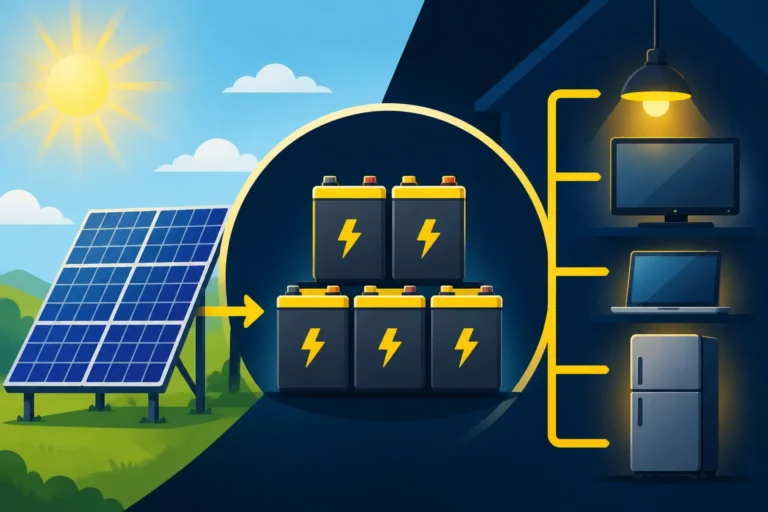
The battery bank is arguably the most critical component for full-time off-grid living. It's your energy reservoir, storing the power generated by your solar panels for use when the sun isn't shining. If your battery bank is too small, you'll constantly be running out of power, even with a perfectly sized solar array. For continuous living, you need a bank that can reliably carry your household through multiple days of low sun production without dipping below a healthy depth of discharge.
Determining Your Days of Autonomy
"Days of autonomy" refers to how many days your fully charged battery bank can power your home without any additional input from solar panels or a generator. For grid-tied backup systems, one or two days might suffice. But for full-time off-grid living, especially in regions prone to extended cloudy periods or heavy snowfall (which can cover panels), aiming for 3-5 days of autonomy is a much safer bet. This buffer provides peace of mind and significantly reduces reliance on a backup generator. To calculate your required battery capacity, you'll take your average daily watt-hour consumption, multiply it by your desired days of autonomy, and then divide by your battery's usable depth of discharge (DoD) and system voltage.
For example, if you need 5,000 Wh per day and want 4 days of autonomy, and you're using a 48V Lithium Iron Phosphate (LiFePO4) battery bank (which can typically be discharged to 80-90% DoD without significant damage), your calculation would look something like this: (5,000 Wh/day * 4 days) / 0.80 DoD = 25,000 Wh. To convert this to Amp-hours at 48V: 25,000 Wh / 48V = 520.8 Ah. So, you'd need a 48V battery bank with approximately 521 Ah of usable capacity. If you were using lead-acid batteries, which typically have a usable DoD of only 50%, you'd need roughly twice the Amp-hour capacity to achieve the same useful energy storage, making LiFePO4 vs Lead-Acid Battery Cost a crucial comparison.
Choosing the Right Battery Chemistry and Voltage
The market offers several battery chemistries, each with its pros and cons. For serious, full-time off-grid living, Lithium Iron Phosphate (LiFePO4) batteries have become the gold standard. They offer a much longer cycle life (how many times they can be charged and discharged), higher usable depth of discharge, faster charging rates, and are lighter and more compact than traditional lead-acid batteries. While their upfront cost is higher, their longevity and performance often make them more cost-effective over the system's lifetime. Popular brands like Battle Born Batteries or EG4 offer robust LiFePO4 options built for demanding applications.
Lead-acid batteries (Flooded, AGM, or Gel) are a more budget-friendly option initially, but they require more maintenance (especially flooded types), have a shorter lifespan, and can only be safely discharged to 50% of their capacity without risking damage. This means you need significantly more lead-acid capacity to get the same usable energy as LiFePO4, which often negates some of the initial cost savings. As for system voltage, 12V and 24V systems are common for smaller setups like RVs or tiny homes, but for full-time off-grid houses with higher power demands, 48V is generally recommended. A higher voltage reduces the current flow, which means you can use smaller, less expensive wiring, and it's more efficient for larger inverters and longer cable runs. For more information on this, check out 12V vs 24V vs 48V Which to Choose.
| Battery Type | Pros | Cons | Usable DoD | Cycle Life (approx.) | Best For |
|---|---|---|---|---|---|
| LiFePO4 | Long lifespan, high usable capacity, fast charging, lightweight, maintenance-free, stable voltage | High upfront cost, can struggle in extreme cold without heating | 80-100% | 3,000 – 10,000+ | Full-time off-grid homes, high-demand systems |
| AGM (Lead-Acid) | Lower upfront cost, sealed (maintenance-free), better cold tolerance than flooded, good for moderate cycling | Shorter lifespan than LiFePO4, lower usable capacity, heavier | 50-60% | 400 – 1,000 | Smaller cabins, RVs, backup power, budget-conscious |
| Flooded Lead-Acid | Lowest upfront cost, easily recycled, can be equalized to extend life | Requires regular maintenance (watering, ventilation), lowest usable capacity, fumes, heavier | 30-50% | 500 – 1,500 | Very budget-restricted, experienced users, shed/utility use |
Selecting the Right Inverter and Charge Controller
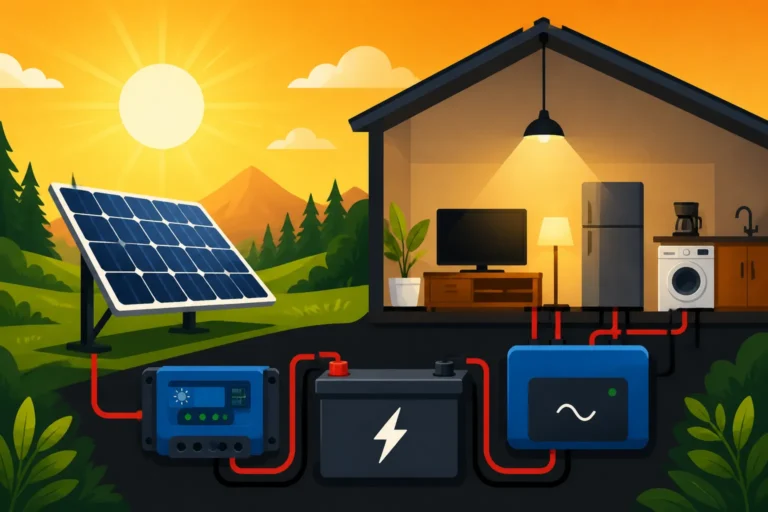
These two components are the brain and heart of your off-grid system, respectively. The charge controller manages the flow of power from your solar panels to your batteries, protecting them from overcharging, while the inverter converts the DC power stored in your batteries into the AC power that most of your household appliances use. Choosing the right ones is crucial for efficiency, safety, and the overall functionality of your full-time off-grid home.
Matching Inverter Size to Your Appliance Demands
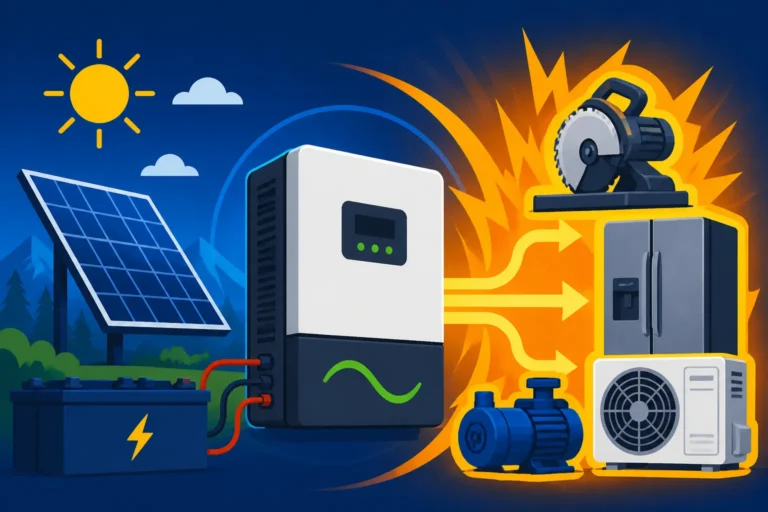
Your inverter's job is to convert the direct current (DC) from your battery bank into alternating current (AC) to power your everyday household appliances. It needs to be sized correctly to handle not only the continuous running wattage of all your simultaneously operating appliances but also the surge (starting) wattage of motor-driven appliances like refrigerators, well pumps, or power tools. If your inverter is too small, it will trip or fail when you try to run too many things at once, or when a motor-driven appliance kicks on. For full-time living, you need a pure sine wave inverter, as modified sine wave inverters can damage sensitive electronics and run motors inefficiently or noisily.
To determine the right inverter size, you'll look back at your load analysis. Sum the running wattage of all appliances you anticipate using at any single moment. Then, identify the appliance with the highest surge wattage (e.g., a well pump might surge to 4,000 watts for a split second, even if it only runs at 1,000 watts). Your inverter needs to have a continuous rating that can handle your total simultaneous running load and a surge rating that can handle that largest surge load. Many reputable brands like Victron Energy or Sol-Ark offer high-quality inverter/chargers that integrate both functions, simplifying your system and often providing advanced monitoring capabilities. For larger homes, a 5000W or even 8000W inverter might be necessary. You can dive deeper into this by reading about What Size Inverter to Run a Refrigerator or What Size Inverter to Run a Well Pump.
The Importance of MPPT Charge Controllers
The charge controller is the unsung hero that optimizes the charging of your batteries from your solar panels. For full-time off-grid living, you absolutely want an MPPT (Maximum Power Point Tracking) charge controller. While PWM (Pulse Width Modulation) controllers are cheaper, they are much less efficient, especially in varying light conditions or when panel voltage significantly differs from battery voltage. MPPT controllers constantly track the maximum power point of your solar array, extracting up to 30% more power from your panels compared to a PWM controller. This increased efficiency translates directly into more usable energy for your home, particularly valuable during those less-than-sunny periods.
An MPPT charge controller will automatically adjust its input voltage to match the optimal output from your solar panels, regardless of your battery voltage. This means you can run higher voltage solar arrays (e.g., 60V panels) to charge a lower voltage battery bank (e.g., 48V), reducing wire size requirements and energy losses over longer runs from your panels to your battery bank. Given that every watt-hour counts for full-time off-grid living, the efficiency gains from an MPPT controller are well worth the investment. Brands like Victron and Outback Power are known for their high-quality, robust MPPT controllers that provide excellent performance and advanced battery management features, vital for the longevity of your expensive battery bank. You can learn more about how to choose one in How to Choose an Off-Grid Charge Controller.
Wiring and Safety Considerations for Permanent Off-Grid Homes
Safety is paramount in any electrical system, but especially so in an off-grid setup where you are responsible for every aspect of the design and installation. Improper wiring can lead to fires, equipment damage, and serious personal injury. For a permanent off-grid home, adhering to electrical best practices and, where possible, local codes, is non-negotiable, even if permits aren't strictly required in your remote location.
Ensuring Proper Cable Sizing and Protection
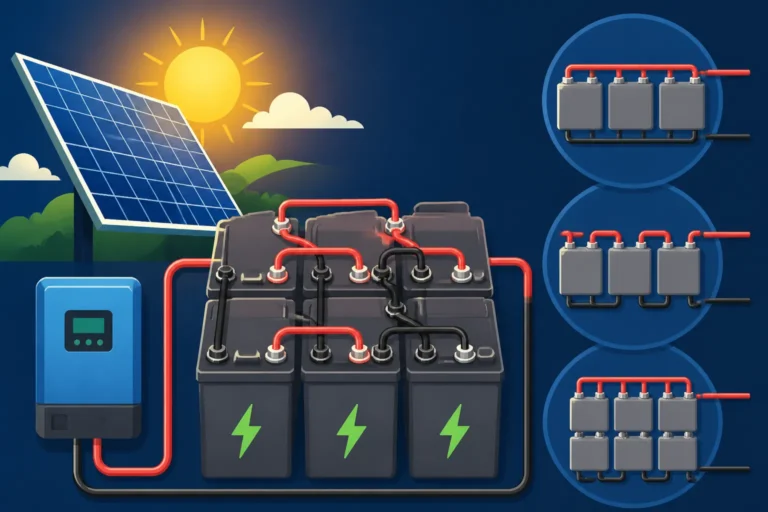
One of the most critical safety aspects is correctly sizing your DC and AC wiring. Undersized wires create resistance, which leads to voltage drop (power loss) and, more dangerously, heat. Excessive heat can melt insulation, cause shorts, and start fires. When sizing wires, you need to consider the current (amperage) that will flow through them, the voltage of the system, and the distance of the wire run. Longer runs or higher currents require thicker wires. Always err on the side of slightly oversized wire if you are in doubt. For example, the battery cables connecting your batteries to your inverter will carry very high currents and must be extremely thick, typically 2/0 or 4/0 AWG, and as short as possible.
Beyond sizing, all circuits must be protected with appropriate fuses or circuit breakers. Fuses protect equipment by breaking the circuit when current exceeds a safe limit, while breakers offer resettable protection. You'll need overcurrent protection on the solar panel side (before the charge controller), on the battery bank side (between the batteries and the inverter), and on the AC output side (from the inverter to your household loads). All connections should be secure, properly insulated, and housed in appropriate enclosures. This includes using UV-resistant conduit for outdoor wiring and junction boxes to protect splices from the elements and physical damage. A detailed guide on How to Size Wire and Cables can provide the specific calculations you'll need.
Grounding and Electrical Code Compliance
Even though you're off the grid, proper grounding is essential for safety. A grounding system provides a safe path for fault currents (like a lightning strike or a short circuit) to dissipate into the earth, preventing dangerous voltage buildups on electrical equipment and protecting you from electrocution. Your main electrical panel, inverter chassis, solar panel frames, and mounting racks should all be bonded together and connected to a ground rod (or multiple rods, depending on soil conditions and code requirements) driven into the earth.
While local electrical codes (like the National Electrical Code, or NEC) primarily apply to grid-tied installations and may not be legally enforceable for completely isolated off-grid systems, they represent a gold standard for electrical safety. Designing your off-grid system to meet NEC standards, even if you're not seeking a permit, is a highly recommended practice for full-time living. This means using approved components, proper wire types, robust enclosures, and clear labeling. Many resources, including online forums and books, provide comprehensive guidance on Off-Grid Solar System Design Basics and meeting these safety benchmarks. Remember, the goal isn't just to make electricity; it's to make safe electricity that will reliably power your home for years to come.
Planning for Expandability and Backup Solutions
No off-grid system is truly "set it and forget it." Your energy needs might grow over time, new efficient appliances might become available, or circumstances might change. Designing with future expansion in mind is a smart move that saves money and headaches down the road. Furthermore, even the most robust solar setup benefits from a reliable backup power source to cover extended periods of bad weather or unexpected equipment failures.
Designing for Future Growth and Appliance Additions
It's common for off-gridders to start with a modest system and then realize they want more power a few years down the line—perhaps for a new workshop, an electric vehicle charger, or simply to run a few more comforts. Trying to retrofit an entirely new system onto an existing, rigid design can be cumbersome and expensive. Instead, think modularly from the start. Install a charge controller that can handle more solar input than you currently have. Opt for an inverter that has some headroom above your initial needs. Build a battery enclosure that can accommodate additional batteries. Run slightly oversized conduits for your wiring, allowing for future cable additions without tearing walls apart.
For example, if you initially plan for 2000W of solar panels, consider a charge controller that can handle 3000W or 4000W. If your current inverter is 5000W, choose one that has robust monitoring capabilities, like those offered by Sol-Ark, which also easily allows for parallel operation with another inverter should you need to double your AC output in the future. Even selecting a larger main breaker panel for your AC loads can give you extra slots for future circuits. Thinking about How to Design an Expandable System upfront allows you to grow your off-grid power infrastructure incrementally as your needs evolve, preventing costly overhauls and making the transition to more comforts seamless.
Integrating a Reliable Backup Generator
While solar panels and batteries form the core of your off-grid system, a reliable backup generator is almost indispensable for full-time living, especially in climates with unpredictable weather. Generators provide a vital safety net during prolonged cloudy spells, heavy snow, or if there's a problem with your solar components. They can quickly recharge your batteries when solar generation is insufficient, ensuring you maintain essential power for critical loads like refrigeration or well pumps. You can also learn about Off-Grid Solar Generator Backup Cost to understand the financial implications.
When choosing a generator, consider its fuel type (propane, diesel, gasoline), size (wattage), and whether it has an electric start and an automatic transfer switch. Many modern inverters, especially advanced inverter/chargers, are designed to work seamlessly with generators. They can automatically start the generator when battery voltage drops below a certain threshold and shut it off once the batteries are topped up. This automated process minimizes manual intervention and ensures uninterrupted power. Maintaining your generator with regular oil changes and fuel stabilization is also crucial, as it’s a critical component that you’ll rely on when your primary solar power is unable to meet demand. A well-integrated generator isn't a sign of a failed solar system; it's a testament to a well-planned, resilient off-grid home designed for true long-term independence.
Disclaimer
The information provided in this article is for general guidance and informational purposes only, and does not constitute professional electrical or solar engineering advice. Off-grid solar system design and installation can be complex and involve significant electrical hazards. Always consult with qualified and licensed professionals for specific design, installation, and safety requirements applicable to your location and unique situation. Improper installation can lead to property damage, injury, or death.