What Size Inverter to Run A Cpap Machine
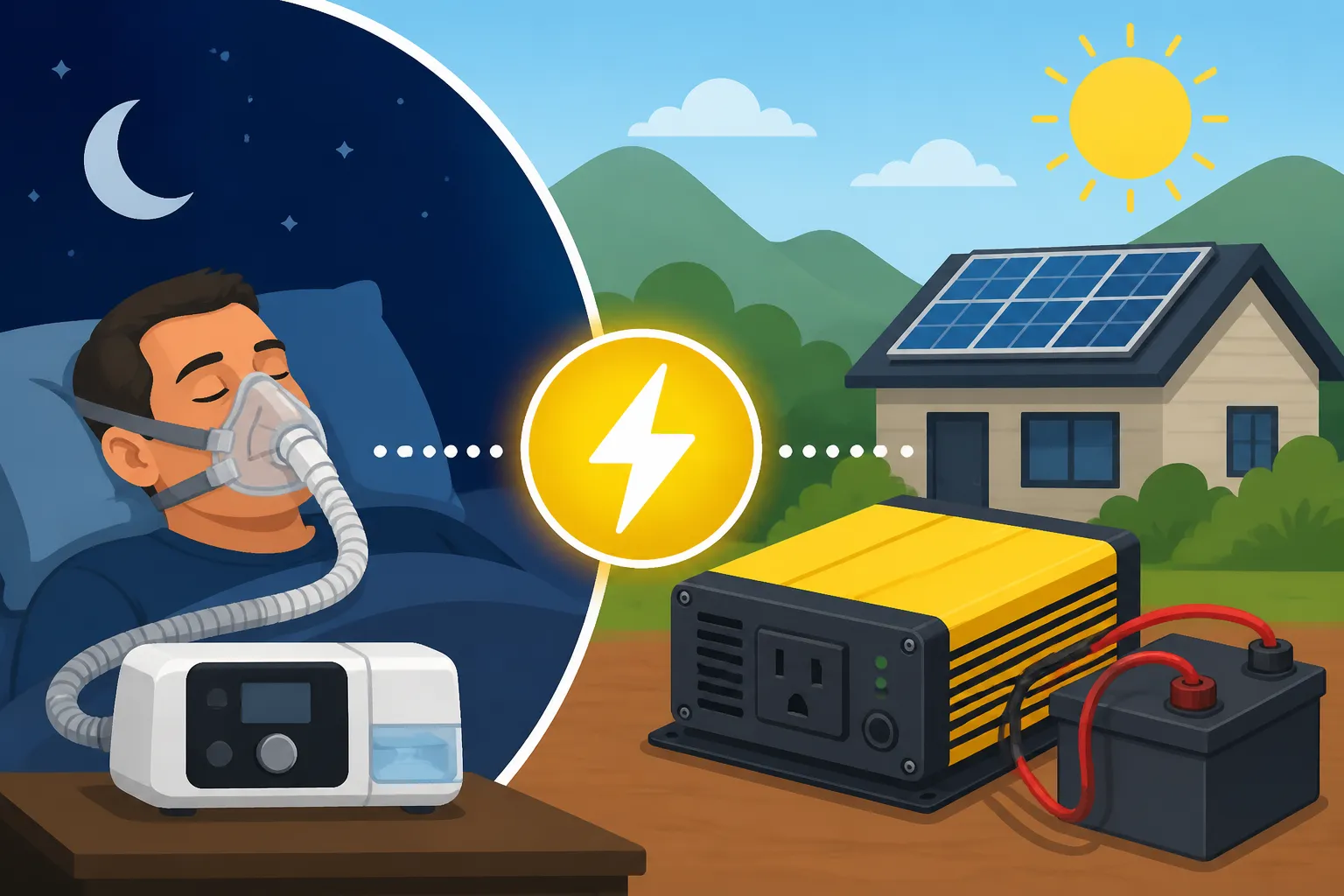
One of the most common anxieties for anyone considering going off-grid, especially those with medical needs, is how to reliably power essential devices like a CPAP machine. The thought of losing power during the night and having your sleep apnea treatment interrupted is a genuine concern, but with the right planning, you can absolutely integrate your CPAP into a dependable off-grid solar system. This guide will walk you through everything you need to know to size the perfect inverter to keep your CPAP running smoothly, night after night.
Understanding Your CPAP Machine's Power Demands
Before you can even think about what size inverter you need, you first have to get intimately familiar with your CPAP machine's specific power requirements. This isn't just about plugging it in; it's about understanding how much electricity it consumes and in what form, which can vary significantly between models and usage habits.
Deciphering Wattage: Running Power and Peak Loads
Most CPAP machines have a relatively low continuous power draw, often somewhere between 30 to 60 watts. However, this number can climb, especially if you use features like a heated humidifier or a heated hose. These components can easily double or even triple your CPAP's power consumption. When you're looking at the back of your machine or its power brick, you'll usually see a label indicating its input voltage (typically 100-240V AC for the brick, or 12V/24V DC for the machine itself) and its maximum current draw in amps or wattage.
It's critical to distinguish between running wattage and any potential peak or surge wattage. Unlike appliances with motors, like refrigerators or well pumps, CPAP machines generally don't have large startup surges that exceed their running wattage significantly. What can create a higher load, as mentioned, is the heater in the humidifier or hose. If you only run your CPAP without these features, your power needs will be much lower. If you rely on them for comfort, you need to account for their added load when sizing your inverter. For instance, a basic CPAP might draw 30W, but with a heated humidifier, it could easily jump to 80-100W. This continuous draw, over many hours, is what determines the necessary battery capacity and, subsequently, the inverter size needed to convert that battery power.
DC Versus AC Power for CPAP Machines
This is a crucial distinction that many people overlook. While you typically plug your CPAP machine into a standard wall outlet (AC power) in a grid-tied home, most modern CPAP machines actually operate internally on DC (direct current) power, often 12V or 24V. The large power brick that comes with your CPAP is an AC-to-DC converter. It takes the 120V AC from your wall and transforms it into the lower DC voltage your machine needs.
Why does this matter for off-grid living? Every time you convert power (AC to DC, or DC to AC), you lose a little bit of energy due to inefficiency. If your off-grid system primarily stores power in 12V, 24V, or 48V DC batteries, and your CPAP machine could run directly on 12V or 24V DC, you might be able to bypass the inverter entirely. Many CPAP manufacturers offer dedicated 12V or 24V DC power cords or adapters that plug directly into a cigarette lighter-style outlet or a dedicated DC power port on your battery bank or distribution panel. This is often the most efficient way to power a CPAP off-grid, as it eliminates the energy loss associated with using an inverter to convert DC battery power to AC, only for your CPAP's power brick to convert it back to DC. This efficiency gain can significantly extend your battery life, which is a big win when you're relying on finite stored energy. You can learn more about how to calculate your overall daily energy usage when planning your system.
How to Choose the Right Inverter for Your CPAP Machine
If running your CPAP directly on DC isn't an option for your specific machine, or if you prefer the simplicity of using its standard AC power brick, then an inverter becomes a critical component of your off-grid setup. Choosing the right one ensures not only power but also the longevity of your sensitive medical equipment.
The Absolute Necessity of a Pure Sine Wave Inverter
This point cannot be stressed enough: always use a pure sine wave inverter for sensitive electronics like CPAP machines. There are two main types of inverters on the market: modified sine wave (also sometimes called "modified square wave" or "quasi sine wave") and pure sine wave.
- Modified Sine Wave Inverters: These are cheaper and might seem appealing for a tight budget. However, they produce a "choppy" approximation of AC power. While some older, less sensitive devices might tolerate this, modern electronics, especially medical equipment like CPAP machines, can be damaged by it. The irregular waveform can cause internal components to overheat, run less efficiently, or even fail prematurely. It can also lead to audible buzzing from the device and may prevent it from operating correctly.
- Pure Sine Wave Inverters: These inverters replicate the smooth, consistent waveform of the AC power you get from the utility grid. This is what your CPAP machine is designed to run on. A pure sine wave inverter ensures that your CPAP operates as intended, without any risk of damage, buzzing, or reduced lifespan. Don't compromise here; the cost savings of a modified sine wave inverter are not worth the potential risk to your health or your expensive CPAP machine. Many reliable brands like Renogy offer excellent pure sine wave inverters suitable for off-grid use.
Calculating the Bare Minimum Inverter Size
Once you've committed to a pure sine wave inverter, the next step is determining its wattage rating. This is relatively straightforward for a CPAP machine.
- Identify Maximum Wattage: Look at the power brick of your CPAP machine. It will usually state the maximum power draw in watts (e.g., "Input: 100-240V AC, 1.5A," or "Output: 24V DC, 3.75A, 90W max"). If it only gives you amps, multiply the voltage by the amps to get watts (e.g., 120V * 1.5A = 180W). Always take the maximum wattage, especially if you use features like a humidifier.
- Add a Buffer: It's always a good idea to add a buffer to your maximum wattage. This accounts for inverter inefficiencies, small variations in power draw, and gives you a bit of headroom. A 10-20% buffer is usually sufficient. So, if your CPAP draws 90W, add 20% (18W) for a total of 108W.
- Consider Other Loads (if any): Will anything else be plugged into this inverter simultaneously? Perhaps a phone charger or a small light? If so, add those wattages to your total. For instance, if you also want to charge a 10W phone, your total would be 108W + 10W = 118W.
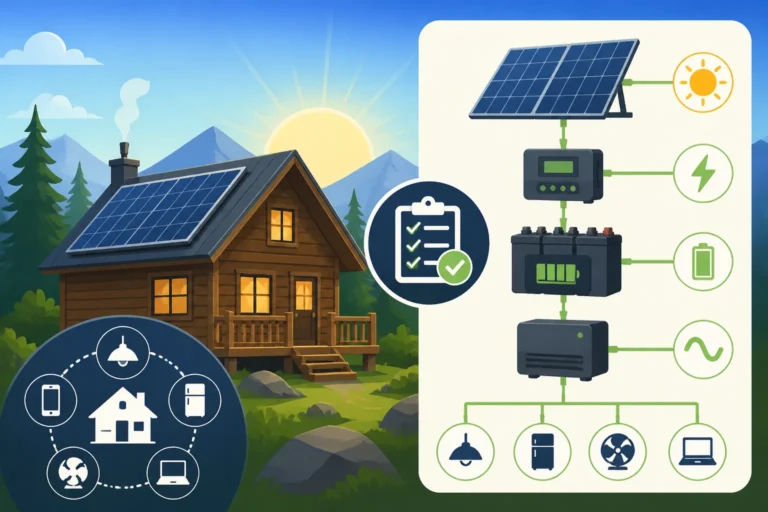
- Choose the Next Size Up: Inverters typically come in standard sizes (e.g., 150W, 300W, 500W, 1000W). Based on your buffered total, choose an inverter that comfortably exceeds that number. For our 118W example, a 150W or 200W pure sine wave inverter would be more than adequate. You don't need a massive inverter to run a CPAP machine unless you plan to power many other larger appliances through that same inverter at the same time. Remember that the inverter is just one piece of your overall Off-Grid Solar System Components Explained.
| CPAP Usage Scenario | Estimated Max Wattage (AC) | Recommended Inverter Size (Pure Sine Wave) |
|---|---|---|
| Basic CPAP (no heat) | 30-50W | 150W |
| CPAP with Humidifier | 60-100W | 200W-300W |
| CPAP with Humidifier & Heated Hose | 80-150W | 300W-500W |
| CPAP + Small Personal Electronics | 100-200W | 300W-500W |
Note: These are general estimates. Always check your specific CPAP machine's power brick for precise wattage or amperage details.
Factors Beyond Watts: Ensuring Reliability for Your CPAP
While getting the right size and type of inverter is critical, it's just one part of the equation for truly reliable off-grid CPAP power. Your inverter draws power from your battery bank, and your battery bank needs to be adequately sized and charged by your solar array.
Battery Bank Capacity: More Than Just the Inverter
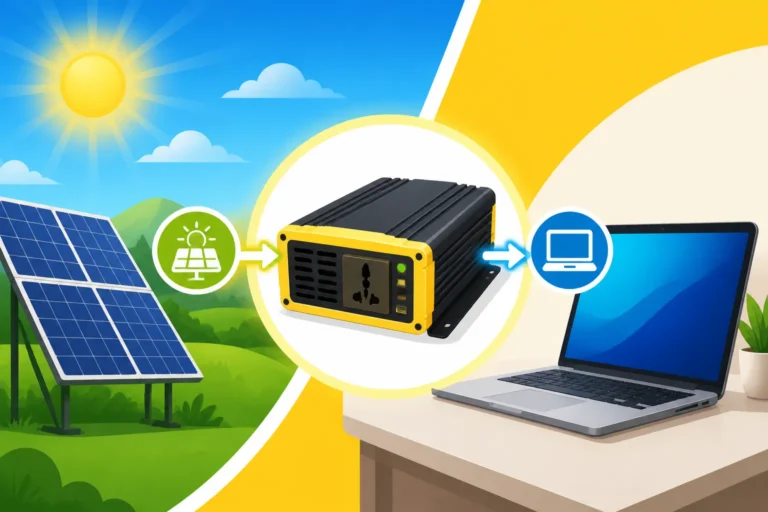
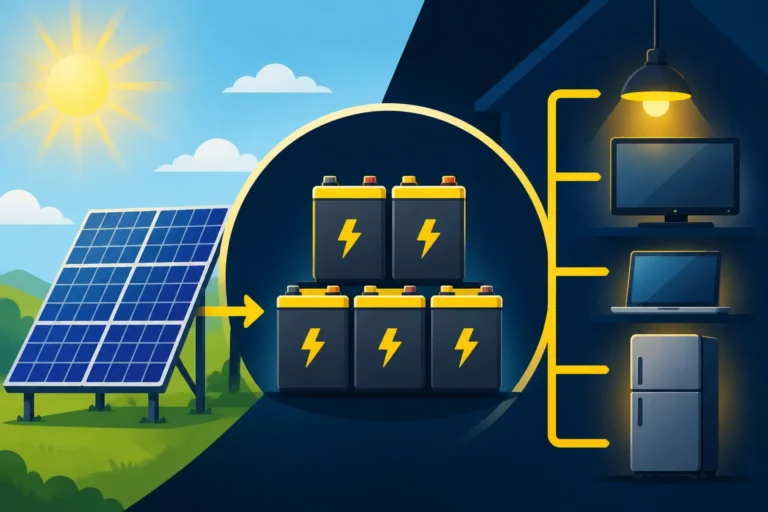
An inverter's job is to convert DC power from your batteries into AC power for your appliances. It doesn't create power; it just transforms it. Therefore, the battery bank behind your inverter is arguably even more important for ensuring continuous CPAP operation. Even a perfectly sized inverter is useless if your batteries run dry.
To figure out your battery needs for a CPAP, you need to know its hourly wattage (which we just calculated) and how many hours you use it per night. If your CPAP draws 90 watts for 8 hours, that's 720 Watt-hours (Wh) per night. Now, consider how many nights you want to be able to run it without any sun (your "days of autonomy"). For critical medical devices, aiming for at least 2-3 days of autonomy is wise, especially in cloudy regions. So, 720 Wh/night * 3 nights = 2160 Wh. You'll also need to factor in inverter efficiency losses (typically 10-15%) and the usable capacity of your batteries. For example, lead-acid batteries should only be discharged to 50%, while LiFePO4 batteries can go much lower. These factors can significantly increase the required raw capacity of your battery bank.
Neglecting to properly size your battery bank is a common mistake. Imagine having a powerful 1000W inverter for your 100W CPAP, but only a small 50Ah 12V battery. That battery (600Wh total, maybe 300Wh usable for lead-acid) won't even power your CPAP for one full night! Understanding How Batteries Drive Off-Grid Solar Cost and how to calculate your overall battery capacity are essential steps.
System Voltage and Efficiency Considerations
The voltage of your overall off-grid solar system (12V, 24V, or 48V) also plays a role in inverter selection and efficiency.
- 12V Systems: Common for smaller setups, RVs, or van life. A 12V inverter is readily available and often works well for CPAP machines. However, for higher wattages, 12V systems require thicker wires to carry the same power, which can be more expensive and lead to more voltage drop over longer distances.
- 24V or 48V Systems: These are more efficient for larger power needs. Higher voltage systems draw less current for the same wattage, allowing for thinner wires and less energy loss. If you're building a larger off-grid home system, a 24V or 48V system is usually recommended. You'd then need an inverter designed for that specific system voltage. While your CPAP still needs 120V AC (if using the power brick), the inverter itself needs to be compatible with your battery bank's voltage.
Inverter efficiency is another factor. Most good quality pure sine wave inverters are 85-95% efficient. This means that if your CPAP is drawing 100W AC, the inverter might be pulling 105-118W DC from your battery bank. This is why factoring in a buffer is always a good idea. Looking for an inverter with high peak efficiency ratings from reputable brands like Victron or Outback Power, which are known for their quality, can make a difference over the long haul.
Practical Tips for Integrating Your CPAP into an Off-Grid System
Beyond the technical specs, there are real-world considerations and strategies that can make your off-grid CPAP experience seamless and worry-free.
Dedicated CPAP Power Solutions and Adapters
As we touched on earlier, bypassing the inverter for your CPAP machine is often the most efficient approach.
- 12V DC Converters: Many CPAP manufacturers (like ResMed or Philips Respironics) offer official 12V or 24V DC power converters specifically designed for their machines. These adapters plug directly into a DC "cigarette lighter" style outlet or a fused 12V/24V power port from your battery bank. This eliminates the conversion loss of going from DC battery to AC inverter, and then AC back to DC via your CPAP's power brick. You might be surprised how much energy you save over a night, which directly translates to less solar panel charging needed or longer battery runtime. You can often find these specialized adapters on sites like Amazon or directly from medical supply companies.
- Portable Power Stations: For those just starting out or with smaller power needs, a dedicated portable power station (sometimes called a solar generator) can be an excellent, all-in-one solution for CPAP use. Brands like EcoFlow or Bluetti offer models with built-in LiFePO4 batteries, pure sine wave inverters, and multiple charging options (solar, car, AC wall outlet). They are incredibly user-friendly; you just charge it up, plug in your CPAP, and you're good to go. This can be a great backup solution even if you have a larger system, providing an extra layer of security. This is also a good option if you're looking for Off-Grid Solar Cost for a Rv or need a portable solution.
Redundancy, Monitoring, and Maintenance
For a critical device like a CPAP, having backup plans and good monitoring is paramount.
- Battery Monitoring: Invest in a good battery monitor. A shunt-based battery monitor will give you precise information on your battery's state of charge, how much power is going in (from solar) and out (to your inverter and CPAP), and an estimate of remaining runtime. This eliminates guesswork and helps you manage your power consumption effectively. It’s better to know you’re running low on power before your CPAP unexpectedly shuts off.
- Backup Power: Consider having a small, dedicated backup battery for your CPAP, or even a small, high-quality power bank that can power it for a few hours in an emergency. If your main off-grid system has an issue, a small backup ensures you won't miss your therapy. Some people even keep an old, manual CPAP machine or nasal dilators as a last resort, though that's less about power and more about overall preparedness.
- Regular Maintenance: Just like any part of your off-grid system, your CPAP and its power components need occasional checks. Ensure all connections are secure, inspect wires for fraying, and clean your CPAP machine and its filters regularly according to manufacturer guidelines. Keeping your solar panels clean will also ensure maximum charging efficiency, which is crucial for topping off your battery bank, especially in the winter months or during periods of low sun. Read our guide on How to Maintain Off-Grid Solar Panels for more tips.
- Generator Backup: For a truly robust off-grid home, a backup generator integrated into your system provides peace of mind. If you have extended periods of cloudy weather or unexpectedly high energy usage, a generator can charge your batteries, ensuring your CPAP and other essential devices continue to run. Knowing How to Add a Generator to Your Design can be a game-changer for reliability.
By paying close attention to these details, you can ensure your CPAP machine operates flawlessly within your off-grid solar setup, allowing you to enjoy the freedom of off-grid living without sacrificing your health or peace of mind. For those looking to budget for their system, understanding the Cost of an Off-Grid Solar Inverter is a key step in overall financial planning.
Disclaimer
The information provided in this guide is for general informational purposes only and does not constitute professional medical, electrical, or engineering advice. Always consult with a qualified medical professional regarding your CPAP therapy. For electrical system design and installation, it is highly recommended to consult with a certified electrician or solar professional to ensure safety and compliance with all applicable codes and regulations. Off-grid solar systems involve high voltages and currents that can be dangerous if not handled properly.