How Many Batteries to Run Lights And Electronics
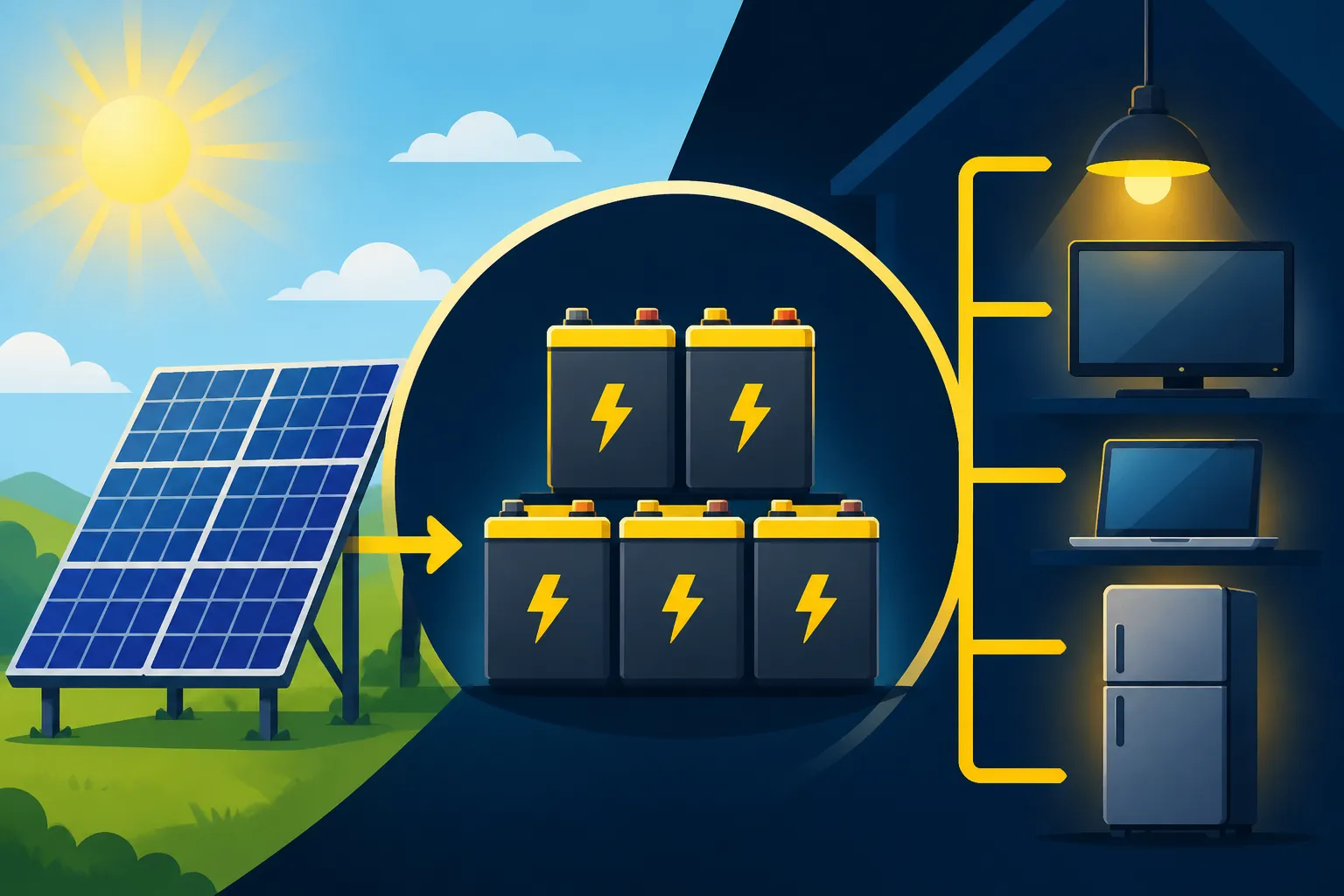
One of the biggest anxieties for anyone looking to go off-grid, even for just a small cabin or RV, is the fear of running out of power, especially for the essentials like lights and basic electronics. It can feel like a daunting puzzle trying to figure out how many batteries you actually need just to keep the lights on and your phone charged, let alone run a laptop or a small fan. This guide is here to cut through the confusion and walk you through, step-by-step, exactly how to calculate the right battery bank size for your lighting and electronics needs, ensuring you have reliable power without overspending.
Understanding Your Energy Needs for Lights and Electronics
Before you can even begin to think about batteries, you need a crystal-clear picture of what you actually want to power and for how long. This isn't just a guessing game; it's a fundamental step that ensures you don't end up with either too little power or a wildly oversized, expensive system. Think of it like grocery shopping – you wouldn't just grab a cart and hope for the best, right? You make a list based on what you actually need.
Identifying Your Specific Appliances
Start by making a comprehensive list of every single light source and electronic device you plan to run. Be honest and thorough. This isn't just about the big ticket items; even small things add up. Are you talking about a couple of LED bulbs in a shed, or are you planning to illuminate a multi-room cabin and keep several devices charged daily?
Consider typical items like:
- Lighting: LED bulbs (the most common and efficient choice), string lights, work lights.
- Charging: Smartphones, tablets, laptops, portable power banks, camera batteries.
- Small Electronics: Portable radios, e-readers, small Bluetooth speakers, electric toothbrushes, USB fans.
- Other: Wi-Fi hotspots, small medical devices (like a CPAP machine, though that might fall into a higher usage category), even a small TV or monitor if you consider it an "electronic."
For each item, try to find its wattage. This is usually printed on the device itself, its power adapter, or in the user manual. For USB-charged devices, you might see "5V/2A," which translates to 10 watts (Volts x Amps = Watts). Don't forget parasitic loads either, like the standby power of an inverter or a small clock. Every watt counts when you're off-grid.
Calculating Daily Watt-Hours
Once you have your list of devices and their individual wattages, the next crucial step is to estimate how long each one will be running per day. This is where the magic number of "watt-hours" comes in, which represents the total energy consumed. It's not just about how powerful something is (watts), but also for how long you use it.
Let's say you have a 10-watt LED bulb. If it's on for 4 hours a day, that's 10 watts x 4 hours = 40 watt-hours (Wh) for that single bulb. Do this for every item on your list. Be realistic about your usage patterns. If you only read for an hour at night, factor that in. If your laptop is on for 8 hours for remote work, account for that hefty usage.
Add all these individual watt-hour totals together, and you'll get your total daily energy consumption for lights and electronics. This number is your foundation. Without it, any battery sizing will be a shot in the dark. For a deeper dive into this, check out our guide on How to Calculate Daily Energy Usage.
Here's a quick example table to illustrate typical consumption:
| Device/Appliance | Wattage (W) | Est. Daily Usage (Hours) | Daily Watt-Hours (Wh) |
|---|---|---|---|
| LED Bulb (small) | 5 W | 4 hours | 20 Wh |
| LED Bulb (medium) | 10 W | 5 hours | 50 Wh |
| Smartphone Charger | 15 W | 2 hours | 30 Wh |
| Laptop Charger | 60 W | 3 hours | 180 Wh |
| Wi-Fi Hotspot | 10 W | 24 hours | 240 Wh |
| Portable Fan | 20 W | 3 hours | 60 Wh |
| E-Reader | 3 W | 1 hour | 3 Wh |
| Total Daily Usage | 583 Wh |
This table helps visualize how even seemingly small items can quickly add up, especially if used for extended periods.
Deciphering Battery Specs: What Do All Those Numbers Mean?
Once you know your daily energy needs, it's time to understand the language of batteries. It's not just about picking the biggest number you see; there's a nuanced interplay between voltage, capacity, and usable energy. This is where many folks get tripped up, thinking "more amp-hours must mean more power," without considering the deeper implications.
Voltage and Amp-Hours: The Key Metrics
Batteries are typically rated by their voltage (V) and their amp-hour (Ah) capacity.
- Voltage: This refers to the electrical "pressure" a battery provides. Common off-grid system voltages are 12V, 24V, and 48V. For smaller setups focused primarily on lights and electronics, 12V is very common, especially in RVs, vans, and small cabins. Larger systems might benefit from 24V or 48V to reduce wire size and increase efficiency. Our article on How to Choose System Voltage can provide more insights here.
- Amp-Hours (Ah): This is a measure of the battery's capacity to deliver a certain current over time. A 100Ah battery, for example, can theoretically deliver 10 amps for 10 hours, or 1 amp for 100 hours (though this isn't perfectly linear due to factors like the Peukert effect in lead-acid batteries).
However, to directly compare battery capacity to your daily energy needs (which you calculated in watt-hours), you need to convert amp-hours into watt-hours. The formula is simple:
Watt-Hours (Wh) = Voltage (V) x Amp-Hours (Ah)
So, a 12V 100Ah battery stores 12V * 100Ah = 1200 Wh. A 24V 100Ah battery stores 24V * 100Ah = 2400 Wh. See how voltage plays a huge role in the total energy stored? Knowing Watts vs Watt-Hours vs Amp-Hours Explained can really clarify these concepts.
Usable Capacity and Depth of Discharge
This is perhaps the most critical, yet often overlooked, aspect of battery sizing: not all stored energy is usable. Batteries have a recommended Depth of Discharge (DoD), which tells you how much of their total capacity you can safely use without significantly shortening their lifespan.
- Lead-Acid Batteries (e.g., Flooded, AGM, Gel): These batteries generally have a lower usable capacity. To maximize their lifespan, it's often recommended not to discharge them below 50% DoD. This means a 100Ah lead-acid battery only really offers about 50Ah of usable power. Constantly draining them lower will drastically reduce their cycle life, meaning you'll be replacing them much sooner.
- Lithium Iron Phosphate (LiFePO4) Batteries: These are game-changers for off-grid living. LiFePO4 batteries can typically be discharged to 80-100% DoD without significant harm to their lifespan. A 100Ah LiFePO4 battery can effectively deliver 80-100Ah of usable power. This higher usable capacity, combined with a much longer cycle life (often 10x or more than lead-acid), makes them incredibly attractive, despite a higher upfront cost. We dive deep into this comparison in LiFePO4 vs Lead-Acid Battery Cost.
So, when you calculate your needed battery capacity, you must factor in the usable capacity based on the battery chemistry you choose.
Calculating Your Ideal Battery Bank Size
Now that you understand your daily energy consumption and the crucial specifics of battery capacity, we can pull it all together to determine how many batteries you'll need. This is where the rubber meets the road!
Putting It All Together: The Sizing Formula
Let's assume you've already calculated your total daily watt-hour needs for lights and electronics (e.g., 583 Wh from our example). Now, we need to calculate the actual capacity required from your battery bank.
Here's the simplified formula for required battery bank capacity in Watt-Hours:
Required Battery Wh = (Total Daily Watt-Hours) / (Usable Depth of Discharge as a decimal) * (Days of Autonomy)
Let's break this down:
- Total Daily Watt-Hours: This is the number you calculated earlier (e.g., 583 Wh).
- Usable Depth of Discharge (DoD):
- For lead-acid batteries (AGM, Gel), use 0.50 (50% DoD).
- For LiFePO4 batteries, use 0.80 (80% DoD) or even 0.90 (90%) for practical purposes, as many modern LiFePO4 batteries can safely go to 100% but 80-90% helps prolong life.
- Days of Autonomy: This is how many days you want your system to run without any sun (i.e., solely on battery power). For lights and electronics, 1-3 days is common. In cloudy regions or for critical loads, you might want more.
Let's use our example of 583 Wh daily usage:
Scenario 1: LiFePO4 batteries (80% DoD), 2 days of autonomy
Required Battery Wh = (583 Wh / 0.80) * 2 days = 728.75 Wh * 2 = 1457.5 Wh
Scenario 2: Lead-Acid batteries (50% DoD), 2 days of autonomy
Required Battery Wh = (583 Wh / 0.50) * 2 days = 1166 Wh * 2 = 2332 Wh
Notice the huge difference! LiFePO4 needs significantly less total stored capacity to deliver the same usable energy.
Now, once you have your "Required Battery Wh," you can figure out how many individual batteries you need based on the voltage and amp-hour rating of the specific batteries you're looking at. For example, if you need 1457.5 Wh and you're buying 12V 100Ah LiFePO4 batteries (which deliver 12V * 100Ah * 0.80 usable DoD = 960 usable Wh per battery):
Number of Batteries = Required Battery Wh / (Usable Wh per battery)
Number of Batteries = 1457.5 Wh / 960 Wh/battery = 1.51 batteries.
Since you can't buy half a battery, you'd round up to 2 x 12V 100Ah LiFePO4 batteries. This combination would give you 2400 Wh total stored capacity (2 x 12V x 100Ah) and 1920 Wh of usable capacity (2 x 12V x 100Ah x 0.80), more than enough for your 1457.5 Wh requirement over 2 days. This detailed approach is what you need for How to Calculate Battery Amp-Hours Needed.
Considering Days of Autonomy and Future Expansion
As touched upon, days of autonomy are crucial. Nobody wants to be stuck in the dark during a stretch of bad weather. For lights and electronics, especially if they are critical for safety or communication, planning for 2-3 days of autonomy is a sensible buffer. If you live in an area known for extended cloudy periods, or if you use a lot of power during peak usage times, you might even consider 4-5 days of autonomy. This prevents that stomach-dropping feeling when you check your battery monitor and see the numbers dipping lower than comfortable.
Another vital consideration, especially if you're just starting small, is future expansion. While you might only need lights and electronics now, you might want to add a small fridge, a water pump, or more substantial appliances down the road. Designing an expandable system from the outset can save you a lot of headaches and money in the long run. Our guide on How to Design an Expandable System is a must-read for this. Investing in components like a charge controller and inverter that can handle more panels and battery capacity than your current needs allows for seamless upgrades. Brands like Renogy often offer modular components that make expanding your system relatively straightforward.
Practical Considerations and Common Pitfalls
Calculating the numbers is one thing, but making those numbers work in the real world is another. There are several practical elements that can significantly impact the performance and longevity of your battery bank. Ignoring these can lead to frustration and unexpected costs.
Choosing the Right Battery Chemistry LiFePO4 vs Lead-Acid
The choice between LiFePO4 and lead-acid batteries is one of the most impactful decisions you'll make for your off-grid system, especially for lights and electronics. It's not just about the upfront price; it's about long-term value, maintenance, and performance.
- Lead-Acid Batteries: These are typically cheaper upfront. They come in various types like flooded, AGM (Absorbed Glass Mat), and Gel. Flooded batteries require regular maintenance (checking and refilling water levels) and emit gases, so they need ventilation. AGM and Gel are sealed and maintenance-free but still generally limited to 50% DoD for good lifespan. They are heavier and bulkier for their usable capacity, perform less efficiently in cold weather, and have a shorter cycle life (often 300-1000 cycles). For a very budget-conscious, small, seasonal setup where occasional deep discharge isn't critical, they can still be an option.
- LiFePO4 Batteries (Lithium Iron Phosphate): As mentioned, these offer a much higher usable capacity (80-100% DoD), boast an incredibly long cycle life (often 3,000-10,000 cycles), are lighter, more compact, and perform better across a wider temperature range (though charging in freezing temperatures without a low-temp cutoff can damage them). They require no maintenance and have a higher charging efficiency. While the initial investment is higher, their vastly longer lifespan and superior performance often make them more cost-effective over the system's lifetime. Many prefer brands like Renogy or Battle Born for their reliability and integrated Battery Management Systems (BMS). When you're considering How Many Batteries for an Off-Grid System, the type of battery makes a huge difference in the number of physical batteries you'll need.
For most modern off-grid setups, even those primarily powering lights and electronics, the benefits of LiFePO4 batteries generally outweigh the higher initial cost, especially for long-term reliability and convenience.
System Voltage 12V, 24V, 48V and Its Impact
The voltage of your battery bank impacts both safety and efficiency. For simply running lights and electronics, a 12V system is often sufficient and very common, especially in mobile applications like RVs and vans, or small cabins. Many readily available 12V accessories, LED lights, and USB chargers can be wired directly to a 12V system, minimizing the need for an inverter (which converts DC battery power to AC household power). This reduces system complexity and parasitic losses. You can find a huge variety of 12V-compatible devices and charging solutions on Amazon.
However, as your system grows and your power needs increase (e.g., adding an air conditioner, well pump, or significant kitchen appliances), a higher voltage system (24V or 48V) becomes more advantageous.
- Reduced Amperage: Higher voltage means lower amperage for the same amount of power (Watts = Volts x Amps). Lower amperage requires thinner, less expensive wiring, which is a significant safety and cost benefit for longer wire runs or larger loads.
- Efficiency: Higher voltage systems often operate with less voltage drop over distances and can be more efficient for larger inverters, which are necessary for powering standard household AC appliances.
- Scalability: Many high-capacity inverters and charge controllers are designed for 24V or 48V systems, making future expansion easier.
For strictly lights and electronics, a 12V system is usually adequate and simpler to set up. But if there's any chance you'll expand your off-grid life beyond basic essentials, it's worth considering a 24V system from the start.
In summary, sizing your battery bank for lights and electronics isn't just about throwing numbers at a wall. It's a thoughtful process of identifying needs, understanding battery capabilities, and making informed decisions about battery chemistry and system voltage. By taking the time to do this correctly, you'll create a robust, reliable off-grid power system that keeps your essentials running smoothly, day in and day out. For those just starting out, taking a look at Off-Grid Solar System Sizing Guide can provide an even broader understanding.
Disclaimer
The information provided in this guide is for general informational purposes only and does not constitute professional electrical or solar engineering advice. Off-grid solar system design and installation can be complex and involve significant electrical hazards. Always consult with a qualified solar professional or licensed electrician for specific design, installation, and safety recommendations tailored to your unique circumstances and local codes.