Best Off-Grid Kit for Weekend Camping
There’s nothing quite like packing up the car, heading out to a secluded campsite, and escaping the hustle and bustle of everyday life. But for many, that serene experience is often interrupted by the nagging worry of how to keep essential devices charged – or even how to enjoy a few creature comforts like a decent cup of coffee or keeping the cooler running without a noisy, smelly gas generator. This guide is all about helping you find the perfect off-grid power kit for your weekend camping adventures, ensuring you stay powered up, connected (if you want to be!), and comfortable, all while embracing the peace of the outdoors.
Understanding Your Weekend Camping Power Needs
Before you even start looking at shiny new gear, the most critical step is to realistically assess what you actually need to power during your weekend escape. It’s easy to get carried away and think you need a massive system, but for just a few days, often less is more. Over-specifying means extra weight and cost that you might not need.
Calculating Daily Watt-Hours for Short Trips
When you’re just out for a weekend, typically two to three days, your power demands are usually different than if you were full-time van living or homesteading. The key here is to think about your daily usage in Watt-hours (Wh). Don't let the technical terms scare you; it's simpler than it sounds. For example, if your phone charger draws 10 watts and you use it for 2 hours, that's 20 Watt-hours. Do this for all your planned electronics. Your LED camping lantern might use 5 watts for 4 hours (20 Wh), a portable fan could be 15 watts for 3 hours (45 Wh), and charging a laptop for an hour might pull 60 watts (60 Wh).
Consider your actual habits. Are you truly going to stream movies on a portable projector every night, or is it more likely you’ll charge your phone, run a small fan, and keep your headlamp powered up? A good exercise is to actually list out every single item you plan to bring that requires electricity. Then, for each item, estimate its wattage and how many hours per day you expect to use it. Add all those daily Watt-hours together, and that’s your target daily consumption. This foundational step is often overlooked, but it's where you determine How to Calculate Daily Energy Usage with real precision. Knowing this number will guide all your subsequent decisions.
Identifying Essential vs. "Nice-to-Have" Appliances
When you're out in nature, some things are non-negotiable for safety and comfort, while others fall into the luxury category. For a weekend trip, essentials might include charging your phone for emergencies, powering a headlamp or camping lantern, and perhaps running a small medical device like a CPAP machine. These items should be prioritized when calculating your power needs. You absolutely need enough juice for these, no matter what.
Then there are the "nice-to-haves." This could be a portable blender for morning smoothies, an electric cooler to keep drinks cold, or even a projector for an outdoor movie night under the stars. While these significantly enhance the camping experience, they also draw substantial power. You'll need to decide if the added comfort is worth the increased investment in a larger battery capacity and potentially more solar panels. If you're planning on running more demanding appliances, you might want to look into What a 1000W Off-Grid System Can Power and Cost for a broader perspective, even if you don't need that much for a weekend. The beauty of off-grid living is the freedom, but that freedom comes with the responsibility of managing your power budget wisely.
Key Components of a Weekend Camping Off-Grid Kit
Gone are the days when "off-grid camping power" meant a loud, smelly generator. Today's market is full of quiet, efficient, and surprisingly powerful solutions. For weekend camping, integrated portable power stations coupled with lightweight solar panels are the heroes of the story.
Portable Solar Panels for Quick Setup
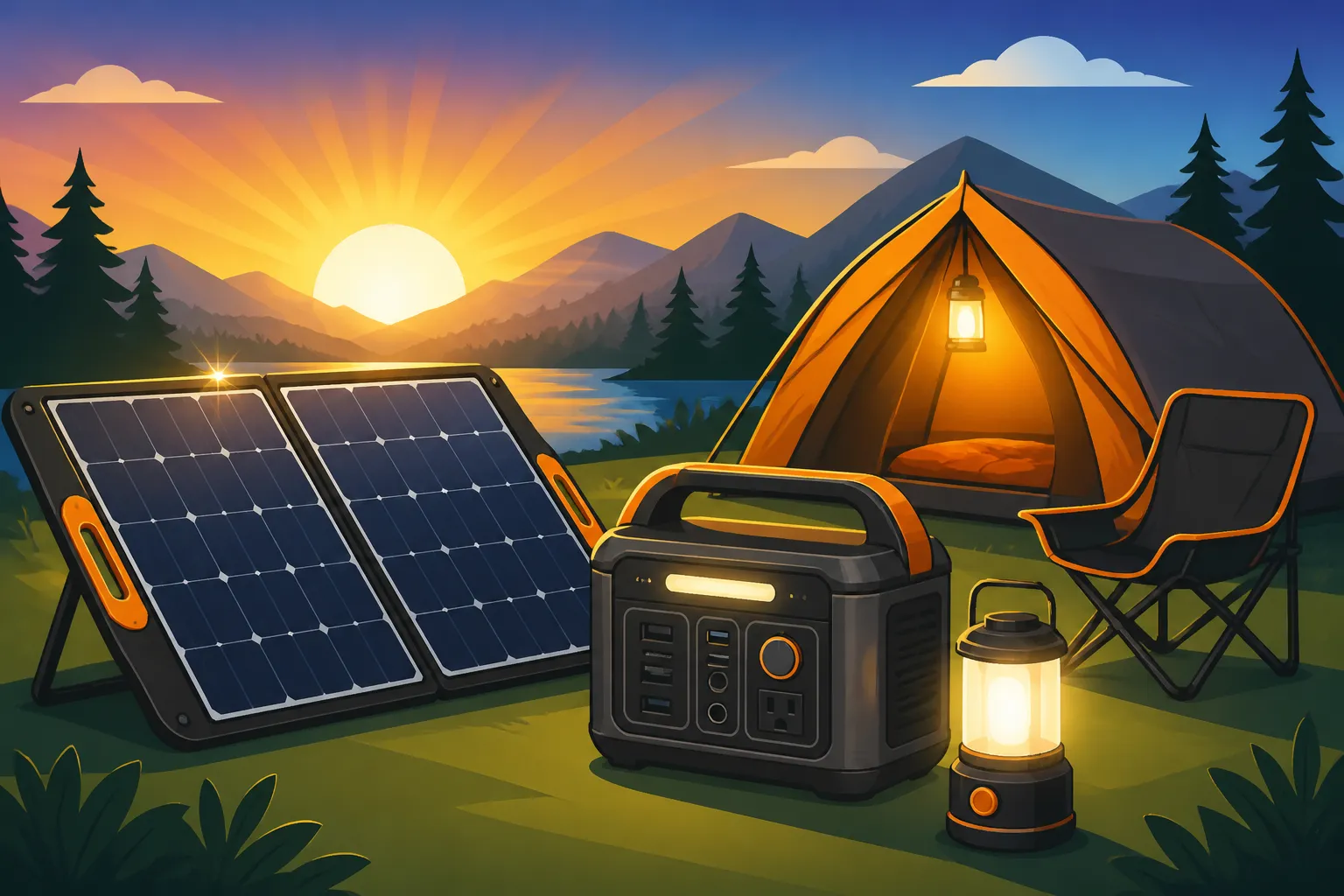
For weekend camping, portability and ease of setup are paramount. You don't want to spend half your precious Saturday wrestling with complex solar panel mounts. This is where portable solar panels shine. These typically come in foldable, briefcase-style designs or flexible rollable mats. They are designed to be easily deployed on the ground, propped up against your vehicle, or even draped over a tent, then packed away just as quickly. Look for panels with integrated kickstands or eyelets for easy hanging. Their efficiency has come a long way, with many models offering respectable wattage even in compact forms.
When choosing, consider panels ranging from 50W to 200W, which are usually sufficient for topping up a portable power station over a sunny day. Brands like Renogy and Jackery offer excellent portable options that integrate seamlessly with their power stations. It’s important to understand the concept of How to Choose an Off-Grid Solar Panels to ensure you're getting the right type and wattage for your needs, factoring in the limited sunlight hours you might have at your campsite. Don't forget to check the connector type – most portable solar generators use standard MC4 connectors or proprietary ports, so make sure your panels match your power station.
High-Capacity Portable Power Stations
This is often the heart of a weekend camping off-grid kit. Portable Power Stations (PPS), sometimes called "solar generators," are essentially large batteries with built-in inverters, charge controllers, and multiple output ports (AC outlets, USB-A, USB-C, 12V DC car ports). They are designed for convenience, offering plug-and-play functionality. Instead of separate components, everything is neatly housed in one durable, often suitcase-like unit.
These units are fantastic because they simplify the entire setup. You just plug in your solar panels, and the internal charge controller handles the charging. Then, you plug in your appliances directly to the station. For weekend camping, look for capacities ranging from 300 Wh to 1500 Wh, depending on your needs identified in the first section. A Cost of an Off-Grid Solar Battery Bank is largely tied to its capacity and chemistry, and for portable units, lithium iron phosphate (LiFePO4) is increasingly popular due to its longevity and safety, though older lead-acid based units still exist in some budget options. Brands like EcoFlow, Bluetti, and Jackery dominate this space, offering a variety of sizes and features suitable for everything from a minimalist backpacking trip to a full family car camping adventure.
Inverters and Charge Controllers in Portable Units
One of the greatest benefits of a dedicated portable power station is that the complex components like the inverter and charge controller are already integrated. You don't have to worry about wiring them yourself or matching specifications. The inverter converts the battery's DC power into the AC power that most of your household appliances use, while the charge controller manages the flow of electricity from your solar panels to the battery, preventing overcharging and optimizing efficiency.
For camping, it’s crucial that the integrated inverter is a pure sine wave inverter. This ensures that your sensitive electronics, like laptops, cameras, and medical devices, receive clean, stable power, just like they would from a wall outlet at home. Modified sine wave inverters are cheaper but can damage or poorly run certain electronics, leading to buzzing noises or malfunction. The built-in charge controller will almost always be an MPPT (Maximum Power Point Tracking) controller in quality portable power stations, which is more efficient than PWM (Pulse Width Modulation) controllers, especially crucial when you have limited sun exposure during a camping trip. Understanding a bit about How to Set Up an Inverter for Off-Grid can give you appreciation for how much these all-in-one units simplify things.
Choosing the Right Size Kit for Your Camping Style
Your camping style dictates the ideal size and type of off-grid power kit. There’s no one-size-fits-all answer, so let’s explore the common scenarios you might encounter during a weekend trip.
Ultra-Light Kits for Minimalist Campers
If your idea of weekend camping involves backpacking deep into the wilderness, kayaking to a remote spot, or simply preferring a truly minimalist setup, then an ultra-light off-grid kit is your best friend. These kits focus on extreme portability and minimal power for essential devices. We're talking about small, hand-sized power banks (100-300Wh capacity), often paired with tiny foldable solar panels (10-30W). The goal here isn't to run a coffee maker, but rather to keep your phone charged for navigation or emergencies, power a headlamp, and maybe charge a small e-reader.
Think of lightweight power stations like the Jackery Explorer 240 or similar compact units. These devices are designed to slip into a backpack without adding significant bulk or weight. They are durable, often splash-proof, and remarkably efficient for their size. While they won't power a refrigerator, they offer peace of mind, ensuring you can always call for help or light your way in the dark. This type of setup is perfect for those who truly want to disconnect but need a lifeline to the modern world, or at least a way to keep their vital gear operational.
Mid-Range Kits for Family Camping and Comfort
This is where most weekend campers will find their sweet spot. Mid-range kits are perfect for car camping, RV boondocking, or setting up a base camp where a few more comforts are desired without going overboard. These kits typically feature a portable power station with a capacity between 500Wh and 1500Wh, often paired with 100W to 200W portable solar panels. This size allows you to power a broader range of appliances. You can run an electric cooler for hours, charge multiple phones and tablets, keep a fan going all night, run a portable projector, or even power a small immersion heater for that morning coffee.
Consider popular models like the EcoFlow DELTA 2 or the Jackery Explorer 1000. These units strike an excellent balance between capacity, output power, and portability. They're still manageable enough for one person to carry and set up, but they offer enough juice to make a significant difference in your camping comfort. For a family weekend, having reliable power means happy kids with charged devices and parents enjoying the convenience of a small microwave or an electric kettle. It really enhances the experience, turning a basic campsite into a comfortable outdoor living space. You might be interested in a Best Portable Off-Grid Solar Kit to help explore options in this range.
Larger Kits for Extended Stays or Power-Hungry Gear
While this guide focuses on weekend camping, some weekenders might have higher power demands, perhaps for medical equipment, specific hobbies like drone flying, or bringing along more "glamping" amenities. For these scenarios, a larger, more robust off-grid kit comes into play. These systems might feature portable power stations in the 1500Wh to 3000Wh range, often paired with 200W-400W of portable solar panels. These larger units can handle bigger loads, like a small air conditioner, a full-size portable fridge/freezer, or an array of power tools for a remote project.
Units like the Bluetti AC200L or the EcoFlow DELTA Pro fall into this category. They are heavier and more expensive, but they offer substantial power and versatility. While still "portable," they are usually heavier and might require two people to comfortably move. The benefit is the ability to truly replicate some home comforts or ensure critical operations can continue even far from an outlet. If you're pondering Is Off-Grid Solar Worth It for a Camper or an RV, these larger portable solutions often bridge the gap between simple charging and running a more robust setup for a couple of days. They're ideal for those who push the boundaries of "weekend camping" into more intensive, power-demanding outdoor activities.
Top Features to Look for in a Camping Off-Grid Kit
When you're sifting through all the options, it's easy to get overwhelmed by specifications. Focusing on these key features will help you zero in on a kit that genuinely meets your weekend camping needs.
Portability and Durability Considerations
For a camping kit, portability isn't just about weight; it's also about form factor. Is it easy to carry with one hand? Does it have comfortable handles? Will it fit easily in your car’s trunk or under a seat? A compact, well-designed unit that’s easy to move from your vehicle to your campsite is far more practical than a bulky box, even if the bulky one has slightly more power. For example, many Jackery models are praised for their sturdy handles and compact design, making them very user-friendly.
Durability is another non-negotiable. Your gear will inevitably face dust, dirt, bumps, and possibly rain. Look for robust construction, good quality plastics or metal casings, and ideally, some level of water resistance (IP rating). While you shouldn't submerge it, a splash from an unexpected downpour or a spilled drink shouldn't spell the end of your power supply. Consider features like rubberized corners for impact protection and covered ports to keep out debris. A kit that can withstand the rigors of the outdoors will serve you faithfully for many camping seasons.
Output Ports and Charging Flexibility
The best off-grid camping kit is one that can power all your devices without needing a tangle of adapters and power strips. Check for a variety of output ports:
- AC outlets: You'll want at least one or two standard wall outlets for laptops, mini-fridges, or small appliances. Make sure the total AC output wattage matches your highest-draw appliance's running wattage.
- USB-A and USB-C ports: These are crucial for phones, tablets, smartwatches, and rechargeable headlamps. USB-C Power Delivery (PD) is especially valuable for fast charging modern devices.
- 12V DC car port: Handy for car coolers, portable air compressors, or other 12V accessories you might bring from your vehicle.
- Wireless charging pad: A nice bonus feature on some higher-end portable power stations for ultimate convenience.
Beyond output, consider how the power station itself charges. Most come with an AC wall charger (for home), a 12V car charger, and, crucially for off-grid camping, solar input. Look for efficient solar input capabilities and ensure the charging cable and port match your chosen portable solar panels. Some units offer fast charging from multiple sources simultaneously, which can be a game-changer if you have limited charging windows.
Expandability and Future-Proofing
Even if you're starting with a small setup for weekend camping, it's wise to consider if the system can grow with your needs. Perhaps you'll eventually move to a larger RV, or start taking longer trips, or simply realize you want to power more amenities. Some portable power stations, particularly from brands like EcoFlow and Bluetti, offer modular designs allowing you to add extra battery packs to increase capacity. This can significantly extend your power autonomy without having to buy an entirely new system.
While a simple portable power station might not offer the same modularity as a custom-built off-grid system, look for units with sufficient input and output capabilities that can accommodate future upgrades. For instance, a unit with a higher solar input capacity means you can add more powerful panels later if needed. Investing a little more upfront in a system with growth potential can save you money and hassle down the road, making your initial purchase a more sustainable choice for your evolving off-grid lifestyle. Thinking about How to Design an Expandable System even for a temporary setup can be really beneficial.
Setting Up and Using Your Off-Grid Camping Kit
Once you've chosen your kit, knowing how to quickly and efficiently set it up and maximize its performance is key to a stress-free weekend. It’s not just about plugging things in; there are smart ways to optimize your power use.
Quick Deployment and Connection Tips
The beauty of a portable off-grid camping kit is its simplicity. For solar panels, aim for a clear, unobstructed view of the sun. Position them to face south (in the Northern Hemisphere) and tilt them at an angle that maximizes direct sunlight. For weekend trips, adjusting the panels every few hours as the sun moves can significantly boost your energy harvest. Many portable panels come with adjustable kickstands, making this easy. Don't worry too much about precise angles; just getting them angled towards the sun is better than lying them flat.
Connecting everything is usually a breeze. Most portable power stations have clearly labeled input ports for solar. You'll typically connect your solar panels directly to the power station using the provided cables. Ensure connections are secure to prevent power loss or accidental disconnections. Once plugged in, the power station's display should indicate that it's receiving a charge from the solar panels. Before you head out, do a quick test run at home to familiarize yourself with the connections and display readings. This simple step can prevent any frustrating surprises at the campsite.
Maximizing Solar Harvest During Short Trips
With only a few days to gather energy, every ray of sunshine counts. Beyond proper panel orientation, there are a few other strategies to maximize your solar harvest. First, try to park your vehicle or set up your camp in a spot that offers good sun exposure throughout the day, especially for your solar panels. Avoid shaded areas under dense trees if your goal is maximum solar charging. Even partial shading on one part of a panel can significantly reduce its overall output.
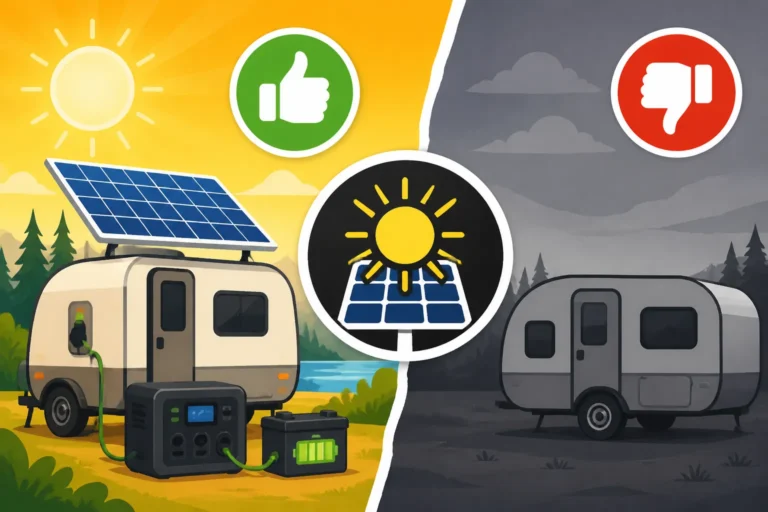
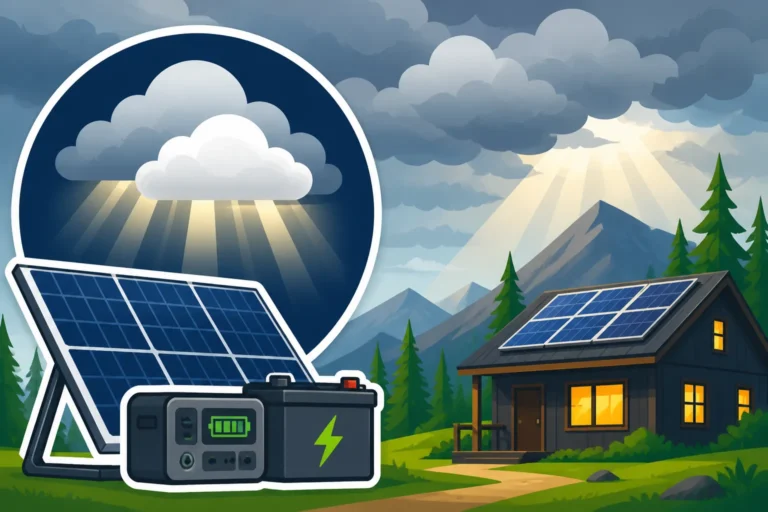
Secondly, keep your panels clean. Dust, pollen, bird droppings, or even fallen leaves can block sunlight and reduce efficiency. A quick wipe-down with a damp cloth can make a big difference. Finally, manage your expectations based on the weather. On cloudy days, your solar input will be dramatically lower. This is why having enough battery capacity for at least one "day of autonomy" (meaning your battery can power your essentials for a full day without any solar input) is wise. If you're going for more than a day or two in cloudy conditions, consider starting with a fully charged battery from home. While you don't need to become an expert on Peak Sun Hours Explained for a quick trip, a basic understanding of how sun intensity affects charging will help you plan better.
Comparing Popular Off-Grid Camping Kit Brands
The market for portable power is booming, and several brands have carved out a reputation for quality and innovation. Understanding their strengths can help you make an informed decision.
Jackery and EcoFlow Offerings
When it comes to portable power stations, Jackery and EcoFlow are two of the most recognized and respected names. Both brands offer a wide range of portable power stations and solar panels, catering to various camping needs.
Jackery is often lauded for its robust, user-friendly design and excellent portability. Their Explorer series, ranging from the compact Explorer 240 to the more powerful Explorer 1000 and 2000 Pro, are frequently recommended for campers and RVers. Jackery power stations are known for their bright, clear displays, durable construction, and simple plug-and-play operation. Their matching SolarSaga portable solar panels are equally well-designed, offering quick setup and efficient charging. Many users appreciate the straightforward nature of Jackery products, making them an excellent choice for beginners looking for reliable power without unnecessary complexity. For instance, the Jackery 2000 Plus for Off-Grid: Specs and Review provides a comprehensive look at one of their more powerful offerings.
EcoFlow, on the other hand, often pushes the boundaries with faster charging speeds and higher output capacities. Their DELTA series, including the DELTA 2, DELTA Pro, and their River series for smaller needs, are popular for their rapid AC charging technology and the ability to expand battery capacity with add-on batteries. EcoFlow also often features higher continuous output wattages, making them suitable for running more demanding appliances. They tend to integrate advanced app control features, allowing for remote monitoring and management of your power station. If you're looking for cutting-edge technology and flexibility, EcoFlow is a strong contender, as seen in the EcoFlow Delta 2 for Off-Grid: Specs and Review.
Renogy and Bluetti Options for Portability
Beyond Jackery and EcoFlow, Renogy and Bluetti also offer compelling options that are well-suited for weekend camping. Each brand brings its own unique set of advantages to the table, and exploring them can broaden your choices significantly.
Renogy has long been a staple in the DIY solar world, offering individual components like solar panels, charge controllers, and batteries. However, they've also entered the portable power station market with products like their Lycan Power Box and Phoenix series. Renogy's strength often lies in offering competitive pricing and robust, reliable components. Their portable power stations, while sometimes not as sleek as some competitors, are built to be workhorses. They also offer a wide array of portable solar panels that pair well with their own power stations and can often integrate with other brands thanks to standard connectors. If you’re familiar with solar components or appreciate a brand known for its deep roots in solar, Renogy could be a great fit. Their products are designed to be practical and efficient, catering to those who value function and durability.
Bluetti is another powerhouse in the portable energy sector, known for its diverse range of products from compact power stations to large home backup systems. For weekend camping, their EB series (like the EB3A, EB55, or EB70) offers excellent capacity-to-size ratios and feature sets. Bluetti units often boast a wider variety of output ports, including dedicated 12V regulated DC outlets, which are great for sensitive 12V devices. They are also known for their long-lasting LiFePO4 batteries and often come with comprehensive warranties. Like EcoFlow, Bluetti is big on innovation, offering fast charging and user-friendly interfaces, making them a premium choice for many campers. Checking out something like the Bluetti AC200L for Off-Grid: Specs and Review will give you a sense of their higher-end capabilities, even if you opt for a smaller model for camping.
| Feature / Brand | Jackery (e.g., Explorer 1000) | EcoFlow (e.g., DELTA 2) | Renogy (e.g., Lycan 500) | Bluetti (e.g., EB70S) |
|---|---|---|---|---|
| Capacity (Wh) | 1002 Wh | 1024 Wh (expandable) | 500 Wh | 716 Wh |
| AC Output (W) | 1000W (2000W surge) | 1800W (2700W surge) | 700W (1400W surge) | 800W (1400W surge) |
| Battery Type | Li-ion NMC | LiFePO4 | LiFePO4 | LiFePO4 |
| Charge Time (AC) | ~7.5 hours | ~1 hour | ~5 hours | ~4 hours |
| Solar Input (W) | 200W Max | 500W Max | 200W Max | 200W Max |
| Weight | ~22 lbs | ~27 lbs | ~13.4 lbs | ~21.4 lbs |
| Key Selling Points | User-friendly, portable, durable | Ultra-fast charging, expandable, high output | Cost-effective, robust, good for DIYers | Wide port selection, LiFePO4 longevity, reliable |
| Best For | General camping, ease of use | Power-hungry devices, rapid recharge | Budget-conscious, reliable basics | Balanced performance, versatile charging |
Disclaimer
The information provided in this guide is for general informational purposes only and does not constitute professional advice. Off-grid solar system design and installation can be complex and involve electrical hazards. Always consult with a qualified professional and adhere to all local codes and regulations before installing or modifying any electrical system. The performance of off-grid solar equipment can vary based on environmental conditions, usage patterns, and product specifications.