Off-Grid vs Hybrid Solar Systems
Many folks dream of energy independence, picturing a life free from utility bills and power outages. But when you start looking into solar, you quickly run into a lot of confusing terms and options, especially the big question: do you completely ditch the grid or just work with it? This guide is here to clear up that often overwhelming decision, diving deep into the differences between off-grid and hybrid solar systems so you can confidently choose the path that best suits your lifestyle and needs.
Understanding Fully Off-Grid Solar Systems
Going truly off-grid means severing all ties with your local utility company. You become your own power company, responsible for generating, storing, and managing all the electricity your home or property consumes. It's a powerful concept, offering ultimate freedom and resilience, but it also comes with a unique set of responsibilities and technical considerations.
What Defines True Off-Grid Living
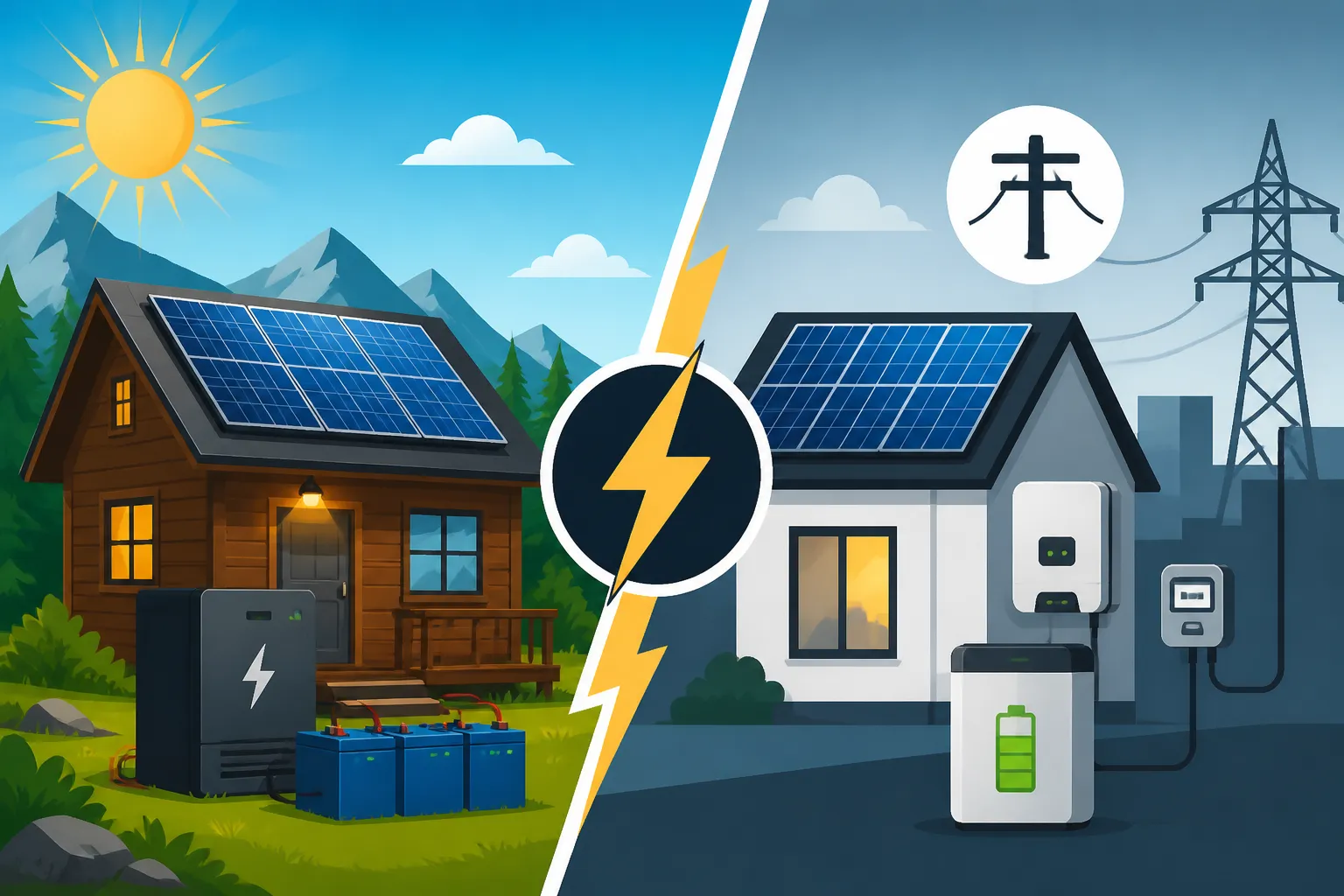
At its heart, off-grid living is about self-sufficiency. There's no electric meter from the power company on your property, no monthly bill, and no reliance on a distant power plant. This isn't just about saving money; for many, it's a philosophical choice, a move towards a more sustainable and independent lifestyle. It often appeals to those in remote areas where extending utility lines is prohibitively expensive, or to folks who simply want to be prepared for any eventuality, knowing their power source is entirely within their control. Think of a remote cabin nestled deep in the woods or a tiny home exploring different landscapes – these are prime examples of true off-grid setups.
However, this independence also means you bear the full weight of energy management. Every watt-hour you consume must be generated by your solar panels (or other renewable sources like wind or hydro) and stored in your battery bank. There’s no safety net of the grid to fall back on if your batteries run low on a long, cloudy stretch. This requires a diligent approach to energy usage and a well-designed system capable of handling your peak demands and days of low sunlight. It's a constant dance between generation, consumption, and storage.
The Core Components of an Independent System
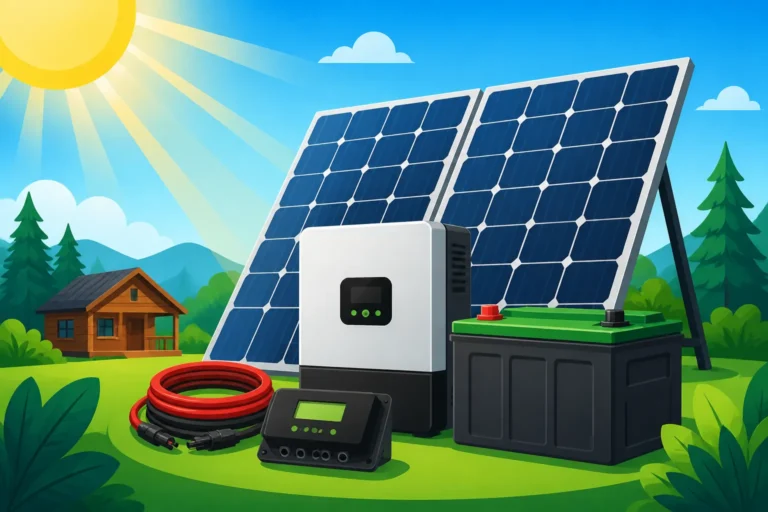
A complete off-grid solar system is a carefully orchestrated ensemble of several key components, each playing a vital role in keeping your lights on and appliances running. First and foremost, you have the solar panels themselves, the workhorses that convert sunlight into usable electricity. These panels are typically mounted on roofs or ground arrays, optimized for maximum sun exposure throughout the day and year.
Next in line is the charge controller, an unsung hero that acts as the brain between your panels and your batteries. Its job is crucial: to regulate the voltage and current coming from your solar panels to prevent overcharging and extend the lifespan of your battery bank. Without a good charge controller, you risk seriously damaging expensive batteries. Many off-grid setups, especially larger ones, opt for MPPT (Maximum Power Point Tracking) controllers, which are far more efficient at harvesting power from the panels, particularly in varying weather conditions. For a deeper dive into the brainpower behind your system, you might want to read about the Best MPPT Charge Controllers.
Then we come to the heart of any off-grid system: the battery bank. Since the sun doesn't shine 24/7, batteries store the excess energy generated during the day for use at night or on cloudy days. The size and type of your battery bank are critical and represent a significant portion of the overall Off-Grid Solar Cost: Complete Breakdown. Lithium iron phosphate (LiFePO4) batteries have become increasingly popular due to their longevity, depth of discharge, and efficiency, though traditional lead-acid options are still around. You'll need to think about How Many Batteries for an Off-Grid System based on your daily energy usage.
Finally, the inverter takes the stored DC (direct current) power from your batteries and converts it into AC (alternating current) power, which is what most household appliances use. Without an inverter, you'd be limited to running only DC-compatible devices. The inverter's capacity needs to be carefully matched to your maximum anticipated power draw, including any surge loads from motors or compressors. For most homes, a pure sine wave inverter is essential to ensure sensitive electronics operate correctly and without damage. Understanding How to Size an Off-Grid Inverter is a key part of your system design.
Understanding Hybrid Solar Systems
If the idea of cutting the cord completely feels a bit too daunting, or if you still value the reliability of the utility grid, a hybrid solar system might be your sweet spot. These systems offer a balanced approach, blending the benefits of solar energy with the security and convenience of grid connectivity.
What Makes a System Hybrid
A hybrid solar system, simply put, is one that connects to both the solar array and the utility grid, while also incorporating battery storage. It's like having your cake and eating it too: you generate your own clean electricity, store it for later use, and you have the grid as a backup, a source of power when your solar production is low or your batteries are depleted. This approach is gaining immense popularity, especially in areas with unreliable grids or where homeowners want to maximize their solar investment without the full commitment and responsibility of pure off-grid living.
The beauty of a hybrid system lies in its flexibility. During the day, your solar panels power your home and charge your batteries. If you generate more power than you need, you can often sell the excess back to the grid (net metering), effectively earning credits on your utility bill. When the sun goes down or if there's a power outage, your home can seamlessly switch to battery power, providing backup during emergencies. And if your batteries run low, the grid is there to recharge them or supply power directly, preventing any interruptions. This interplay allows for a much more forgiving energy management strategy compared to off-grid systems.
The Integrated Components of a Hybrid Setup
Like off-grid systems, hybrid setups also rely on solar panels to generate electricity. However, the energy flow and management are a bit more complex due to the presence of both batteries and the grid. You'll still have your solar panels converting sunlight into electricity, feeding it into a charge controller, and then storing it in a battery bank. But the key difference lies in how this power is then managed and distributed.
A specialized hybrid inverter is the star of the show in these systems. Unlike a standard off-grid inverter, a hybrid inverter is capable of managing power flow from multiple sources: the solar panels, the battery bank, and the utility grid. It intelligently decides where power should go – directly to your home's loads, into the batteries for storage, or back to the grid. This intelligent management ensures optimal efficiency and can prioritize solar self-consumption, sending excess to the grid only after your home and batteries are satisfied. Brands like Sol-Ark and Victron are well-known for their robust hybrid inverter offerings, providing sophisticated control over your energy ecosystem. You can learn more about Best Off-Grid Solar Inverters to get a sense of the capabilities.
Battery storage in a hybrid system serves primarily for backup power during grid outages or to enable "time-of-use" savings, where you store cheap off-peak power from the grid to use during expensive peak hours. While a smaller battery bank might suffice for short outages, larger banks offer greater resilience. Portable power stations, like those from Jackery, can also play a role in smaller-scale hybrid setups, providing a flexible battery solution for critical loads or as a supplementary power source during extended outages. These smaller units are fantastic for proving specific needs without having to invest in a full-scale home battery system right away.
The final, crucial component is the grid connection itself, which acts as both a safety net and a potential source of revenue through net metering. This connection requires proper wiring and often specific utility approvals to ensure safe and compliant operation, especially for systems that can export power back to the grid. The presence of this connection means your system needs to be designed to safely disconnect from the grid during an outage (anti-islanding protection) to protect utility workers.
Key Differences and Considerations
When weighing off-grid versus hybrid, it's really about balancing independence against convenience, and understanding the practical implications of each. It's not just a technical choice; it's a lifestyle decision that impacts your daily routine and long-term financial planning.
| Feature | Fully Off-Grid Solar System | Hybrid Solar System |
|---|---|---|
| Grid Connection | None | Connected to the utility grid |
| Energy Source | 100% self-generated (solar, wind, etc.) | Primarily solar, supplemented by grid |
| Battery Storage | Essential, typically larger capacity for full autonomy | Essential for backup/optimization, can be scaled |
| Reliability | Dependent on system sizing, weather, and energy management | Very high, with grid as backup |
| Cost | High upfront for large battery bank and robust system | Varies, potentially lower battery capacity needed, can get grid credits |
| Independence | Complete energy independence | Partial energy independence, grid backup |
| Complexity | High design and management responsibility | Moderate, intelligent inverter manages power flow |
| Net Metering | Not applicable | Yes, can sell excess power back to the grid |
| Power Outages | Unaffected if system is sized correctly | Provides seamless backup power if batteries are charged |
| Common Use | Remote homes, cabins, RVs where grid is unavailable | Urban/suburban homes, areas with high electricity rates, unreliable grid |
Cost Implications and Return on Investment
The cost of an off-grid solar system is almost always higher upfront than a grid-tied system (which lacks batteries) or even a hybrid system that might skimp on battery capacity. This is largely because going truly off-grid necessitates a robust battery bank capable of supplying all your power needs, often for several days of autonomy. The more days of autonomy you want, or the higher your daily energy consumption, the larger and more expensive your battery bank will be. You can explore the Cost of an Off-Grid Solar Battery Bank to get a clearer picture. Installation costs can also be higher, especially if you're dealing with remote locations or custom mounting solutions. The good news is that battery prices have been steadily decreasing, making off-grid more accessible than ever before.
For hybrid systems, the upfront cost can vary widely. If your primary goal is just backup power, you might opt for a smaller battery bank, keeping initial expenses lower. However, if you're looking to maximize self-consumption and participate in time-of-use arbitrage, you might invest in a larger battery bank, similar in size to some off-grid setups. The key financial advantage of hybrid systems often comes from net metering, allowing you to offset a significant portion, or even all, of your utility bill by selling excess solar power back to the grid. This can lead to a quicker Off-Grid Solar Payback Period Explained compared to a purely off-grid system, which doesn't have that direct revenue stream.
Level of Independence and Reliability
Complete energy independence is the hallmark of an off-grid system. You are truly in charge. This is incredibly appealing for many, offering peace of mind during widespread grid failures or natural disasters. However, this independence comes with the responsibility of careful system design and vigilant energy management. If your system is undersized, or if you experience an extended period of bad weather without a backup generator, you could run out of power. The reliability hinges entirely on the quality of your components, the accuracy of your Off-Grid Solar System Sizing Guide, and your commitment to conservative energy usage, particularly during winter or cloudy seasons.
Hybrid systems offer a different kind of reliability. While you gain significant energy independence from daily grid reliance, the utility grid remains your ultimate safety net. If your solar production dips and your batteries drain, the grid is there to seamlessly pick up the slack. This means you rarely, if ever, experience a power outage, unless the grid goes down and your batteries are also depleted. The ability to switch between solar, battery, and grid power automatically provides a level of comfort and consistent reliability that's hard to beat. For many homeowners, this balanced approach strikes the perfect chord, offering the benefits of solar without the potential anxieties of full off-grid commitment.
Complexity of Design and Installation
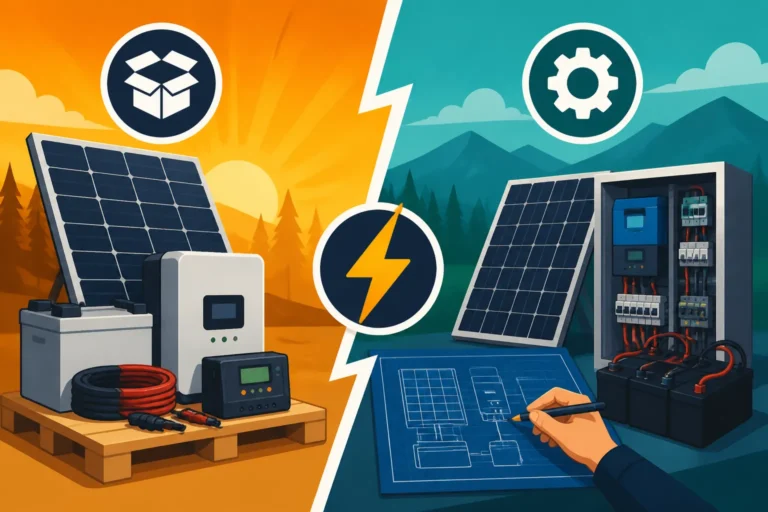
Designing an off-grid system is inherently more complex. You need to account for 100% of your energy needs, including worst-case scenarios like extended cloudy periods or unexpected high loads. This involves meticulous load calculations, precise battery sizing for days of autonomy, and often an understanding of how to incorporate backup generators. Every component must be perfectly matched and sized, from the solar panels to the charge controller to the inverter and battery bank. Mistakes in sizing can lead to frequent power outages or premature battery degradation. DIY Off-Grid Solar Installation Step by Step can be a rewarding but challenging endeavor, often requiring a good grasp of electrical principles and safety.
Hybrid systems, while still requiring careful design, often have a more forgiving margin for error due to the grid backup. The hybrid inverter handles much of the intelligent power management, simplifying the user's daily interaction. Installation can also be less daunting, as you're not solely responsible for ensuring continuous power. However, hybrid systems introduce another layer of complexity: grid interconnection requirements. You'll need to navigate utility regulations, permits, and inspections, which can sometimes be a lengthy process. Choosing a reputable installer or understanding the nuances of Off-Grid Solar Installation Guide is key to a smooth process for both types of systems.
Pros and Cons of Going Fully Off-Grid
Deciding to sever ties with the utility grid is a significant lifestyle choice, bringing with it a unique set of advantages and disadvantages. It's a path chosen by adventurers, environmentalists, and those seeking ultimate self-reliance, but it's not without its challenges.
The Undeniable Advantages of True Independence
The most compelling benefit of going fully off-grid is undoubtedly total energy independence. Imagine a massive blackout hitting your region – a severe ice storm, a widespread wildfire, or an aging infrastructure failure. While your neighbors are fumbling for flashlights and dealing with spoiled food, your home remains powered, lights on, refrigerator humming, and well pump supplying water. This peace of mind is invaluable for many, especially those living in areas prone to grid instability or natural disasters. There's no reliance on external infrastructure that can fail, be attacked, or impose arbitrary rate hikes.
Another significant advantage is the freedom from utility bills. Once your system is installed, your ongoing electricity costs are essentially zero, save for occasional maintenance or eventual battery replacement. Over the long term, this can represent substantial savings, especially as grid electricity prices continue to rise. For many, it's also a powerful statement of environmental stewardship. By relying solely on renewable energy, you drastically reduce your carbon footprint, contributing to a cleaner planet. This resonates deeply with individuals who prioritize sustainability and want to lead by example, transforming their property into a beacon of green living.
Furthermore, off-grid systems provide unparalleled flexibility for remote properties. If you've ever dreamt of building a cabin deep in the wilderness or a homestead far from civilization, extending utility lines can be incredibly expensive, often tens of thousands of dollars per mile. In these scenarios, going off-grid isn't just an option; it's often the most financially sensible and practical solution. It opens up possibilities for living in locations that would otherwise be inaccessible or economically unfeasible with traditional power.
The Practical Challenges of Off-Grid Living
Despite the allure, going fully off-grid presents several practical challenges that require careful consideration. The upfront cost can be a major hurdle. Building a robust system capable of powering a modern home, especially one that needs to account for appliances like air conditioning or a well pump, requires a substantial investment in panels, inverters, and most critically, a large battery bank. While the long-term savings are there, the initial capital outlay can be significant. You should realistically budget for an Off-Grid Solar Cost for a Whole House or similar project, and understand that it's a marathon, not a sprint.
Energy management also becomes a daily discipline. You can't just flip on every light, run the washing machine, and blast the AC without thinking about your power reserves. You become acutely aware of every appliance's draw, and you learn to conserve power, especially during periods of low solar production. This might mean adjusting your habits, scheduling heavy loads for sunny afternoons, or investing in energy-efficient appliances. It's a learning curve, and a sudden change in weather can quickly drain an undersized system, leading to temporary power interruptions that can be frustrating if you're not prepared with a backup plan like a generator. For more on preparing for these challenges, consider How to Design for Year-Round Off-Grid Power.
Maintenance is another factor. While solar panels are relatively low-maintenance, batteries and inverters require periodic checks and care. Batteries, especially lead-acid types, need regular monitoring and sometimes watering. Even LiFePO4 batteries, while more hands-off, require proper temperature management. Replacing batteries is an inevitable part of off-grid life, representing a significant recurring cost every 5-15 years, depending on the battery chemistry and usage. When considering Lifetime Cost of an Off-Grid Solar System, battery replacement is a major component.
Pros and Cons of Choosing a Hybrid System
Hybrid solar systems offer a pragmatic middle ground, seeking to capture the best of both worlds: renewable energy generation and grid reliability. This makes them an attractive option for a broad range of homeowners and situations.
The Balanced Benefits of Grid Integration
One of the most significant advantages of a hybrid solar system is enhanced reliability and peace of mind. You get the benefit of generating your own clean power, reducing your reliance on the grid, but you always have the grid there as a fail-safe. If your solar panels aren't producing much (think prolonged cloudy weeks or heavy snow) or your battery bank gets low, the grid automatically steps in. This virtually eliminates the risk of running out of power, offering a level of comfort that off-grid systems cannot match without a robust generator backup. You can have your essential appliances running without constantly monitoring your battery levels.
Financial flexibility is another strong point. With a hybrid system, you can often take advantage of net metering programs offered by utility companies. This means any excess electricity your solar panels generate and you don't use or store in your batteries can be sent back to the grid, earning you credits on your electricity bill. This significantly reduces your overall energy costs and can even lead to earning money during periods of high production. Moreover, you might benefit from state and federal incentives for solar installation, including tax credits, which can make the initial investment more palatable and accelerate your return on investment.
Hybrid systems also typically offer more scalable solutions for battery storage. While off-grid systems demand a large battery bank from day one, a hybrid system can start with a smaller battery pack designed primarily for critical loads during outages. As your needs grow or your budget allows, you can easily expand your battery capacity. This flexibility allows for a phased approach to energy independence, spreading out the initial investment. Even smaller, portable power stations, like a Jackery Explorer, can serve as an entry point for battery backup in a hybrid setup, powering essential devices during a short outage without needing a full-scale home battery system.
The Drawbacks of Remaining Grid-Tied
While hybrid systems offer many benefits, they aren't without their downsides. The most prominent is the continued reliance on the utility grid. You're still connected, still paying a monthly connection fee (even if your energy consumption charges are zeroed out by net metering), and still subject to grid outages. While your batteries provide backup during these outages, their duration is limited by their capacity. An extended grid outage during unfavorable weather could still leave you without power if your batteries run dry. This means you don't achieve the full, unyielding independence that a true off-grid system offers.
Another consideration is the regulatory burden. Interconnecting with the utility grid often involves permits, inspections, and adherence to specific utility guidelines and local electrical codes. This process can sometimes be complex, time-consuming, and frustrating, requiring additional paperwork and coordination. While many solar installers handle this for you, it's still a factor that adds to the overall project timeline and potentially the cost. You might find yourself waiting for approvals before you can fully activate your system and start benefiting from net metering.
Finally, while hybrid systems aim for efficiency, there can be some energy losses involved in the multiple conversions between AC and DC power as electricity flows between panels, batteries, the inverter, and the grid. Although modern hybrid inverters are highly efficient, these small losses can add up over time. Additionally, the initial cost of a hybrid system, especially one with significant battery storage, is still higher than a simple grid-tied system without batteries. While the benefits often outweigh these costs, it's an important financial consideration.
Making the Right Choice for Your Lifestyle
Choosing between an off-grid and a hybrid solar system isn't about one being inherently "better" than the other. It's about finding the perfect match for your specific circumstances, values, and vision for the future. Your location, budget, energy needs, and desired level of self-sufficiency all play a critical role in this decision.
Factors to Consider for Remote Living
For those living in truly remote locations where utility grid access is either impossible or exorbitantly expensive, the choice is often clear: off-grid is the way to go. Imagine a hunting cabin deep in the Adirondacks or a secluded homestead in rural Montana. In these scenarios, the cost of extending power lines can easily surpass the cost of a robust off-grid solar system. Here, the independence isn't just a preference; it's a necessity. You might also be interested in how to tackle the specific challenges for a Cost to Power a Cabin with Solar.
However, remote living also amplifies the challenges of off-grid. You need to be incredibly diligent about system sizing, ensuring it can handle all your loads, including essentials like well pumps, water heaters, and possibly heating in colder climates. Winter sun exposure can be significantly lower, demanding a larger solar array and battery bank. You must plan for Off-Grid Solar Cost in Cold Climates and periods of low generation. Having a reliable backup generator, often integrated with your off-grid inverter, becomes almost non-negotiable for true resilience in remote areas.
Considerations for Urban and Suburban Homes
In urban and suburban environments, the utility grid is readily available and generally reliable. Here, the decision between hybrid and off-grid swings heavily towards hybrid for most homeowners. The primary motivation for solar in these areas is often to reduce or eliminate electricity bills, gain energy independence during power outages, and contribute to environmental sustainability. A hybrid system perfectly addresses these goals without the higher upfront cost, greater complexity, and daily energy management discipline required for a full off-grid setup.
A hybrid system allows you to leverage net metering, potentially turning your roof into a revenue-generating asset while still having the security of the grid. It means you can run your central air conditioning, charge your electric vehicle, and operate all your modern appliances without the constant worry of depleting your battery bank. For those who want to feel prepared for emergencies, but still enjoy the conveniences of modern life, a hybrid system with a good battery backup offers an ideal solution. Portable power stations from brands like Jackery can also serve as excellent supplementary backup for specific circuits or appliances during a hybrid system's outage, providing an extra layer of redundancy without a massive integrated battery bank.
Budgeting and Long-Term Goals
Your budget is undeniably a crucial factor. If you're on a very tight budget, a full off-grid system might be out of reach initially due to the high cost of a comprehensive battery bank. In such cases, a grid-tied system (without batteries) or a more modest hybrid system could be a more achievable first step. You can always plan to expand a hybrid system later by adding more battery capacity as your budget allows or your needs evolve. For a better understanding of initial investment, consider reading How Much Does an Off-Grid Solar System Cost.
Beyond the initial investment, think about your long-term goals. Do you envision complete self-sufficiency and a life unburdened by utility providers? If so, the discipline and investment of going off-grid might align with your deepest values. Are you looking for a blend of savings, environmental benefit, and energy security without completely cutting ties? Then a hybrid system offers a practical and powerful solution. Both paths offer significant benefits, but they cater to different philosophies and practical requirements. Understanding your own priorities will be the most significant guide in making this important choice.
Disclaimer
The information provided in this guide is for general informational purposes only and does not constitute professional advice. Off-grid and hybrid solar system design and installation require careful planning and adherence to electrical codes and safety standards. Always consult with qualified solar professionals and local authorities before making any decisions or commencing installation.