Is Off-Grid Solar Cost-Effective for a Barn
There's a unique frustration that comes with having a barn, workshop, or outbuilding on your property that's just a little too far from the existing power grid. You want to light it up, run tools, or even keep livestock comfortable, but the thought of expensive trenching and utility line extensions can be a real headache. This guide is here to walk you through whether off-grid solar is a truly cost-effective and practical solution for powering your barn, exploring the financial realities and long-term benefits.
Understanding Barn Power Needs for Off-Grid Solar
Before you can even begin to think about installing an off-grid solar system, the first and most crucial step is to understand exactly what your barn needs in terms of electricity. It's not just about slapping some panels on the roof; it's about tailoring a system that meets your specific demands without overspending or undersupplying. This foundational understanding will save you a lot of headaches and money down the road.
Assessing Your Barn’s Energy Consumption
To figure out if off-grid solar is cost-effective for your barn, you first need to play detective with your electricity usage. This isn't just a guessing game; it's a careful inventory of every single appliance, light, and tool you plan to run. Think about everything from simple overhead lights to a robust air compressor or a critical well pump. Each item has a wattage rating, usually found on a label or in its manual, and knowing how long you'll use it each day is key.
Start by making a detailed list. For example, if you have a few LED lights that are 10 watts each and you plan to run them for 4 hours a day, that's 40 watt-hours per light. A small refrigerator might draw 100 watts and run for, say, 8 hours a day (since it cycles on and off), accumulating 800 watt-hours. Power tools, like a circular saw that draws 1500 watts, might only be used for 15 minutes a day, so that's 375 watt-hours. Don't forget any fans for ventilation, electric fence chargers, or even a small coffee maker if you plan to spend time out there. All these seemingly small numbers add up quickly to your total daily watt-hour consumption. Getting a precise handle on these figures is the bedrock of figuring out How to Size an Off-Grid Solar System correctly, ensuring you don't waste money on an oversized system or constantly run out of power with an undersized one.
Once you have a list, tally up the wattage for each item and multiply it by the estimated hours of daily use. This gives you the total watt-hours per day for each appliance. Then, sum all these up to get your grand total daily energy consumption in watt-hours (Wh). This number is your target. It represents the minimum amount of energy your solar system needs to generate and store each day to keep your barn humming along. Many folks find this step eye-opening, realizing they use more (or sometimes less) power than they initially thought. Overestimate slightly for peace of mind, especially if your usage patterns might fluctuate seasonally, but avoid going overboard, as every extra watt-hour capacity comes with an additional cost.
Distinguishing Between Essential and Non-Essential Loads
After you've done the math on your total consumption, the next logical step is to categorize your loads. Not everything in your barn absolutely has to run all the time, or even at all, if power is tight. Differentiating between essential and non-essential loads is critical for designing a cost-effective system and for managing your power in real-time, especially during cloudy stretches or shorter winter days.
Essential loads are those critical functions that simply must operate. For many barn owners, this includes things like interior lighting for safety and chores, a well pump if it's your primary water source, or perhaps a critical fan for animal ventilation. If you have any medical equipment that needs to be powered, that definitely falls into the essential category. These are the items that, if they stop working, would cause significant problems or safety concerns. Your off-grid solar system needs to be robust enough to guarantee power for these essentials, no matter what.
Non-essential loads, on the other hand, are conveniences or items you could do without for a period if necessary. This might include a workshop radio, a dedicated charging station for power tools that could wait, or supplemental heaters that aren't critical for animal survival but make things more comfortable. While it's great to have the capacity for these, designing a system solely around peak "all-on" usage can significantly increase your upfront How Much Does an Off-Grid Solar System Cost. By being realistic about what you truly need vs. what you want, you can make smarter choices about system size, battery capacity, and overall budget. It's often more cost-effective to build a system that comfortably handles essentials and then add capacity for non-essentials later, perhaps through a Cost of Expanding an Off-Grid System strategy.
Breaking Down the Costs of an Off-Grid Solar System for a Barn
When you decide to take the leap into off-grid solar for your barn, it's crucial to understand that it's more than just buying a few panels. A complete system involves several key components, each with its own price tag and considerations. This breakdown will help you get a clearer picture of where your money will go and why.
Major Components and Their Price Tags
An off-grid solar system for a barn comprises several main elements, and understanding each one is vital to budgeting. First up are the solar panels themselves. These are the workhorses, converting sunlight into electricity. Their cost varies widely based on wattage, efficiency, and brand. You might find smaller 100-watt panels for under $100 each, while high-efficiency 400-watt panels could be $300-$500 or more. The total number of panels depends directly on your energy needs, which we discussed earlier.
Next, and often the most expensive single component, are the batteries. Since you're off-grid, you need to store the energy captured during the day for use at night or on cloudy days. Lithium iron phosphate (LiFePO4) batteries are gaining popularity for their longevity and deep-cycle capabilities, but they come with a higher upfront cost, often several hundred to a few thousand dollars per battery, depending on capacity. Lead-acid batteries (like flooded or AGM) are cheaper initially but require more maintenance and have a shorter lifespan. The Cost of an Off-Grid Solar Battery Bank can truly make or break your budget, so choose wisely based on your expected lifespan and budget.
You'll also need an inverter, which converts the DC power from your batteries into the AC power that most standard appliances use. Inverters can range from a few hundred dollars for smaller systems to several thousand for powerful, high-quality units capable of handling substantial surge loads (like starting a well pump). A charge controller is another essential piece, regulating the power flow from your solar panels to your batteries, preventing overcharging and maximizing efficiency. MPPT (Maximum Power Point Tracking) controllers are more efficient and thus more expensive than PWM (Pulse Width Modulation) controllers, typically costing a couple of hundred to well over $500 depending on their capacity and features. Finally, don't forget the miscellaneous but critical items like wiring, fuses, breakers, and mounting hardware for your panels, which can add another few hundred dollars to your Off-Grid Solar Cost: Complete Breakdown.
Installation Costs and DIY vs. Professional
Once you have all your shiny new components, the next hurdle is getting them installed correctly and safely. This is where the choice between a DIY approach and hiring a professional can significantly impact your overall cost. Many barn owners, especially those with a knack for hands-on projects, consider doing a significant portion of the installation themselves. Opting for a DIY install can drastically reduce your labor costs, potentially saving you thousands of dollars. You can find comprehensive guides online for DIY Off-Grid Solar Installation Step by Step that cover everything from mounting panels to wiring your battery bank. If you're comfortable with electrical work and understand safety protocols, this path might be very appealing. However, it requires a significant time investment, specialized tools, and a strong understanding of electrical systems to ensure everything is up to code and, more importantly, safe.
On the flip side, hiring a professional installer offers peace of mind and expertise. A certified electrician or solar installer will ensure your system is designed optimally, installed according to local codes, and properly grounded, minimizing risks and maximizing performance. This professional touch often comes with warranties on both equipment and labor. However, these services aren't cheap. Professional installation can add anywhere from 10% to 30% or more to the total cost of your system. For instance, if your components cost $10,000, installation could easily add $1,000 to $3,000 or even more. The ultimate decision on DIY vs Professional Off-Grid Solar Cost often boils down to your personal skill set, available time, the complexity of your system, and your comfort level with electrical work. For a simple barn setup powering lights and a few small tools, a confident DIYer might be fine. For a more complex system powering heavy machinery or critical animal care, professional help might be a worthwhile investment.
Unexpected and Long-Term Expenses
Beyond the initial purchase and installation, it's easy to overlook the ongoing and potential future costs associated with an off-grid solar system for your barn. This isn't a "set it and forget it" solution; like any complex system, it requires attention and maintenance. Understanding these Hidden Costs of Going Off-Grid upfront will help you create a more realistic long-term budget.
One of the most significant long-term expenses is battery replacement. Even the best LiFePO4 batteries, while lasting much longer than lead-acid, have a finite lifespan, typically 10-15 years, sometimes more. When they do need replacing, the Cost to Replace Off-Grid Solar Batteries can be substantial, often representing a significant fraction of your original system cost. Lead-acid batteries will need replacing even sooner, perhaps every 3-7 years, making their long-term cost potentially higher despite a lower upfront price. Regularly checking battery health and optimizing charging can extend their life, but replacement is an inevitability.
Beyond batteries, other components will also require occasional attention. Solar panels are incredibly durable, but they need cleaning to maintain efficiency, especially in dusty environments or areas with heavy pollen. Inverters and charge controllers, while generally robust, can wear out or fail over time, necessitating repair or replacement, which can range from a few hundred to over a thousand dollars. Wires can degrade, connections can loosen, and fuses might blow. Regular inspections and preventative Off-Grid Solar Maintenance Costs are essential to keep your system running smoothly and efficiently, catching small issues before they become expensive problems. These maintenance tasks might include checking connections, monitoring system performance, and ensuring ventilation for your battery bank. Factoring these potential expenses into your long-term plan will give you a clearer picture of the true cost-effectiveness of your barn's off-grid solar setup.
Analyzing the Cost-Effectiveness: When Off-Grid Solar Makes Sense for Your Barn
Deciding whether off-grid solar is truly cost-effective for your barn isn't just about comparing price tags; it's about weighing immediate expenses against long-term gains, both financial and practical. For many remote properties, the decision becomes clearer when you consider the alternatives.
Comparing Off-Grid Solar to Traditional Power Extension
One of the biggest financial headaches for anyone with a remote barn is the astronomical cost of extending utility power lines. If your barn is located significantly far from the nearest grid connection – say, more than a few hundred feet – you're looking at a serious investment. Utility companies often charge per linear foot for trenching, poles, and wiring, and these costs can quickly add up to tens of thousands of dollars, sometimes even exceeding $50,000 or more for truly remote locations. Imagine the expense of digging trenches through rocky terrain or across wetlands! This isn't just a hypothetical scenario; many folks in rural areas face these exact quotes.
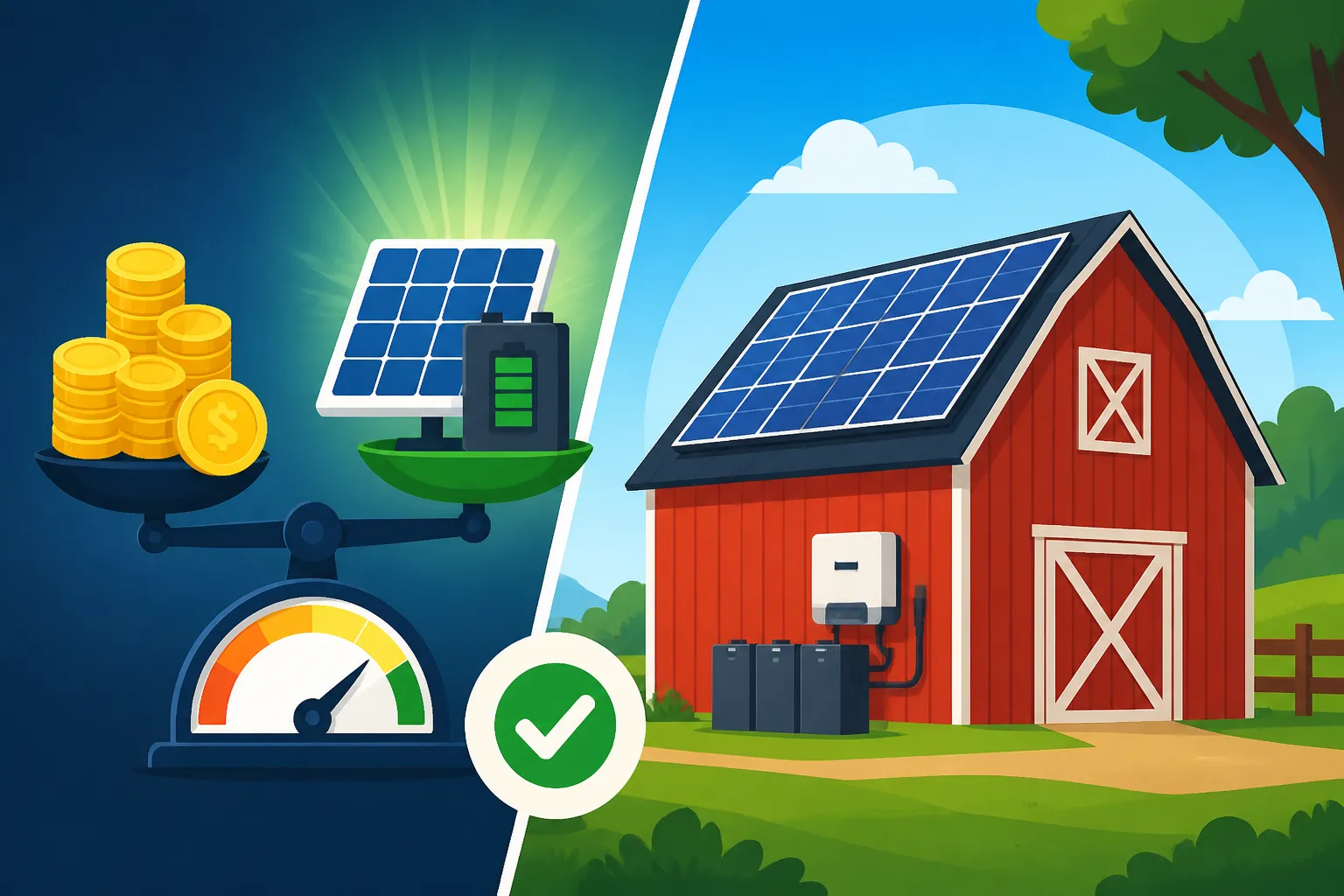
When you factor in these exorbitant costs for traditional power extension, suddenly the upfront investment in an off-grid solar system starts to look much more reasonable. A well-designed off-grid system for a typical barn, powering lights, basic tools, and perhaps a small pump, could range from $5,000 to $20,000, depending on its size and complexity. While this is a significant sum, it's often considerably less than the cost of extending grid power by even a quarter-mile. This direct comparison is often the tipping point for many rural property owners, making off-grid solar the clear winner from a purely financial standpoint. This is where the discussion of Off-Grid Solar vs Utility Extension Cost truly comes into play, revealing the surprising affordability of generating your own power.
Long-Term Savings and Return on Investment
Beyond the initial cost comparison with grid extension, off-grid solar systems for barns offer compelling long-term financial advantages. Once your system is installed, your "fuel" — sunlight — is absolutely free. This eliminates monthly electricity bills, which, while perhaps not huge for a barn, can still add up over decades. More importantly, it removes you from the unpredictable fluctuations of utility rates. You're no longer at the mercy of rising energy prices or demand charges.
If you're currently relying on a gas or diesel generator to power your barn, the savings are even more immediate and substantial. Fuel costs, along with maintenance for internal combustion engines, can be a continuous drain on your wallet. Switching to solar means saying goodbye to those recurring expenses, translating into significant savings over the system's lifespan. These tangible savings contribute directly to the system's Off-Grid Solar Return on Investment. Over 10-20 years, the money saved on electricity bills or generator fuel can easily offset the initial cost of your solar setup, effectively making your power free after the payback period. Furthermore, having a reliable, independent power source can increase your property's value, making it more attractive to potential buyers who appreciate self-sufficiency and lower operating costs. This is a critical factor when considering How Off-Grid Solar Saves Money Long-Term.
Non-Monetary Benefits and Practical Considerations
While financial metrics are important, the cost-effectiveness of off-grid solar for a barn extends far beyond just dollars and cents. There are significant non-monetary benefits and practical considerations that often sway barn owners towards solar independence. One of the most compelling is reliability. Grid power can be susceptible to outages due to storms, infrastructure failures, or even rolling blackouts. For a barn, especially one housing livestock or critical equipment, a sudden loss of power can be more than just an inconvenience; it can be a serious issue. An off-grid solar system, properly designed with sufficient battery storage, provides a continuous, uninterrupted power supply, giving you invaluable peace of mind.
Another huge benefit is environmental impact. By generating clean energy from the sun, you're significantly reducing your carbon footprint compared to relying on fossil fuel-generated grid power or a noisy gas generator. This aligns with a sustainable lifestyle and can be a source of personal pride. Practical considerations also include the flexibility of placement. You can build your barn virtually anywhere on your property without worrying about proximity to power lines. There's also the satisfaction of self-sufficiency – knowing that you are generating your own power and are independent of external utility companies. While these benefits don't have a direct monetary value, they contribute immensely to the overall appeal and long-term satisfaction of choosing off-grid solar, making it a truly holistic cost-effective solution for your barn.
Tips for Maximizing Cost-Effectiveness for Your Barn Solar System
Investing in off-grid solar for your barn is a big decision, and you want to make sure every dollar counts. There are smart strategies you can employ to ensure your system is as cost-effective as possible, balancing upfront expense with long-term performance and reliability.
Smart Sizing and Phased Implementation
One of the biggest mistakes people make when going off-grid is either oversizing their system, leading to unnecessary expense, or undersizing it, leading to constant power shortages and frustration. The key to maximizing cost-effectiveness is precise sizing. As we discussed earlier, performing a detailed load analysis to calculate your exact daily watt-hour needs is paramount. Don't just guess; use a kilowatt-hour meter for a few days if possible to get real data on appliance usage. For example, if you realize your most power-hungry tool is only used once a week for 20 minutes, you might not need to design your battery bank around that daily draw. Being honest and realistic about your usage patterns will prevent you from buying more panels and batteries than you truly need, directly impacting your Off-Grid Solar Cost by System Size.
Another excellent strategy, especially for those on a tighter budget, is phased implementation. Instead of trying to build your "dream" system all at once, start with a smaller, more manageable setup that covers your absolute essential loads. For instance, you could begin with enough panels and batteries to power just your lights and a few critical hand tools. Once you've lived with that system for a while, gained experience, and saved up more funds, you can then expand it. Adding more panels, batteries, or even a larger inverter later on is a perfectly viable approach, and it allows you to spread out the investment. Planning for this expandability from the outset, perhaps by oversizing your charge controller or inverter slightly, can make future additions much easier. This approach also helps you understand the actual Cost of Expanding an Off-Grid System without the pressure of a massive initial outlay.
Choosing the Right Components and Suppliers
When it comes to the hardware of your off-grid barn system, making informed choices about components and where you purchase them is critical for cost-effectiveness. The market is flooded with options, and not all are created equal. It's often tempting to go for the absolute cheapest components you can find, but this can lead to headaches, premature failures, and ultimately, higher costs down the line. Investing in quality components from reputable brands generally pays off in terms of longevity, efficiency, and reliability. For instance, while a no-name inverter might be cheaper, a quality pure sine wave inverter from a brand like Victron Energy or Sol-Ark will provide cleaner power, protect your appliances better, and likely last for many more years.
Batteries are a prime example where quality truly matters. While a basic lead-acid battery might save you money upfront, a reliable LiFePO4 battery from brands like Battle Born or EG4 will offer significantly more cycles, deeper discharge capabilities, and require virtually no maintenance, making them more cost-effective in the long run, as detailed in our guide on LiFePO4 vs Lead-Acid Battery Cost. When sourcing your components, consider looking at comprehensive kits from established solar retailers or even online marketplaces like Amazon, where you can often find competitive prices and read customer reviews. Smaller, portable power stations, such as a Jackery Explorer series, might even be a cost-effective solution for very minimal barn needs, like occasional lighting or charging small tools, acting as a backup or a standalone mini-system without the full complexity of a multi-component setup. Always compare warranties, customer support, and product reviews before making a purchase.
Taking Advantage of Incentives and DIY Options
While off-grid solar systems for barns might not qualify for all the same incentives as grid-tied residential systems, it's always worth investigating potential cost-saving opportunities. The federal solar tax credit, known as the Investment Tax Credit (ITC), has historically applied to off-grid systems, allowing you to deduct a percentage of your system's cost from your federal taxes. The specifics can change, so it's essential to check the most current information regarding the 2026 Solar Tax Credit and Off-Grid Systems or consult with a tax professional to see if your barn setup qualifies. Additionally, some states or local municipalities might offer their own incentives, rebates, or grant programs for renewable energy installations, even for agricultural or remote property applications. A quick search for "state incentives for off-grid solar" might reveal unexpected savings.
Beyond incentives, embracing the DIY spirit is one of the most direct ways to reduce the cost of your off-grid barn solar system. If you have a good understanding of electrical principles, are comfortable with tools, and prioritize safety, doing the installation yourself can eliminate significant labor costs. Many resources, including online forums, YouTube tutorials, and dedicated solar blogs, provide step-by-step guidance on How to Install an Off-Grid Solar System. You can also save money by being smart about your component choices. Sometimes buying used solar panels or refurbished inverters can cut costs, though you must exercise caution and thoroughly test any used equipment. By combining careful planning, smart purchasing, and hands-on effort, you can create a truly cost-effective off-grid solar solution for your barn.
Comparison of Barn Powering Options
To further illustrate the cost-effectiveness, let's look at a simplified comparison of options for powering a remote barn.
| Feature | Grid Extension | Gas/Diesel Generator | Off-Grid Solar System |
|---|---|---|---|
| Upfront Cost | Very High ($10,000s to $50,000+) | Moderate ($500 – $5,000+) | Moderate to High ($5,000 – $20,000+) |
| Operating Cost | Monthly electricity bill, subject to rates | High (fuel, maintenance, oil changes) | Very Low (sunlight is free, minor maintenance) |
| Reliability | Excellent, but vulnerable to grid outages | Good, but dependent on fuel supply | Excellent (with proper sizing/storage), independent |
| Environmental | Varies (depends on grid's energy mix) | High emissions, noise pollution | Very Low (clean, silent operation) |
| Maintenance | Minimal for homeowner | Regular fuel checks, oil, spark plugs | Panel cleaning, battery monitoring, occasional component checks |
| Expansion | Easy, just add outlets/circuits | Add larger generator or more fuel tanks | Scalable (add panels/batteries/inverters) |
| Autonomy/Storage | None (direct connection) | Fuel storage (limited duration) | Battery bank (days of autonomy) |
| Best For | Barns close to existing grid, high, constant power needs | Temporary power, backup, very low/intermittent use | Remote barns, desire for independence, long-term savings |
Disclaimer
Please remember that the information provided in this article is for general guidance and informational purposes only. The costs and effectiveness of off-grid solar systems can vary significantly based on your specific location, energy consumption, component choices, installation methods, and local regulations. Always consult with qualified professionals for detailed system design, installation, and to understand any applicable codes or incentives in your area.