How to Design for Desert Heat
Living off-grid in a desert environment sounds romantic, doesn't it? Wide open spaces, endless sunshine, peace and quiet. But the reality is, that same beautiful sunshine and tranquility can be brutal on your off-grid solar system. The relentless desert heat and harsh conditions pose unique challenges that can dramatically affect your system's performance, lifespan, and even safety. This comprehensive guide will walk you through exactly how to design a resilient and efficient off-grid solar setup that can truly thrive, not just survive, in the challenging desert climate.
The Unique Challenges of Desert Environments for Off-Grid Solar
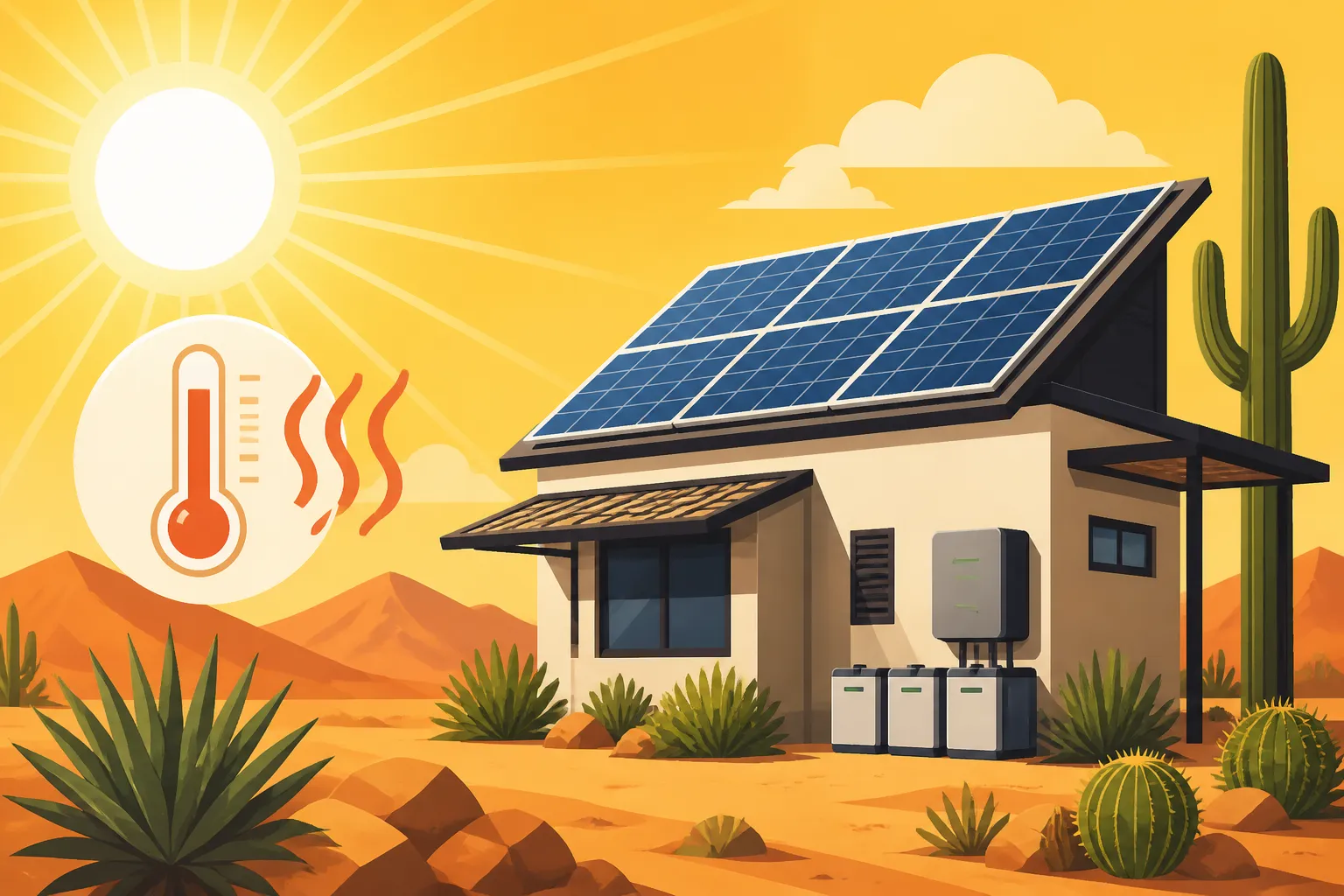
When you envision off-grid living in the desert, you probably picture clear, sunny skies, perfect for solar. And while the solar irradiance is certainly abundant, it comes with a significant catch: the heat itself. Temperatures can soar, creating an incredibly stressful environment for every component of your solar system. It's not just the direct sun; it's the high ambient air temperatures, the low humidity, and the ever-present dust that create a perfect storm of challenges.
Extreme Temperatures and Their Impact on Performance
Let's be real, those glorious 100°F+ summer days in places like Joshua Tree, California, or outside Phoenix, Arizona, feel amazing if you're swimming, but they wreak havoc on solar panels. Solar panels are rated at a standard test condition of 77°F (25°C). For every degree Celsius above that, a typical silicon panel loses about 0.3% to 0.5% of its power output. So, when your panels are baking at 140°F (60°C) or higher on a desert roof, they're losing a significant chunk of their advertised power. That 400-watt panel might only be putting out 320-350 watts. It’s a frustrating reality for anyone trying to maximize their energy harvest.
Beyond the panels, every other component in your system also suffers. Batteries lose capacity and lifespan faster when consistently exposed to high temperatures. Inverters and charge controllers, which generate their own heat, become less efficient and may even "derate" themselves—meaning they intentionally reduce their power output to prevent overheating. Imagine your air conditioner or well pump suddenly not getting enough power because your inverter is struggling with the heat. It's a common, and often maddening, desert dilemma.
Intense Solar Radiation and UV Degradation
The desert's sunshine isn't just hot; it's intensely strong, with high levels of ultraviolet (UV) radiation. This constant barrage of UV light can cause materials to break down over time, a process known as UV degradation. Think about how plastic items left out in the sun get brittle and crack—the same thing happens to components in your solar system, just on a more critical level.
This degradation affects panel encapsulants, wiring insulation, and the casings of junction boxes and other electrical components. Over years, this can lead to decreased performance, potential electrical shorts, and even safety hazards. The vibrant blues and blacks of your brand-new solar panels might fade, but more importantly, their structural integrity can be compromised. Choosing the right materials from the outset, like those offered by reputable brands, is crucial in these conditions.
Dust, Sand, and Wind Erosion
Another formidable foe in the desert is the omnipresent dust and sand. Windstorms, common in arid regions, can whip up fine particulates that settle on everything. While a little dust might seem innocuous, a significant layer on your solar panels can dramatically reduce their light absorption, directly impacting power generation. It’s like putting a dirty filter over your light source.
Beyond just blocking sunlight, abrasive sand particles carried by strong winds can slowly erode the surface of your solar panels and other exposed equipment. This isn't just a cosmetic issue; it can reduce the transparency of the glass, further hindering efficiency, and slowly wear down seals and coatings. Plus, dust can get into ventilation openings of inverters and charge controllers, clogging them up and making their internal cooling even less effective. It's a constant battle to keep your system clean and protected.
Protecting Your Core Components from the Heat
Designing an off-grid solar system for the desert means taking proactive steps to protect your valuable equipment. You can't change the climate, but you can certainly influence how your components react to it. This involves smart placement, effective cooling strategies, and choosing the right gear from the start.
Solar Panels: Mitigating Efficiency Loss and Degradation
Your solar panels are your primary energy collectors, so keeping them happy is paramount. The goal is to minimize their operating temperature and protect them from the harsh elements.
One of the best ways to combat heat is through proper mounting and ventilation. Roof-mounted panels, while convenient, can get extremely hot because heat radiates up from the roof surface, trapping warmth underneath the panels. A better solution for desert environments is often a ground mount system. This allows for significantly more airflow around and beneath the panels, which helps dissipate heat more effectively. Plus, How to Install Ground-Mounted Solar Panels can offer more flexibility in tilt angle, which is useful for shedding dust. Mounting panels with at least 4-6 inches of clearance from the mounting surface, whether roof or ground, is a simple yet effective way to improve airflow.
When selecting panels, pay attention to their temperature coefficient. This specification, usually expressed as %/°C, tells you how much power a panel loses for every degree Celsius above the 77°F (25°C) standard test condition. Look for panels with a lower (closer to zero) temperature coefficient. For example, a panel with -0.3% /°C will perform better in heat than one with -0.5% /°C. Many modern monocrystalline panels from reputable manufacturers, like those sometimes found on Amazon, offer good temperature performance.
Finally, consider shading where possible, but with extreme caution. While shading panels can keep them cooler, even partial shading on the panel surface will drastically reduce its output due to cell-level performance issues. Instead, think about shading the area around the panels or the support structures to keep the ambient temperature slightly lower, without casting shadows on the actual photovoltaic cells.
Batteries: Guarding Against Thermal Runaway and Reduced Lifespan
Batteries are arguably the most vulnerable component to extreme temperatures. High heat can accelerate degradation, reduce cycle life, and in extreme cases, even pose a fire risk, especially with certain chemistries. Protecting your battery bank is critical for the longevity and safety of your entire off-grid system.
The location of your battery bank is paramount. Avoid direct sunlight at all costs. An ideal location would be in a shaded, insulated enclosure, perhaps even partially buried underground if feasible, as the earth provides excellent temperature regulation. If burying isn't an option, a well-insulated shed or a dedicated battery box placed on the north side of a structure can help significantly. The key is to keep the batteries within their optimal operating temperature range, which for most chemistries is between 60-85°F (15-30°C).
Ventilation and active cooling are often necessary in desert heat, especially for larger battery banks. For lead-acid batteries, proper ventilation is always important to disperse hydrogen gas, but for all battery types in hot climates, it's crucial for heat management. Consider installing exhaust fans that are thermostatically controlled to kick on when temperatures inside the enclosure reach a certain threshold. For more critical or larger systems, a small, dedicated air conditioner or an evaporative cooler (swamp cooler) can provide a significant cooling boost, though these consume power and need water.
The type of battery chemistry also plays a huge role. While traditional lead-acid batteries (like AGM or flooded lead-acid) are more sensitive to heat and require careful temperature management, LiFePO4 (Lithium Iron Phosphate) batteries generally handle heat better. They have a wider operating temperature range and are less prone to thermal runaway compared to other lithium-ion chemistries. However, even LiFePO4 batteries will degrade faster if consistently operated at high temperatures. Brands like Renogy offer a range of LiFePO4 batteries that are known for their durability, but still benefit greatly from proper thermal management. When considering your options, understanding the LiFePO4 vs Lead-Acid Battery Cost can help inform your decision, as lithium batteries often have a higher upfront cost but a longer lifespan, especially with proper care in hot climates. For more on cold weather battery protection, which shares principles with heat management, you can check out How to Protect Batteries from Cold.
Inverters and Charge Controllers: Keeping Electronics Cool
These vital components are the brains of your off-grid system, converting and managing the power flow. Like any electronics, they generate heat during operation, and if they can't dissipate that heat effectively, their performance suffers, and their lifespan can be shortened.
Again, strategic placement is your first line of defense. Install your inverter and charge controller in a cool, dry, and well-ventilated area, preferably indoors or in a heavily shaded, insulated enclosure. Never mount them in direct sunlight or in a cramped, unventilated space. Garages, equipment sheds, or utility closets are often good choices, as long as they offer ample airflow. Many off-grid setups place these components on a wall in a dedicated utility room, ensuring they have room to breathe.
For larger systems or particularly hot environments, active cooling for your electronics enclosure might be a necessity. Small DC-powered fans, similar to computer fans, can be installed to create a cross-breeze, drawing cooler air in and expelling warmer air. You might even consider a small, dedicated exhaust fan controlled by a thermostat to automatically regulate the enclosure temperature. Some high-end inverters, like those from Victron or Sol-Ark, have robust internal cooling systems, but even these benefit from a cooler ambient environment. When you're trying to figure out How to Choose an Off-Grid Inverter or How to Choose an Off-Grid Charge Controller, checking their operating temperature ranges and internal cooling mechanisms is a smart move for desert dwellers.
Remember the concept of derating: if your inverter or charge controller gets too hot, it will automatically reduce its power output to protect its internal components. This means you might not get the full power you expect from your solar array or battery bank, leading to frustrating power shortages during peak demand or when you need to run high-draw appliances. Proper cooling helps ensure your system operates at its full potential, even when the mercury rises.
Smart System Design and Maintenance for Desert Operations
Beyond protecting individual components, a holistic approach to system design and ongoing maintenance is crucial for successful off-grid living in the desert. Thinking ahead about capacity, materials, and routine care will save you headaches and costly repairs down the line.
Oversizing and Redundancy for Reliable Power
Given the inherent efficiency losses of solar panels in high heat and the accelerated degradation of batteries, oversizing your system isn't a luxury in the desert—it's often a necessity. You need to account for those days when panel output is reduced by 15-20% due to heat and dust. Many experienced off-gridders in hot climates recommend oversizing your solar array by 20-30% compared to what a typical sizing calculation might suggest for temperate climates. This ensures you still meet your daily energy needs even on the hottest, dustiest days. Want to dive deeper into this? Check out How Much to Oversize Your Solar Array for more specific calculations.
When it comes to batteries, consider not just your daily energy needs, but also the impact of heat on their lifespan. A battery bank that's slightly oversized will experience less stress from daily cycling and may have a longer overall life, even in challenging temperatures. This extra capacity provides a buffer against the inevitable efficiency dips and helps you achieve desired How to Calculate Days of Autonomy even under adverse conditions.
Redundancy is also a smart strategy. While a well-designed solar system is robust, having a backup plan is critical, especially in remote desert locations. A reliable backup generator can kick in during prolonged periods of extreme heat, dust storms, or unexpected equipment failures, keeping your power on when you need it most. Integrating a generator into your system design, perhaps with an auto-start feature, provides invaluable peace of mind. Learn more about adding one to your setup in How to Add a Generator to Your Design.
Material Selection and Installation Best Practices
The devil is in the details, especially when facing extreme conditions. The materials you choose and how you install them can make a significant difference in your system's longevity and performance.
- UV-Resistant Materials: Invest in high-quality, UV-resistant wiring, conduits, and cable ties. Standard electrical tape or cheap plastic components will degrade rapidly in the intense desert sun, leading to cracked insulation, exposed wires, and potential system failures. Look for conduit made from rigid PVC or galvanized steel, and cables specifically rated for outdoor and direct burial use if applicable.
- Robust Mounting Hardware: Wind is another factor in the desert, often accompanied by abrasive sand. Ensure your panel mounting hardware is robust, corrosion-resistant, and securely fastened. Using high-quality stainless steel bolts and clamps will prevent rust and structural fatigue over time.
- Proper Wire Sizing: All wires have resistance, and resistance generates heat. In already hot environments, undersized wires can overheat, leading to voltage drop and potential fire hazards. Always size your wires generously, erring on the side of larger gauge, to minimize resistance and heat generation. This is especially important for long cable runs from panels to the charge controller or from the battery bank to the inverter. A detailed guide like How to Size Wire and Cables can walk you through the calculations.
- Effective Grounding: Proper grounding and bonding are critical for safety in any electrical system, but in the desert, dry, sandy soil can sometimes be less conductive than moist earth. Ensure your grounding electrodes are properly installed and sufficient to provide a low-resistance path to ground. While the specific requirements can vary, understanding Off-Grid Solar Safety and Grounding is paramount to protect your equipment and yourself.
| Component | Desert Heat Challenge | Design Strategy | Material/Placement Tips |
|---|---|---|---|
| Solar Panels | Efficiency loss, UV degradation | Ample airflow, ground mounts, low temperature coefficient panels | High-clearance mounts, south-facing, monocrystalline panels |
| Batteries | Accelerated degradation, thermal risk | Insulated enclosure, active cooling, optimal chemistry | Underground, shaded shed, LiFePO4, thermostatically controlled fans |
| Inverter/Charge Controller | Derating, overheating, dust clogging | Shaded, ventilated space, active cooling, dust filtration | Indoors, dedicated utility room, exhaust fans, dust filters |
| Wiring/Cables | UV degradation, overheating | UV-resistant insulation, proper sizing, conduit protection | Outdoor-rated cables, rigid PVC/metal conduit, oversized gauge |
| Mounting Hardware | Wind erosion, structural fatigue | Robust, corrosion-resistant, securely anchored | Stainless steel, heavy-duty clamps, concrete footings |
Routine Monitoring and Maintenance
Once your desert off-grid system is installed, the work isn't over. Regular monitoring and proactive maintenance are essential to keep it running smoothly and efficiently in the face of constant environmental stress.
Temperature monitoring for your critical components—especially your battery bank and inverter/charge controller enclosures—is highly recommended. Many modern inverters and charge controllers offer built-in temperature sensors, or you can add external ones. Knowing the operating temperatures allows you to identify issues before they become critical and adjust your cooling strategies if needed. For instance, if you notice your battery enclosure getting consistently above its optimal range, it might be time to upgrade your ventilation.
Panel cleaning is probably the most frequent maintenance task in the desert. Dust and sand can accumulate quickly, significantly reducing output. A simple rinse with water (preferably soft water to avoid mineral deposits) and a soft brush can dramatically improve panel performance. Consider automated or robotic cleaning systems for very large arrays, but for most homesteads, a monthly or bi-weekly manual cleaning is sufficient. Don't underestimate the power of clean panels; it's a direct way to maximize your energy harvest.
Regularly inspect all connections and wiring for signs of heat stress, cracking insulation, or corrosion. The intense heat can accelerate wear and tear on electrical components. Check fan vents on inverters and charge controllers to ensure they aren't clogged with dust, which can severely impede cooling. Also, monitor your battery water levels (for flooded lead-acid) and check terminals for corrosion. A good Off-Grid Solar Maintenance Guide will provide a comprehensive checklist to keep your system in top shape. By staying vigilant and addressing small issues before they escalate, you can extend the life of your off-grid solar system and ensure reliable power, even in the harsh desert environment.
Disclaimer
Please remember that the information provided in this guide is for educational and informational purposes only and should not be considered professional advice. Off-grid solar system design and installation can be complex and involve electrical hazards. Always consult with qualified professionals and adhere to all local codes and regulations when planning or installing your system.