How to Add AC and DC Loads Together
One of the trickiest parts about diving into off-grid living, whether it's for a cozy cabin in the woods or a mobile tiny home, is figuring out how to power everything you need. You've got those efficient little LED lights and phone chargers that hum along on DC power, but then there's the microwave, the fridge, and maybe even a trusty power tool that absolutely demands AC. Juggling these different power needs can feel like learning a new language, and many folks get stuck wondering how to seamlessly integrate both types of loads without overcomplicating or undersizing their system. This guide is here to untangle that complexity, showing you exactly how to combine AC and DC loads effectively for a robust and reliable off-grid setup.
The Fundamental Differences Between AC and DC Power for Off-Grid Living
Before we even start talking about hooking things up, it's really important to understand the two main types of electricity we deal with: Direct Current (DC) and Alternating Current (AC). They're not just different names; they function in fundamentally different ways, and knowing these differences is key to designing an efficient and safe off-grid system.
What is DC Power and Why It's Crucial Off-Grid
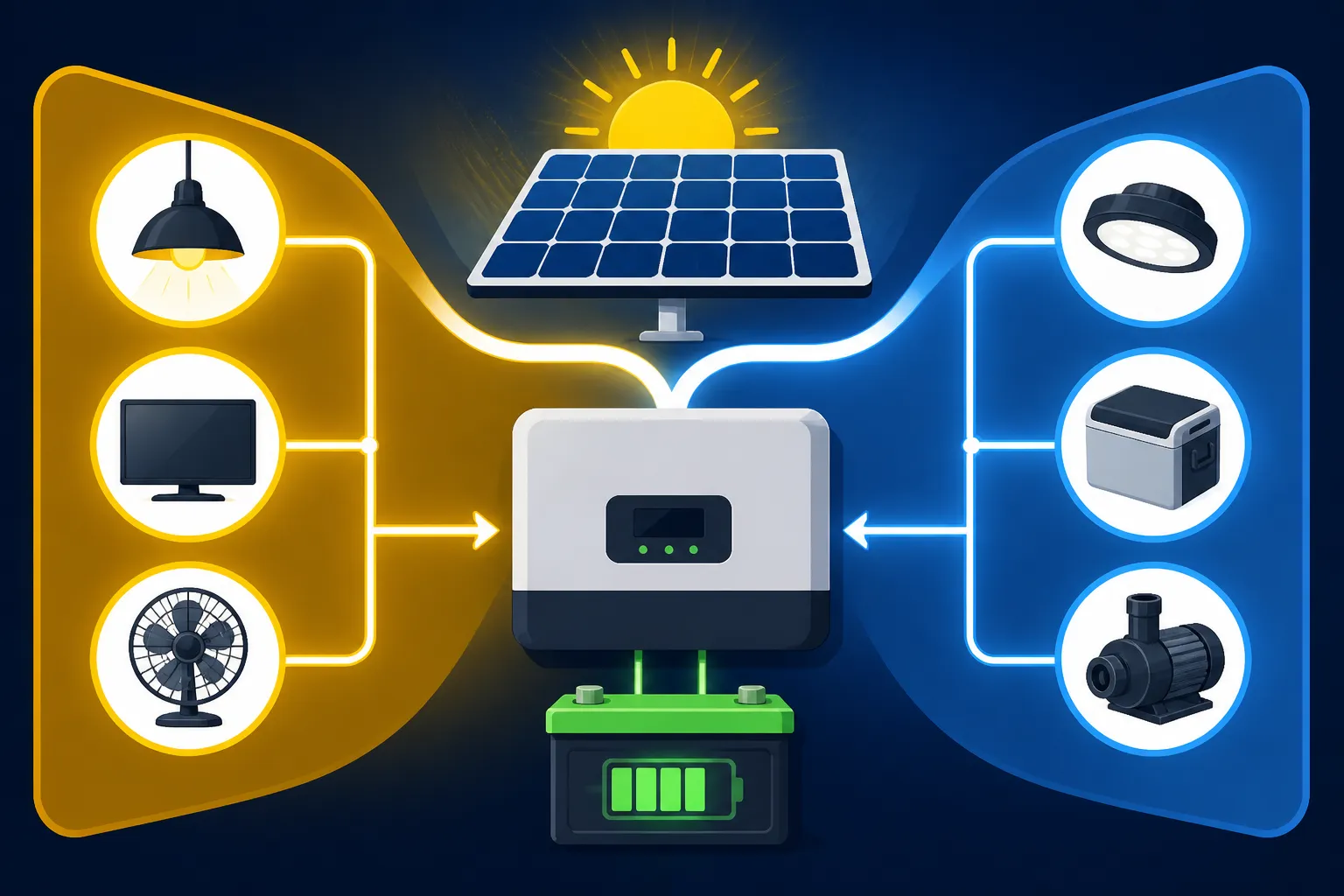
Direct Current, or DC, is what you get directly from your solar panels and what's stored in your batteries. Think of it as a one-way street for electrons—they flow in a single, constant direction. Many of our modern, smaller electronics are designed to run on DC power. This includes things like your smartphone, tablet, laptop (with an adapter, of course), LED lighting, and even some specialized refrigerators or water pumps designed for RVs or marine use.
For off-grid setups, using DC power directly from your battery bank for compatible appliances is often the most efficient way to go. Why? Because you're bypassing the need to convert that power. Every time electricity is converted from one form to another (like from DC to AC), you lose a little bit of energy in the process, usually as heat. It might seem minor, but those small losses add up over time, especially when you're meticulously managing your energy budget. By prioritizing DC appliances where possible, you can stretch your stored battery power further, which is a huge win for anyone living off the grid. If you're wondering How Many Batteries for an Off-Grid System, optimizing your DC loads can help you get more mileage out of your battery bank.
Understanding AC Power and Its Role in Modern Off-Grid Homes
Alternating Current, or AC, is the standard power found in homes connected to the utility grid. It's the kind of electricity that makes your toaster pop, your washing machine spin, and your air conditioner hum. Unlike DC, AC electrons periodically reverse direction, which makes it easier to transmit over long distances and transform into different voltages.
In an off-grid system, AC power is generated by an inverter. The inverter takes the DC power from your batteries and converts it into usable AC power for your household appliances. While it introduces a slight efficiency loss, an inverter is absolutely essential if you want to run common household items like conventional refrigerators, microwaves, televisions, power tools, or even a well pump. Choosing the right inverter is critical, and you'll often hear discussions about Pure Sine Wave vs Modified Sine Wave Inverters. For sensitive electronics and efficient operation of most appliances, a pure sine wave inverter is generally recommended, even if it comes at a slightly higher cost. Without a properly sized and efficient inverter, your dreams of running a blender for smoothies or charging power tool batteries might just stay dreams.
Performing a Comprehensive Load Analysis for Both AC and DC Appliances
Before you buy a single solar panel or battery, the absolute first step in designing any off-grid system, especially one with mixed loads, is to perform a detailed load analysis. This is where you figure out exactly how much power you actually need. Many folks skip this step or eyeball it, only to find themselves constantly running out of power or having vastly oversized (and overpriced) equipment. Don't fall into that trap! Understanding How to Do an Off-Grid Load Analysis is foundational.
Cataloging Your DC Appliances and Their Energy Consumption
Start by making a thorough list of every single appliance, gadget, and device you plan to power directly with DC. This is usually the simpler part of the equation because these devices often list their power consumption in watts or amps at a specific DC voltage (e.g., 12V, 24V).
For each item on your list, note down its wattage and how many hours per day you expect to use it. For example, if you have 10 LED lights that consume 5 watts each and you run them for 4 hours a day, that's 50 watts * 4 hours = 200 Watt-hours (Wh) per day. Don't forget smaller items like phone chargers, USB fans, or 12V water pumps if you have them. Many modern devices, even if they come with a wall plug, internally convert to DC, but it's best to stick to devices explicitly rated for DC use if you're aiming for direct DC power. Keeping a simple spreadsheet, perhaps on a platform like Google Sheets or Microsoft Excel, can be incredibly helpful for this process.
Identifying and Quantifying Your AC Energy Demands
Now for the AC side of things, which tends to be more complex. This list will include all your conventional household appliances. For each item, you'll need two wattage numbers: the running watts and the surge watts. Running watts are what the appliance consistently draws while operating. Surge watts are the brief, higher power draw an appliance needs when it first starts up, especially motors in things like refrigerators, microwaves, or well pumps. This surge can be two to five times the running wattage and is critical for How to Size an Off-Grid Inverter.
Again, list each AC appliance, its running watts, surge watts, and estimated daily usage in hours. A conventional fridge, for instance, might run intermittently throughout the day, so you'd estimate its total running time over 24 hours. A microwave, on the other hand, might only run for 15 minutes total per day, but its wattage is quite high during that short period. Remember to factor in the inefficiency of your inverter for AC loads. A good rule of thumb is to add about 10-15% to your AC energy consumption to account for inverter losses. This means if your AC loads consume 1000 Wh, you'll actually need about 1100-1150 Wh of DC power from your batteries. Knowing How to Calculate Daily Energy Usage for all your devices is the backbone of a successful system.
Aggregating Your Total Daily Energy Budget
Once you've meticulously cataloged both your DC and AC loads and calculated their individual daily watt-hour consumption, it's time to add them all up. Your total daily watt-hour requirement is the sum of your DC loads and your AC loads (including that inverter loss factor). This grand total is your "daily energy budget."
This number is paramount because it dictates the size of your solar array (how many panels you need) and your battery bank (how much storage capacity you need). For instance, if your total daily energy budget comes out to 5,000 Wh, you'll need enough solar panels to generate at least that much energy, accounting for "peak sun hours" in your location and days when the sun isn't shining as brightly. You also need a battery bank large enough to store that energy and ideally provide "days of autonomy," meaning you have enough stored power to last through a few cloudy days. Understanding Watts vs Watt-Hours vs Amp-Hours Explained will help you translate these numbers into concrete component sizes.
Here's a simple table to help organize your load analysis:
| Appliance Name | Type (AC/DC) | Running Watts (W) | Surge Watts (W) | Est. Daily Use (Hrs) | Daily Wh (Running) | Daily Wh (Surge) | Notes (e.g., Inverter Loss) |
|---|---|---|---|---|---|---|---|
| LED Strip Lights | DC (12V) | 20 | N/A | 5 | 100 | N/A | Very efficient |
| Phone Charger | DC (USB) | 10 | N/A | 2 | 20 | N/A | Small, constant use |
| Water Pump | DC (12V) | 60 | N/A | 0.5 | 30 | N/A | Intermittent |
| Refrigerator | AC (120V) | 150 | 800 | 8 (cycling) | 1200 | 800 | Factor in 15% inv. loss |
| Microwave | AC (120V) | 1200 | 2000 | 0.25 (15 min) | 300 | 2000 | Factor in 15% inv. loss |
| Laptop Charger | AC (120V) | 60 | N/A | 4 | 240 | N/A | Factor in 15% inv. loss |
| TOTALS | 2800 | 1890 Wh (DC equiv. for AC loads) | 2800W max surge | (Adjusted AC + Direct DC) = ~2335 Wh |
Note: Daily Wh for AC loads includes a 15% inverter efficiency loss factor for conversion to DC equivalent.
Designing Your Off-Grid System to Accommodate Mixed Loads
With your load analysis in hand, you're ready to start building out the design of your off-grid system. The goal here is to create a seamless flow of power, ensuring both your DC and AC appliances have what they need, when they need it, without undue stress on your components or your wallet.
Choosing the Right Inverter for Your AC Needs
The inverter is the heart of your AC power system. As discussed, a pure sine wave inverter is generally preferred for its clean power output, which is crucial for sensitive electronics and the longevity of motor-driven appliances. When choosing an inverter, you need to consider two main things: continuous wattage and surge wattage.
The continuous wattage rating of your inverter must be higher than the combined running watts of all the AC appliances you anticipate using simultaneously. For example, if you plan to run your refrigerator (150W), a laptop (60W), and a TV (100W) all at the same time, you'd need an inverter capable of at least 310W continuous output. But that's just continuous. Your inverter's surge wattage rating needs to exceed the highest single surge watt requirement of any appliance you own. So, if your microwave surges to 2000W, your inverter needs to be able to handle that momentary spike, even if its continuous rating is lower. Many quality inverters, like those from Renogy or Victron, specify both these ratings clearly. It's often better to slightly oversize your inverter than to undersize it, as it provides a buffer for unexpected loads and can extend the life of the unit.
Integrating DC-Specific Power Distribution
While the inverter handles your AC needs, your DC loads should ideally be powered directly from your battery bank. This means setting up a separate DC distribution system. Typically, this involves a DC fuse block or breaker panel connected directly to your batteries (with appropriate fusing at the battery itself). Each DC appliance or group of DC appliances would then have its own fused circuit running from this panel.
Think of it like the fuse box in your car: individual fuses protect individual circuits. This setup minimizes energy loss by avoiding unnecessary DC-to-AC-to-DC conversions (which is what happens if you plug a phone charger into an AC outlet that's powered by an inverter from DC batteries). It also creates a more resilient system, as a fault in your AC inverter won't take down your essential DC lighting or communication devices. When you're thinking about How to Choose System Voltage, remember that higher system voltages (like 24V or 48V) can be more efficient for larger systems with longer wire runs because they reduce current and thus voltage drop, but 12V is common for smaller setups, especially RVs or vans. You can find a wide range of DC fuse blocks and other DC components on online marketplaces like Amazon, making it easy to build out this part of your system.
Balancing Your System for Optimal Performance and Longevity
Designing an off-grid system isn't just about meeting your power needs; it's about doing so efficiently and sustainably. This involves balancing your system voltage, solar array size, and battery bank capacity. For instance, if you have very high AC loads, moving to a 24V or 48V battery bank will significantly reduce the current flowing through your inverter and wiring, leading to less heat loss and allowing for smaller gauge (and less expensive) wiring. This directly impacts the Cost of an Off-Grid Solar Inverter and overall wiring expenses.
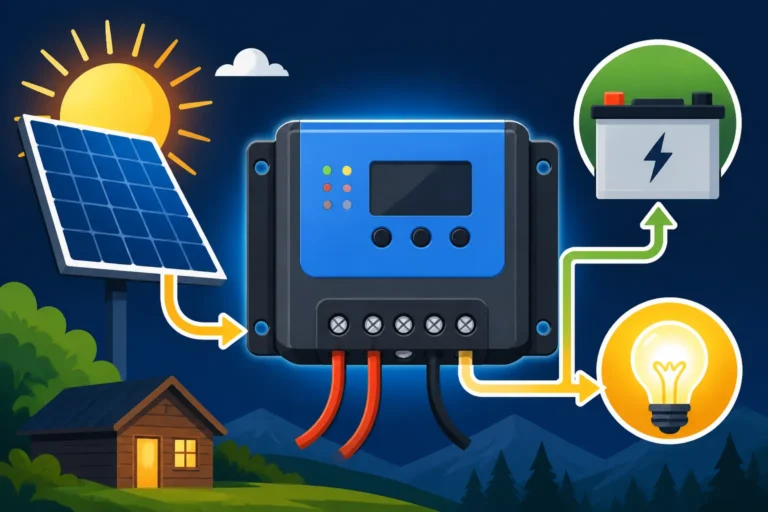
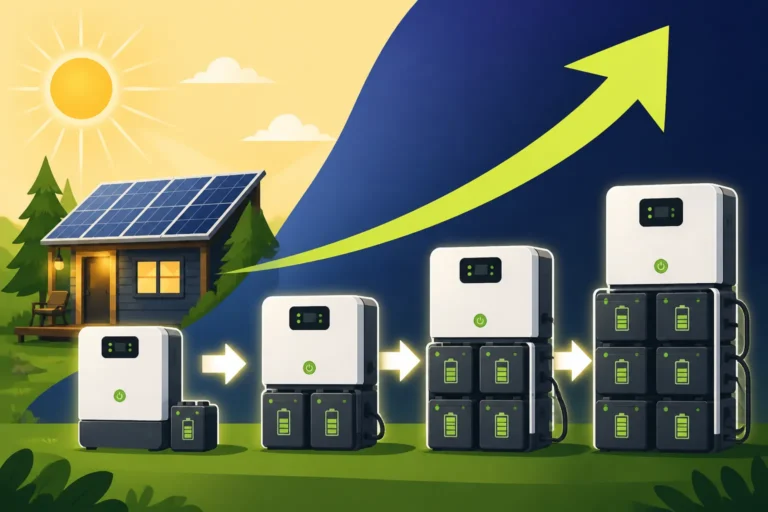
Your charge controller, which manages the power flow from your solar panels to your batteries, also needs to be correctly sized to handle your solar array's output. Make sure it's compatible with your chosen battery chemistry (e.g., LiFePO4 or lead-acid). Lastly, always think about future expansion. If you plan to add more appliances later, designing with that in mind (e.g., choosing an inverter with a bit of headroom, using slightly larger gauge wiring in main runs) can save you a lot of hassle and money down the road. This foresight is crucial for long-term independence.
Wiring and Safety Protocols for Mixed AC/DC Off-Grid Systems
Wiring an off-grid solar system, especially one with both AC and DC loads, demands careful attention to detail and strict adherence to safety standards. Skimping on proper wiring or safety measures can lead to inefficient operation, equipment damage, or, worst of all, dangerous electrical hazards. This is where your planning truly turns into action, and understanding principles like How to Wire an Off-Grid Solar System becomes paramount.
Essential Wiring Practices for Dual Current Systems
The golden rule for mixed AC/DC wiring is clear separation. You should run your DC wiring in its own conduits or cable runs, entirely separate from your AC wiring. This prevents interference, makes troubleshooting easier, and reduces the risk of accidentally mixing up circuits.
For DC wiring, always use appropriate wire gauges. The wire size depends on the current it needs to carry and the distance it travels. Longer runs or higher currents require thicker wire to prevent excessive voltage drop, which translates to wasted energy and reduced performance for your appliances. For AC wiring, standard household electrical practices apply, including using Romex or equivalent wiring for fixed installations. Always color-code your wires correctly: typically, red for positive DC, black for negative DC, and for AC, black for hot, white for neutral, and green or bare copper for ground. Ensure all connections are tight, secure, and protected from environmental factors.
Implementing Critical Safety Measures
Safety is non-negotiable in any electrical system, and off-grid is no exception. For both your AC and DC circuits, you need proper overcurrent protection. This means installing fuses or circuit breakers in strategic locations. On the DC side, this includes fuses directly at your battery bank, fuses or breakers for each circuit in your DC fuse block, and often a main DC breaker between your charge controller and batteries. On the AC side, a standard AC breaker panel protects your household circuits. Knowing How to Install Fuses and Breakers correctly is vital.
Beyond overcurrent protection, proper grounding is absolutely crucial. Your entire off-grid system, including your solar panels, inverter chassis, and electrical enclosure, needs to be bonded to a common ground point and then connected to an earth ground rod. This provides a safe path for fault currents, protecting you and your equipment from electrical shock or lightning strikes. Understanding Off-Grid Solar Safety and Grounding isn't just a suggestion; it's a requirement for peace of mind. If you're unsure about any aspect of grounding or high-voltage wiring, it’s always wise to consult or hire a qualified electrician, even if you’re doing most of the DIY work.
Practical Considerations for Everyday Operation
Once your system is installed, monitoring becomes your best friend. A good battery monitor (which can often be purchased on Amazon or from specialized solar retailers like Renogy) will give you real-time insights into your battery state of charge, current draw, and overall system health. Your inverter and charge controller will also have displays or apps that provide valuable data. Regularly checking these readings helps you understand your power consumption habits and spot any anomalies.
It's also important to understand your system's limitations. Don't try to run too many high-draw AC appliances simultaneously if your inverter isn't sized for it. While it's great to have a robust system, overloading can trigger safety shutdowns or damage components. Lastly, remember that even off-grid systems require maintenance. Periodically check wiring connections, clean your solar panels, and inspect your battery bank. And for those times when the sun just isn't cooperating, or your energy needs spike, consider How to Add a Generator to Your Design as a backup power source.
Disclaimer
Please note that this guide provides general information about off-grid solar systems. Electrical work can be dangerous. Always consult with a qualified electrician or solar professional and adhere to all local codes and regulations when designing and installing your system. The author and publisher are not responsible for any actions taken based on the information provided herein.